The Big Myth

If you are in the mood for some basic questioning of the status quo, this book may be for you, according to Kirkus Review:

A thoughtful denunciation of the economic dogma that the market knows best.

“How did so many Americans come to have so much faith in markets and so little faith in government?” So ask Oreskes and Conway, continuing the line of research they began in their seminal 2010 book, Merchants of Doubt. Where that book focused on the co-optation of scientists to dispute the realities of climate change and the linkage of tobacco to cancer, this joins that co-optation to carefully planted “free market” fundamentalism that holds that any attempt to regulate business is a form of tyranny…

Brilliance Up North

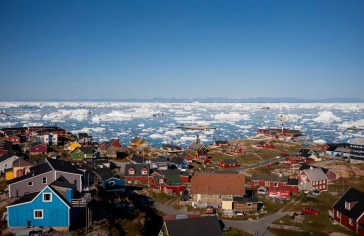
Ilulissat’s icy fjord, a UNESCO World Heritage site, is one of Greenland’s main tourist destinations even though its airport is currently too small to accommodate large jets. Carsten Snejbjerg for The New York Times

Setting limits at the outset, what a brilliant idea:

The Arctic island, renowned for its glaciers and fjords, is expanding airports and hotels to energize its economy, even as it tries to avoid the pitfalls of overtourism.

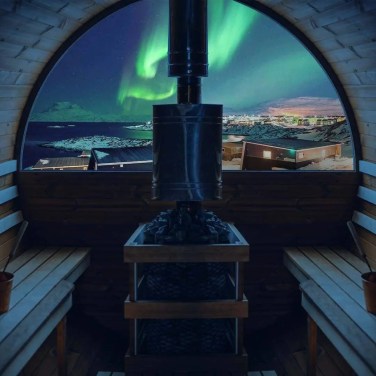
A sauna with a view of Nuuk and, at left, in the distance, the nearly 4,000-foot mountain Sermitsiaq. Inuk Travel

“The weather decides”: It could almost be the motto of Greenland. Visitors drawn to this North Atlantic island to see its powder blue glaciers, iceberg-clogged fjords and breathtakingly stark landscapes quickly learn to respect the elements, and they’re sometimes rewarded for it.

One cold December day, I was waiting for a delayed flight in Kangerlussuaq, a former U.S. military base just above the Arctic Circle, when a friendly Air Greenland pilot named Stale asked if I’d like to join him on a drive to the harbor to “pick up some musk ox heads.” The offer seemed very Greenlandic, so how could I refuse? Continue reading

Flaco Free

Central Park Zoo

Flaco is only the latest of a long history of unusual bird stories from New York City’s Central Park. Thanks to Louis C. Hochman at National Public Radio’s excellent Gothamist collaborative for local news for this latest one:

Manhattan Bird Alert@BirdCentralPark. Flaco the Eurasian Eagle-Owl showing his talons and looking mighty on a sunny day in Central Park.

Flaco to remain free: Central Park Zoo gives up on capturing escaped owl for now

Flaco, the Eurasian eagle owl that escaped the Central Park Zoo early this month after his habitat was vandalized, will be allowed to stay free for now.

The zoo says it’s putting on hold efforts to recover Flaco, who has been “very successful at hunting and consuming the abundant prey in the park.” Continue reading

Say No To Coffee, Sometimes

We are in the coffee business, and we still agree that sometimes you have to say no to coffee (thanks to Bartleby at The Economist for this review):

Why it’s time to get shot of coffee meetings at work

A productivity hack for the ages

If people used the time they currently devote to reading books about productivity hacks to do some actual work, their productivity problem would be solved. But occasionally these books contain nuggets of wisdom. In “Time Wise”, Amantha Imber has a short chapter whose title alone gleams with good sense. It is called “Why you need to say ‘no’ to coffee meetings”. That is splendid advice for anyone who can identify with the following situation. Continue reading

Africa’s Sunlight & Europe’s Electricity

The Noor solar power station near Ouarzazate, Morocco. SEPCO III / XINHUA / ALAMY STOCK PHOTO

Fred Pearce brings us news from the European-African axis of renewable energy:

In Scramble for Clean Energy, Europe Is Turning to North Africa

In its quest for green energy, Europe is looking to North Africa, where vast solar and wind farms are proliferating and plans call for submarine cables that will carry electricity as far as Britain. But this rush for clean power is raising serious environmental concerns.

Solar panels in sun-rich North Africa generate up to three times more energy than in Europe. And North Africa has a lot more room for them than densely populated Europe. Continue reading

Bio-Based Gains

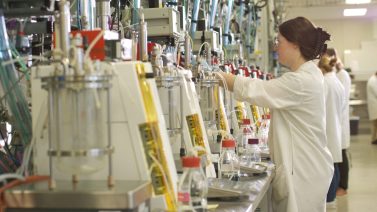
Scientists at San Diego-based Genomatica, which is developing a plant-based nylon. GENOMATICA

We have been watching and waiting for this range of products to have their day, and Jim Robbins delivers an up to date account that gives hope:

From Lab to Market: Bio-Based Products Are Gaining Momentum

A 3D-printed house made from sawdust and other timber industry waste by the University of Maine’s Advanced Structures and Composites Center. UNIVERSITY OF MAINE

Propelled by government investment and shareholder demand, manufacturers are pushing to get bio-based products into the marketplace. These new materials — made from plants, fungi, and microbes — aim to replace those that contain toxins and are difficult to recycle or reuse.

In the 1930s, the DuPont company created the world’s first nylon, a synthetic polymer made from petroleum. The product first appeared in bristles for toothbrushes, but eventually it would be used for a broad range of products, from stockings to blouses, carpets, food packaging, and even dental floss.
Nylon is still widely used, but, like other plastics, it has environmental downsides: it is made from a nonrenewable resource; its production generates nitrous oxide, a potent greenhouse gas; it doesn’t biodegrade; and it sheds microfibers that end up in food, water, plants, animals, and even the clouds.

Laminated timber beams and floors used in the construction of Ascent, a 25-story apartment building in Milwaukee. THORNTON TOMASETTI

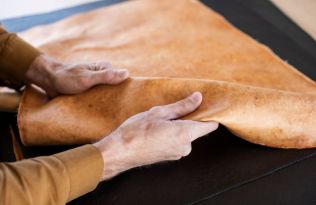
Now, however, a San Diego-based company called Genomatica is offering an alternative: a so-called plant-based nylon made through biosynthesis, in which a genetically engineered microorganism ferments plant sugars to create a chemical intermediate that can be turned into nylon-6 polymer chips, and then textiles. The company has partnered with Lululemon, Unilever, and others to manufacture this and other bio-based products that safely decompose. Continue reading

Renewable Energy & Winged Creatures

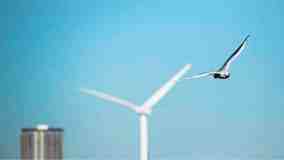
PHOTOGRAPH: YUKIKO YAMAMOTO/GETTY IMAGES

We knew  that the intersection between renewable energy and birds can be problematic, so we thank Emma Foehringer Merchant for this look at one initiative to address it:

Wanted: Dead Birds and Bats, Felled by Renewables

Scientists say collecting, studying, and storing the carcasses from wind and solar facilities can unlock new insights.

“This is one of the least smelly carcasses,” said Todd Katzner, peering over his lab manager’s shoulder as she sliced a bit of flesh from a dead pigeon lying on a steel lab table. The specimens that arrive at this facility in Boise, Idaho, are often long dead, and the bodies smell, he said, like “nothing that you can easily describe, other than yuck.” Continue reading

Greta Thundberg Talking To David Wallace-Wells

David Wallace-Wells has published a conversation, Greta Thunberg: ‘The World Is Getting More Grim by the Day’, in advance of the publication of the book to the right:

There is genuinely no precedent in the modern history of geopolitics for the climate activist Greta Thunberg.

Four and a half years ago, she began “striking” outside of Swedish parliament — a single teenager with a single sign. She was 15. In just a few months, she had made her mark at the United Nations climate conference in Poland: “You are not mature enough to tell it like it is,” she told the assembled diplomats and negotiators, “even that burden you leave to us children.” Continue reading

Post-Peak Meat

Hundreds of dairy farms across California have sold the rights to their manure to energy producers. Illustration: Ricardo Cavolo/The Guardian

We are always on the lookout for more reasons why reducing beef and dairy consumption makes sense:

Brown gold: the great American manure rush begins

The energy industry is turning waste from dairy farms into renewable natural gas – but will it actually reduce emissions?

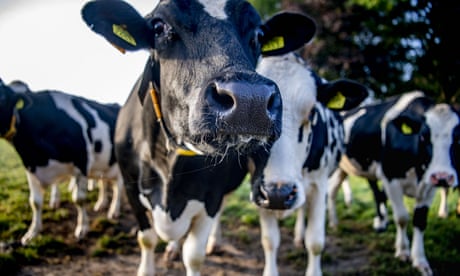
Cows in a meadow at a dairy farm in Zundert, the Netherlands.

Have we reached ‘peak meat’? Why one country is trying to limit its number of livestock

On an early August afternoon at Pinnacle Dairy, a farm located near the middle of California’s long Central Valley, 1,300 Jersey cows idle in the shade of open-air barns. Above them whir fans the size of satellites, circulating a breeze as the temperature pushes 100F (38C). Underfoot, a wet layer of feces emits a thick stench that hangs in the air. Just a tad unpleasant, the smell represents a potential goldmine. Continue reading

Reducing Cement’s Carbon Footprint, Improving Its Longevity

PHOTOGRAPH: GETTY IMAGES

Whether we want buildings to last longer or not, we now know that reducing the carbon footprint of the materials used is a consideration is important:

The Secret to Making Concrete That Lasts 1,000 Years

Scientists have uncovered the Roman recipe for self-repairing cement—which could massively reduce the carbon footprint of the material today.

ROME’S PANTHEON STANDS defiant 2,000 years after it was built, its marble floors sheltered under the world’s largest unreinforced concrete dome. For decades, researchers have probed samples from Roman concrete structures—tombs, breakwaters, aqueducts, and wharves—to find out why these ancient buildings endure when modern concrete may crumble after only a few decades. Continue reading

Kenya’s Libraries Get The Attention They Deserve

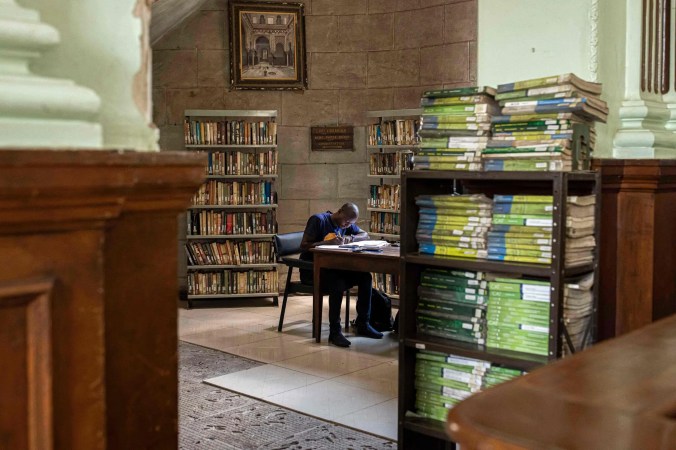
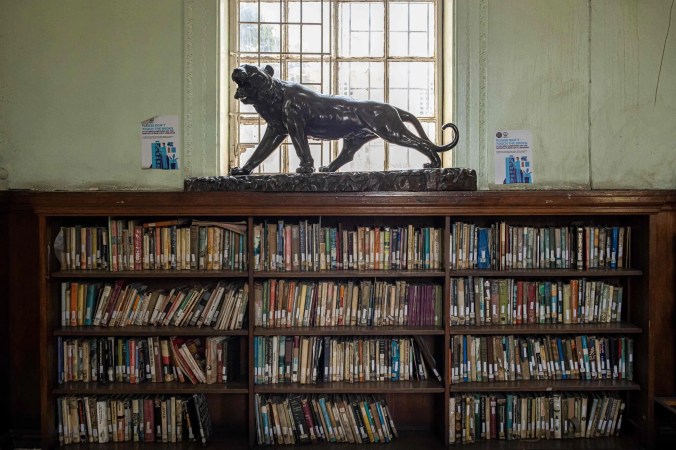
The archives of the McMillan Memorial Library are being digitized. Kenyans are also being invited to bring items such as photographs or letters to create an archive anchored in collective memory. Patrick Meinhardt/Agence France-Presse — Getty Images

Palace is a fine way to think about libraries, and Kenya has a movement to make this metaphor work:

Turning Nairobi’s Public Libraries Into ‘Palaces for the People’

A Kenyan nonprofit is restoring iconic public libraries, leaving behind a segregated past and turning them into inclusive spaces.

A project to preserve libraries such as this one is not a sprint or even a marathon, but a relay, said Lola Shoneyin, a Nigerian novelist. Patrick Meinhardt/Agence France-Presse — Getty Images

In 1931, the first library in Kenya’s capital, Nairobi, opened its doors — to white patrons only. Continue reading

UK Plant Prospecting & iNaturalist

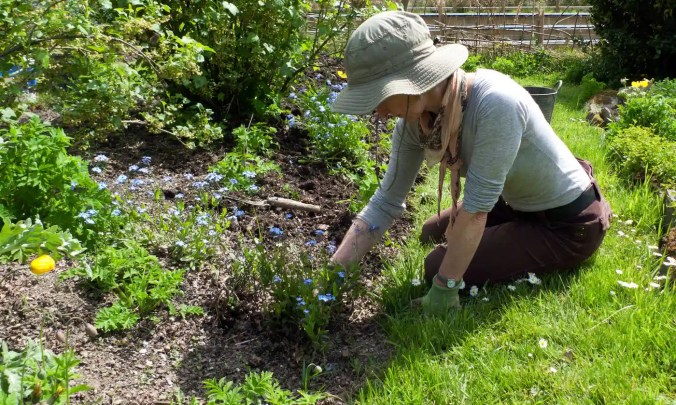
While once gardening was somewhat of a battle against nature, people are now working with native plants and animals. Photograph: Kathy deWitt/Alamy

We are happy to see citizen scientists putting this technology to such use anywhere, but particularly gratified to know that a large organization is encouraging its use for such an important initiative:

RHS asks gardeners to find interesting ‘weeds’ that may be rare plants

People urged to submit specimens to an app as private gardens may be fresh source of scientific discovery

Record the “weeds” that pop up in your garden because they could be a rare plant, the Royal Horticultural Society has said. Continue reading

Snowpack & Colorado River Recovery

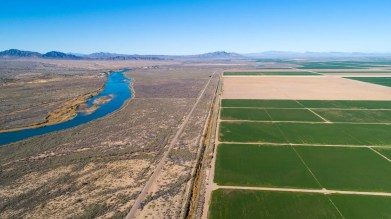
Among the arid lands where water from the Colorado River makes agriculture possible is the Colorado River Indian Tribes reservation, which serves Mohave, Chemehuevi, Hopi, and Navajo peoples. More than 70,000 acres of alfalfa, cotton, potatoes, and other crops are being produced on the reservation. (Image credit: Ted Wood/The Water Desk, CC BY-NC-ND 4.0)

The Colorado River holds our attention for many reasons, but mostly now due to climate impact. Our thanks to Bob Henson at Yale Climate Connection for this:

Wet winter won’t fix Colorado River woes

“One year of good flows doesn’t mean we have a trend,” noted one expert.

Snowpack has been running well above average this winter across the Colorado River watershed. It’s a rare bright spot after 23 years of grinding megadrought brought the driest conditions in 1,200 years to the basin that supplies 40 million people in Arizona, California, Colorado, Nevada, New Mexico, Utah, Wyoming, and Mexico. Continue reading

Seasonal King Tides

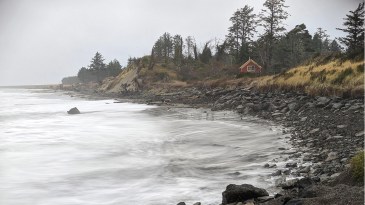
Washington’s seasonal king tides, shown here at Washaway Beach, are becoming more destructive as sea levels rise. Sarah Trent/High Country News

Our thanks to Sarah Trent, an editorial intern for High Country News based in southwest Washington, for the story and to Mother Jones for sharing it more broadly:

This Experiment Could Help Restore Eroding Coastlines

David Cottrell dropped $400 worth of rock on “washaway beach” to see what would happen. Now engineers are watching, too.

David Cottrell stood on what used to be a 14-foot-high cliff at the crumbled end of Blue Pacific Drive. Just a few years ago, this was the fastest-eroding shoreline on the US Pacific Coast; locals here in North Cove, Washington, dubbed it “washaway beach.” Continue reading

Collaborative Cataloging of Feathered Finery

Architect Esha Munshi and veterinarian Sherwin Everett, founders of the Feather Library

Over the years we talked about feathers from numerous perspectives, including scientific and artistic. Thanks once again to the Guardian for sharing this inspiring Citizen Science story.

Plucky idea: the feather library providing a visual A to Z of India’s birds

Finding a trapped silverbill during lockdown inspired Esha Munshi to create an invaluable record of species in an uncertain world

Esha Munshi, an architect based in Ahmedabad, has “breathed birds” as far back as she can remember. She has travelled all over India on birding trips and has, she says, spotted 1,060 of the 1,400 bird species in the country.

An Indian golden oriole feather, left, and white-throated kingfisher feathers

But it was at home, during the Covid-19 lockdown in 2020, that she saw an Indian silverbill caught in the protective netting on her balcony, attracting the attention of her cat. Although the bird escaped, some of its feathers were damaged. When Munshi saw the exquisite markings and patterns, she tried to identify the bird, but was struck by how little information there was online.

Continue reading

Seed Bank Futures

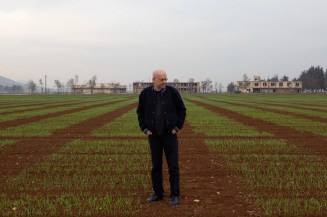
Hassan Machlab, a country manager with ICARDA in Lebanon, stands in the middle of a field with newly planted grains at the ICARDA research station, Dec. 21, 2022. Dalia Khamissy for NPR

Protecting plant species’ futures with seed banks grows greater in importance as time passes, because challenges to the planet multiply. We appreciate updates like this one by Ruth Sherlock and colleagues at National Public Radio (USA):

How ancient seeds from the Fertile Crescent could help save us from climate change

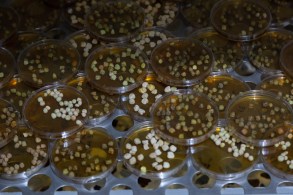
Chickpea grains are tested for various diseases at the ICARDA research station, Dec. 21, 2022. Dalia Khamissy for NPR

TERBOL, Lebanon — Inside a large freezer room at the International Center for Agricultural Research in the Dry Areas, tens of thousands of seeds are stored at a constant temperature of minus-4 degrees Fahrenheit. After being threshed and cleaned, the seeds are placed inside small, sealed foil packets and stored on rows of heavy, sliding metal shelves.

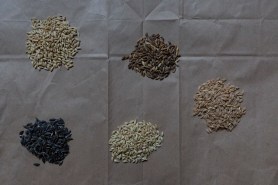
Barley grains stored at the ICARDA research station. Dalia Khamissy for NPR

Some of them may hold keys to helping the planet’s food supply adapt to climate change.

The gene bank can hold as many as 120,000 varieties of plants. Many of the seeds come from crops as old as agriculture itself. They’re sown by farmers in the Fertile Crescent region, where cultivation began some 11,000 years ago. Other seeds were deposited by researchers who’ve hiked in the past four decades through forests and mountains in the Middle East, Asia and North Africa, searching for wild relatives of wheat, legumes and other crops that are important to the human diet. Continue reading

New York Waters Are Clean Enough For Fun Again

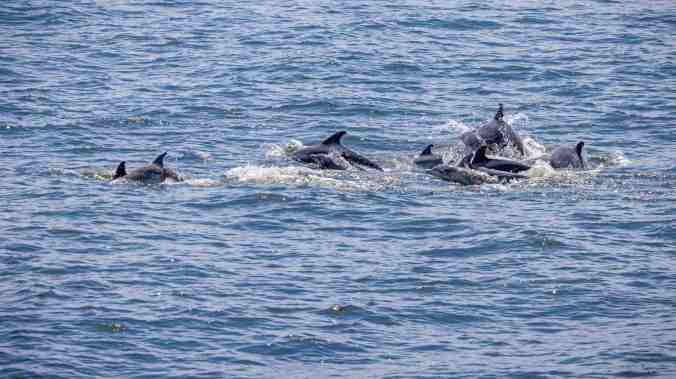
A pod of dolphins just outside New York harbor. Carsten Brandt/Getty

Our thanks to Oliver Milman, Mother Jones and the Climate Desk collaboration for this, and we hope the frolicking continues:

To New Yorkers’ Delight, Dolphins Return to the Bronx River

“We’ve come a long way.”

Dolphins have been spotted frolicking in New York City’s Bronx River, an encouraging sign of the improving health of a waterway that was for many years befouled as a sewer for industrial waste. Continue reading

The Remarkable Efficiency Of Heat Pumps, Explained

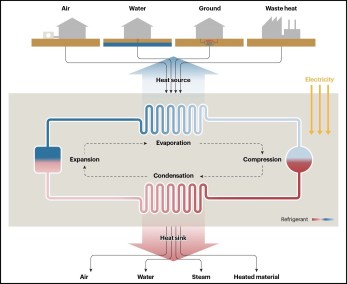
Heat pumps use electricity to compress a refrigerant, raising its temperature. IEA

Heat pumps have only been a passing reference occasionally in these pages, but today they are the focus, thanks to Paul Hockenos in Yale e360:

In Europe’s Clean Energy Transition, Industry Turns to Heat Pumps

With soaring gas prices due to the Ukraine war and the EU’s push to cut emissions, European industries are increasingly switching to high-temperature, high-efficiency heat pumps. Combined with the boom in residential use, the EU is now hoping for a heat pump revolution.

An industrial heat pump at the Mars Confectionery in Veghel, the Netherlands. GEA

The Wienerberger brickworks in Uttendorf, Austria, in the Tyrolean Alps, has always required a steady stream of 90 degree C (194 degree F) heat to dry its construction blocks. This process would have been an expensive proposition for the company after Russia cut gas exports to Europe, as it was for most of Europe’s energy-intensive construction industry. But four years ago, Wienerberger — the largest brick producer in the world — made an investment in the future that is now paying off: it replaced Uttendorf’s gas-fired boiler with an industrial-scale heat pump, which whittles the factory’s energy bill by around 425,00 euros a year. Continue reading

Good Chocolate

‘The only way to ensure that money is going into a farmer’s pocket is to buy directly from farmers.’

‘The only way to ensure that money is going into a farmer’s pocket is to buy directly from farmers.’ Illustration: Rita Liu/The Guardian

We have been avid readers on the topic of chocolate for almost as long as we have been sharing articles on this platform:

The sweet spot: is ethical and affordable chocolate possible?

It is possible to pay farmers a premium while selling single-origin chocolate at a cheaper price – but it means companies have to transform the way it’s made

Is it possible to make an ethical chocolate bar that’s also affordable? Tim McCollum, the founder of the bean-to-bar chocolate brand Beyond Good, says the answer is yes – but you have to transform the way it’s made. Continue reading

Aeon & The Rise Of Maize In Asia

On the outskirts of Kunming, the capital of Yunnan province in southwestern China, 6 November 2006. Photo by stringer/Reuters

Aeon was a regular source of excellent ideas and information during our first few years, and we are happy to see it again:

Maize is arguably the single most important crop in the world and is rivalled only by soybeans in terms of versatility. That said, it is, along with sugar cane and palm oil, among the most controversial crops, proving particularly so to critics of industrial agriculture. Although maize is usually associated with the Western world, it has played a prominent role in Asia for a long time, and, in recent decades, its importance in Asia has soared. For better or worse, or more likely for better and worse, its role in Asia seems to be following the Western script. Continue reading