Close The Hose Of Fossil Fuel Cash

Michael Mann, director of the Earth System Science Center at Pennsylvania State University, said fossil-fuel funding ‘has been used to compromise leading academic institutions’. Photograph: James Ross/AAP

Hats off to Michael Mann and colleagues for this determination:

Universities must reject fossil fuel cash for climate research, say academics

Open letter from 500 academics likens fossil-energy funding of climate solutions to tobacco industry disinformation

Universities must stop accepting funding from fossil fuel companies to conduct climate research, even if the research is aimed at developing green and low-carbon technology, an influential group of distinguished academics has said. Continue reading

Climate Forests

LET TREES
GROW
PROTECT THE CLIMATE

Last week’s epic essay by Bill McKibben in the New Yorker was followed up by his weekly newsletter, in which he mentions the organization above. Visit and see what they are doing. And the newsletter is a useful footnote to the essay:

…It argues that the time has come for us to end—after 200,000 years—the central place of combustion in human affairs, and rely instead on the fact there’s a flaming ball of gas hanging 93 million miles away in the sky. I won’t repeat the argument here, but I do want to extend it a little. Continue reading

Kenya’s Coffee Climbs

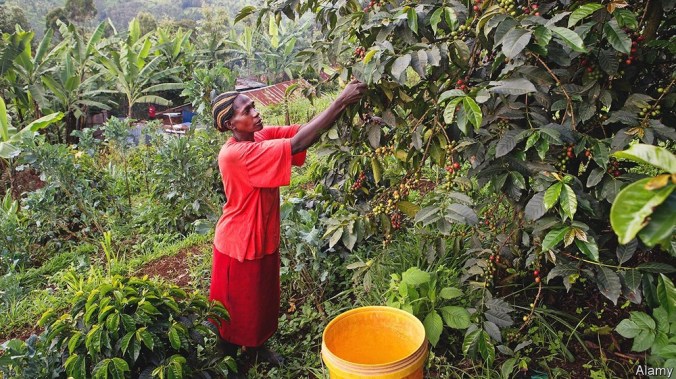
Coffee is climbing uphill in Kenya because the climate up there is more suitable. But there are no easy fixes to the climbing temperatures, for coffee or other crops. Hybrids and wild heirloom varietals had our attention already, and are mentioned in this article from the Middle East & Africa section of the Economist’s print edition under the headline “Hot coffee:”

Why global warming threatens east African coffee

Other cash crops including tea will also be affected

Jeremiah Letting learned about coffee from his father. As a child in the late 1980s, he worked on his family’s one-acre (0.4 hectare) coffee farm in the hills of Nandi county, western Kenya. The cycle ran like clockwork: cultivate, plant, ripen, harvest and sell. “Every year was the same,” he says. “It was timely.” Continue reading

The Force Of Law, On Top Of Information & Protest

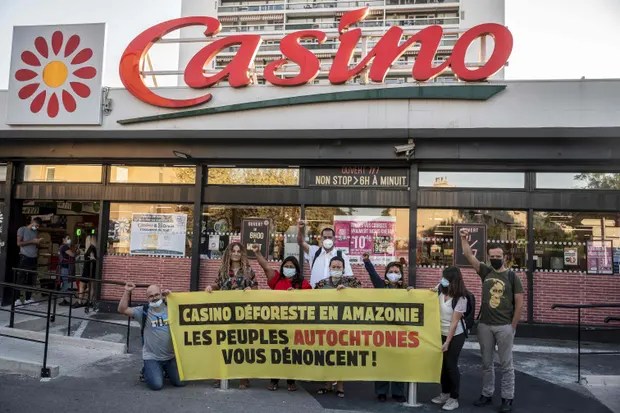
A protest in Marseille against the French supermarket chain Groupe Casino for allegedly selling meat products linked to deforestation. Photograph: Christophe Simon/AFP/Getty

What can we do when commercial interests damage our collective future? The identification of and protest against companies doing business in ways that cause environmental destruction are two important forces, but the force of law is another. Thanks to the Guardian for its ongoing coverage of these:

Legal eagles: how climate litigation is shaping ambitious cases for nature

Plans for an airport in the Tagus estuary have failed to take into account its impact on the wetlands, lawyers argue. Photograph: Handout

Environmental lawsuits are nothing new but now lawyers are turning their attention to cases that address the loss of biodiversity

The Tagus estuary near Lisbon is Portugal’s largest wetland, a vital habitat and stopover for tens of thousands of migratory birds, including flamingos, black-tailed godwits and glossy ibis. Continue reading

Maori Tree-Saving

Tourists visiting Tāne Mahuta, the largest known kauri tree, in Waipoua Forest in New Zealand. The tree is named for a god in Māori mythology. Ruth Mcdowall for The New York Times

A former kauri ambassador blowing a conch shell near Tāne Mahuta. There’s hope among advocates that Māori-led interventions have created enough time for scientists to save the kauri. Ruth Mcdowall for The New York Times

Thanks to Pete McKenzie for this story, How Maori Stepped In to Save a Towering Tree Crucial to Their Identity, in the New York Times:

Tāne Mahuta, an ancient tree named after the god of forests in Māori mythology, is threatened by the slow creep of an incurable disease.

WELLINGTON, New Zealand — In an ancient grove in northern New Zealand, the mighty conifer known as Tāne Mahuta, lord of the forest, is threatened by the encroachment of a deadly enemy. Continue reading

Stenophylla, A Coffee With Real Potential & Poster Child For Food Diversity

Our thanks to Dan Saladino, a food journalist and author of Eating to Extinction: The World’s Rarest Foods and Why We Need to Save Them as well as recipient of a James Beard Award for food journalism.

He offers an inside look at a relatively unknown coffee varietal with potential, and at the same time, an argument in favor of diversity, in his article Edible Extinction: Why We Need to Revive Global Food Diversity:

A Khasi farmer growing millet in Meghalaya, India.

A Khasi farmer growing millet in Meghalaya, India. NORTH EAST SLOW FOOD & AGROBIODIVERSITY SOCIETY

The Green Revolution helped feed a surging global population, but at the cost of impoverishing crop diversity. Now, with climate change increasingly threatening food supplies, the need for greater agricultural resilience means restoring endangered crop and food varieties.

Stenophylla beans up close. RBG KEW; KLAUS STEINKAMP / ALAMY

In August 2020, inside the cupping room of a London roastery, a team of botanists and baristas gathered to taste a coffee species that most believed had been lost forever. It was an important moment. Coffee experts had spent years searching in West Africa for the few remaining trees of this species, even issuing “wanted posters” to farmers asking if they had seen it. Continue reading

Plastic, The Gift That Keeps Giving

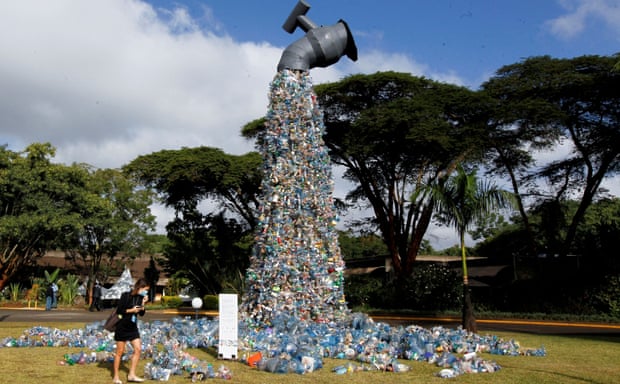
An artwork at the Nairobi summit venue by the artist Benjamin von Wong, made with rubbish from Kibera slum, urging people to ‘turn off the plastic tap’. Photograph: Monicah Mwangi/Reuters

We have endless opportunities to demonstrate leadership, thanks to plastic:

World leaders agree to draw up ‘historic’ treaty on plastic waste

UN environment assembly resolution is being hailed as biggest climate deal since 2015 Paris accord

World leaders, environment ministers and other representatives from 173 countries have agreed to develop a legally binding treaty on plastics, in what many described a truly historic moment. Continue reading

What Remains, A Documentary

In this short documentary film by Paavo Hanninen, with text by David Kortava, the director says “It’s kind of a tragic story of the herculean effort that’s required just to build 1.3 miles of coastline”:

Protecting Louisiana’s Coastline with Oyster Shells in “What Remains”

Paavo Hanninen’s documentary looks at a surprisingly simple intervention with the potential to slow runaway land loss along the state’s fragile coast.

As early as the nineteen-thirties, oystermen in southern Louisiana began to notice the shoreline that they worked was creeping inland. Continue reading

Trees’ Wondrous Capabilities

Diana Beresford-Kroeger at her home in Ontario. “If you build back the forests, you oxygenate the atmosphere more, and it buys us time,” she said. Nasuna Stuart-Ulin for The New York Times

Another round of thanks to Cara Buckley for a vividly written snapshot. Using Science and Celtic Wisdom to Save Trees (and Souls) is about one person’s multi-talented capacity to inspire us in new ways related to trees, and the patience it has required:

Diana Beresford-Kroeger, a botanist and author, has created a forest with tree species handpicked for their ability to withstand a warming planet.

MERRICKVILLE, Ontario — There aren’t many scientists raised in the ways of druids by Celtic medicine women, but there is at least one. She lives in the woods of Canada, in a forest she helped grow. From there, wielding just a pencil, she has been working to save some of the oldest life-forms on Earth by bewitching its humans. Continue reading

The Standing Rock Sioux Tribe Asks For Your Help

If you have been following the pipeline news stories and you care, but not yet found a way to get involved, the Standing Rock Sioux tribe offers you a simple first step to help them end the DAPL. Click on the DAPL EIS Countdown Alert signup image below to show support, by asking to be alerted when public comments open:

The Next Step to End DAPL

The fight to stop the Dakota Access pipeline isn’t over, and you can help right now! This month, the U.S. Army Corps of Engineers will take public comment on DAPL’s fatally flawed Environmental Impact Statement (EIS). Sign up to be first in line to tell the Corps to conduct a proper environmental review — without interference from the fossil fuel industry. We’ll let you know how to make your voice heard as soon as the comment period opens! Thank you for standing with Standing Rock.

New Technology For Anti-Poaching

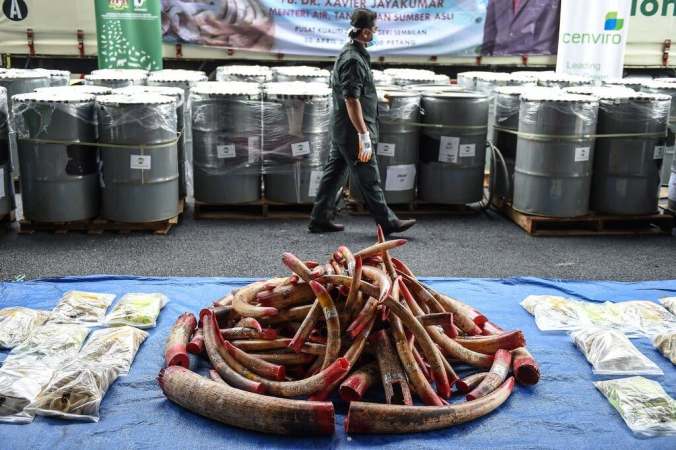
Seized ivory tusks before being destroyed at a waste management center in Port Dickson, Malaysia, in 2019. Mohd Rasfan/Agence France-Presse — Getty Images

Poaching has a puzzling array of culprits as well as victims, and many possible solutions. I have thought over the years that the Tiger Trail approach was replicable for this purpose. But genetic technology might scale more effectively. And with climate change overshadowing other crises, you might think this topic is past its prime, so read the comments section at the end of this article. Thanks to Catherine M. Allchin (how did we miss her prior work?) for this story, and please click through to read it in the New York Times:

It Helped Catch Serial Killers. Can It Stop Elephant and Wildlife Poachers, Too?

Scientists used a genetic investigation technique with the aim of helping turn the tide against illicit hauls of ivory and other animal parts.

Cambodian law enforcement officials received a tip from investigators in the U.S. Department of Homeland Security. Continue reading

Big Companies, Big Noise

(Original Caption) A man sitting atop a girder over the city is shown taking photos of the unfinished municipal building.

Bill Mckibben’s newsletter is one of the most efficient ways to stay informed on issues of interest to us in our daily posts on this platform. This week’s edition, titled Needs Improvement, is as good as any other recent edition. Consider subscription options that suit your budget by clicking the button, if you appreciate what you read below:

The Economic Giants Must Do Better than Meh

No one expects small businesses to be the leaders on climate change, though of course a noble handful are. It’s the giants—who have enormous brands to protect, and large margins to cover the cost of changing—that need to be out front. The ones with big ad campaigns with lots of windmills and penguins and cheerful shots of the smiling future. The ones who have made a lot of noise about ‘net zero.’ And how are they doing? Meh. Continue reading

More On, And From, Kim Stanley Robinson

“The Ministry for the Future” displays Robinson’s anti-anti-utopianism: its prognosis is both heartening and harrowing. Illustration by Deena So’Oteh

Thirteen months ago I first became aware of this author and this book. Four months ago Robinson showed up on my radar again. I still had not made time for his book. And two weeks ago, another reminder of how my time has and has not been employed, this time posed as a question: Can Science Fiction Wake Us Up to Our Climate Reality? I already feel quite awake to that reality, but the question is still of considerable interest.

Kim Stanley Robinson’s novels envision the dire problems of the future—but also their solutions.

Robinson at home in Davis, California. Much of his sci-fi could seem like nature writing, with the Sierra Nevadas—his “heart’s home”—recast as Mercury or Mars. Photograph by Jim McAuley for The New Yorker

Last summer, the science-fiction writer Kim Stanley Robinson went on a backpacking trip with some friends. They headed into the High Sierra, hiking toward Deadman Canyon—a fifty-mile walk through challenging terrain. Now sixty-nine, Robinson has been hiking and camping in the Sierras for half a century. At home, in Davis, California, he tracks his explorations on a wall-mounted map, its topography thick with ink. He is a devotee of the “ultralight” approach to backpacking and prefers to travel without water, instead gathering it along the way, from lakes and streams. Arriving at the canyon, with its broad, verdant floor cradled in smooth slopes of granite, he planned to fill his bottles with meltwater from the seven glaciers buried in its headwall. Continue reading

Nuclear Fusion’s Heat Feat

The interior of the JET, where an experiment generated 59 megajoules of heat, beating the 1997 record of 21.7 megajoules. Photograph: UKAEA

We have no expertise in this specific energy-related subject, but we know that new sources of energy are an important potential contributor to the reduction of global warming. So, we read this news about a new heat record from nuclear fusion as a qualified source of hope:

Nuclear fusion heat record a ‘huge step’ in quest for new energy source

Oxfordshire scientists’ feat raises hopes of using reactions that power sun for low-carbon energy

The prospect of harnessing the power of the stars has moved a step closer to reality after scientists set a new record for the amount of energy released in a sustained fusion reaction. Continue reading

Chile Has New Hands On Deck

The receding Santa Ines glacier in Seno Ballena fjord in Punta Arenas, southern Chile. Photograph: Martin Bernetti/AFP/Getty

Bringing experts into government does not sound like a news story, until you consider Chile. A country governed for decades by Chicago school economics–a strong invisible hand of market forces combined with a strong visible hand of military rule to keep leftists at bay–Chile’s most recent election led to some new hands in the governance picture.

With the climate crisis, Chile has an opportunity to set a new example for the world. The failure of markets until now to address a human-induced environmental catastrophe will be met with the combined force of expert scientific knowledge and public sector governance:

‘We need politicians and experts’: how Chile is putting the climate crisis first

President Gabriel Boric has brought renowned named climate scientist Maisa Rojas into government to help ensure a greener future

‘We need politicians and experts’: how Chile is putting the climate crisis first
President Gabriel Boric has brought renowned named climate scientist Maisa Rojas into government to help ensure a greener future

Hidden behind the Andes in a quiet corner of South America, a formidable generation of former student leaders are putting together one of the world’s most exciting progressive movements.

On 11 March, Gabriel Boric, 35, a tattooed leftist with a steely resolve to reform Chile from the bottom up, will become the country’s youngest ever president – and his green agenda is echoing across the world as time ticks away on an impending climate catastrophe.

“It is so exciting to see what these young people have done,” says Maisa Rojas, 49, a renowned Chilean climate scientist who has been named environment minister in a cabinet including several of Boric’s student protest generation. Continue reading

Volunteering For Town-Saving

The Ascutney ski resort once boasted 1,800 vertical feet of skiing on over 50 trails. When it closed for the last time in 2010, it was a crushing blow to the town of West Windsor. Caleb Kenna for The New York Times

Volunteers inspire more volunteerism, so here is another story about a community volunteering to save its own future, thanks to David Goodman and the New York Times for A Town That Saved a Mountain, and a Mountain That Saved a Town:

At the heart of the mountain’s revival is Ascutney Outdoors, a nonprofit with over 100 volunteers that now runs recreation on the mountain. Caleb Kenna for The New York Times

After the Ascutney ski resort in Vermont closed because of erratic snowfall and mismanagement, it threatened to take with it the nearby town of West Windsor. The community took the situation into its own hands.

Jim Lyall briskly skied up Mount Ascutney, eagerly pointing out the view. We were skinning up a ski area in southern Vermont, but the chairlifts are long gone. At the top of the mountain we arrived at an abandoned ski patrol cabin and lift station. A cold breeze whipped through the deserted structures. It had a ghostly, post-apocalyptic feel. Continue reading

Palm Oil Potential

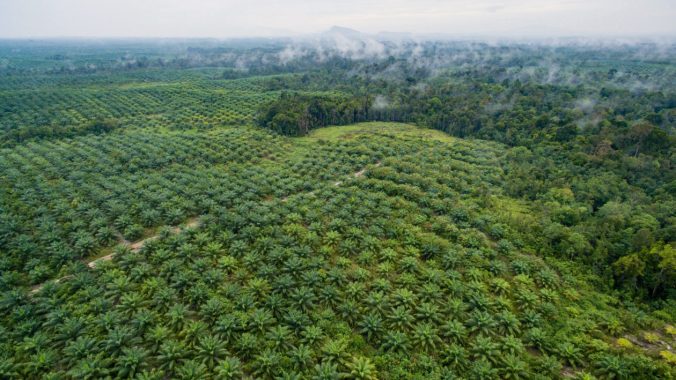
An oil palm plantation encroaches on a rainforest in West Kalimantan, Indonesia. NANANG SUJANA / CIFOR

Palm oil’s problems, and potential solutions have been catalogued in these pages many times. In this recent story by James Dinneen, writing again for Yale Environment 360, a new potential solution is explored:

Can Synthetic Palm Oil Help Save the World’s Tropical Forests?

Christopher Chuck, a chemical engineer at the University of Bath, is working to produce yeast able to generate more oil from cheaper feedstocks. UNIVERSITY OF BATH

Numerous startups are creating synthetic palm oil in the lab, hoping to slow the loss of tropical forests to oil palm cultivation. But palm oil is the most widely used vegetable oil, and producing a synthetic version on a large scale remains a daunting challenge.

Tom Jeffries and Tom Kelleher met at Rutgers University in the 1970s while studying industrially useful microbes. Jeffries went on to run a yeast genomics program at the U.S. Department of Agriculture; Kelleher spent decades in the biomedical industry, working with biologics like insulin, which are produced by genetically modified microbes in giant, fermenting vats. Continue reading

Big Win On Climate, Says McKibben

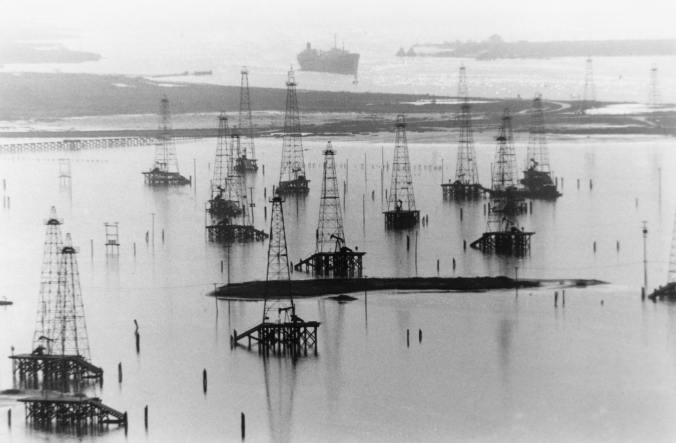
Early offshore action in Texas. the rigs are bigger now—so big that a federal court found yesterday that they’re endangering the climate.

His first book was an early harbinger that we wish had changed the world. Now, decades later, his newsletter is worth subscribing to. When Bill McKibben says something has gone right, we cannot wait to read it:

Something went right!?

Through no fault of its own, Biden’s team gets a big win on climate

Last summer the Biden administration granted the largest set of offshore oil leases in American history. The ironies abounded—Biden had insisted during his campaign that he would not be doing this (“And by the way, no more drilling on federal lands, period. Period, period, period,” he’d explained during the New Hampshire primary); it was the Interior Department that officially sold the leases, headed by a secretary, Deb Haaland, that environmentalists had fought like crazy to get confirmed. Continue reading

Hargila


“Hargila” Film Documents India’s Grassroots Effort to Save the Endangered Greater Adjutant Stork

A new film by the Cornell Lab of Ornithology’s Center for Conservation Media tells the story of a wildlife photographer who travels to India intent on documenting the rarest stork on earth, but soon discovers a conservation hero and her inspiring efforts to rally a community to save it. Hargila documents the Greater Adjutant, a huge scavenging stork that was once widely distributed across India and Southeast Asia but is now mostly confined to a last stronghold in Assam, with small populations persisting in Cambodia’s northern plains region. Greater Adjutants are called “hargila” in the Assamese language, which literally translates as “bone swallower.” Continue reading

Carless Berlin

A cyclist in Berlin, Germany.

A cyclist in Berlin, Germany. HENDRIK WIEDUWILT VIA FLICKR

Thanks to Yale E360 for Berlin Looks to Create Car-Free Zone Larger Than Manhattan, a snapshot of the city’s fewer cars campaign, with links to further details in related stories by the Guardian and Fast Company:

Berlin’s regional parliament is considering creating a car-free zone in the German capital in response to a concerted push from a local advocacy group. Continue reading