Keep Peat In Place

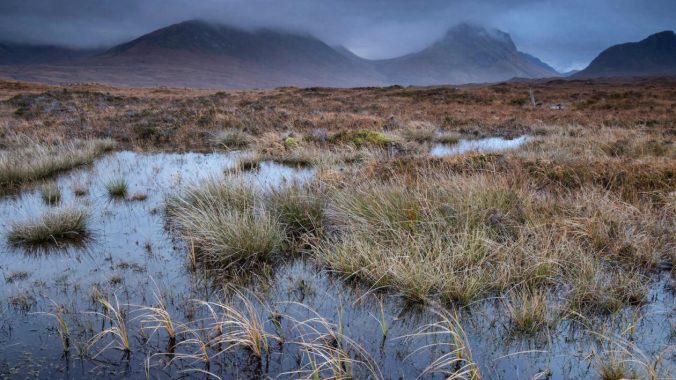
Peat bogs on the Isle of Skye, Scotland. ALAN NOVELLI / ALAMY STOCK PHOTO

Peat made two appearances in our pages in 2014, both underscoring the importance of this type of landscape for storing carbon. More such stories in 2017 and again last year made it clear how the case has been building over the years:

Why Saving World’s Peatlands Can Help Stabilize the Climate

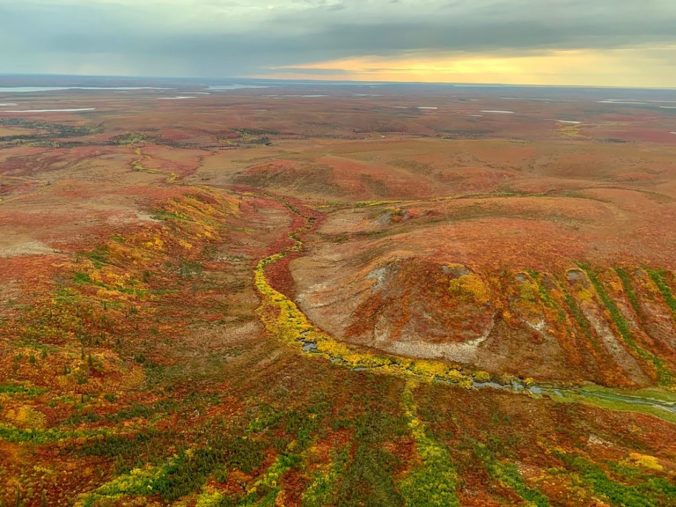
Peatlands make up 3 percent of the earth’s landscape, yet absorb large amounts of carbon and harbor surprising biodiversity. Although peat bogs and fens are under increasing environmental threat, efforts to protect and restore these ecosystems are gathering momentum.

Peatlands in northern Canada’s Mackenzie Valley, seen here in autumn. ED STRUZIK

The Aweme borer is a yellowish-brown moth with an inch-and-a half wingspan. In the often-colorful world of lepidopterology — the study of moths and butterflies — it’s not particularly flashy, but it is exceedingly rare. For decades, entomologists thought the moth lived in the sand dunes and oak savannahs in southern Manitoba and the Great Lakes region. Continue reading
Goats’ Appetites Put To Work

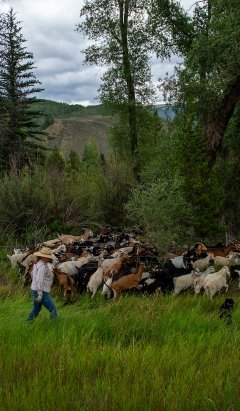
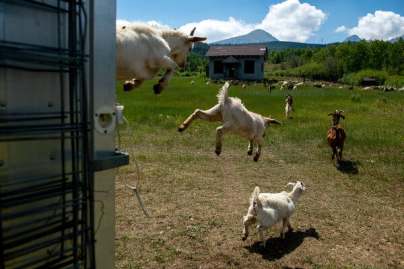
Goats made their first appearance in our pages as a matter of pure visual fun. Then there were several in a row that touched on companionship as well as culinary aspects. Finally one treated goats as workers.  That was five years ago. Today Coral Murphy Marcos tells the story, with photographs by Amanda Lucier, about a family, plus one intern, at the cutting edge of fighting fire with appetite:

The Unconventional Weapon Against Future Wildfires: Goats

When megafires burn in unison and harsh droughts parch the West, local governments, utilities and companies struggle with how to prevent outbreaks, especially as each year brings record destruction.

Carrying an unconventional weapon, Ms. Malmberg travels the American West in an Arctic Fox camper, occupying a small but vital entrepreneurial niche.

Ms. Malmberg, 64, is a goat herder and a pioneer in using the animals to restore fire-ravaged lands to greener pastures and make them less prone to the spread of blazes. Continue reading

Gerald Durrell, The Stationary Ark, And A 2021 Maverick

Gerald Durrell, somehow, has escaped mention in 11,281 previous posts over the last decade+ on this platform. Today is the day to begin correcting that oversight. His novelist brother Lawrence is worthy of his own post here another day. And the family name was recently popularized on television. While Gerald’s own legacy is not easy to categorize, a good starting point is to look at Durrell Wildlife Conservation Trust and his related conservation work. Books are a big part of the legacy and the one to the right has had a tangible influence:

An Ark for Vanished Wildlife

Derek Gow’s maverick efforts to breed and reintroduce rare animals to Britain’s countryside.

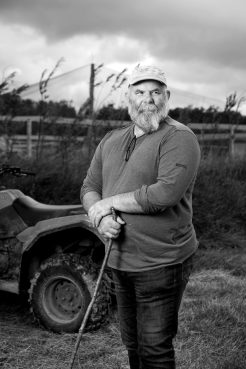
Derek Gow wants his farm to be a breeding colony, a seedbed for a denuded island. Photograph by Jonny Weeks / eyevine / Redux

Derek Gow decided to abandon conventional farming about ten years ago, not long after the curlews left. At the time, Gow, who is thickset and white of beard, had a flock of fifteen hundred breeding ewes and a hundred and twenty cows, which he kept on a three-hundred-acre farm of heavy clay close to the border between Devon and Cornwall, in southwest England. He was renting an extra field from a neighbor, and a pair of curlews had come to forage for a few days. A farm worker spotted the distinctive brown birds; they have long beaks that slope downward, like violin bows. “He didn’t even recognize what they were,” Gow told me.

Curlews are Europe’s largest wading bird. Continue reading

A Bit Of Merlin’s Backstory

Heather Wolf. Illustration by João Fazenda

Five years ago David Owen wrote a short article that fit well with the recycling and upcycling themes we frequently cover so we linked to it. Since then his writing caught my eye again on a related theme, and then earlier this year wrote one of my favorite profiles of recent years. This week I am drawn to his work again. Seth first introduced us to Merlin, after his three years working at the Lab of Ornithology. Merlin has been improving, and we have given it a few more looks since then. But today I am happy to learn more about the app’s backstory:

Meet Merlin, the Bird-Identifying App

How Heather Wolf, a part-time juggling impresario, turned her birding habit into an app that pegs species—even on the Brooklyn Bridge—using both images and birdsong.

Heather Wolf earned a degree in sociology at U.C.L.A., then spent six years playing electric bass in a travelling band. She earned a master’s degree in information science, moved to Brooklyn, and worked as a software developer for a company based in Manhattan. Continue reading

Alternative Incentives For Living With The Rainforest

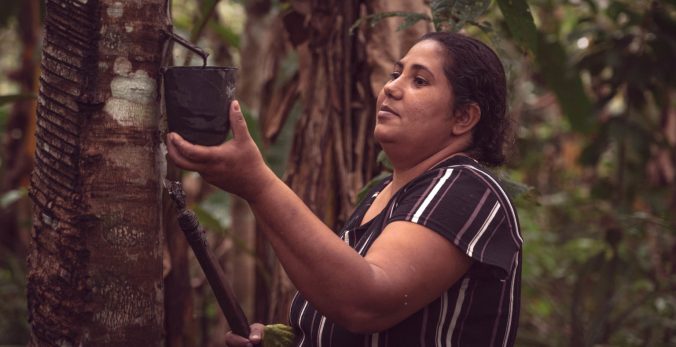
Eliane Lima Oliveira, 30, learned how to collect rubber with her family of traditional rubber tappers

We have been neglecting excellent reporting in the Food & Environment Reporting Network over the last four years. Here is a good correction to the oversight. Our orientation to entrepreneurial conservation makes us cheer this on:

Can fashion help small farmers preserve the Amazon?

Many downplay capitalist solutions to conservation. But they could spark the wealth transfer needed to save the world’s largest rainforest.

By Brian Barth and Flávia MilhorancePhotography by Flávia Milhorance

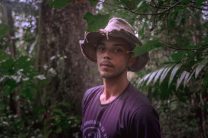
Small farmer and rubber tapper, Rogerio Mendes, 23: “I have an inexplicable feeling inside the forest. Because it’s a feeling of happiness, but with agony and concern.”

On a rainy March afternoon, Rogério Mendes strides through the dripping vegetation of a tract of virgin Amazonian forest and stops at a tree with scars arranged in neat diagonal rows across its trunk. From his back pocket he produces a wood-handled tool with a blade on one end, called a cabrita, and cuts another diagonal line though the bark, beneath the others. A milky white goo—raw liquid latex—begins to trickle down this tiny canal and into a metal pail below. Continue reading
Smart People Do Smart Things, Sometimes Very Late

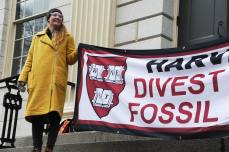
BREAKING: After a decade of constant pressure by students, faculty, and alums,
@HARVARD
IS FINALLY DIVESTING FROM FOSSIL FUELS.

While Rupert Murdoch is not even worthy of the “too little too late” moniker, Harvard University is worthy of “better late than never:”

Triumph! Harvard Finally Divests From Fossil Fuel

The richest university in the world capitulates after a decade of activism

The end came, as ends often do, quietly: at midafternoon today Harvard president Larry Bacow released a letter to Harvard students, faculty, and alumni. He didn’t use the word ‘divestment’–that would have been too humiliating–but he did say that the richest university on earth no longer had any direct investments in fossil fuel companies, and that its indirect investments through private equity funds would be allowed to lapse. “HMC has not made any new commitments to these limited partnerships since 2019 and has no intention to do so going forward. These legacy investments are in runoff mode and will end as these partnerships are liquidated.” Continue reading
Orca On

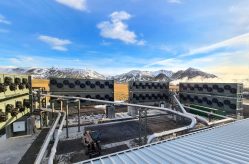
The video above is the shortest, clearest primer we could find to explain how this machine technology works. With Orca now on we will get the chance to see how much promise this process holds for carbon capture’s machine approach versus the tree approach, which we now know needs some reconsideration:

World’s biggest machine capturing carbon from air turned on in Iceland

Operators say the Orca plant can suck 4,000 tonnes of CO2 out of the air every year and inject it deep into the ground to be mineralised

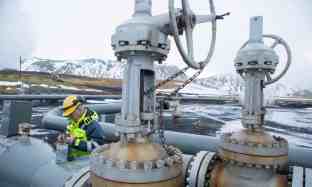
A worker on a CarbFix carbon injection well in Iceland in 2017. The company is involved in the new Orca plant designed to draw carbon dioxide out of the air and store it as rock. Photograph: Christian Science Monitor/Getty Images

The world’s largest plant designed to suck carbon dioxide out of the air and turn it into rock has started running, the companies behind the project said on Wednesday.

The plant, named Orca after the Icelandic word “orka” meaning “energy”, consists of four units, each made up of two metal boxes that look like shipping containers.

Constructed by Switzerland’s Climeworks and Iceland’s Carbfix, when operating at capacity the plant will draw 4,000 tonnes of carbon dioxide out of the air every year, according to the companies. Continue reading
Restor & Correcting The Trillion Tree Mess

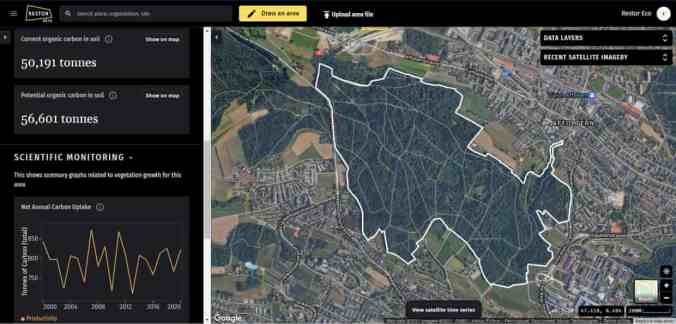
Crowther says Restor is his ‘life’s vision’, mapping the latest data and thousands of conservation projects. Photograph: Courtesy of Restor

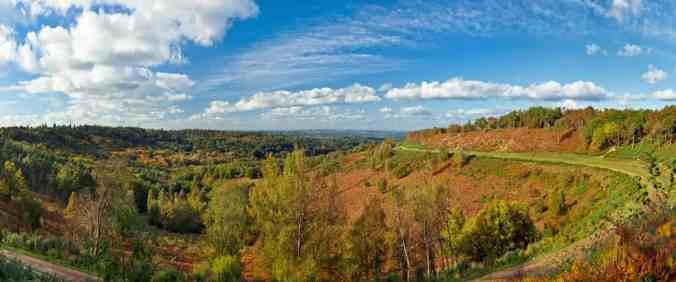
I have been on a tree-planting spree in the last couple years. So I am constantly on the lookout for resources that help me see this work in a larger context. Here is a great one I have just learned about. Restor’s macro-level organizing of conservation through geographic information systems requires skills and ambitions that few have in such capacity as the scientist featured in the following story. Maps like the one shown above are less inspirational, but more powerful in other ways, than scenes of effective restoration like the one below.

The former A3 London to Portsmouth road at Hindhead, after being restored back to heathland. Photograph: Tony Watson/Alamy

T. W. Crowther has featured in our pages for years, starting with our link to his work on how many trees are on our planet and what this implies with regard to climate. We lunged forward to share the idea that planting a trillion trees was the key implication, and also lurched back a bit when it seemed worthy of more consideration. This article does much to clear up “the mess” that Mr. Crowther acknowledges resulted from the trillion tree findings, and which I was captivated by:

‘I’ve never said we should plant a trillion trees’: what ecopreneur Thomas Crowther did next

Thomas Crowther understands more than most the danger of simple, optimistic messages about combating the climate crisis. Continue reading
Balancing Power On Climate

The main way to counter the malign power of vested interest is to meet organized money with organized people. Photograph by Nicole Neri / Bloomberg / Getty

For the entire run of his newsletter McKibben made this point over and over again, and now one final time from his unique platform at the New Yorker:

The Answer to Climate Change Is Organizing

Dealing with global warming is always going to be about the balance of power.

Amore personal note than usual this week, because this will be the last of these Climate Crisis columns I’ll write (though it’s not the end of my work for the magazine). I’m incredibly grateful to The New Yorker for letting me do them—and especially thankful for Virginia Cannon, who has edited them each week with grace and aplomb. Our run has overlapped almost perfectly with the course of the pandemic, and for me it’s been the perfect moment to sit back and appreciate and highlight the work of so many across the wide universe of activists, scientists, economists, and politicians who are taking on the deepest problem that humans have ever wandered into. I can’t overstate the comfort of that universe: it didn’t exist thirty-two years ago, when I started writing about climate change; its slow but inexorable rise has given me not just welcome company but real hope. I’ve particularly enjoyed “passing the mic” to many members of that gathering throng. Continue reading
Romania’s Carpathian Mountains, Forever

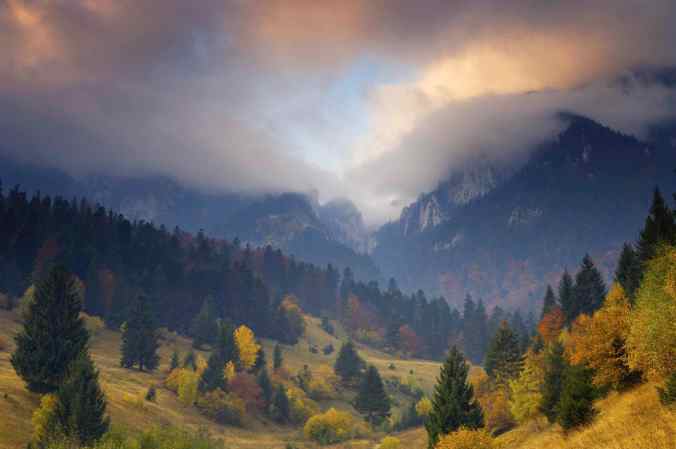
Rock of the King, NP Piatra Craiului, Transylvania, Southern Carpathian, Romania

The word Carpathian appears, to my surprise, only once in a post before today. Likewise Romania is underrepresented except in passing, and was the focus of just one post, five years ago in our pages. Today I will correct the oversight.

FOUNDATION CONSERVATION CARPATHIA
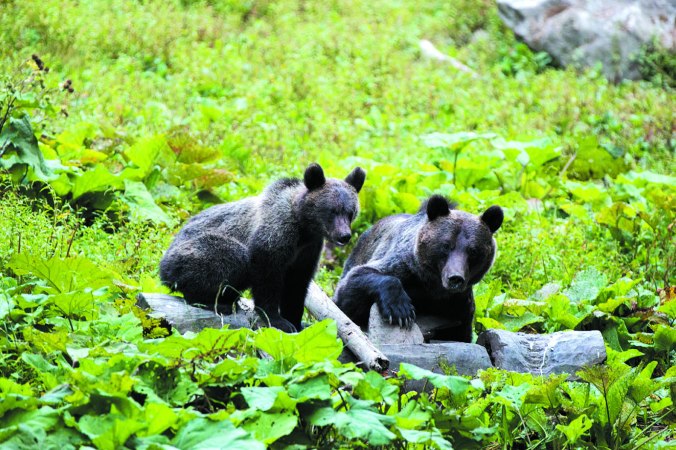
Bears in the Southern Carpathian Mountains, Romania.

It is surprising because after I was exposed to the idea of rewilding, I started receiving The European Nature Trust’s newsletter. Frequently the newsletter highlights one of the projects they support, in Romania’s Carpathian Mountains. I have been admiring the photographs for years now, and silently supporting TENT’s joint mission with the FCC. Silent no more. Let’s all actively support the Carpathian Mountains of Romania being there forever, intact:

DANIEL ROSENGREN
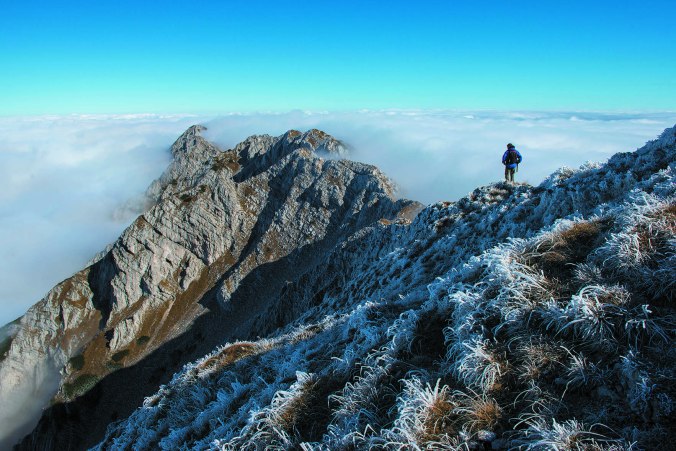
A frosty morning in the Piatra Craiului National Park, Romania.

TENT is committed to the protecting and restoration of Romania’s natural resources through supporting Foundation Conservation Carpathia.

Romania has 250,000 hectares of virgin forest, mostly in the Southern Carpathians, which constitutes the largest unfragmented forest area in Europe. They contain an extraordinarily high number of indigenous species, one third of all European plant species and are home to the largest European populations of large carnivores. Continue reading
A Taste Of Matthew Raiford’s Heritage

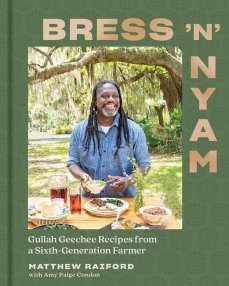
The last food book we featured was not a cookbook, but had plenty of food for thought. Thanks to the Kim Severson (again, after a couple years of our not seeing her work) for bringing Matthew Raiford, his family heritage, his farm and his cookbook to our attention in her article: A High-Summer Feast to Forge Connections in the Deep South. And if time is short, click through just for the exceptional photography:

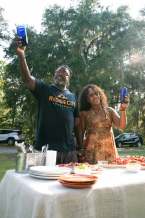
Rinne Allen for The New York Times

Matthew Raiford swore he’d never return to his family farm in coastal Georgia. But in breaking that vow, he found a sense of community worth celebrating with a lavish spread.

BRUNSWICK, Ga. — It’s not a stretch to say there may have never been a party for a cookbook like the one Matthew Raiford threw on his family farm a few weeks ago.

Rinne Allen for The New York Times

The book’s title is “Bress ‘n’ Nyam” — “bless and eat” in the English-based Creole spoken by the Gullah Geechee people who live along the coasts of the Carolinas, Georgia and northern Florida. Their ancestors were captured in West Africa and enslaved. Nowhere else in America has the cultural line from Africa been better preserved. (Mr. Raiford’s people call themselves freshwater Geechee, which means they are from the mainland of coastal Georgia. Saltwater Geechees are from the barrier islands.) Continue reading
Carbon Capture Closer

Fans draw air into Climeworks’ direct air capture plant in Zurich, Switzerland. CLIMEWORKS

Our thanks as always to Jon Gertner for this news.  Combining capturing carbon with other goals is not new, but it has been goal-setting elusive of significantly robust results; we are getting closer:

The Dream of Carbon Air Capture Edges Toward Reality

Next month, an industrial facility in Iceland will join a growing number of projects to remove CO2 from the air and put it underground. But major hurdles, including high costs, remain before this technology can be widely deployed and play a key role in tackling climate change.

Climeworks’ Orca plant under construction near Reykjavik, Iceland. CLIMEWORKS

In early September, at an industrial facility located about 25 miles southeast of Reykjavik, Iceland, the Swiss company Climeworks will mark the opening of a new project named “Orca.” At least in a conventional sense, Orca doesn’t actually make anything. It is comprised of eight elongated boxes that resemble wood-clad tanks. Each of these boxes — known as “collectors” — is roughly the size of a tractor trailer, and each is festooned with 12 whirring fans that draw a stream of air inside. Within the collectors, a chemical agent known as a sorbent will capture CO2 contained in the air wafting through. Continue reading

Whales’ Future, Our Future

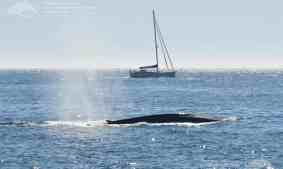
Whale stories have been in our pages on a regular basis over the last ten years not only because of their charisma. Because of how long they have been on the planet, their future should matter to mankind. The biggest of the species hiding in plain sight is increasingly spotted in ancestral waters, which seems like good news, but read on:

Blue whales returning to Spain’s Atlantic coast after 40-year absence

Some experts fear climate crisis is leading creatures back to area where they were hunted almost to extinction

The creatures may have returned to Galicia out of a form of homesickness, or ancestral memory. Photograph: Bottlenose Dolphin Research Institute

Blue whales, the world’s largest mammals, are returning to Spain’s Atlantic coast after an absence of more than 40 years.

The first one was spotted off the coast of Galicia in north-west Spain in 2017 by Bruno Díaz, a marine biologist who is head of the Bottlenose Dolphin Research Institute in O Grove, Galicia. Continue reading

Greeley’s Conundrum

Thanks to Matthew Daly and PBS Newshour (USA) for this story:

Booming Colorado town asks, ‘Where will water come from?’

GREELEY, Colo. (AP) — “Go West, young man,” Horace Greeley famously urged.

The problem for the northern Colorado town that bears the 19th-century newspaper editor’s name: Too many people have heeded his advice.

By the tens of thousands newcomers have been streaming into Greeley — so much so that the city and surrounding Weld County grew by more than 30% from 2010 to 2020, according to the U.S. Census Bureau, making it one of the fastest-growing regions in the country.

And it’s not just Greeley. Continue reading
Sri Lanka Energy Progress

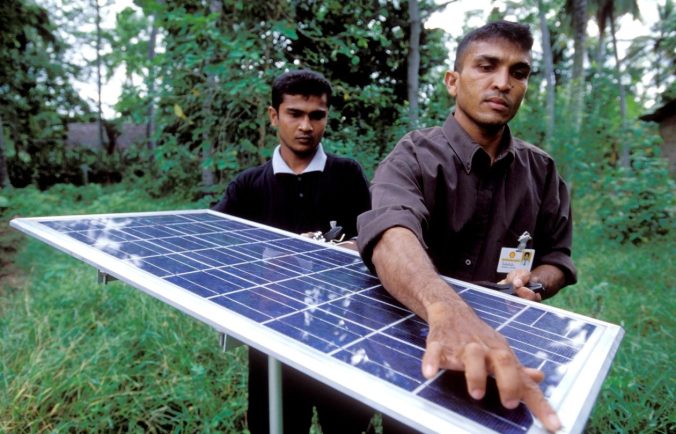
A solar installation in Sri Lanka. DOMINIC SANSONI / WORLD BANK VIA FLICKR

Thanks to Yale e360 for this news from our old neighborhood:

Sri Lanka Pledges No New Coal, Makes Push Into Rooftop Solar

In its latest climate plan, Sri Lanka is ruling out new coal power and aiming to reach 70 percent clean electricity by 2030, an important milestone on its way to reaching its goal of a carbon-neutral electricity generation system by 2050, Climate Home News reported. Continue reading
Bioluminescent Distractions

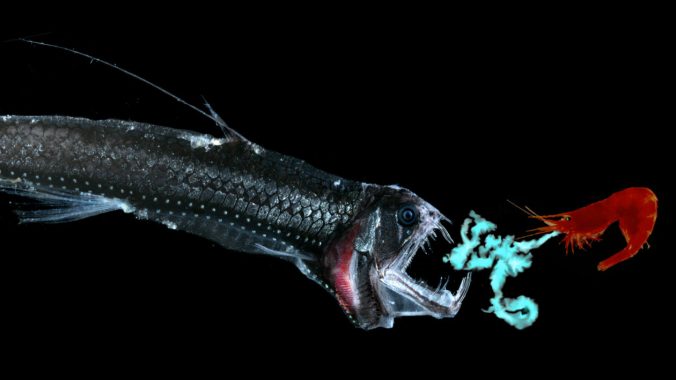
A deep-sea shrimp spews bioluminescent chemicals at its predator, a viperfish. EDITH WIDDER

Nothing like bioluminescence to take your mind off of other things for a while. Thanks to Yale e360 for this:

A Scientist Reveals the Bioluminescent Magic of the Deep-Sea World

In an interview with Yale Environment 360, marine biologist Edith Widder talks about her pioneering research into the world of bioluminescent organisms in the deep oceans and warns of the dangers, from trawling to oil drilling, that imperil this hidden realm.

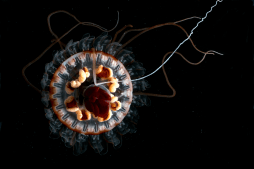
Atolla vanhoeffeni, a bioluminescent deep-sea jellyfish. EDITH WIDDER

Until recently, the depths of the world’s oceans remained almost entirely unexplored. But advances in submersible technology are increasingly giving scientists a window into this little-known universe. One of the leaders in this exploration is marine biologist Edith Widder, who has extensively studied bioluminescent, or light-producing, organisms that use this trait to communicate, defend themselves, and hunt in darkness. Among other things, Widder has worked with engineers to develop highly sensitive deep-sea light meters and special cameras, like the remotely operated Eye-in-the-Sea, which allow for real-time monitoring of the seafloor. Continue reading
Know Where Your Coffee Comes From

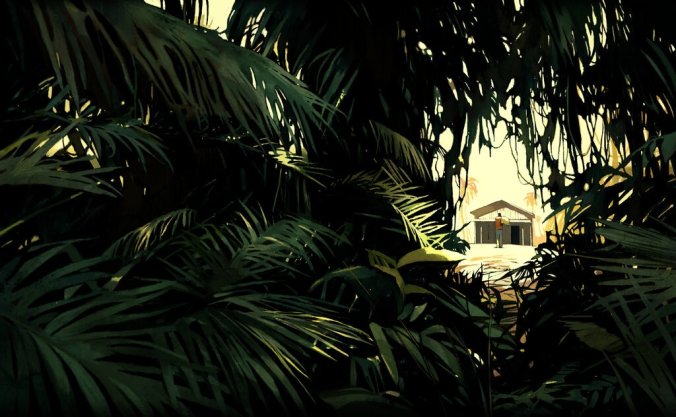
Illustrations by Hokyoung Kim

Most of the coffee stories I tell here are short reports on our efforts to regenerate a onetime coffee farm. Plenty of others we link to are about challenges facing coffee farmers and efforts to improve their lot . I cannot find a story like the one below that we have featured previously, where coffee farming is effectively undermining conservation. Reading this new longform work by Wyatt Williams will not make anyone happy, but that must be the point. The illustrations by Hokyoung Kim are a perfect accompaniment:
The Case of the Vanishing Jungle

It seemed like an easy crime to stop: protected Indonesian rainforest, cut for coffee farms. But a globalized economy can undermine even the best-laid plans.

In the fall of 2015, Matt Leggett, a newly hired senior adviser for the Wildlife Conservation Society, found himself sitting in a meeting in Jakarta, Indonesia, wondering if someone had missed the point. The meeting, as he remembers it, was meant to unveil some good news about tigers. In brief: Back in 2002, a survey of one of the last habitats of the critically endangered Sumatran tiger, Bukit Barisan Selatan National Park, showed a tiger population that, in biologist-speak, amounted to only 1.6 tigers per 100 square kilometers. Continue reading
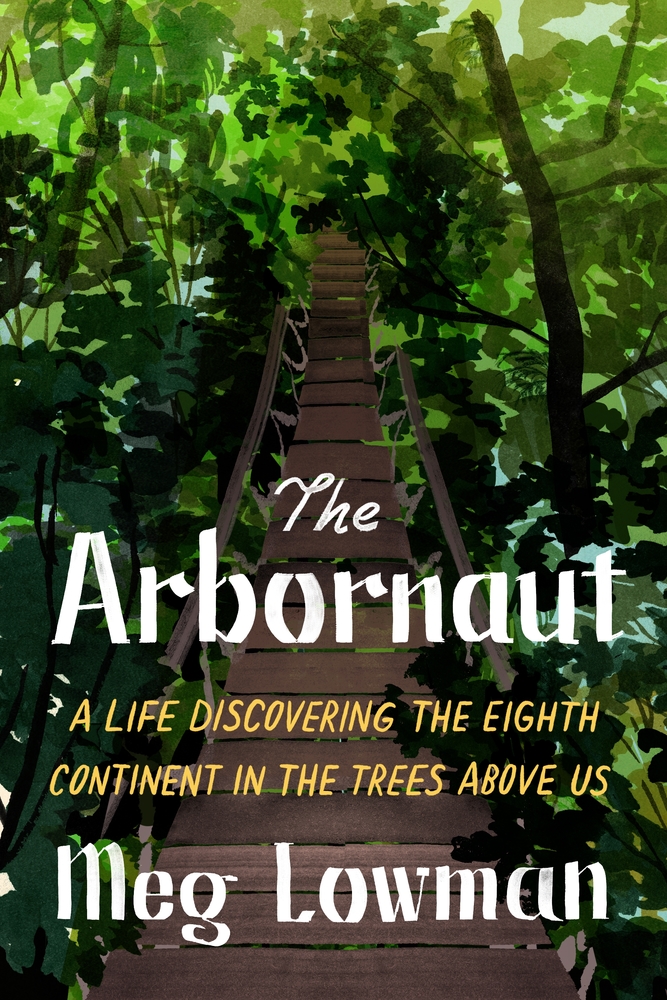
The Arbornaut

The author has been featured in these pages multiple times over the years. The publisher makes it easy to find an option that suits your shopping preferences (our preference is obvious). Her new book has received plenty of praise, according to an email she sent us:
Readers everywhere will be fascinated and inspired to learn more about nature, and especially about how we need to conserve the world’s forests.” ―Jane Goodall, PhD, DBE, founder of the Jane Goodall Institute, and United Nations Messenger of Peace Continue reading

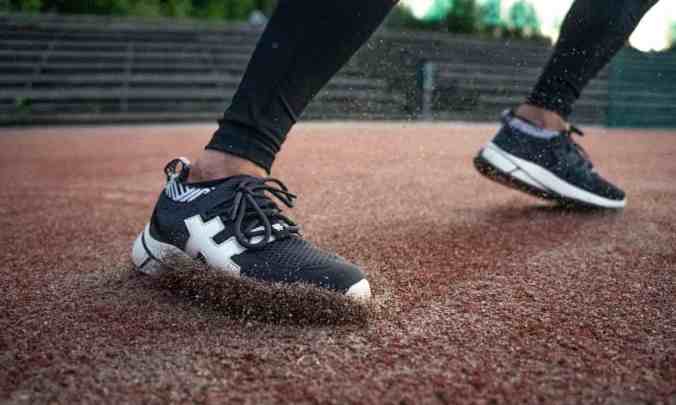
Coffee & Plastic, Second Shift Footwear

The company said the shoe, called Nomad, will be made from coffee waste and recycled bottles, while recycled polyester will be used to create the membrane to make the footwear waterproof. Photograph: c/o Rens

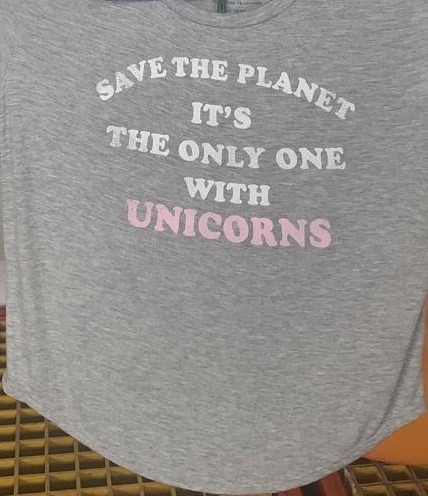
There is nothing particularly remarkable about the idea of using coffee bags a second time. But it was fun realizing how easy it is, and just doing it. Less easy and maybe lots more fun is the idea in the article below. Hats off to the creative founders who chose this path instead of chasing Silicon Valley unicorns (perhaps their success will demonstrate that unicorns thrive on a healthy planet, as expressed in this t-shirt I saw recently):
Firm seeks funding for ‘performance sneakers’ made from coffee waste

Finnish firm Rens says shoes made from used grounds and recycled plastic will be climate neutral

It is the typical morning routine for hundreds of thousands of Britons: have a cup of coffee and then slip on your trainers before heading for a jog. Upon returning, a quick drink of water to rehydrate before stepping into the shower.

Now, one firm has enabled one thing to beget another, by creating trainers made of recycled plastic bottles and used coffee beans.

Finnish footwear firm Rens launched an online fundraising campaign for its latest sustainable trainer on Tuesday, which it claims will be climate neutral in its production, packaging and transport. Continue reading

Nature, Intervention & Protection

Discovery inspires.

Participation motivates.

Discovery + Participation + Organization =

Results

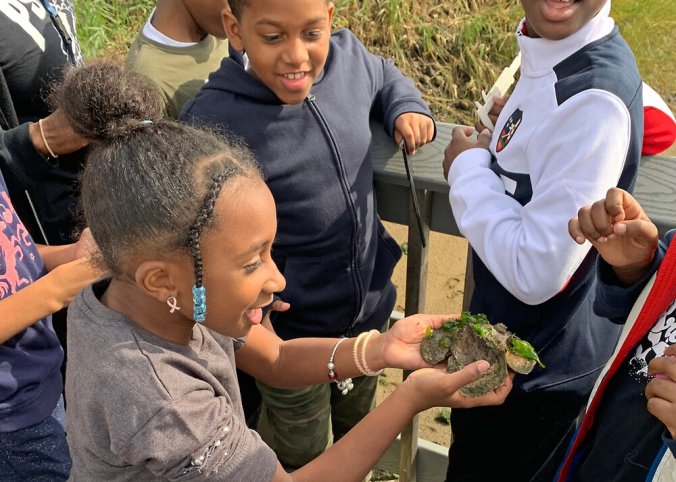
Click any of the images above to go to the website of this organization featured once before in our pages and now again in the article below. It will make more sense after reading the article. But do visit the site and consider volunteering. Take some kids along.

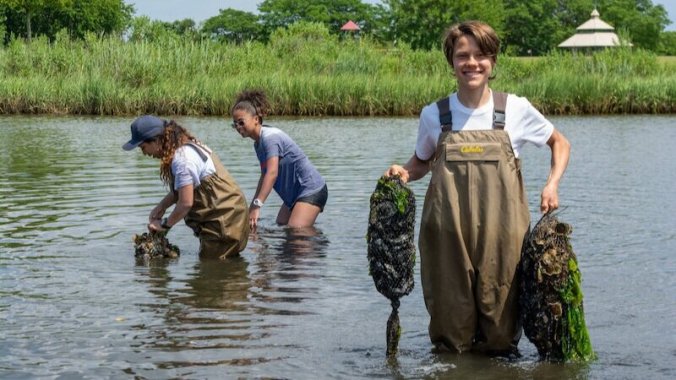
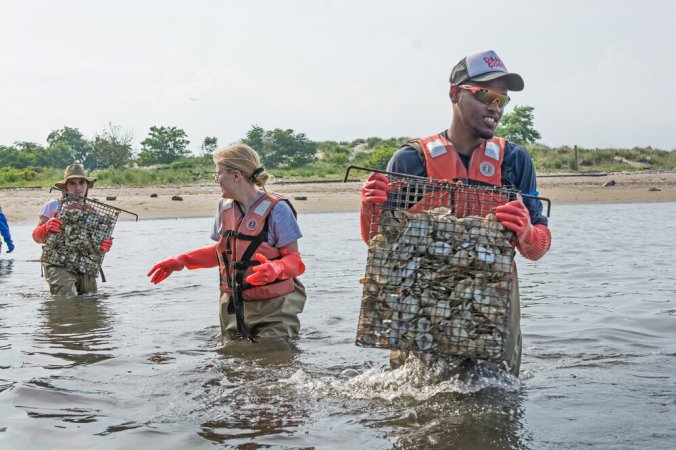
In New York, Kate Orff will use oyster reefs to mitigate storm surges. Photograph by Thomas Prior for The New Yorker

Eric Klinenberg‘s work on the topic of libraries provided a sense of common cause. After featuring so many stories about libraries and librarians (my more recent personal anecdote was purposely brief so did not relay how many ways my local library impacted my young life, a topic for another day), his book summed up much of why the institution matters to us. And then some. Advocating for libraries was something a talented academic could do on a larger scale than we could in these pages, especially with publications like those. Bravo. And now this.

After lots of attention to rewilding in these pages, plenty of it related to urban landscapes, the same author that further illuminated our understanding about the value of libraries has convinced me of how much more there is to learn on this topic:

The Seas Are Rising. Could Oysters Help?

How a landscape architect is enlisting nature to defend our coastal cities against climate change—and doing it on the cheap.

On a windy afternoon in April, the landscape architect Kate Orff stood on the open walkway of a container crane, some eighty feet above the Red Hook Terminal, in Brooklyn, and the Buttermilk Channel, a tidal strait on the southeast side of Governors Island. Continue reading