Popcorn’s Origin Story

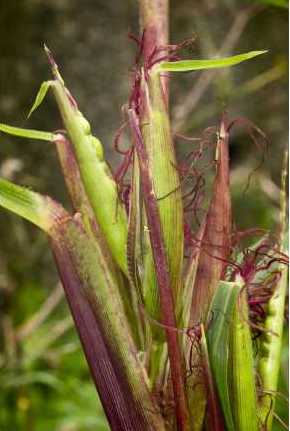
(Credit: vainillaychile/iStock via Getty Images Plus) The ancestor of maize was a grass called teosinte.

Since it is one of my go-to snacks, I frequently wonder about this, and appreciate the sleuthing by Sean Rafferty at SUNY Albany, and Discover magazine for publishing it:

How Was Popcorn Discovered?

Could a spill by the cook fire have been popcorn’s eureka moment?

You have to wonder how people originally figured out how to eat some foods that are beloved today. The cassava plant is toxic if not carefully processed through multiple steps. Yogurt is basically old milk that’s been around for a while and contaminated with bacteria. And who discovered that popcorn could be a toasty, tasty treat?

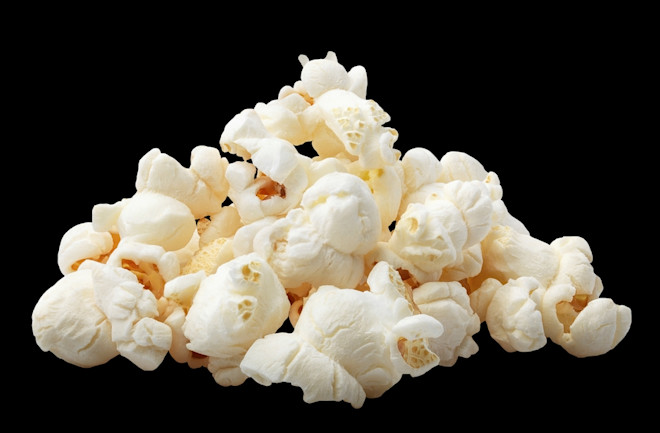
pile-of-popcorn

(Credit: Yeti studio/Shutterstock)

These kinds of food mysteries are pretty hard to solve. Archaeology depends on solid remains to figure out what happened in the past, especially for people who didn’t use any sort of writing. Unfortunately, most stuff people traditionally used made from wood, animal materials or cloth decays pretty quickly, and archaeologists like me never find it.

We have lots of evidence of hard stuff, such as pottery and stone tools, but softer things – such as leftovers from a meal – are much harder to find. Sometimes we get lucky, if softer stuff is found in very dry places that preserve it. Also, if stuff gets burned, it can last a very long time. Continue reading
Shrimp Transparency

Shrimp and transparent shrimp shells sitting on a white surface.We link to the work of Erik Vance for its clarity and utility:

Americans love their prawns. So how healthy are they — for us and for the planet?

Americans aren’t particularly enthusiastic about seafood. We eat less than half of what a Japanese or Indonesian person does. Less than a third of the average Icelander. But there is one big exception: shrimp. Continue reading

If You Eat Beef, Track Its Origins

A JBS facility in Tucuma, Brazil. JONNE RORIZ / BLOOMBERG VIA GETTY IMAGES

Reducing meat in our diet was easier living in India, and we committed specifically to cutting beef consumption. This effort has been assisted by awareness of this issue. Thanks to Yale e360 for bringing the work of this team to our attention:

Marcel Gomes (center) with colleagues at Repórter Brasil’s offices in São Paulo. GOLDMAN ENVIRONMENTAL PRIZE

Tracking Illicit Brazilian Beef from the Amazon to Your Burger

Journalist Marcel Gomes has traced beef in supermarkets and fast food restaurants in the U.S. and Europe to Brazilian ranches on illegally cleared land. In an e360 interview, he talks about the challenges of documenting the supply chains and getting companies to clean them up.

Investigative journalism can be a very deep dive. By the end of his probe into the supply chain of JBS, the world’s largest meat processing and packing company, Marcel Gomes reckons he and his team at the São Paulo-based nonprofit Repórter Brasil knew more about the origins of the beef it supplies from the Amazon to the world’s hamburger chains and supermarkets than the company itself. Continue reading

Oobli, Brazzein & Revolution In Sweetness

In our extended family there are several cases of diabetes that have made me interested in sugar and its alternatives. Stevia came to my attention while working in Paraguay, when honey was my primary interest, because stevia is native to that place. Stevia is a taste of place product as much as any other we have come to share in our current work.

But neither stevia nor have any other so-called sugar alternatives have featured in our work. Still, this article by Yasmin Tayag in The Atlantic fits perfectly as a theme in our pages:

Illustration by Ben Kothe / The Atlantic

A New Sweetener Has Joined the Ranks of Aspartame and Stevia

Unfortunately, it’s still nothing like real sugar.

A few months ago, my doctor uttered a phrase I’d long dreaded: Your blood sugar is too high. With my family history of diabetes, and occasional powerful cravings for chocolate, I knew this was coming and what it would mean: To satisfy my sweet fix, I’d have to turn to sugar substitutes. Ughhhh. Continue reading

Addiction To Longevity

Like many Italian aging researchers, Dr. Longo thinks Italy doesn’t invest enough in research. “Italy’s got such incredible history and a wealth of information about aging,” he said. “But spends virtually nothing.” Alessandro Grassani for The New York Times

Faux fasting is new to us, but thinking about diet is not. Our thanks to Jason Horowitz for another story from Italy:

To Live Past 100, Mangia a Lot Less: Italian Expert’s Ideas on Aging

Valter Longo, who wants to live to a healthy 120 or 130, sees the key to longevity in diet — legumes and fish — and faux fasting.

Most members of the band subscribed to a live-fast-die-young lifestyle. But as they partook in the drinking and drugging endemic to the 1990s grunge scene after shows at the Whisky a Go Go, Roxy and other West Coast clubs, the band’s guitarist, Valter Longo, a nutrition-obsessed Italian Ph.D. student, wrestled with a lifelong addiction to longevity. Continue reading

Winning The Popularity Contest, Fungi In Our Pages

courtesy of Laura Murray/Smallhold

The topic came to our attention a dozen years ago and is now mainstream enough that it is a regularly featured topic in our feed:

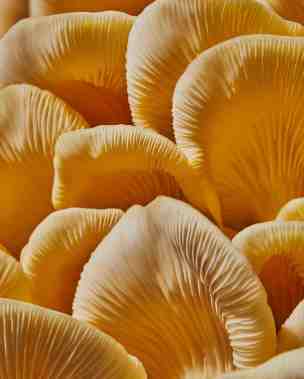
A mushrooming trend: how fungi became an It food

The mushroom moment of the past few years shows no sign of ending. What’s feeding its enduring popularity?

You can’t walk more than a few aisles in the grocery store these days without running into some kind of new mushroom product. Fresh white button mushrooms are increasingly joined by specialty varieties like lion’s mane, maitake or oyster mushrooms. There’s sparkling cordyceps tea and chaga coffee boasting a range of health benefits, mushroom chips and even chocolate bars infused with reishi. Continue reading

Replanting With Edibles

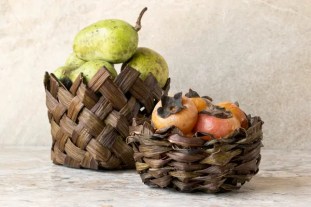
Your first taste of a ripe pawpaw, left, or American persimmon, right, may convince you to plant the trees, which can serve as the centerpiece of a permaculture food forest. J.B. Douglas

It is a relief, always, to read a Margaret Roach article when given the choice between her advice and any given news of the world:

Or just start by planting a few pawpaw or persimmon trees. Chances are, you’ll want more.

A long view of a food forest, with fruit trees growing in beds of companion plants.

At a permaculture site planted by Michael Judd, an edible landscape designer, each fruit tree is underplanted with beneficial companion plants, so “you’re not leaving your poor little fruit tree in a sea of grass,” he said. Michael Judd

Your first taste of a ripe pawpaw or persimmon can leave you hungry for more. That’s why Michael Judd is confident that he can persuade you to make room for several of these trees in your front yard — or even to surrender your lawn altogether.

Turning your yard into a meadow or blanketing it in an expanse of alternative ground covers aren’t the only ecologically viable options for replacing conventional grass. Continue reading

Capsicum Futures

The World Vegetable Center conducts research, builds networks, and carries out training and promotion activities to raise awareness of the role of vegetables for improved health and global poverty alleviation.

Among the essential components of Kerala cuisine, various chili peppers were central in our diet during the India work years. I became quite tolerant of high intensity heat from capsicum, and learned to enjoy the steamy delirium of a typical mango curry. I am out of practice, not sure I can still handle high Scoville meals any more, but heartened to know that Derek Barchenger and the W.V.C team are taking care for capsicum’s future, so thanks to Clarissa Wei for this story:

The Quest to Save Chili Peppers

A seed bank in Taiwan is home to more chili varieties than anywhere else on earth. In a warming world, we’re going to need them.

In 1999, Susan Lin, a bespectacled plant researcher at the World Vegetable Center, in Taiwan, pulled on a pair of latex gloves and got to work cross-pollinating some chili peppers. She collected tiny white flowers from a cayenne-pepper plant, shook their pollen into a tiny test tube, and walked over to an aji-chili plant. Using tweezers, she removed the petals and anthers from its flower buds, exposing the thread-like stigmas that serve as the plant’s female reproductive organs. Then she dipped the stigmas into the pollen, hoping that they would eventually form peppers. Continue reading

Crop Swap LA & Other Microfarm Advances

Illustration: Julia Louise Pereira/The Guardian

Our thanks to Victoria Namkung for this reporting in the Guardian, from Los Angeles:

‘Everything is natural and tastes so good’: microfarms push back against ‘food apartheid’

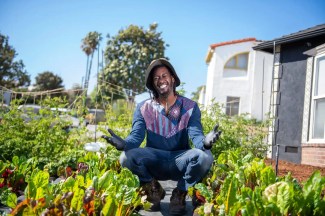
Crop Swap LA founder Jamiah Hargins in the Asante microfarm in Los Angeles, California. Photograph: Valérie Macon/AFP/Getty Images

Bipoc-led local farms in unconventional spaces decentralize systems that have produced food deserts and create food equity

On a recent Sunday morning in South Los Angeles, Crop Swap LA volunteers and staffers harvested bags of freshly picked produce from the front yard of a residence. Located just steps from Leimert Park Plaza, the Asante microfarm is the first of what will be numerous microfarms created by the organization, which is dedicated to growing hyperlocal food on unused spaces “in the neighborhood, exclusively for the neighborhood”. Continue reading

Indigenous Food Foraging

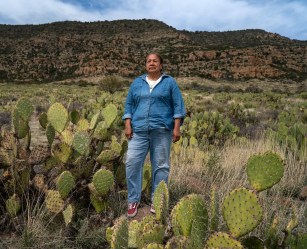
Prickly pear cacti, which produce Twila Cassadore’s favorite fruit. Photograph: Gabriela Campos/The Guardian

Samuel Gilbert was in Bylas, Arizona, on the San Carlos Apache Reservation to report this article, which contains excellent accompanying photographs by Gabriela Campos.

We thank the Guardian for this coverage of indigenous heritage:

‘It healed me’: the Indigenous forager reconnecting Native Americans with their roots

Twila Cassadore hopes teaching Western Apache traditional foodways can aid mental, emotional and spiritual health

Twila Cassadore gathers wild pearl onions on a foraging trip in the San Carlos Apache Reservation in April. Photograph: Gabriela Campos/The Guardian

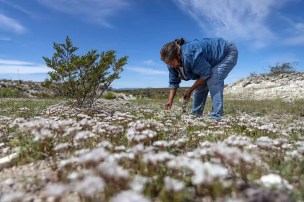
On a warm day in April, Twila Cassadore piloted her pickup truck toward the mountains on the San Carlos Apache Reservation in Arizona to scout for wild edible plants. A wet winter and spring rains had transformed the desert into a sea of color: green creosote bushes topped with small yellow flowers, white mariposa lilies, purple lupines and poppies in full bloom.

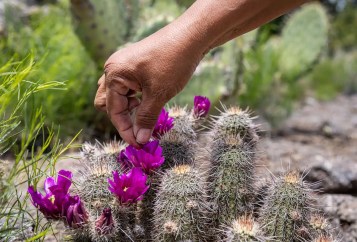
Cassadore picks the petals off a flowering cactus during a foraging trip. She uses the petals in salads. Photograph: Gabriela Campos/The Guardian

Cassadore and I drove up a rough dirt road that used to be an old cattle trail, passing through various ecosystems, moving from Sonoran desert to grasslands and piñon-juniper woodlands. In each area, Cassadore would stop to gather desert chia seeds, cacti flowers and thistles.

Cassadore stopped her truck beside a three-leafed sumac bush brimming with fruit. Continue reading

Weed Is A Weed Is A Weed

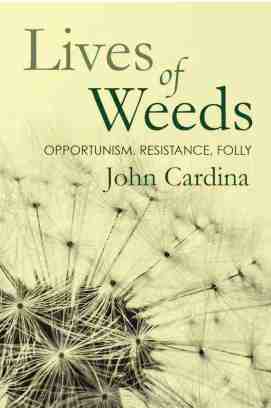
Weeds are classified subject to norms, we have read; thanks to Rivka Galchen for reminding us, and reference to this book:

What Is a Weed?

The names we call plants say more about us than they do about the greenery that surrounds us.

Steve Brill’s first stop was the greenery behind the bike racks. Brill, who is known as Wildman Steve, picked up a weed with heart-shaped seed pods and a small, four-petalled white flower. About thirty of us were gathered for a three-hour foraging tour through Prospect Park, in Brooklyn.

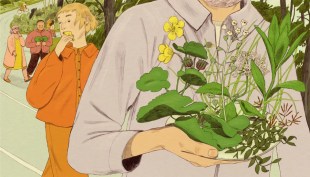
Illustration by Karlotta Freier

The plant was shepherd’s purse, a name that references the seed pods’ resemblance to the containers shepherds used to make from the bladders of sheep. “It’s in the mustard family,” Brill said. “Most all of the flowers in the mustard family are four petals in the shape of a cross.” He encouraged everyone to take a bite, and to tell him what vegetable it tasted like. Continue reading

Think, While You Can, About The Processed Foods You Eat

Jess Ebsworth

The groceries we shop for, even with the finer shopping options, sometimes disappoint; but some foods are just plain wrong, as this article by Sally Wadyka in the New York Times explains:

The Link Between Highly Processed Foods and Brain Health

Eating packaged foods like cereal and frozen meals has been associated with anxiety, depression and cognitive decline. Scientists are still piecing together why.

Roughly 60 percent of the calories in the average American diet come from highly processed foods. Continue reading
Plenty To Question About Milk’s Status

We began featuring food-related stories by employees and interns, plus occasional visiting friends, during our first couple of years living in India. More recently, taste of place considerations first explored in India became for our Authentica shops in Costa Rica a key differentiator.

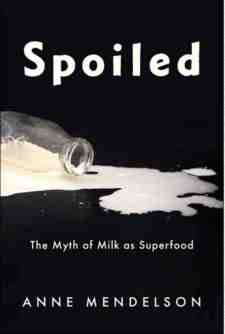
So my eye is drawn to food writing that overlaps with ethnicity considerations, and Mayukh Sen’s review of Spoiled brings out that book’s relevance to our pages:

A Fresh History of Lactose Intolerance

In “Spoiled,” the culinary historian Anne Mendelson takes aim at the American fallacy of fresh milk as a wonder food.

Six decades ago, Pedro Cuatrecasas, a fledgling resident at the Johns Hopkins School of Medicine, was studying the lives of impoverished residents of Baltimore when he noticed an unsettling trend. In interviews, a number of his Black patients would confess that they found milk repellent. Continue reading
Insects And Our Food Future

Insects started showing up in these pages early on and as years passed we saw them as equally interesting as other parts of the natural world; but only in more recent years did we start paying attention to insects as food. Today, one more entry.

Precision Fermentation’s Implied Potential

Illustration: Eleanor Shakespeare/The Guardian

It is the first time we are seeing these two words together, and George Monbiot has this to say about the potential implied:

Embrace what may be the most important green technology ever. It could save us all

Never mind the yuck factor: precision fermentation could produce new staple foods, and end our reliance on farming

So what do we do now? After 27 summits and no effective action, it seems that the real purpose was to keep us talking. If governments were serious about preventing climate breakdown, there would have been no Cops 2-27. The major issues would have been resolved at Cop1, as the ozone depletion crisis was at a single summit in Montreal. Continue reading

Raw Versus Cooked, The Quiz

Take our quiz to find out.

If you subscribe to the tenets of the raw food diet, or even if you don’t, you may have heard the phrase, “When you cook it, you kill it.” Many people believe that applying heat to vegetables — whether by sautéing, boiling, steaming, frying, roasting or grilling — zaps their nutrition. Continue reading
Peanuts, Soil Regeneration & Coffee

I will not blame Ruby Tandoh for the link to the predatory bookseller in her essay; the magazine she writes for is responsible. Instead, I will just put a better link from the book image on the left to where you might purchase it. Bringing our attention to the book is enough of a good deed to overlook that link. Especially as I work on finding new ways to fix nitrogen in the soil we are prepping for coffee planting:

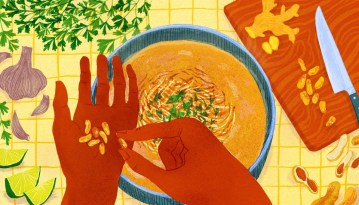
The Possibilities of the Peanut

I’ve made salads of peanut with watermelon and sumac, fries dunked in garlic-scented satay sauce, and more variations on my aunt’s Ghanaian groundnut stew than I can remember.

Illustration by Sophia Pappas

It would be hard to find a more devoted champion of the peanut than the agricultural scientist George Washington Carver. Born into slavery in Missouri around 1864, Carver studied at Iowa State University and then taught at the Tuskegee Institute, where he would spend much of the rest of his life learning to repair the environmental damage wrought by intensive cotton farming. Continue reading

More Insects In Our Diet

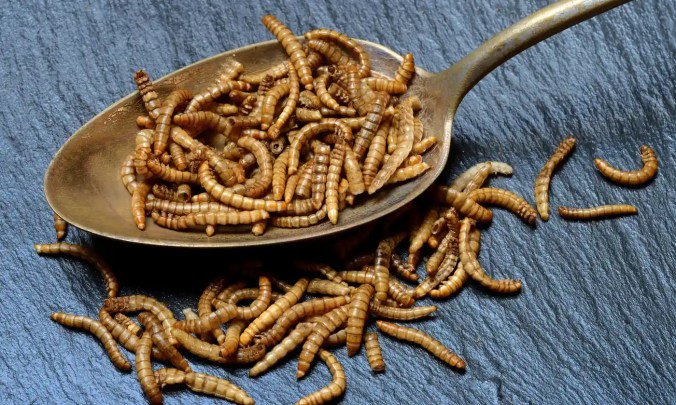
Mealworms, the larval form of the yellow mealworm beetle, have been cooked with sugar by researchers who found that the result is a meat-like flavoring. Photograph: image BROKER/Alamy

Thanks again to Oliver Milman, after a long while,  for this article in the Guardian. The photo is clickbait, so try not to let it get in the way. The story is worthy of attention, unless you are vegan, because of its prediction about how commonplace eating insects will be for most of us in the not too distant future; or should be:

Flavorings made from mealworms could one day be used on convenience food as a source of protein

Insects can be turned into meat-like flavors, helping provide a more environmentally friendly alternative to traditional meat options, scientists have discovered. Continue reading
Graphic Food For Thought

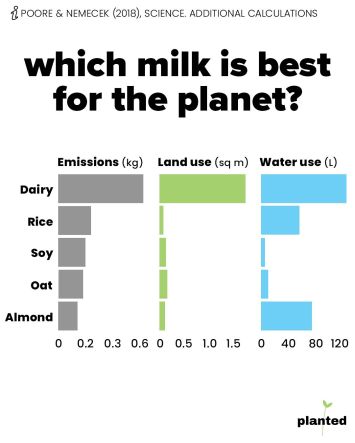
I came across this graph posted on LinkedIn. More interesting than the graph is the commentary it provoked.

Looking at the affiliations of the commenters it is clear in some cases why, for example dairy farmers, they would have claims contrary to those in the graph.

But read all the comments.

Who are all these people?

Plant-based Diet Enhanced By The Sea

Seaweed ecologist Dr Sophie Steinhagen inspects the crop at the seafarm in the Koster archipelago in Sweden.

Three months into a beef-free diet, with no temptation to lapse, I am aware that other animal protein is so far a saving grace. When I switch entirely to alternative creatures such as crickets, and to plants including seaweed, I will know the transformation is complete.

Seaweed farming in Sweden could be a vital component of the shift away from eating meat for protein.

Meanwhile, thanks to the Guardian for Richard Orange’s reporting from Malmö on Sea-farmed supercrop: how seaweed could transform the way we live.

From high-protein food to plastics and fuel, Swedish scientists are attempting to tap the marine plant’s huge potential

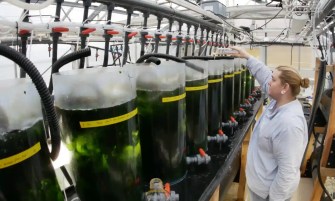
Steinhagen inspects the tanks in her “seaweed kindergarten”.

You can just see the buoys of the seafarm,” Dr Sophie Steinhagen yells over the high whine of the boat as it approaches the small islands of Sweden’s Koster archipelago. The engine drops to a sputter, and Steinhagen heaves up a rope to reveal the harvest hanging beneath: strand after strand of sea lettuce, translucent and emerald green. Continue reading