Rural Lives & Other Options

The reviews are in, and below is an excerpt. The book does not appear to be available through online booksellers in the USA, but I will be watching for it. The excerpt echoes my experience growing up in an equivalent place. A key difference between my youth and hers: my family’s income was modest but, due to my immigrant mother and father’s New England heritage I inherited a clear sense of mobility. I never had the oppressive sense of class boundaries that can dictate exclusion.

Instead I had the sense, and still do, that I could have chosen to earn the requisite fortune that would have afforded me the luxury of owning my own home in that town. But I chose otherwise, and for plenty of reasons I have no regrets whatsoever.

The view from the author’s bedroom window at Graythwaite. Rebecca Smith

Jane Austen’s English Countryside Is Not Mine

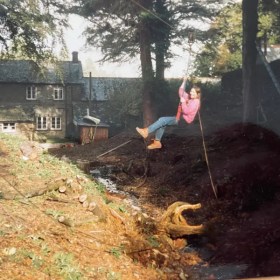
Often people assume I am someone I am not. My childhood was spent making dens in the hidden corners of the landscaped gardens of a grand country estate in the Lake District. I wandered woods full of baby pheasants being fattened up for the shoot. I roamed the hills listening to my Walkman like a modern Brontë sister. I had lakes to paddle in and a dinghy that we bumped down the ­path to a private beach.

The author playing in the garden at Graythwaite. Rebecca Smith

But they weren’t my gardens. It wasn’t my beach.

Until the age of 18, I lived on three private country estates in England. First in Yorkshire, then in Bedford, then on Graythwaite Estate, in Cumbria in the Lake District. In each of these my dad had the job of forester, working his way up until he was head forester, overseeing 500 hectares of woodland at Graythwaite, where the job came with a three-bedroom lodge on the estate. Continue reading

Climate Optimism, Part 2

Hilary Swift for The New York Times

Bill McKibben’s occasional optimism notwithstanding, he and Al Gore are the two most visible alarmists on climate change. Even in the worst of circumstances both find reason to point out our remaining options for actually doing something.

Our thanks to David Gelles and the New York Times for rounding out the doom and gloom with a bit of hope:

Al Gore on Extreme Heat and the Fight Against Fossil Fuels

The past few weeks have him even more worried than usual.

It’s been 17 years since former Vice President Al Gore raised the alarm about climate change with his documentary, “An Inconvenient Truth.” Since then, he’s been shouting from the rooftops about the risks of global warming more or less nonstop. Continue reading

Climate Optimism Part 1

Illustration by João Fazenda

Bill McKibben acknowledges in his most recent newsletter that in spite of all his efforts over the decades, he and we all are failing on climate change mitigation. But he has not given up hope:

Big Heat and Big Oil

A rapid end to burning fossil fuel would arrest the heating that has caused extreme damage in recent weeks; and that rapid end is possible.

In the list of ill-timed corporate announcements, historians may someday give pride of place to one made by Wael Sawan, the new C.E.O. of Shell, the largest energy company in Europe. In 2021, Shell said that it would reduce oil and gas production by one to two per cent a year up to 2030—a modest gesture in the direction of an energy transition. Continue reading

Bill McKibben On Degrowth Movements Past & Present

Bill McKibben gives a thorough reconsideration of what, if any, growth is helpful now:

To Save the Planet, Should We Really Be Moving Slower?

The degrowth movement makes a comeback.

John Maynard Keynes once observed that dating from “say, to two thousand years before Christ—down to the beginning of the 18th century, there was no very great change in the standard of life of the average man living in the civilised centres of the earth. Ups and downs certainly. Visitations of plague, famine, and war. Golden intervals. But no progressive, violent change.” Continue reading

Climate Migration’s Upsides

Reporting from Niger, the Economist offers a glass-half-full consideration of a daunting topic (the podcast version of this story is excellent), and pulls it off:

image: josh haner/the new york times/redux/eyevine

The surprising upside of climate migration

To adapt to climate change, people will move. The results will not be all bad

On the outskirts of Niamey, the capital of Niger, it looks as if the countryside has moved to the city. Clusters of dome-like wooden huts have popped up. Cows and goats are tethered in the shade. Waves of rural folk have arrived, largely because of climate change. Continue reading

Prime Pitch Punished

Federal regulators have sued Amazon, alleging the company for years “tricked” people into Prime memberships that were purposefully hard to cancel. FREDERIC J. BROWN/AFP via Getty Images

We have shared our concern about the company so many times in the last decade it is surprising that this part of their market aggression has not featured until now:

FTC sues Amazon for ‘tricking and trapping’ people in Prime subscriptions

Federal regulators have sued Amazon, alleging the company for years “tricked” people into buying Prime memberships that were purposefully hard to cancel. Continue reading

Pyrolysis, Advanced Plastic Recycling, Explained

Plastic waste at a disposal plant in Tokyo. THE YOMIURI SHIMBUN VIA AP IMAGES

We have a difficult time giving Exxon and other petroleum companies the benefit of the doubt, but at minimum we want to understand what they say about what they are selling:

As Plastics Keep Piling Up, Can ‘Advanced’ Recycling Cut the Waste?

Exxon’s advanced recycling facility in Baytown, Texas. BUSINESS WIRE

Proponents of a process called pyrolysis — including oil and gas companies — contend it will keep post-consumer plastics out of landfills and reduce pollution. But critics say that by converting waste to petroleum feedstock, it will only perpetuate a dependence on fossil fuels.

Bob Powell had spent more than a decade in the energy industry when he turned his attention to the problem of plastic waste. Continue reading
Taking Better Care With Help From Kate Raworth

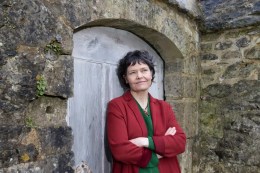
What? We never posted on this book or its economist author before? We correct that now with Hettie O’Brien’s article in the Guardian :

The planet’s economist: has Kate Raworth found a model for sustainable living?

Her hit book Doughnut Economics laid out a path to a greener, more equal society. But can she turn her ideas into meaningful change?

Raworth in Oxford. Photograph: Graeme Robertson/The Guardian

Consider the electric car. Sleek and nearly silent, it is a good example of how far the world has progressed in fighting the climate crisis. Its carbon footprint is around three times smaller than its petrol equivalent, and unlike a regular car, it emits none of the greenhouse gases that warm the planet or noxious fumes that pollute the air. That’s the good news. Then consider that the battery of an electric car uses 8kg of lithium, likely extracted from briny pools on South America’s salt flats, a process that has been blamed for shrinking pasturelands and causing desertification.

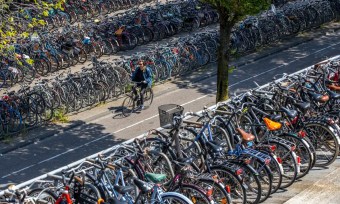
A bike park in Amsterdam which offers free parking for more than 2,500 bicycles. Photograph: Jochen Tack/Alamy

The 14kg of cobalt that prevent the car’s battery from overheating have probably come from the Democratic Republic of the Congo, where cobalt mines have contaminated water supplies and soil. As the demand for electric vehicles grows, the mining and refining of their components will intensify, further damaging natural ecosystems. By 2040, according to the International Energy Agency, the global demand for lithium will have increased more than fortyfold. Continue reading

Ghana Says No Thank You To Europe’s Fast Fashion

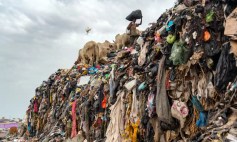
Some of the 6m items of clothing that arrive at Kantamanto Market each week. With the rise of fast fashion in the west, more is discarded as the quality drops. Photograph: Muntaka Chasant/Rex

When  the clothes cast off by the wealthy are cast on to those less wealthy, it should be done so according to the golden rule:

Stop dumping your cast-offs on us, Ghanaian clothes traders tell EU

With 100 tonnes of clothing from the west discarded every day in Accra, ‘fast fashion’ brands must be forced to help pay for the choking textile waste they create, environmentalists say

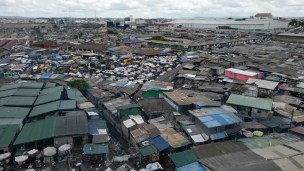
An aerial view of Kantamanto market in Accra, where 100 tonnes of secondhand clothing a day are discarded. Photograph: Misper Apawu/The Guardian

A group of secondhand clothes dealers from Ghana have visited Brussels to lobby for Europe-wide legislation to compel the fashion industry to help address the “environmental catastrophe” of dumping vast amounts of textiles in the west African country. Continue reading

The World Of Sugar, Reviewed

Our thanks to the LA Review of Books for this review by Dinyar Patel:

Sugar, Slavery, and Capitalism: On Ulbe Bosma’s “The World of Sugar”

WHAT MIGHT DONALD RUMSFELD have in common with Frederick Barbarossa, Mormons, and Queen Elizabeth I’s rotting teeth? The answer is simpler than you might expect: the power and influence of sugar, a crystalline specimen of world-historical significance dissolved in your morning coffee or tea. A warmongering neocon, a Holy Roman emperor, pious Utahns, and a heavily cavitied pair of Tudor gnashers are part of an expansive cast of characters in Ulbe Bosma’s new work on the sweet stuff, The World of Sugar: How the Sweet Stuff Transformed Our Politics, Health, and Environment over 2,000 Years. This book is a tour de force of global history, one that helps us better understand the genesis of both modern capitalism and globalization. Continue reading

Trees Are Always Welcome In Our Pages

The notion that clear-cutting can be counteracted by the planting of trees is a political product of the timber industry.Photograph © Robert Adams / Fraenkel Gallery

Jill Lepore gives us a 30-minute read on a topic we have linked to more times than any topic other than birds:

What We Owe Our Trees

Forests fed us, housed us, and made our way of life possible. But they can’t save us if we can’t save them.

The woods I know best, love best, are made of Northern hardwoods, sugar maple and white ash, timber-tall; black and yellow birch, tiger-skinned; seedlings and saplings of blighted beech and striped maple creeping up, knock-kneed, from a forest floor of princess pine and Christmas fern, shag-rugged. White-tailed deer dart through softwood stands of pine and hemlock, bucks and does, the last leaping fawn, leaving tracks that look like tiny human lungs, trails that people can only ever see in the snow, even though, long after snowmelt, dogs can smell them, tracking, snuffling, shuddering with the thrill of the hunt and noshing on deer scat for dog treats. Continue reading

Green Capitalism Explained & Criticized

We are new to the website where this interview is on offer, and appreciate its proclamation: “We cut through the noise. Of social media. And algorithmic distraction. We find the serious stuff. The stuff you miss. Every week. With human curators.” We are also new to the explainer and critic on a set of topics we often have had links to:

ADRIENNE BULLER ON GREEN CAPITALISM AND THE PITFALLS OF CLIMATE FINANCE

Adrienne Buller is Director of Research at the think tank Common Wealth, where she leads investigative projects about building a democratic economy. She previously researched the intersection of finance and the climate crisis at InfluenceMap, and has also written for The Guardian and the Financial Times, among other publications. Continue reading

Andy Hunter Scales Up Without Selling Out

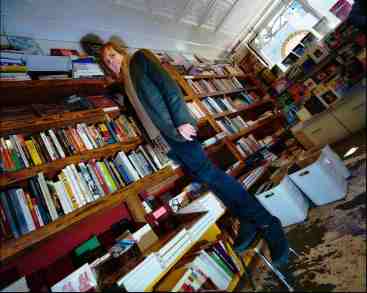
Andy Hunter, the founder of Bookshop.org (pictured here at Spoonbill & Sugartown Books in Brooklyn) developed his love for books early. “I became a reader, in the beginning, because it provided me solace,” he says. PHOTOGRAPH: YAEL MALKA

Who could resist a story about scaling up without selling out–especially when it involves an online book shop?

Our thanks to Kate Knibbs, a senior writer at WIRED, for this profile of someone who has indirectly featured in our pages without being named before.

Not to mention the photographs by Yael Malka accompanying the story:

How Bookshop.org Survives—and Thrives—in Amazon’s World

Andy Hunter’s ecommerce platform was a pandemic hit. Now he’s on a mission to prove that small businesses can scale up without selling out.

“DO YOU REMEMBER what kind of beer it was?”

PHOTOGRAPH: YAEL MALKA

Andy Hunter pauses for so long before answering my question, it’s awkward. He’s racking his brain. I’ve asked him to tell me about the night he came up with the idea that led to his improbably successful bookselling startup, Bookshop.org. As a former magazine editor, he wants to get the details right.

He remembers the easy stuff: It was 2018. He was on the road for work. At the time, Hunter ran the midsize literary publishing house Catapult, a job that required schmoozing at industry events. The night of his big brainstorm, he was away from his two young daughters and his usual evening obligations—dishes, bedtime rituals—and had a rare moment to think, and drink a beer. Continue reading

Valuation Of Biodiversity

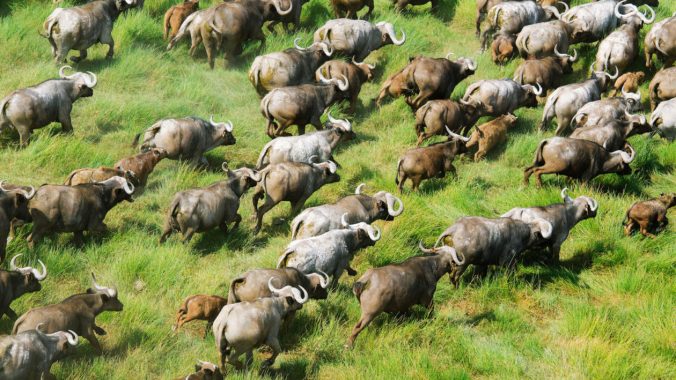
Cape Buffalo in Kenya. MARTIN HARVEY / ALAMY

Biodiversity valuation is a topic we link to from time to time, so we thank Zach St. George for this article’s contribution to our understanding:

Pricing Nature: Can ‘Biodiversity Credits’ Propel Global Conservation?

Backed by the UN, an alliance of conservationists and policymakers is devising new ways to finance the preservation of biodiversity by placing economic values on ecosystems. Some analysts say such schemes have the potential to boost conservation, but others are skeptical.

In 2009, as global financial markets shuddered, David Dorr became interested in the possibility of putting a price on nature. Dorr is a Cayman Islands-based global macro trader, attuned to what he calls the “butterfly effect” of geopolitics and other international forces on financial markets. Continue reading

DRC’s Price Paid For Our Electric Future

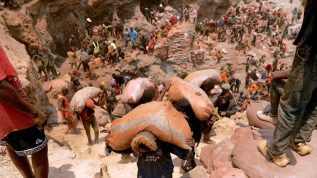
Miners haul sacks of cobalt ore at the Shabara mine near Kolwezi in the Democratic Republic of the Congo. JUNIOR KANNAH / AFP VIA GETTY IMAGES

Jocelyn C. Zuckerman leads a conversation below that puts our electric future in a very particular context:

For Your Phone and EV, a Cobalt Supply Chain to a Hell on Earth

The race for high-tech metals has sparked a cobalt boom in the Democratic Republic of the Congo that has come at a steep human cost. In an e360 interview, author Siddharth Kara talks about the horrific conditions in the mines that are putting thousands of workers at risk.

As countries around the world look to pivot quickly to clean energy, demand for the lithium-ion batteries used to charge our smartphones, laptops, and electric vehicles is booming. Continue reading

Libraries Old & New

Adults and children in a room of a library with bookshelves, an orange light in the ceiling and an orange wall.

The Adams Street Library in Dumbo, Brooklyn, has a children’s space with hues reminiscent of a Creamsicle. Justin Kaneps for The New York Times

The name Michael Kimmelman is rare in these pages, but in covering one of our favorite topics he gets our full attention again today:

As New York Weighs Library Cuts, Three New Branches Show Their Value

Facing a giant budget deficit, Mayor Eric Adams proposed cuts to New York libraries. But they play an outsize role in the city, offering services and safety.

Adults and children gather in a well-lit children’s room in a library that is filled with bookshelves. One child sits on a color-blocked rug, drawing.

The children’s room at the Macomb’s Bridge branch in Upper Manhattan; below, the entrance and canopy outside refer to the original landmarked architecture. Justin Kaneps for The New York Times Image

A city is only as good as its public spaces. The Covid-19 pandemic was another reminder: For quarantined New Yorkers, parks, outdoor dining sheds and reopened libraries became lifelines.

But now Mayor Eric Adams wants to slash funds for parks ($46 million) and for libraries ($13 million this fiscal year, more than $20 million next), and the City Council is debating the dining sheds. The sheds need regulation and the city budget needs to be cut by perhaps $3 billion. That said, if you don’t find the current political conversation shortsighted, you might want to do what I recently did and check out some of the library branches that have opened since the start of 2020. I visited three of them — each one a boon for its neighborhood, and money well-spent. Continue reading

The Big Myth

If you are in the mood for some basic questioning of the status quo, this book may be for you, according to Kirkus Review:

A thoughtful denunciation of the economic dogma that the market knows best.

“How did so many Americans come to have so much faith in markets and so little faith in government?” So ask Oreskes and Conway, continuing the line of research they began in their seminal 2010 book, Merchants of Doubt. Where that book focused on the co-optation of scientists to dispute the realities of climate change and the linkage of tobacco to cancer, this joins that co-optation to carefully planted “free market” fundamentalism that holds that any attempt to regulate business is a form of tyranny…

Bio-Based Gains

Scientists at San Diego-based Genomatica, which is developing a plant-based nylon. GENOMATICA

We have been watching and waiting for this range of products to have their day, and Jim Robbins delivers an up to date account that gives hope:

From Lab to Market: Bio-Based Products Are Gaining Momentum

A 3D-printed house made from sawdust and other timber industry waste by the University of Maine’s Advanced Structures and Composites Center. UNIVERSITY OF MAINE

Propelled by government investment and shareholder demand, manufacturers are pushing to get bio-based products into the marketplace. These new materials — made from plants, fungi, and microbes — aim to replace those that contain toxins and are difficult to recycle or reuse.

In the 1930s, the DuPont company created the world’s first nylon, a synthetic polymer made from petroleum. The product first appeared in bristles for toothbrushes, but eventually it would be used for a broad range of products, from stockings to blouses, carpets, food packaging, and even dental floss.

Nylon is still widely used, but, like other plastics, it has environmental downsides: it is made from a nonrenewable resource; its production generates nitrous oxide, a potent greenhouse gas; it doesn’t biodegrade; and it sheds microfibers that end up in food, water, plants, animals, and even the clouds.

Laminated timber beams and floors used in the construction of Ascent, a 25-story apartment building in Milwaukee. THORNTON TOMASETTI

Now, however, a San Diego-based company called Genomatica is offering an alternative: a so-called plant-based nylon made through biosynthesis, in which a genetically engineered microorganism ferments plant sugars to create a chemical intermediate that can be turned into nylon-6 polymer chips, and then textiles. The company has partnered with Lululemon, Unilever, and others to manufacture this and other bio-based products that safely decompose. Continue reading

Renewable Energy Investment Parity

PEXELS

Thanks to Yale e360:

Clean Energy Saw as Much Investment as Fossil Fuels for the First Time in 2022

Solar, wind, electric vehicles, and other clean energy technologies saw a record-high $1.1 trillion in investment globally last year, matching investment in fossil fuels for the first time ever, according to a new report from Bloomberg New Energy Finance. Continue reading

The Remarkable Efficiency Of Heat Pumps, Explained

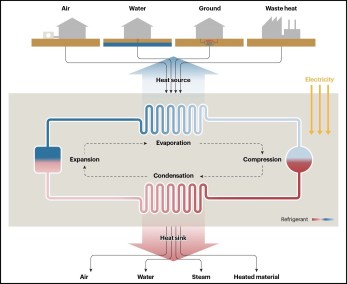
Heat pumps use electricity to compress a refrigerant, raising its temperature. IEA

Heat pumps have only been a passing reference occasionally in these pages, but today they are the focus, thanks to Paul Hockenos in Yale e360:

In Europe’s Clean Energy Transition, Industry Turns to Heat Pumps

With soaring gas prices due to the Ukraine war and the EU’s push to cut emissions, European industries are increasingly switching to high-temperature, high-efficiency heat pumps. Combined with the boom in residential use, the EU is now hoping for a heat pump revolution.

An industrial heat pump at the Mars Confectionery in Veghel, the Netherlands. GEA

The Wienerberger brickworks in Uttendorf, Austria, in the Tyrolean Alps, has always required a steady stream of 90 degree C (194 degree F) heat to dry its construction blocks. This process would have been an expensive proposition for the company after Russia cut gas exports to Europe, as it was for most of Europe’s energy-intensive construction industry. But four years ago, Wienerberger — the largest brick producer in the world — made an investment in the future that is now paying off: it replaced Uttendorf’s gas-fired boiler with an industrial-scale heat pump, which whittles the factory’s energy bill by around 425,00 euros a year. Continue reading