New Ways Of Thinking About Exxon

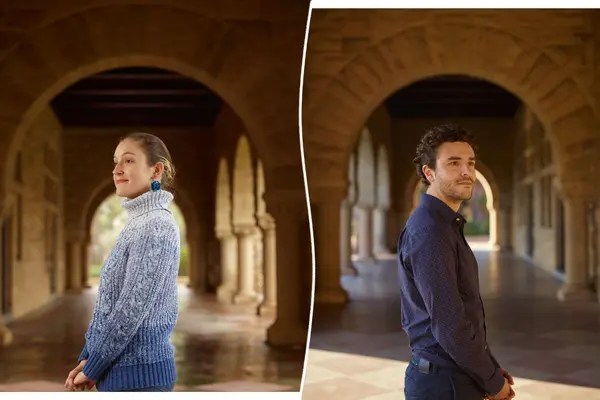
Her work is funded by Exxon, he’s skeptical of industry. Rebecca Grekin, left, and Yannai Kashtan at Stanford, where they study and teach.

We have made our views on Exxon clear, and also been open to new ways of thinking about them. In the spirit of being open to new ways of thinking, without being foolish, this story is worth a read:

He Wants Oil Money Off Campus. She’s Funded by Exxon. They’re Friends.

The two friends, both climate researchers, recently spent hours confronting the choices that will shape their careers, and the world. Their ideas are very different.

Two good friends, Rebecca Grekin and Yannai Kashtan, met up one crisp December morning at Stanford University, where they both study and teach. The campus was deserted for the holidays, an emptiness at odds with the school’s image as a place where giants roam, engaged in groundbreaking research on heart transplants, jet aerodynamics, high-performance computing. Work that has changed the world. Continue reading

August Reading, Science For Nonscientists

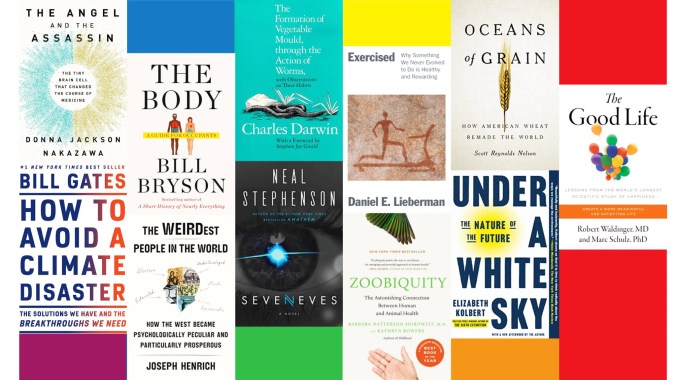
Clea Simon, correspondent for the Harvard Gazette, has these book recommendations from professors around campus:

Climate change, global hunger: What to do?

Black holes, warming seas, new treatments for disease: No matter how you approach it, the news is full of science-based stories. For those of us who aren’t scientists, however, understanding the context — not to mention the technical jargon — can be a challenge. With that in mind, we asked Harvard science faculty in various fields to recommend their favorite science book for nonscientists. Ideally these accessible reads will give the rest of us a leg up on understanding our changing world. Continue reading

Solidarity, Class Traitors & Ambiguity Management

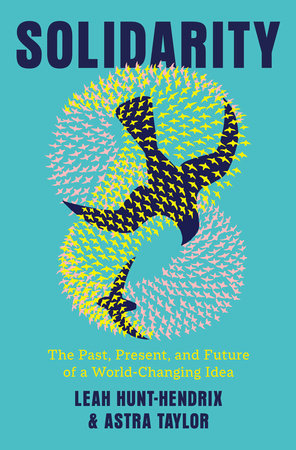
Solidarity by Leah Hunt-Hendrix and Astra TaylorThis book comes with a strong pitch by Bill McKibben. It came to my attention while reading this profile by Andrew Marantz. Full of ambiguity, about a balancing act between privilege inherited from fossil fuel wealth and sincere commitment to solidarity movements, what follows is entirely worth the read to get to the last paragraph (which only works if you have made it through the entire text):

What Should You Do with an Oil Fortune?

The Hunt family owns one of the largest private oil companies in the country. Leah Hunt-Hendrix funds social movements that want to end the use of fossil fuels.

Leah HuntHendrix photographed by Platon.

“Leah was clearly preoccupied with how a person of extreme privilege can live responsibly in the world,” her Ph.D. adviser said. Photograph by Platon for The New Yorker

Let’s say you were born into a legacy that is, you have come to believe, ruining the world. What can you do? You could be paralyzed with guilt. You could run away from your legacy, turn inward, cultivate your garden. If you have a lot of money, you could give it away a bit at a time—enough to assuage your conscience, and your annual tax burden, but not enough to hamper your life style—and only to causes (libraries, museums, one or both political parties) that would not make anyone close to you too uncomfortable. Or you could just give it all away—to a blind trust, to the first person you pass on the sidewalk—which would be admirable: a grand gesture of renunciation in exchange for moral purity. But, if you believe that the world is being ruined by structural causes, you will have done little to challenge those structures. Continue reading

Natural History Anew

An image from 1957, when the cross and square design was still legible. American Museum of Natural History

We have featured so many natural history museums in our pages over the years that one more might have been redundant; but no:

A new aerial photo shows the museum today, as a crazy quilt of buildings from many eras, with Gilder on the right. Iwan Baan

The article below, by Michael Kimmelman with photographs and video by Peter Fisher, allows us to imagine the experience of a new view on natural history in New York City.

The view at the entrance toward the monumental staircase with bleacher seats.

We are ready to be awed:

The stunning $465 million Richard Gilder Center for Science, designed like a canyon, is destined to become a colossal attraction.

When plans for it first surfaced, I wondered if the new Gilder Center at the Natural History museum might end up looking overcooked.

From the outside it’s a white-pink granite cliff with yawning windows shaped a little like the openings to caves, nestling the museum’s wonderful Romanesque Revival addition from the turn of the last century. Past the front doors, that cliff face morphs. It becomes an atrium in the guise of a towering canyon, a city block deep.

Skylights and balconies in the atrium of the new Richard Gilder Center for Science, Education and Innovation.

For its architects, Jeanne Gang and her team, Gilder was clearly a gamble and leap of faith, bucking today’s innocuous norms, almost begging for charges of starchitectural self-indulgence.

Now that it’s built, I love it.

I wouldn’t go so far as to equate it with the curvaceous genius of Gaudi or with Saarinen’s groovy TWA Terminal, but it’s in the family. Like them, Gilder is spectacular: a poetic, joyful, theatrical work of public architecture and a highly sophisticated flight of sculptural fantasy. New Yorkers live to grouse about new buildings. This one seems destined to be an instant heartthrob and colossal attraction. Continue reading

Heatmap, Climate & Energy Transition

Heatmap Illustration/Getty Images

We are happy to see a new platform that Robinson Meyer has co-founded for climate-related news:

Are Wind Farm Tours the Hoover Dam Trip of the 21st Century?

Marvel at America’s green transition on your next vacation.

Scroll past San Jacinto Mountain, Brandini Toffee, a bicycle-powered bar crawl, and 13 other attractions on Tripadvisor’s list of “Things to Do in Palm Springs” and you’ll come to “Palm Springs Windmill Tours.” Continue reading

Math & Him

When I started graduate school 34 years ago I was 25 years old. I had scored sufficiently high on the math section of the GMAT to be accepted into a program that assumed all students would be comfortable with calculus. Not only was I years since my last math class but I had never taken calculus. The experience of starting a quantitative program of study for which I was mathematically unprepared was no fun whatsoever. But there is a funny story to share, another day. For now, all eyes on this book, which a while back I had read an excerpt of here:

Illustration by Nicholas Konrad / The New Yorker

How Mathematics Changed Me

If one is inclined toward mysteries, mathematics can lead one to the conclusion that behind the veil of life there is a structure and an order.

I have written about mathematics for The New Yorker and, lately, also in my book “A Divine Language: Learning Algebra, Geometry, and Calculus at the Edge of Old Age,” and I thought that I had said everything I had to say about mathematics and my simple engagement with it, but I find I can’t stop thinking about it…

María Medem

And then yesterday I followed that up by reading this op-ed, which on its own is also worth anyone’s reading:

Math Is the Great Secret

As a boy in the first weeks of algebra class, I felt confused and then I went sort of numb. Adolescents order the world from fragments of information. In its way, adolescence is a kind of algebra. The unknowns can be determined but doing so requires a special aptitude, not to mention a comfort with having things withheld. Straightforward, logical thinking is required, and a willingness to follow rules, which aren’t evenly distributed adolescent capabilities. Continue reading

Solar@School, Win-Win-Win

Solar panels installed near the Heart-Butte schools in Montana. Janie Osborne for The New York Times

Two elementary school students stand at table covered in papers, markers and other school materials, and face a wall with a poster map of Montana, divided by tribal territories. The child at left uses an orange marker to point at an area called “Blackfeet & Gros Ventre.”

Students at Heart-Butte School exploring their area of the world on a map in the “Blackfeet Immersion” classroom. Janie Osborne for The New York Times

In the USA it has become normal to think that partisan divisions prevent collaboration on issues of common interest. The partisan divisions are real, and then some; but there are silver linings here and there.  Cara Buckley, a climate reporter, continues to demonstrate a talent for finding cases where communities benefit from collective action in the act of taking better care of the environment:

Black and white goats frolic in grass on a field, which is fenced off and behind which is a series of solar panels angled at the sun. Trees line the horizon.

Goats cared for by Batesville High School’s 4-H students, next to the school’s solar panels. “If you’re conservative, we didn’t ask you for more taxes, if you’re liberal, you love the green concept,” Dr. Hester said. Terra Fondriest for The New York Times

Facing Budget Shortfalls, These Schools Are Turning to the Sun

Public schools are increasingly using savings from solar energy to upgrade facilities, help their communities, and give teachers raises — often with no cost to taxpayers.

One school district was able to give pay raises to its teachers as big as 30 percent. Another bought new heating and ventilation systems, all the better to help students and educators breathe easier in these times. The improvements didn’t cost taxpayers a cent, and were paid for by an endlessly renewable source — the sun.

Mike Tatsey, in jeans and a light blue plaid short sleeve shirt, his thumbs hooked into his jean pockets, stands in a field with solar panes in the background. Brush partially obscures the foreground.

Mike Tatsey, superintendent of schools in Heart-Butte, believes that freeing up extra money for staples like groceries and shoes could have a ripple effect in classrooms. Janie Osborne for The New York Times

As solar energy gains traction across the country, one beneficiary have been schools, particularly those in cash-strapped districts contending with dwindling tax bases.

From New Jersey to California, nearly one in 10 K-12 public and private schools across the country were using solar energy by early 2022, according to data released Thursday by Generation180, a nonprofit that promotes and tracks clean energy. That’s twice as many as existed in 2015. Continue reading

Why Are Starbucks Workers United?

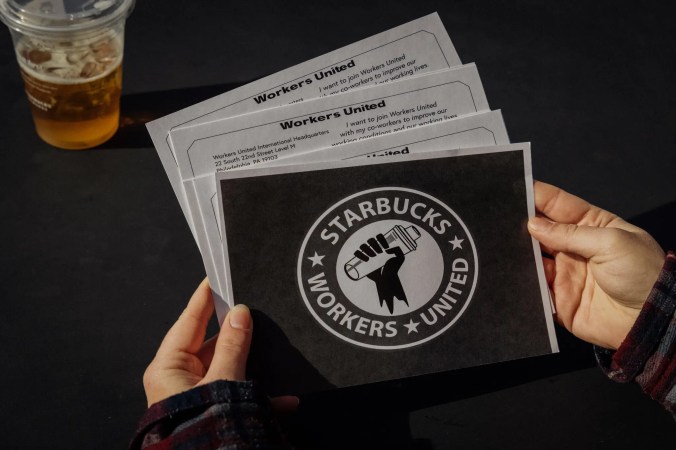
Maggie Carter, a Starbucks barista in Knoxville, Tenn., keeps a stack of union cards with her. Audra Melton for The New York Times

We wrote one time previously about the Starbucks union drive, wondering why Starbucks is against it. We know the typical corporate reasons, but Starbucks has represented itself as atypical. So, we wanted to know. And in related news, the company’s efforts to keep unionization at bay has a new leader. Today we consider a related question, this time from workers’ perspective:

Why a Rhodes Scholar’s Ambition Led Her to a Job at Starbucks

Jaz Brisack became a barista for the same reasons that talented young people have long chosen their career paths: a mix of idealism and ambition.

Most weekend mornings, Jaz Brisack gets up around 5, wills her semiconscious body into a Toyota Prius and winds her way through Buffalo, to the Starbucks on Elmwood Avenue. After a supervisor unlocks the door, she clocks in, checks herself for Covid symptoms and helps get the store ready for customers. Continue reading

Personal Approaches To Carbon Footprint Reduction

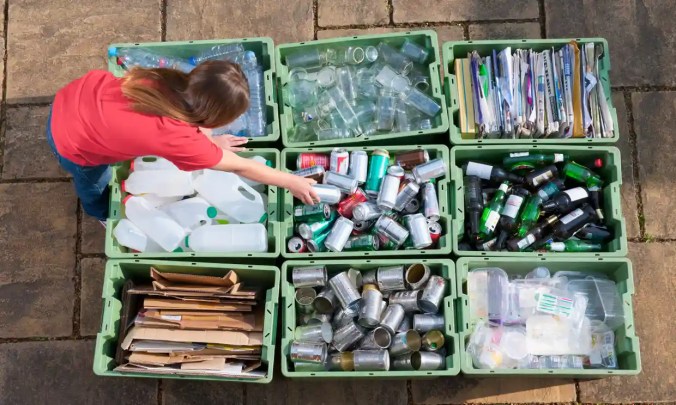
Recycle to save the planet? Photograph: Jacobs Stock Photography Ltd/Getty Images

A public service request for your input, from the Guardian:

What is the single most effective thing I could do to reduce my carbon footprint?

The long-running series in which readers answer other readers’ questions on subjects ranging from trivial flights of fancy to profound scientific and philosophical concepts

What is the single most effective thing I could do to reduce my carbon footprint? Without dying, preferably. Andrew Hufnagel, Caithness

Post your answers (and new questions) below or send them to nq@theguardian.com. A selection will be published on Sunday.

Nature, Intervention & Protection

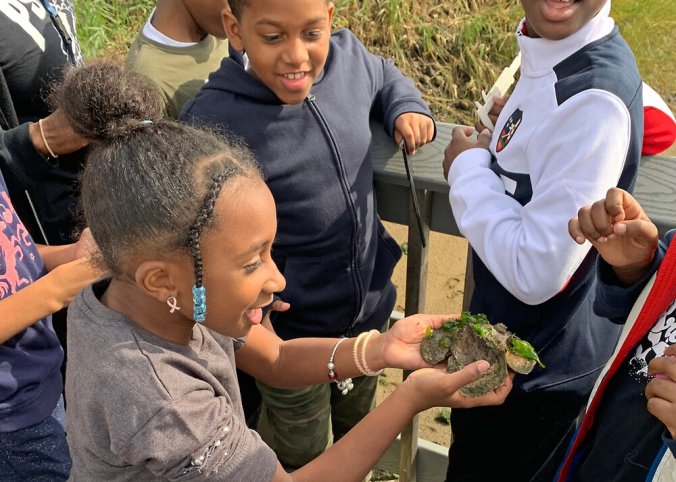
Discovery inspires.

Participation motivates.

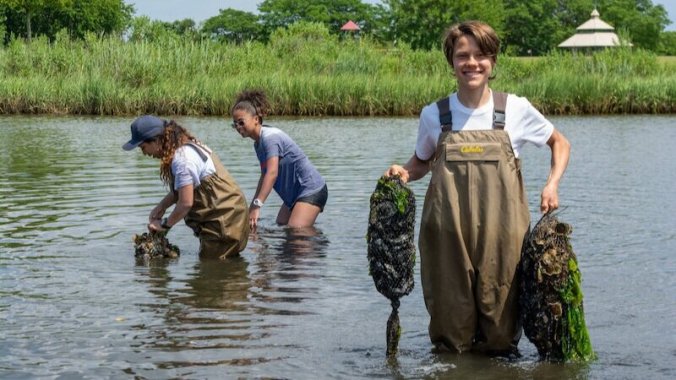
Discovery + Participation + Organization =

Results

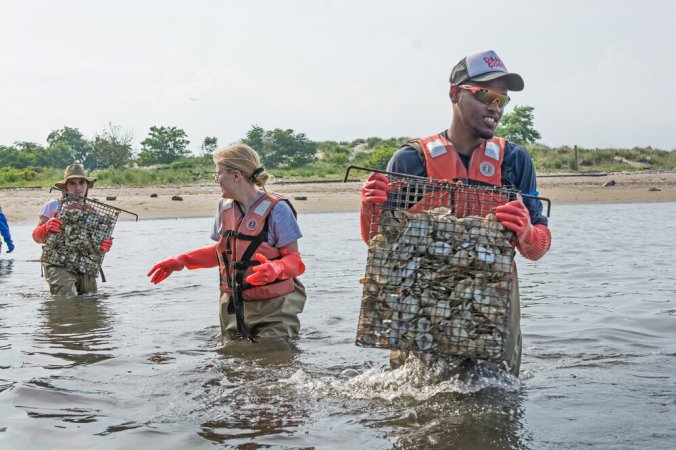
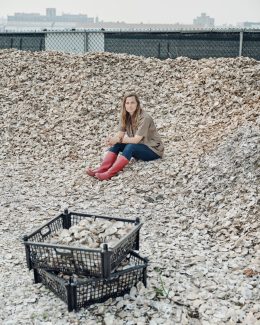
Click any of the images above to go to the website of this organization featured once before in our pages and now again in the article below. It will make more sense after reading the article. But do visit the site and consider volunteering. Take some kids along.

In New York, Kate Orff will use oyster reefs to mitigate storm surges. Photograph by Thomas Prior for The New Yorker

Eric Klinenberg‘s work on the topic of libraries provided a sense of common cause. After featuring so many stories about libraries and librarians (my more recent personal anecdote was purposely brief so did not relay how many ways my local library impacted my young life, a topic for another day), his book summed up much of why the institution matters to us. And then some. Advocating for libraries was something a talented academic could do on a larger scale than we could in these pages, especially with publications like those. Bravo. And now this.

After lots of attention to rewilding in these pages, plenty of it related to urban landscapes, the same author that further illuminated our understanding about the value of libraries has convinced me of how much more there is to learn on this topic:

The Seas Are Rising. Could Oysters Help?

How a landscape architect is enlisting nature to defend our coastal cities against climate change—and doing it on the cheap.

On a windy afternoon in April, the landscape architect Kate Orff stood on the open walkway of a container crane, some eighty feet above the Red Hook Terminal, in Brooklyn, and the Buttermilk Channel, a tidal strait on the southeast side of Governors Island. Continue reading

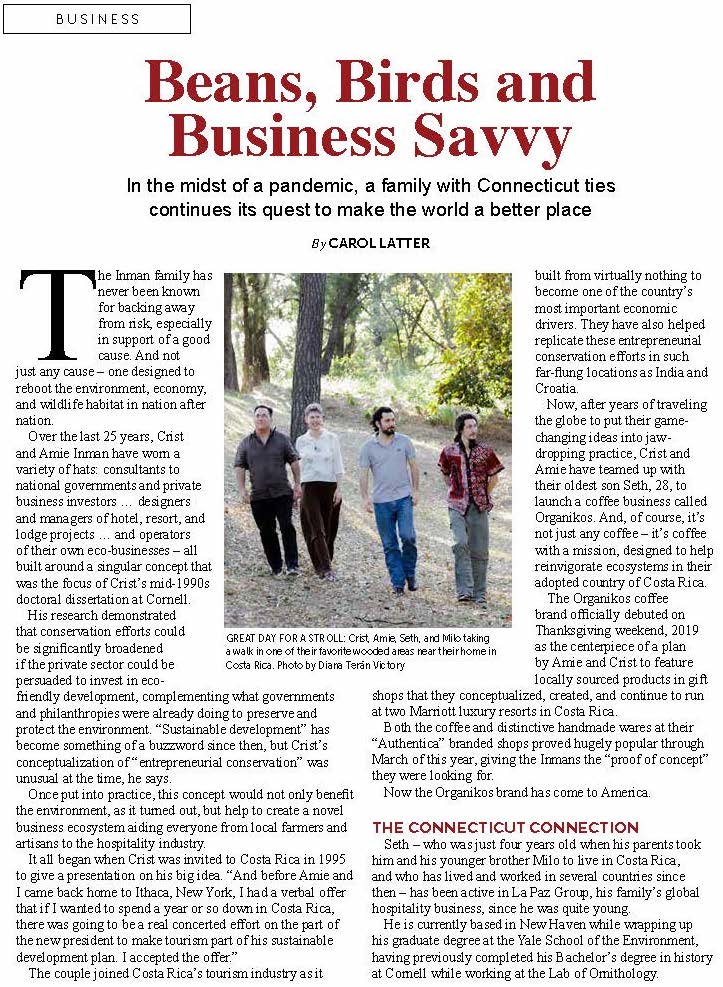
Beans, Birds & Business

Last month a magazine article was published about the origins of Organikos. We have told bits and pieces of the story in these pages, but Carol Latter was the first person to tell the story from a perspective outside of our family. The online version of the story has two photos, whereas the tangibly published version has ten; in both cases we were happy that a magazine from the state I grew up in, and where Seth has been living since 2018, was interested in sharing this founding story.

Today, reading Marella Gayla’s story about founders trending younger (and why), plenty to ponder. My takeaway is that for whatever reason ambitious young people see an important link between entrepreneurship and positive social outcomes, we can count that as a good thing:

Is Every Ambitious Teen-ager a “Founder and C.E.O.”?

Forget Model U.N. and the SATs. Kids today want to tell college admissions officers all about the companies they’ve started to save the world.

One striking innovation of modern meritocracy is the teen-age executive. High-school students used to spiff up their college applications with extracurriculars like Model U.N. and student council. Today’s overachievers want to grace their résumés with the words “founder and C.E.O.” When schools in Fremont, California, shut down in March, Jagannath Prabhakaran, a sixteen-year-old, seized the opportunity to join the ranks. Continue reading

2020, Year Of Puzzles

The math teacher at the center of “Miyamoto and the Machine” believes that a well-crafted puzzle can tell a story in numbers.

A poetic closure to a year of challenges, this film looks at one man’s quest to conquer the world with elegant presentation of numbers-as-stories:

The Puzzle Inventor Who Makes Math Beautiful

By

, and 

An elementary-school math teacher silently paces his classroom in a pin-striped stockbroker shirt, his mouth full of braces. Continue reading

Organikos A Decade Ago & Non-Patagonian Beavers

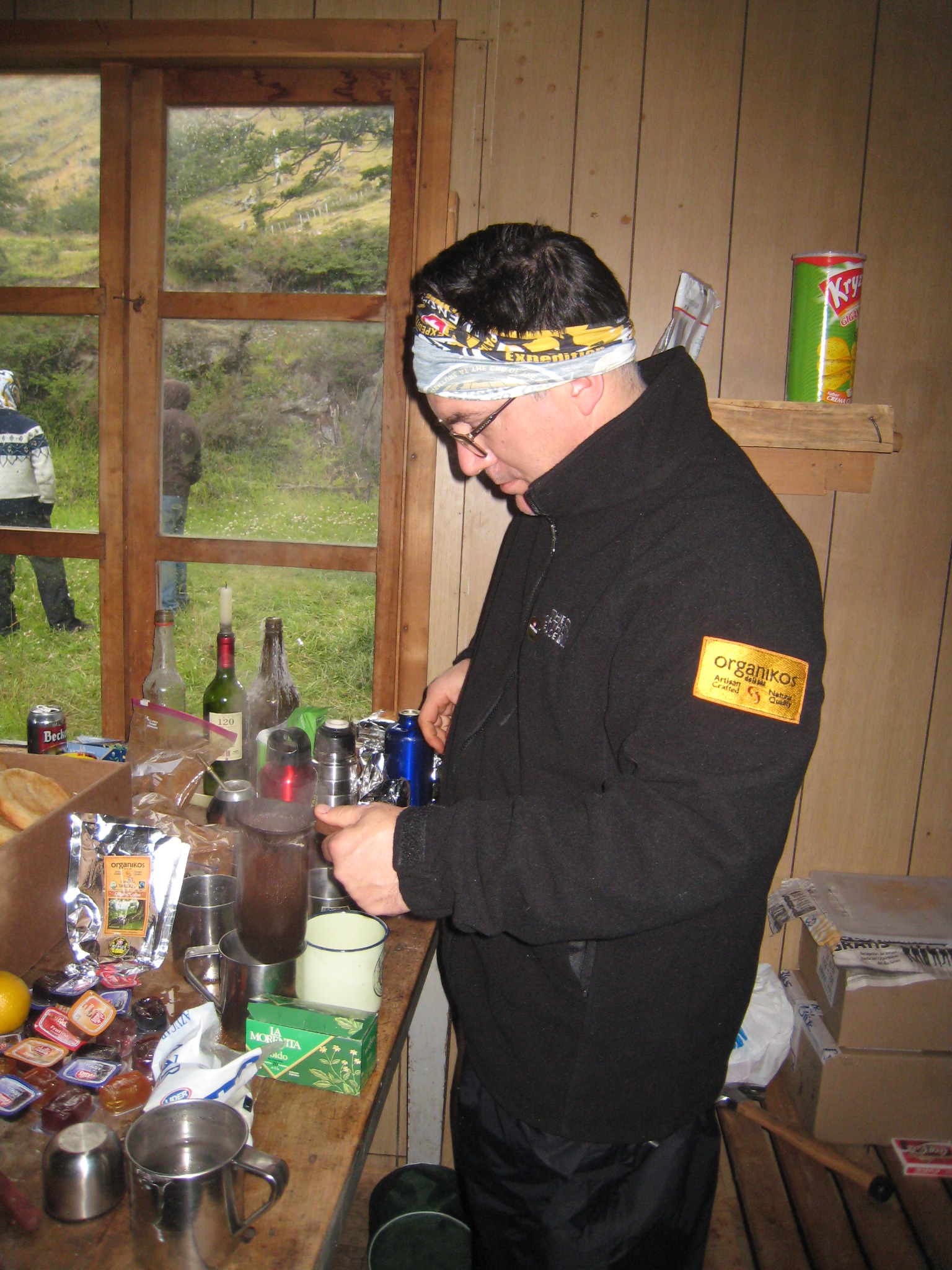
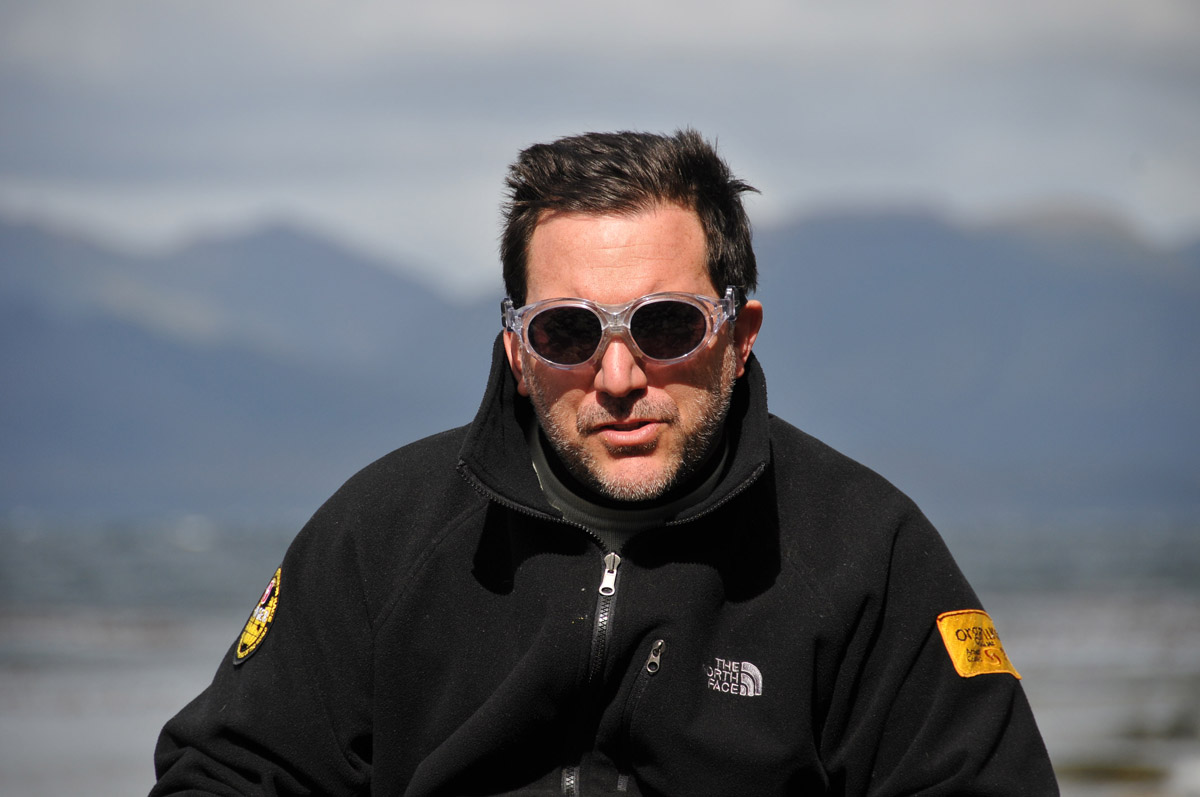
In a brief interview a student recorded my description of the work I was doing in southern Chile from 2008-2010. The Patagonia Expedition Race had secured Wenger’s sponsorship, and now graduate students from Columbia Business School, as well as from Cornell Hotel School, were developing a strategy for how best to use that sponsorship money to achieve lasting conservation results. The patch on the left arm of my jacket shows another sponsor.

Organikos was a minor sponsor compared to Wenger, but in that earlier iteration of Organikos we were already thinking about what is now the 100% Forward commitment.  As a sponsor, I also served coffee from sunrise to sunset at each station along the Race’s 500-mile route. Somewhere I have photos of the race teams drinking Organikos coffee, but at the moment I only find this one of me prepping coffee in the traditional Costa Rican manner to serve to Race volunteers in a farmhouse where we had spent the night on Tierra del Fuego.

In this photo to the left I was waiting for the racers who would soon be arriving at this station in their kayaks. As serious as I appeared to be, it would take nearly a decade to get that coffee launched more formally into the market.

Images Andrew Wilson, Mark Humpfrey, Nicola MaCleod and Bruce Duncan of Team Helly Hansen-Prunesco paddling their way to victory in stage 15 of the 2010 Wenger Patagonian Expedition Race on the island of Tierra del Fuego in southern Chile. Michael Clark Photography

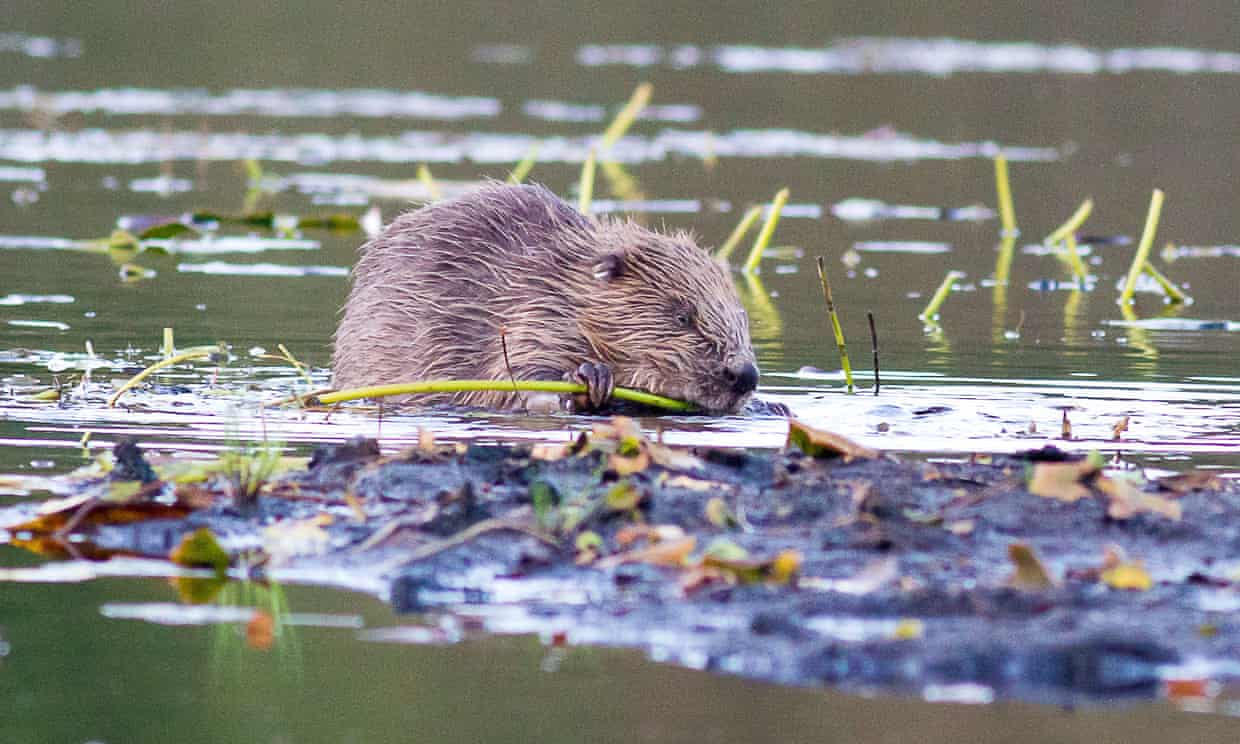
Not long after the photos above were taken, we accepted a new assignment in India that would put the original idea of Organikos on hold. Recently, when Seth took the name and gave it a clear conservation mission, coffee was still the most viable product to start with. I am reminded of all that thanks to Sandra Laville, and the Guardian. Her article, full of good news related to conservation funding in the UK, triggers my memory of the fact that beavers are an invasive species in Patagonia and the Race had the mission of controlling their spread, in the interest of wilderness conservation. Beavers in their natural habitat are in need of protection in some locations, I see:

Wetlands, beavers and Cinderella causes; the growth of environmental funding

Donations from individuals and charities to green causes more than double since 2016

Funding from the People’s Trust for Endangered Species helped reintroduce beavers in Knapdale Forest in Scotland. Photograph: Steve Gardner/Scottish Wildlife Trust/PA

Philanthropic donations to environmental causes have more than doubled in value in the UK as the climate crisis and unprecedented biodiversity loss attract increasing attention from individuals and charities.

The amounts of money given to support efforts to tackle climate change and nature loss range from £5,000 to millions of pounds, and the focus of the funding is as broad.

It includes a £10,000 donation given to support a successful campaign for a deposit return scheme in Scotland; the funding of grassroots defenders of Europe’s last primeval forest, in Poland, and the protection of wetlands in Montenegro; and millions of pounds in support of environmental legal challenges and donations to back campaigning against fossil fuels. Continue reading

The Wonderful World Of Harbingers

Moments after posting about this owl, an email promoting a course about owls appeared in my inbox. Owls have been considered harbingers in different folk and mythic traditions, none of which I subscribe to. A harbinger event on the computer is now most likely an algorithmic event, where one thing triggered another on purpose. Normally I find those intrusive, at best. But, I get emails from the Lab of Ornithology frequently and this one came a few days after the news of the owl in Central Park. Did they put together this course and promo after seeing the publicity that the Central Park owl was getting? If so, bravo. Quick reaction. Well communicated. Watch the brief video that came in the email and tell me you have no interest:

As creatures of the night, owls can seem mysterious and kind of spooky. Some people think of them as bad omens, harbingers of death. But they can also be symbols of knowledge and wisdom.

Owls have fascinated people for millennia. Everyone knows what an owl is, even if you haven’t actually seen one in real life. They’re instantly recognizable, with their large, round heads, flat faces, and forward staring eyes. We seem to be drawn to them because they resemble people. They’re definitely birds, but they also kind of look like us…

Some people are interested in learning more about birds, others are not, but this lesson plan sounds like a good one for starters: Continue reading

Wordists & Their Discontents

One of the earliest series of posts on this platform, wordsmithing was a way for us to say something about words we like, words we avoid, and important words almost lost to history. A fun, useful, if shortlived series. On August 12, 2011 we started the Bird of the Day series, where photos tell colorful stories with no words other than species name and photo location. Yesterday’s BOTD marks the 3,251st entry in that series, whereas the wordsmithing ended after the 26th entry. Parsimony of words combined with excellent photography wins the series longevity contest. But I find I still care enough about words to post on the topic. I cringed when I heard this news below, but was glad to read more about the decision to include a nonsensical word creation in the dictionary (I am 100% with the teacher who will still mark it as incorrect):

Regardless Of What You Think, ‘Irregardless’ Is A Word

Merriam-Webster raised the hackles of stodgy grammarians last week when it affirmed the lexical veracity of “irregardless.”

The word’s definition, when reading it, would seem to be: without without regard.

“Irregardless is included in our dictionary because it has been in widespread and near-constant use since 1795,” the dictionary’s staff wrote in a “Words of the Week” roundup on Friday. “We do not make the English language, we merely record it.”

Merriam-Webster defines irregardless as “nonstandard” but meaning the same as “regardless.” “Many people find irregardless to be a nonsensical word, as the ir– prefix usually functions to indicates negation; however, in this case it appears to function as an intensifier,” the dictionary writes. Continue reading

Coffee & Redemption

merlin_162395559_98cb8532-954c-4586-ab89-d783600df71f-jumbo.jpg

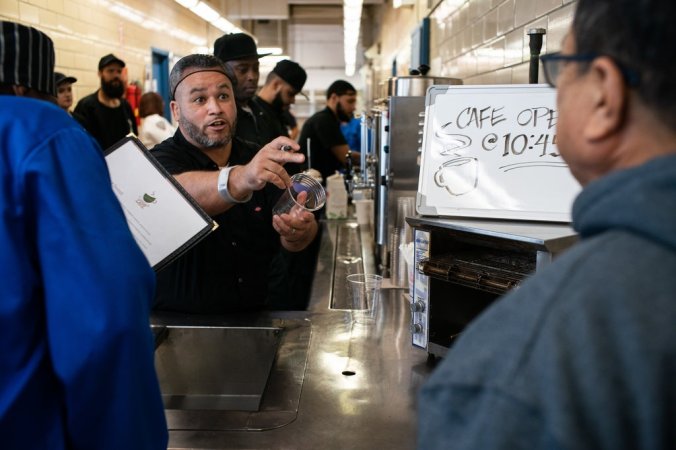
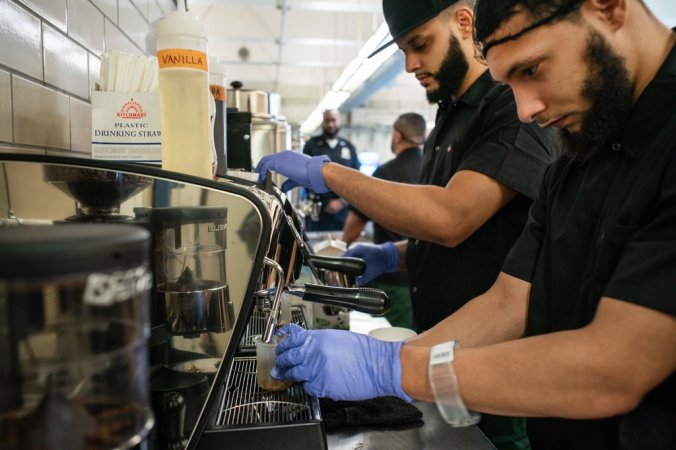
Eddie Rodriguez taking an order. Todd Heisler/The New York Times

Thanks to Amy Chozick for a great story about coffee, redemption and creative solutions to close out 2019:

The Rikers Coffee Academy

Can teaching prison inmates to make lattes give them a chance at a better future?

merlin_162395604_563de7b5-b27e-421a-a3c9-7aabbf8dac12-jumbo.jpg

Omar Jhury and Joshua Molina, right, at Rikers Island manning the espresso machine. Todd Heisler/The New York Times

Officer Green wanted her vanilla latte piping hot. “With vanilla on top, not a lot, just a drizzle, and very hot, don’t make it warm,” she shouted to Eddie Rodriguez, who was taking orders. He nodded and wrote Green on the side of a cup. “Don’t worry, I got ya. Extra hot for Officer Green.” Then he slid the cup down the bar where Mr. Rodriguez and the other inmates in the barista training program at the Rikers Island prison complex were adding ice, steaming milk and grinding beans to load into a $3,000 Nuova Simonelli espresso machine. Continue reading

Experiential Learning & Social Enterprise

img_7929-00d6c37254394099fdabc17f3a9f58edf45afcbe-s2000-c85.jpg

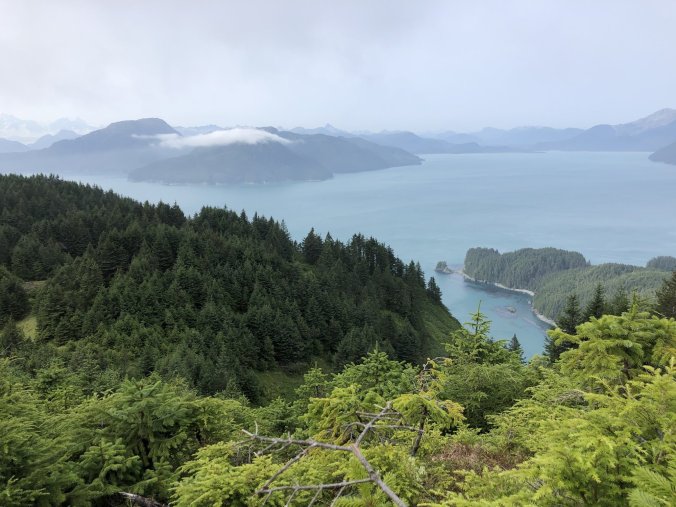
The waters and mountains of the Inian Islands, near Glacier Bay, Alaska.Lauren Migaki/NPR

img_3125-e4c5960c6deafeb70a1351245d93ef84c23822ce-s1300-c85.jpg

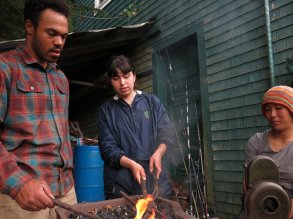
With help from books and YouTube, Abe Marcus (left, pictured with Yasamin Sharifi, center, and Tsu Isaka) has been learning how to operate a coal-powered, hand-cranked forge found on the property. Lauren Migaki/NPR

There is a great story shared yesterday on the National Public Radio (USA) website, told in unusually long form for that outlet, by Anya Kamenetz. I look forward to more stories by this journalist — she relates a story that is as far away from my own experience as I can imagine, but I feel at home in it. The picture to the right, from near the end of the story, hints at one reason. But it is not that. Nor is it the fact that I witnessed the birth and evolution of a similar initiative in Costa Rica.

I taught a field course in amazing locations (2005 in Senegal, followed by Costa Rica in 2006 followed by Croatia, India, Siberia and Chilean Patagonia), but that bore little resemblance to the initiative in this story. All those factors may help me feel at home in this story, but mostly I relate to it as a story told well for the purpose of understanding the motivations of a social entrepreneur and incidentally her commitment to experiential learning.
In Alaska’s Wilderness, A New Vision Of Higher Learning

img_3218-40ad27a28a658ea679c7588062a86574bdbf6e68-s1300-c85.jpg

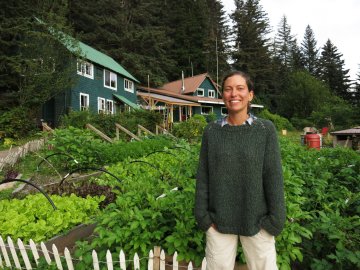
Marcus stands in front of the massive vegetable garden at The Arete Project in Glacier Bay, Alaska. Lauren Migaki/NPR

In Glacier Bay, Alaska, mountains rush up farther and faster from the shoreline than almost anywhere else on the planet. Humpback whales, halibut and sea otters ply the waters that lap rocky, pine-crowned islands, and you can stick a bare hook in the water and pull out dinner about as fast as it takes to say so.

This is the place 31-year-old Laura Marcus chose for her Arete Project. Or just maybe, this place chose her.

The Arete Project takes place in the remote wilderness of the Inian Islands in southeast Alaska.
Lauren Migaki/NPR

Arete in Greek means “excellence.” And Marcus’ Arete is a tiny, extremely remote program that offers college credit for a combination of outdoor and classroom-based learning. It’s also an experiment in just how, what and why young people are supposed to live and learn together in a world that seems more fragile than ever. It’s dedicated, Marcus says, to “the possibility of an education where there were stakes beyond individual achievement — where the work that students were doing … actually mattered.” Continue reading

Conservation via Changing Perspectives

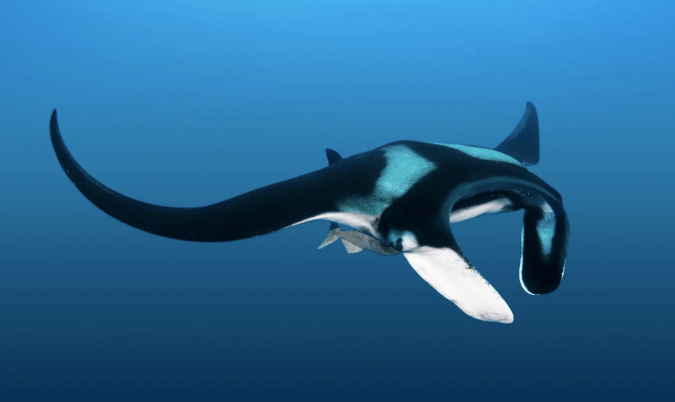
The manta ray tourism model in Peru is helping to protect rays and their habitat. Photograph: Martin Strmiska/Getty Images

The correlation between the success rates of ecotourism as a conservation tool and the “charisma quotient” of a particular species may be stating the obvious, but the giant manta is one such example.

It’s especially gratifying when the strategy takes engaging the next generation in the process.

How Peru fell in love with a sea giant worth far more alive than dead

The giant manta ray is at risk in the Pacific ocean, but the rise of ecotourism is changing attitudes among local fishermen

Fishermen heading out to sea off Peru’s northern coast keep a keen eye on the turquoise waters below them, hoping for a glimpse of the elusive giant manta ray gliding by.

Nowadays the boats are taking tourists rather than nets. The fish they once caught are now in decline, and the fish the visitors want to see now are worth far more alive than dead.

This wildlife-rich stretch of the eastern tropical Pacific shared with Ecuador is home to one of the largest populations of the world’s biggest ray – the giant manta – and the local community, led by marine scientist Kerstin Forsberg, is trying to conserve the creatures.

These ocean-going giants are targeted for their gill plates, used in Chinese medicine, or, more commonly in Peruvian waters, they become entangled in fishing nets. With a wingspan that can measure as much as nine metres across, the giant manta rays have declined by up to a third globally and are classified as vulnerable on the red list of the International Union for Conservation of Nature.

“This species was really overlooked in my country,” says Forsberg, 34. But that is no longer the case in Zorritos, a village arranged along a stretch of Peru’s west-facing Pacific coastline.

In eight years, Forsberg has changed the mentality here towards the mantas. She has helped create a fisherman’s association focused on ecotourism encouraging local and foreign visitors to observe or even swim with the rays. The Guardian spotted rays leaping out of the sea and swimming close to the boat on one of these trips.

“People here now get excited about giant manta rays. Before, they didn’t even notice that they existed,” Forsberg says. “Now if the manta ray gets entangled in their nets, fishermen start releasing them and report on it excitedly. They’re happy to mention it to their peers.” Continue reading

Schools as Frontline Against Food Deserts

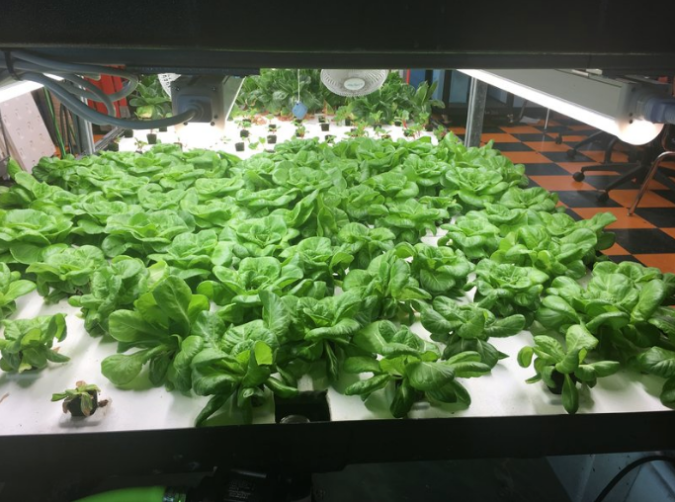
These greens are among the hydroponic crops grown by students at Brownsville Collaborative Middle School, in Brooklyn, N.Y. In June, the students started to sell discounted boxes of the fresh produce to community members. Robin Lloyd/for NPR

Thanks again to the Salt for more inspiring stories about communities cultivating more than just smart students.

How Hydroponic School Gardens Can Cultivate Food Justice, Year-Round

After a full day of school a few weeks ago, 12-year-old Rose Quigley donned gloves and quickly picked bunches of fresh lettuce, Swiss chard, kale, mint and oregano. But she didn’t have to leave her school in Brooklyn, N.Y., or even go outdoors to do it.

Quigley is one of dozens of students at Brownsville Collaborative Middle School who in the past year built a high-tech, high-yield farm inside a third-floor classroom. They decided what to grow, then planted seeds and harvested dozens of pounds of produce weekly.

The vegetables never stop coming because the crops are grown hydroponically — indoors, on floor-to-ceiling shelves that hold seedlings and plants sprouting from fiber plugs stuck in trays, each fed by nutrient-enriched water and lit by LED lamps. The students provide weekly produce for their cafeteria’s salad bar and other dishes.

Later that same day, for the first time, Quigley and several of her schoolmates also sold some of their harvest — at a discount from market rates — to community members. It’s part of a new weekly “food box” service set up in the school’s foyer. Each of 34 customers receive an allotment of fresh produce intended to feed two people for a week. Three students, paid as interns, used digital tablets to process orders, while peers handed out free samples of a pasta salad featuring produce from the farm. Continue reading

Have Books – Will Travel

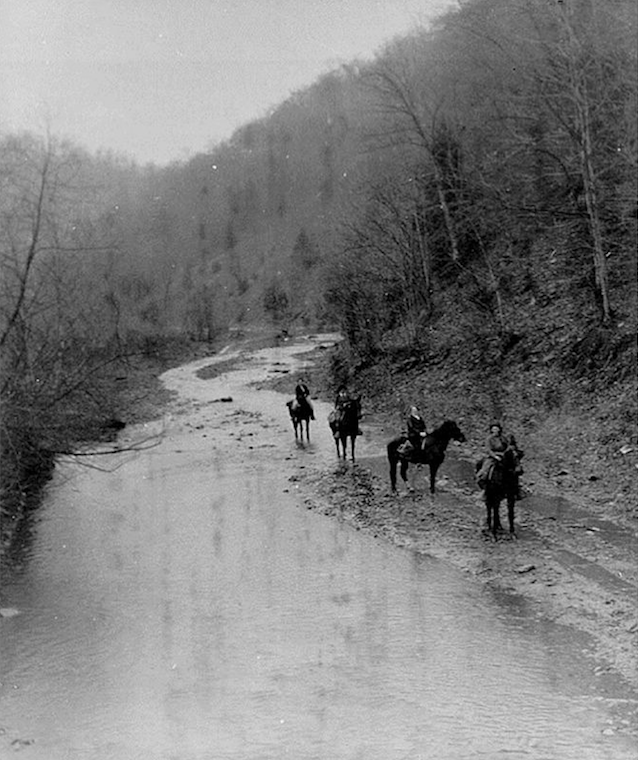
A Pack Horse Librarian returning over the mountain side for a new supply of books (Part of Goodman-Paxton Photographic Collection, Kentucky Digital Library)

We’ve long held the belief that librarians are among the real life Super Heroes of society.  The history of the Pack Horse Librarians may be new to us, but without doubt, they deserve a pinnacle spot in the pantheon.

There are both rural and urban communities in our country that continue to qualify as “at risk” related to the official support received for the public educational and cultural services that libraries represent.  Some of the New Deal programs that helped millions of Americans survive the Great Depression seem advisable in the face of  administrations that turn their backs on libraries and other equivalent cultural elements that helped make the country great.


Horse-Riding Librarians Were the Great Depression’s Bookmobiles

During the Great Depression, a New Deal program brought books to Kentuckians living in remote areas

Pack Horse Librarians start down Greasy Creek to remote homes of mountaineers anxious for books. (Part of Goodman-Paxton Photographic Collection, Kentucky Digital Library)

Their horses splashed through iced-over creeks. Librarians rode up into the Kentucky mountains, their saddlebags stuffed with books, doling out reading material to isolated rural people. The Great Depression had plunged the nation into poverty, and Kentucky—a poor state made even poorer by a paralyzed national economy—was among the hardest hit.

The Pack Horse Library initiative, which sent librarians deep into Appalachia, was one of the New Deal’s most unique plans. The project, as implemented by the Works Progress Administration (WPA), distributed reading material to the people who lived in the craggy, 10,000-square-mile portion of eastern Kentucky. The state already trailed its neighbors in electricity and highways. And during the Depression, food, education and economic opportunity were even scarcer for Appalachians.

They also lacked books: In 1930, up to 31 percent of people in eastern Kentucky couldn’t read. Residents wanted to learn, notes historian Donald C. Boyd. Coal and railroads, poised to industrialize eastern Kentucky, loomed large in the minds of many Appalachians who were ready to take part in the hoped prosperity that would bring. “Workers viewed the sudden economic changes as a threat to their survival and literacy as a means of escape from a vicious economic trap,” writes Boyd.

This presented a challenge: In 1935, Kentucky only circulated one book per capita compared to the American Library Association standard of five to ten, writes historian Jeanne Cannella Schmitzer,. It was “a distressing picture of library conditions and needs in Kentucky,” wrote Lena Nofcier, who chaired library services for the Kentucky Congress of Parents and Teachers at the time. Continue reading