Emma Marris On Urban Shade

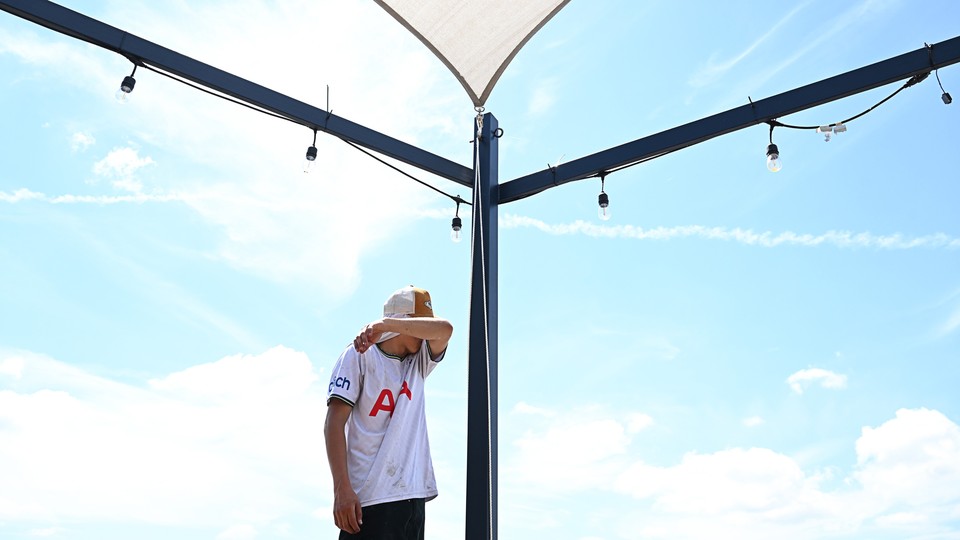
A man wipes his forehead under the hot sun as he walks under shade sail.

Matt McClain / The Washington Post / Getty

The science writer Emma Marris, here featured in The Atlantic, first came to our attention in a passing mention ten years ago, then again in full force six years ago. Whether or not you live in an urban area, you likely depend on urban areas for some part of your livelihood so her essay may be of interest:

Trees are nice and all, but they’re not enough.

On a 92-degree Saturday afternoon in Portland, Oregon, I went looking for shade in Cully Park, which was built on top of an old landfill and opened in 2018. The city included plenty of trees in the design—I mean, this is Oregon. Continue reading

Shrimp Transparency

Shrimp and transparent shrimp shells sitting on a white surface.We link to the work of Erik Vance for its clarity and utility:

Americans love their prawns. So how healthy are they — for us and for the planet?

Americans aren’t particularly enthusiastic about seafood. We eat less than half of what a Japanese or Indonesian person does. Less than a third of the average Icelander. But there is one big exception: shrimp. Continue reading

Get Your Hands Dirty

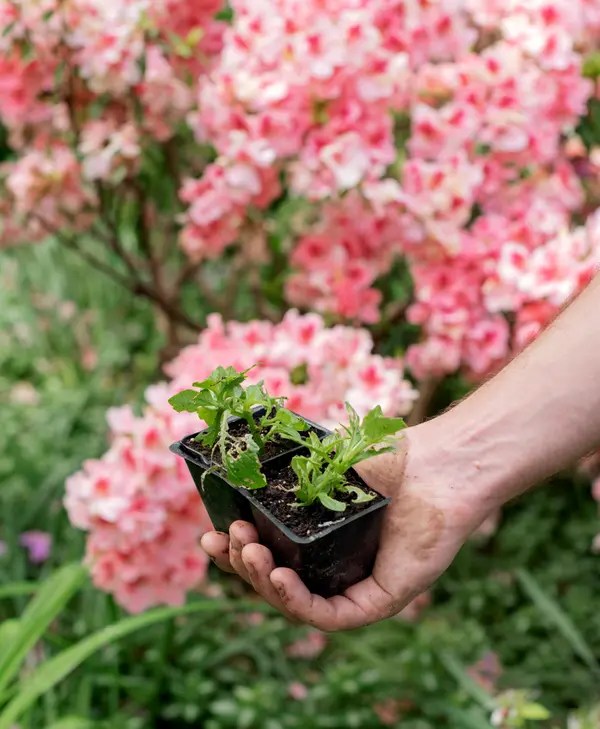
Gardening can provide people with a sense of meaning and purpose. “When you’re working with plants, you’re the nurturer,” said Emilee Weaver, the program manager of therapeutic horticulture at the North Carolina Botanical Garden. Jasmine Clarke for The New York Times

This is good reading following my morning routine in recent weeks, now that the rains have returned. Thanks to Dana G. Smith, who reported this story from Plant Hardiness Zone 8a for the New York Times:

Digging holes can be a workout and mood booster all rolled into one.

Last Saturday, I was covered in dirt, my back ached, the scream of a trillion cicadas rang in my ears, and, despite my best efforts, a sunburn was developing on the back of my neck.

I was in heaven.

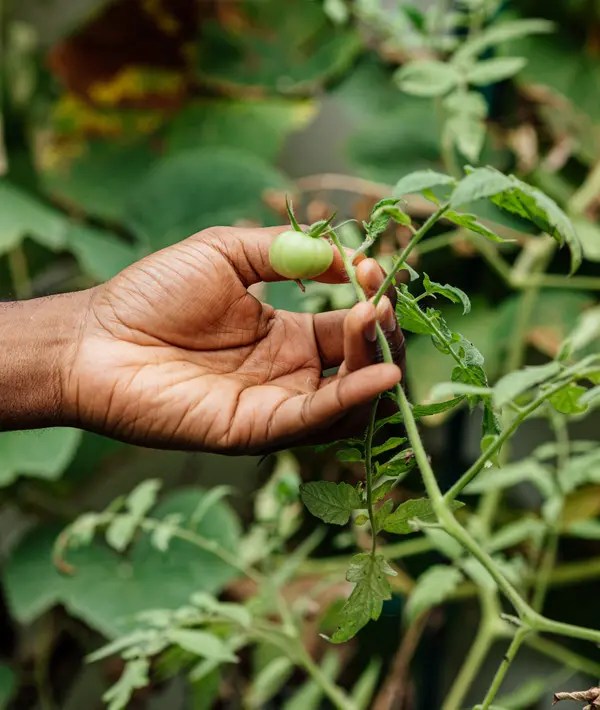
Many gardeners say that when they get their hands in the soil, they feel stress “roll off their shoulders,” said Jill Litt, a professor of environmental health at the University of Colorado at Boulder. Ike Edeani for The New York Times

Over the course of the day, I planted my summer haul of annuals (a riot of reds, purples and yellows), transplanted some fall-blooming mums and pulled a Montauk daisy that had grown too big for the space. A neighbor took the daisy off my hands, and in return gifted me some iris and lamb’s ear that he needed to thin out of his yard.

For me, gardening is a workout, meditation and opportunity to socialize with my neighbors all rolled into one. And while I’m admittedly biased, research backs up some of my observations that gardening can have real benefits for your mind and body.

Shoveling mulch, pulling weeds and lugging around a watering can all qualify as moderate-intensity physical activities. And gardeners tend to report higher levels of physical activity overall, compared with non-gardeners. Continue reading

Oobli, Brazzein & Revolution In Sweetness

In our extended family there are several cases of diabetes that have made me interested in sugar and its alternatives. Stevia came to my attention while working in Paraguay, when honey was my primary interest, because stevia is native to that place. Stevia is a taste of place product as much as any other we have come to share in our current work.

But neither stevia nor have any other so-called sugar alternatives have featured in our work. Still, this article by Yasmin Tayag in The Atlantic fits perfectly as a theme in our pages:

Illustration by Ben Kothe / The Atlantic

A New Sweetener Has Joined the Ranks of Aspartame and Stevia

Unfortunately, it’s still nothing like real sugar.

A few months ago, my doctor uttered a phrase I’d long dreaded: Your blood sugar is too high. With my family history of diabetes, and occasional powerful cravings for chocolate, I knew this was coming and what it would mean: To satisfy my sweet fix, I’d have to turn to sugar substitutes. Ughhhh. Continue reading

Breadfruit More Fully Appreciated

Wolfgang Kaehler / LightRocket / Getty

Our thanks to Zoë Schlanger for this corrective. Breadfruit has appeared more than once in our pages, but never with appreciation like this:

Too Few Americans Are Eating a Remarkable Fruit

Breadfruit is a staple in tropical places—and climate change is pushing its range north.

Someplace in the lush backroads of San Sebastián, in western Puerto Rico, my friend Carina pulled the car over. At a crest in the road stood a breadfruit tree, full of basketball-size, lime-green fruits, knobbled and prehistoric, like a dinosaur egg covered in ostrich leather. Continue reading

Children, Phones & Futures

Photographs by Maggie Shannon

It has been our belief since starting that getting outdoors is a very good preventative medicine, but maybe that was too simple a focus. Phones have disrupted life, especially for our young ones, more than we appreciated. Our thanks to Jonathan Haidt and The Atlantic for this (podcast discussion of the research here):

The environment in which kids grow up today is hostile to human development.

Something went suddenly and horribly wrong for adolescents in the early 2010s. Continue reading

Addiction To Longevity

Like many Italian aging researchers, Dr. Longo thinks Italy doesn’t invest enough in research. “Italy’s got such incredible history and a wealth of information about aging,” he said. “But spends virtually nothing.” Alessandro Grassani for The New York Times

Faux fasting is new to us, but thinking about diet is not. Our thanks to Jason Horowitz for another story from Italy:

To Live Past 100, Mangia a Lot Less: Italian Expert’s Ideas on Aging

Valter Longo, who wants to live to a healthy 120 or 130, sees the key to longevity in diet — legumes and fish — and faux fasting.

Most members of the band subscribed to a live-fast-die-young lifestyle. But as they partook in the drinking and drugging endemic to the 1990s grunge scene after shows at the Whisky a Go Go, Roxy and other West Coast clubs, the band’s guitarist, Valter Longo, a nutrition-obsessed Italian Ph.D. student, wrestled with a lifelong addiction to longevity. Continue reading

A Caffeine Primer

Illustration by Ben Kothe / The Atlantic. Source: Getty.

Considering the coffee habits, and commercial interests of those of us contributing on this platform, we thank Yasmin Tayag, at The Atlantic for this:

Caffeine’s Dirty Little Secret

“How much is too much?” is an impossible question.

On Tuesday, curiosity finally got the best of me. How potent could Panera’s Charged Lemonades really be? Within minutes of my first sip of the hyper-caffeinated drink in its strawberry-lemon-mint flavor, I understood why memes have likened it to an illicit drug. My vision sharpened; sweat slicked my palms. Continue reading

Plastic’s Plentiful Problems

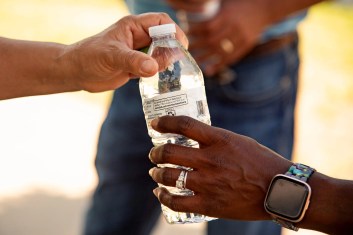
Emil Lippe for The New York Times

The waste has been our main objection to plastic water bottles. But there are other major questions.

We have reason to wonder (more on that another day) whether water in reusable glass bottles is an answer to this one:

Bottled Water Is Full of Plastic Particles. Can They Harm Your Health?

Here’s what scientists know so far about the health effects of nanoplastics, and what you can do to reduce your exposure.

A liter of bottled water contains nearly a quarter of a million pieces of nanoplastic on average, according to new research published this week in the Proceedings of the National Academy of Sciences. Continue reading

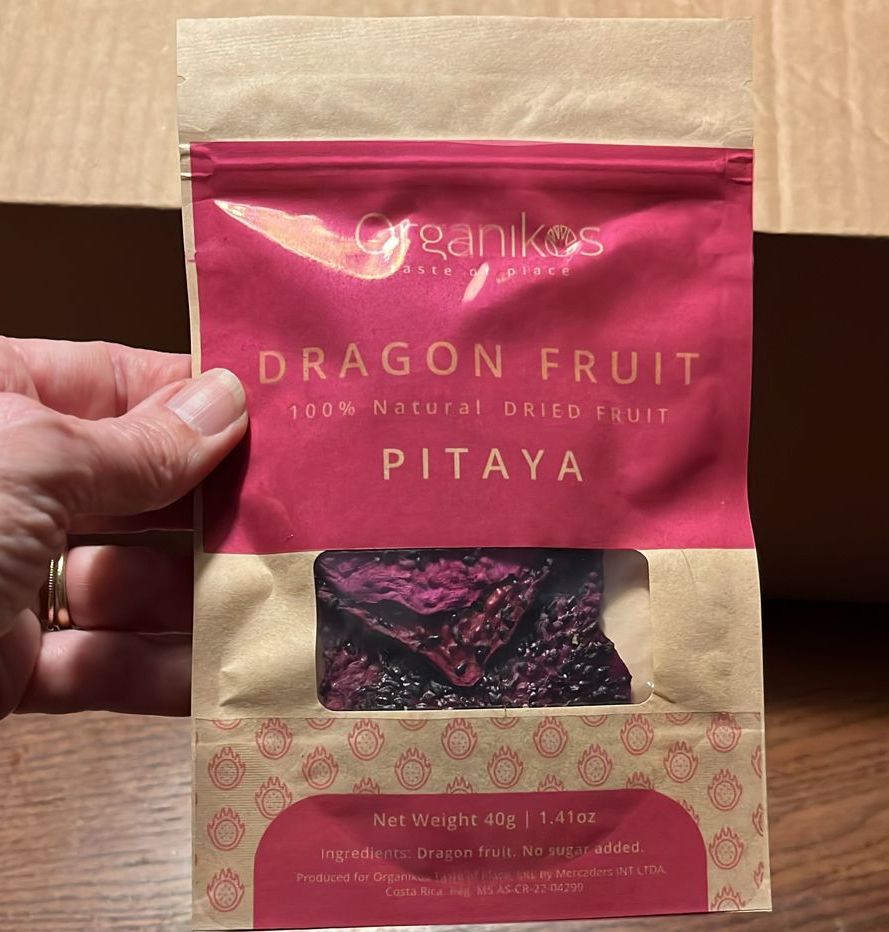
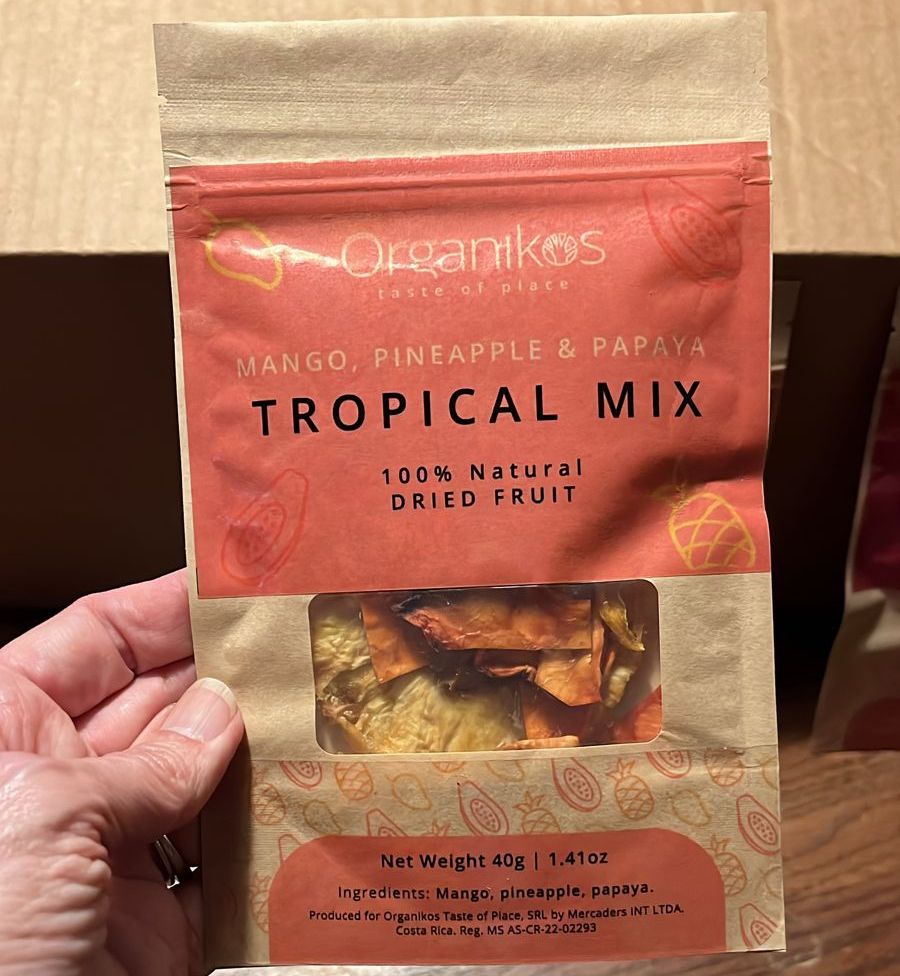
Dragon Fruit, Pineapple & Tropical Mix, Oh My

It started with the dehydrated Pitaya. I was sent a sample. I did not open it for many days because the last time a food artisan tried making something from this fruit I did not like it. Love the fruit, did not love that attempt at hot sauce. The man who sent me the sample called me to ask how I liked what he sent, and because the sample was sitting right next to me I opened it and tried it. Oh. My.

Then I opened the pineapple. Oh my, again.

And then the mix of mango, pineapple and papaya, the latter of which is difficult to dehydrate without making tough to chew. Again, oh my.

So now all three are in our packaging, and going in the Authentica shops today.

Kelp & Life

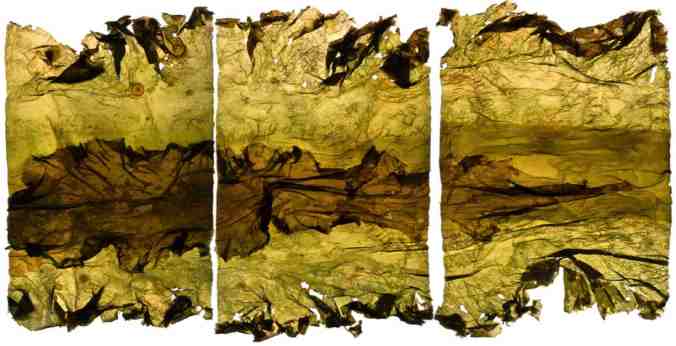
Sugar kelp from Penobscot Bay, Maine. Photograph: Josie Iselin

We have featured the promise of various seaweed schemes many times, and we find it evergreen for further exploration:

Could I live and breathe seaweed – and reduce my use of plastics – for 24 hours?

Seaweed Day starts at 8am. Haunted by pervasive news that so many of our everyday habits harm our planet, I wonder how to minimize my personal use of plastics. I embark upon a day of replacing the microplastics that pollute our atmosphere, our water and even our bloodstreams.

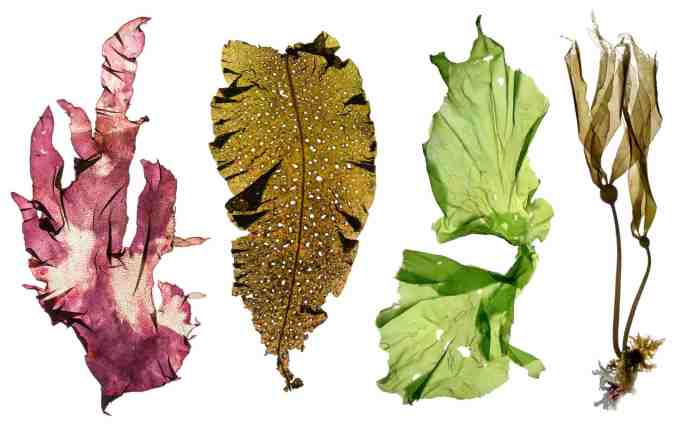
From left to right, Chondracanthus, Agarum, Ulva (sea lettuce), Nereocystis (juvenile bull kelp). Photograph: Josie Iselin

How much of my daily life can I accomplish with seaweed? Eating, washing, dressing? Armed with a budget of $500, I set out on a seaweed-based product shopping spree. Continue reading

Notes From A Pennsylvania Garden

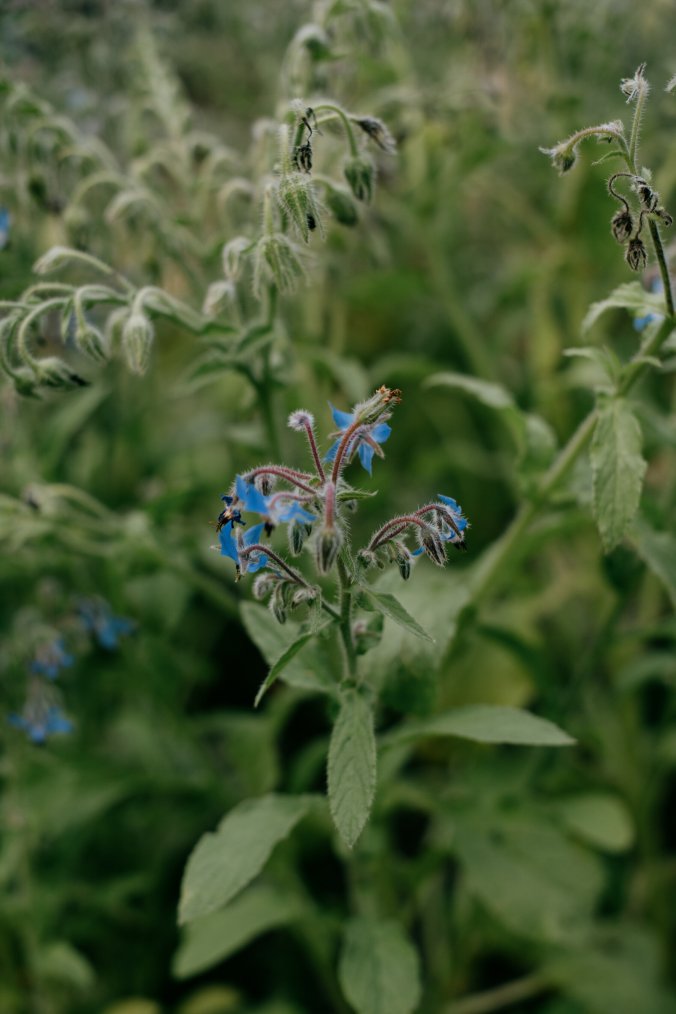
Borage

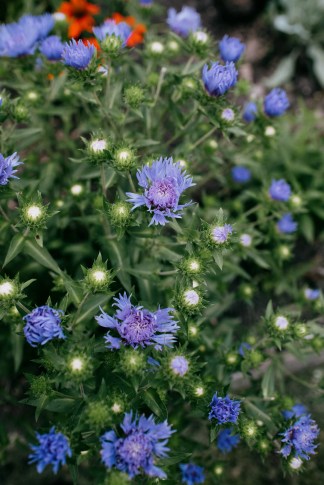
The thoughts and images in this article inspire pre-dawn work on that soil I mentioned yesterday. We do not have the heat here that she does there, but the nudge to go out in the dark is welcome. My attention has been solely focused on regeneration below for the coffee that once  thrived above ground. Time to start thinking of accent colors and other edibles:

Stokes asters

What You Discover When You Garden at Night

Daytime heat forced a writer with a green thumb to change her routine. She found unexpected pleasures.

When it’s too hot to garden during the day, what is there to do but garden at night? Neither floppy hat nor gobs of sunscreen will lure me into the glare of a hot and humid, possibly record-breaking, 90-plus-degree day. Or, as our local meteorologist reports: one with a heat index of 103. So instead, I venture out into the garden after dinner, dogs in tow, surveying the raised beds in the coolness of evening.

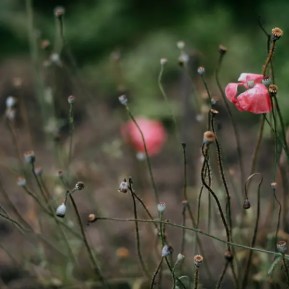
Poppies that have gone to seed, bringing to mind “the coming glory of red, white, and pink blooms” next season.

I carry a basket full of seeds, green string to tie the tomatoes higher, and wooden stakes and black markers to record once again what I have sown, some new crops and others a repeat of those planted earlier in the season. It is midsummer now and the lettuce, radishes, and shallots are fading, but the basil and tomatoes, beans and zucchini are finally coming into their own. A little more rain and warmth and I will be able to make my first tomato sandwich, one of the driving forces, no doubt, behind planting a vegetable garden. Continue reading

To Dye For Author Interviews

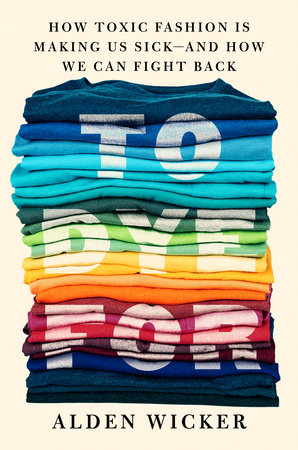
None of us wants yet one more environmental hazard to worry about. But ignorance is not bliss. Wired offers an interview with Alden Wicker about the book to the right, and the Fresh Air podcast with her is also worth the listen, especially if you have sensitive skin and/or have ever wondered if your clothing was the cause of certain kinds of discomfort. Women of reproductive age, especially, listen to both:

Your Clothes Are Making You Sick

This week, we talk to the author of To Dye For, a new book about toxic fashion and the abundance of harmful chemicals in our clothing.

HOTOGRAPH: ALFIAN WIDIANTONO/GETTY IMAGES

HAVE YOU EVER put on a new shirt and discovered that it makes you feel itchy? Or taken off a new pair of pants at the end of the day to find that the fabric has given you a rash? This problem is increasingly common as more chemicals are added to our clothing when they’re dyed or treated with additives that make them resistant to stains, wrinkles, and odors. Some of these chemicals are irritants that can cause breathing problems or skin issues. Others are toxic enough to trigger life-altering autoimmune diseases. Since the fashion industry operates within loose regulations, the problem of toxic apparel isn’t going away anytime soon.

Paris & Continuous Greening

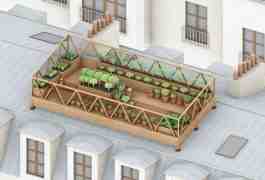
Paris’ iconic zinc roofs can heat up to 194 degrees F on a hot summer day. JAN WOITAS / PICTURE-ALLIANCE VIA GETTY IMAGES

We have celebrated the many greening efforts made in Paris over the last decade, and today is a small but important addition to our knowledge of those commitments. Our thanks to Jeff Goodell in Yale e360:

A rendering of a rooftop terrace installed by the Parisian startup Roofscapes. ROOFSCAPES

Paris When It Sizzles: The City of Light Aims to Get Smart on Heat

With its zinc roofs and minimal tree cover, Paris was not built to handle the new era of extreme heat. Now, like other cities worldwide, it is looking at ways to adapt to rising temperatures — planting rooftop terraces, rethinking its pavements, and greening its boulevards.

The tree-lined Boulevard des Italiens is much cooler than nearby streets that lack trees.

The tree-lined Boulevard des Italiens is much cooler than nearby streets that lack trees. MBZT VIA WIKIPEDIA

There’s a long tradition in France of taking August off for holiday. Paris virtually shuts down as the temperature drifts around in the seventies, and people go to the beach or the mountains to cool off and relax. Think of it as an old‑fashioned adaptation to heat. People who stick around during August are often older or have jobs that require them to stay and keep the city functioning. Continue reading

Crop Swap LA & Other Microfarm Advances

Illustration: Julia Louise Pereira/The Guardian

Our thanks to Victoria Namkung for this reporting in the Guardian, from Los Angeles:

‘Everything is natural and tastes so good’: microfarms push back against ‘food apartheid’

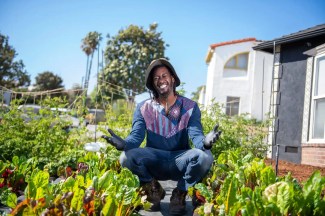
Crop Swap LA founder Jamiah Hargins in the Asante microfarm in Los Angeles, California. Photograph: Valérie Macon/AFP/Getty Images

Bipoc-led local farms in unconventional spaces decentralize systems that have produced food deserts and create food equity

On a recent Sunday morning in South Los Angeles, Crop Swap LA volunteers and staffers harvested bags of freshly picked produce from the front yard of a residence. Located just steps from Leimert Park Plaza, the Asante microfarm is the first of what will be numerous microfarms created by the organization, which is dedicated to growing hyperlocal food on unused spaces “in the neighborhood, exclusively for the neighborhood”. Continue reading

Indigenous Food Foraging

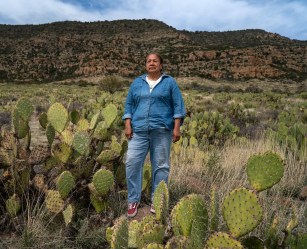
Prickly pear cacti, which produce Twila Cassadore’s favorite fruit. Photograph: Gabriela Campos/The Guardian

Samuel Gilbert was in Bylas, Arizona, on the San Carlos Apache Reservation to report this article, which contains excellent accompanying photographs by Gabriela Campos.

We thank the Guardian for this coverage of indigenous heritage:

‘It healed me’: the Indigenous forager reconnecting Native Americans with their roots

Twila Cassadore hopes teaching Western Apache traditional foodways can aid mental, emotional and spiritual health
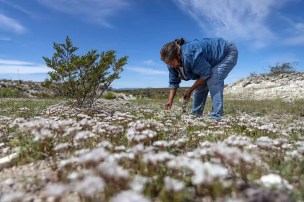
Twila Cassadore gathers wild pearl onions on a foraging trip in the San Carlos Apache Reservation in April. Photograph: Gabriela Campos/The Guardian

On a warm day in April, Twila Cassadore piloted her pickup truck toward the mountains on the San Carlos Apache Reservation in Arizona to scout for wild edible plants. A wet winter and spring rains had transformed the desert into a sea of color: green creosote bushes topped with small yellow flowers, white mariposa lilies, purple lupines and poppies in full bloom.
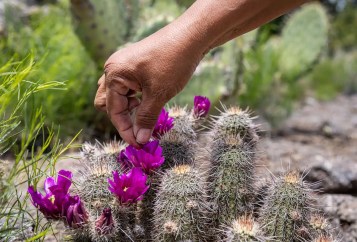
Cassadore picks the petals off a flowering cactus during a foraging trip. She uses the petals in salads. Photograph: Gabriela Campos/The Guardian

Cassadore and I drove up a rough dirt road that used to be an old cattle trail, passing through various ecosystems, moving from Sonoran desert to grasslands and piñon-juniper woodlands. In each area, Cassadore would stop to gather desert chia seeds, cacti flowers and thistles.

Cassadore stopped her truck beside a three-leafed sumac bush brimming with fruit. Continue reading

Weed Is A Weed Is A Weed

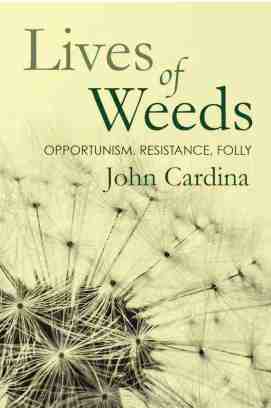
Weeds are classified subject to norms, we have read; thanks to Rivka Galchen for reminding us, and reference to this book:

What Is a Weed?

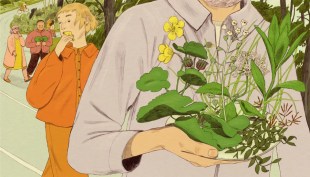
The names we call plants say more about us than they do about the greenery that surrounds us.

Steve Brill’s first stop was the greenery behind the bike racks. Brill, who is known as Wildman Steve, picked up a weed with heart-shaped seed pods and a small, four-petalled white flower. About thirty of us were gathered for a three-hour foraging tour through Prospect Park, in Brooklyn.

Illustration by Karlotta Freier

The plant was shepherd’s purse, a name that references the seed pods’ resemblance to the containers shepherds used to make from the bladders of sheep. “It’s in the mustard family,” Brill said. “Most all of the flowers in the mustard family are four petals in the shape of a cross.” He encouraged everyone to take a bite, and to tell him what vegetable it tasted like. Continue reading

Better Living Through Birding, Christian Cooper’s Forthcoming Book

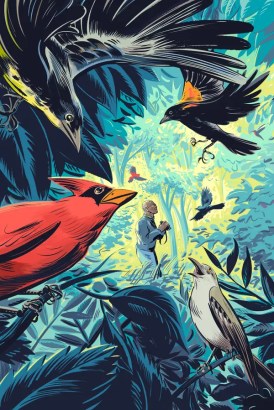
Wesley Allsbrook

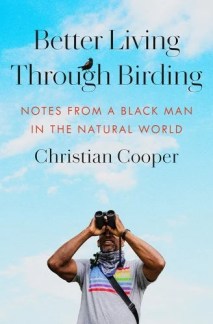
Christian Cooper, an American science writer, is author of the forthcoming book (below left) from which the following essay in the New York Times is adapted:

Three Years After a Fateful Day in Central Park, Birding Continues to Change My Life

Early in the morning of May 25, 2020, I biked from my apartment on Manhattan’s Lower East Side to Central Park to go birding in the Ramble. Despite the uncertainties of the time — New Yorkers were living in a hot spot of the raging Covid pandemic, with no vaccine in sight — I strove to start this warm, sunlit Memorial Day on a happy note by wandering my favorite urban woodlands in search of migrating songbirds.

I was focused on the end-of-season hunt for a mourning warbler, a small yellow and gray skulking bird that’s difficult to spot and relatively rare. I hadn’t yet seen one that year.

Visiting the park in the morning to look for birds has long been a springtime routine for me. I wake before sunrise and grab my Swarovski binoculars — a 50th-birthday present from my father — and head out the door. Continue reading

Out With PFAS, Considering Alternatives

PFAS are used as a coating on food packaging and are prevalent in other everyday items like personal care products and textiles.

Triple Pundit, and writer Riya Anne Polcastro, are new to us, and we appreciate their coverage of this complex topic, important both for health and environmental reasons:

Nixing PFAS is a Real Possibility: Here’s One Company That’s Doing It

Per- and polyfluorinated substances (PFAS) have been getting a lot of negative publicity. And with good reason. Classified as “forever chemicals,” they’ve been found in food, water, soil, animals and even our blood. Although the extent of their effects is not fully understood, they are known to negatively impact human health in a variety of ways. But while many are calling for an overall ban on the chemicals, pushback from the industry seeks to simply switch out the PFAS we already know are harmful with lesser-known ones that likely have the same — or possibly even worse — effects. Continue reading

About The Food Waste Known As Diversion

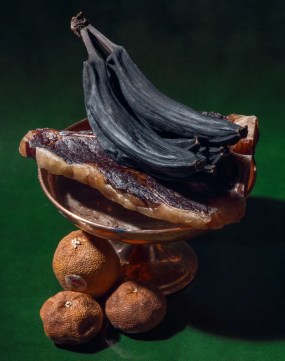
Photograph by Grant Cornett

As still life compositions go, the photo to the right is classic in style and weirdly perfect for the essay it accompanies.  Helen Rosner frequently writes about food, including a review that convinced me to watch The Bear, and this is the best of her work that I have read:

The Promises of the Home “Composting” Machine

A new crop of techy appliances wants to help fight the food-waste crisis. How virtuous should we feel using them?

In the course of a week, my kitchen produces a shocking quantity of what we might think of as edible trash: apple peels, garlic nubs, a bit of gristle from a steak, Dorito dust, tea bags, the iron-hard heel of a loaf of bread that’s been sitting out overnight. The meat scraps I feed to my dog. The bones and vegetable scraps I store in the freezer in gallon-size ziplock bags and periodically bung into a pot and simmer into stock. But even then, once the stock is made, and the chicken bones or onion ends are leached of all their flavor, I’m left again with edible trash—only now it’s soggy. And then there are the times when the strawberries aren’t sealed right and become fuzzy with mold, or the delivery sandwich turns out to be gross, or the refrigerator’s compressor breaks and somehow we don’t notice, or I’m just exhausted and overwhelmed and want everything gone. Continue reading