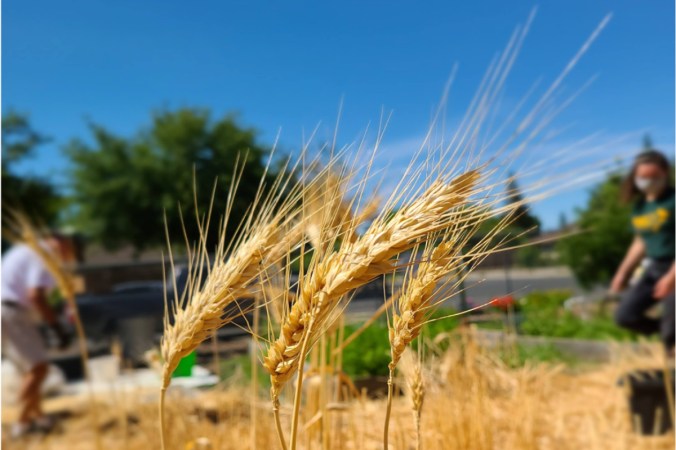
Harvesting Hard Red Spring wheat variety Summit 515 at Whitehead Elementary school in Woodland, California – the second school to grow wheat as part of the Wheat 2 Schools project. (Photo courtesy of Claudia Carter)
Thanks to Civil Eats, after a while, for bringing Nan Kohler and her mission to our attention:
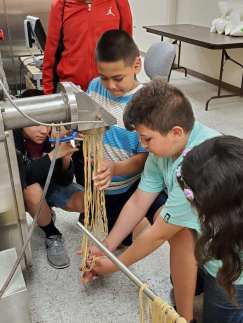
Elementary students processing whole wheat pasta with the wheat they harvested that season from their school’s wheat garden.
A new project in California aims to purchase mills for school cafeterias, marking the next step in years-long effort to bring local, whole grains to schools around the country.
Nan Kohler founded the milling company Grist & Toll in Pasadena, California in 2013 and her freshly milled flours have been a hit with bakers, chefs, and locavores ever since. But her abiding wish is to sell California-grown, freshly milled whole grain flour, which is nutritionally superior to refined flour, to the public schools in the area. Continue reading →
Indigenous women in North and Central America are coming together to share ancestral knowledge of amaranth, a plant booming in popularity as a health food
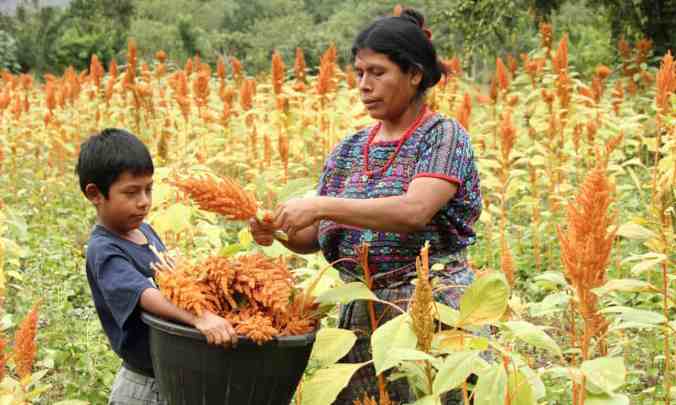
An elderly woman cuts an amaranth crop, in Uttarakhand, India. The plant is indigenous to North and Central America but also grown in China, India, Southeast Asia, West Africa and the Caribbean. Photograph: Hitendra Sinkar/Alamy Stock Photo
Just over 10 years ago, a small group of Indigenous Guatemalan farmers visited Beata Tsosie-Peña’s stucco home in northern New Mexico. In the arid heat, the visitors, mostly Maya Achì women from the forested Guatemalan town of Rabinal, showed Tsosie-Peña how to plant the offering they had brought with them: amaranth seeds.
Back then, Tsosie-Peña had just recently come interested in environmental justice amid frustration at the ecological challenges facing her native Santa Clara Pueblo – an Indigenous North American community just outside the New Mexico town of Española, which is downwind from the nuclear facilities that built the atomic bomb. Continue reading →
Our work with coffee farmers in Costa Rica in recent years has convinced me that without hybridization there will not be much of a specialty coffee supply in the near future without it. Climate change and various pests essentially require it. On the other hand, I understand why genetic engineering causes fear. I have suffered mildly from that fear, but still read widely on the subject looking to allay those fears. The main appeal of the technology is obvious, and the reasons to be concerned are plenty, but here are some overlooked observations thanks very much to Jennifer Kahn:
Overblown fears have turned the public against genetically modified food. But the potential benefits have never been greater.
Bobby Doherty for The New York Times
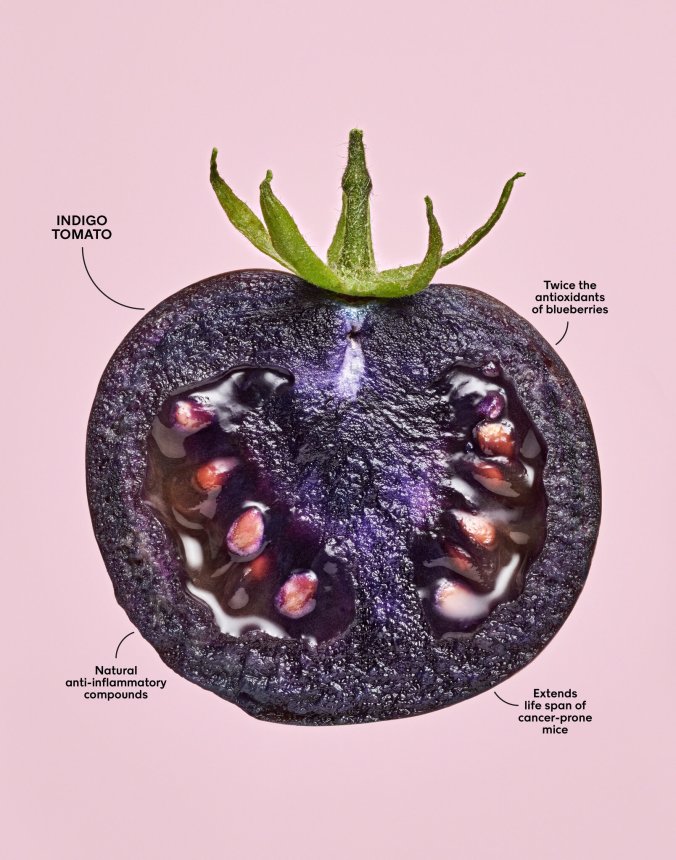
On a cold December day in Norwich, England, Cathie Martin met me at a laboratory inside the John Innes Centre, where she works. A plant biologist, Martin has spent almost two decades studying tomatoes, and I had traveled to see her because of a particular one she created: a lustrous, dark purple variety that is unusually high in antioxidants, with twice the amount found in blueberries.
At 66, Martin has silver-white hair, a strong chin and sharp eyes that give her a slightly elfin look. Continue reading →
A New Hampshire lawn in June. John Tully for The New York Times
Emily Pennington has shared recommendations from some experienced folks about alternatives to the well-known spectacular adventures, such as hiking the Grand Canyon. She recommends trying microadventures in this article subtitled How to find a sense of awe and discover a miraculous world right outside your door. Early on she writes about what we are often looking for in the places we travel to :
…Researchers often describe awe as an emotion that combines an experience of vastness with both pleasure and a fear of the unknown. While many of us might consider these moments rare, ephemeral and tricky to reproduce, a few scientists are finding that this reverence is a skill that can be cultivated and has remarkable mental health benefits.
“Awe basically shuts down self-interest and self-representation and the nagging voice of the self,” said Dacher Keltner, a professor of psychology at the University of California, Berkeley. “That’s different from feeling pride or amusement or just feeling good. It’s like, ‘I’m after something sacred.’”
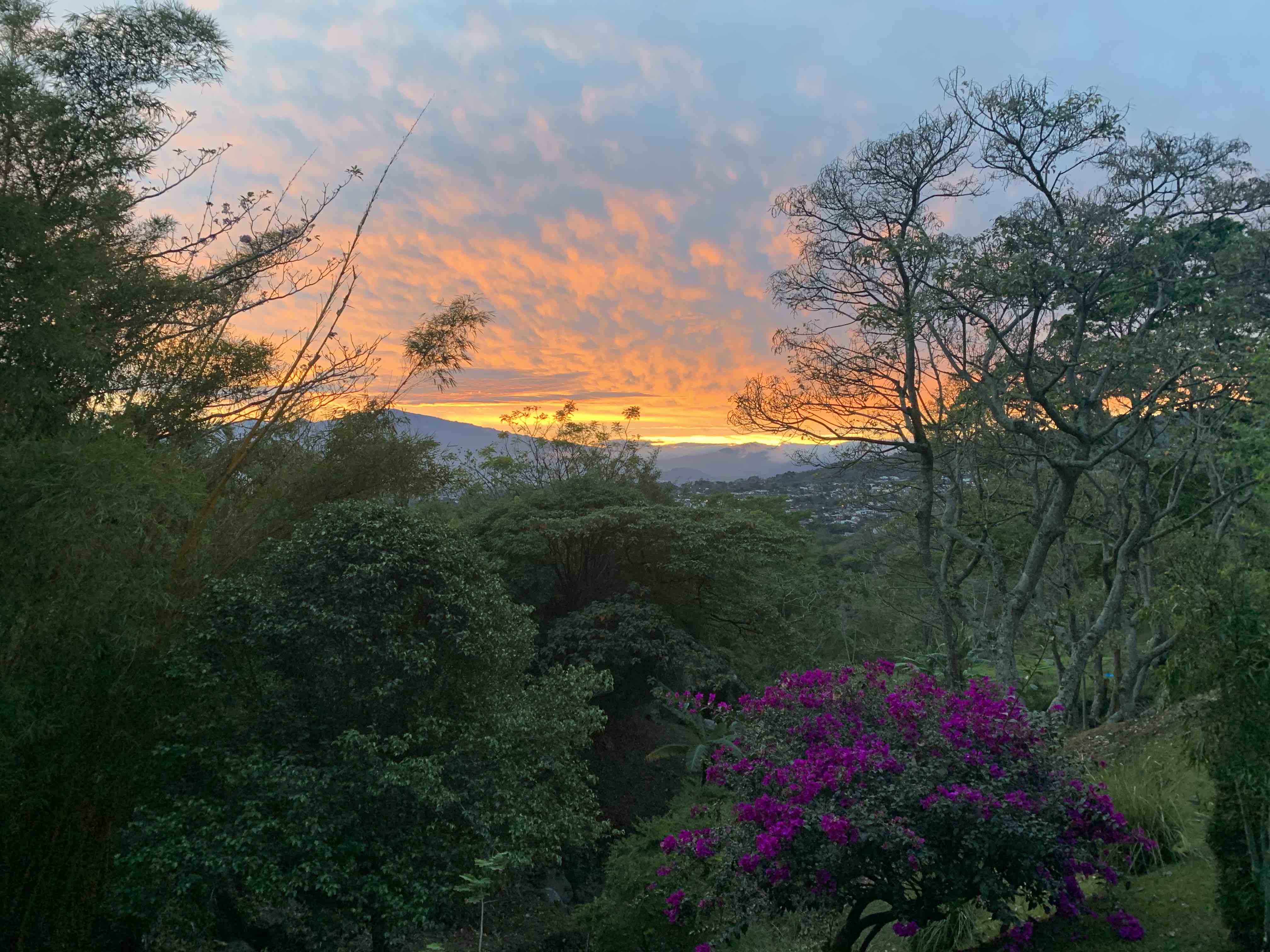
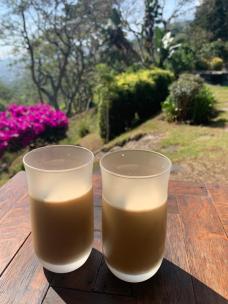
I have spent most days since early March 2020 looking for awe at or close to home, so I could relate immediately to what she was writing about in this article. A typical day starts with this view:
Start of a day’s microadventures
If you cannot imagine being awed by that, stop reading here. I will seek more awe as the day continues. Continue reading →
The number of urban trees is shrinking due to storms, construction and insects: at the moment, the US is facing a projected loss of 8.3% in urban tree cover by 2060. Photograph: Mary Altaffer/AP
Regardless of the viability of tree-planting as a solution to climate change, the need for more trees in some locations is overwhelming:
First ever nationwide tally of trees reveals how communities of color and poorer neighborhoods lack canopy
With vast swathes of the American west baking under a record-setting heatwave, a new study has revealed how unevenly trees are spread throughout cities in the United States and how much it disadvantages communities of color and the poor. Continue reading →
Last week, researchers at nasa and noaa found that “the earth is warming faster than expected.” Photograph by Kyle Grillot / Bloomberg / Getty
This week’s newsletter ponders how adaptable we are and serves as a reminder that we cannot take for granted that we are sufficiently so for the changes upon us:
Rising air temperatures remind us that our bodies have real limits.
By Bill McKibben
It’s hard to change the outcome of the climate crisis by individual action: we’re past the point where we can alter the carbon math one electric vehicle at a time, and so activists rightly concentrate on building movements large enough to alter our politics and our economics. But ultimately the climate crisis still affects people as individuals—it comes down, eventually, to bodies. Which is worth remembering. In the end, we’re not collections of constructs or ideas or images or demographics but collections of arteries and organs and muscles, and those are designed to operate within a finite range of temperatures. Continue reading →
Short answer: yes. Explanations and caveats follow.
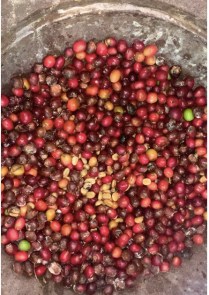
Coffee cherries that I harvested in January on the onetime coffee farm that we are rehabilitating. I am biased enough to enjoy the process of picking coffee, washing it and preparing it for planting.
I believe coffee has health benefits. Do I have them memorized? No. Do I fully understand the ones I can recall? No. But even with changing scientific findings over the years (e.g. findings from decades ago about coffee’s negative health effects were confounded by the fact that smoking and drinking coffee were highly correlated in study participants) I am inclined to listen to and trust findings from credentialed scientists.
A friend sent me the above video a couple of days ago, asking if I believe the contents. I just watched it. In six minutes a medical expert delivers more scientific findings than I could possibly digest. Upon first listening I am inclined to believe that coffee is better for me, in ways I had not been aware of, than I had previously considered.
During the early days of the pandemic, staying in isolation, I experimented with hot-brewed and cold-brewed coffee trying to come up with a new way to enjoy it that would also boost my immune system
That said, I am also willing to believe that for every finding of the health benefits, there could be findings of health penalties that I simply have not come across. Or maybe I have willfully avoided coming across them.
I am inclined to bias on this topic for at least two reasons. First, because I enjoy drinking coffee as much or more than the average person. Stated less politely, I might be a coffee junkie. And related to that, maybe because of that, my primary entrepreneurial activity now is selling coffee. I try to keep my enthusiasm in check, and rarely reference the health benefits of coffee unless I feel I truly understand the scientific findings.
Gracia Lam
Just after watching the video my friend sent, I came across this, so will make a rare exception and recommend both these summaries of information about coffee’s health benefits. Jane Brody, the Personal Health columnist for the New York Times since 1976, recently reviewed decades of scientific findings, including plenty of overlap with the medical expert in the video above, and with this quick read you can judge for yourself:
Americans sure love their coffee. Even last spring when the pandemic shut down New York, nearly every neighborhood shop that sold takeout coffee managed to stay open, and I was amazed at how many people ventured forth to start their stay-at-home days with a favorite store-made brew. Continue reading →
Mark Bittman writes the way he cooks: The ingredients are wholesome, the preparation elegantly simple, the results nourishing in the best sense of the word. He never strains; there’s no effort to impress, but you come away full, satisfied, invigorated.
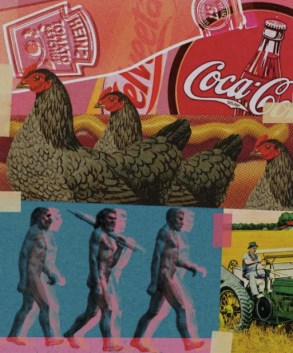
From his magnum opus, How to Cook Everything, and its many cookbook companions, to his recipes for The New York Times, to his essays on food policy, Bittman has developed a breeziness that masks the weight of the politics and economics that surround the making and consuming of food. In Animal, Vegetable, Junk, his latest book, he offers us his most thoroughgoing attack on the corporate forces that govern our food, tracking the evolution of cultivation and consumption from primordial to modern times and developing what is arguably his most radical and forthright argument yet about how to address our contemporary food cultures’ many ills. But it still goes down easy; the broccoli tastes good enough that you’ll happily go for seconds. Continue reading →
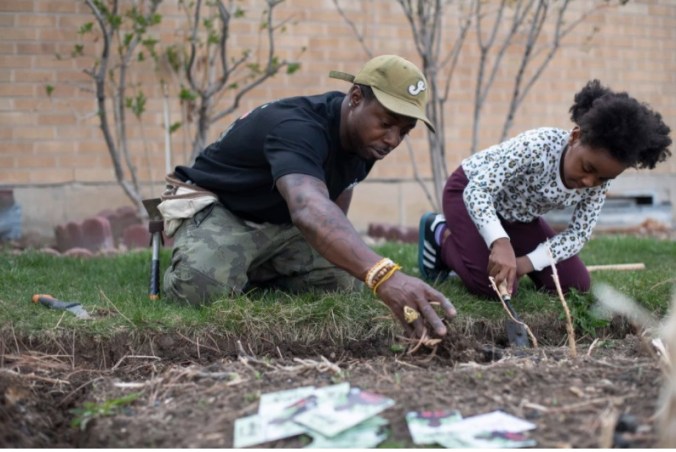
Ietef “DJ Cavem Moetavation” Vita plants seeds with daughter Libya LeaDonvita in the garden at their home outside Denver. Vita is among a growing list of Black gardening enthusiasts-turned-entrepreneurs across the country who’ve launched seed businesses during the pandemic-inspired gardening boom. Rachel Woolf for KHN
Vita, a vegan rapper, wants to encourage people of color to eat healthier by growing their own vegetables. He sells his own line of kale, beet and arugula seeds. Rachel Woolf for KHN
Ietef Vita had planned to spend most of 2020 on the road, promoting Biomimicz, the album he had released on his #plantbasedrecords label in January. But the pandemic cut those plans short, says Vita, known to his fans as “DJ Cavem Moetavation” and “Chef Ietef.”
He was playing in Berkeley, Calif., on Feb. 29, and “literally got out of town right before they shut the whole country down,” recalls the 34-year-old vegan rapper, who has performed for the Obamas and is known as the father of eco-hip-hop. “It was scary.”
Suddenly sidelined at his metro Denver home with his wife, Alkemia Earth, a plant-based lifestyle coach, and three daughters, Vita struggled to pivot. Eventually, he accepted that he would need to stay put and, as the saying goes, bloom where he was planted.
Vita has mailed out more than 20,000 packets of his kale, beet and arugula seeds to urban farmers across the country. Rachel Woolf for KHN
He and his wife launched an impromptu campaign: mailing out thousands of the more than 42,000 packets of kale, beets and arugula seeds that he’d planned to sell at his shows, all emblazoned with his likeness and the QR code to hear his digital album. Continue reading →
It wouldn’t actually take that much of an investment for Biden to get us headed in the right direction.
I’m a vegan, but I’m also a realist. There’s no chance humanity is going to give up meat, en masse, anytime soon. That said, we can’t just wish away the risks of industrial animal agriculture. If we don’t end this system, soon, terrible things will happen to us and to the planet. Terrible things are already happening. Continue reading →
Plant more bean-like crops in Europe and consider ‘healthy diet transition’ to beat climate crisis, say scientists
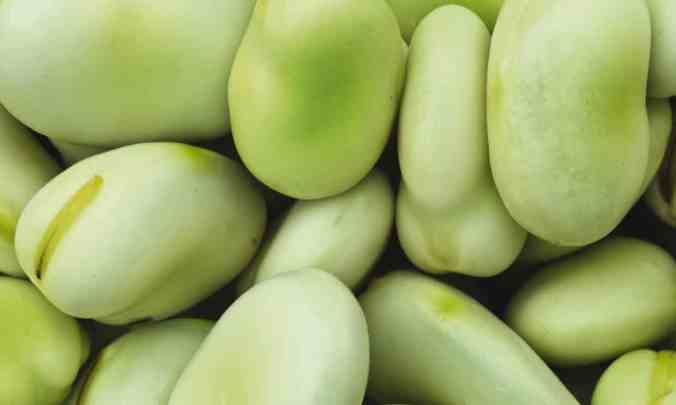
Adding the likes of peas, lentils, beans, and chickpeas to your diet, and farming more of them, could result in more nutritious and effective food production with large environmental benefits, scientists have found. Continue reading →
Easy to grow, visually beautiful and oodles of fabulous fungi for breakfast, what’s not to love?
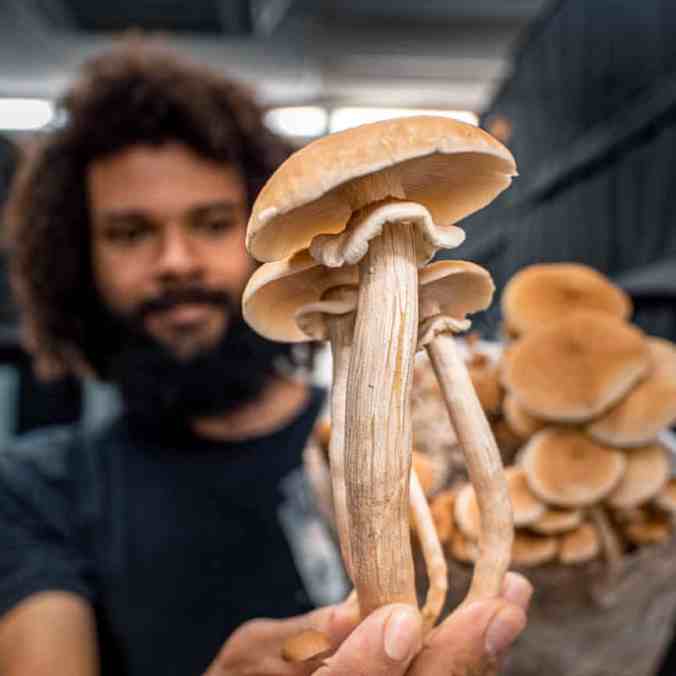
Michael Crowe with an abundance of homegrown mushrooms. Photograph: Stronz Vanderploeg
Selling homegrown mushrooms – through bags small enough to sit on your kitchen countertop, filled with organic matter like grain or coffee grounds and inoculated with spores – has been Michael Crowe’s businesssince 2017. He enjoys hearing from happy customers, who sometimes send him updates on their progress. “It’s just so cool because it can bring together people of all ages, from all walks of life and people all over the place can grow food and have a really good time learning about it,” he says. Continue reading →
Waldeinsamkeit is an archaic German term for the feeling of “forest loneliness” (Credit: Marco Bottigelli/Getty Images)
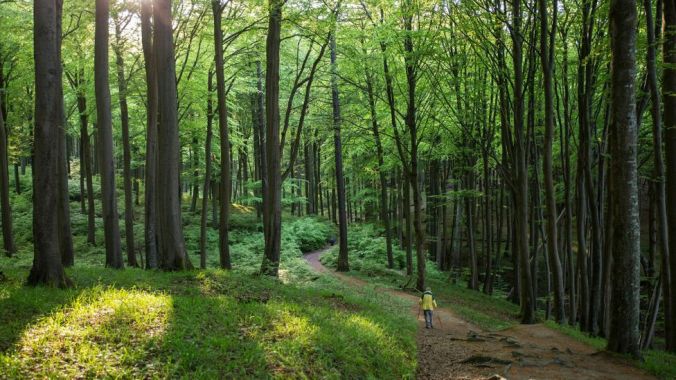
Everybody is at it in Germany. They’re doing it in the trees in the Black Forest. Out in the magical Harz Mountains. In the national parks of Bavaria when silhouetted in the moonlight. And in the city centre woodlands of Berlin and Munich. Continue reading →
Nearly four years ago I mentioned Harrington Ham in a post, but did not mention that in 1978 and 1979 I worked as a stock clerk in the Harrington’s shop in my hometown. In addition to the most amazing hams, my employee discount allowed me to purchase all kinds of food items I otherwise would not have known from the A&P and Grand Union grocery stores where we otherwise shopped. Erewhon Organic was one of the brands carried, providing my introduction to “health food.” Which led to my discovery of this book, which I scarcely recall, but which instilled in me a curiosity about utopia, and an appreciation of anagrams.
Erewhon, an upscale organic grocery store and cafe, has six locations in the Los Angeles area. Michelle Groskopf for The New York Times
Today, reading of this retail operation in California with a similar name, I took the opportunity to find out what happened to that old Erewhon brand; it is still out there, but has been reduced in scale and variety to producing only organic cereals. The retail Erewhon, almost as old as the brand I remember, looks like it is on a good trajectory for a long and prosperous life:
With a little help from celebrities and influencers, the health food store became the place to see and be seen.
Michelle Groskopf for The New York Times
Angelenos have long known that health is wealth, and the healthiest and wealthiest among them shop at Erewhon, the upscale organic grocery store with six locations throughout Los Angeles County.
Last year, after the coronavirus pandemic forced bars and nightclubs across the city to shutter, supermarkets were among the few places where people could still see and be seen. Erewhon, with its outdoor dining areas, became the unofficial hangout for the young, beautiful and bored. Like a moth to a nontoxic flame, the store drew Instagram flâneurs in droves — but also plenty of grimaces and eye rolls from locals. Continue reading →
About 10,000 years ago, humans began to farm. This agricultural revolution was a turning point in our history and enabled the existence of civilization. Today, nearly 40 percent of our planet is farmland. Spread all over the world, these lands are the pieces to a global puzzle we’re all facing: in the future, how can we feed every member of a growing population a healthy diet?
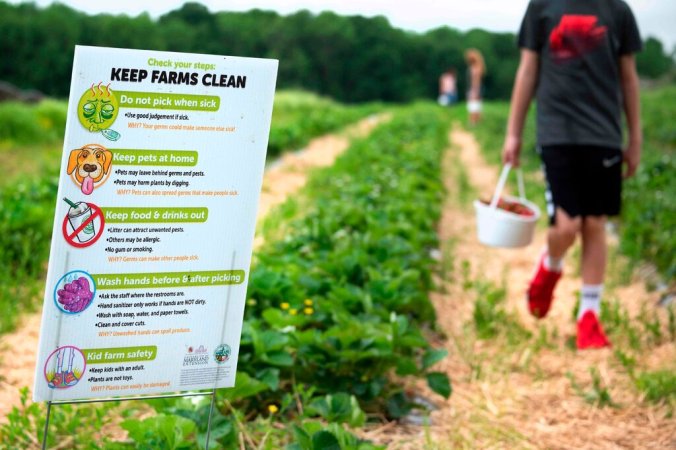
Strawberry fields, apple orchards and pumpkin patches have seen high volumes of visitors, most of whom have been on their best behavior.
U-pick farms — the choose-your-own-fruit-and-vegetable patches that draw droves each summer and fall — have been especially busy this year. Some farms have been so picked over that they’ve had to close their fields for a day or longer to let new fruit ripen.
With apple-and-pumpkin season in full swing, that popularity is continuing, and u-picks have adapted accordingly. Weekend festivals are out. Mask wearing is in. Most locations have introduced ticketed and timed entry, and created prepaid packages for produce and other amenities, like hay rides, to limit face-to-face interaction. Continue reading →
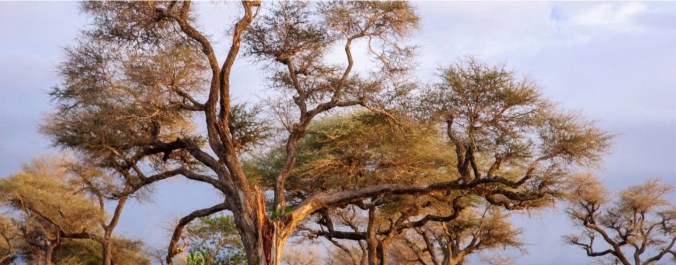
For millennia, the gum of the acacia tree has been prized for its unusual culinary and medical uses. Now, the trees are part of a continent-wide effort to hold back the Sahara Desert.
In the Malian bush, a scattering of acacia trees grow through the wild grass and shrubs that spread for miles across the semi-arid scrub. Herders graze cattle nearby and local people fetch firewood. The acacias are among the taller and faster-growing trees of this habitat, with old individuals reaching high above the surrounding scrub.
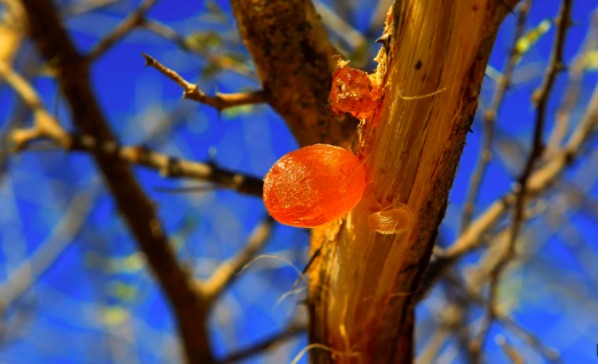
Gum arabic spills out naturally from wounds in the acacia tree, but it can also be extracted by making deliberate incisions into the bark (Credit: Reuters)
Photograph by Mari Maeda and Yuji Oboshi. Styled by Suzy Kim
I have not done a count, but I would guess the New York Times has been the source of as many stories we link to as any other publication. Mostly that would be due to the excellence, and relevance to our goals, of the Science section. The New York Times Style Magazine is not normally a source for us. I cannot find a single link to that publication on this platform in 9+ years and among 4,000+ posts. We feature plenty of shiny pretty things but only those that offer insight relevant to this platform. On occasion the trendy and/or the fashionable intersect well with the stories we favor, and we have no problem pointing those out.
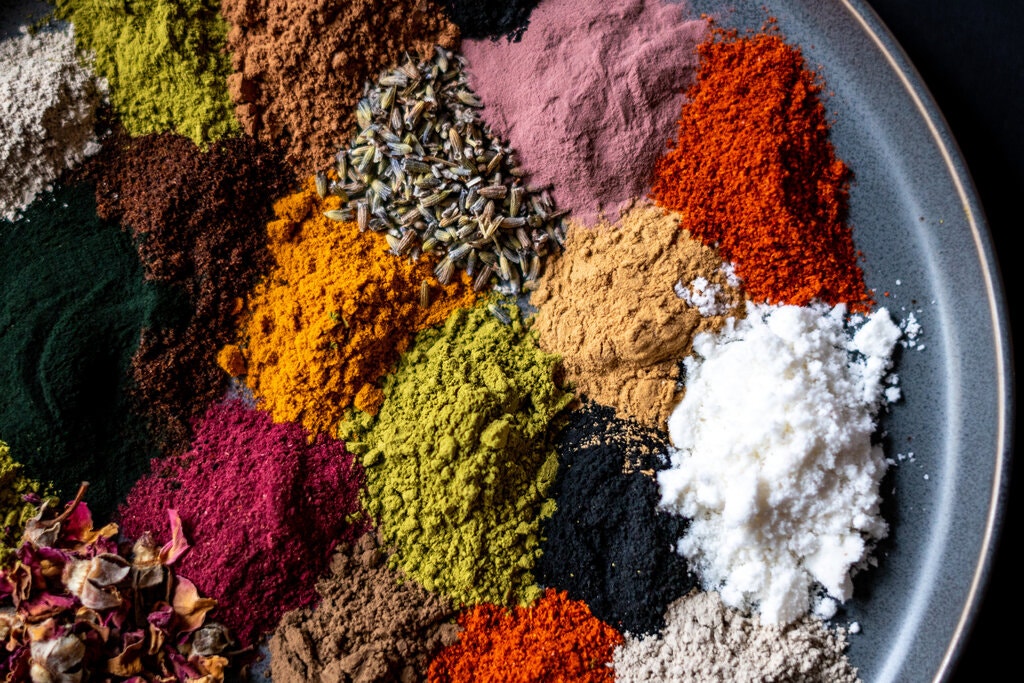
A selection of herbal and mushroom powders from Apothékary. Sarah Gurrity
So it goes with fungi. There are many fungi-focused posts on this platform, few of which would be seen as glamorizing. Surely we are trying to validate the topic by shining an attractive light on it. But we favor knowledge over visual stimulation. Aesthetics are not lost on us, nor is the intent to get more people interested in a topic we care about, so:
Long thought to have medicinal benefits, fungi including reishi, lion’s mane and chaga are gaining popularity in the wellness world.
Even before the onset of the pandemic, which has increased the demand for all manner of so-called organic immunity elixirs, wellness-minded Americans were warming to mushrooms. To be clear, mushrooms don’t cure Covid-19, but they are thought to provide a host of other benefits, from serving as an aphrodisiac to bolstering one’s defenses to toxins…
Not one, but two articles in the same issue, both with fabulous photography. The first, by Arden Fanning Andrews, deals with the health benefits of fungi; the second, by Ligaya Mishan, focuses on the culinary:
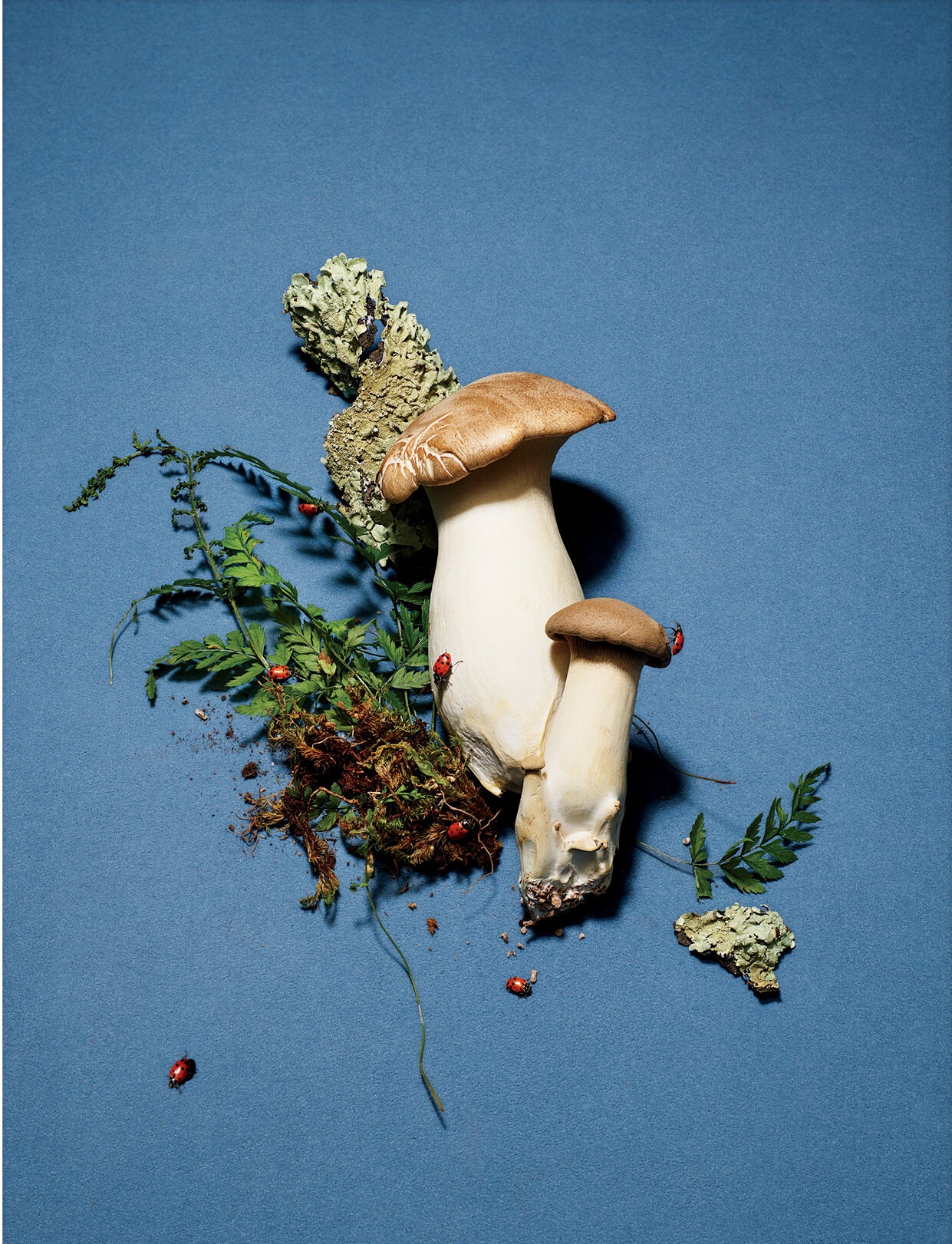
A duo of royal trumpet mushrooms alongside ladybugs, lichen and wild ferns.Credit…Mari Maeda and Yuji Oboshi
Neither plant nor animal, mushrooms have confounded humans since ancient times. Now, they’re a reminder of our tenuous place in an uncertain world.
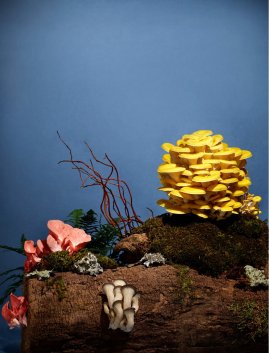
The mushrooms sit on high, behind glass, above bottles of Armagnac and mezcal in a bar at the Standard hotel in Manhattan’s East Village. They are barely recognizable at first, just eerie silhouettes resembling coral growths in an aquarium, blooming in laboratory-teal light: tightly branched clusters of oyster mushrooms in hot pink, yolk yellow and bruise blue, alongside lion’s mane mushrooms, shaggy white globes with spines like trailing hair…
Among the reasons we have stayed committed once we embarked on restoration of a parcel of a coffee farm buried two decades ago, it is a welcome distraction. Also, it is good exercise. Those side benefits add motivation to continue uncovering and then reviving a buried agricultural treasure. If you are not in a place where you can do such a thing, but are in need of a breath-slowing, jaw-unclenching respite, other options exist. Do gardens and/or stories of agricultural revival get you there? The video above, or the classic to the right might be options to consider. Thanks to Helen Rosner for bringing them to our attention in this essay:
“The Victorian Kitchen Garden,” a thirteen-part series on the particularities of Victorian horticulture, is a serene display of domestic competence.Photograph by Anne Gilbert / Alamy
Some time this past spring, I had my annual realization that if I wanted to plant a garden this year I should have got started weeks, maybe months, earlier. Then I set about my annual task of Googling how to make a garden happen. A few days later, clearing out my hundreds of open browser tabs of horticultural-advice forums, I paused over an open Web page that I hadn’t noticed: a grainy upload on the mysterious and vaguely European video-hosting Web site Dailymotion. “The Victorian Kitchen Garden – S01 – E01 – The Beginning,” it said. Curious, I pressed play, and a gentle wave of clarinet arpeggios sounded from my laptop speakers, and a mist-veiled greenhouse appeared on the screen. My breathing slowed, my jaw unclenched. Continue reading →













 Organikos