Fighting Pollution With Garbage

Image may contain Outdoors Flower Plant Nature Pond and Water

Photograph: Abir Mahmud, University of Dhaka

Our thanks to Hannah Richter for her reporting and writing, as well as to Wired for publishing what sounds not like garden variety too good to be true, but quintessentially ridiculous.

Kudos to Nepal for testing out this idea in spite of how it sounds:

Image may contain Lake Nature Outdoors Water Aerial View Architecture and Building

Groups of platforms installed in Nagdaha lake in Nepal. PHOTOGRAPH: SAMYAK PRAJAPATI/THE SMALL EARTH NEPAL

Polluted Lakes Are Being Cleansed Using Floating Wetlands Made of Trash

Platforms combining plants and recycled garbage could offer a cut-price solution for reviving polluted bodies of water.

ON THE BANKS of Nagdaha, a polluted and lotus-infested lake in Nepal, Soni Pradhanang is putting trash back into the water—on purpose.

Image may contain Plant Potted Plant Water Waterfront Boat Transportation Vehicle Outdoors and Food

A floating treatment wetland system loaded with plants. PHOTOGRAPH: SAMYAK PRAJAPATI/THE SMALL EARTH NEPAL

She carefully assembles a platform of styrofoam and bamboo mats, then weaves it together with zip ties and coconut fiber, refuse from nearby tech stores. Then, she pokes 55 plants lush with red flowers through 2-inch holes in the platform, each plant set 6 inches apart. Though Pradhanang’s creation isn’t high-tech, it is effective, and one of the most affordable water-filtration systems available. “I’m cheap,” she says, laughing. Continue reading

MycoHab & Other Namibian Wonders

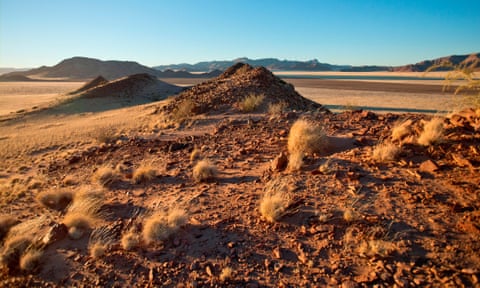
Desert in Namibia

Namibia has a severe housing shortage, with woody encroacher bush reducing the amount of land available for building. Photograph: Hoberman Collection/Universal Images Group/Getty

Mycological options for solving problems are abundant. We had not considered odor as a key potential obstacle, so thanks to Ester Mbathera for this reporting from Namibia:

‘People think they’ll smell but they don’t’: building homes from mushroom waste and weeds

A sustainable project aims to repurpose encroacher bush to create building blocks to solve Namibia’s housing crisis

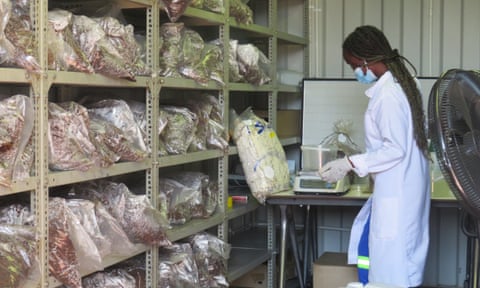
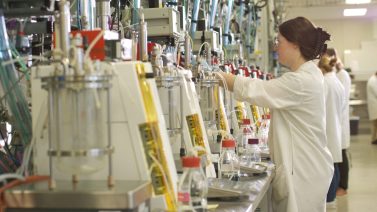
Oyster mushrooms in bags on a shelf with a woman using weighing scales

The remnants of the oyster mushrooms grown on weeds of encroacher bush will be used to create building blocks. Photograph: Ester Mbathera

People think the house would smell because the blocks are made of all-natural products, but it doesn’t smell,” says Kristine Haukongo. “Sometimes, there is a small touch of wood, but otherwise it’s completely odourless.”

Haukongo is the senior cultivator at the research group MycoHab and her job is pretty unusual. She grows oyster mushrooms on chopped-down invasive weeds before the waste is turned into large, solid brown slabs – mycoblocks – that will be used, it’s hoped, to build Namibian homes. Continue reading

Adapting Maple Syrup Making

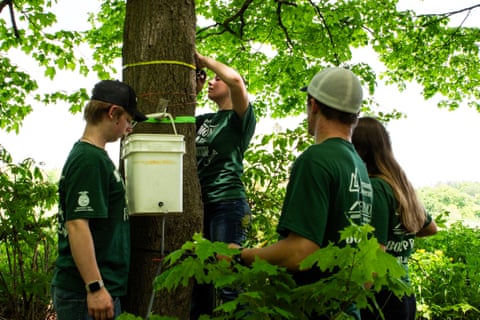
Students tap a tree for maple syrup in Randolph, Vermont, on 20 May 2024.

Students tap a tree for maple syrup in Randolph, Vermont, on 20 May 2024. Photograph: Olivia Gieger/The Guardian

Maple syrup is a good example of what we call taste of place products, and we are happy to see the next generation in Vermont adapting the making of this one for the future:

‘It’s the future of sugar’: new technology feeds Vermont maple syrup boom amid climate crisis

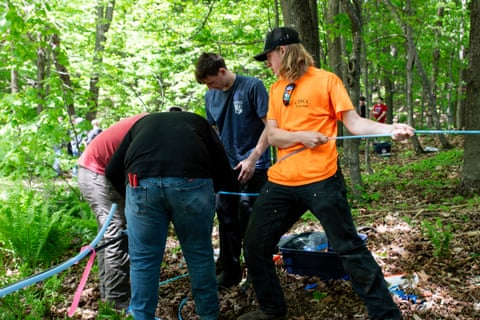
With tools as seemingly simple as these blue tubes, it’s easier than ever to extract sap from maple trees, as these young people demonstrated during a May Future Farmers of America convention on 20 May.

With tools as seemingly simple as these blue tubes, it’s easier than ever to extract sap from maple trees, as these young people demonstrated during a Future Farmers of America convention on 20 May. Photograph: Olivia Gieger/The Guardian

The season to tap trees is now earlier and longer, but new processes and generations are helping the industry thrive

On a warm May Monday, more than three dozen high school students took to the forest behind a former dairy barn at Vermont State University in Randolph.

In teams of four, they ran blue plastic tubing from tree to tree, racing to connect the tubes across three trees in 30 minutes. One student leaned back and pulled it taut with his body weight while another secured tube to tree. Quickly, they dashed to the next in what appears to be a twisted tug-of-war. Continue reading

Energy Observer In New York

Illustration by João Fazenda

Our thanks to Adam Iscoe, writing in the New Yorker, for this:

An Around-the-World Eco-Voyage Makes a Pit Stop Near Wall Street

Energy Observer, a ship equipped with solar panels and a hydrogen fuel cell, has spent the past seven years circumnavigating the globe, powered by sun, water, and salads.

One phrase that describes New York’s waterways is “diesel-powered”: supersized container ships, megayachts, oil tankers, garbage barges. But not every ship that comes to town is on a Greenpeace watch list; there are also schooners, plus the odd outrigger canoe. And recently a hundred-foot-long former racing catamaran from France, which had been retrofitted with solar panels and a hydrogen fuel cell, docked near Wall Street. Continue reading

Scottish Seaweed Innovations

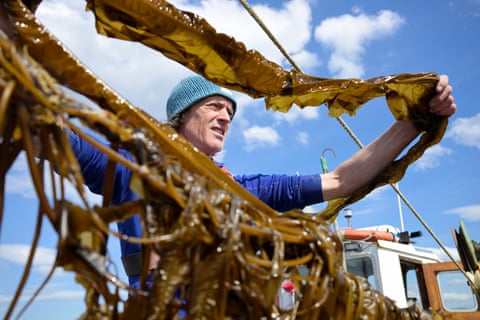
Alex Glasgow of KelpCrofters on a boat harvesting kelp on Skye

Alex Glasgow of KelpCrofters harvesting the seaweed on Skye

Most of us in the Americas and the European  region have not yet had the opportunity to try seaweed, except perhaps in Japanese or other Asian ethnic restaurants. So hearing what the folks who grow seaweed in Scotland are doing with their product to get more of us interested in it–that’s interesting. For these photographs by Christian Sinibaldi and words by Joanna Moorhead we thank the Guardian:

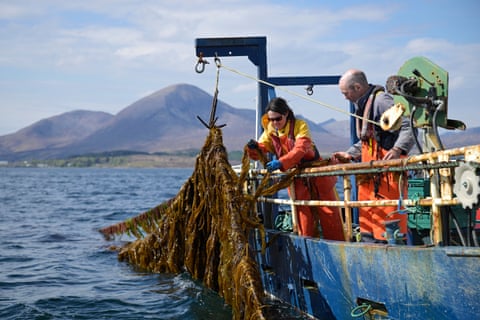
Kyla Orr and Martin Welch of KelpCrofters check the crop from their boat

Kyla Orr and Martin Welch of KelpCrofters check the crop from their boat. Photograph: Christian Sinibaldi/The Guardian

Kelp help? How Scotland’s seaweed growers are aiming to revolutionise what we buy

Farmed kelp could produce plastic substitutes, beauty products and food supplements. Just steer clear of seaweed chocolate

Think sun, sea, Skye – and seaweed. It’s early summer off the west coast of Scotland, and Alex Glasgow is landing a long string of orangey-black seaweed on to the barge of his water farm. Continue reading

Implementing The Inflation Reduction Act

A windmill getting tangled by an electrical cord

Illustration by Ben Kothe / The Atlantic

We celebrate when a law is passed that moves the USA in the right direction, but the biggest  such law ever still is in the process of implementation. So, creativity and vigilance are still key ingredients to making the best of the law:

The Next Front in the War Against Climate Change

Clean-energy investment in America is off the charts—but it still isn’t translating into enough electricity that people can actually use.

On august 2022, the U.S. passed the most ambitious climate legislation of any country, ever. As the director of President Joe Biden’s National Economic Council at the time, I helped design the law. Continue reading

Magrathea Metals & Seawater Bounty

A system for testing technology to draw minerals from seawater at the Pacific Northwest National Laboratory in Sequim, Washington. PACIFIC NORTHWEST NATIONAL LABORATORY

Thanks as always to Jim Robbins and Yale e360:

In Seawater, Researchers See an Untapped Bounty of Critical Metals

Researchers and companies are aiming to draw key minerals, including lithium and magnesium, from ocean water, desalination plant residue, and industrial waste brine. They say their processes will use less land and produce less pollution than mining, but major hurdles remain.

Can metals that naturally occur in seawater be mined, and can they be mined sustainably? Continue reading

Seaweed Mining Explained

Scientists still have a lot to figure out, but the idea of sourcing critical minerals from seaweed is too tantalizing not to look into. Photo by Upix Photography/Alamy Stock Photo

Plenty of links to articles about the importance of various types of seaweed in our pages, but in Hakai Magazine  the environmental journalist Moira Donovan asks and provides a cogent answer to the most basic question:

What the Heck Is Seaweed Mining?

Preliminary research suggests seaweed can trap and store valuable minerals. Is this the beginning of a new type of mining?

Seaweed is versatile; it provides habitat for marine life, shelters coastlines, and absorbs carbon dioxide. Continue reading

Dutch Water Knowhow Is Respectable

Waterstudio renderings like this one, of a floating “city” in the Maldives, are created using tools including Photoshop and the A.I. program Midjourney. Art work courtesy Waterstudio / Dutch Docklands

We respect the Dutch for their respect of nature, particularly their respect for the power of water and their longstanding determination to harmonize our life with it. This profile extends our respect:

A Dutch Architect’s Vision of Cities That Float on Water

What if building on the water could be safer and sturdier than building on flood-prone land?

Koen Olthuis, the founder of the architectural firm Waterstudio, believes that floating buildings like the Théâtre L’Île Ô, in Lyon, will transform urban living like skyscrapers did a century ago. Photograph by Giulio Di Sturco for The New Yorker

In a corner of the Rijksmuseum hangs a seventeenth-century cityscape by the Dutch Golden Age painter Gerrit Berckheyde, “View of the Golden Bend in the Herengracht,” which depicts the construction of Baroque mansions along one of Amsterdam’s main canals. Handsome double-wide brick buildings line the Herengracht’s banks, their corniced façades reflected on the water’s surface. Interspersed among the new homes are spaces, like gaps in a young child’s smile, where vacant lots have yet to be developed.

A rendering of a floating forest in the Persian Gulf, devised as part of a strategy to combat heat and humidity. When building projects on the water, Olthuis says, “you have to be very, very patient.” Art work courtesy Waterstudio

For the Dutch architect Koen Olthuis, the painting serves as a reminder that much of his country has been built on top of the water. The Netherlands (whose name means “low countries”) lies in a delta where three major rivers—the Rhine, the Meuse, and the Scheldt—meet the open expanse of the North Sea. More than a quarter of the country sits below sea level. Over hundreds of years, the Dutch have struggled to manage their sodden patchwork of land. Continue reading

Jaron Lanier On Artificial Intelligence

In case you cannot read his essay any time soon, but can watch or listen for an hour, this is equally illuminating. And since he is a quirky fellow, Jaron Lanier’s work and living space is worth a look.

Jaron Lanier On Virtual Reality

Illustration by Jackie Carlise

Jaron Lanier has been our go-to voice of reason at important moments in technology hype. Here is his take on the latest hype:

Where Will Virtual Reality Take Us?

Apple’s Vision Pro headset suggests one possible future—but there are others.

Because we in Silicon Valley are newness junkies, it can feel like an act of sabotage to have memories, but, for better or worse, I have them. It’s been more than forty years since I co-founded the first company to make headsets and software for simulated experiences, and came up with familiar terms like virtual and mixed reality. Continue reading

Kelp & Life

Sugar kelp from Penobscot Bay, Maine. Photograph: Josie Iselin

We have featured the promise of various seaweed schemes many times, and we find it evergreen for further exploration:

Could I live and breathe seaweed – and reduce my use of plastics – for 24 hours?

Seaweed Day starts at 8am. Haunted by pervasive news that so many of our everyday habits harm our planet, I wonder how to minimize my personal use of plastics. I embark upon a day of replacing the microplastics that pollute our atmosphere, our water and even our bloodstreams.

From left to right, Chondracanthus, Agarum, Ulva (sea lettuce), Nereocystis (juvenile bull kelp). Photograph: Josie Iselin

How much of my daily life can I accomplish with seaweed? Eating, washing, dressing? Armed with a budget of $500, I set out on a seaweed-based product shopping spree. Continue reading

Green Mountain Power, Sunrun, FranklinWH & Innovative Electricity Options

Photograph by Ian Thomas Jansen-Lonnquist / Bloomberg / Getty

We need more energy, and here are some possibilities:

The Next Power Plant Is on the Roof and in the Basement

A Department of Energy report promotes a new system that could remake the energy grid.

On any given Monday in Vermont, Josh Castonguay, the vice-president of innovation at that state’s Green Mountain Power utility, told me, he studies the forecast for the days ahead, asking questions like “What’s it looking like from a temperature standpoint, a potential-of-load standpoint? Is there an extremely hot, humid stretch of a few days coming? A really cold February night?” If there is trouble ahead, Castonguay prepares, among other things, Vermont’s single largest power plant, which isn’t exactly a power plant at all—or, at least, not as we normally think of one. Continue reading

Photosynthesis Mimicry Out Of Cambridge

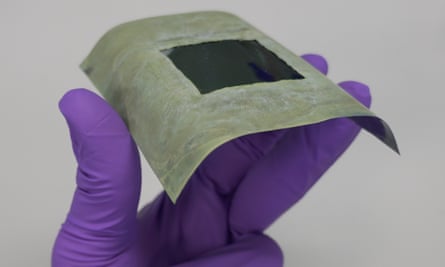
Researchers from the University of Cambridge designed ultra-thin, flexible devices, which take their inspiration from photosynthesis – the process by which plants convert sunlight into food.

Researchers from the University of Cambridge designed ultra-thin, flexible devices, which take their inspiration from photosynthesis – the process by which plants convert sunlight and CO2 into food. Photograph: Virgil Andrei

Photsynthesis comes in handy on this planet. This invention leverages the natural process into a technology to tackle a large scale challenge. We can only hope that it is not too little, too late:

Floating factories of artificial leaves could make green fuel for jets and ships

Cambridge University scientists develop a device to ‘defossilise’ the economy using sunlight, water and carbon dioxide

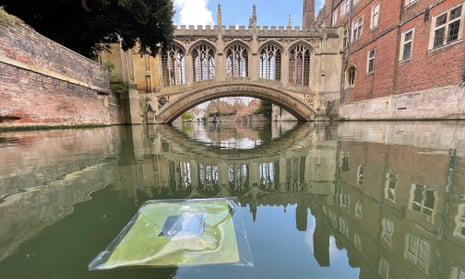
The artificial leaves were tested on the River Cam in and around Cambridge including sites such as the Bridge of Sighs.

The artificial leaves were tested on the River Cam in and around Cambridge including sites such as the Bridge of Sighs. Photograph: Virgil Andrei

Automated floating factories that manufacture green versions of petrol or diesel could soon be in operation thanks to pioneering work at the University of Cambridge. The revolutionary system would produce a net-zero fuel that would burn without creating fossil-derived emissions of carbon dioxide, say researchers. Continue reading

CRISPR Silk

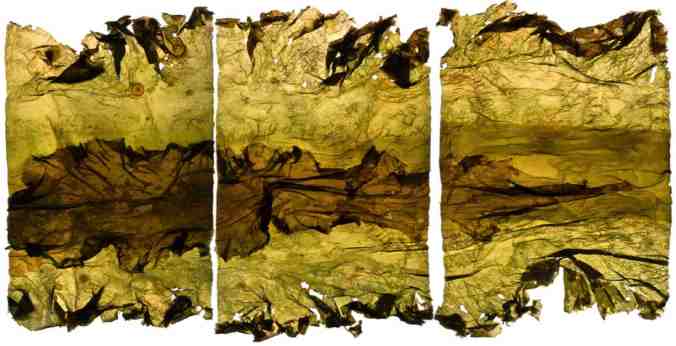
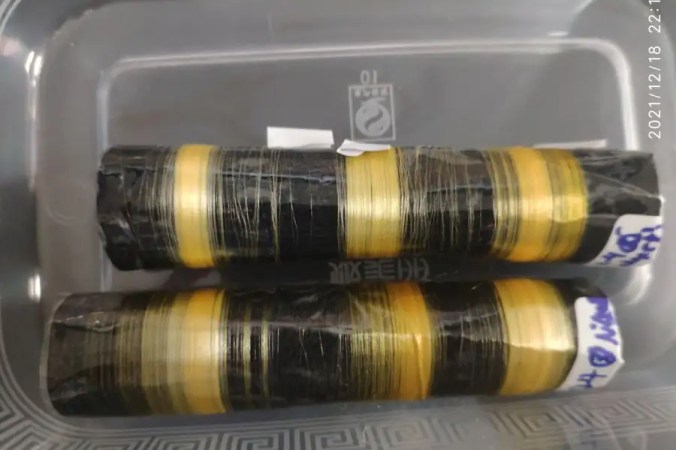
Spider silk fibres produced by silkworms. Junpeng Mi, Donghua University

This will be the fifth time for CRISPR in our pages. We suspend judgement each time we link to explanations of the technology, or new applications:

Silkworms genetically engineered to produce pure spider silk

Spider silk has been seen as a greener alternative to artificial fibres like nylon and Kevlar, but spiders are notoriously hard to farm. Now researchers have used CRISPR to genetically engineer silkworms that produce pure spider silk

Silkworms have been genetically engineered with CRISPR to produce pure spider silk for the first time. The worms could offer a scalable way to create things like surgical thread or bulletproof vests from spider silk, which is prized for its strength, flexibility and lightness. Continue reading

Archeologists + Cartographers = Dipylon

If you click on the image above you will experience through a short video what can happen when technically skilled map-makers, using GIS, combine forces with scholars of antiquity. Better yet, go straight to the software they have created. In advance of travel commemorating 40 years since two of us met, my daily omnivorous media diet brought me to Dipylon, via a profile by Nick Romeo, which I highly recommend (to better understand the origins and workings of Dipylon) whether or not you are planning to visit Athens:

Illustration by Eleni Kalorkoti

The Hidden Archeologists of Athens

By collecting long-forgotten archeological data, a new project reveals the researchers who toiled unrecognized.

In Don DeLillo’s 1982 novel “The Names,” an American businessman living in Athens can’t quite bring himself to visit its most iconic monument. “For a long time I stayed away from the Acropolis,” he says. Continue reading

Paint It Very White

In one green-gloved hand, a man wearing goggles holds a paint brush dripping with bright white paint. His other hand holds a plastic container of the white paint under the brush to catch the drops.

Xiulin Ruan, a professor of mechanical engineering at Purdue University, has created the whitest paint on record with his students. John Underwood/Purdue University

We once again have Cara Buckley to thank:

Scientists at Purdue have created a white paint that, when applied, can reduce the surface temperature on a roof and cool the building beneath it.

Xiulin Ruan, a professor of mechanical engineering at Purdue University, didn’t set out to make it into the Guinness World Records when he began trying to make a new type of paint. He had a loftier goal: to cool down buildings without torching the Earth. Continue reading

Bubbles On Ice

Illustration by Arina Kokoreva

A bit late considering the special issue was published one month ago, but here is another article in a recent series featuring unusual ideas about how to address climate change:

A Heat Shield for the Most Important Ice on Earth

Engineers might be able to protect Arctic ice by coating it with tiny glass bubbles. Should they?

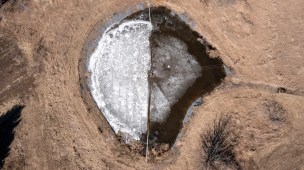
An aerial view of the glass-bubble-covered ice, at left, and the bare ice. Photograph by Doug Johnson

On a clear morning in late March, in rural Lake Elmo, Minnesota, I followed two materials scientists, Tony Manzara and Doug Johnson, as they tromped down a wintry hill behind Manzara’s house. The temperature was in the high thirties; a foot of snow covered the ground and sparkled almost unbearably in the sunlight. Both men wore dark shades. “You don’t need a parka,” Johnson told me. “But you need sunglasses—snow blindness, you know?” At the bottom of the hill, after passing some turkey tracks, we reached a round, frozen pond, about a hundred feet across. Manzara, a gregarious man with bushy eyebrows, and Johnson, a wiry cross-country skier with a quiet voice, stepped confidently onto the ice. Continue reading

Bio-Based Gains

Scientists at San Diego-based Genomatica, which is developing a plant-based nylon. GENOMATICA

We have been watching and waiting for this range of products to have their day, and Jim Robbins delivers an up to date account that gives hope:

From Lab to Market: Bio-Based Products Are Gaining Momentum

A 3D-printed house made from sawdust and other timber industry waste by the University of Maine’s Advanced Structures and Composites Center. UNIVERSITY OF MAINE

Propelled by government investment and shareholder demand, manufacturers are pushing to get bio-based products into the marketplace. These new materials — made from plants, fungi, and microbes — aim to replace those that contain toxins and are difficult to recycle or reuse.

In the 1930s, the DuPont company created the world’s first nylon, a synthetic polymer made from petroleum. The product first appeared in bristles for toothbrushes, but eventually it would be used for a broad range of products, from stockings to blouses, carpets, food packaging, and even dental floss.

Nylon is still widely used, but, like other plastics, it has environmental downsides: it is made from a nonrenewable resource; its production generates nitrous oxide, a potent greenhouse gas; it doesn’t biodegrade; and it sheds microfibers that end up in food, water, plants, animals, and even the clouds.

Laminated timber beams and floors used in the construction of Ascent, a 25-story apartment building in Milwaukee. THORNTON TOMASETTI

Now, however, a San Diego-based company called Genomatica is offering an alternative: a so-called plant-based nylon made through biosynthesis, in which a genetically engineered microorganism ferments plant sugars to create a chemical intermediate that can be turned into nylon-6 polymer chips, and then textiles. The company has partnered with Lululemon, Unilever, and others to manufacture this and other bio-based products that safely decompose. Continue reading

The Remarkable Efficiency Of Heat Pumps, Explained

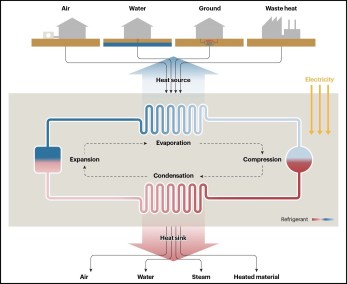
Heat pumps use electricity to compress a refrigerant, raising its temperature. IEA

Heat pumps have only been a passing reference occasionally in these pages, but today they are the focus, thanks to Paul Hockenos in Yale e360:

In Europe’s Clean Energy Transition, Industry Turns to Heat Pumps

With soaring gas prices due to the Ukraine war and the EU’s push to cut emissions, European industries are increasingly switching to high-temperature, high-efficiency heat pumps. Combined with the boom in residential use, the EU is now hoping for a heat pump revolution.

An industrial heat pump at the Mars Confectionery in Veghel, the Netherlands. GEA

The Wienerberger brickworks in Uttendorf, Austria, in the Tyrolean Alps, has always required a steady stream of 90 degree C (194 degree F) heat to dry its construction blocks. This process would have been an expensive proposition for the company after Russia cut gas exports to Europe, as it was for most of Europe’s energy-intensive construction industry. But four years ago, Wienerberger — the largest brick producer in the world — made an investment in the future that is now paying off: it replaced Uttendorf’s gas-fired boiler with an industrial-scale heat pump, which whittles the factory’s energy bill by around 425,00 euros a year. Continue reading