The New Carbon Trading Rules

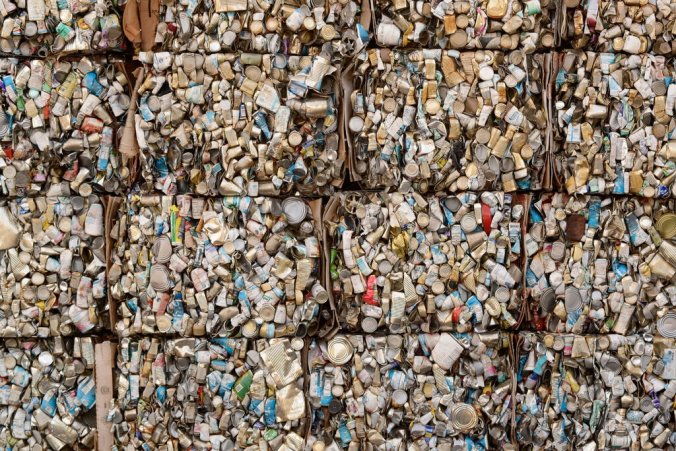
Hundreds of billions of dollars could change hands in coming years through a global market in greenhouse emissions. Last month’s climate summit in Glasgow, Scotland, approved the new trading system.
Peter Dejong/AP

This article provides a coherent summary of the carbon trading market’s prospects after the Glasgow Summit, including the key criticism of the scheme:

Carbon trading gets a green light from the U.N., and Brazil hopes to earn billions

Carbon emissions trading is poised to go global, and billions of dollars — maybe even trillions — could be at stake. That’s thanks to last month’s U.N. climate summit in Glasgow, Scotland, which approved a new international trading system where companies pay for cuts in greenhouse gas emissions somewhere else, rather than doing it themselves. Continue reading

Rehabilitation Of Antitrust Law

Starting seven years ago I have been paying attention to monopoly power mostly in the context of Amazon. One of the clearest articles on the topic focused on a young person’s breakthrough idea. So I was very happy to read about Lina Khan’s Battle to Rein in Big Tech by rehabilitating antitrust law:

As monopolies and other large companies gain increasing control of our daily lives, Khan is Joe Biden’s pick to do something about it.

In the spring of 2011, a recent Williams College graduate named Lina Khan interviewed for a job at the Open Markets Program, in Washington, D.C. Open Markets, which was part of the New America think tank, was dedicated to the study of monopolies and the ways in which concentration in the American economy was suppressing innovation, depressing wages, and fuelling inequality. Continue reading

More Trees Now

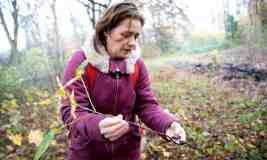
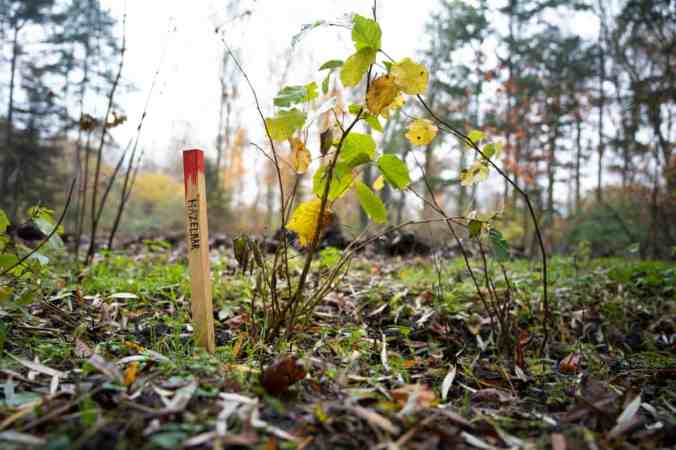
A hazel sapling (Corylus avellana) in the ditches of the tree hub at Amsterdamse Bos. Photograph: Judith Jockel/The Guardian

The trillion trees concept, which inspires but has had its share of legitimate questions, has a scrappy cousin with a novel approach:

‘Every tree counts’: Dutch come up with cunning way to create forests for free

More Trees Now aims to give away 1m unwanted saplings to farmers and councils with hope idea will spread across Europ

Hanneke van Ormondt saves a sapling at the tree hub in Amsterdamse Bos, Amsterdam, the Netherlands. Photograph: Judith Jockel/The Guardian

In a clearing in the Amsterdamse Bos, a forest on the outskirts of the Dutch capital, is a “tree hub” where hundreds of saplings, among them hazelnut, sweet cherry, field maple, beech, chestnut and ash, are organised by type.

The idea behind it is simple: every day unwanted tree saplings were being cleared and thrown away when those young trees could be carefully collected and transplanted to where they are wanted. Continue reading

Fixing Carbon Offset Markets

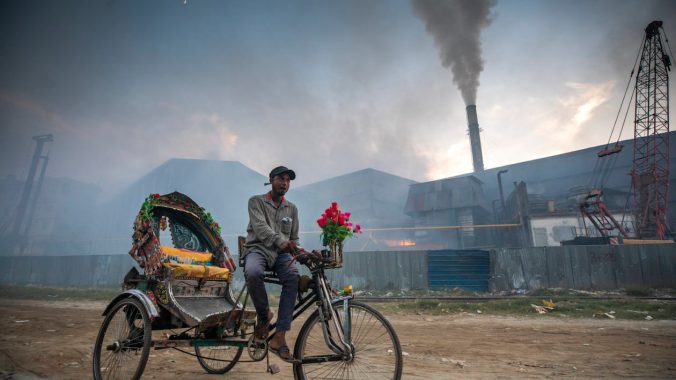
A steel re-rolling mill in Narayanganj, Bangladesh. Well-designed carbon markets could spur companies in developing countries to reduce emissions. AHMED SALAHUDDIN / NURPHOTO VIA AP

Thanks to Yale e360 for this opinion on a hot topic that we have sometimes mused less seriously about:

How to Repair the World’s Broken Carbon Offset Markets

Markets that connect businesses hoping to offset their carbon emissions with climate change mitigation projects have been plagued by problems. But an economist and his co-authors argue that carbon markets can be reformed and play a significant role in slowing global warming

In the wake of the Glasgow climate summit, governments must now return to the daunting challenge of making good on their emissions-reductions pledges, which at this point remain insufficient to hold warming below 2 or even 1.5 degrees C above pre-industrial levels. Continue reading

1992 Earth Summit Revisited

Illustration by João Fazenda

In her look back at last week’s events in Glasgow, Elizabeth Kolbert comments in Running Out of Time at the U.N. Climate Conference that we were set up for this moment at the first such event nearly three decades earlier:

To really appreciate America’s fecklessness, you have to go back to the meeting that preceded all the bad COPs—the so-called Earth Summit, in 1992.

For those inclined to see them, there were plenty of bad omens last week as the latest round of international climate negotiations—cop26—got under way in Glasgow. A storm that lashed England with eighty-mile-per-hour winds disrupted train service from London to Scotland, leaving many delegates scrambling to find a way to get to the meeting. Just as the conclave began, Glasgow’s garbage workers went on strike, and rubbish piled up in the streets. Continue reading

Global North, Global South & Responsibilities

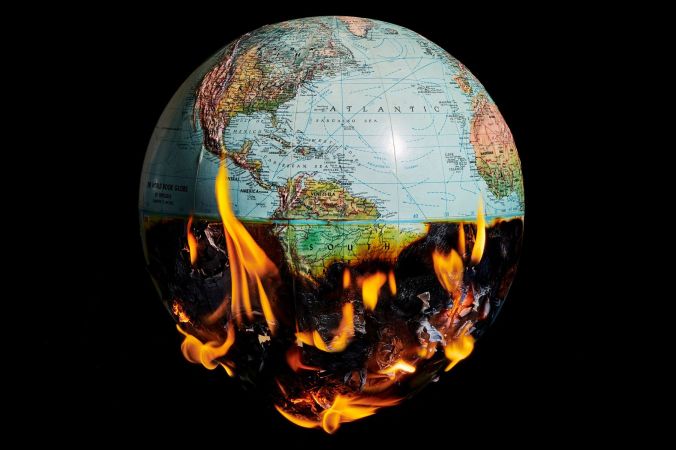
Photo: Hannah Whitaker; Prop Styling: Marina Bevilacqua.

David Wallace-Wells has done it again. Devastated me with considerations I should have had on my own, but had not. And he makes it so vivid that once you see his point you cannot stop seeing it. Having lived in the Global South for a majority of my adult years, but having been born into and lived in the Global North for the first half of my life, this story resonates with me in ways I cannot quite describe. But the quote from Proverbs in yesterday’s post seems even more intensely relevant:

Climate Reparations

A trillion tons of carbon hangs in the air, put there by the world’s rich, an existential threat to its poor. Can we remove it?

I. What Is Owed

Brazil, 2019. Photo: Cristina de Middel/Magnum Photos

The math is as simple as the moral claim. We know how much carbon has been emitted and by which countries, which means we know who is most responsible and who will suffer most and that they are not the same. We know that the burden imposed on the world’s poorest by its richest is gruesome, that it is growing, and that it represents a climate apartheid demanding reparation — or should know it. We know we can remove some of that carbon from the atmosphere and undo at least some of the damage. We know the cost of doing so using tools we have today. And we know that unless we use them, the problem will never go away. Continue reading

Sign Up For McKibben

James Watt, at work in the small University of Glasgow workshop where he basically invented the fossil fuel era

I am trying to imagine getting tired of reading Bill McKibben’s constant flow of commentary and news, even though most of it is dismal. It would be like getting tired of paying attention to the environment, especially climate issues. Yesterday’s observations from Glasgow are particularly rewarding, and I hope you will consider subscribing to his newsletter:

Glasgow: where climate wreckage began

And where it’s definitely not going to end

I spent part of the morning wandering the gorgeous Victorian courtyards of the University of Glasgow (they would seem familiar to you—it’s where they shot the exteriors for the Harry Potter films), trying to find the university chapel where I was supposed to give a lecture. Instead of that august sanctuary, I stumbled across the James Watt building—and with it a poignant set of reminders about just how quickly we’ve managed to bring the world to the edge of ruin. Continue reading

Beware of LEAF’s Possible Exclusions

Thanks to Fred Pearce, as always:

A Big New Forest Initiative Sparks Concerns of a ‘Carbon Heist’

Major funding to finance forest conservation projects is set to be announced at the UN climate summit next week. But some environmentalists contend the LEAF program could exclude the Indigenous people who have long protected the forests that the initiative aims to save.

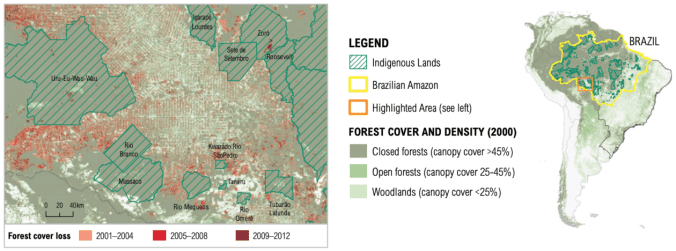
Indigenous lands on the western end Brazilian Amazon have seen far less deforestation than surrounding areas. WORLD RESOURCES INSTITUTE

After a decade of disappointing failures, UN-backed schemes to fight climate change by capturing carbon in the world’s forests are set for a comeback. Big new funding will be announced at next week’s climate conference in Glasgow, Scotland that would deliver billions of dollars in private finance for conservation projects in tropical forests, with governments and companies being able to use the carbon offsets from those projects to achieve their net-zero emissions pledges.

But concerns are growing that these new mega-offset projects will happen at the expense of forest communities. Continue reading
Understanding What Is At Stake At The Glasgow Climate Conference

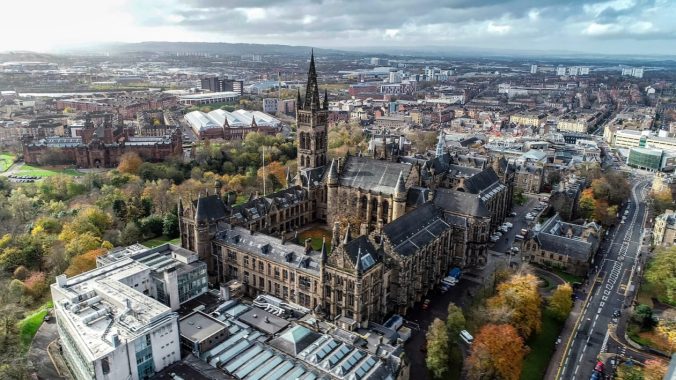
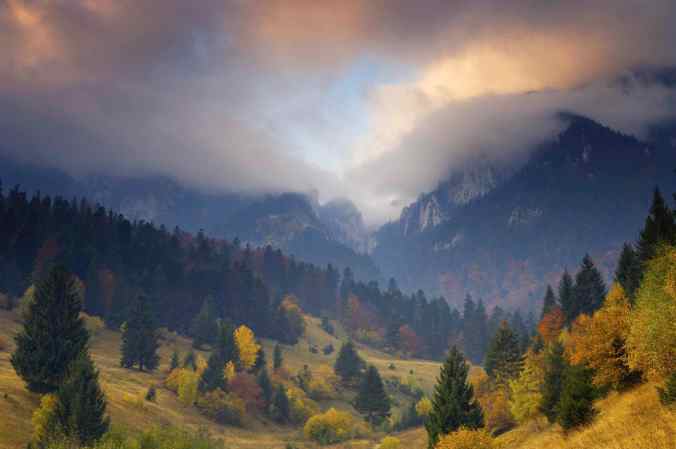
Glasgow, Scotland, site of the 2021 UN climate conference in November. TREASUREGALORE / SHUTTERSTOCK

Fred Pearce has a unique ability to make big, complex important matters more understandable:

At Climate Talks, Can the World Move from Aspiration to Action?

Negotiators at the Glasgow climate conference will face a critical choice: Set firm emissions targets for 2030, or settle for goals of achieving “net zero” by 2050? The course they set could determine if we have a shot at avoiding the worst impacts of climate change.

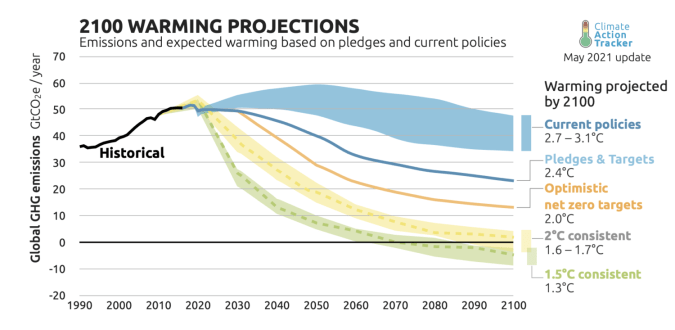
CLIMATE ACTION TRACKER

Glasgow, once the second city of the British Empire and the biggest shipbuilder on the planet, next month hosts the 26th conference of nations aiming to halt dangerous climate change. The negotiators face the challenge of turning the aspiration of the 2015 Paris Agreement to achieve “net zero” emissions by mid-century into the detailed near-term action plans necessary to turn those hopes into reality in time to halt warming at or near 1.5 degrees Celsius (2.7 degrees Fahrenheit). Continue reading

Legal Consequences For Deforestation

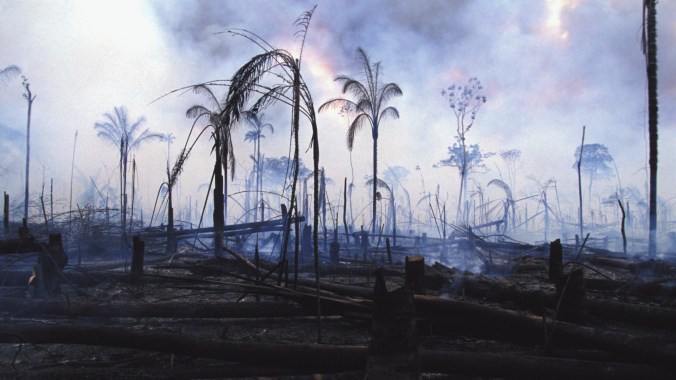
Ron Haviv / VII / Redux

This article by Robinson Meyer, a staff writer at The Atlantic and the author of the newsletter The Weekly Planet, is worth reading if Brazil’s role in climate change has been on your mind:

Deforestation Is a Crime

A new bipartisan bill would treat it that way.

The world doesn’t agree on many things, but one of them is that global deforestation is a problem. If deforestation were a country, it would be the world’s third-largest source of climate-warming pollution, after the United States and China. (It would also be a terrible place to live—bulldozers everywhere and no shade to speak of.) Parts of the Amazon now emit more carbon pollution than they capture because of deforestation, a recent study found.

Knowing about a problem is, of course, different from knowing what to do about it. Continue reading

Alternative Incentives For Living With The Rainforest

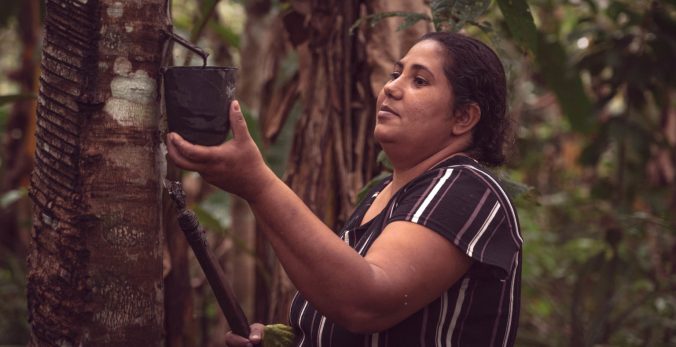
Eliane Lima Oliveira, 30, learned how to collect rubber with her family of traditional rubber tappers

We have been neglecting excellent reporting in the Food & Environment Reporting Network over the last four years. Here is a good correction to the oversight. Our orientation to entrepreneurial conservation makes us cheer this on:

Can fashion help small farmers preserve the Amazon?

Many downplay capitalist solutions to conservation. But they could spark the wealth transfer needed to save the world’s largest rainforest.

By Brian Barth and Flávia MilhorancePhotography by Flávia Milhorance

Small farmer and rubber tapper, Rogerio Mendes, 23: “I have an inexplicable feeling inside the forest. Because it’s a feeling of happiness, but with agony and concern.”

On a rainy March afternoon, Rogério Mendes strides through the dripping vegetation of a tract of virgin Amazonian forest and stops at a tree with scars arranged in neat diagonal rows across its trunk. From his back pocket he produces a wood-handled tool with a blade on one end, called a cabrita, and cuts another diagonal line though the bark, beneath the others. A milky white goo—raw liquid latex—begins to trickle down this tiny canal and into a metal pail below. Continue reading

Smart People Do Smart Things, Sometimes Very Late

BREAKING: After a decade of constant pressure by students, faculty, and alums,
@HARVARD
IS FINALLY DIVESTING FROM FOSSIL FUELS.

While Rupert Murdoch is not even worthy of the “too little too late” moniker, Harvard University is worthy of “better late than never:”

Triumph! Harvard Finally Divests From Fossil Fuel

The richest university in the world capitulates after a decade of activism

The end came, as ends often do, quietly: at midafternoon today Harvard president Larry Bacow released a letter to Harvard students, faculty, and alumni. He didn’t use the word ‘divestment’–that would have been too humiliating–but he did say that the richest university on earth no longer had any direct investments in fossil fuel companies, and that its indirect investments through private equity funds would be allowed to lapse. “HMC has not made any new commitments to these limited partnerships since 2019 and has no intention to do so going forward. These legacy investments are in runoff mode and will end as these partnerships are liquidated.” Continue reading

Really, Rupert?

Rupert Murdoch, executive chairman of News Corp, at a meeting of the World Economic Forum, January 30, 2009. MONIKA FLUECKIGER / WORLD ECONOMIC FORUM

If we had a category called too little, too late, this man and his phenomenally profitable media empire would not even feature in it. He has done so much damage through his empire’s constant denialism of climate change that even one little act like this one would not be worthy. Australia is too fossil fuel friendly, for sure, but is small potatoes in the scope of Murdoch’s holdings and their relevance to the world. And it is not at all clear this move is genuine. It seems obvious that as more of the world believes its own eyes rather than what he has been selling, he needs to pivot. We should not reward such a pivot:

In Australia, Murdoch-Owned News Outlets Vow to Back Away From Climate Denial

Though long hostile toward climate science, News Corp Australia is planning an editorial campaign calling for a zero-carbon economy,The Sydney Morning Herald reported. Continue reading

Balancing Power On Climate

The main way to counter the malign power of vested interest is to meet organized money with organized people. Photograph by Nicole Neri / Bloomberg / Getty

For the entire run of his newsletter McKibben made this point over and over again, and now one final time from his unique platform at the New Yorker:

The Answer to Climate Change Is Organizing

Dealing with global warming is always going to be about the balance of power.

Amore personal note than usual this week, because this will be the last of these Climate Crisis columns I’ll write (though it’s not the end of my work for the magazine). I’m incredibly grateful to The New Yorker for letting me do them—and especially thankful for Virginia Cannon, who has edited them each week with grace and aplomb. Our run has overlapped almost perfectly with the course of the pandemic, and for me it’s been the perfect moment to sit back and appreciate and highlight the work of so many across the wide universe of activists, scientists, economists, and politicians who are taking on the deepest problem that humans have ever wandered into. I can’t overstate the comfort of that universe: it didn’t exist thirty-two years ago, when I started writing about climate change; its slow but inexorable rise has given me not just welcome company but real hope. I’ve particularly enjoyed “passing the mic” to many members of that gathering throng. Continue reading

Romania’s Carpathian Mountains, Forever

Rock of the King, NP Piatra Craiului, Transylvania, Southern Carpathian, Romania

The word Carpathian appears, to my surprise, only once in a post before today. Likewise Romania is underrepresented except in passing, and was the focus of just one post, five years ago in our pages. Today I will correct the oversight.

FOUNDATION CONSERVATION CARPATHIA
Bears in the Southern Carpathian Mountains, Romania.

It is surprising because after I was exposed to the idea of rewilding, I started receiving The European Nature Trust’s newsletter. Frequently the newsletter highlights one of the projects they support, in Romania’s Carpathian Mountains. I have been admiring the photographs for years now, and silently supporting TENT’s joint mission with the FCC. Silent no more. Let’s all actively support the Carpathian Mountains of Romania being there forever, intact:

DANIEL ROSENGREN
A frosty morning in the Piatra Craiului National Park, Romania.

TENT is committed to the protecting and restoration of Romania’s natural resources through supporting Foundation Conservation Carpathia.

Romania has 250,000 hectares of virgin forest, mostly in the Southern Carpathians, which constitutes the largest unfragmented forest area in Europe. They contain an extraordinarily high number of indigenous species, one third of all European plant species and are home to the largest European populations of large carnivores. Continue reading

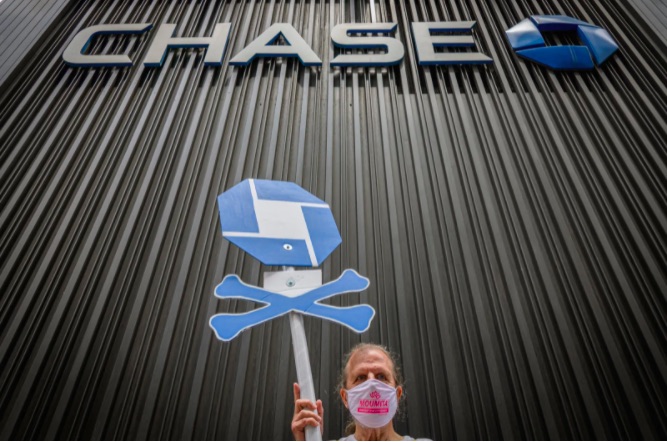
Really, Chase?

A climate activist picketing outside a Chase Bank branch in New York earlier this year. Photograph by Erik McGregor / Getty

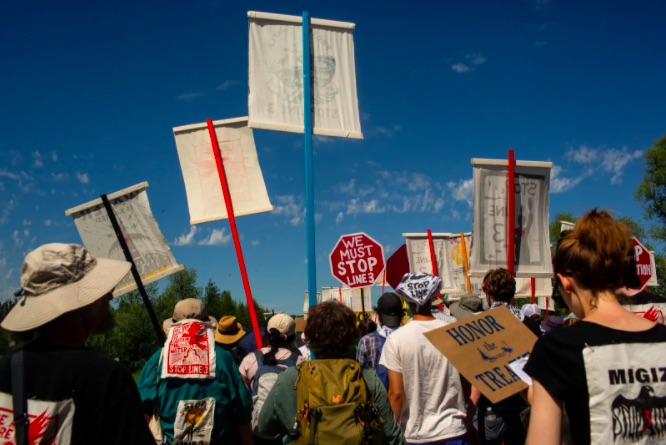
It is a no-brainer to oppose Line 3, but mere opposition does not amount to much. Action is the thing. And action is not always as cumbersome as it may sound. For example, if you bank with the people who are bullish on the future of oil, and who mix your money up with that money, it is time to rethink that relationship. Pull your money out of that bank:

Slow-Walking the Climate Crisis

“Greenwashing” is too kind a term; this is more like careful sabotage.

Travellers arriving in an unfamiliar city used to worry that they’d climb in a taxi and be driven to their destination by the most circuitous route possible, racking up an enormous bill. That’s pretty much what Big Oil and its allies in government and the financial world are doing with the climate crisis—in fact, at this point, it’s the heart of the problem. Continue reading

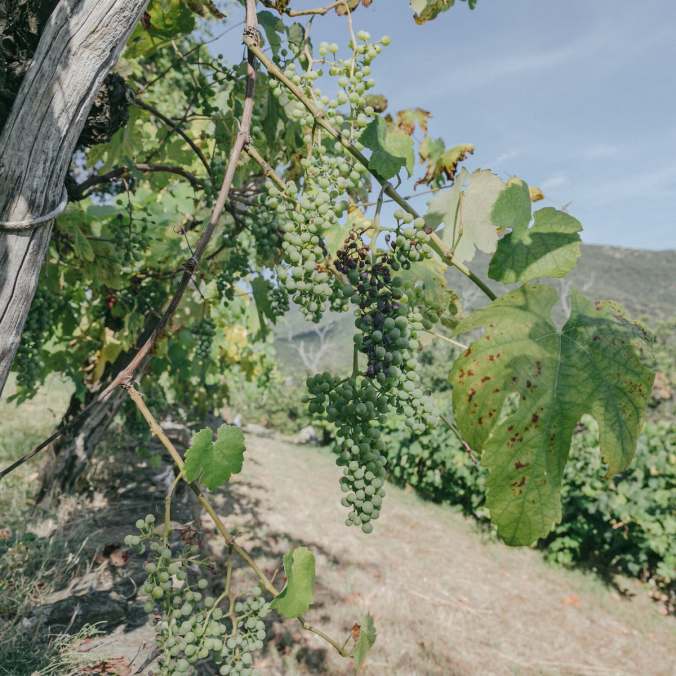
Adaptation In The Vineyard

Jacquez vines at Michel Arnaud’s farm in the village of Saint-Mélany in the Ardèche region of France. The American hybrid variety has been banned in France since 1934. Andrea Mantovani for The New York Times

We admire many French traditions, except for those, especially, having to do with birds. When it comes to wine, the French are often but not always right:

For France, American Vines Still Mean Sour Grapes

French authorities have tried to outlaw hardy American hybrids for 87 years. But climate change and the natural wine movement are giving renegade winemakers a lift.

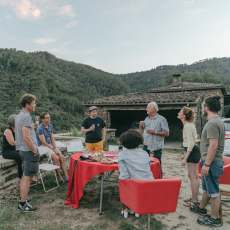
A tasting of forbidden wines at Hervé Garnier’s “Memory of the Vine” association in the village of Beaumont. Mr. Garnier, standing third from right, is one of the last stragglers in a long-running struggle against the French wine establishment and its allies in Paris. Andrea Mantovani for The New York Times

BEAUMONT, France — The vines were once demonized for causing madness and blindness, and had been banned decades ago. The French authorities, brandishing money and sanctions, nearly wiped them out.

But there they were. On a hillside off a winding mountain road in a lost corner of southern France, the forbidden crop was thriving. Early one recent evening, Hervé Garnier inspected his field with relief.

In a year when an April frost and disease have decimated France’s overall wine production, Mr. Garnier’s grapes — an American hybrid variety named jacquez, banned by the French government since 1934 — were already turning red. Barring an early-autumn cold snap, all was on track for a new vintage. Continue reading
Sri Lanka Energy Progress

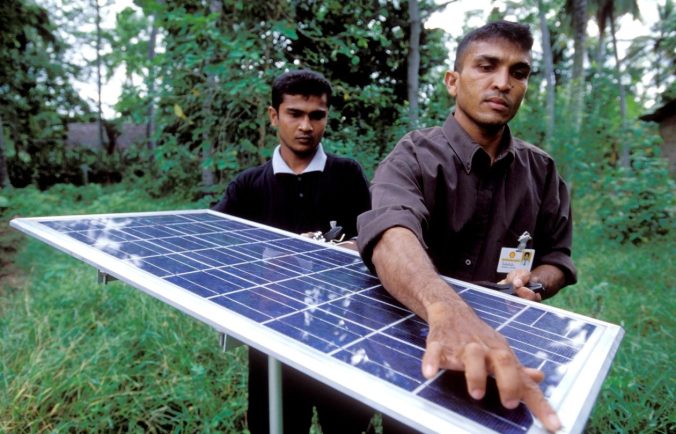
A solar installation in Sri Lanka. DOMINIC SANSONI / WORLD BANK VIA FLICKR

Thanks to Yale e360 for this news from our old neighborhood:

Sri Lanka Pledges No New Coal, Makes Push Into Rooftop Solar

In its latest climate plan, Sri Lanka is ruling out new coal power and aiming to reach 70 percent clean electricity by 2030, an important milestone on its way to reaching its goal of a carbon-neutral electricity generation system by 2050, Climate Home News reported. Continue reading
The Alberta Tar Sands Prize

In a world that will need less oil, the attraction of going to a landlocked continental interior, such as Alberta, Canada, and trying to separate petroleum from sand is waning. Photograph by Ben Nelms / Bloomberg / Getty

Oil from the tar sands of Alberta will sink us faster than we are already sinking. How important is it to keep it where it is? Akin to some sort of holy grail. Thanks to Bill McKibben, as always, for weekly reminders to keep our eyes on the prize:

We Love You, Alberta—Just Not Your Tar Sands

If the province’s oil is dug up and burned, it will be calculably harder to limit the damage from climate change.

Some weeks ago, the government of Alberta wrote to me—and apparently to a number of other environmentalists and environmental groups. We are all subjects of an “anti-Alberta energy inquiry,” and have the right to respond to charges that are being levelled by a government commission. Alberta, it turns out, has spent three and a half million dollars in an effort to find out whether foreigners are unfairly targeting its oil-and-gas industry. I’m mentioned dozens of times in the draft report, due to be finished this week, and it contains links to lots of articles of mine explaining why the province’s vast tar-sands project should be curtailed. Continue reading
Recycling 2.0, Maine Gets It Done

A collection facility in Bend, Ore. The state is expected to adopt a recycling law similar to Maine’s within weeks. Leon Werdinger/Alamy

When we were making decisions about coffee and chocolates that we would offer in the Authentica shops, which we knew to be best-selling categories for travelers wanting to take something home from Costa Rica, product quality was the top consideration. Packaging was a close second. Relative to what was sold in other shops, we radically reduced the carbon footprint of the packaging, and more recently took another step further down that road. We know that every little effort counts, but we also know that the big game is elsewhere, and we are happy to see a relatively small state making big strides in the USA:

Maine Will Make Companies Pay for Recycling. Here’s How It Works.

The law aims to take the cost burden of recycling away from taxpayers. One environmental advocate said the change could be “transformative.”

Gov. Janet Mills of Maine, a Democrat, signed the new recycling policies into law this month. Robert F. Bukaty/Associated Press

Recycling, that feel-good moment when people put their paper and plastic in special bins, was a headache for municipal governments even in good times. And, only a small amount was actually getting recycled.

Then, five years ago, China stopped buying most of America’s recycling, and dozens of cities across the United States suspended or weakened their recycling programs.

Now, Maine has implemented a new law that could transform the way packaging is recycled by requiring manufacturers, rather than taxpayers, to cover the cost. Nearly a dozen states have been considering similar regulations and Oregon is about to sign its own version in coming weeks. Continue reading