Fighting Pollution With Garbage

Image may contain Outdoors Flower Plant Nature Pond and Water

Photograph: Abir Mahmud, University of Dhaka

Our thanks to Hannah Richter for her reporting and writing, as well as to Wired for publishing what sounds not like garden variety too good to be true, but quintessentially ridiculous.

Kudos to Nepal for testing out this idea in spite of how it sounds:

Image may contain Lake Nature Outdoors Water Aerial View Architecture and Building

Groups of platforms installed in Nagdaha lake in Nepal. PHOTOGRAPH: SAMYAK PRAJAPATI/THE SMALL EARTH NEPAL

Polluted Lakes Are Being Cleansed Using Floating Wetlands Made of Trash

Platforms combining plants and recycled garbage could offer a cut-price solution for reviving polluted bodies of water.

ON THE BANKS of Nagdaha, a polluted and lotus-infested lake in Nepal, Soni Pradhanang is putting trash back into the water—on purpose.

Image may contain Plant Potted Plant Water Waterfront Boat Transportation Vehicle Outdoors and Food

A floating treatment wetland system loaded with plants. PHOTOGRAPH: SAMYAK PRAJAPATI/THE SMALL EARTH NEPAL

She carefully assembles a platform of styrofoam and bamboo mats, then weaves it together with zip ties and coconut fiber, refuse from nearby tech stores. Then, she pokes 55 plants lush with red flowers through 2-inch holes in the platform, each plant set 6 inches apart. Though Pradhanang’s creation isn’t high-tech, it is effective, and one of the most affordable water-filtration systems available. “I’m cheap,” she says, laughing. Continue reading

The Downside Of Mainstreaming The Recycling Arrows

Rapapawn / Grist

Thanks as always to Grist for offering analysis that nudges us to keep our interest in recycling in the realm of the real:

How the recycling symbol lost its meaning

Corporations sold Americans on the chasing arrows — while stripping the logo of its worth.

It’s Earth Day 1990, and Meryl Streep walks into a bar. She’s distraught about the state of the environment. “It’s crazy what we’re doing. It’s very, very, very bad,” she says in ABC’s prime-time Earth Day special, letting out heavy sighs and listing jumbled statistics about deforestation and the hole in the ozone layer. Continue reading

The Paper Log House On View Until December

The Paper Log House at The Glass House. Photo by Michael Biondo.

The building in the background of the photo above has never featured in any of our architecture-focused posts before, even though architecture has been a key theme since our start, and especially after hosting these interns in India. I know why I never wanted that particular architect in our pages, but nevermind that. This post is about another architect’s achievement, which I plan to visit if I get close enough before December:

SHIGERU BAN: THE PAPER LOG HOUSE

The Glass House, Shigeru Ban Architects (SBA), and The Irwin S. Chanin School of Architecture of The Cooper Union announce the completion of Shigeru Ban: The Paper Log House at The Glass House. Students from The Cooper Union joined in erecting the structure through a unique opportunity offered this semester for the university’s Building Technology course. The collaborative installation will be on display April 15th through December 15th 2024 for The Glass House’s more than 13,000 annual visitors. Continue reading

Does Recycling Matter In 2024?

Thanks to Yale Climate Connections for this primer:

Does recycling actually do anything? What about carbon offsets? Did you know that the average person’s carbon footprint is about 6.5 tons but the average American’s footprint is double that? Meteorologist Alexandra Steele talks to the experts to get answers about what actually helps the planet, and what doesn’t. You can calculate you carbon footprint by using the links below:

https://coolclimate.berkeley.edu/calc…

https://www.nature.org/en-us/get-invo…

Credits Script, research, interviews, camera: Alexandra Steele Script Editors: Sara Peach, Pearl Marvell Edit Producers: Iain Moss, Sam Lucas Production support: Anthony Leiserowitz, Lisa Fernandez Production Editor: Iain Moss Graphics: Screen Stories Production Manager: Ellie Aitken Social Media Manager: Ellie Phillips Director of Production: Hal Arnold Production Company: Little Dot Studios

PureCycle Technologies, Promising But Still Needing Verification

Recycled polypropylene pellets at a PureCycle Technologies plant in Ironton, Ohio. Maddie McGarvey for The New York Times

Big companies have not earned our trust, especially when it comes to plastics. So, our thanks to Hiroko Tabuchi for the tough questions in this New York Times article:

There’s an Explosion of Plastic Waste. Big Companies Say ‘We’ve Got This.’

By 2025, Nestle promises not to use any plastic in its products that isn’t recyclable. By that same year, L’Oreal says all of its packaging will be “refillable, reusable, recyclable or compostable.”

And by 2030, Procter & Gamble pledges that it will halve its use of virgin plastic resin made from petroleum.

To get there, these companies and others are promoting a new generation of recycling plants, called “advanced” or “chemical” recycling, that promise to recycle many more products than can be recycled today.

Crushed plastic waste at the PureCyle plant. Nestlé, Procter & Gamble and L’Oréal have expressed confidence in the company despite its early setbacks. Maddie McGarvey for The New York Times

So far, advanced recycling is struggling to deliver on its promise. Nevertheless, the new technology is being hailed by the plastics industry as a solution to an exploding global waste problem.

The traditional approach to recycling is to simply grind up and melt plastic waste. The new, advanced-recycling operators say they can break down the plastic much further, into more basic molecular building blocks, and transform it into new plastic.

PureCycle Technologies, a company that features prominently in Nestlé, L’Oréal, and Procter & Gamble’s plastics commitments, runs one such facility, a $500 million plant in Ironton, Ohio. Continue reading

Canvus & The Beauty Of Upcycled Turbines

Visitors to Every Child’s Playground in Avon, Ohio, will find products from Canvus’s nearby factory. Photographer: Brian Kaiser/Bloomberg

We missed Bloomberg’s story about Canvus back in November, but happy to share it now:

Retired Wind Turbine Blades Live on as Park Benches and Picnic Tables

To keep turbine blades from piling up in landfills, startups like Canvus are turning them into new products — and free marketing for wind power.


At first glance, the benches outside the Great Lakes Science Center in downtown Cleveland seem unremarkable. But a closer inspection shows that their droplet-shaped shells aren’t made from wood or metal. A scan of the attached QR codes reveals even more: These benches used to be wind turbine blades…


A big thanks to Yale Climate Connections for bringing Canvus to our attention today:

Plastic Waste Losing Another Place To Land

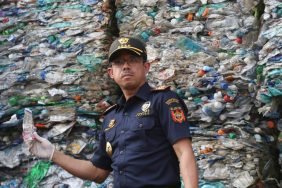
An Indonesian customs official intercepts a container full of illegally imported plastic waste in September 2019. ACHMAD IBRAHIM / AP PHOTO

When conscientious citizens learn more about where all the plastic goes when they do their part to recycle, it can be demoralizing. Recycling is important but the real solution is reducing the waste in the first place:

Indonesia Cracks Down on the Scourge of Imported Plastic Waste

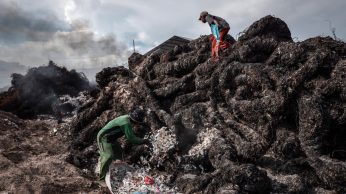
Workers prepare to burn plastic waste at an import dump in Mojokerto, Indonesia. ULET IFANSASTI / GETTY IMAGES

When China banned plastic waste imports in 2018, exporters in wealthy countries targeted other developing nations. Faced with an unending stream of unrecyclable waste, Indonesia has tightened its regulations and has begun to make progress in stemming the plastics flow.

In 2019, at a meeting in Geneva, Switzerland, delegates from 187 countries approved the first-ever global rules on cross-border shipments of plastic waste. Continue reading

Celebrating French Environmental Commitments

Paris mayor Anne Hidalgo and the co-president of the Paris bid for the 2024 Olympics, Tony Estanguet, paddle on the Seine in Paris. Photograph: Reuters

Since 11+ years ago many valuable environmental opinions by George Monbiot have been linked to in our pages; today a celebration of a neighboring country’s efforts:

When it comes to rich countries taking the environment seriously, I say: vive la France

Emmanuel Macron’s government is at least doing the bare minimum to avert the planetary crisis – and putting the UK to shame

While we remain transfixed by a handful of needy egotists in Westminster and the crises they manufacture, across the Channel a revolution is happening. It’s a quiet, sober, thoughtful revolution, but a revolution nonetheless. France is seeking to turn itself into an ecological civilisation. Continue reading

Pyrolysis, Advanced Plastic Recycling, Explained

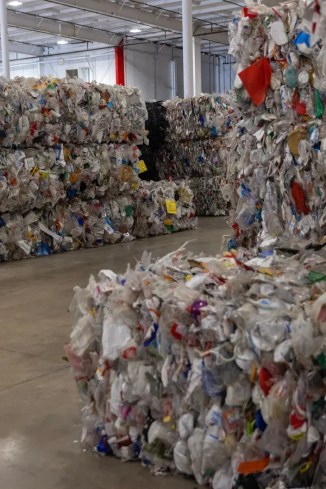
Plastic waste at a disposal plant in Tokyo. THE YOMIURI SHIMBUN VIA AP IMAGES

We have a difficult time giving Exxon and other petroleum companies the benefit of the doubt, but at minimum we want to understand what they say about what they are selling:

As Plastics Keep Piling Up, Can ‘Advanced’ Recycling Cut the Waste?

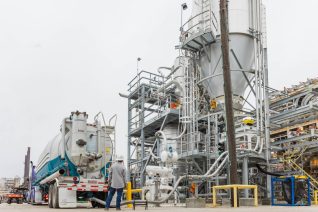
Exxon’s advanced recycling facility in Baytown, Texas. BUSINESS WIRE

Proponents of a process called pyrolysis — including oil and gas companies — contend it will keep post-consumer plastics out of landfills and reduce pollution. But critics say that by converting waste to petroleum feedstock, it will only perpetuate a dependence on fossil fuels.

Bob Powell had spent more than a decade in the energy industry when he turned his attention to the problem of plastic waste. Continue reading

Ghana Says No Thank You To Europe’s Fast Fashion

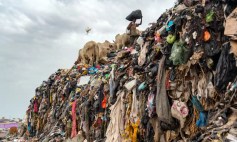
Some of the 6m items of clothing that arrive at Kantamanto Market each week. With the rise of fast fashion in the west, more is discarded as the quality drops. Photograph: Muntaka Chasant/Rex

When  the clothes cast off by the wealthy are cast on to those less wealthy, it should be done so according to the golden rule:

Stop dumping your cast-offs on us, Ghanaian clothes traders tell EU

With 100 tonnes of clothing from the west discarded every day in Accra, ‘fast fashion’ brands must be forced to help pay for the choking textile waste they create, environmentalists say

An aerial view of Kantamanto market in Accra, where 100 tonnes of secondhand clothing a day are discarded. Photograph: Misper Apawu/The Guardian

A group of secondhand clothes dealers from Ghana have visited Brussels to lobby for Europe-wide legislation to compel the fashion industry to help address the “environmental catastrophe” of dumping vast amounts of textiles in the west African country. Continue reading

Trashy Fashion

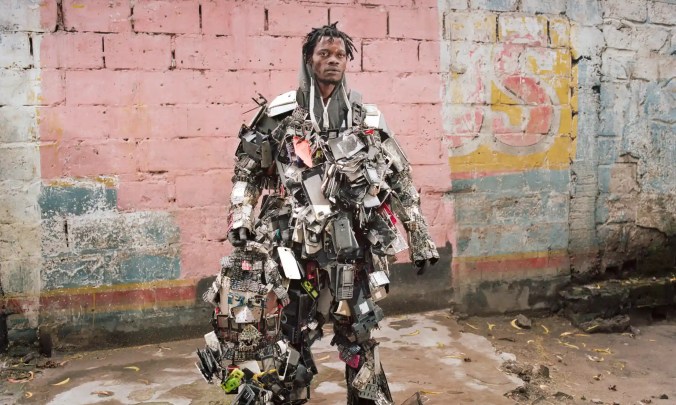
Congolese artist Nada Thsibwabwa photographed by Colin Delfosse wearing a costume made of mobile phones in Matonge district, Kinshasa, Democratic Republic of the Congo. All images © Colin Delfosse

Congolese artist Hemock Kilomboshi posing in his rubber costume in Matonge district, Kinshasa. A member of the Kinact platform, Kilomboshi performs in Kinshasa’s streets to raise issues about globalisation and economic plunder in the DRC.

We featured an African social enterprise in our pages, back in the days of our Ghana work, that today’s story reminds us of. Whether on the streets of Accra, or the streets of Kinshasa, we love the creative approach. Click any image, or the title link below, to see the entire collection in the Guardian:

Rubbish fashion: street art costumes of Kinshasa – in pictures

In his series Fulu Act, Brussels-based documentary photographer Colin Delfosse captures street artists in Kinshasa, who craft striking costumes out of everyday objects found littering the streets, such as discarded wigs, wires, soda cans and bottle lids, to raise awareness of environmental issues facing the Democratic Republic of the Congo. “The statement behind their costumes is to condemn and inform about overconsumption and its side effects, namely pollution, poverty, lack of reliable investments and so on,” says Delfosse. “By capturing these images, I’m giving an echo to their crucial work.”

Congolese artist Jean Precy Numbi Samba, AKA Robot Kimbalambala, pictured in his costume made of car spare parts in the Ngiri-Ngiri district, Kinshasa, December 2019. The car market in the capital’s suburbs is mostly made of highly polluting secondhand (or thirdhand) vehicles from Europe.


Spirit Catcher and Lumen-Less Lantern, An Art Intervention by Willie Cole

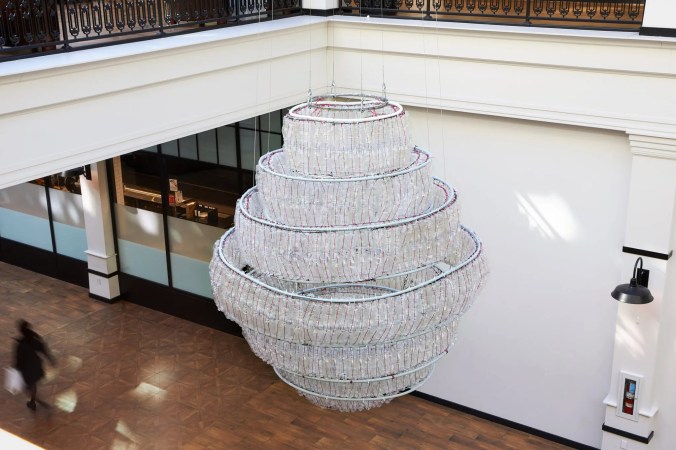
Willie Cole in his artist-in-residence studio at Express Newark, where he has been assembling chandeliers made from thousands of used plastic bottles. Rachel Vanni for The New York Times

Recycling has been a key theme in these pages since we started. Sometimes upcycle has been the term. Of course, reuse is also interesting.

All of these are worth our attention and support.

Our thanks to Laura van Straaten and the New York Times for bringing Willie Cole’s exhibition into view:

The artist invited the community in Newark to reimagine objects that would otherwise be destined for a landfill — to look at them in a fresh, imaginative way.

“Spirit Catcher” by Willie Cole is made of thousands of water bottles held together with metal wire and sculpted to resemble a chandelier. Rachel Vanni for The New York Times

NEWARK — The artist Willie Cole has created two colossal new sculptures and generated a provocative group exhibition stemming from an unusual open call asking artists to transform objects destined for landfill into something imaginative and new. Continue reading

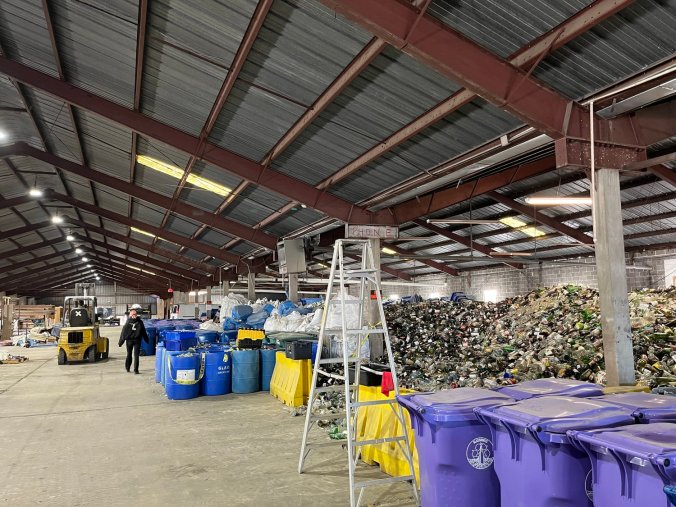
Glass Half Full, NOLA Community Recycling

This youthful organization, new to us but old enough to have proof of concept is, in their own words, crushing it:

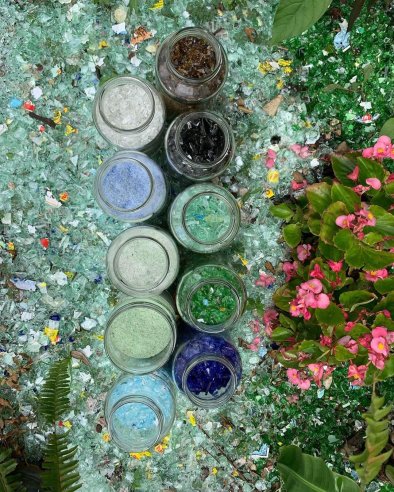
Turning glass waste into useable sand and cullet.

We collect and convert NOLA’s glass bottles — which have been crammed into our landfills for decades — into functional products: sand and glass cullet. These precious materials have an array of applications, from coastal restoration to flood prevention to eco-construction.

Converting glass into sand & glass cullet

Our recycling process involves diverting used glass products from landfills and sorting, sifting, and ultimately converting them into sand products ranging from super soft, beach-like sand to glass gravel. The final products are used for coastal restoration projects, disaster relief efforts, eco-construction, new glass products, and so much more. The applications for sand are truly endless.

A Bit About The Origins Of Clean The World

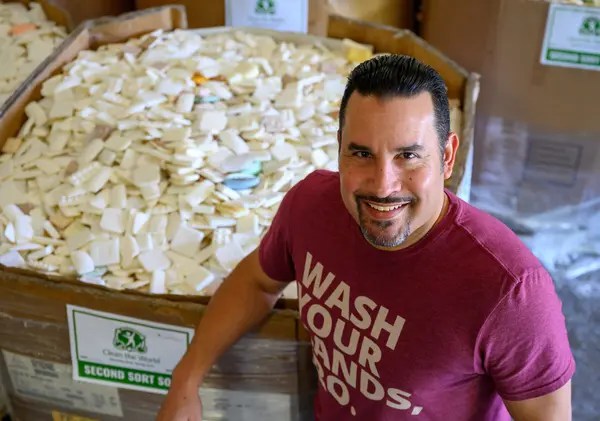
Shawn Siepler, the founder of Clean the World, with used hotel soap before it will be recycled for those in need. Todd Anderson for The New York Times

Reusing things versus wasting them has been a major theme in these pages, especially in relation to travel and hospitality. Looking back at posts about washing hands for a cleaner world and then another about soap making for the same, it is not surprising we had already featured Clean The World in a couple earlier posts. Thanks to Victoria M. Walker for this conversation with the founder:

Getting the World Clean, One Recycled Bar of Soap at a Time

Meet Shawn Siepler, the founder of Clean the World. The nonprofit recycles partially used soap left behind from hotel guests for those in need.

When hotel or motel guests check into their rooms, they expect at the very least to be greeted with a clean space, a made-up bed and in the bathroom, soap.

But what happens when you leave that soap behind? Continue reading

Personal Approaches To Carbon Footprint Reduction

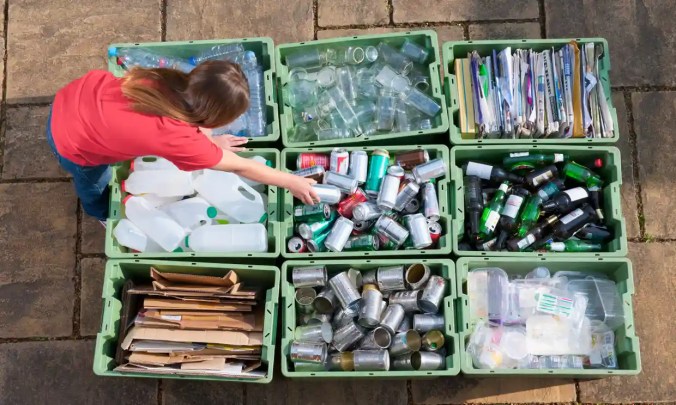
Recycle to save the planet? Photograph: Jacobs Stock Photography Ltd/Getty Images

A public service request for your input, from the Guardian:

What is the single most effective thing I could do to reduce my carbon footprint?

The long-running series in which readers answer other readers’ questions on subjects ranging from trivial flights of fancy to profound scientific and philosophical concepts

What is the single most effective thing I could do to reduce my carbon footprint? Without dying, preferably. Andrew Hufnagel, Caithness

Post your answers (and new questions) below or send them to nq@theguardian.com. A selection will be published on Sunday.

Plastic Rings, Bygone Things

Plastic rings hold together sets of beer cans. GHI/Education Images/Universal Images Group via Getty Images

Why did it take this long, you might ask? It is not clear from this article. But that it is happening at all is surprising, so we hope it is correct to say better late than never: Soda and Beer Companies Are Ditching Plastic Six-Pack Rings

In an effort to cut down on plastic waste, packaging is taking on different forms that can be more easily recycled or that do away with plastic altogether.

The plastic rings ubiquitous with six-packs of beer and soda are gradually becoming a thing of the past as more companies switch to greener packaging. Continue reading

Circularity & The Future Of Recycling Plastic

Getty

Since our earliest days we have had team members searching for news on the subject of plastic, and what to do about it. The Atlantic, publishing an article by Ula Chrobak that was originally featured in Undark, points out The False Promise of Plastic Recycling:

A French company has a new solution to the plastic problem. Not everyone is buying it.

Since the first factories began manufacturing polyester from petroleum in the 1950s, humans have produced an estimated 9.1 billion tons of plastic. Of the waste generated from that plastic, less than a tenth of that has been recycled, researchers estimate. Continue reading

Senegal’s Plastic Recycling Entrepreneurship

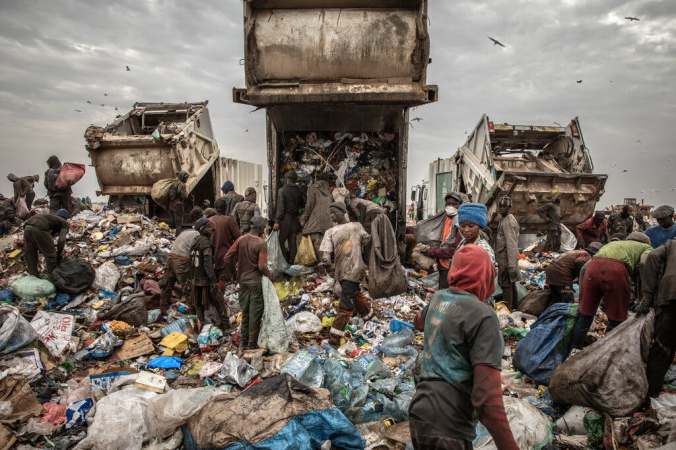
Waste pickers searching for plastics at the main dump in Dakar, Senegal.

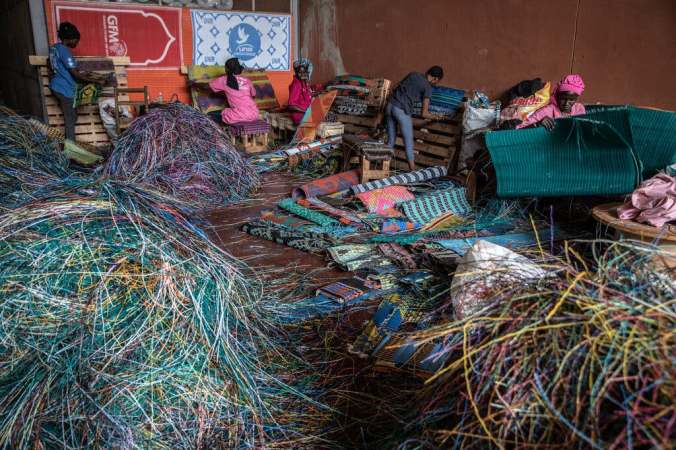
The article below, written by Ruth Maclean and accompanied with photographs by Finbarr O’Reilly, is a portrait in developing world green opportunism. It is not a pretty picture, per se, but it is a sight to behold after the market for recycled plastic seemed to implode in recent years. The photo above shows the gritty reality of the work. The photos below show some of the prettier, and more entrepreneurial downstream opportunities from that work:

Workers stripping reusable plastic from mats at the Sosenap factory, which recycles plastic to make mats and carpets in Diamniadio, on the outskirts of Dakar.

‘Everyone’s Looking for Plastic.’ As Waste Rises, So Does Recycling.

Plagued by plastic pollution, Senegal wants to replace pickers at the garbage dump with a formal recycling system that takes advantage of the new market for plastics.

The main event at the outdoor venue for Dakar Fashion Week in December, which had a theme of sustainability.

DAKAR, Senegal — A crowd of people holding curved metal spikes jumped on trash spilling out of a dump truck in Senegal’s biggest landfill, hacking at the garbage to find valuable plastic. Continue reading

Blacksmithing The Zero Waste Knife

I have mentioned more than once about my brief blacksmithing experience. I have a respect for the profession. I have a new level of respect for this particular blacksmith featured in Matthew Weaver’s article below, so would encourage you to visit his website by clicking the image to the left:

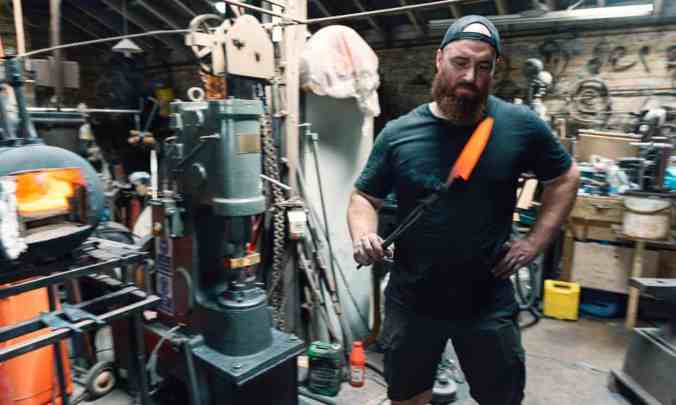
Tim Westley making a zero-waste knife at his forge. Photograph: Xavier D Buendia/XDBPhotography

‘My customers like zero waste’: the blacksmith recycling canisters into cult kitchen knives

Tim Westley takes up chef friend’s challenge to transform laughing gas litter

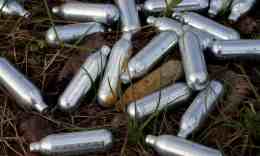
Discarded nitrous oxide gas canisters. Photograph: Gareth Fuller/PA

The little steel bulbs that litter parks, roadsides and city centres – the discarded canisters from Britain’s second favourite drug, laughing gas – cause misery to many communities. But now one blacksmith has found an innovative use for them: turning them into handmade kitchen knives.

The prevalence of the canisters has prompted some councils to impose local bans, while the home secretary is keen to outlaw them nationally. But Tim Westley’s handmade kitchen knives are gaining a cult following among environmentally conscious foodies after being endorsed by chefs committed to low waste. Continue reading

Coffee & Plastic, Second Shift Footwear

The company said the shoe, called Nomad, will be made from coffee waste and recycled bottles, while recycled polyester will be used to create the membrane to make the footwear waterproof. Photograph: c/o Rens

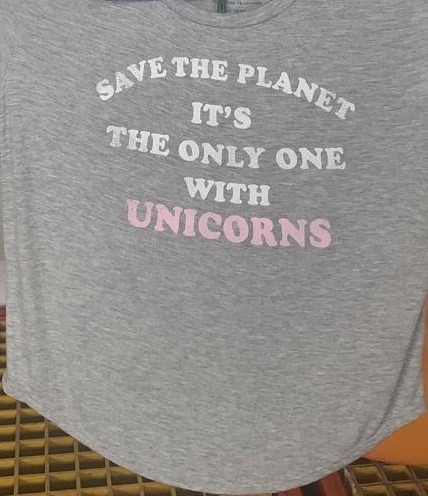
There is nothing particularly remarkable about the idea of using coffee bags a second time. But it was fun realizing how easy it is, and just doing it. Less easy and maybe lots more fun is the idea in the article below. Hats off to the creative founders who chose this path instead of chasing Silicon Valley unicorns (perhaps their success will demonstrate that unicorns thrive on a healthy planet, as expressed in this t-shirt I saw recently):

Firm seeks funding for ‘performance sneakers’ made from coffee waste

Finnish firm Rens says shoes made from used grounds and recycled plastic will be climate neutral

It is the typical morning routine for hundreds of thousands of Britons: have a cup of coffee and then slip on your trainers before heading for a jog. Upon returning, a quick drink of water to rehydrate before stepping into the shower.

Now, one firm has enabled one thing to beget another, by creating trainers made of recycled plastic bottles and used coffee beans.

Finnish footwear firm Rens launched an online fundraising campaign for its latest sustainable trainer on Tuesday, which it claims will be climate neutral in its production, packaging and transport. Continue reading