Kim Stanley Robinson’s Message For All Of Us

When The Ministry for the Future came to my attention late last year, it was the first I had heard of this author (I am buried deep under a big rock when it comes to science fiction). Now I wonder how I could have missed such an important thinker on the most important topics of our time (not science fiction):

Kim Stanley Robinson on “Utopian” Science Fiction

One of the premier writers of thinky sci-fi, Kim Stanley Robinson opened his book “The Ministry for the Future” with an all too plausible scenario: a lethal heat wave descends on India, with vast, horrifying consequences. It’s a sobering read, especially after July, 2021, was declared the hottest month on record. And yet Robinson tells Bill McKibben that his work is not dystopian; his central concern is how the globe could respond to such a disaster and begin to halt the momentum of global warming. Continue reading

Romania’s Carpathian Mountains, Forever

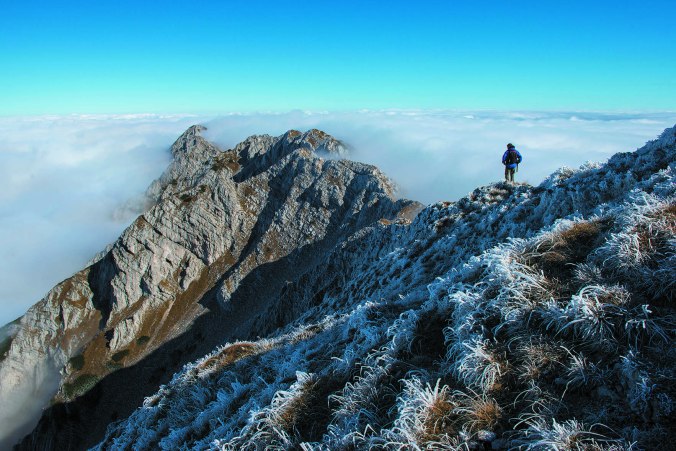
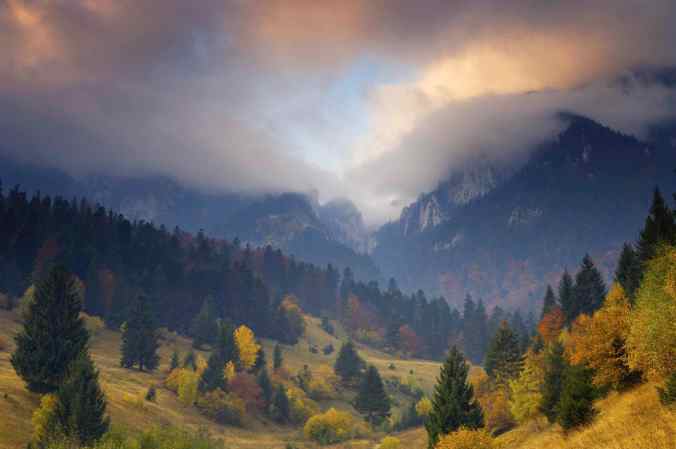
Rock of the King, NP Piatra Craiului, Transylvania, Southern Carpathian, Romania

The word Carpathian appears, to my surprise, only once in a post before today. Likewise Romania is underrepresented except in passing, and was the focus of just one post, five years ago in our pages. Today I will correct the oversight.

FOUNDATION CONSERVATION CARPATHIA
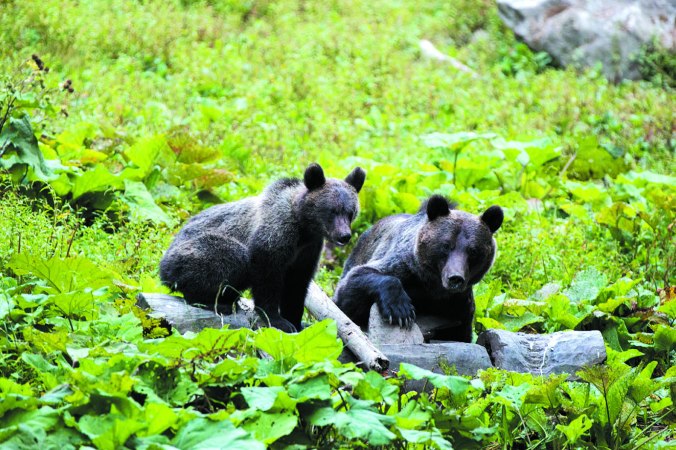
Bears in the Southern Carpathian Mountains, Romania.

It is surprising because after I was exposed to the idea of rewilding, I started receiving The European Nature Trust’s newsletter. Frequently the newsletter highlights one of the projects they support, in Romania’s Carpathian Mountains. I have been admiring the photographs for years now, and silently supporting TENT’s joint mission with the FCC. Silent no more. Let’s all actively support the Carpathian Mountains of Romania being there forever, intact:

DANIEL ROSENGREN
A frosty morning in the Piatra Craiului National Park, Romania.

TENT is committed to the protecting and restoration of Romania’s natural resources through supporting Foundation Conservation Carpathia.

Romania has 250,000 hectares of virgin forest, mostly in the Southern Carpathians, which constitutes the largest unfragmented forest area in Europe. They contain an extraordinarily high number of indigenous species, one third of all European plant species and are home to the largest European populations of large carnivores. Continue reading
Know Where Your Coffee Comes From

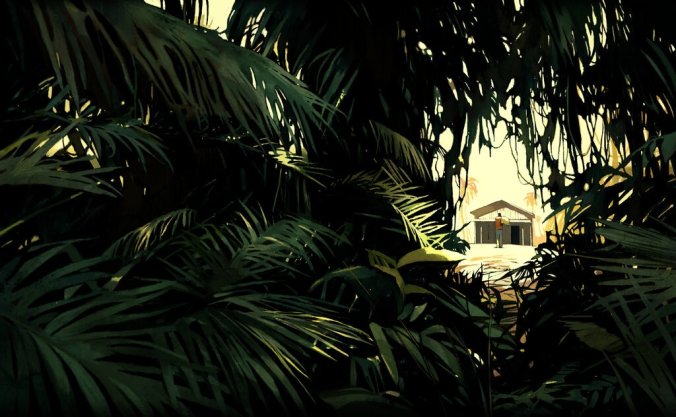
Illustrations by Hokyoung Kim

Most of the coffee stories I tell here are short reports on our efforts to regenerate a onetime coffee farm. Plenty of others we link to are about challenges facing coffee farmers and efforts to improve their lot . I cannot find a story like the one below that we have featured previously, where coffee farming is effectively undermining conservation. Reading this new longform work by Wyatt Williams will not make anyone happy, but that must be the point. The illustrations by Hokyoung Kim are a perfect accompaniment:

The Case of the Vanishing Jungle

It seemed like an easy crime to stop: protected Indonesian rainforest, cut for coffee farms. But a globalized economy can undermine even the best-laid plans.

In the fall of 2015, Matt Leggett, a newly hired senior adviser for the Wildlife Conservation Society, found himself sitting in a meeting in Jakarta, Indonesia, wondering if someone had missed the point. The meeting, as he remembers it, was meant to unveil some good news about tigers. In brief: Back in 2002, a survey of one of the last habitats of the critically endangered Sumatran tiger, Bukit Barisan Selatan National Park, showed a tiger population that, in biologist-speak, amounted to only 1.6 tigers per 100 square kilometers. Continue reading

A Way To Garden

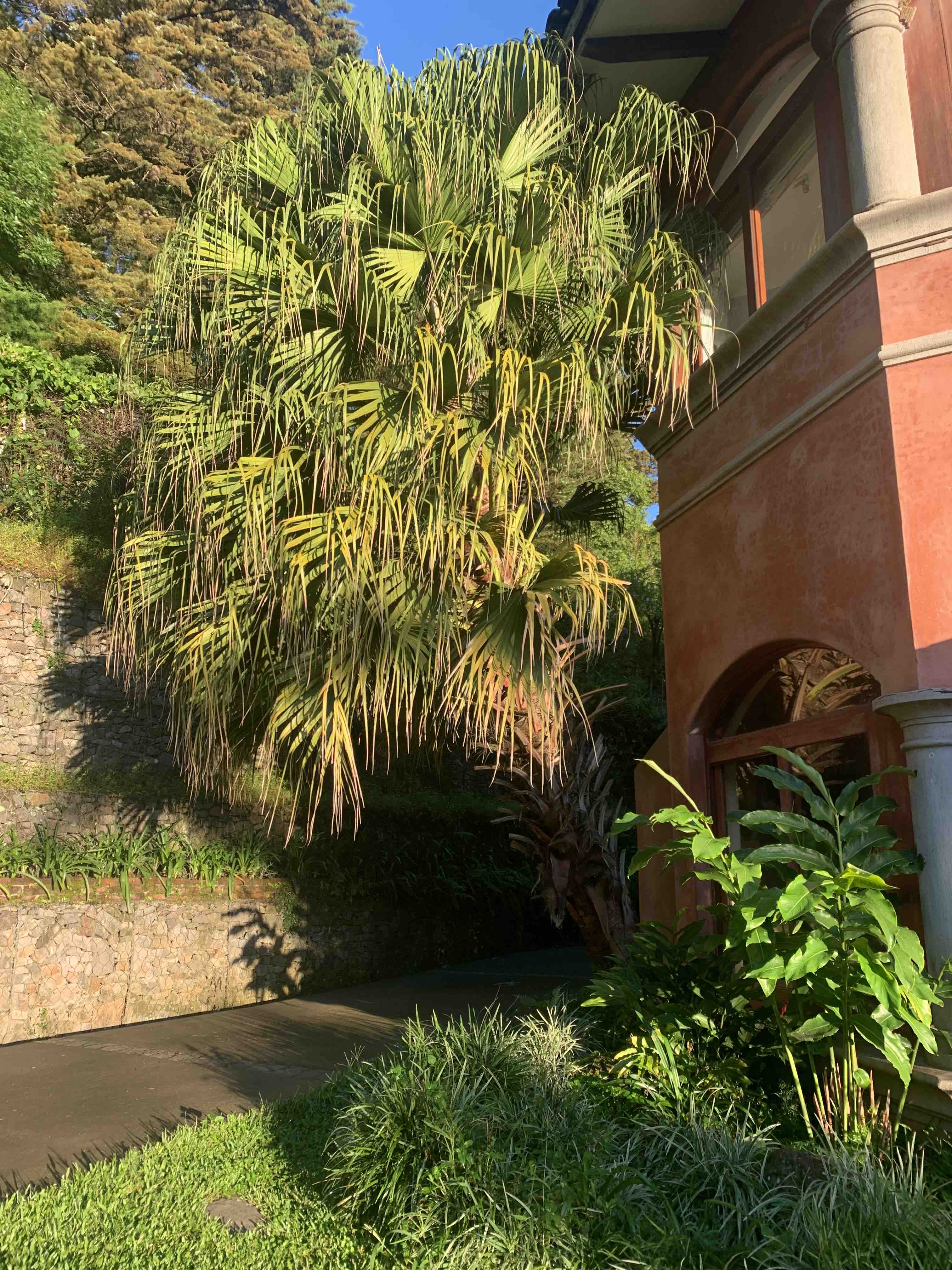
20 years after planting, this palm has reached for the sun, and found it.

When we completed construction on our home late in the year 2000, we had a small palm tree in a planter on our terrace. It was perhaps two feet tall at the time. Sometime in 2001 we planted that palm to the side of the house, and ever since it has been reaching for the sun. The opening sentence in the article below, combined with the photo from the same article that I have inserted with it, struck a chord. We need to think about this tree’s future in a way we did not when choosing where to plant it 20 years ago. My thanks to Margaret Roach– who wrote the article and is the creator of the website and podcast A Way to Garden, and a book of the same name–for this:

Questions About Tree Care? You’re Not Alone.

Many people find trees a little enigmatic. But there is help for the asking. (And it’s free.)

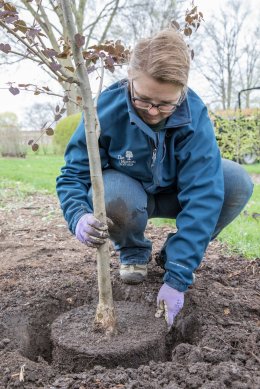
Younger, container-grown trees will settle in and start growing faster than field-dug specimens that may take three to five years to reestablish root systems and resume growth. The Morton Arboretum

The biggest plants in our gardens often get the smallest share of our attention. And it’s not because trees don’t need or want attention — or because we intend to neglect them.

Maybe it’s because they look so strong, holding most of their foliage overhead and not making their needs known near ground level, where we are busy paying attention to everyone else. Or maybe we just don’t have much tree-care confidence.

At The Morton Arboretum in Lisle, Ill., Julie Janoski and her Plant Clinic colleagues respond to gardeners’ and green-industry professionals’ questions — about 17,000 a year. And many of those questions are about trees. Continue reading
Amaranth All Over

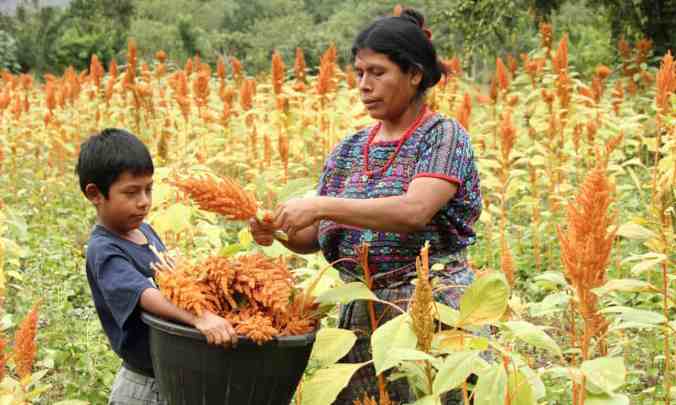
Blanca Marsella González, a member of Qachuu Aloom, harvests amaranth plants. Photograph: JC Lemus/Juan Carlos Lemus

We have been paying attention to amaranth plenty over the years. It should have occurred to me back in the early days of this platform to investigate its origins. Amaranth was so central to our diet in India that I assumed it was a native plant. Not so, but it grows all over the world:

‘It could feed the world’: amaranth, a health trend 8,000 years old that survived colonization

Indigenous women in North and Central America are coming together to share ancestral knowledge of amaranth, a plant booming in popularity as a health food

An elderly woman cuts an amaranth crop, in Uttarakhand, India. The plant is indigenous to North and Central America but also grown in China, India, Southeast Asia, West Africa and the Caribbean. Photograph: Hitendra Sinkar/Alamy Stock Photo

Just over 10 years ago, a small group of Indigenous Guatemalan farmers visited Beata Tsosie-Peña’s stucco home in northern New Mexico. In the arid heat, the visitors, mostly Maya Achì women from the forested Guatemalan town of Rabinal, showed Tsosie-Peña how to plant the offering they had brought with them: amaranth seeds.

Back then, Tsosie-Peña had just recently come interested in environmental justice amid frustration at the ecological challenges facing her native Santa Clara Pueblo – an Indigenous North American community just outside the New Mexico town of Española, which is downwind from the nuclear facilities that built the atomic bomb. Continue reading
Mycology’s Expansive Boundaries

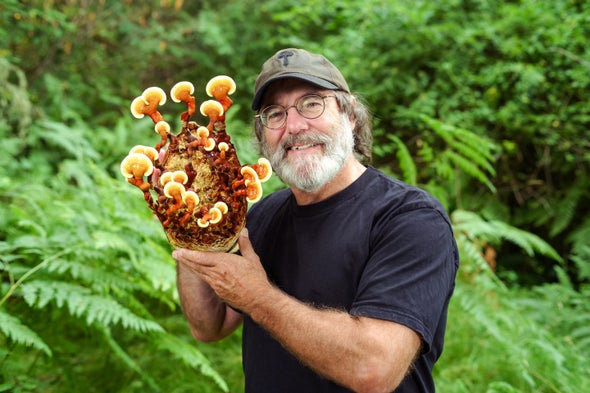
Paul Stamets. Credit: Trav Williams Broken Banjo Photography

In the media we scan for articles and podcasts to share here, some of the last year’s attention to fungi has been aimed at making them seem less alien by celebrating their very alien-ness. Up to now, this has all been earth-bound, but maybe that has been an arbitrary boundary. Thanks to Scientific American magazine for this conversation with the man who has been stretching fungi boundaries for much longer than we have been paying attention:

Future Space Travel Might Require Mushrooms

Mycologist Paul Stamets discusses the potential extraterrestrial uses of fungi, including terraforming planets, building human habitats—and providing psilocybin therapy to astronauts

The list of mycologists whose names are known beyond their fungal field is short, and at its apex is Paul Stamets. Educated in, and a longtime resident of, the mossy, moldy, mushy Pacific Northwest region, Stamets has made numerous contributions over the past several decades— perhaps the best summation of which can be found in his 2005 book Mycelium Running: How Mushrooms Can Help Save the World. But now he is looking beyond Earth to discover new ways that mushrooms can help with the exploration of space. Continue reading
Coffee & Plastic, Second Shift Footwear

The company said the shoe, called Nomad, will be made from coffee waste and recycled bottles, while recycled polyester will be used to create the membrane to make the footwear waterproof. Photograph: c/o Rens

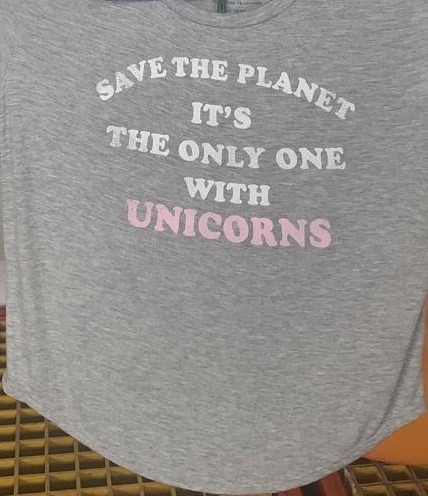
There is nothing particularly remarkable about the idea of using coffee bags a second time. But it was fun realizing how easy it is, and just doing it. Less easy and maybe lots more fun is the idea in the article below. Hats off to the creative founders who chose this path instead of chasing Silicon Valley unicorns (perhaps their success will demonstrate that unicorns thrive on a healthy planet, as expressed in this t-shirt I saw recently):

Firm seeks funding for ‘performance sneakers’ made from coffee waste

Finnish firm Rens says shoes made from used grounds and recycled plastic will be climate neutral

It is the typical morning routine for hundreds of thousands of Britons: have a cup of coffee and then slip on your trainers before heading for a jog. Upon returning, a quick drink of water to rehydrate before stepping into the shower.

Now, one firm has enabled one thing to beget another, by creating trainers made of recycled plastic bottles and used coffee beans.

Finnish footwear firm Rens launched an online fundraising campaign for its latest sustainable trainer on Tuesday, which it claims will be climate neutral in its production, packaging and transport. Continue reading
Nature, Intervention & Protection

Discovery inspires.

Participation motivates.

Discovery + Participation + Organization =

Results

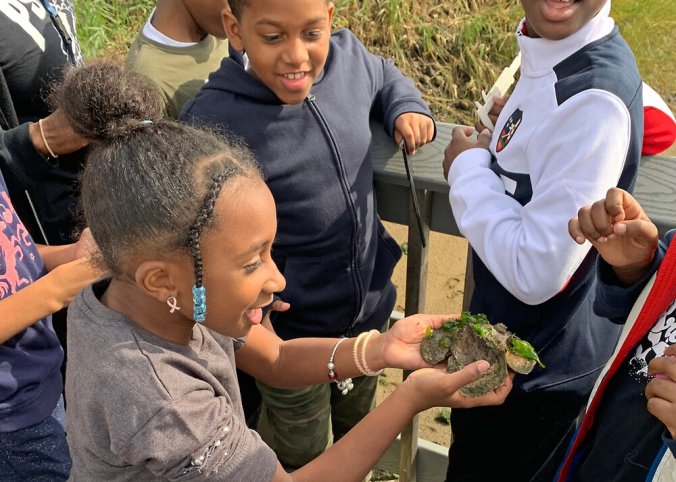
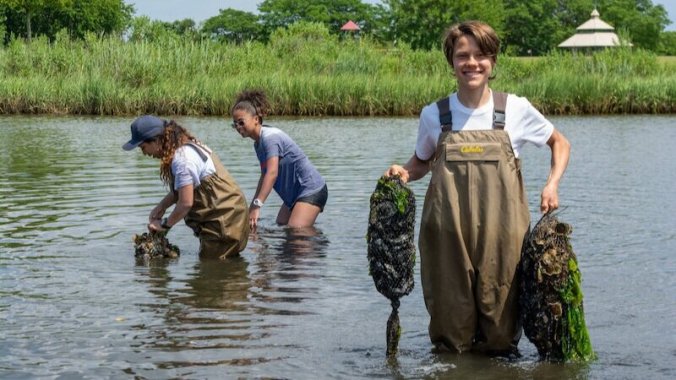
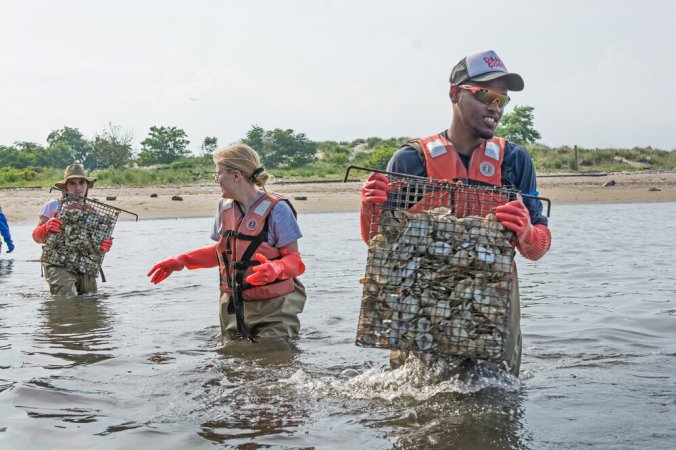
Click any of the images above to go to the website of this organization featured once before in our pages and now again in the article below. It will make more sense after reading the article. But do visit the site and consider volunteering. Take some kids along.

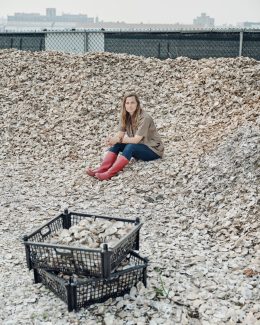
In New York, Kate Orff will use oyster reefs to mitigate storm surges. Photograph by Thomas Prior for The New Yorker

Eric Klinenberg‘s work on the topic of libraries provided a sense of common cause. After featuring so many stories about libraries and librarians (my more recent personal anecdote was purposely brief so did not relay how many ways my local library impacted my young life, a topic for another day), his book summed up much of why the institution matters to us. And then some. Advocating for libraries was something a talented academic could do on a larger scale than we could in these pages, especially with publications like those. Bravo. And now this.

After lots of attention to rewilding in these pages, plenty of it related to urban landscapes, the same author that further illuminated our understanding about the value of libraries has convinced me of how much more there is to learn on this topic:

The Seas Are Rising. Could Oysters Help?

How a landscape architect is enlisting nature to defend our coastal cities against climate change—and doing it on the cheap.

On a windy afternoon in April, the landscape architect Kate Orff stood on the open walkway of a container crane, some eighty feet above the Red Hook Terminal, in Brooklyn, and the Buttermilk Channel, a tidal strait on the southeast side of Governors Island. Continue reading

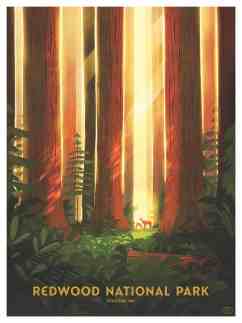
Art Of The National Parks

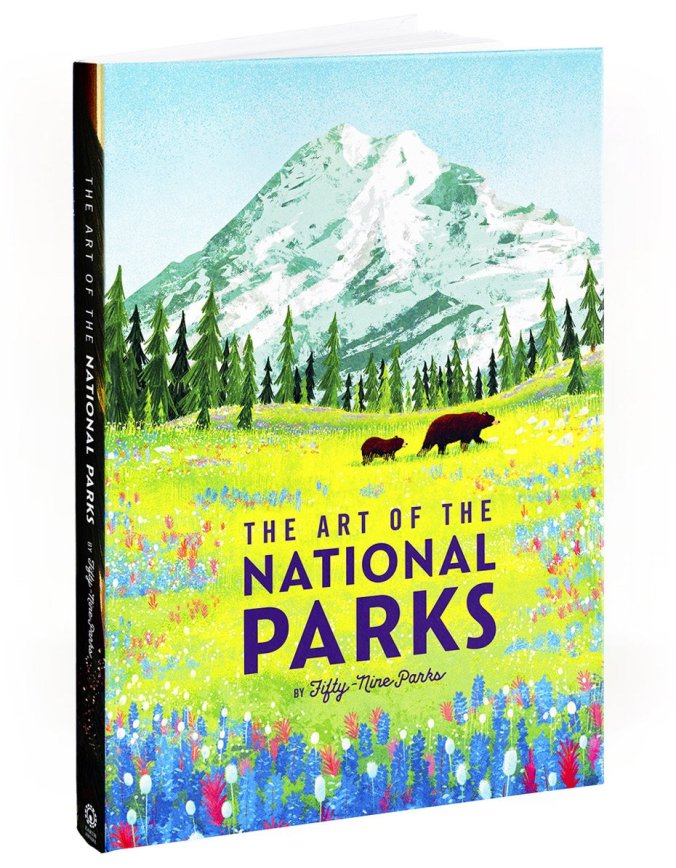
Click the image above if this is your kind of coffee table book. It is of course available elsewhere but please, support the publisher instead of the elsewhere option. We feature stories related to the national parks of the USA about as frequently as any other topic; here is a unique way to support the idea and the actions that flow from the idea.

Thanks to the Guardian’s feature on the book for bringing it to our attention:

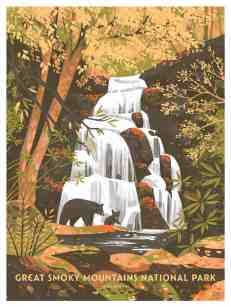
The art director JP Boneyard ’s favourite park is Montana’s Glacier national park. “It’s breathtaking, I’m smiling just thinking about it ,” he says. For his screen-print project Fifty-Nine Parks, now collected in a book, he asked modern artists to reinterpret America’s classic national park posters, commissioned by the government in the 1900s.

“I hope they inspire people to visit the parks and connect with nature, but, heck, it’d be awesome if the book inspired folks to pick up a squeegee and start printing too,” he says.

The National Parks Conservation Association has been mentioned in our pages a couple times before, but only in passing. Finding out more about this book led me to their website for the first time, and I already see a post on that topic is needed, but on another day.

Close This Organic Certification Loophole

A shortcut to organic farming. Source: Bloomberg

Since Sunday I have been thinking about what to plant, and how, with regard to our Escazu coffee regeneration project. Questions related to genetics are fundamental to agriculture, even if genetic engineering is controversial. I am only considering hybrids, not genetically engineered coffee varietals. We will use no pesticides or synthetic fertilizers,  nor have any been used on this land in nearly three decades, so our coffee will be grown according to organic standards. Whether we seek USDA certification is a topic for a later date.

But I am a proponent of organic certification. Not every farmer can afford it but if they could I would hope they consider it. That said, like any certification, there can be bugs in the system. Thanks to Amanda Little (whose work we first linked to five years ago, and again when her book was published) for investigating and bringing this to our attention, with the help of Bloomberg. It would seem to go without saying, but perhaps we all need to shout it out:

Organic Farming Should Protect Nature, Not Destroy It

A USDA loophole that allows farmers to cut down forests and clear grasslands to win faster certification should have been closed years ago.

Sustainable agriculture is having its political moment.

The Biden administration deserves credit for being the first to recognize that food system reforms can go a long way toward solving the climate crisis. Yet for all its big-picture vision, some critical details are getting overlooked. A big one is a loophole within the USDA’s National Organic Program that undermines its mission and impedes the nation’s path toward climate-smart agriculture. Continue reading
Plotting Varietals

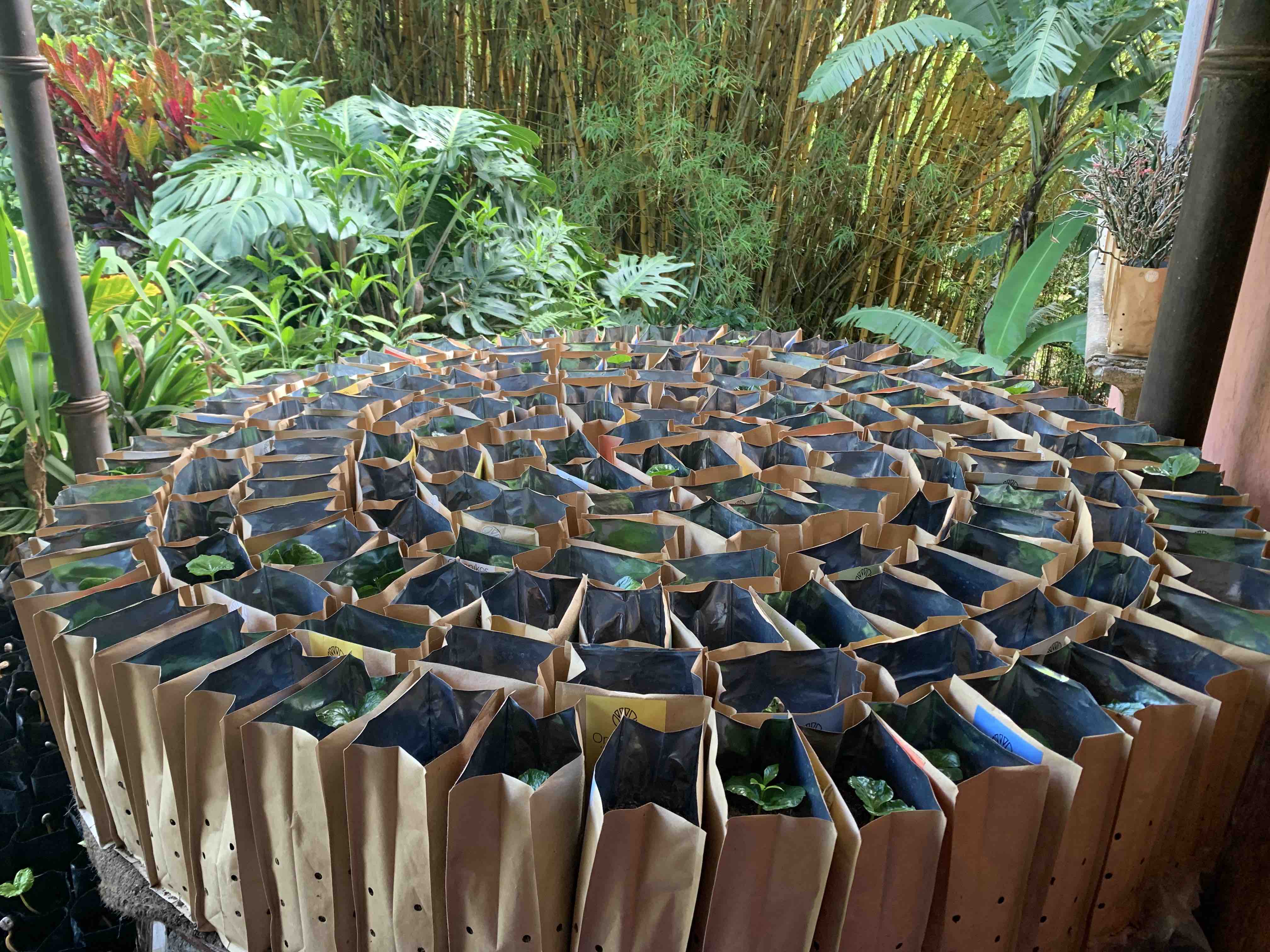
Day 187, with 319 coffee seedlings

When posting yesterday I had in mind my coffee germination project. In addition to recycling bags to use for this stage of prepping for the bigger goal, I have been considering the question of varietals, including hybrids, to plant alongside these seedlings that are from coffee collected on this land 187 days ago, from coffee trees originally planted five decades ago.

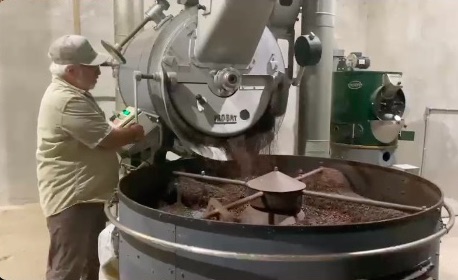
Hacienda La Amistad coffee, roasted at the farm

On Saturday I was speaking with the man who farms and roasts one of our single estate coffees, the only one that is USDA-certified organic. He exhibited the new roaster at the farm, while telling me about an experimental varietal he has growing at 1,800 meters elevation, which he has nicknamed Purple Haze.

This fueled my imagination further down the road of how complex to get with our own re-planting options. Our seedlings will be mature enough to plant next May, and by that time I will need to have sourced the thousand or so other seedlings we have space for. We will have micro-lots within our micro-lot. If we plant varietals in clusters of 100, that would give us the option of ten varietals other than the varietal that was originally planted here. Or clusters of 50, allowing twenty other varietals? More likely clusters of 200, because over the next ten months surely we can do enough homework to figure out the five very best varietal options for this soil, climate and elevation. It’s time to start pondering and plotting those on the map…

Genetic Modification, In Moderation, Appeals

Levon Biss for The New York Times

Our work with coffee farmers in Costa Rica in recent years has convinced me that without hybridization there will not be much of a specialty coffee supply in the near future without it. Climate change and various pests essentially require it. On the other hand, I understand why genetic engineering causes fear. I have suffered mildly from that fear, but still read widely on the subject looking to allay those fears. The main appeal of the technology is obvious, and the reasons to be concerned are plenty, but here are some overlooked observations thanks very much to Jennifer Kahn:

Learning to Love G.M.O.s

Overblown fears have turned the public against genetically modified food. But the potential benefits have never been greater.

Bobby Doherty for The New York Times

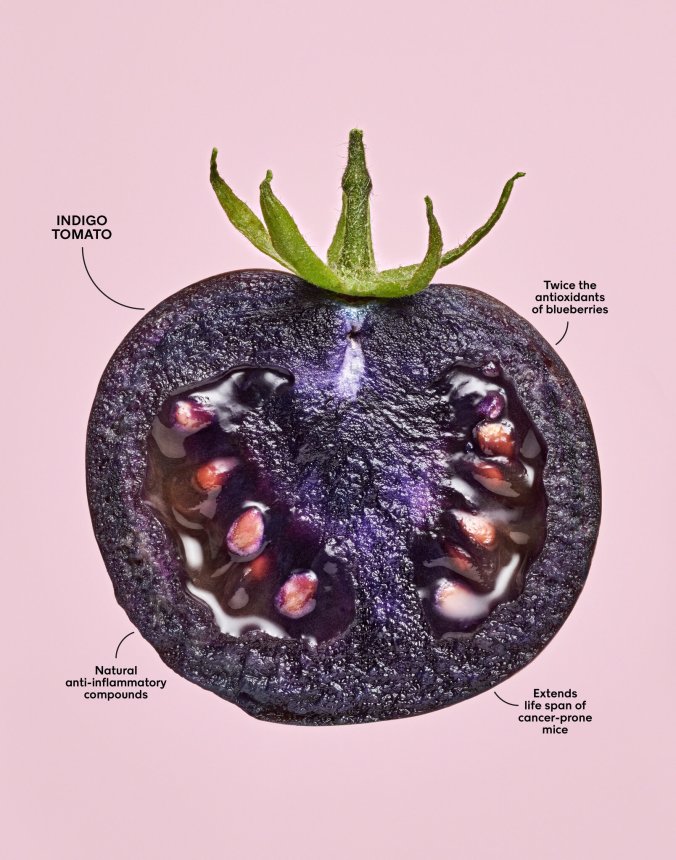
On a cold December day in Norwich, England, Cathie Martin met me at a laboratory inside the John Innes Centre, where she works. A plant biologist, Martin has spent almost two decades studying tomatoes, and I had traveled to see her because of a particular one she created: a lustrous, dark purple variety that is unusually high in antioxidants, with twice the amount found in blueberries.

At 66, Martin has silver-white hair, a strong chin and sharp eyes that give her a slightly elfin look. Continue reading
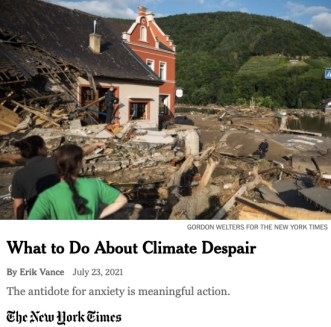
Practical Advice From Erik Vance

My first link to the work of Erik Vance came when I was re-writing the welcome to Chan Chich Lodge section of the property’s website. On another occasion his work took me to Madagascar, offering me a much-appreciated journey seven months into the isolation of pandemic. Today, I thank him again for a graphic feature with practical advice on the kinds of steps any of us can take to get some relief from the cataclysm that overshadows even the pandemic. Local variations to the steps he recommends, depending on where you live, might apply; the point is to find them and act on them.

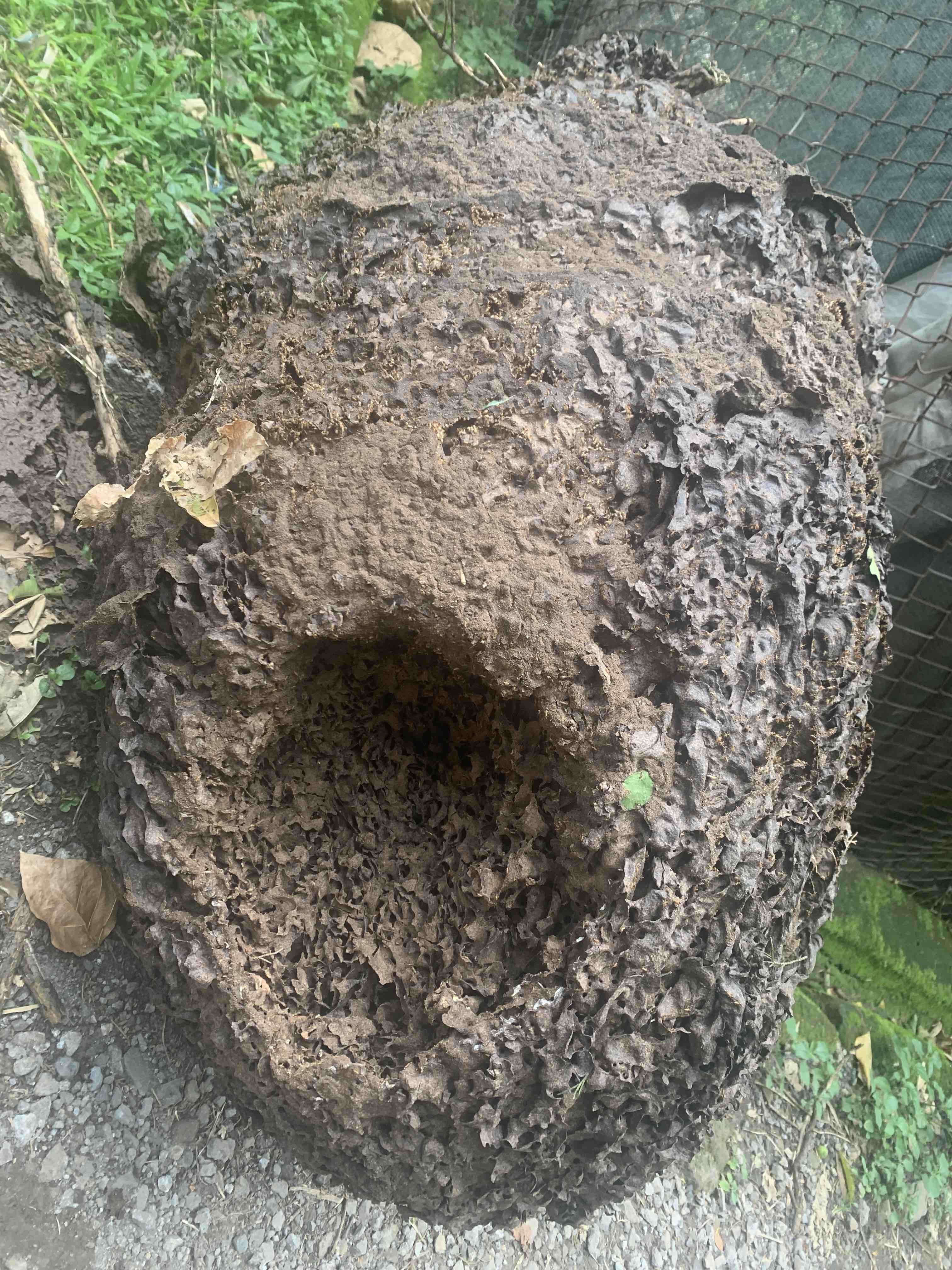
A Nest Dislodged, Rolled, Resting

It rolled down the hill from our up-hill neighbor, and rested on our chicken coop.

You can see the size of this nest if you consider the size of the chain-links in the fence it is resting on. It is approximately two feet wide and four feet long, oblong.

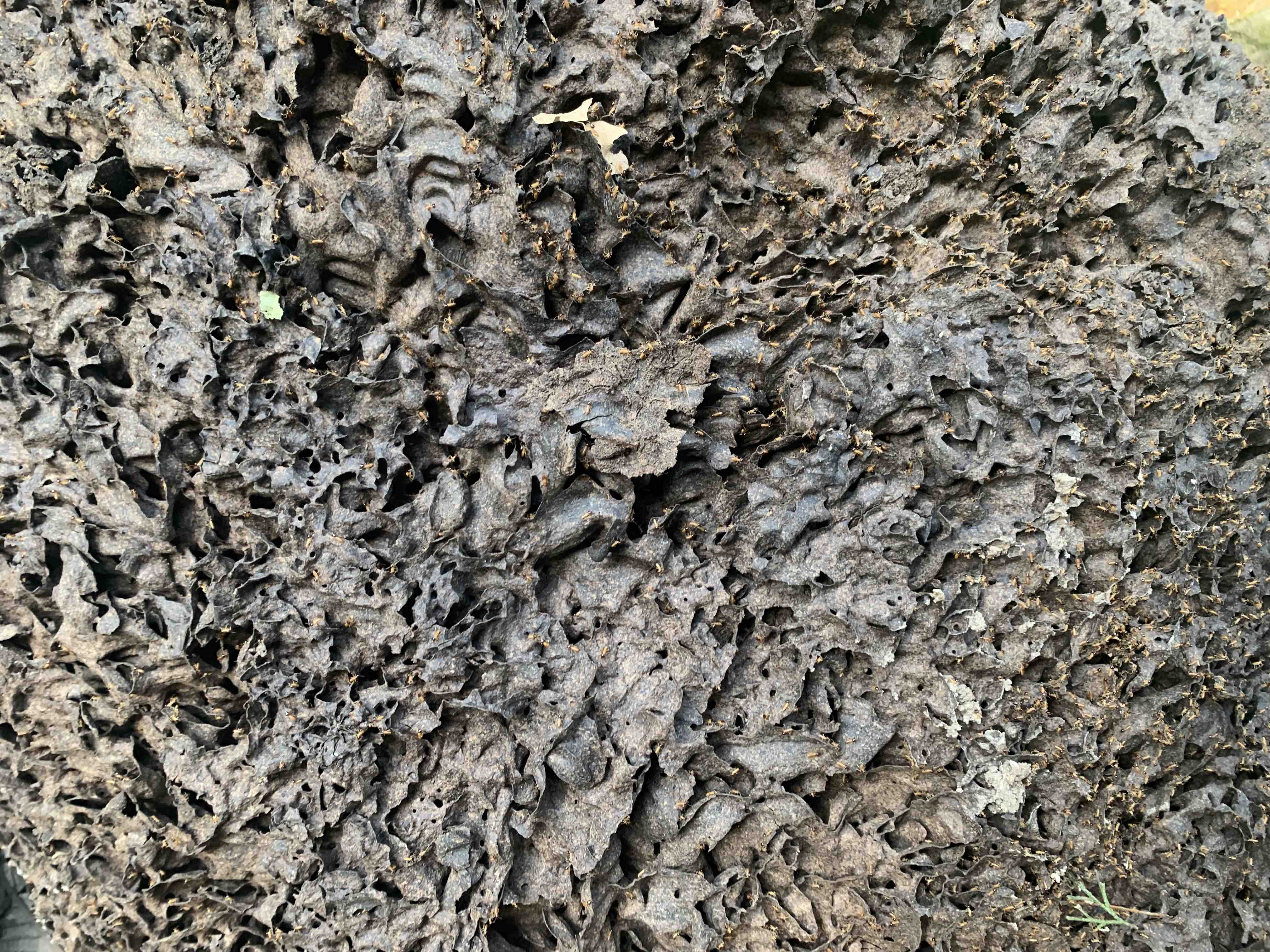
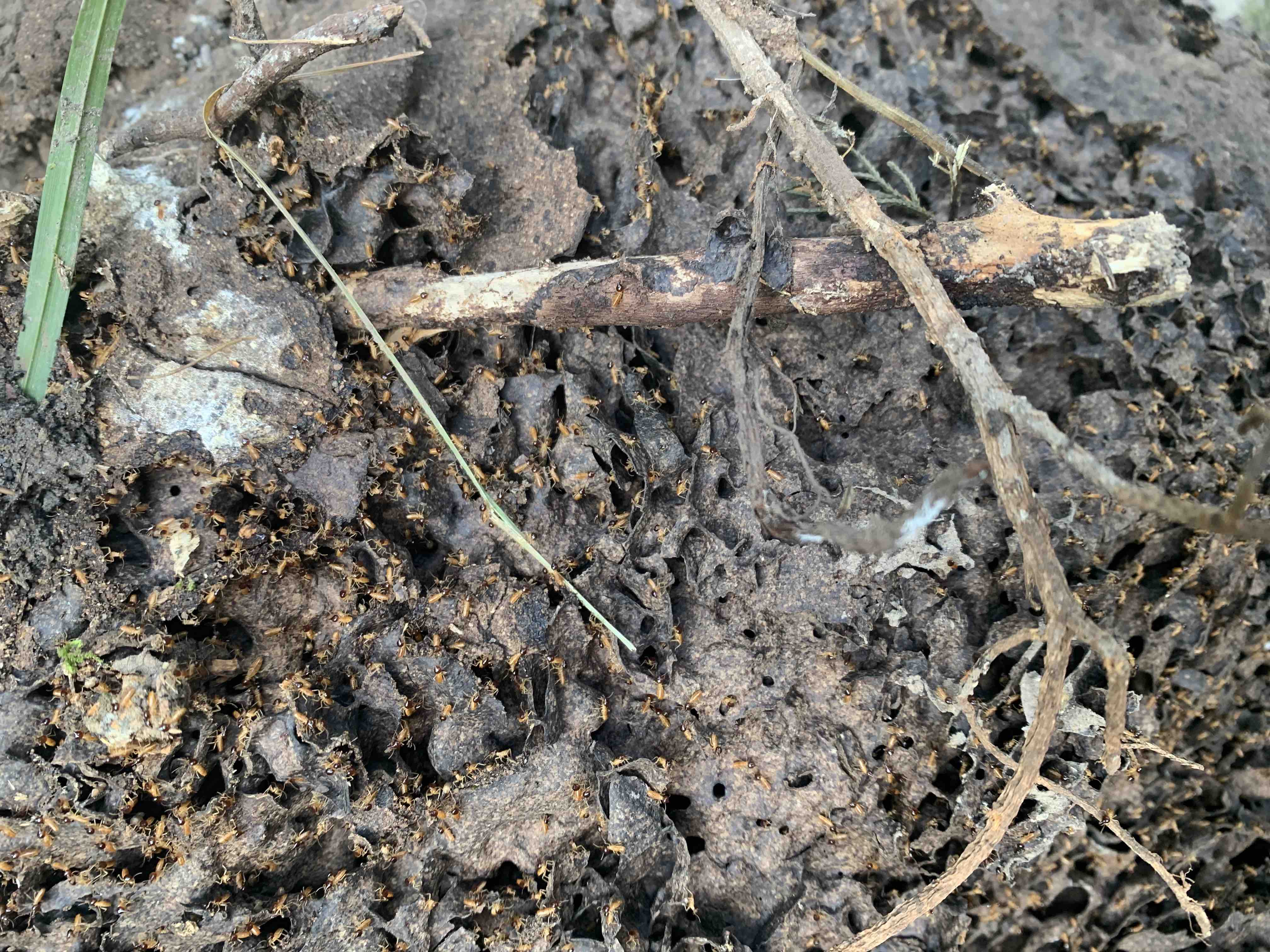
Close examination reveals tiny ant-like creatures crawling in the recesses of the structure. Termites?

The texture is firm, brittle, what seems to be the organic material I frequently see ants carrying off (occasionally something I have planted, to my annoyance), and layered as if dipped in mud. On one side there are sticks that are built into the structure sticking out.

Is a nest like this anything like trust in modern human society?

I cannot imagine how much time was required to build this nest, but ants seem patient, diligent, even tireless. The man clearing brush on the hillside told me that he gave it a little push, and it rolled on its own. It is an apt photo to accompany a review I have just read about the alarming decline of trust in modern society:

Are Americans More Trusting Than They Seem?

Political scientists say that our confidence in our institutions—and in one another—is running perilously low. Economists see a different story.

My  takeaway from the article is that trust, a binding agent of society, takes a long time to build, yet can be more easily toppled than you might have imagined. Institutions, through which trust has been built in the past, may be replaced with a different variety of trust according to economists. As of now, I do not buy it.

The Soul Of An Octopus

I missed this book when it was first published, but thankfully its author was invited onto a podcast I listen to regularly.

On the author’s own website she links an independent bookseller of her choice as the favored place to buy the book. Bravo.

Klein’s introduction to the conversation:

How Octopuses Upend What We Know About Ourselves

I’ve spent the past few months on an octopus kick. In that, I don’t seem to be alone. Octopuses (it’s incorrect to say “octopi,” to my despair) are having a moment: There are award-winning books, documentaries and even science fiction about them. I suspect it’s the same hunger that leaves many of us yearning to know aliens: How do radically different minds work? Continue reading
Reflecting On The Water’s Simplicity & Its Surrounding Complexity

Photograph by Alejandro Cegarra for The New Yorker

My work in Costa Rica, motivated by previous work on my doctoral dissertation, started with an expectation that to protect nature we should search for entrepreneurial approaches that can complement regulatory and/or philanthropic efforts. Since then I am more convinced than ever that effective conservation depends on all three types of efforts.

So, after reading about the lagoon in the story below my thoughts wander into that territory, hoping that the author and her adopted community find a location-specific adaptation of that trifecta. A key insight of her story is the recognition of how easily perspective can be lost about the phenomenal beauty of some places in their natural state. We adjust, for better or worse:
How a Mexican Lagoon Lost Its Colors

Bacalar is poised to become one of the country’s great tourist destinations—if its ecosystem can survive.

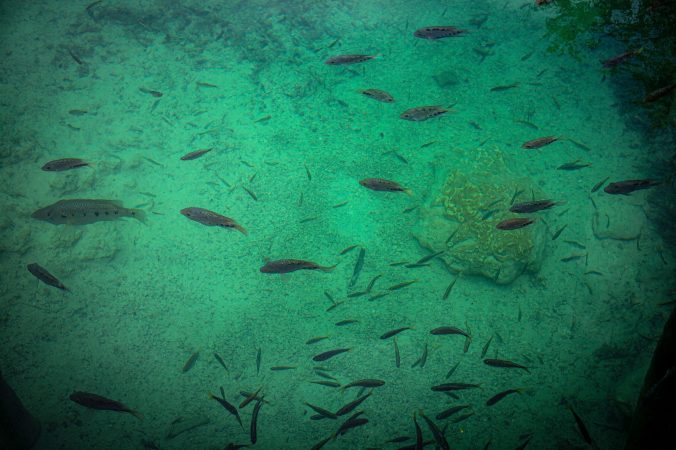
The water of the Bacalar Lagoon, on the east coast of Mexico’s Yucatán Peninsula, is as pure as glacial ice. It contains scant organic material: some of its oldest inhabitants are oligotrophic microorganisms, so called for their minimal diet. As a result, the lagoon puts on a spectacular display in the sunlight. It’s said that there are seven distinct shades of blue in the water, from deep-sea indigo to sunset violet. In English, Bacalar is sometimes called the Lagoon of Seven Colors; its original name in Mayan, Siyan Ka’an Bakjalal, translates roughly to “place surrounded by reeds where the sky is born.”…

Read the entire story here.

Adventures In Blue

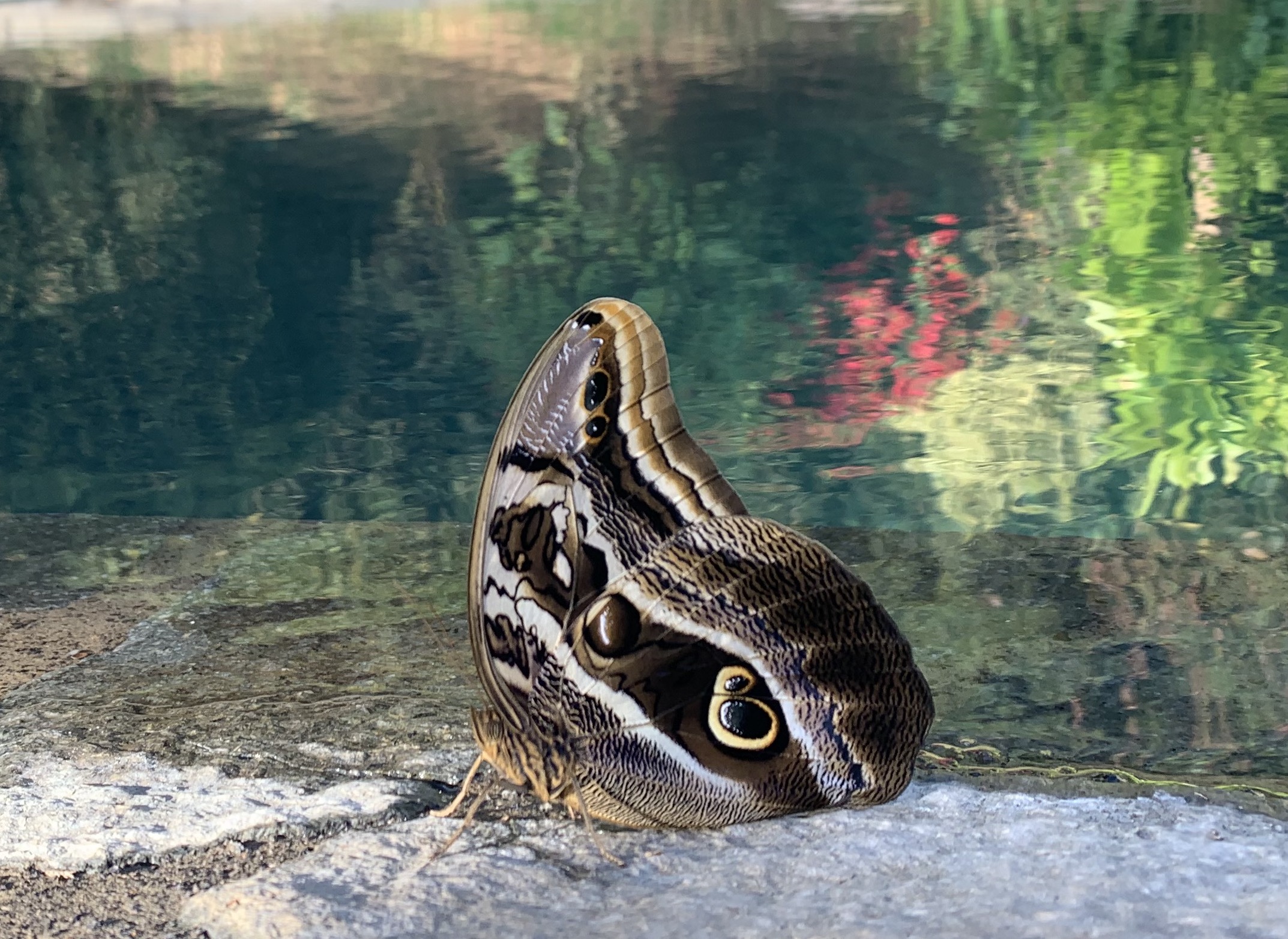
Blue morpho butterfly

The last time I posted about a blue insect you could see the blue. In the case of this butterfly above, all the blue is on the upper side of the wings, hidden in this view. To wrap up the thoughts started a couple days ago, I share a few more photos that for me qualify as visual micro-adventures.

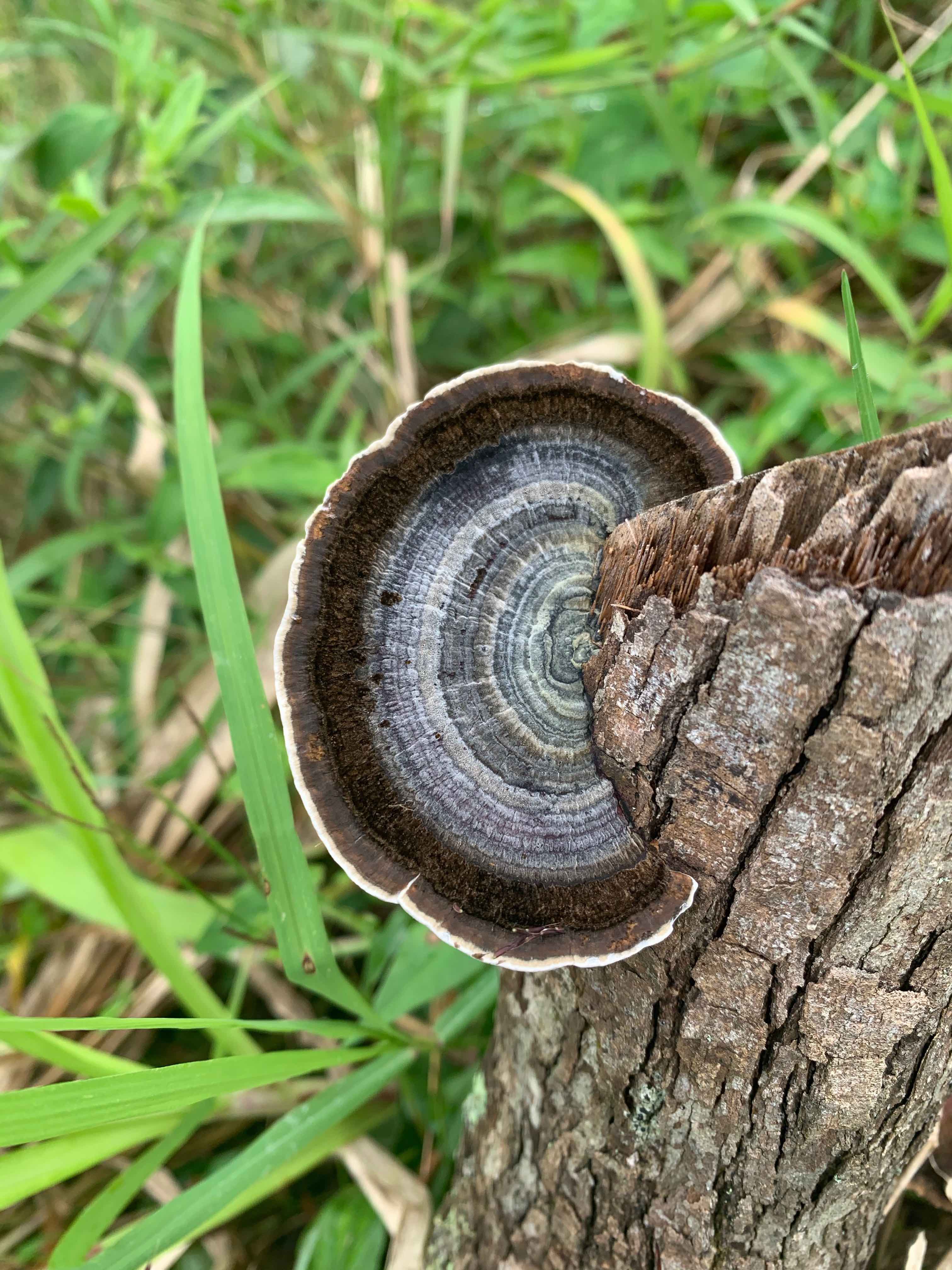
Probable identification: one of the 50 or so species of the Trametes genus of fungi

I do not know the species of this fungi, but I find it remarkable that it comes to my attention just after the surprise of seeing a blue morpho butterfly, not commonly seen on this land in Escazu. Remarkable because some of the colors in common, including an unexpected hint of blue.

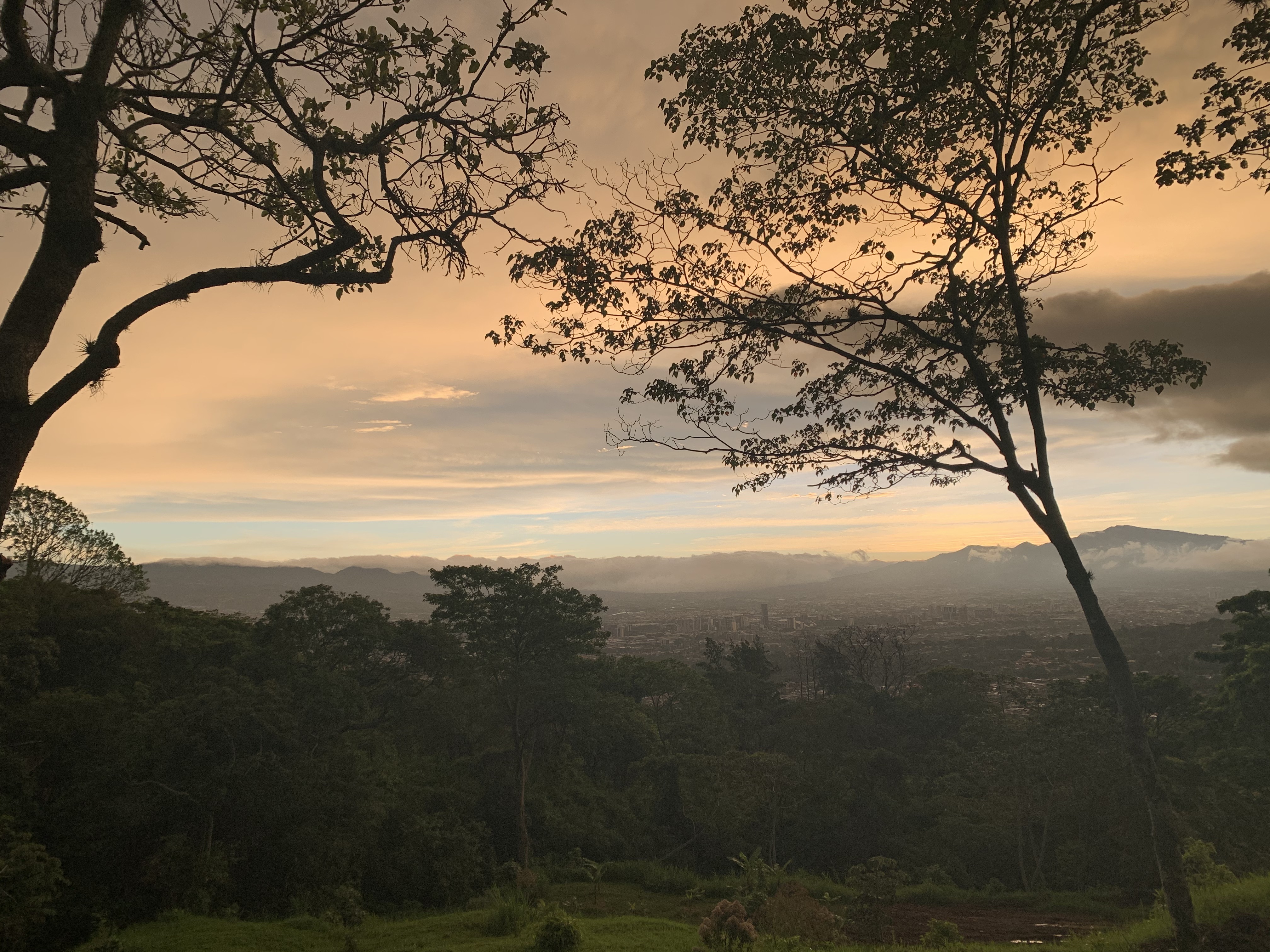
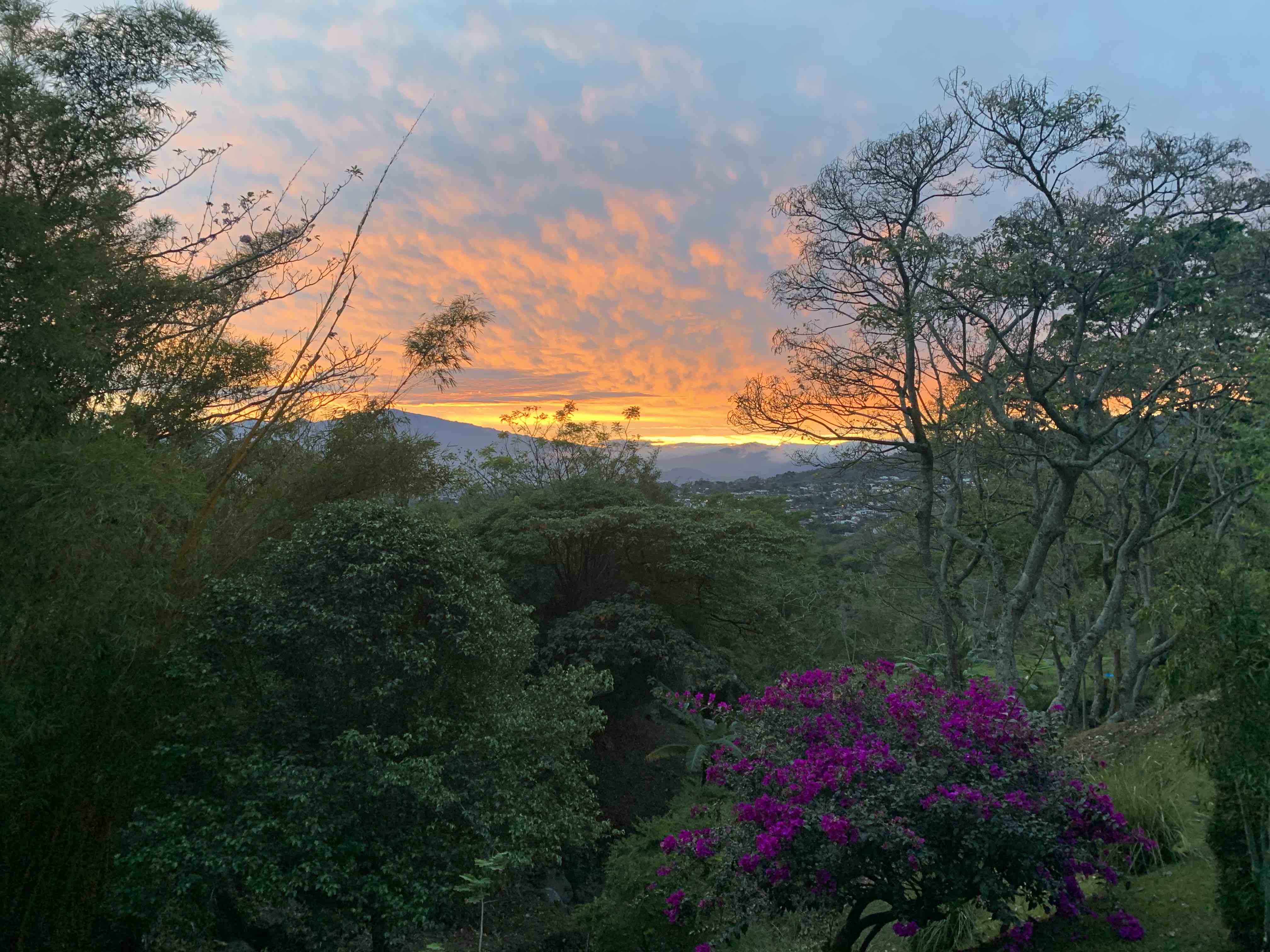
View to the east from Escazu as sun sets

Likewise, by the end of a day on this land, dusk may not produce a classical awe, but in the context of the various shades of brown it is something to still see some blue.

Micro Versus Macro

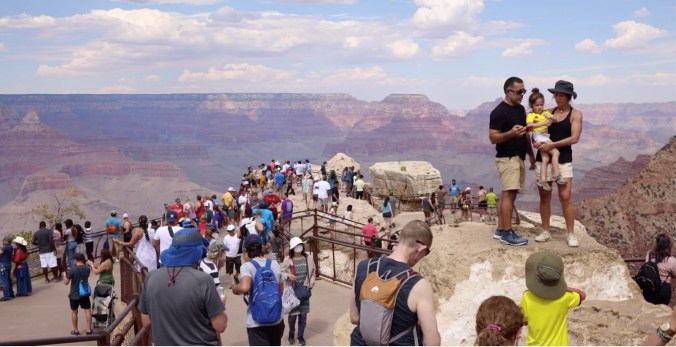
Mather Point, at Grand Canyon National Park, over the Fourth of July weekend.

Likely there is an algorithmic explanation for why the article I chose to riff on yesterday from one publication is followed by my coming across this article to riff on today as a follow-up:

PHOTO ESSAY

Americans are flocking to national parks in record numbers, in many cases leading to long lines and overcrowded facilities. Here’s what four parks looked like over the holiday weekend.

After so long being constrained from travel, and being socially distanced from others, I can imagine that all the people in all the crowded national parks are delighted by the combination of social and natural awe. As for me, I will continue the thoughts started yesterday, and share a few more images of a morning full of micro versus macro awe. About that ant I concluded with yesterday:

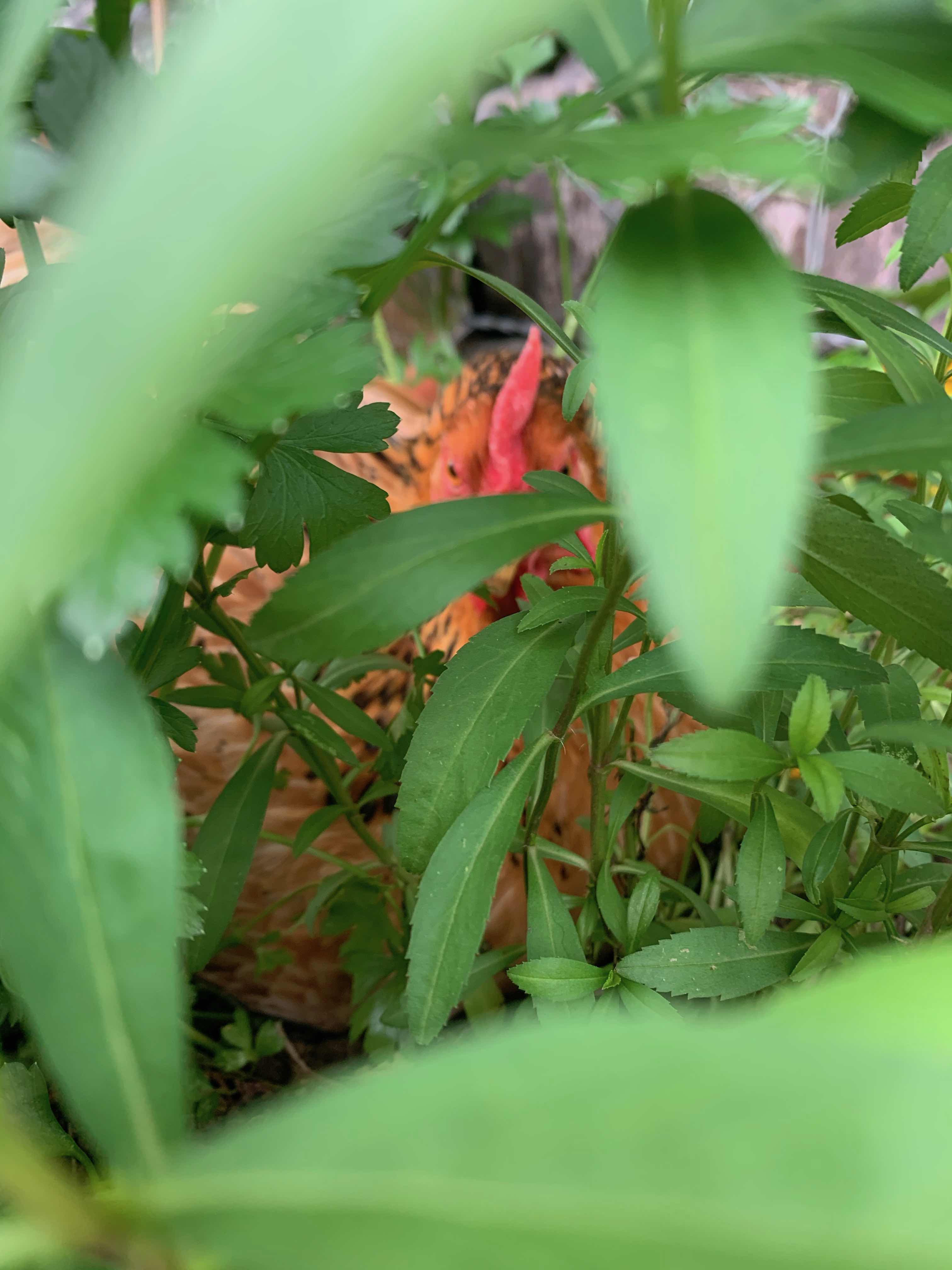
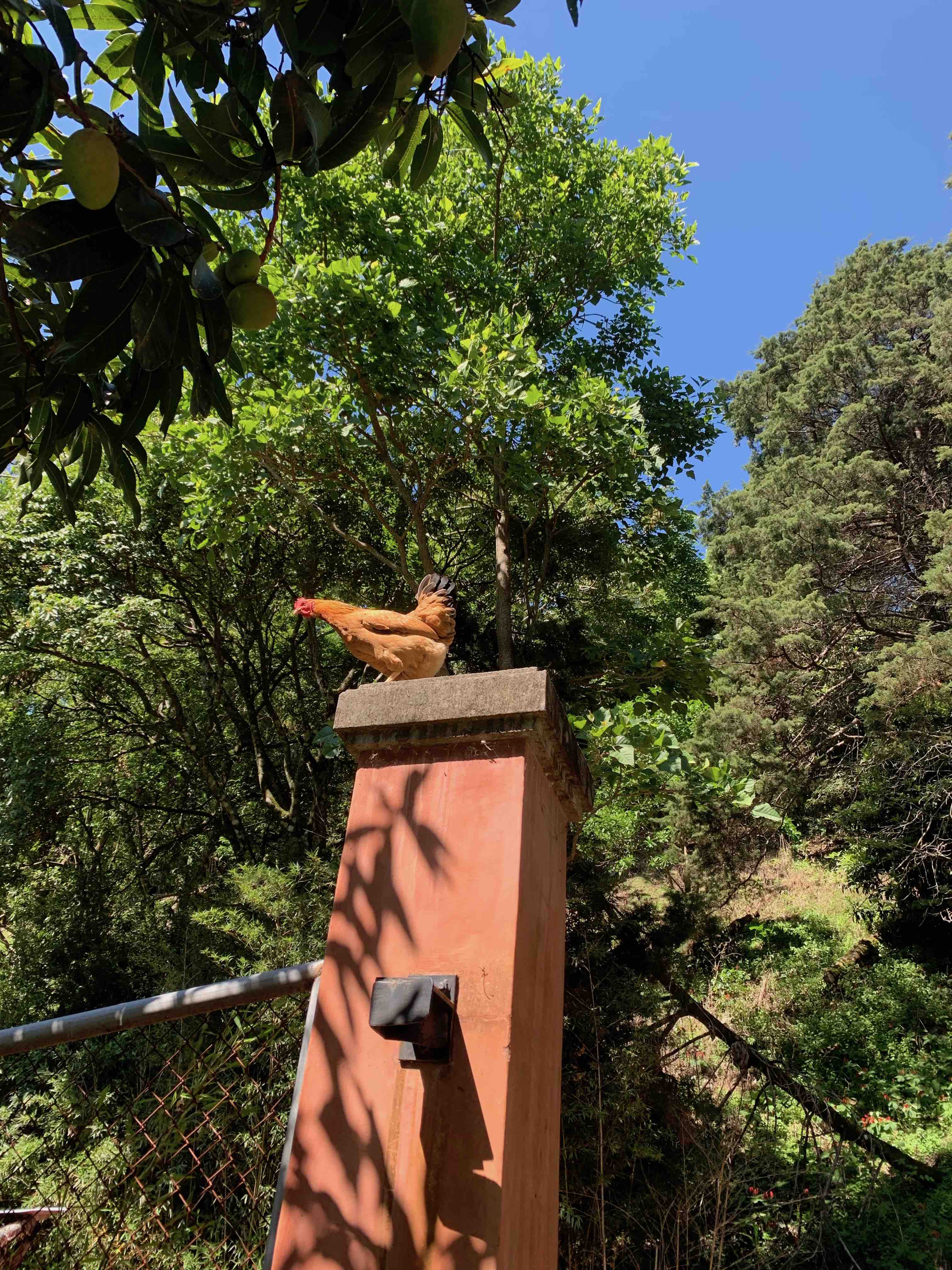
I have no clue about the species; but the herky-jerky movement is awesome. After that little parking lot observation, walking to the other side of the house, I see the hen again in a planter. I had shooed her away each recent morning, thinking that she was digging for worms or otherwise disrupting the growth of the herbs.

Hen again

I got her to vacate with such enthusiasm that she scrambled to the top of a tall column next to a mango tree where she often spends the night.

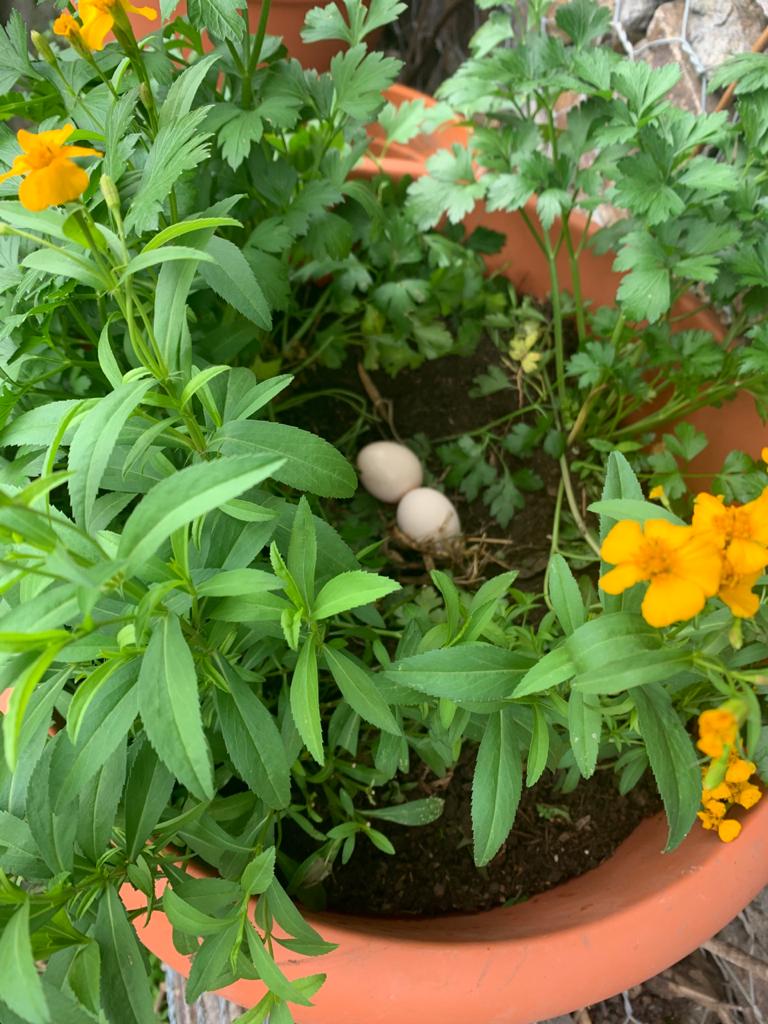
When I came back to inspect the damage to the herbs, I instead found what she was really doing there.

When your hen lays eggs in the tarragon and parsley bed, she is telling you something. Omelette

Not only not destructive; on the contrary, awesome breakfast.

All In A Day’s Microadventures

A New Hampshire lawn in June. John Tully for The New York Times

Emily Pennington has shared recommendations from some experienced folks about alternatives to the well-known spectacular adventures, such as hiking the Grand Canyon. She recommends trying microadventures in this article subtitled How to find a sense of awe and discover a miraculous world right outside your door. Early on she writes about what we are often looking for in the places we travel to :

…Researchers often describe awe as an emotion that combines an experience of vastness with both pleasure and a fear of the unknown. While many of us might consider these moments rare, ephemeral and tricky to reproduce, a few scientists are finding that this reverence is a skill that can be cultivated and has remarkable mental health benefits.

“Awe basically shuts down self-interest and self-representation and the nagging voice of the self,” said Dacher Keltner, a professor of psychology at the University of California, Berkeley. “That’s different from feeling pride or amusement or just feeling good. It’s like, ‘I’m after something sacred.’”

I have spent most days since early March 2020 looking for awe at or close to home, so I could relate immediately to what she was writing about in this article. A typical day starts with this view:

Start of a day’s microadventures

If you cannot imagine being awed by that, stop reading here. I will seek more awe as the day continues. Continue reading

Sugarcane On The Curvy Berm & Other Wonders

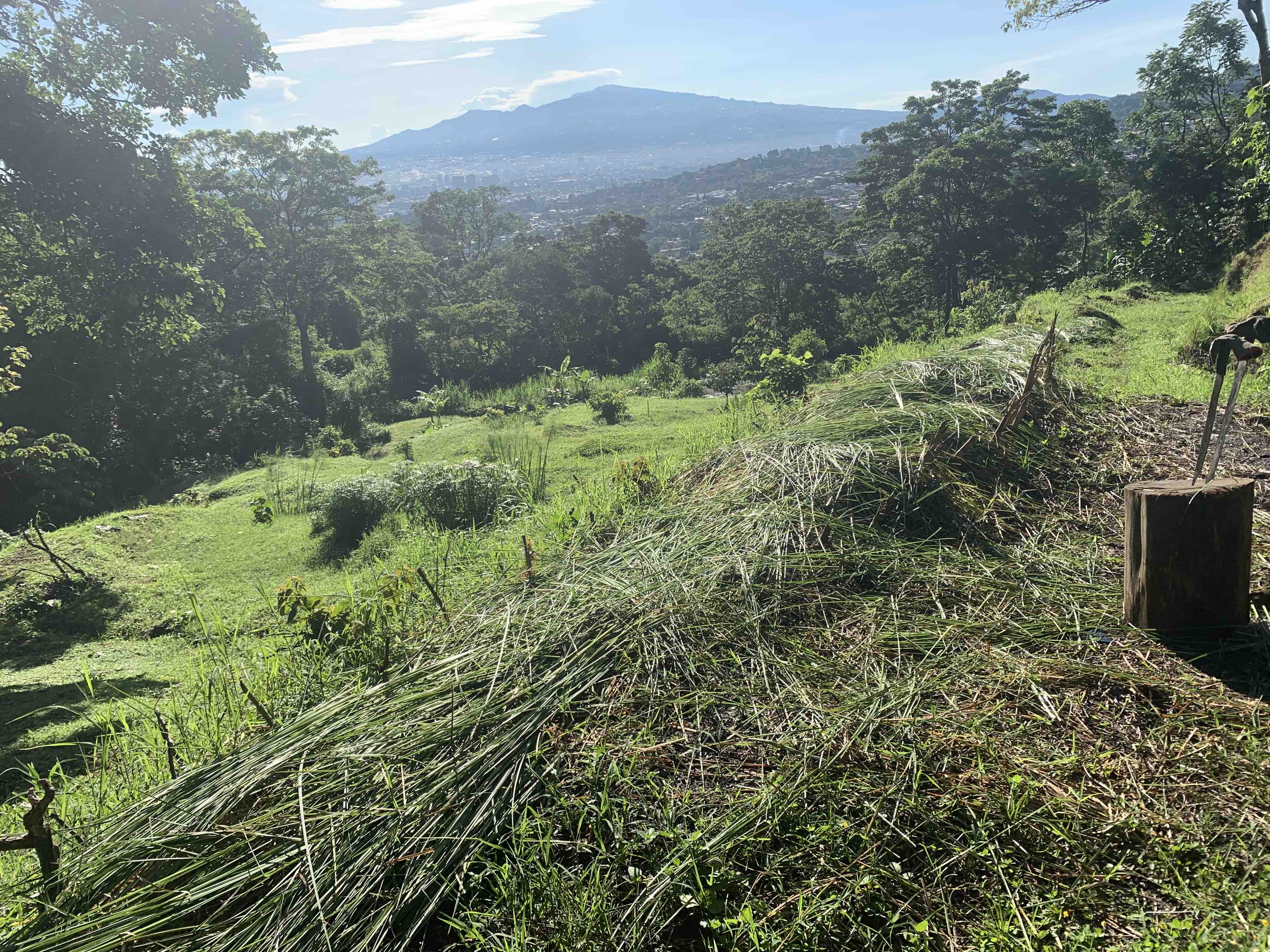
Sugarcane planted with vetiver grass mulching cover

The saving grace of the period from March, 2020 to the present day has been this few acres of land needing attention and care. Saving grace means that by giving attention and care to the land, I was simultaneously tending to my own wellbeing. The therapeutic value was such that by September, half a year of cloudy outlook was giving way to an urge to send postcards to the world. It was an urge urged by tending that land. As we began the second year of the venture that supports that land, all kinds of regenerative initiatives kept coming to my attention. And now it is nonstop planting around the curvy berm.