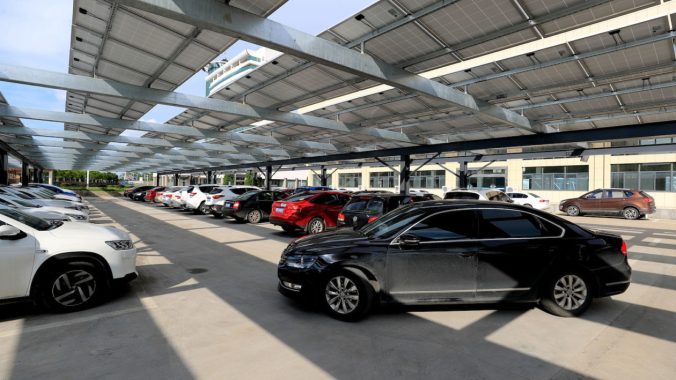
A solar-covered parking lot at the plant of Anhui Quanchai Engine Co., Ltd. in Chuzhou, China. IMAGINECHINA VIA AP IMAGES
Using solar panels to create shade for coffee trees requires thought about the tradeoffs between the non-shade benefits trees otherwise provide: (nitrogen-fixing in the case of poro trees, plus bird habitat and other biodiversity benefits) and the non-shade benefits that solar panels provide (renewable energy). Solar panels on parking lots and other roofs, on the other hand, seems the definition of a no-brainer. Our thanks to Richard Conniff and Yale e360, as always:
Solar farms are proliferating on undeveloped land, often harming ecosystems. But placing solar canopies on large parking lots offers a host of advantages — making use of land that is already cleared, producing electricity close to those who need it, and even shading cars.
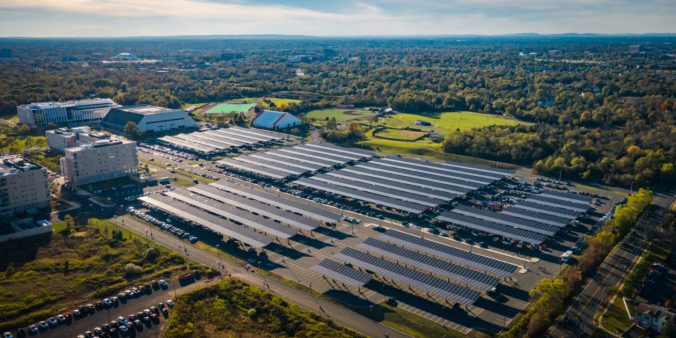
A solar parking facility at Rutgers University in Piscataway, New Jersey, with an output of 8 megawatts of electricity.
Fly into Orlando, Florida, and you may notice a 22-acre solar power array in the shape of Mickey Mouse’s head in a field just west of Disney World. Nearby, Disney also has a 270-acre solar farm of conventional design on former orchard and forest land. Park your car in any of Disney’s 32,000 parking spaces, on the other hand, and you won’t see a canopy overhead generating solar power (or providing shade) — not even if you snag one of the preferred spaces for which visitors pay up to $50 a day. Continue reading →

In a beautiful example of a closed but functional ecosystem, David Latimer has grown a garden sealed inside a giant glass bottle that he has only opened once since he started it almost 60 years ago.
Latimer planted the terrarium garden on Easter Sunday in 1960. He placed some compost and a quarter pint of water into a 10-gallon glass carboy and inserted a spiderwort sprout, which is not typically an indoor plant, using wires. Continue reading





















 Organikos