The New Carbon Trading Rules

Hundreds of billions of dollars could change hands in coming years through a global market in greenhouse emissions. Last month’s climate summit in Glasgow, Scotland, approved the new trading system.
Peter Dejong/AP

This article provides a coherent summary of the carbon trading market’s prospects after the Glasgow Summit, including the key criticism of the scheme:

Carbon trading gets a green light from the U.N., and Brazil hopes to earn billions

Carbon emissions trading is poised to go global, and billions of dollars — maybe even trillions — could be at stake. That’s thanks to last month’s U.N. climate summit in Glasgow, Scotland, which approved a new international trading system where companies pay for cuts in greenhouse gas emissions somewhere else, rather than doing it themselves. Continue reading
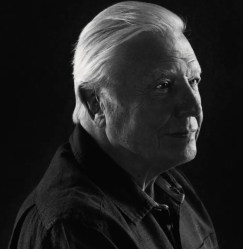
David Attenborough’s Green Planet

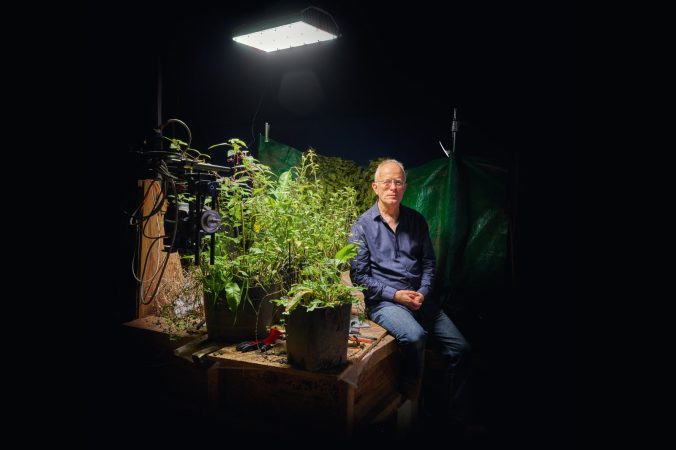
Mike Gunton, creative director of the BBC Natural History Unit and a long-time collaborator with David Attenborough.PHOTOGRAPH: BENEDICT REDGROVE

David Attenborough has been a frequent feature in our pages over the years. Each conversation with him repeats something we already knew but shares something we had not previously known:

David Attenborough’s Unending Mission to Save Our Planet

“We tend to think we are the be all and end all—but we’re not. The sooner we can realize that the natural world goes its way, not our way, the better.”

David Attenborough’s Green Planet is his latest series in a career that began in the 1950s and is as notable for its variety of firsts—pioneering 16-mm film in TV; first to film a Komodo dragon; first to use drone cameras—as it is for his long-standing commitment to bringing wildlife and environmental issues into the homes of viewers around the world. PHOTOGRAPH: NADAV KANDER

WE MAKE LOTS of programs about natural history, but the basis of all life is plants.” Sir David Attenborough is at Kew Gardens on a cloudy, overcast August day waiting to deliver his final piece to camera for his latest natural history epic, The Green Planet. Planes roar overhead, constantly interrupting filming, and he keeps putting his jacket on during pauses. “We ignore them because they don’t seem to do much, but they can be very vicious things,” he says. “Plants throttle one another, you know—they can move very fast, have all sorts of strange techniques to make sure that they can disperse themselves over a whole continent, have many ways of meeting so they can fertilize one another and we never actually see it happening.” He smiles. “But now we can.” Continue reading

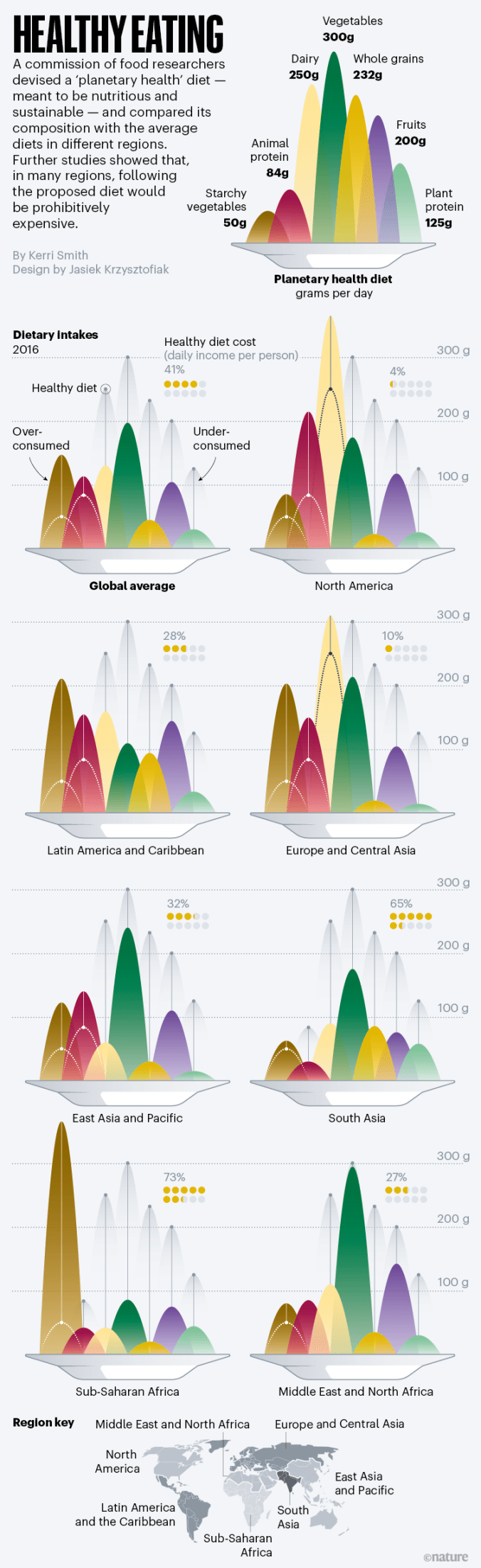
Planetary Health Diet

What we should eat for the sake of our individual and communal futures is one of the topics most posted on this platform.  Gayathri Vaidyanathan’s article below adds to the most macro of perspectives on these topics. It takes a moment to process the information in the graphic above, but this article from the journal Nature makes it clear:

What humanity should eat to stay healthy and save the planet

What we eat needs to be nutritious and sustainable. Researchers are trying to figure out what that looks like around the world.

Illustration by Paweł Jońca

A clutch of fishing villages dot the coast near Kilifi, north of Mombasa in Kenya. The waters are home to parrot fish, octopus and other edible species. But despite living on the shores, the children in the villages rarely eat seafood. Their staple meal is ugali, maize (corn) flour mixed with water, and most of their nutrition comes from plants. Continue reading

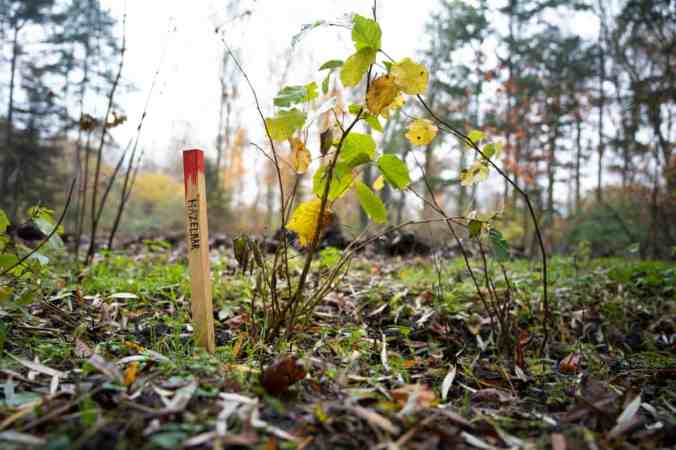
More Trees Now

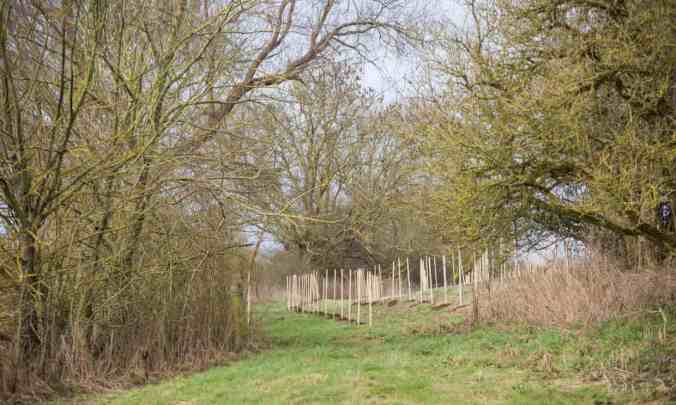
A hazel sapling (Corylus avellana) in the ditches of the tree hub at Amsterdamse Bos. Photograph: Judith Jockel/The Guardian

The trillion trees concept, which inspires but has had its share of legitimate questions, has a scrappy cousin with a novel approach:

‘Every tree counts’: Dutch come up with cunning way to create forests for free

More Trees Now aims to give away 1m unwanted saplings to farmers and councils with hope idea will spread across Europ

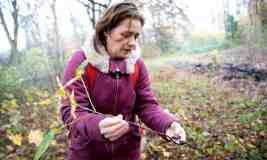
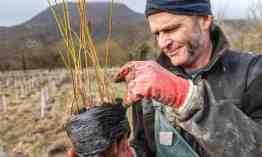
Hanneke van Ormondt saves a sapling at the tree hub in Amsterdamse Bos, Amsterdam, the Netherlands. Photograph: Judith Jockel/The Guardian

In a clearing in the Amsterdamse Bos, a forest on the outskirts of the Dutch capital, is a “tree hub” where hundreds of saplings, among them hazelnut, sweet cherry, field maple, beech, chestnut and ash, are organised by type.

The idea behind it is simple: every day unwanted tree saplings were being cleared and thrown away when those young trees could be carefully collected and transplanted to where they are wanted. Continue reading

Fixing Carbon Offset Markets

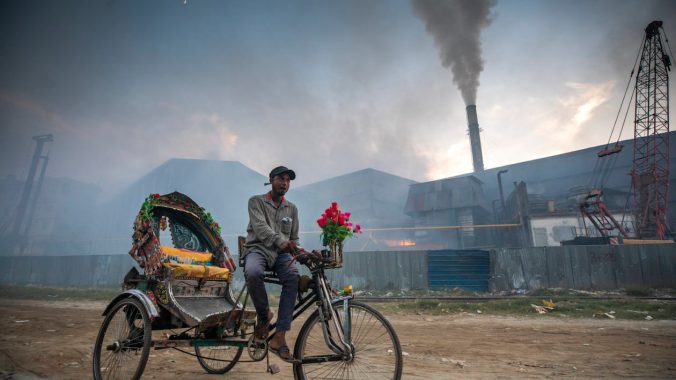
A steel re-rolling mill in Narayanganj, Bangladesh. Well-designed carbon markets could spur companies in developing countries to reduce emissions. AHMED SALAHUDDIN / NURPHOTO VIA AP

Thanks to Yale e360 for this opinion on a hot topic that we have sometimes mused less seriously about:

How to Repair the World’s Broken Carbon Offset Markets

Markets that connect businesses hoping to offset their carbon emissions with climate change mitigation projects have been plagued by problems. But an economist and his co-authors argue that carbon markets can be reformed and play a significant role in slowing global warming

In the wake of the Glasgow climate summit, governments must now return to the daunting challenge of making good on their emissions-reductions pledges, which at this point remain insufficient to hold warming below 2 or even 1.5 degrees C above pre-industrial levels. Continue reading

In The UK, Trees Say I Love You

One of the National Trust’s tree-planting projects, at Kingston Lacy in Dorset. Its Plant a Tree appeal has topped £1m. Photograph: James Dobson/National Trust/PA

Planting trees is part of our business model. So, we love this news:

Forget flowers – poll shows third of people prefer to say I love you with a tree

National Trust says tree giving growing in popularity but only 7% know best season to plant

A National Trust ranger, David Smith, preparing saplings for planting at Hafod Garegog in north Wales. Photograph: Paul Harris/National Trust/PA

For centuries people have said it with flowers but research suggests a new tradition is gaining popularity in the UK – expressing love, thanks, perhaps even regret with the gift of a tree.

A third of people said they would consider saying it with a tree rather than a bouquet and more than one in 10 had already done so, according to the research commissioned by the National Trust.

However, the conservation charity also said only 7% of people in the UK knew the best time of year to plant, and it was launching a drive to improve “tree literacy”. Continue reading

More Solar Canopy Initiatives

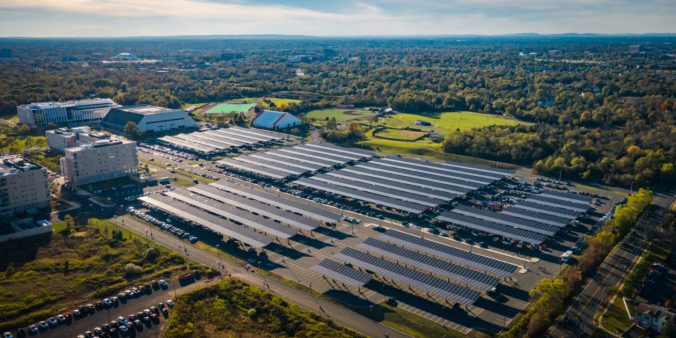
A solar-covered parking lot at the plant of Anhui Quanchai Engine Co., Ltd. in Chuzhou, China. IMAGINECHINA VIA AP IMAGES

Using solar panels to create shade for coffee trees requires thought about the tradeoffs between the non-shade benefits trees otherwise provide: (nitrogen-fixing in the case of poro trees, plus bird habitat and other biodiversity benefits) and the non-shade benefits that solar panels provide (renewable energy). Solar panels on parking lots and other roofs, on the other hand, seems the definition of a no-brainer. Our thanks to Richard Conniff and Yale e360, as always:

Why Putting Solar Canopies on Parking Lots Is a Smart Green Move

Solar farms are proliferating on undeveloped land, often harming ecosystems. But placing solar canopies on large parking lots offers a host of advantages — making use of land that is already cleared, producing electricity close to those who need it, and even shading cars.

A solar parking facility at Rutgers University in Piscataway, New Jersey, with an output of 8 megawatts of electricity.

Fly into Orlando, Florida, and you may notice a 22-acre solar power array in the shape of Mickey Mouse’s head in a field just west of Disney World. Nearby, Disney also has a 270-acre solar farm of conventional design on former orchard and forest land. Park your car in any of Disney’s 32,000 parking spaces, on the other hand, and you won’t see a canopy overhead generating solar power (or providing shade) — not even if you snag one of the preferred spaces for which visitors pay up to $50 a day. Continue reading

Thanks Big Oil, We Got Your Messages

Illustration: Guardian Design

Geoffrey Supran and Naomi Oreskes have compiled reminders of the messaging from some of big oil’s leaders of climate change messaging, and shared it with us in the Guardian:

The forgotten oil ads that told us climate change was nothing

Since the 1980s, fossil fuel firms have run ads touting climate denial messages – many of which they’d now like us to forget. Here’s our visual guide

Both ads from the Informed Citizens for the Environment, 1991

Why is meaningful action to avert the climate crisis proving so difficult? It is, at least in part, because of ads.

The fossil fuel industry has perpetrated a multi-decade, multibillion dollar disinformation, propaganda and lobbying campaign to delay climate action by confusing the public and policymakers about the climate crisis and its solutions. This has involved a remarkable array of advertisements – with headlines ranging from “Lies they tell our children” to “Oil pumps life” – seeking to convince the public that the climate crisis is not real, not human-made, not serious and not solvable. The campaign continues to this day. Continue reading

Rigged With Irony

A supply ship sits anchored next to the Chevron Corp. Jack/St. Malo deep water oil platform in the Gulf of Mexico in the aerial photograph taken off the coast of Louisiana, U.S., on Friday, May 18, 2018. Bloomberg/Bloomberg via Getty Images

Irony is not always funny:

The Biden administration sold oil and gas leases days after the climate summit

Days after President Joe Biden told world leaders that his administration is committed to slowing climate change with “action, and not words,” his Interior Department oversaw one of the largest oil and gas lease sales in American history. Continue reading

What Are You Willing To Do To Protect The Environment?

ILLUSTRATION: PABLO HURTADO DE MENDOZA

Elizabeth Flock has written the most unusual article I have ever read published by The Economist (in this case its 1843 magazine, which offers longform stories). The question in the title of her article below gives the reader permission to draw their own conclusion on the ethics of destruction of private property in the interest of environmental justice. It is the second time I have been surprised in such a way (this conversation was even more surprising since it was the first time a mainstream publication raised such a question). This article poses the question in the context of a very human story, well-told:

Two environmentalists sabotaged an oil pipeline in America. Are they terrorists or heroes?

As the devastating effects of climate change became impossible to ignore, Jessica Reznicek and Ruby Montoya took matters into their own hands

ILLUSTRATION: PABLO HURTADO DE MENDOZA

When Jessica Reznicek walked into a courtroom in Des Moines, Iowa, last June, her sun-weathered face was the only clue that she’d lived rough: that she’d camped at the edge of an oil-pipeline construction site for months; that she’d camped night after night all over the country when she and Ruby Montoya, her co-defendant, were on the run; that she’d camped simply because, as far back as she could remember, she loved being in nature.

Reznicek, dressed in a black trouser suit and white blouse with her blonde hair hanging neatly, hoped that the federal judge deciding her sentence might show her some sympathy (Montoya was due to be sentenced later in the summer). Continue reading

Big Hydro’s Climate Change

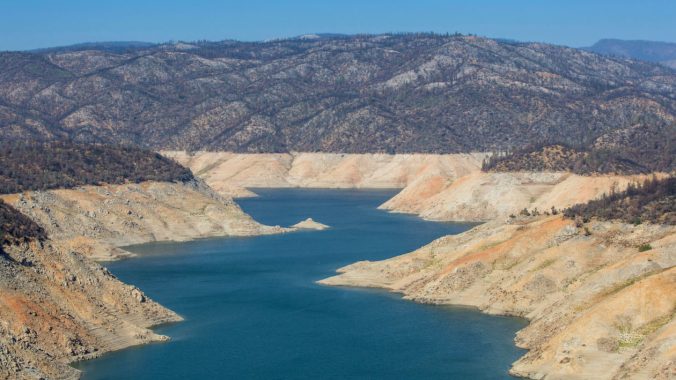
Lake Oroville, the reservoir behind the Oroville Dam in California, at a near-record low level on September 1. Because of drought, the dam has not operated since August 5. GEORGE ROSE / GETTY IMAGES

Jacques Leslie, a Yale e360 regular and Los Angeles Times op-ed contributor, is a leading authority on dams, so his opinion here is worth noting:

As Warming and Drought Increase, A New Case for Ending Big Dams

The argument against major hydropower projects — ravaged ecosystems and large-scale displacement of people — is well known. But dam critics now say that climate change, bringing dried-up reservoirs and increased methane releases, should spell the end of big hydropower.

As the hydroelectric dam industry tries to reposition itself as a climate change solution, more and more evidence shows that climate change actually undermines the case for hydro dams. Continue reading

1992 Earth Summit Revisited

Illustration by João Fazenda

In her look back at last week’s events in Glasgow, Elizabeth Kolbert comments in Running Out of Time at the U.N. Climate Conference that we were set up for this moment at the first such event nearly three decades earlier:

To really appreciate America’s fecklessness, you have to go back to the meeting that preceded all the bad COPs—the so-called Earth Summit, in 1992.

For those inclined to see them, there were plenty of bad omens last week as the latest round of international climate negotiations—cop26—got under way in Glasgow. A storm that lashed England with eighty-mile-per-hour winds disrupted train service from London to Scotland, leaving many delegates scrambling to find a way to get to the meeting. Just as the conclave began, Glasgow’s garbage workers went on strike, and rubbish piled up in the streets. Continue reading

Global North, Global South & Responsibilities

Photo: Hannah Whitaker; Prop Styling: Marina Bevilacqua.

David Wallace-Wells has done it again. Devastated me with considerations I should have had on my own, but had not. And he makes it so vivid that once you see his point you cannot stop seeing it. Having lived in the Global South for a majority of my adult years, but having been born into and lived in the Global North for the first half of my life, this story resonates with me in ways I cannot quite describe. But the quote from Proverbs in yesterday’s post seems even more intensely relevant:

Climate Reparations

A trillion tons of carbon hangs in the air, put there by the world’s rich, an existential threat to its poor. Can we remove it?

I. What Is Owed

Brazil, 2019. Photo: Cristina de Middel/Magnum Photos

The math is as simple as the moral claim. We know how much carbon has been emitted and by which countries, which means we know who is most responsible and who will suffer most and that they are not the same. We know that the burden imposed on the world’s poorest by its richest is gruesome, that it is growing, and that it represents a climate apartheid demanding reparation — or should know it. We know we can remove some of that carbon from the atmosphere and undo at least some of the damage. We know the cost of doing so using tools we have today. And we know that unless we use them, the problem will never go away. Continue reading

Anglophiles, We, This Observation Is Useful

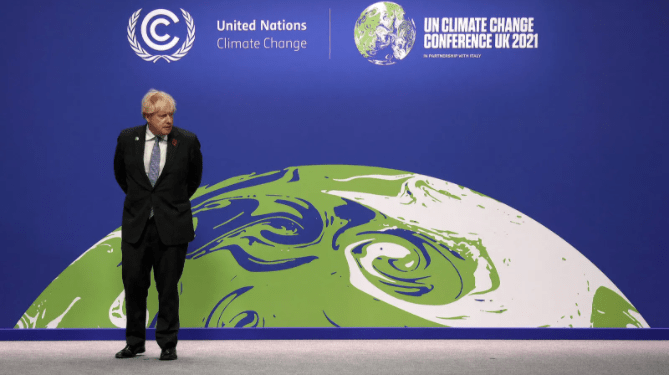
On a good day, Prime Minister Boris Johnson’s energy can change the political weather. But he will say, and forget, anything to get where he wants to be. Photography by Christopher Furlong / Getty

The last line of this article quotes the book of Proverbs, and it stings: ‘Where there is no vision, the people perish.’ We have a  borrowed phrase–not my circus, not my monkeys–for situations that are frustrating but technically none of our business. I did not like any element of the Brexit campaign, and I especially did not like Boris Johnson’s “solutions” to its challenges. None of my business, in a sense, because I am not a citizen of that country. But I care about the UK, so I care about Brexit. I care about the UK so I care about its leadership (or lack thereof). For that reason, I share this:

Boris Johnson’s Fickle Climate Leadership

In the face of scientific reality, the host of the U.N. climate-change talks comes up short.

For more than an hour on Monday morning, Boris Johnson, the British Prime Minister, stood on a gray carpet in front of a bright-blue-and-green backdrop—a swirling, hopeful suggestion of the Earth—at the Scottish Event Campus, in Glasgow, welcoming international leaders to cop26, the climate-change talks. A few feet away, António Guterres, the U.N. Secretary-General, a more placid presence, occupied his own stretch of carpet. Continue reading

Greek Islands & Cleaner Energy

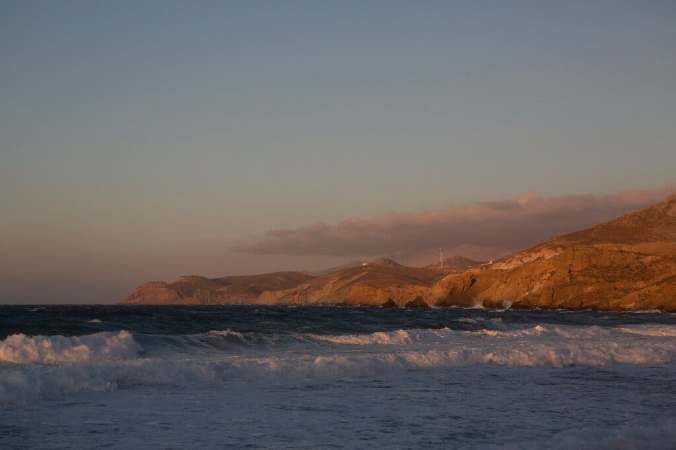
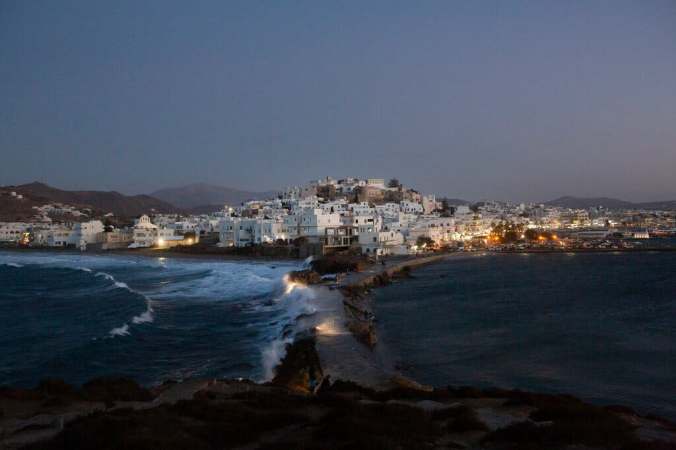
The island of Naxos is now linked to the Greek mainland via an underwater electrical cable. Eirini Vourloumis

Writing from Costa Rica, which currently generates nearly all of its electricity from renewable sources, but thinking of Greece, which is moving in that direction, my thanks to Liz Alderman and Eirini Vourloumis for the excellent reporting and photography about that journey:

Greece Is Getting Rewired for the Future

As climate change bears down, Greece is upending its sources of energy and trying to reshape its economic destiny.

Two wind turbines on a hill outside the main town of Naxos. Eirini Vourloumis

NAXOS, Greece — On the windswept western tip of one of Greece’s largest islands, an unassuming stone building above the Aegean Sea has become an unlikely outpost in this country’s fight against climate change. Continue reading

Sign Up For McKibben

James Watt, at work in the small University of Glasgow workshop where he basically invented the fossil fuel era

I am trying to imagine getting tired of reading Bill McKibben’s constant flow of commentary and news, even though most of it is dismal. It would be like getting tired of paying attention to the environment, especially climate issues. Yesterday’s observations from Glasgow are particularly rewarding, and I hope you will consider subscribing to his newsletter:

Glasgow: where climate wreckage began

And where it’s definitely not going to end

I spent part of the morning wandering the gorgeous Victorian courtyards of the University of Glasgow (they would seem familiar to you—it’s where they shot the exteriors for the Harry Potter films), trying to find the university chapel where I was supposed to give a lecture. Instead of that august sanctuary, I stumbled across the James Watt building—and with it a poignant set of reminders about just how quickly we’ve managed to bring the world to the edge of ruin. Continue reading

Humanity & Melting History

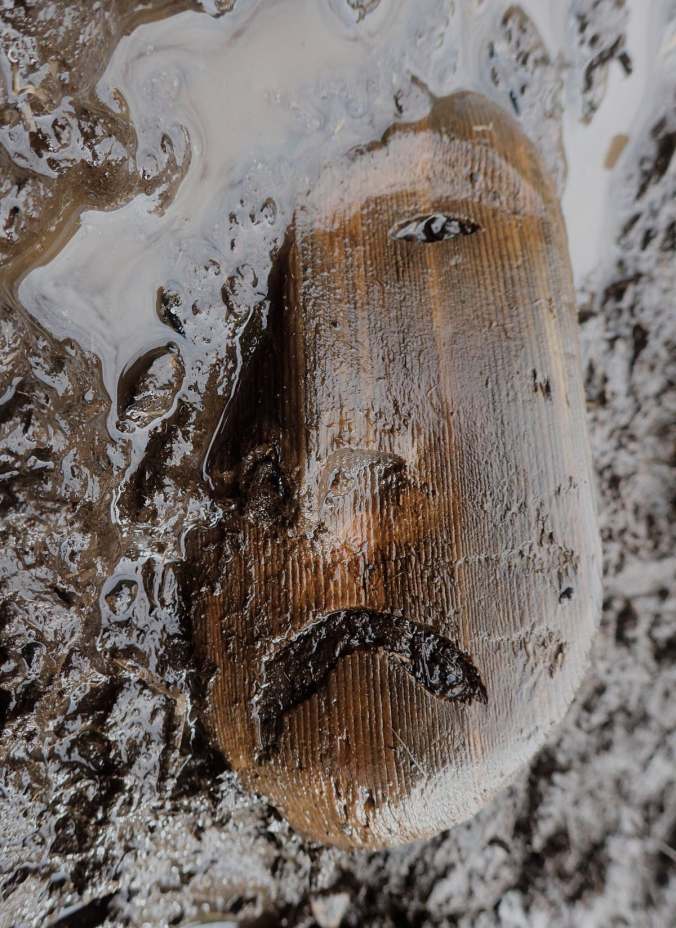
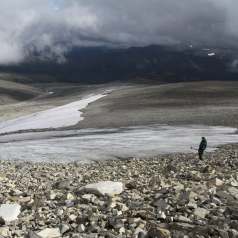
A mask belonging to the Yup’ik people of Alaska emerging from the permafrost. It is one of more than 100,000 artifacts retrieved from Nunalleq, the site of a village that was attacked by rivals 350 years ago. University of Aberdeen

When I posted about this book yesterday I had the long arc of history on my mind all day, and now this:

As Earth Warms, Human History Is Melting Away

Climate change is revealing long-frozen artifacts and animals to archaeologists. But the window for study is slender and shrinking.

The Langfonne ice patch in Norway. Glacier Archaeology Program, Innlandet County Council

For the past few centuries, the Yup’ik peoples of Alaska have told gruesome tales of a massacre that occurred during the Bow and Arrow War Days, a series of long and often brutal battles across the Bering Sea coast and the Yukon. According to one account, the carnage started when one village sent a war party to raid another. But the residents had been tipped off and set an ambush, wiping out the marauders. The victors then attacked the undefended town, torching it and slaughtering its inhabitants. No one was spared. Continue reading

Beware of LEAF’s Possible Exclusions

Thanks to Fred Pearce, as always:

A Big New Forest Initiative Sparks Concerns of a ‘Carbon Heist’

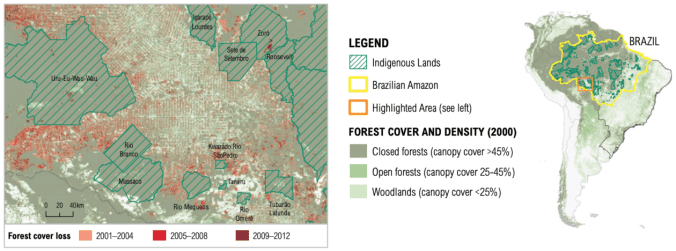
Major funding to finance forest conservation projects is set to be announced at the UN climate summit next week. But some environmentalists contend the LEAF program could exclude the Indigenous people who have long protected the forests that the initiative aims to save.

Indigenous lands on the western end Brazilian Amazon have seen far less deforestation than surrounding areas. WORLD RESOURCES INSTITUTE

After a decade of disappointing failures, UN-backed schemes to fight climate change by capturing carbon in the world’s forests are set for a comeback. Big new funding will be announced at next week’s climate conference in Glasgow, Scotland that would deliver billions of dollars in private finance for conservation projects in tropical forests, with governments and companies being able to use the carbon offsets from those projects to achieve their net-zero emissions pledges.

But concerns are growing that these new mega-offset projects will happen at the expense of forest communities. Continue reading
Scientists At Work

This book, about a scientist who has featured in plenty of posts on this platform, is introduced by one of our favorite writers with some juicy gossip from the halls of academia. I had no idea that the biology department at Harvard divided along the lines described here; the how is the juicy part and the why makes some sense–all for the best–knowing what we know now. As an aside, having taken my first calculus course as a doctoral student at age 30, with undergrads as classmates, I had a jolt of painful memory that made me even more respectful of this biologist’s determination.

Silent EarthThe second book reviewed in this essay is one we have pointed to previously, and the research that led to it was also featured much earlier. The backstory presented in this essay brings the science to life, so do read through to the end:

Where Have All the Insects Gone?

Scientists who once documented new species of insects are now charting their perilous decline—and warning about what it will mean for the rest of us.

In the summer of 1942, Ed Wilson, age thirteen, decided that it was time to get serious about research. He had already determined that he wanted to be an entomologist, a choice made partly out of interest and partly out of injury. As a child, he’d been fascinated with marine life. One day, he jerked too hard on a fish he caught, and one of its needlelike spines lodged in his right eye. The lens had to be removed, and, following the surgery, to see something clearly he needed to hold it up near his face. Insects were just about the only animals that submitted to this treatment. Continue reading
Coral Reef Bright Spots

A diver examines bleached coral in French Polynesia in 2019.

A diver examines bleached coral in French Polynesia in 2019. ALEXIS ROSENFELD / GETTY IMAGES

When someone offers to point out bright spots on anything in the natural world, we are all ears. When the author is Nicola Jones, all the more:

Finding Bright Spots in the Global Coral Reef Catastrophe

The first-ever report on the world’s coral reefs presents a grim picture, as losses mount due to global warming. But there are signs of hope — some regions are having coral growth, and researchers found that corals can recover if given a decade of reprieve from hot water.

When ecological genomicist Christian Voolstra started work on corals in Saudi Arabia in 2009, one of the biggest bonuses to his job was scuba diving on the gorgeous reefs. Things have changed. “I was just back in September and I was shocked,” says Voolstra, now at the University of Konstanz in Germany. “There’s a lot of rubble. The fish are missing. The colors are missing.” Continue reading