Golden Oldies

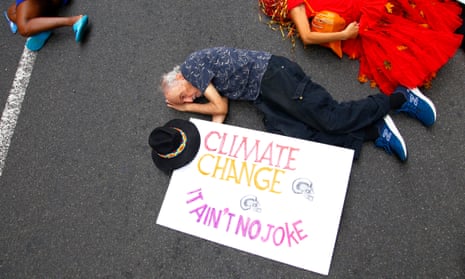
People perform a die-in on Third Avenue in New York during a protest in 2021.

People perform a die-in on Third Avenue in New York during a protest in 2021. Photograph: Michael M Santiago/Getty Images

Thanks to Oliver Milman, as ever:

‘We have money and power’: older Americans to blockade banks in climate protest

Demonstrations at 90 sites are billed as first major action by older activists: ‘It’s not fair to ask 18-year-olds to solve this’

Climate activists across the US will on Tuesday blockade branches of banks that finance fossil fuels, cutting up their credit cards in protest and holding rallies featuring everything from flash mobs to papier-mache orca whales. Unusually for such a spectacle, the protests won’t be led by young activists but those of a grayer hue. Continue reading

Greta Thundberg Talking To David Wallace-Wells

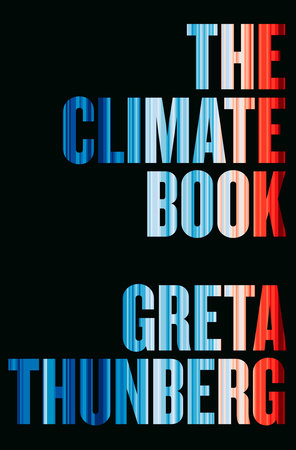
David Wallace-Wells has published a conversation, Greta Thunberg: ‘The World Is Getting More Grim by the Day’, in advance of the publication of the book to the right:

There is genuinely no precedent in the modern history of geopolitics for the climate activist Greta Thunberg.

Four and a half years ago, she began “striking” outside of Swedish parliament — a single teenager with a single sign. She was 15. In just a few months, she had made her mark at the United Nations climate conference in Poland: “You are not mature enough to tell it like it is,” she told the assembled diplomats and negotiators, “even that burden you leave to us children.” Continue reading

Time To Care About Climate Change

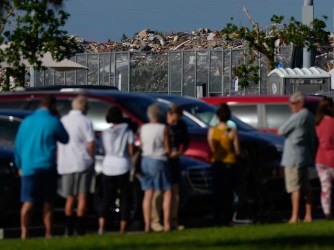
A pile of debris from Hurricane Ian rises behind a line of people waiting to vote in Fort Myers, Fla., in November 2022. Research suggests support for some climate policies increases immediately after climate-driven disasters such as Ian.
Rebecca Blackwell/AP

If you are not (yet) concerned about climate change there is no time like the present:

How our perception of time shapes our approach to climate change

Most people are focused on the present: today, tomorrow, maybe next year. Fixing your flat tire is more pressing than figuring out if you should use an electric car. Living by the beach is a lot more fun than figuring out when your house will be underwater because of sea level rise. Continue reading

Land Use By Food Type, Data For Thought

The Conversation

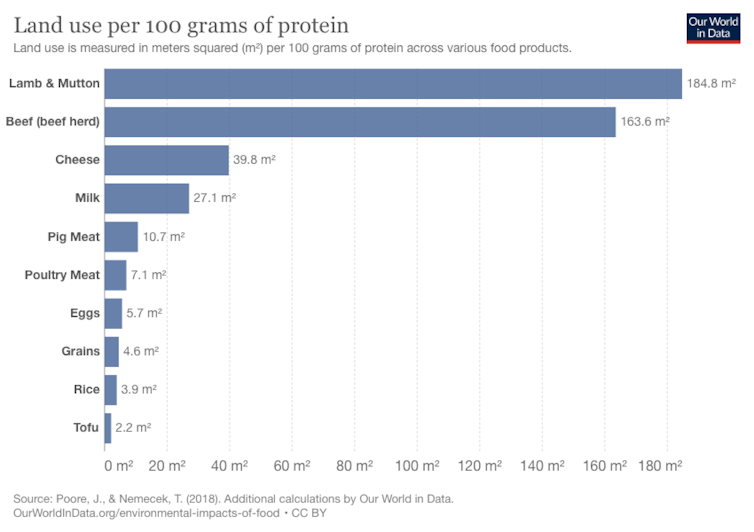
Chart of land use per 100g of protein for different foodsThe Conversation is “a news organization dedicated to facts and evidence” and with the tag line “Academic rigor, journalistic flair”. Our kind of reading. The graph to the left illustrates this article’s point; the photo below to the right is too composed for rigor:

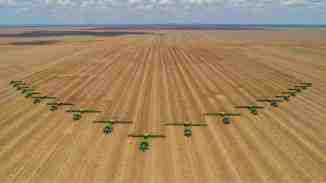
Brazil’s enormous soy farms mostly produce food for animals, not humans. lourencolf / shutterstock

New food technologies could release 80% of the world’s farmland back to nature

Here’s the basic problem for conservation at a global level: food production, biodiversity and carbon storage in ecosystems are competing for the same land. Continue reading

Biodiversity, Montreal & Us

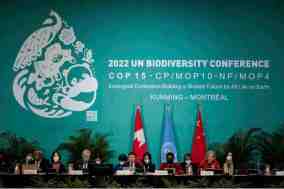
The opening plenary of the U.N. biodiversity conference in Montreal. Photograph by Andrej Ivanov / AFP / Getty

We continue, as a species, to document our impact on other species. The warning signs keep getting clearer. It is not pleasant reading, but it is documented for a reason; it is about us. It is about our responsibilities. Our thanks, as always, to Elizabeth Kolbert:

Can the U.N. Save the World from Ecological Collapse?

At this week’s summit, delegates will consider ambitious new conservation targets—even though the old ones have yet to be achieved.

The Red List of Threatened Species might best be described as a lack-of-progress report. Continue reading

Precision Fermentation’s Implied Potential

Illustration: Eleanor Shakespeare/The Guardian

It is the first time we are seeing these two words together, and George Monbiot has this to say about the potential implied:

Embrace what may be the most important green technology ever. It could save us all

Never mind the yuck factor: precision fermentation could produce new staple foods, and end our reliance on farming

So what do we do now? After 27 summits and no effective action, it seems that the real purpose was to keep us talking. If governments were serious about preventing climate breakdown, there would have been no Cops 2-27. The major issues would have been resolved at Cop1, as the ozone depletion crisis was at a single summit in Montreal. Continue reading

Fridays For Future @COP27

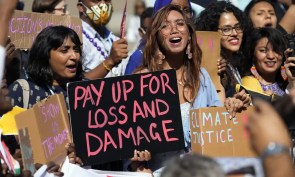
Fridays for Future protest calling for money for climate action at Cop27. Photograph: Peter de Jong/AP

If you wonder what our youth are up to, take a look at what the Guardian’s team of Fiona Harvey, with Adam Morton and Patrick Greenfield is reporting from Sharm el-Sheikh:

Cop27: EU agrees to loss and damage fund to help poor countries amid climate disasters

Change in stance puts spotlight on US and China, which have both objected to fund

A breakthrough looked possible in the deadlocked global climate talks on Friday as the European Union made a dramatic intervention to agree to key developing world demands on financial help for poor countries. Continue reading

New Fracking Science

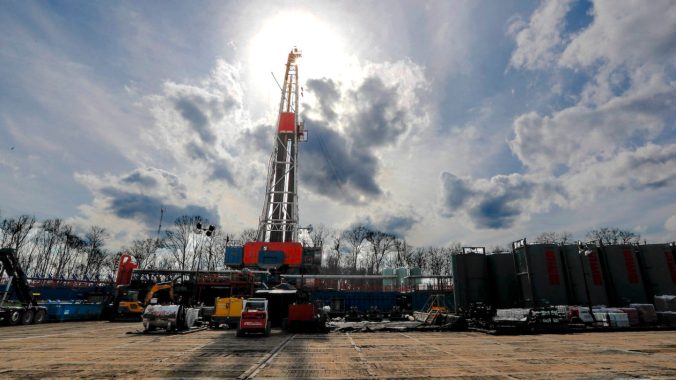
A shale gas drilling rig in St. Marys, Pennsylvania. AP PHOTO / KEITH SRAKOCIC

We thought the science of fracking’s dangers was already sufficiently clear, and now this (read Jon Hurdle’s entire story at Yale e360):

As Evidence Mounts, New Concerns About Fracking and Health

Two decades after the advent of fracking, a growing number of studies are pointing to a link between gas wells and health problems, particularly among children and the elderly. Researchers are now calling for new regulations restricting where wells can be located.

Almost 20 years after the adoption of hydraulic fracturing began to supercharge U.S. production of oil and gas, there’s growing evidence of a correlation between the industry’s activities and an array of health problems ranging from childhood cancer and the premature death of elderly people to respiratory issues and endocrine disruption. Continue reading

McKibben From COP 27 & A Rare Smile

You can read the daily news from COP27 on the official website, and it is useful information but not fully contextualized; for that we have our most reliable scribe who today is giving us one of his rare smiles:

Has the fever broken just a bit?

The view from Egypt: Trumpism, Putinism, Bolsonaroism finally on the defensive

Those of us who have been faithful in bringing the world bad news are perhaps excused if we seize occasionally on the the promising straws in the wind (though always aware that ill winds continue blowing, and not just in Florida where a rare November hurricane made landfall today). I’m thinking globally this afternoon, because I’m at the climate summit in Sharm al Sheikh in Egypt, where dozens of countries have pavilions (it’s the Epcot of carbon mitigation.) And the planet looks just a little better than it did a month ago. Continue reading

David Wallace-Wells & Co With New Perspective

After providing some of the deepest gloom, one of the environmental journalists we respect for not flinching or sugar-coating is singing a new tune, at least on this day:

Beyond Catastrophe

A New Climate Reality Is Coming Into View

By David Wallace-Wells
Photographs by Devin Oktar Yalkin
Captions by Charley Locke

You can never really see the future, only imagine it, then try to make sense of the new world when it arrives Continue reading

A Decade Of Reading Yale e360 & A Monday Perspective

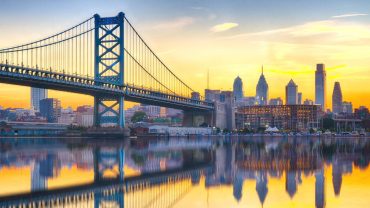
The Philadelphia skyline and Benjamin Franklin Bridge reflected in the Delaware River. PAUL BRADY / ALAMY

Monday mornings often have had their own theme in these pages. Fresh perspective to start the new work week on a new track. So here is my Monday morning contribution. For a brief history to immerse you in the bleak dark, I could send you here; but not today.

Following is an article that does something different, and more difficult to find recently. A look at five decades’ accomplishment on one environmental issue in one country, and a takeaway worthy of the photo above: complex, but inspiring. Our thanks as always after a decade relying on Yale e360 for environmental stories, and advocacy; in this case also for introducing us to Andrew S. Lewis, who will now be on our radar:

The Clean Water Act at 50: Big Successes, More to Be Done

Sparked by the 1970s environmental movement, the Clean Water Act — which marks its 50th anniversary this month — transformed America’s polluted rivers. The Delaware, once an industrial cesspool, is one of the success stories, but its urban stretches remain a work in progress.
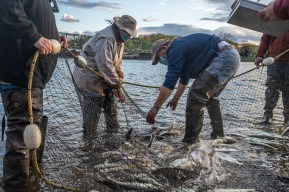
Steve Meserve (second from right) is a fourth-generation shad fisherman who operates the Lewis Fishery, the last commercial shad operation on the Delaware. ANDREW S. LEWIS

When Steve Meserve’s great-grandfather, Bill Lewis, started the Lewis Fishery in 1888, it was one of dozens of commercial outfits scattered up and down the Delaware River that seined for American shad during the spring spawn. At the time, the Delaware’s shad fishery hauled 3 to 4 million of the hard-fighting fish from the river and its tributaries every year. But, soon enough, Lewis discovered that he had gotten into the business just as the river — along with the species it supported — was entering a period of catastrophic decline. Continue reading

Ecotage Made Plain

I first heard an interview with Andreas Malm last year, and listening to more on the subject I found his argument understandable, and compelling enough to read a bit further. But, I did not read the book. I let it go, the way one lets any taboo thought recede from memory. His book came back to my attention today with this essay. And I realize that by not sharing on this platform I was denying what is compelling about his basic argument. At the very least, I can share what the publisher says about the book:

Why resisting climate change means combatting the fossil fuel industry

The science on climate change has been clear for a very long time now.  Yet despite decades of appeals, mass street protests, petition campaigns, and peaceful demonstrations, we are still facing a booming fossil fuel industry, rising seas, rising emission levels, and a rising temperature. With the stakes so high, why haven’t we moved beyond peaceful protest? Continue reading

Patagonia 2.0

Details of a desk in a Patagonia office with a stack of orange and brown stickers that read “defend bears ears national monument’ on top of stacks of magazines and papers.

Patagonia has become more politically active, going so far as to sue the Trump administration in a bid to protect the Bears Ears National Monument. Laure Joliet for The New York Times

We have mentioned this company multiple times in our pages over the years, because we take inspiration from it, the same way we have taken inspiration from the example set by Chuck Feeney. It is worth noting that I also value everything I have ever bought from Patagonia. The day of this blizzard in New York I took an old beat up backpack in to see if they could repair it in the nearby shop; instead, they gave me a new one.

Good quality products, combined with good service, make the good environmental values of the company all the better:

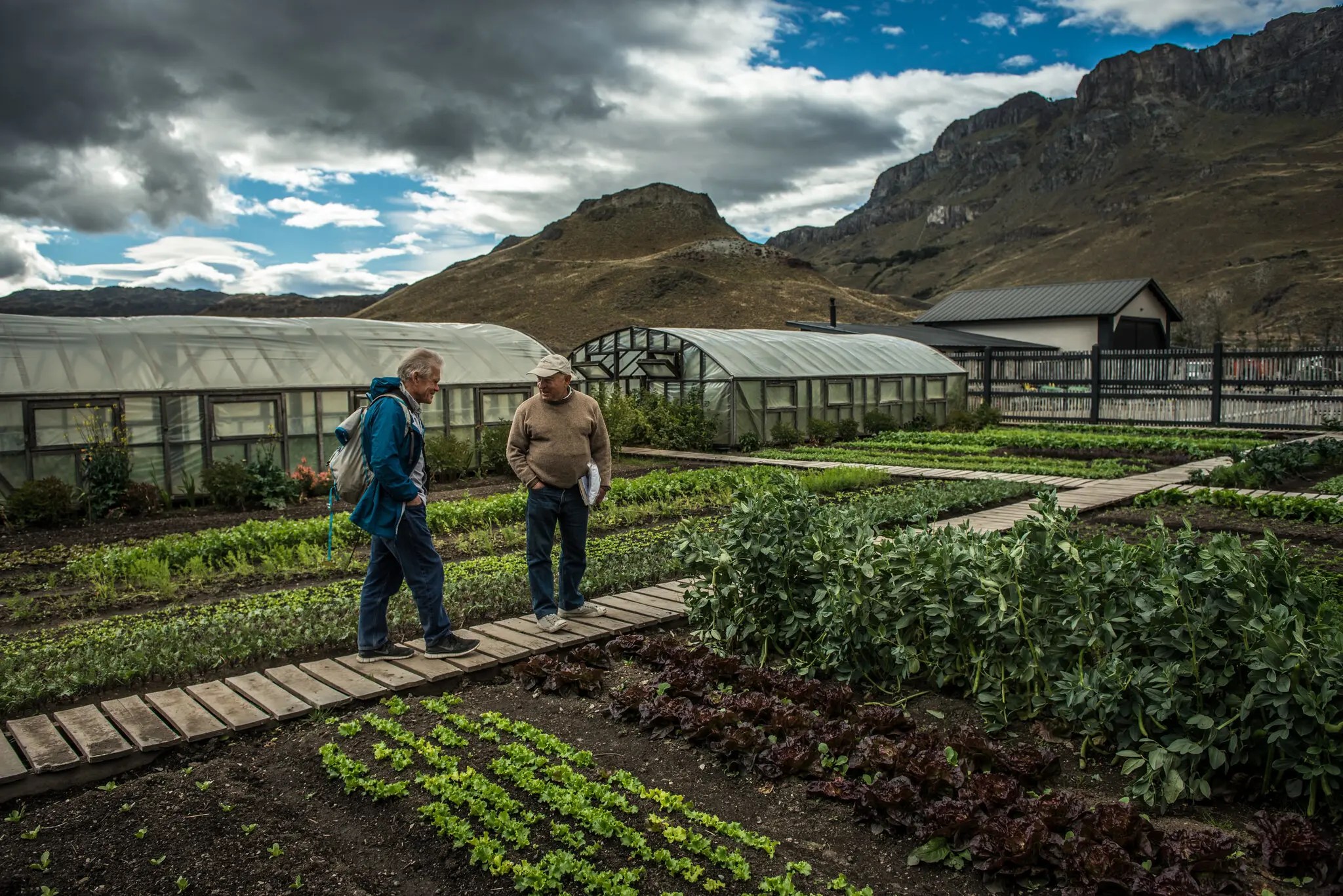
“Hopefully this will influence a new form of capitalism that doesn’t end up with a few rich people and a bunch of poor people,” said Mr. Chouinard. Meridith Kohut for The New York Times

Billionaire No More: Patagonia Founder Gives Away the Company

Mr. Chouinard filmed an announcement for his employees at home in Wyoming. By giving away the bulk of their assets during their lifetime, the Chouinards have established themselves as among the most charitable families in the country. Natalie Behring for The New York Times

A half century after founding the outdoor apparel maker Patagonia, Yvon Chouinard, the eccentric rock climber who became a reluctant billionaire with his unconventional spin on capitalism, has given the company away.

Rather than selling the company or taking it public, Mr. Chouinard, his wife and two adult children have transferred their ownership of Patagonia, valued at about $3 billion, to a specially designed trust and a nonprofit organization. They were created to preserve the company’s independence and ensure that all of its profits — some $100 million a year — are used to combat climate change and protect undeveloped land around the globe. Continue reading

Almost Missed

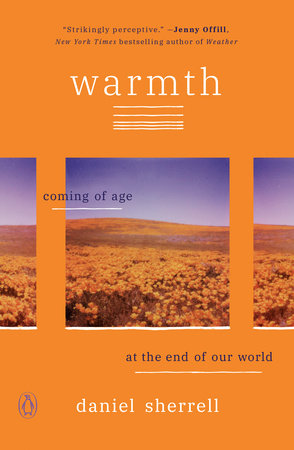
I have missed plenty of good articles, books and other sources of news and analysis that relate to our goals with this platform. When I am late to see something important, like the book to the right, no regrets. Especially when it comes to my attention through an essay like this one by Daniel Sherrell:

The Democrats’ climate bill is a historic victory. But we can’t stop here

Passage of the Inflation Reduction Act filled me with joy and rage, relief and apprehension, exhaustion and vigilance. We must celebrate, but also mourn, rage and organize

I was at a Mets game when news broke that the climate bill had enough votes to pass in the Senate. It was the bottom of the eighth, and Edwin Díaz had just struck out the heart of the Braves’ lineup. The crowd at Citi Field was feeling good. Everyone could sense a win was at hand.

I read the push notification then sat there stunned for several minutes, watching the Mets clinch the game, waiting for the world-shaping news to register. Continue reading

Really, Danone?

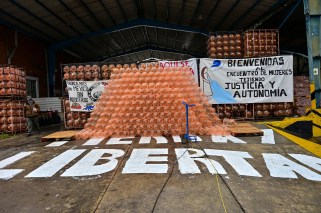
An aerial view of people standing around the sinkhole in Santa María Zacatepec, a small town in central Mexico. The opening, almost perfectly circular, grew to be longer than a football field. Photograph by Jose Castañares / AFP / Getty

Really, as in, can you not control yourselves? We asked the same of Nestle a couple times in the past:

The Sinkhole That Swallowed a Mexican Farm

A bottled-water company tapped an ancient aquifer that thousands of people and businesses share. Then came the protests.

A Bonafont bottling plant, which was occupied by activists, pictured on September 1, 2021. Photograph by Pedro Pardo / AFP / Getty

On May 29, 2021, a boom reverberated through Santa María Zacatepec, a small town near the city of Puebla, in central Mexico. At first, the sound might have been mistaken for one of the earthquakes or small volcanic eruptions that are common in the area. Then some local children told their mother that a strange hole had appeared in the farmland behind their house. Continue reading

Unwanted Plastic Renaissance

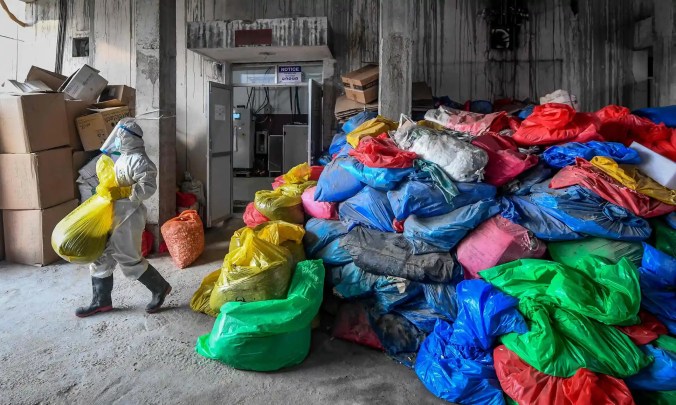
A worker at a hospital in Kathmandu, Nepal, readies bags of Covid-19 waste for treatment, December last year. Photograph: Prakash Mathema/AFP/Getty Images

The plague of plastic has zombie-like revivification capabilities:

How the plastic industry turned the pandemic to its advantage

With its products proving indispensable to combatting Covid-19, the plastics business is reinvigorated. What will it take to bring this major polluter to heel?

There are only two reasons that the plastics industry will change, a polymer scientist once told me: war or legislation. Continue reading

Monbiot Uncorked

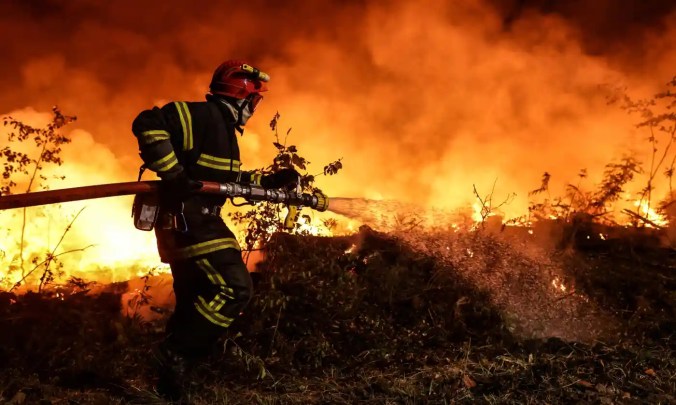
‘The dangerous heat England is suffering at the moment is already becoming normal in southern Europe.’ A firefighter tackles a wild fire in Gironde, France, 17 July 2022. Photograph: Thibaud Moritz/AFP/Getty Images

George Monbiot has never held back, but now the cork is released full force:

This heatwave has eviscerated the idea that small changes can tackle extreme weather

Dangerous heat will become the norm, even in the UK. Systems need to urgently change – and the silence needs to be broken

Can we talk about it now? I mean the subject most of the media and most of the political class has been avoiding for so long. You know, the only subject that ultimately counts – the survival of life on Earth. Continue reading

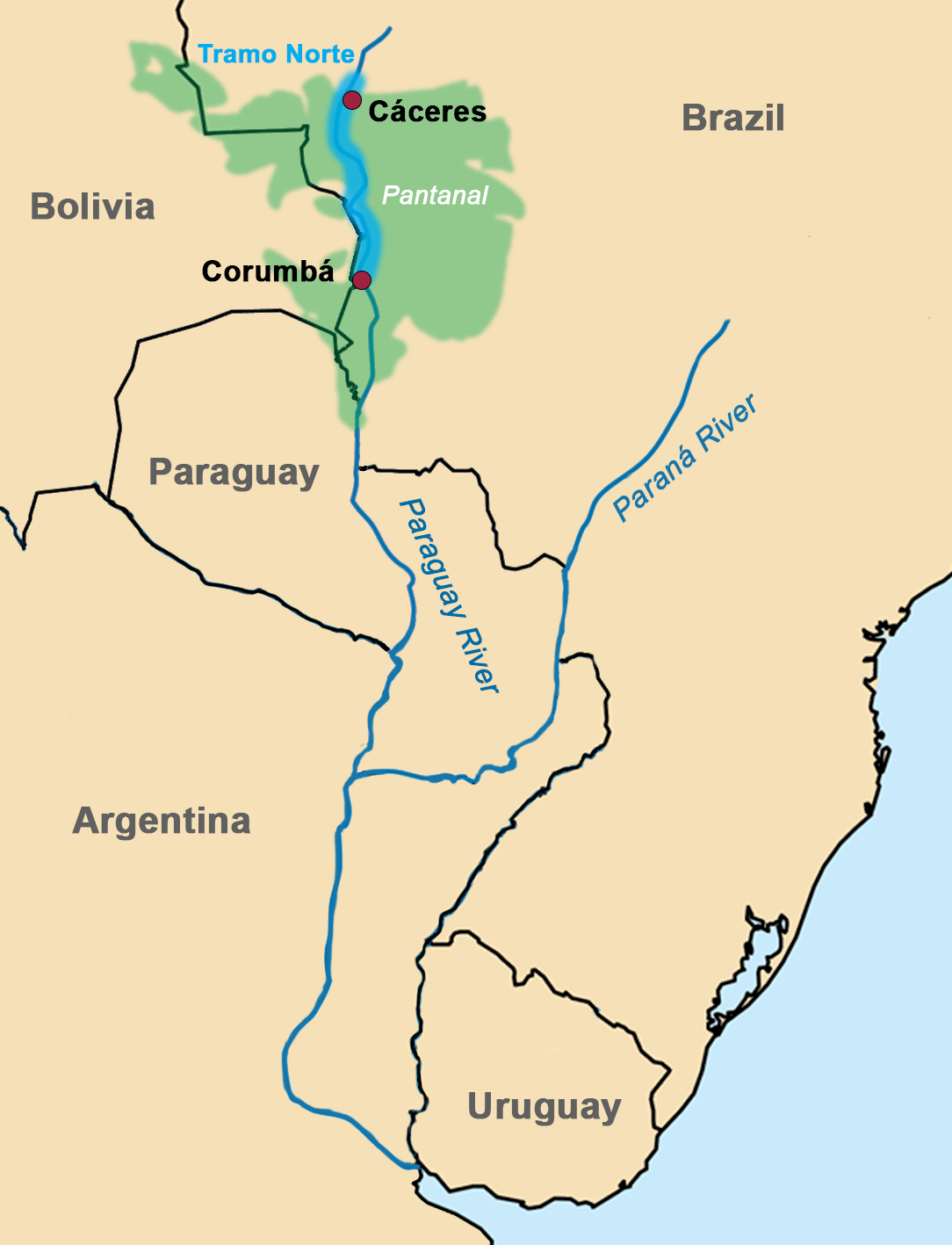
Pantanal Priorities

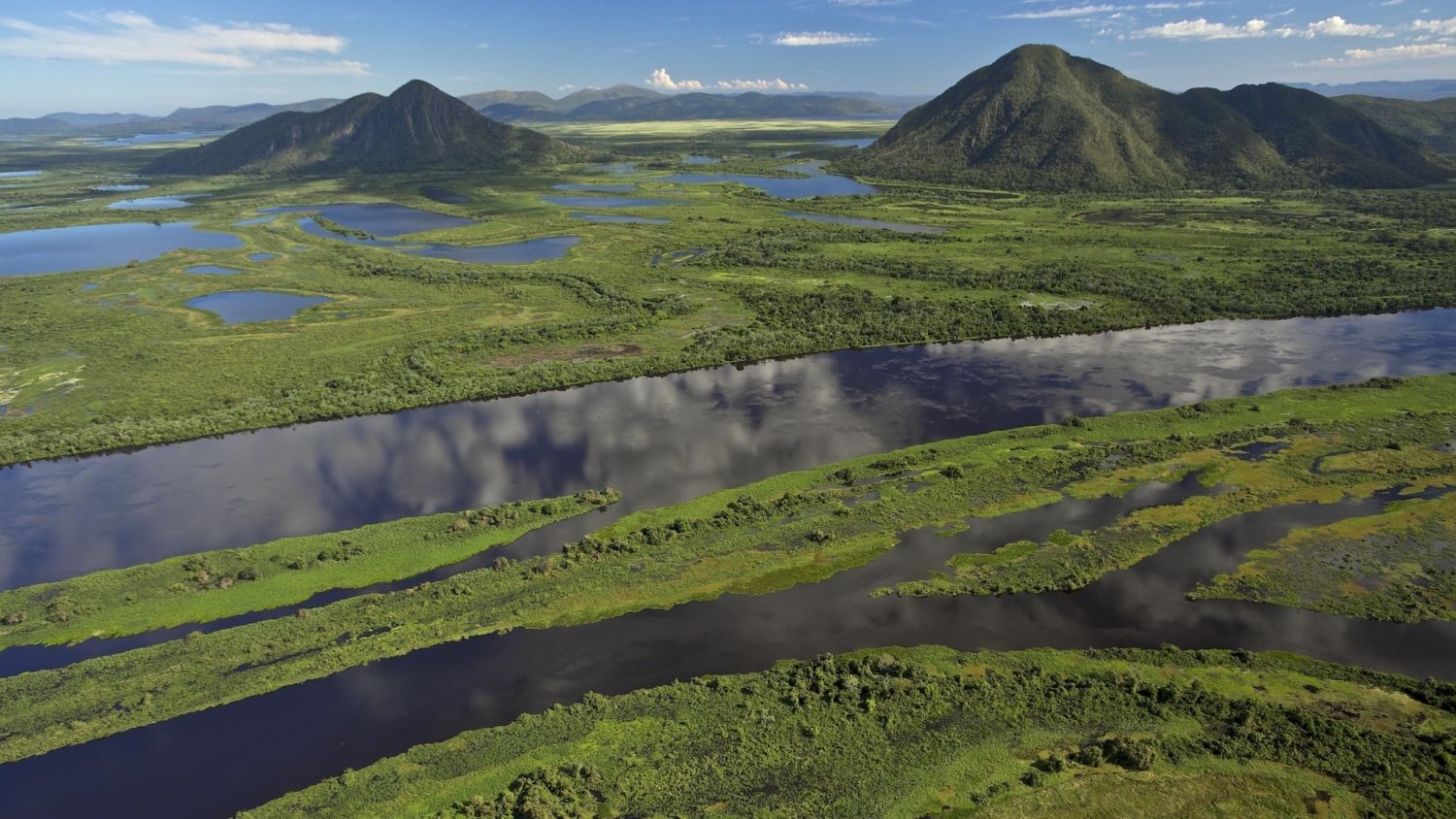
The Pantanal wetlands in Brazil.

The Pantanal wetlands in Brazil. MARKUS MAUTHE / GREENPEACE

There is not much that has happened in Brazil in the last few years that I would consider good environmental news.

YALE ENVIRONMENT 360

So one more urgency is at risk of getting lost in all the rest (which may be part of a strategy). But making it easier to extract the extracted from the center of the continent is akin to adding fuel to a very big fire:

A Waterway Project in Brazil Imperils a Vast Tropical Wetland

The Pantanal, the world’s largest tropical wetland, has been battered in recent years by agricultural development, drought, and fire. Now, a push to turn the region’s key river into a waterway for soybean-laden barges threatens to alter the natural flows of this iconic ecosystem.

It takes 14 hours for Lourenço Pereira Leite to reach his fishing spot.

He and his brother-in-law chug along in a simple one-engine motorboat, towing their traditional fishing canoe behind them. Continue reading

Really, Starbucks?

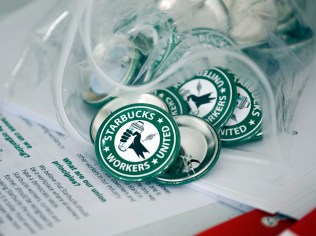
Pro-union pins sit on a table during a watch party for Starbucks’ employees union election in December in Buffalo, N.Y.  Starbucks union organizers say the company is closing a New York store to retaliate. Joshua Bessex/AP

Most of the companies and places and people we ask the question “Really?” of are more clearly acting in bad faith. In this case we are more puzzled that certain. We have generally been a fan of the company that had much to do with improving the lot of coffee farmers, with educating the public about coffee quality, with treating its employees fairly, and many other good works. If their employees feel the need to organize, and clearly want to organize, then Starbucks not supporting them seems out of character. Closing a shop location in Ithaca, a town we know well, may be due to that town being cosmopolitan enough to have several good coffee options:

Starbucks union says the coffee giant is closing a store to retaliate

Starbucks is closing a store in Ithaca, N.Y., in what Starbucks union organizers are calling an illegal move of retaliation after workers at the location voted to unionize. Continue reading

The Dirty Banking & Fossil Fuel Relationship Seen From Another Angle

We know a bit about dirty banking. While we do not think money is a dirty word, we have seen how dirty it can get when mixed with fossil fuels. So thanks, as always, to Bill McKibben for this further illumination. We are sharing his newsletter, rather than the New Yorker story he references, because as you will see below he encourages sharing Your money is your carbon:

If you’ve got $125k in the financial system, it’s doing as much damage as your cooking and your heating and your flying. These are the most important new climate numbers for many years

Earlier today I published a big story in the New Yorker about how banks are driving the climate crisis. A report from a consortium of environmental groups made clear that for the biggest, richest companies on earth, the cash they keep in the banking system (which gets lent out for pipelines and the like) produces more carbon than their actual, you know, business. Google emits more carbon from its money than its phones, and Netflix from its streaming, and so on. Continue reading