Emma Marris On Urban Shade

A man wipes his forehead under the hot sun as he walks under shade sail.

Matt McClain / The Washington Post / Getty

The science writer Emma Marris, here featured in The Atlantic, first came to our attention in a passing mention ten years ago, then again in full force six years ago. Whether or not you live in an urban area, you likely depend on urban areas for some part of your livelihood so her essay may be of interest:

Trees are nice and all, but they’re not enough.

On a 92-degree Saturday afternoon in Portland, Oregon, I went looking for shade in Cully Park, which was built on top of an old landfill and opened in 2018. The city included plenty of trees in the design—I mean, this is Oregon. Continue reading

Evolution Of Eating & Adaptation Of Dining

A photo illustration showing watermelon and other fruits cut up and stacked in a precarious tower.

Alma Haser

We recommend two recent op-eds from the New York Times, starting with this one by David Wallace-Wells:

From the vantage of the American supermarket aisle, the modern food system looks like a kind of miracle. Everything has been carefully cultivated for taste and convenience — even those foods billed as organic or heirloom — and produce regarded as exotic luxuries just a few generations ago now seems more like staples, available on demand: avocados, mangoes, out-of-season blueberries imported from Uruguay…

A photo illustration of a squash in the desert, with a hose above it dripping water.

Photo illustration by Scott Semler

And if time allows after reading that, continue on with today’s essay by Aaron Timms, a cultural critic whose upcoming book about modern food culture we hope to preview in these pages soon:

Petrostate Is A Choice

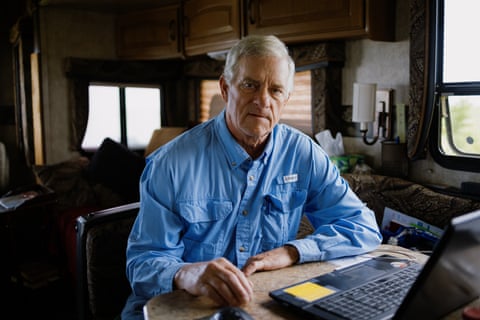
A middle-aged man in a blue button-up shirt sits in front of a laptop.

John Allaire, a former oil industry worker, has turned his efforts to blocking LNG plants from being built directly next to his camper home in Cameron parish.

Some states are moving forward with new technologies leading to a cleaner energy future. We respect John Allaire’s work to protect his state from leaning in to dirty energy, reminding us of the choice we all have to just watch others make decisions affecting where you live, or to do something:

‘This used to be a beautiful place’: how the US became the world’s biggest fossil fuel state

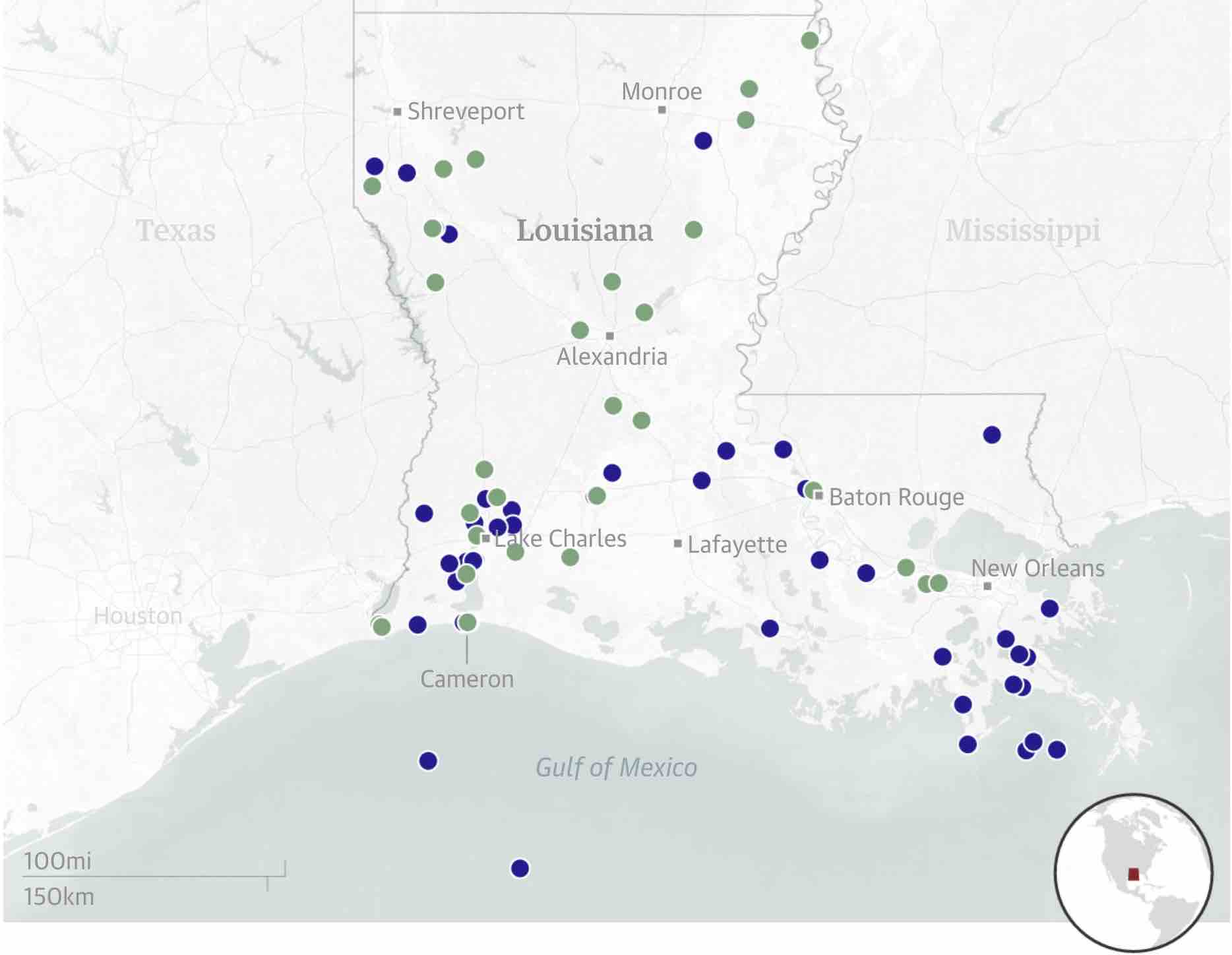
Guardian graphic. Sources: Oil & Gas Watch. Note: Map includes oil, gas and liquified natural gas projects. Those classified as ‘Announced / underway’ also include projects with statuses of ‘Under construction’, ‘Pre-construction’, ‘Commissioning’ and ‘On hold’.

No country has ever in history produced as much oil and gas as the US does now and Louisiana is ground zero

To witness how the United States has become the world’s unchallenged oil and gas behemoth is to contemplate the scene from John Allaire’s home, situated on a small spit of coastal land on the fraying, pancake-flat western flank of Louisiana.

Allaire’s looming neighbor, barely a mile east across a ship channel that has been pushed into the Gulf of Mexico, is a hulking liquified natural gas (or LNG) plant, served by leviathan ships shuttling its chilled cargo overseas. Continue reading

Big Buyer Power & Plastic Reduction Potential

Two stainless steel cylindrical containers hold a few dozen disposable forks, knives and drinking straws.

The goal of the administration’s plan is to reduce demand for plastics and encourage a market for reusable or compostable alternatives. Eric Baradat/Agence France-Presse — Getty Images

We celebrate when individuals, or groups, do things they were not required to do when those things are in the common interest. Some things require rules, and rules also require imagination and courage to be effective. This is welcome news at the intersection of entrepreneurial conservation and rules set by those in a position to make them work:

The White House Has a Plan to Slash Plastic Use in the U.S.

The government said it would phase out its purchases of single-use plastics, a significant step because it is the biggest buyer of consumer goods in the world.

Calling plastic pollution one of the world’s most pressing environmental problems, the Biden administration on Friday said that the federal government, the biggest buyer of consumer goods in the world, would phase out purchases of single-use plastics. Continue reading

Options For Human Waste Management

An illustration of a toilet. Its black lid is open and water is splashing out. An oversize roll of toilet paper is unrolling, seemingly out of control, just above the toilet. The background is pink.

Naomi Anderson-Subryan

Waste has been a regular topic in our pages in the decade+ since we started sharing stories here. Human bodily waste has not been featured, but deserves attention. If you can, consider these options:

What’s Greenest and Cleanest When Nature Calls?

Conventional toilet paper has a big environmental impact. We’ve got the lowdown on alternatives, from bamboo tissue to bidets.

These days, the toilet paper aisle is crowded with products that claim to be more sustainable, from bamboo and recycled material to products with “forest-safe” labels. But are they really better for the environment? And can you cast aside the paper altogether?

Today, we’ll try to get to the bottom of it. Continue reading

USA Environmental Policy Opinion Landscape

An illustration showing a corn field, a wind turbine and an electric car on top of a solar farmIt is political season, which can be overwhelming. But it has moments of inspiration. Karin Kirk at Yale Climate Connections summarizes the landscape of opinion on key environmental issues:

Six incredibly popular climate policies

The majority of registered U.S. voters support electrification and renewable energy.

An infographic showing strong support for climate-pollution reducing policies

A strong majority of registered voters support certain policies aimed at tackling climate change, according to recent research by the Yale Program on Climate Change Communication (the publisher of this site) and the Center for Climate Change Communication at George Mason University.

Here’s a summary of these results. Continue reading

With Rewilding, Markets Are Not Everything, But Are A Key Ingredient

Rewilding can support the development of a wide range of nature-based businesses. NEIL ALDRIDGE

Places can have a particular taste, maybe one that is even iconic, and coffee was the obvious tool in our taste of place toolkit for decades. When it came time to focus on these products as our primary work we drew on some earlier experiments.

One was with honey and the other was with wine. All that was long before coming home to Costa Rica to launch Organikos.

Lunch provided with products from the Wild Côa Network during the ERN-EYR event in the Greater Côa Valley. The Wild Côa Network, which now comprises over 50 members, is driving the development of nature-based enterprise in and around Portugal’s Greater Côa Valley. NELLEKE DE WEERD

We are about to introduce two new products, and one has a story that mixes conservation and rewilding. So, in this story  that follows we sense something akin to the Organikos products in our Authentica shops:

Nature-based business networks take off across Rewilding Europe landscapes

Helping nature heal can lead to prosperous local economies. Nature-based business networks are being developed in a growing number of our rewilding landscapes, enabling businesses and communities to benefit from nature recovery in a sustainable way. This, in turn, is generating more support for rewilding.

The network effect

Today, nature-based business networks are a growing feature of Rewilding Europe’s expanding portfolio of rewilding landscapes. These bring businesses together under a shared rewilding vision for the landscape, facilitating the creation of new tourism packages, helping to close gaps in tourism experiences, and creating new economic opportunities. Continue reading

The Market For Travel Books

Young woman reads a Lonely Planet guide in Kandy train station, Sri Lanka.

photograph: getty images

A reminder of the reasons for travel writing‘s staying power:

Why travel guidebooks are not going anywhere

Despite predictions that the internet would kill them

They declared that it was dead—or, if it wasn’t dead yet, it soon would be. The cause of the malady was viral: first blogs, then influencers on Instagram and TikTok. Continue reading

The Downside Of Mainstreaming The Recycling Arrows

Rapapawn / Grist

Thanks as always to Grist for offering analysis that nudges us to keep our interest in recycling in the realm of the real:

How the recycling symbol lost its meaning

Corporations sold Americans on the chasing arrows — while stripping the logo of its worth.

It’s Earth Day 1990, and Meryl Streep walks into a bar. She’s distraught about the state of the environment. “It’s crazy what we’re doing. It’s very, very, very bad,” she says in ABC’s prime-time Earth Day special, letting out heavy sighs and listing jumbled statistics about deforestation and the hole in the ozone layer. Continue reading

Care & Sacrifice & Cruise Ships

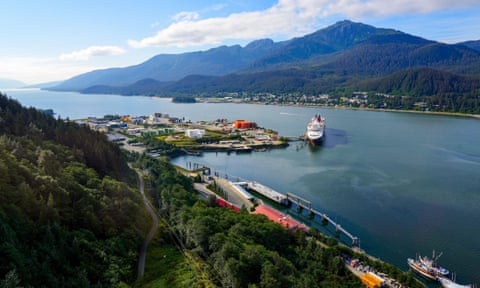
Two huge cruise ships in a large sound with tree-clad mountains in the background

Cruise ships at Alaska’s capital, Juneau, which has a population of 32,000 but had 1.67m cruise ship visitors last year – a 23% rise on the previous record. Photograph: Stephen Dorey/Alamy

We salute you for the care you have chosen to demonstrate, and the sacrifice, Juneau:

Alaska limits cruise ship passengers in capital city after 1.6m visitors last year

Juneau agrees deal with industry body to curtail visits but critics say it does not go far enough to protect quality of life

Cruise ship moored to a pier in a large sound with tree-clad mountains in the background

The Gastineau Channel near Juneau. Some critics of the cruise industry have proposed ‘ship-free Saturdays’ to cut down on the number of ships stopping there. Photograph: Alexandre Rosa/Alamy

Alaska’s capital city is to limit the numbers of cruise ship passengers arriving at the port amid concerns over tourism’s growing impact, but a leading critic of the industry has said further measures to protect Alaskans’ quality of life are needed.

Located on the Gastineau Channel in southern Alaska, Juneau has a population of 32,000 and last year received a record 1.65 million cruise ship passengers – a 23% increase from the previous high. Continue reading

Implementing The Inflation Reduction Act

A windmill getting tangled by an electrical cord

Illustration by Ben Kothe / The Atlantic

We celebrate when a law is passed that moves the USA in the right direction, but the biggest  such law ever still is in the process of implementation. So, creativity and vigilance are still key ingredients to making the best of the law:

The Next Front in the War Against Climate Change

Clean-energy investment in America is off the charts—but it still isn’t translating into enough electricity that people can actually use.

On august 2022, the U.S. passed the most ambitious climate legislation of any country, ever. As the director of President Joe Biden’s National Economic Council at the time, I helped design the law. Continue reading

Shrimp Transparency

Shrimp and transparent shrimp shells sitting on a white surface.We link to the work of Erik Vance for its clarity and utility:

Americans love their prawns. So how healthy are they — for us and for the planet?

Americans aren’t particularly enthusiastic about seafood. We eat less than half of what a Japanese or Indonesian person does. Less than a third of the average Icelander. But there is one big exception: shrimp. Continue reading

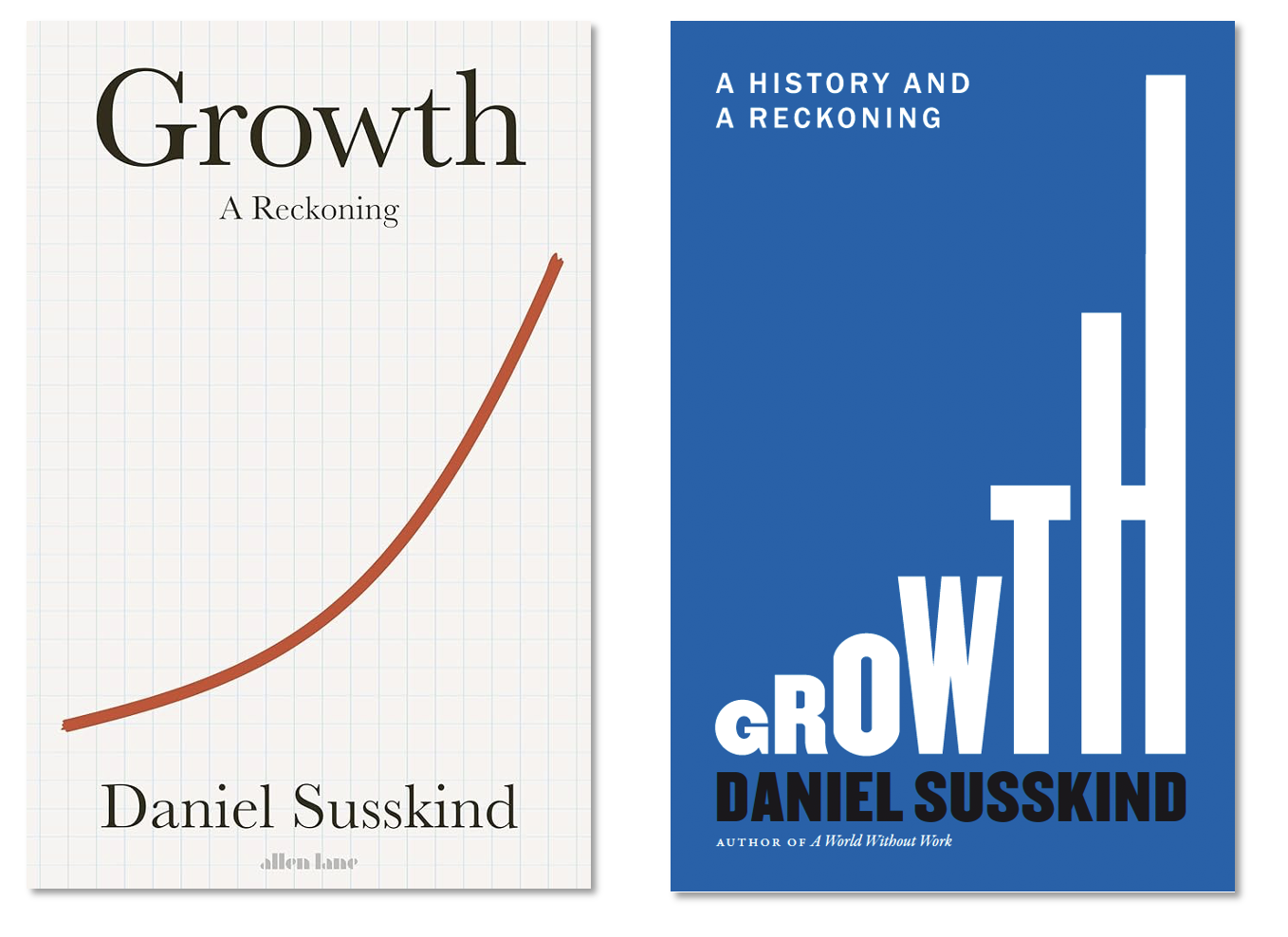
Idrees Kahloon On Daniel Susskind On Growth

Idrees Kahloon is an excellent discussant on the Economist podcast, and reviews Daniel Susskind’s new book in the current issue of the New Yorker:

Capitalism, as it has been practiced throughout the past century, has brought with it plenty of problems; as with any engine, harnessing it properly requires controlling it properly.Illustration by Carl Godfrey; Source photographs from Alamy; Getty

The World Keeps Getting Richer. Some People Are Worried

To preserve humanity—and the planet—should we give up growth?

In April, 1968, a consequential meeting took place in the Villa Farnesina, a stately Roman home built for Pope Julius II’s treasurer and adorned with frescoes by Raphael. The conveners were Alexander King, a Scottish chemist who directed scientific affairs for the Organization for Economic Co-operation and Development, and Aurelio Peccei, an Italian industrialist who simultaneously held executive positions at the automaker Fiat, the typewriter manufacturer Olivetti, and a large consulting firm. Continue reading

Price Adjustments & Carbon Emmissions

illustration: javier jaén/getty images

The Economist shares this news:

Carbon emissions are dropping—fast—in Europe

Thanks to a price mechanism that actually works

“Our most pressing challenge is keeping our planet healthy,” declared Ursula von der Leyen on the day she was elected president of the European Commission in July 2019. Continue reading

If You Eat Beef, Track Its Origins

A JBS facility in Tucuma, Brazil. JONNE RORIZ / BLOOMBERG VIA GETTY IMAGES

Reducing meat in our diet was easier living in India, and we committed specifically to cutting beef consumption. This effort has been assisted by awareness of this issue. Thanks to Yale e360 for bringing the work of this team to our attention:

Marcel Gomes (center) with colleagues at Repórter Brasil’s offices in São Paulo. GOLDMAN ENVIRONMENTAL PRIZE

Tracking Illicit Brazilian Beef from the Amazon to Your Burger

Journalist Marcel Gomes has traced beef in supermarkets and fast food restaurants in the U.S. and Europe to Brazilian ranches on illegally cleared land. In an e360 interview, he talks about the challenges of documenting the supply chains and getting companies to clean them up.

Investigative journalism can be a very deep dive. By the end of his probe into the supply chain of JBS, the world’s largest meat processing and packing company, Marcel Gomes reckons he and his team at the São Paulo-based nonprofit Repórter Brasil knew more about the origins of the beef it supplies from the Amazon to the world’s hamburger chains and supermarkets than the company itself. Continue reading

Oobli, Brazzein & Revolution In Sweetness

In our extended family there are several cases of diabetes that have made me interested in sugar and its alternatives. Stevia came to my attention while working in Paraguay, when honey was my primary interest, because stevia is native to that place. Stevia is a taste of place product as much as any other we have come to share in our current work.

But neither stevia nor have any other so-called sugar alternatives have featured in our work. Still, this article by Yasmin Tayag in The Atlantic fits perfectly as a theme in our pages:

Illustration by Ben Kothe / The Atlantic

A New Sweetener Has Joined the Ranks of Aspartame and Stevia

Unfortunately, it’s still nothing like real sugar.

A few months ago, my doctor uttered a phrase I’d long dreaded: Your blood sugar is too high. With my family history of diabetes, and occasional powerful cravings for chocolate, I knew this was coming and what it would mean: To satisfy my sweet fix, I’d have to turn to sugar substitutes. Ughhhh. Continue reading

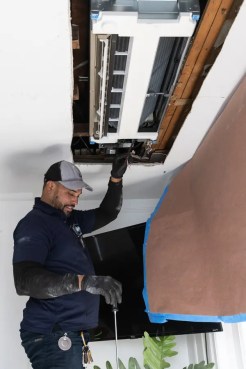
Heat Pumps, Circa 2024

Heat pumps are energy efficient and considered by many to be powerful tools in combating climate change. Jackie Molloy for The New York Times

The technology is still young, and raising questions, but also full of promise according to this article by Hilary Howard in the New York Times:

Why Heat Pumps Are the Future, and How Your Home Could Use One

The highly efficient devices are the darlings of the environmental movement. Here’s why.

Heat pumps, which both warm and cool buildings and are powered by electricity, have been touted as the answer to curbing greenhouse gas emissions produced by homes, businesses and office buildings, which are responsible for about one-third of the emissions in New York State. Continue reading

10,000 New Electric Buses In India

People wait to board an electric bus in Pune, India. (Image credit: courtesy of ITDP)

Seven years and many bus stories among us recall the old buses. Noisy, smoke-belching, hot and crowded. Time to retire the old ones and at least lessen the noise and belching. Thanks to Sarah Spengeman and Yale Climate Connections:

India makes a big bet on electric buses

Fast-growing cities need electric buses if the country is to meet its climate goals.

Public transportation riders in Pune, India, love the city’s new electric buses so much they will actually skip an older diesel bus that arrives earlier to wait for a smoother, cooler ride in a new model. This has fed a new problem: overcrowding. Fortunately, more new buses are on the way. Continue reading

Does Recycling Matter In 2024?

Thanks to Yale Climate Connections for this primer:

Does recycling actually do anything? What about carbon offsets? Did you know that the average person’s carbon footprint is about 6.5 tons but the average American’s footprint is double that? Meteorologist Alexandra Steele talks to the experts to get answers about what actually helps the planet, and what doesn’t. You can calculate you carbon footprint by using the links below:

https://coolclimate.berkeley.edu/calc…

https://www.nature.org/en-us/get-invo…

Credits Script, research, interviews, camera: Alexandra Steele Script Editors: Sara Peach, Pearl Marvell Edit Producers: Iain Moss, Sam Lucas Production support: Anthony Leiserowitz, Lisa Fernandez Production Editor: Iain Moss Graphics: Screen Stories Production Manager: Ellie Aitken Social Media Manager: Ellie Phillips Director of Production: Hal Arnold Production Company: Little Dot Studios

PureCycle Technologies, Promising But Still Needing Verification

Recycled polypropylene pellets at a PureCycle Technologies plant in Ironton, Ohio. Maddie McGarvey for The New York Times

Big companies have not earned our trust, especially when it comes to plastics. So, our thanks to Hiroko Tabuchi for the tough questions in this New York Times article:

There’s an Explosion of Plastic Waste. Big Companies Say ‘We’ve Got This.’

By 2025, Nestle promises not to use any plastic in its products that isn’t recyclable. By that same year, L’Oreal says all of its packaging will be “refillable, reusable, recyclable or compostable.”

And by 2030, Procter & Gamble pledges that it will halve its use of virgin plastic resin made from petroleum.

To get there, these companies and others are promoting a new generation of recycling plants, called “advanced” or “chemical” recycling, that promise to recycle many more products than can be recycled today.
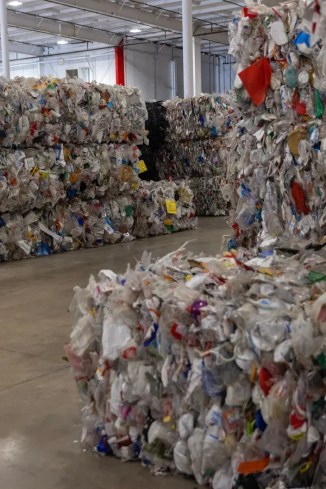
Crushed plastic waste at the PureCyle plant. Nestlé, Procter & Gamble and L’Oréal have expressed confidence in the company despite its early setbacks. Maddie McGarvey for The New York Times

So far, advanced recycling is struggling to deliver on its promise. Nevertheless, the new technology is being hailed by the plastics industry as a solution to an exploding global waste problem.

The traditional approach to recycling is to simply grind up and melt plastic waste. The new, advanced-recycling operators say they can break down the plastic much further, into more basic molecular building blocks, and transform it into new plastic.

PureCycle Technologies, a company that features prominently in Nestlé, L’Oréal, and Procter & Gamble’s plastics commitments, runs one such facility, a $500 million plant in Ironton, Ohio. Continue reading