If You Can, Catch Pacita Abad At MoMA PS1

The work at the center is the nearly 17-foot-tall “Marcos and His Cronies,” which features a dragon demon surrounded by 18 fearsome masked figures.

Installation view of “Pacita Abad” at MoMA PS1. From left: “Waiting in Washington” (1990), “Marcos and His Cronies” (1985-1995) and “Subali” (1983/1990). Kris Graves/MoMA PS1

Pacita Abad has not only not appeared in our pages before, but her work was rejected by plenty of institutions who probably should have known better. Now, if given the chance, most of us will choose not to miss the opportunity to experience her work:

Stitch by Stitch, Pacita Abad Crossed Continents and Cultures

The Filipino American artist is having her first retrospective at MoMA PS1 as the mainstream art world finally catches up to her work. “You will regret missing it,” our critic says.

A row of five colorful paintings depicting masks from various cultures, from left, “Oceania Mask,” “Hopi Mask,” “African Mephisto,” “Mayan Mask,” and “African Mask” with a Kongo figure.

From left, “Oceania Mask (Dancing Demon),” 1983/1990; “Hopi Mask,” 1990; “African Mephisto,” 1981; “Mayan Mask,” 1990; and “African Mask (Kongo),” 1990, on view at MoMA PS1. Kris Graves/MoMA PS1

About a year before she died of cancer, in 2004, at the age of 58, the artist Pacita Abad and a team painted a pedestrian bridge that crosses the Singapore River with exuberant colors and more than 2,000 circles. Surrounded by ho-hum hotels and apartment buildings, it radiates joy. Abad’s work is in museums throughout Asia, and in Manila, where she grew up, the National Museum’s holdings include a painfully lucid 1980 painting of two wary children, Cambodian refugees, holding each other. Continue reading

Sustaining Creativity

Adam Moss has not appeared in our pages until now. Given that we lean on publications that he was the editor of, especially The New York Times Magazine, it is one reason to pay attention to this review of his new book. At The New York Times he oversaw the Magazine, the Book Review, and the Culture, and Style sections, and before that edited Esquire, all of which led to his being elected to the Magazine Editors’ Hall of Fame in 2019.

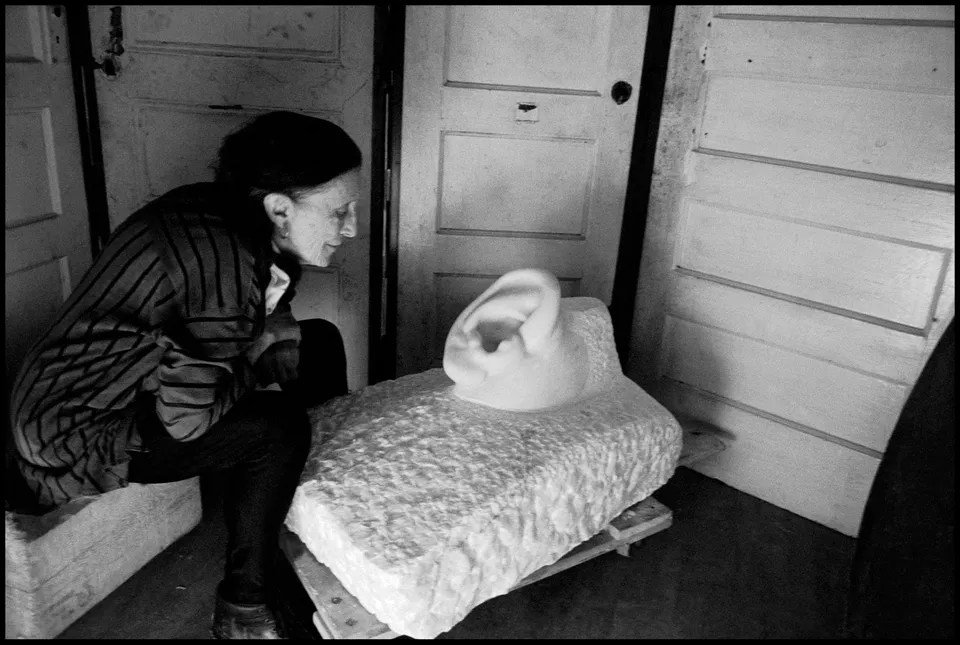
Photograph by Inge Morath / Magnum

The review of his book is paired with that of another, both of which enlighten on the topic of sustaining creativity over a long period. Our thanks to Alexandra Schwartz at The New Yorker for this:

Are You an Artist?

The creative life is shrouded in mystery. Two new books try to discover what it takes.

Louise Bourgeois loved to work, and she loved to talk. She especially loved to talk about her work. In the 2008 documentary “Louise Bourgeois: The Spider, the Mistress and the Tangerine,” directed by Marion Cajori and Amei Wallach—you can watch the whole thing on YouTube, isn’t that great?—she answers questions as she chisels and draws and violently wrings scraps of material as a butcher might wring a chicken’s neck. “It is really the anger that makes me work,” she says. She has just been discussing her governess, the despised Sadie, an Englishwoman who carried on an affair with Bourgeois’s father for ten years while she lived in the family home.

“All my work of the last fifty years, all my subjects, have found their inspiration in my childhood,” Bourgeois adds. Continue reading

Paul Theroux, Still Indulging

At home in Hawaii in 2021. Michelle Mishina Kunz for The New York Times

During the first few months of this platform, when travel experiences as well as variations on biophilia and  conservation became our prevailing themes, a post mentioned one of the great travel writers of our time. 13 years passed and this is his first full reference:

Paul Theroux on Necessary Solitude, Risks and the Joy of Writing

After 60 years of writing and publishing — and almost 60 books — I feel ordering my thoughts on paper to be not a job but a process of my life. You always hear writers complain about the hellish difficulty of writing, but it’s a dishonest complaint.

So many people have it much harder — soldiers, firefighters, field workers, truckers. The writer’s profession is a life of self-indulgence. Continue reading

The Paper Log House On View Until December

The Paper Log House at The Glass House. Photo by Michael Biondo.

The building in the background of the photo above has never featured in any of our architecture-focused posts before, even though architecture has been a key theme since our start, and especially after hosting these interns in India. I know why I never wanted that particular architect in our pages, but nevermind that. This post is about another architect’s achievement, which I plan to visit if I get close enough before December:

SHIGERU BAN: THE PAPER LOG HOUSE

The Glass House, Shigeru Ban Architects (SBA), and The Irwin S. Chanin School of Architecture of The Cooper Union announce the completion of Shigeru Ban: The Paper Log House at The Glass House. Students from The Cooper Union joined in erecting the structure through a unique opportunity offered this semester for the university’s Building Technology course. The collaborative installation will be on display April 15th through December 15th 2024 for The Glass House’s more than 13,000 annual visitors. Continue reading

If You Happen To Be In Venice

Work by Yuku Mohri at Japan’s pavilion. Moisture from the rotting fruit on display is converted into electric signals, which generate sounds or turn on suspended lightbulbs. Matteo de Mayda for The New York Times

It is the end of the standard work week for many, so here is an art concept to take them into the weekend, thanks to the New York Times art critics:

Given the Venice Biennale’s reputation as “the Olympics of the art world” — set in a spectacular city, no less — artists and curators here often favor grand, weighty gestures. This year’s Japan Pavilion wonderfully eschews gravitas for modesty and play, while still getting at something profound.

Mohri’s work was inspired by the rough and ready materials used to fix leaks in Tokyo’s subway. Matteo de Mayda for The New York Times

For her exhibition “Compose,” curated by Sook-Kyung Lee, the artist Yuko Mohri has created two installations of contraptions-slash-sculptures from local materials. One set, inspired by the D.I.Y. methods for fixing leaks in the Tokyo subway system, features tubes and everyday objects — like pans, rubber gloves and coat racks — rigged together and dangling through the air. The systems catch and recirculate water seeping into the pavilion, sometimes activating chimes in the process. Continue reading

Canvus & The Beauty Of Upcycled Turbines

Visitors to Every Child’s Playground in Avon, Ohio, will find products from Canvus’s nearby factory. Photographer: Brian Kaiser/Bloomberg

We missed Bloomberg’s story about Canvus back in November, but happy to share it now:

Retired Wind Turbine Blades Live on as Park Benches and Picnic Tables

To keep turbine blades from piling up in landfills, startups like Canvus are turning them into new products — and free marketing for wind power.


At first glance, the benches outside the Great Lakes Science Center in downtown Cleveland seem unremarkable. But a closer inspection shows that their droplet-shaped shells aren’t made from wood or metal. A scan of the attached QR codes reveals even more: These benches used to be wind turbine blades…


A big thanks to Yale Climate Connections for bringing Canvus to our attention today:

Costa Rica’s Ceramic Craft

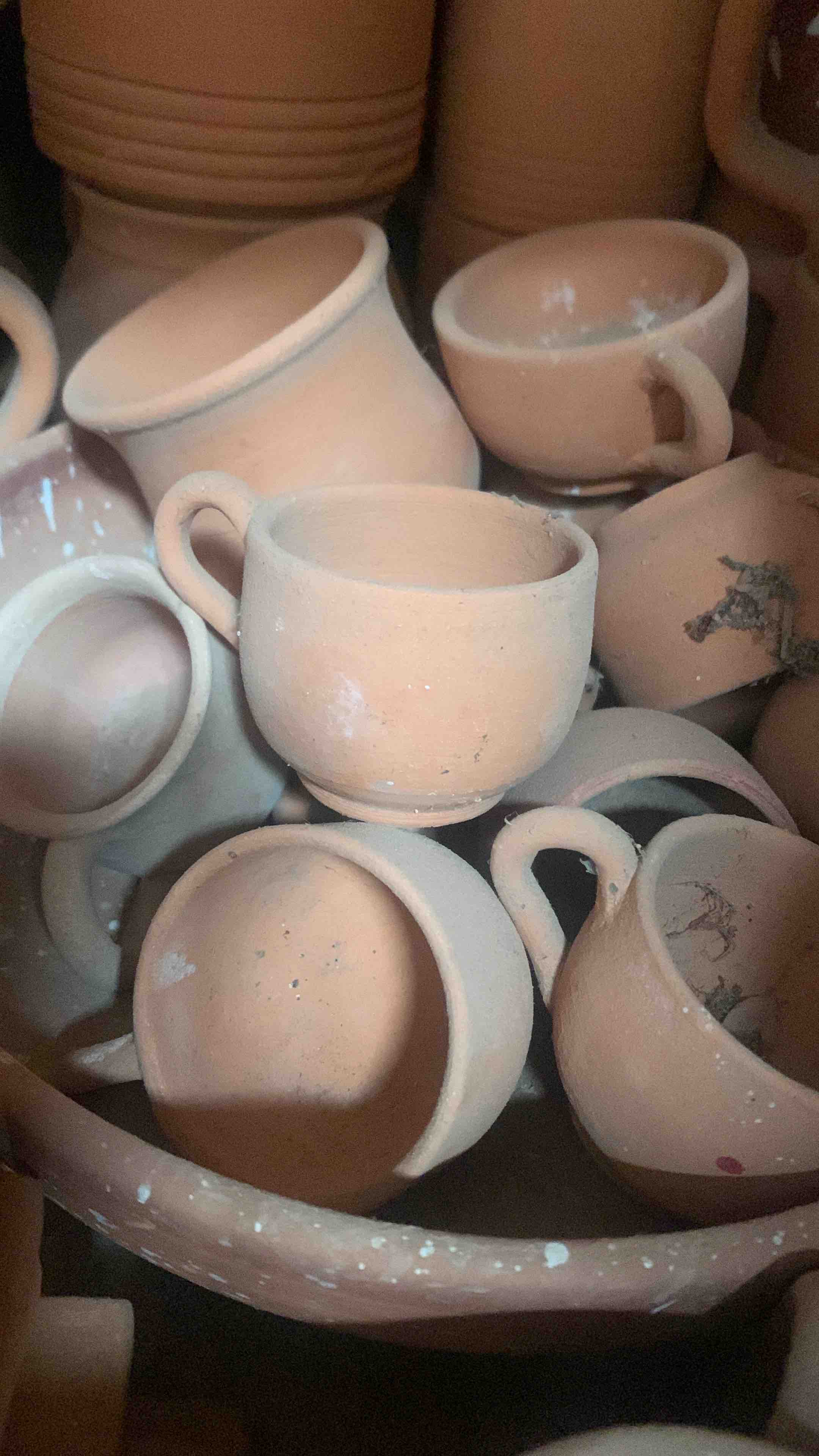
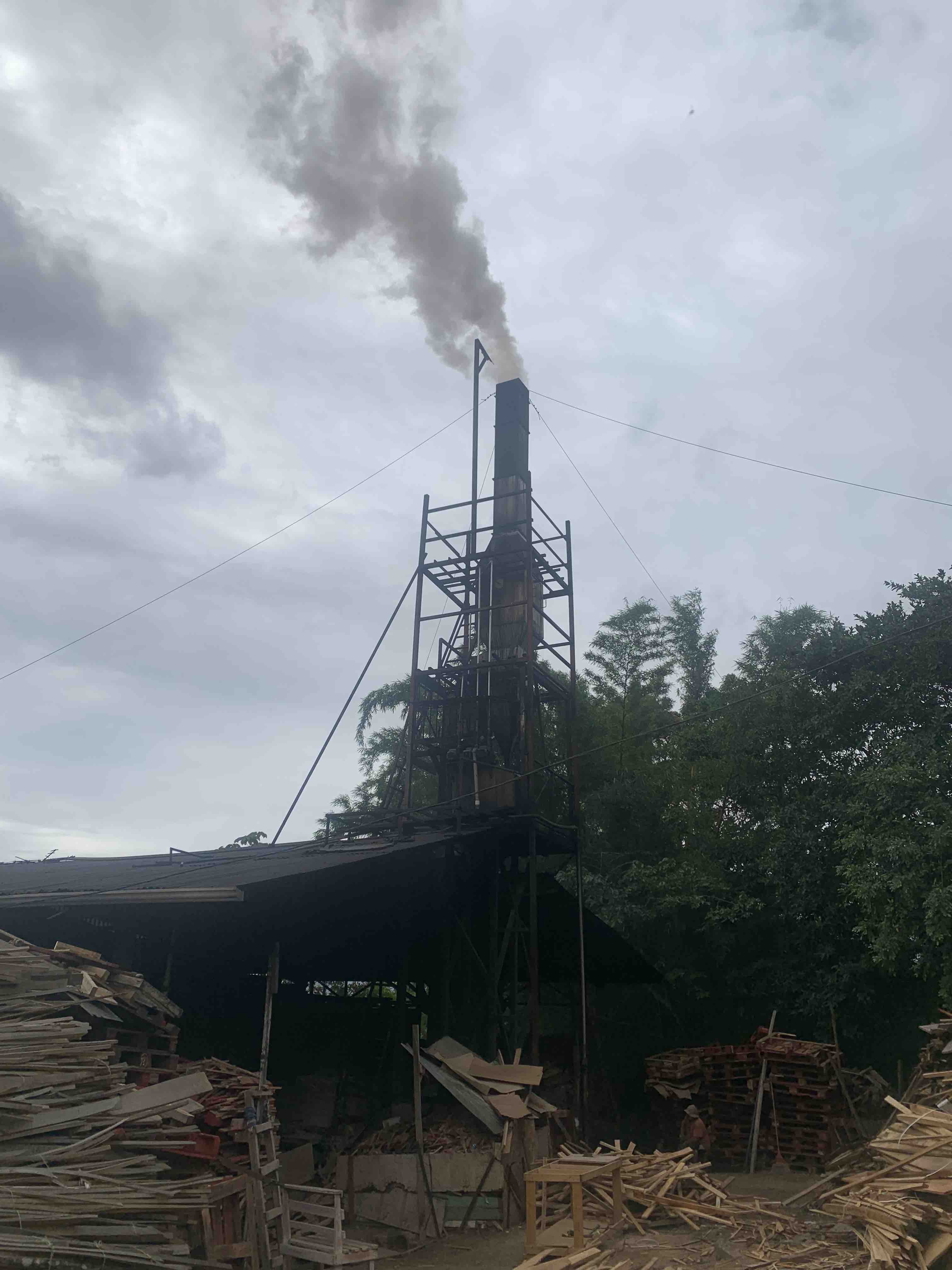
Amie and I work together, but most of my days are consumed by coffee. Especially in the March to May period, when coffee harvests are finishing and the first cuppings of the new crops are possible, my time for other activities is limited. But in June, there is more time. For the past 4+ years our shared work has included my joining her to meet artisans whose work our shops might carry. This work never disappoints, even if we conclude that the product is not a good fit for Authentica. Recently we had an afternoon together with a ceramicist we knew about, but had not yet had the opportunity to spend time with. The biggest surprise was seeing this smoke stack in the photo below.

It is rustic, and at first sight not much to look at. But listening to him tell its history you can appreciate how often in history artisans lead the way that industrialists eventually follow. This was the first smokestack in Costa Rica using technology that reduces carbon and particulate emissions. Continue reading

Pottery Tradition & Modernity

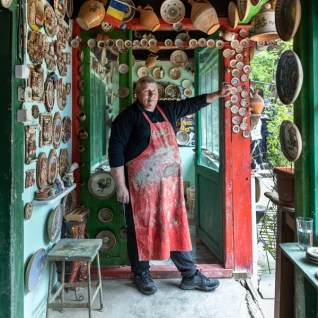
Mr. Biscu makes pieces using clay that comes from earth extracted from a hill in Horezu.

Chantel Tattoli reported this story from Horezu, Romania for the New York Times. Accompanied by photographs and video by Marko Risovic, her story is based on speaking to a dozen local potters using a translator:

A style of pottery made for centuries in a small Romanian town has recently become a hot commodity.

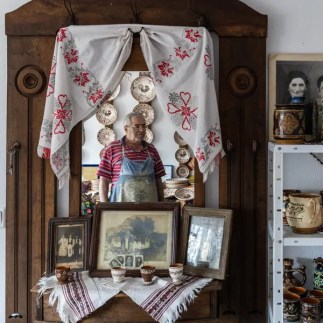
Sorin Giubega at his home, which is filled with ceramics made by him and his ancestors.

Sorin Giubega’s grandfather was a potter. So was his father. And at 8 years old, Mr. Giubega said, he started to play on a pottery wheel, too.

Mr. Giubega, now 63, and his wife, Marieta Giubega, 48, are potters in Horezu, Romania, a town in the foothills of the Capatanii Mountains about three hours by car from Bucharest.

Horezu is home to a community of about 50 artisans who make a traditional style of ceramics with methods that have been practiced for more than 300 years. Continue reading

Miyazaki, Trees & Authentic Experience

A photograph of children walking along a path in the woods. Two of them are holding hands.

The magazine sent the Japanese photographer Rinko Kawauchi to Ghibli Park on a day when it was closed to the public, and she took along her daughter and some friends. Rinko Kawauchi for The New York Times

Links to the writings of Sam Anderson have not appeared in our pages before, and I almost missed this opportunity because at first appearance this article does not fit the norm for our themes. But if you read to the end, it does so in one clear way. It has to do with the power of nature, trees in particular, and once you read the article you will understand (if you are familiar with our platform). You can also listen to an audio version of this article here, but be sure to see the photos in the original publication:

Spirited Away to Miyazaki Land

What happens when the surreal imagination of the world’s greatest living animator, Hayao Miyazaki, is turned into a theme park?

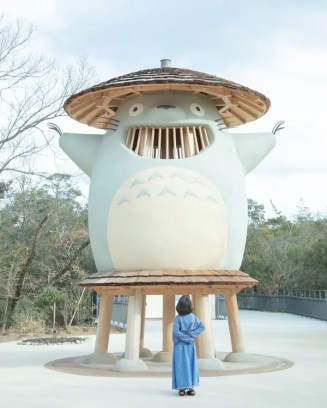
A Totoro-like climbing structure. Rinko Kawauchi

As an American, I know what it feels like to arrive at a theme park. The totalizing consumerist embrace. The blunt-force, world-warping, escapist delight. I have known theme parks with entrance gates like international borders and ticket prices like mortgage payments and parking lots the size of Cleveland. I have been to Disney World, an alternate reality that basically occupies its own tax zone, with its own Fire Department and its own agriculture — a place where, before you’ve even entered, you see a 100-foot-tall electrical pole along the freeway with Mickey Mouse ears. This is a theme park’s job: to swallow the universe. To replace our boring, aimless, frustrating world with a new one made just for us. Continue reading

11 Years, 11 Months & 11 Days Later

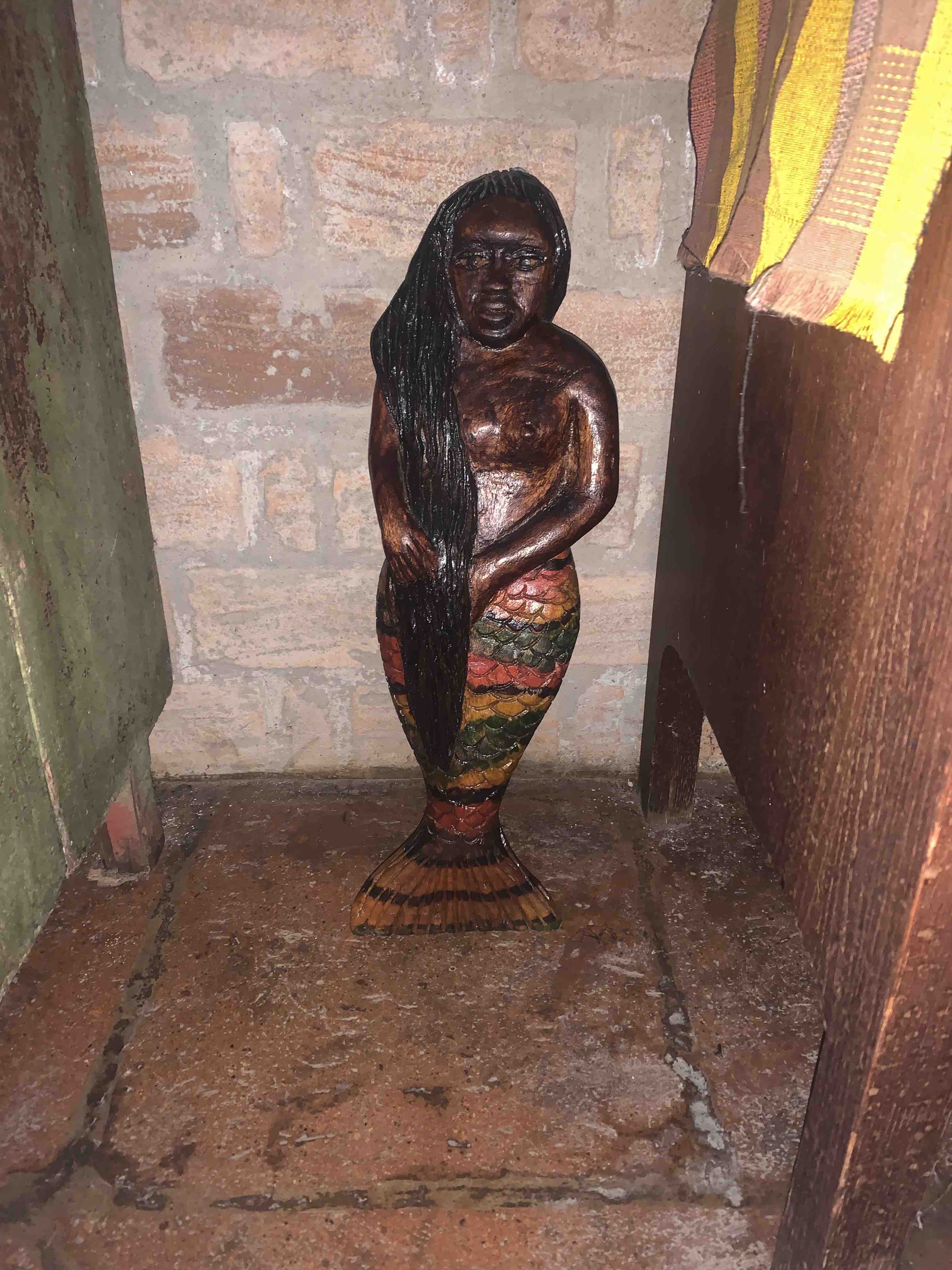
Mermaid (now in Escazu, Costa Rica), handcrafted by Rock Bottom from driftwood in Port Antonio, Jamaica

June 15, 2011 was the day we first posted on this platform, and while we have evolved since then we have remained constant and consistent in a few ways. In the daily search for something worth sharing, photos of birds from around the world have been the most constant–as in, every day since the first photo was shared by this old friend who got us started on that daily routine. Thank you, Vijaykumar, for a healthy habit-formation.

Consistent have been the shared convictions that environmental conservation, no matter how bleak the news, is worth our effort.

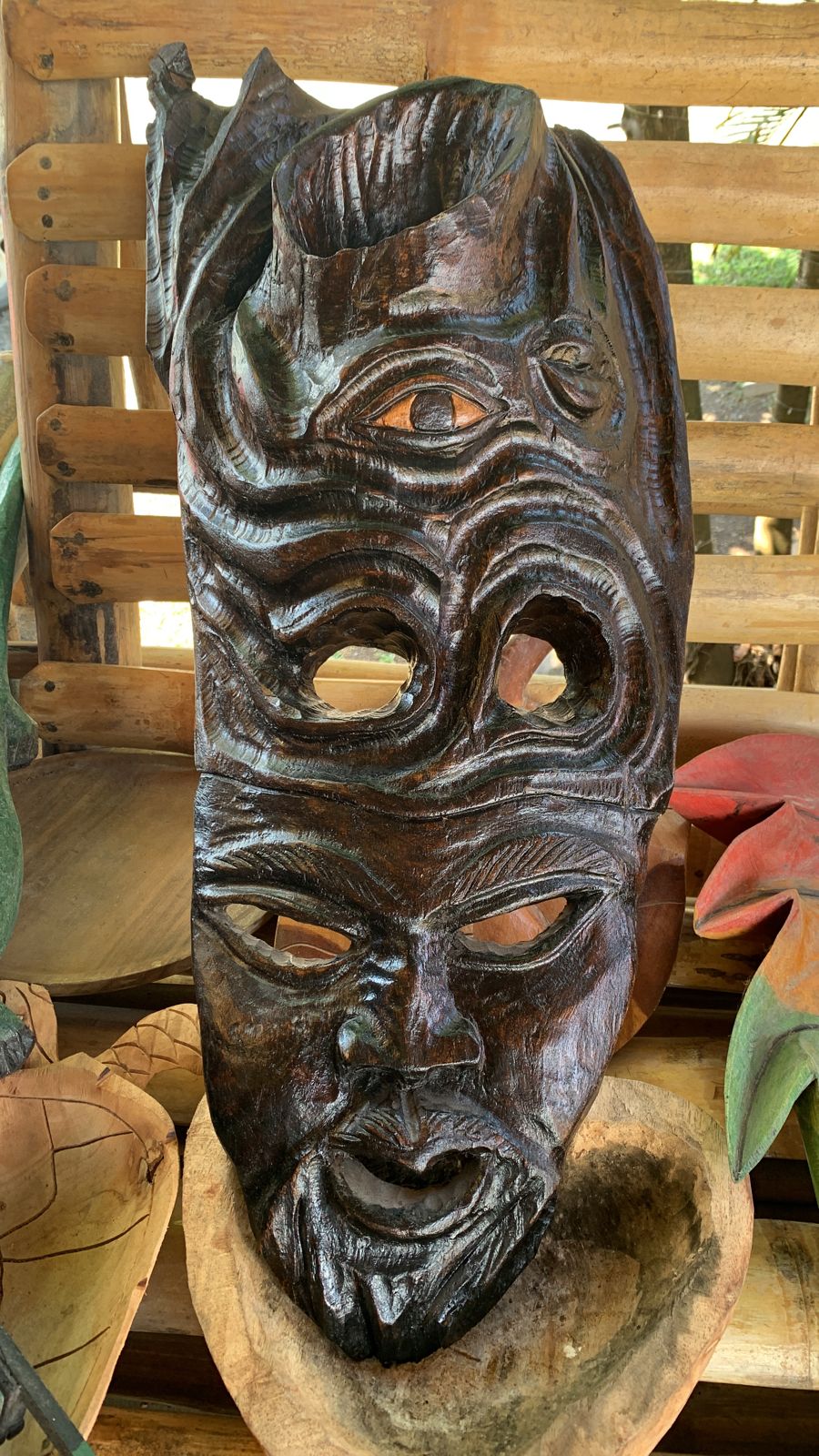
Maroon shaman mask with third eye for healing power (now in Ithaca, NY USA), handcrafted by Rock Bottom from driftwood in Port Antonio, Jamaica

Plenty more constantly interesting sub-topics like books and libraries, seemingly unrelated to the environment, have been the focus of daily posts; but they are related. As is artisan production, riffed upon many times in these pages, especially now that it is the focus of our day jobs.

So today, heading toward the twelve year mark posting here, a nod to an artisan named Rock Bottom. He carves driftwood in Port Antonio, Jamaica.

There is an effort in that part of Jamaica to revive and strengthen traditional crafts, and the work of Rock Bottom is a model for what we can hope to see more of. My hope is that the amazing engine of economic activity that Jamaica’s tourism sector represents will valorize his work and the work of others akin to his.

An Intelligible Conversation About Artificial Intelligence

Yejin Choi leading a research seminar in September at the Paul G. Allen School of Computer Science & Engineering at the University of Washington. John D. and Catherine T. MacArthur Foundation

We have shared dozens of links to stories about advances in technology–especially those with application to conservation–none has touched on artificial intelligence. During my daily scanning for articles to share in 2022 I have noticed this topic more and more as a source of fear, to the point where I stopped reading them; but today’s is different:

An A.I. Pioneer on What We Should Really Fear

Artificial intelligence stirs our highest ambitions and deepest fears like few other technologies. It’s as if every gleaming and Promethean promise of machines able to perform tasks at speeds and with skills of which we can only dream carries with it a countervailing nightmare of human displacement and obsolescence. But despite recent A.I. breakthroughs in previously human-dominated realms of language and visual art — the prose compositions of the GPT-3 language model and visual creations of the DALL-E 2 system have drawn intense interest — our gravest concerns should probably be tempered. At least that’s according to the computer scientist Yejin Choi, a 2022 recipient of the prestigious MacArthur “genius” grant who has been doing groundbreaking research on developing common sense and ethical reasoning in A.I. Continue reading

Glass Half Full, NOLA Community Recycling

This youthful organization, new to us but old enough to have proof of concept is, in their own words, crushing it:

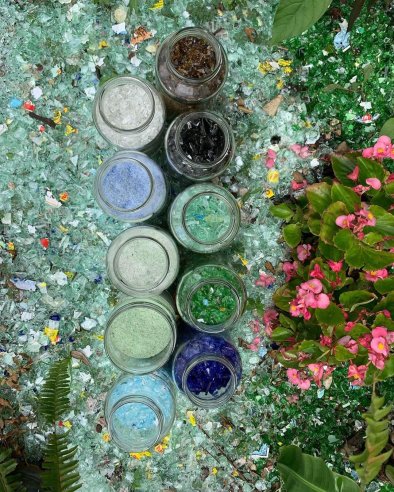
Turning glass waste into useable sand and cullet.

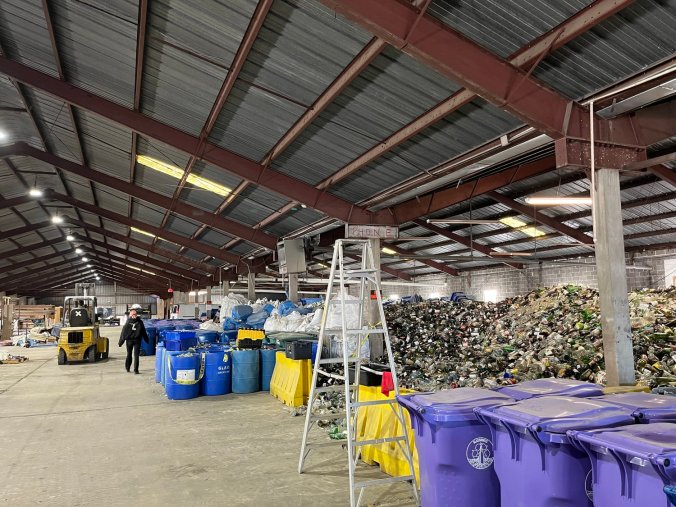
We collect and convert NOLA’s glass bottles — which have been crammed into our landfills for decades — into functional products: sand and glass cullet. These precious materials have an array of applications, from coastal restoration to flood prevention to eco-construction.

Converting glass into sand & glass cullet

Our recycling process involves diverting used glass products from landfills and sorting, sifting, and ultimately converting them into sand products ranging from super soft, beach-like sand to glass gravel. The final products are used for coastal restoration projects, disaster relief efforts, eco-construction, new glass products, and so much more. The applications for sand are truly endless.

Origami At The American Museum Of Natural History

D. Finnin/© AMNH

Folding paper was a frequent topic for us starting in 2011, but origami specifically has been featured only a few times. This holiday season at the American Museum of Natural History we add to the mentions:

The Making of the Origami Holiday Tree

One 13-Foot Tree, 1,000 Origami Models: A Spectacular Museum Tradition

M. Shanley/© AMNH

Early each year, as the days begin to get a bit longer and the first signs of spring crop up in Central Park, Ros Joyce and Talo Kawasaki, volunteers from OrigamiUSA and the designers of the Museum’s Origami Holiday Tree start planning for the year ahead.

M. Shanley/© AMNH

They begin combing the Museum’s halls in search of inspiration—going from floor to floor to decide on a perfect theme and to find just the right exhibits to re-create as origami models on the tree. Continue reading

Understanding & Reviving Games From Other Places, And Times Before

Leaving aside the question of why so many of the world’s most important historical artifacts are in London, rather than where they originated, the curator in the video above is charming. And the man in the photo just below to the right is his counterpart in the place where this particular artifact originated.  My interest in board games is much less well informed, but like Mr. Mofaq I have an interest in their revival, so Deb Amlen’s article in the New York Times is appreciated:

Hoshmand Mofaq, an Iraqi artist, pondered his next move on one of the Royal Game of Ur boards he designed. Mr. Mofaq is part of a group who hope to popularize and return the game to the Iraqi people as part of their cultural heritage. Shwan Mohammed/Agence France-Presse — Getty Images

For 4,600 years, a mysterious game slept in the dust of southern Iraq, largely forgotten. The passion of a museum curator and the hunger of young Iraqis for their cultural history may bring it back.

It is the end of a long, hot day of selling your wares in a market in ancient Mesopotamia, around 2,400 B.C., and you are looking for a way to unwind.

Netflix will not be invented for another four and a half millenniums, but as luck would have it, a pub lies ahead in the distance. A beer and a round of the Middle East’s favorite game is just the thing to pick you up. The thrill of the game is irresistible: It is impossible to predict who will win in this race to get your pieces to the end of the board, even in the last few moves.

One of the boards of the Royal Game of Ur excavated in the 1920s, on display at the British Museum. The British Museum, via Commons.wikimedia.org

You sit down across from your opponent, who offers you the first turn. You pick up the four-sided dice and shake them in your fist. Maybe this time the rumored fortunetelling aspect of the game will bless you with a spate of good luck and prosperity. Continue reading

From Wales To The Tropics, Coppice

Bundles of newly coppiced Salix viminalis – willow stems harvested during late autumn and winter each year, to create living willow structures and woven items. Photograph: Compulsory Credit: GAP Photos/Nicola Stocken

In the tropics we use coppice to make berms that support new growth and channel water, while in Wales they do other practical things; thanks to the Guardian‘s  Alys Fowler (long time no see) for pointing the latter out to us:

Coppicing is great for your garden – and gives you lots of material to play with willow stems

Apart from the enjoyment of making household items out of stems, coppicing trees and shrubs has aesthetic and eco benefits for gardens

Back in late spring when we got the keys to our new house in Wales, I quickly coppiced a huge hazel to let some light into the back of the house. Continue reading

Plus De Ce Méfait, S’il Vous Plaît

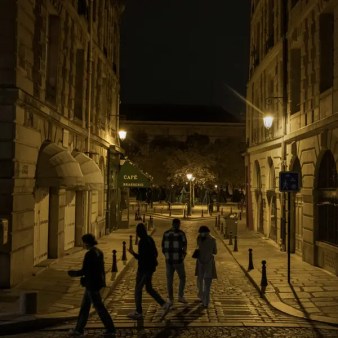
As an energy crisis looms, Paris officials have taken steps to reduce nighttime lights, as have conservation-minded Parkour practitioners. Mauricio Lima for The New York Times

We cannot presume to cheer this type of mischief anywhere else, but considering the origin story of parkour, and the incentives for activism, it seems fitting for the City of Lights:

With Leaps and Bounds, Parkour Athletes Turn Off the Lights in Paris

As an energy crisis looms, nimble young activists are using superhero-like moves to switch off wasteful lights that stores leave on all night.

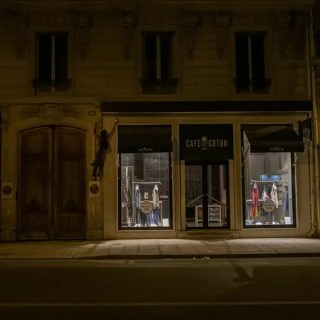
Kevin Ha extinguishing a store’s lights last month. Mauricio Lima for The New York Times

Paris— After taking a few steps back to get a running start, Hadj Benhalima dashed toward the building, pushed against its wall with his foot, propelled himself upward and stretched out his arm.

At the peak of his leap, he flipped off a light switch, more than 10 feet off the ground. A click sound rang out, and the bright lights of a nearby barbershop went off instantly.

“Oooh,” his friends cheered, as Mr. Benhalima, a thin 21-year-old dressed all in black, landed back on the sidewalk. It was the second store sign he had turned off on a recent nighttime tour across Paris’s upscale neighborhoods. Many more would follow as he soared up and dropped back down across the city. Continue reading

If You Happen To Be In New York City

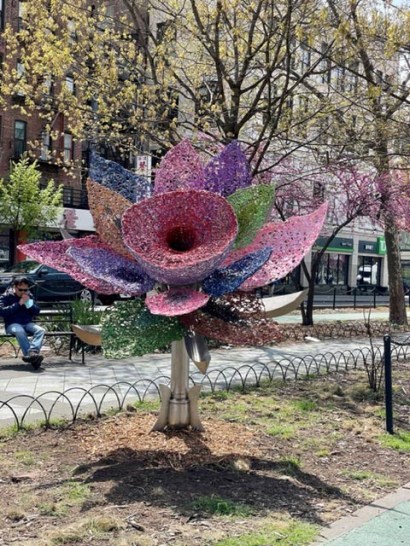
Installed in several locations on the Allen Street Malls between Broome and Hester Streets, this group exhibition features four artworks by five artists addressing themes of nature. Artists include Elizabeth Knowles and Eric David Laxman, Elaine Lorenz, Judith Peck, and Michael Wolf.

While at Cornell University last month I got my fill of early autumn florals and educational signage. While in the Botanic Gardens I was struck by a floral sculpture, a type of art I am not often moved by. But that one worked. And so, looking through the Art in the Parks section  of the New York City Department of Parks & Recreation  website,  the  image to the right caught my  attention.  And scrolling further through that collection I saw the image  below, which on a day after hurricane-driven rains  in  Costa  Rica,  with  the  morning sky clear of clouds,  hits the spot:

Naomi Lawrence, Tierra Fragil

September 25, 2022 to September 10, 2023
Morningside Park, Manhattan

Description:Tierra Fragil, depicts endangered insects and birds with the flowers and plants imperative to their survival. The mural informs and encourages the preservation of familiar species whose presence we may have taken for granted.

Tierra Fragil is made possible in part with public funds from Creative Engagement a regrant program supported by the New York City Department of Cultural Affairs in partnership with the City Council and the New York State Council on the Arts with support of the office of the Governor and the New York State Legislature, UMEZ Arts Engagement a regrant program supported by the Upper Manhattan Empowerment Zone Development Corporation and administered by LMCC. Additional funding was provided by the Friends of Morningside Park.

Lionfish Leather

A lionfish caught off Venezuela, where the authorities organise sport fishing competitions to curb the dangerous proliferation of the invasive species. Photograph: Yuri Cortéz/AFP/Getty

Lionfish came to our attention in a series of posts starting in 2014. That year we came to see that fighting this invasive species would require innovative entrepreneurial conservation methods. We published more posts and series about initiatives in the years since then, but the problem continued to grow. For some reason the stories about initiatives started fading from our attention and then stopped with a post in 2018. Now, 22 posts since the first post and four years since the last one, lionfish are back in our thoughts thanks to Inversa’s innovation:

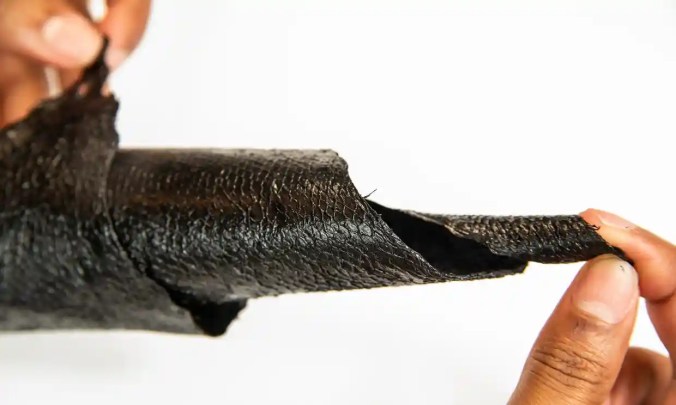
Lionfish leather. Inversa says it is helping to solve an environmental crisis by using an invasive species that eats lots of other fish but has no predators in much of its range. Photograph: Inversa

Fish leather is here, it’s sustainable – and it’s made from invasive species to boot

An avid diver saw how lionfish have devastated populations of Florida’s native tropical fish and resolved to help solve the problem

Aarav Chavda has been diving off the coast of Florida for years. Each time he became increasingly depressed by the ever-growing void, as colourful species of fish and coral reefs continued to disappear. Continue reading
Hotel-ish Homes For Birds, Brooklyn Botanic Garden

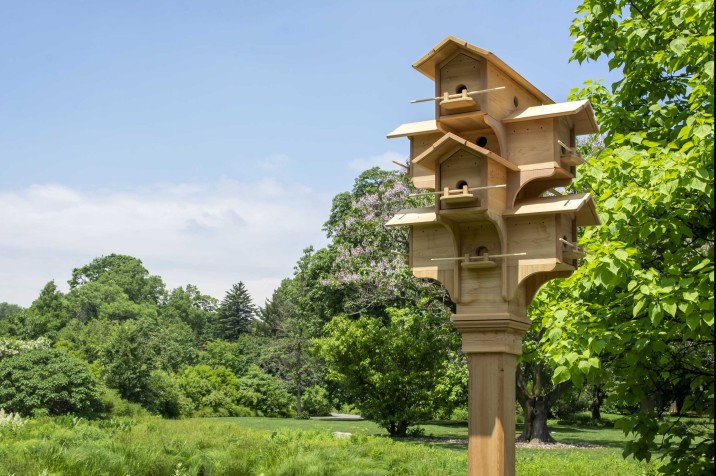
Artist-made birdhouses are installed throughout the Garden as part of For the Birds. Use the exhibition map or scan the list below to explore!

Zach Helfand gives us a quick sketch of what happens when celebrities, and celebrity architects, collaborate on behalf of birds. When you next have the opportunity to visit the Brooklyn Botanic Garden, keep this initiative in mind:

To benefit the Audubon Society, “For the Birds,” a COVID passion project, brings together ornithophiles and artist-designed birdhouses, including a 12BR Apt, A/C, No Elv, Vus.

100 Martin Inn birdhouse on location at Brooklyn Botanic Garden.

The recent housing market has brought about ruinous price increases, a bidding war over a fifth-floor walkup studio with no oven, and enough of a civic exodus for the Post to declaim, earlier this month, “listen up, new york—florida sucks, and you’ll all be back in five years.” But that doesn’t mean deals can’t be had. Take a unit that just went on the market. It’s a newly built architect-designed twelve-bedroom in shall we say Crown Heights, with finishes by a master carpenter and three-hundred-and-sixty-degree views of Prospect Park. Continue reading

Guided Forest-Bathing In The Loire Valley

The tree houses at Loire Valley Lodges are spread out throughout the forest and each is decorated by a different artist. Joann Pai for The New York Times

After several days of heavier fare, today’s recommended reading leans to the escapist:

Beyond the Châteaux: New Escapes in France’s Loire Valley

Rethinking what the region’s travel should be has meant expanding the focus from fairy tale castle crawls to experiences anchored more firmly in nature, food and the arts.

The Loire Valley is a UNESCO Heritage-protected region, and drew in 9 million yearly visitors to its cultural sites before the pandemic. Joann Pai for The New York Times

On my last prepandemic trip to the Loire Valley, in 2018, I found myself in a familiar place.

Ten years after my first road trip on the region’s castle route, I was back at the 500-year-old Château de Chambord, joining a small group of European and American tourists on a guided tour. Within seconds of convening in the inner courtyard, we were craning our necks to marvel at the structure’s ornamental bell towers as our guide rattled off facts and dates about King Francis I and his former hunting lodge. When she ushered us up to the towers, chiding us for not listening, a feeling of deja-vu washed over me. Continue reading