Learning To Appreciate Wasps

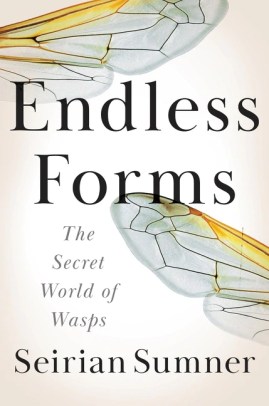
Wasps are one of the least appreciated creatures on the planet, but we have always suspected they deserve some respect. We just never investigated why that might be the case. So, our thanks to the Guardian for bringing this book to our attention in an article titled Why we should all love wasps:

Wasps have always had a bad press. But Dr Seirian Sumner, who has spent her life studying them, argues they are sophisticated, socially complex and essential to the environment

In The Wasp Woman, a 1959 B-movie directed by Roger Corman, the owner of a failing cosmetics company becomes the test subject for a novel anti-ageing formula manufactured from the royal jelly of wasps. Continue reading

Guided Forest-Bathing In The Loire Valley

The tree houses at Loire Valley Lodges are spread out throughout the forest and each is decorated by a different artist. Joann Pai for The New York Times

After several days of heavier fare, today’s recommended reading leans to the escapist:

Beyond the Châteaux: New Escapes in France’s Loire Valley

Rethinking what the region’s travel should be has meant expanding the focus from fairy tale castle crawls to experiences anchored more firmly in nature, food and the arts.

The Loire Valley is a UNESCO Heritage-protected region, and drew in 9 million yearly visitors to its cultural sites before the pandemic. Joann Pai for The New York Times

On my last prepandemic trip to the Loire Valley, in 2018, I found myself in a familiar place.

Ten years after my first road trip on the region’s castle route, I was back at the 500-year-old Château de Chambord, joining a small group of European and American tourists on a guided tour. Within seconds of convening in the inner courtyard, we were craning our necks to marvel at the structure’s ornamental bell towers as our guide rattled off facts and dates about King Francis I and his former hunting lodge. When she ushered us up to the towers, chiding us for not listening, a feeling of deja-vu washed over me. Continue reading

Indigenous Knowhow & Conservation

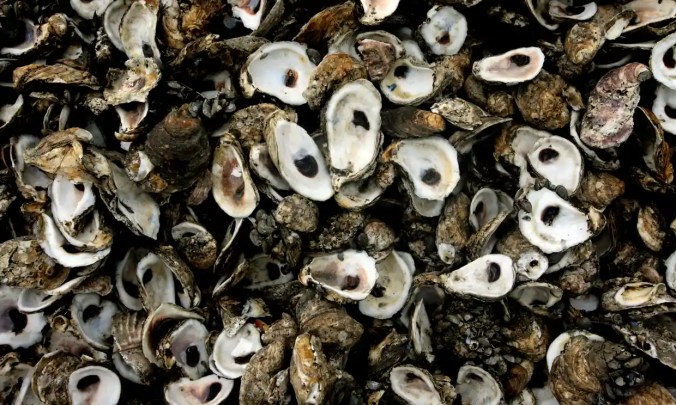
Prof Ian McNevin said ‘the scale of Indigenous oyster harvesting is extraordinary’, and compared it to contemporary commercial oyster farms. Photograph: Orjan F Ellingvag/Corbis/Getty Images

Some of us writing in these pages have been fans of oysters primarily for their culinary value (living in France, and then later in Croatia, could create such bias). But we have posted more frequently about the resiliency that oysters have come to represent in the search for protection against climate impact. Here is some more on that topic, intersecting with another theme we pay frequent attention to:

Precolonial First Nations oyster fisheries sustained millennia of intense harvests, study shows

Researchers in Australia and North America say management of oyster reefs should incorporate Indigenous knowledge

Oyster fisheries in Australia and North America survived for up to 10,000 years prior to colonisation, sustaining First Nations communities even under intense harvest, according to new research. Continue reading

Unexpectedly Amazing In Kerala

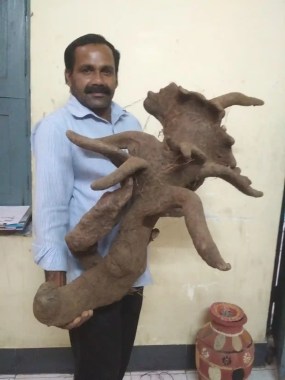
Shaji has a prized collection of more than 200 varieties of tubers. Photograph: Shaji NM

In our Kerala days we visited Wayanad many times, but I would remember if I had met Shaji. We would have sought his advice to expand on the agricultural initiatives at the properties we developed and managed.  Monika Mondal’s story ‘The tuber man of Kerala’ on a quest to champion India’s rare and indigenous crops brings back memories of unassuming neighbors doing unexpectedly amazing things:

Shaji NM has devoted his life to collecting and farming tubers such as yam, cassava and taro, and promoting them across the country

Shaji NM has spent the past two decades travelling across India to collect rare indigenous tubers. Photograph: Shaji NM

Known as “the tuber man of Kerala”, Shaji NM has travelled throughout India over the past two decades, sometimes inspecting bushes in tribal villages, at other times studying the ground of forests closer to home among the green hills of Wayanad in Kerala. His one purpose, and what earned him his title, is to collect rare indigenous varieties of tuber crops.

“People call me crazy, but it’s for the love of tubers that I do what I do,” says Shaji. “I have developed an emotional relationship with the tuber. When we did not have anything to eat, we had tubers.” Continue reading

More On Seed Banks

We have featured these banks before, but they are worthy of a more detailed inside look.

So, thanks to by Salomé Gómez-Upegui, Rita Liu and the Guardian. Their article, Seed banks: the last line of defense against a threatening global food crisis is full of images and written descriptions that put these banks in better perspective:

As climate breakdown and worldwide conflict continue to place the food system at risk, seed banks from the Arctic to Lebanon try to safeguard

As the risks from the climate crisis and global conflict increase, seed banks are increasingly considered a priceless resource that could one day prevent a worldwide food crisis. Continue reading

Convivial Conservation

Click on this image to go to the page where the illustrative video about convivial conservation is embedded

New to me, but not new, is this pairing of words that have a magical ring to them when said together:

Convivial Conservation

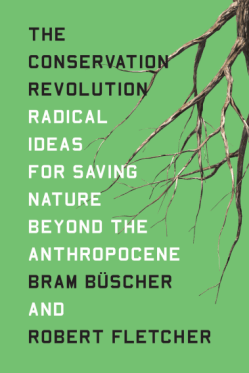
Convivial (literally: ‘living with’) conservation offers a new and integrated approach to understanding and practicing environmental conservation. It is a Whole Earth vision that responds to the major ecological, social and political-economic challenges facing people and biodiversity in the 21st century

Click on the image above to watch a short video introducing the concept, and click to the right to read more about the book. Click here to read more about ongoing research on this topic. Anyone following our posts on this platform for the last decade+ will have seen a different pair of words frequently used–sometimes related to biodiversity and other times related to culture. Now that I have let this other word pairing have some space in my day, I expect to see the words more frequently in these pages.

Maori Tree-Saving

Tourists visiting Tāne Mahuta, the largest known kauri tree, in Waipoua Forest in New Zealand. The tree is named for a god in Māori mythology. Ruth Mcdowall for The New York Times

A former kauri ambassador blowing a conch shell near Tāne Mahuta. There’s hope among advocates that Māori-led interventions have created enough time for scientists to save the kauri. Ruth Mcdowall for The New York Times

Thanks to Pete McKenzie for this story, How Maori Stepped In to Save a Towering Tree Crucial to Their Identity, in the New York Times:

Tāne Mahuta, an ancient tree named after the god of forests in Māori mythology, is threatened by the slow creep of an incurable disease.

WELLINGTON, New Zealand — In an ancient grove in northern New Zealand, the mighty conifer known as Tāne Mahuta, lord of the forest, is threatened by the encroachment of a deadly enemy. Continue reading

Aesop’s Animals Reviewed In Undark Magazine

An illustration from “Aesop’s Animals” by Hana Ayoob.

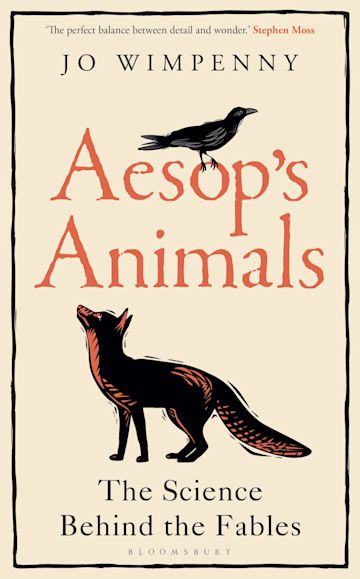
The fables attributed to Aesop were mentioned twice in posts in our pages during our first year. Again the following year. And plenty of times since then. But there is plenty more to say about the menagerie, and a new book takes on that task. Dan Falk offers this Book Review: The Science Behind Aesop’s Menagerie in Undark Magazine (click the image above or the title below to read the entire review at the source):

Aesop’s Animals coverIn “Aesop’s Animals,” zoologist Jo Wimpenny provides a guided tour of animal behavior drawn from the classic fables.

SEVERAL CHAPTERS into “Aesop’s Animals: The Science Behind the Fables,” zoologist and science writer Jo Wimpenny explains that, as a very young girl, she sometimes wanted to be a dog. (In a footnote she credits growing up in Wales for encouraging her “to think outside the box.”) This childhood fantasy, as the reader can readily imagine, involved crawling along the ground on all fours. But that only gets one part-way toward doghood, as the grown-up Wimpenny would come to realize. Continue reading

Something In The Air For Onetime Mining Communities

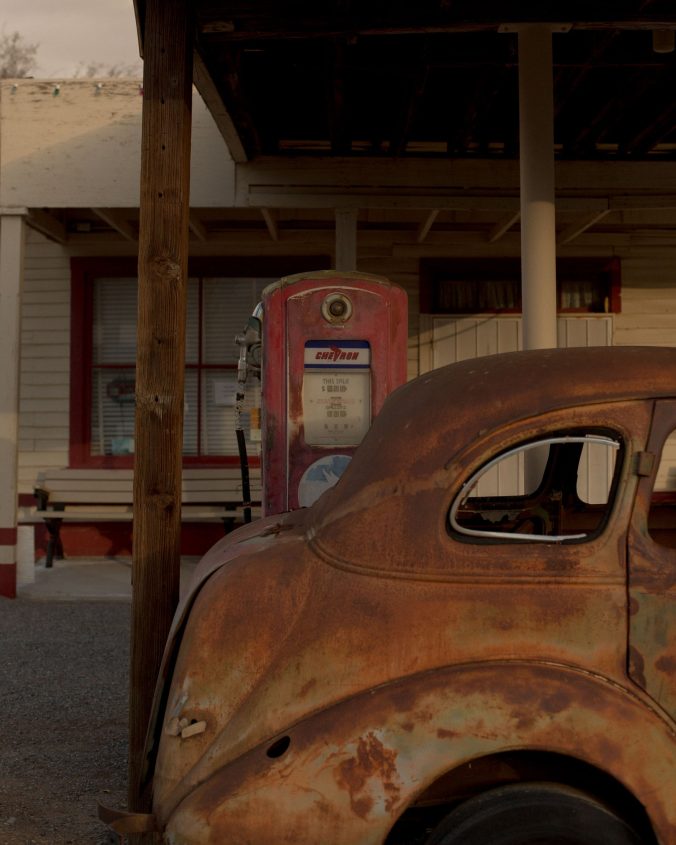
The Shoshone Museum documents the town’s scrappy past as a mining community.

When Alex Ross, a music critic, wanders from criticism to commentary or into especially unexpected territory, it is always for good reason. He clearly has a love of desert ecosystems. His most recent publication intersects desert ecosystem with a deserted mining community. It reaches me just after yesterday’s link to a model for improving the prospects of a coal extraction community, so there is something in the air:

The Queen of the Desert

How Susan Sorrells transformed a Death Valley mining village into a model of ecologically conscious tourism.

For mile after mile along California State Route 127, a two-lane desert road, there are no services, no homes.

Next services 57 miles” reads a sign at the southern end of California State Route 127, which goes from the Mojave Desert town of Baker up to the Nevada border, skirting the edge of Death Valley National Park. It’s one of those two-lane desert roads that slices across the landscape like a never-ending airport runway. There’s an extended stretch that consists of a long downward slope followed by an equally long ascent. If you’re driving at night, the headlights of cars coming in the opposite direction float above one another in midair, like planes waiting to land. But cars are infrequent. For mile after mile, there are no services, no homes. Continue reading

Making Things, Giving Things & Keeping Things

A northern fulmar in flight near Boreray, an uninhabited island in the archipelago of St. Kilda. Photograph by Philip Mugridge / Alamy

Last week I read an essay explaining the allusive power that human-made objects can have. It got me thinking about St. Kilda. Reading four years ago about that place and its people spurred my imagination sufficiently that the following year I committed to a challenge. The challenge was created by the speed of change impacting travel culture, and the tendency of travel retail to homogenize over time.
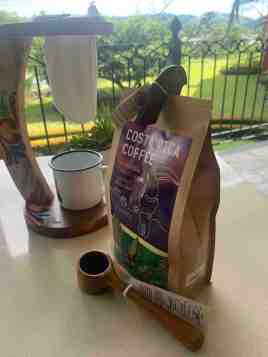
Things you might see in the Authentica shops

Local artisans all over the world were finding their goods displaced in shops oriented to travelers by things made in faraway factories.

Specifically, the commitment was to support local artisans by creating a venue for selling their goods to travelers. Perhaps utopian is a concept too big to apply to this commitment; anyway, maybe the word quixotic is more apt. Authentica offers human-made things for travelers to take home with them, within the context of a travel-retail complex that operates with very different resources and intent.

We understand why the replicas are made, and why people buy them. We refuse to confuse understanding with acquiescence.

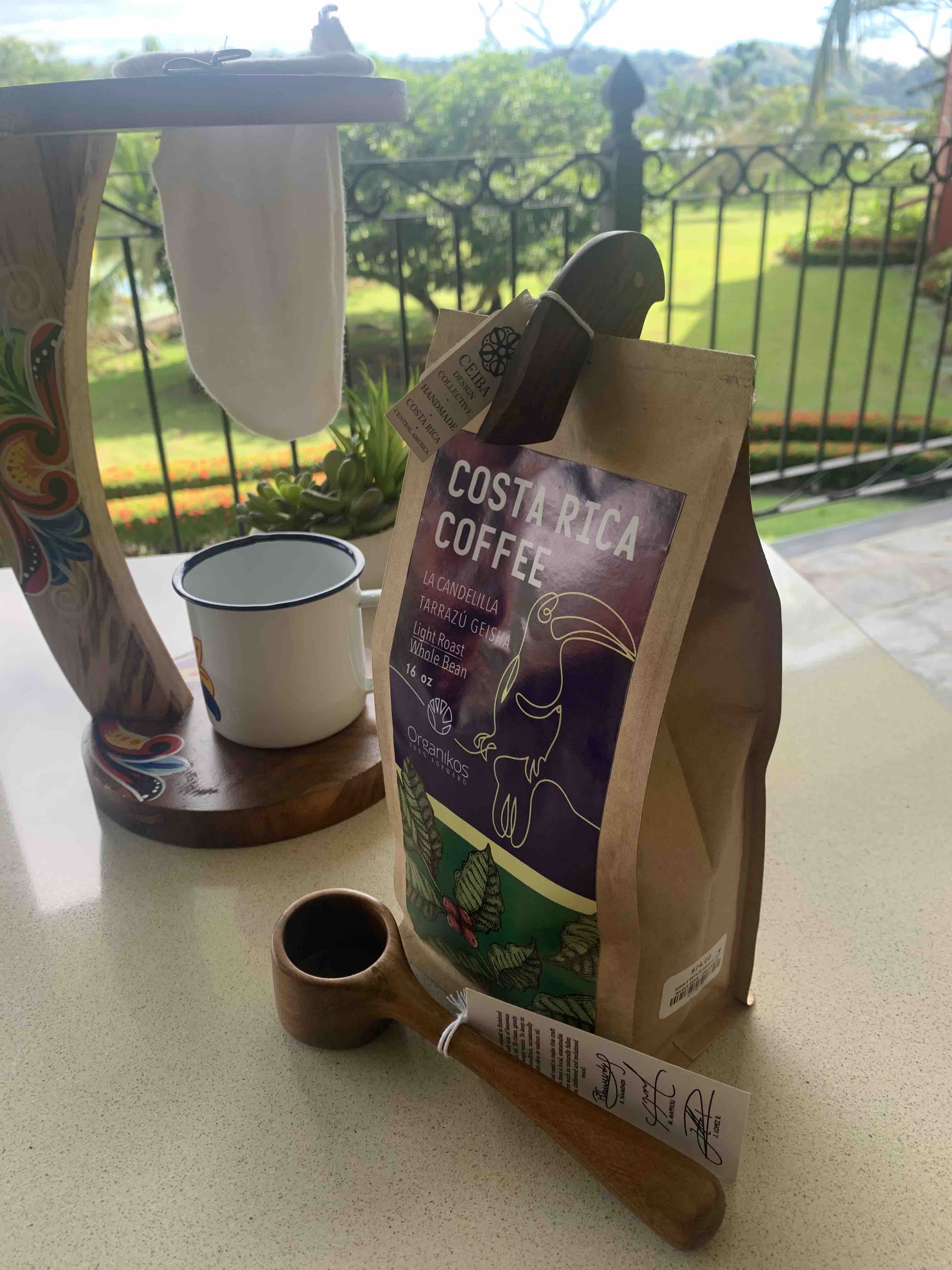
The scoop and the bird clip in the image above, two such things I also wrote about two years ago, are examples of local culturally relevant artifacts that we hope will not be outsourced to a factory in another part of the world. The coffee in that image is another example, with a twist. What I like about coffee as a memento is that it is at the intersection of tangible and intangible. It is quintessentially Costa Rican, but once you enjoy the entire bag you no longer possess that thing. As you consume it, it tells you something about Costa Rica. When it is finished you possess a memory of the coffee, and of Costa Rica.
Arctic Heroes

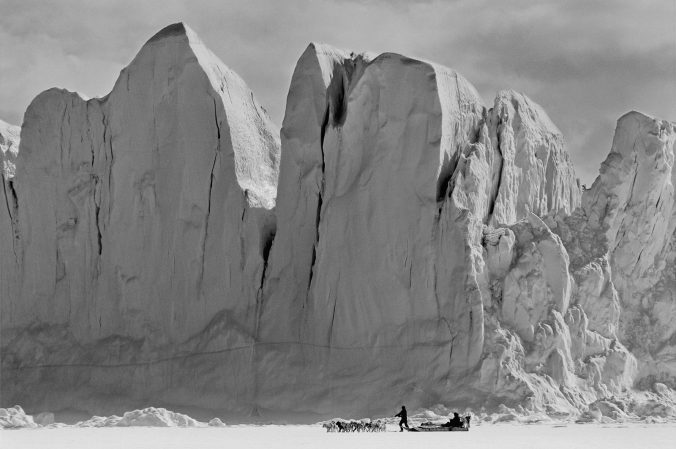
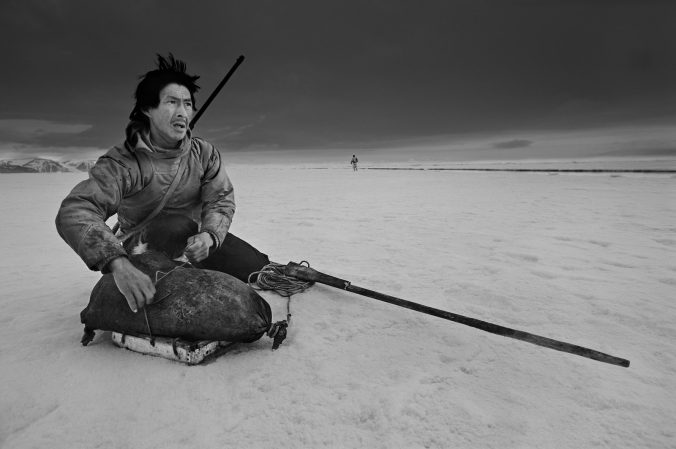
The book is not new, but it is new to us. Ben Taub has brought to our attention this stunning portraiture that, like most great photography, makes you wonder how the artist got the composition just so:

Ragnar Axelsson

The Fading Ways of Indigenous Arctic Hunters

Ragnar Axelsson

Ragnar Axelsson’s portraits from Greenland reveal the effects of climate change on ice floes, sled dogs, and a traditional culture.

During springtime in the far, far north—when the sun breaches the horizon, after months of total darkness—indigenous Greenlandic hunters head out to frozen inlets and get lost in ice and time. By day, the hunters might move miles in one direction, while the ice under their feet floats gently in another. Continue reading

Historians As Climate Sleuths

The Leshan Giant Buddha in Sichuan, China, a relic of the Tang dynasty, which collapsed in 907 A.D. amid changes in the climate. ZHONG ZHENBIN / ANADOLU AGENCY / GETTY IMAGES

Thanks to Jacques Leslie

Climate Clues from the Past Prompt a New Look at History

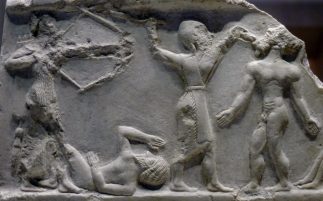
A fragment from a sculpted stele, an artifact of the Akkadian Empire, which collapsed in the 22nd century B.C. amid a severe drought. MBZT VIA WIKIPEDIA

As scientists rapidly improve their ability to decipher past climate upheaval through ice cores and other “proxies,” historians are re-examining previous political and social turmoil and linking it to volcanic eruptions, prolonged droughts, and other disturbances in the natural world.

Joseph Manning, a Yale University professor of ancient history, likes to recall the moment when he was shown an advance copy of a scholarly paper that pinpointed the timing of major volcanic eruptions over the last 2,500 years. As he read the paper, “I literally fell off my chair,” he said recently.

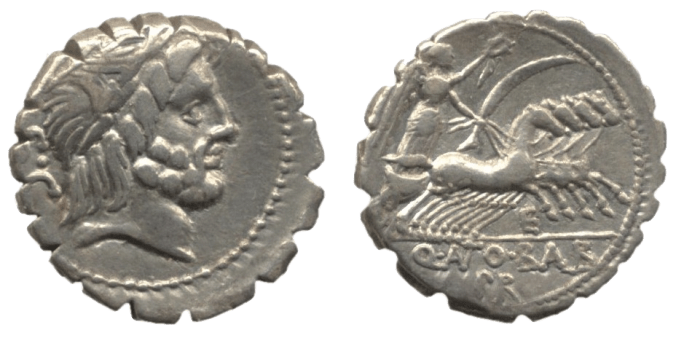
Roman coins dating to 82 B.C. Lead from smelting such coins has been found in faraway ice cores, offering clues about Roman history. CARLOMORINO VIA WIKIPEDIA

Relying on new geochemical techniques for analyzing ice core sediment to determine the dates of ancient volcanic activity down to the year or even season, the paper, published in Nature in 2015, showed that major eruptions worldwide caused precipitous, up-to-a-decade-long drops in global temperatures. Continue reading

Tamil Nadu, Rice, Identity

In the early days of our posting here south Indian rice was a staple in our meals, and we knew that this now global foodstuff had a long history in other cultures. But it looks like the state neighboring where we lived may have found a clue to how much longer they have had rice in their diet:

An ancient rice bowl complicates the story of civilisation in India

In Tamil Nadu, archaeology is part of a contest over history and identity

Rarely can a spoonful of rice have caused such a stir. When M.K. Stalin, chief minister of Tamil Nadu, addressed the south Indian state’s legislature on September 9th, he celebrated a musty sample of the country’s humble staple. Carbon dating by an American laboratory, he said, had just proved that the rice, found in a small clay offering bowl—itself tucked inside a burial urn outside the village of Sivakalai, near the southernmost tip of India—was some 3,200 years old. This made it the earliest evidence yet found of civilisation in Tamil Nadu. The top duty of his government, the chief minister triumphantly declared, was to establish that the history of India “begins from the landscape of the Tamils”. Continue reading

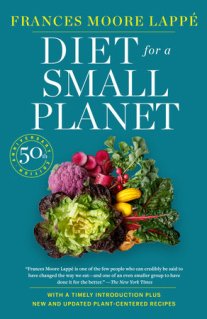
Diet For A Small Planet, Five Decades And Counting

Moosewood has been mentioned, along with its cookbooks, and we have featured plenty of other stories about veg-forward diets and related cookbooks; so it is odd that neither this book nor its author have featured in our pages before. Just in time to celebrate five decades, a fitting tribute to its author:

Frances Moore Lappé’s last hamburger was in 1971, the same year she published “Diet for a Small Planet,” her hugely influential book about food and sustainability, which virtually created the publishing category of food politics and turned Ms. Lappé into what she once self-deprecatingly called “the Julia Child of the soybean circuit.” Continue reading

Yemenis, Coffee & Entrepreneurship

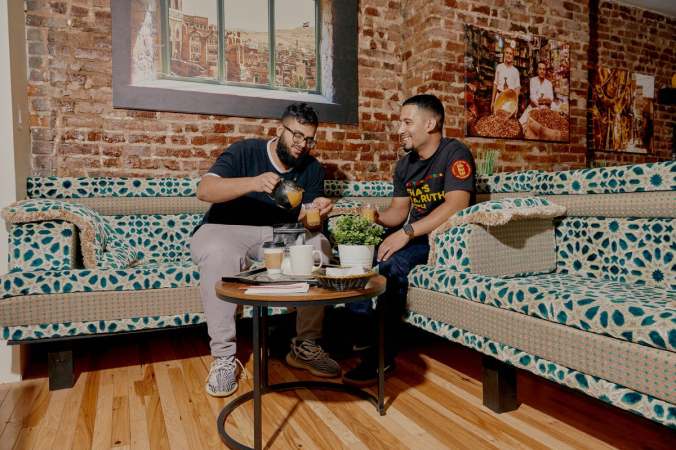
Wisam Alghuzi, left, and Jab Zanta at Diwan, their cafe on Atlantic Avenue in Brooklyn. Vincent Tullo for The New York Times

Yemeni coffee entrepreneurs have graced our pages a couple times before.  We do not tire of these stories, wherever they may originate:

Second-generation Yemeni entrepreneurs in Brooklyn want to reclaim their role as the purveyors of the original specialty coffee.

Hakim Sulaimani roasting coffee at Yafa Cafe in Sunset Park, Brooklyn. Vincent Tullo for The New York Times

Hakim Sulaimani remembers exactly where he was when he first heard that his homeland, the poorest country in the Middle East, had invented one of the most popular drinks in the world.

He was sitting in the living room (which was also his bedroom) in his family’s apartment in Brooklyn, watching a children’s show on public television. When someone on the show said that coffee came from Yemen, Hakim was stunned. He had never heard anyone outside his community say anything about Yemen before, let alone something that made him proud. “I was super-hyped,” he recently recalled. “Super-giddy.” Continue reading

Quirky, Old-School Enterprise Versus Doom

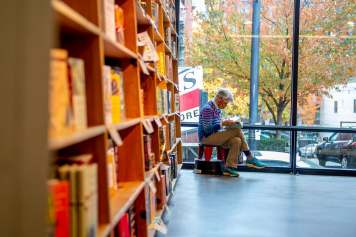
Powell’s anticipated that every part of its business would need to be closed, but then quickly realized that it could continue operating the warehouse. Amanda Lucier for The New York Times

We have used the word doom in a post title on four previous occasions, most recently this one. Doomsaying is not our goal here, but when it comes to the environment, particularly climate change, sometimes no other word will do.

A customer in Powell’s flagship store downtown. Amanda Lucier for The New York Times

On this fifth occasion I use the word just as seriously, but without reference to environmental challenges.  This book retailer has been on the front lines of one of the other big dangers I have had my eye on, and I am thankful to Peter S. Goodman for this account of their approach to survival:

Powell’s Books Survived Amazon. Can It Reinvent Itself After the Pandemic?

As much as any city, Portland, Ore., has been through hell. Its landmark store, Powell’s Books, must finally build a viable online business while recapturing its downtown success.

Powell’s anchors a once dicey neighborhood now dotted with glass-fronted condos and furniture boutiques. Amanda Lucier for The New York Times

PORTLAND, Ore. — Over its half-century in the heart of Portland, Powell’s Books has survived an unending array of foundational threats — the oft-anticipated death of reading, the rise of Amazon, the supposedly irretrievable abandonment of the American downtown.

None of that provided preparation for the tumult of the past two years. Continue reading

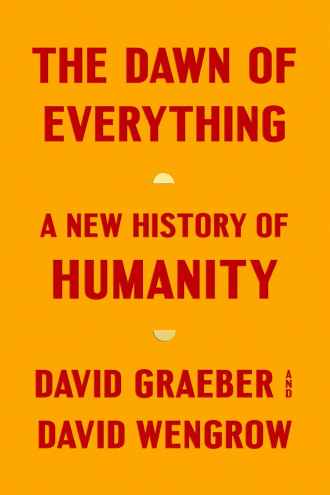
The Dawn Of Everything

Occupy Wall Street never showed up in these pages until now, which is maybe too late. I recall visiting Zuccotti Park in late 2011, to observe more than to occupy. I remember a box of books, many young people and some my own age, and a palpable sense of purpose combined with a pretty straightforward logic. Also, tranquil. That ballerina meant something. But I could not stay. I was in New York on a very brief visit. I have the opposite of anarchist beliefs and my understanding at the time was that the animating philosophy had something to do with anarchy.

I shared views with Occupy Wall Street in opposition to historic inequalities that I could see as a ticking time bomb. But my time that day was limited. I had to leave. No regrets. Until now, perhaps. Maybe I should have stayed. This book, which I have now read several reviews of, gives me reason to wonder. That protest was the brainchild of someone who then spent a decade producing a book to offer a very different view of human history:

…The Big History best-sellers by Harari, Diamond and others have their differences. But they rest, Graeber and Wengrow argue, on a similar narrative of linear progress (or, depending on your point of view, decline). Continue reading

Roses In The Cloister

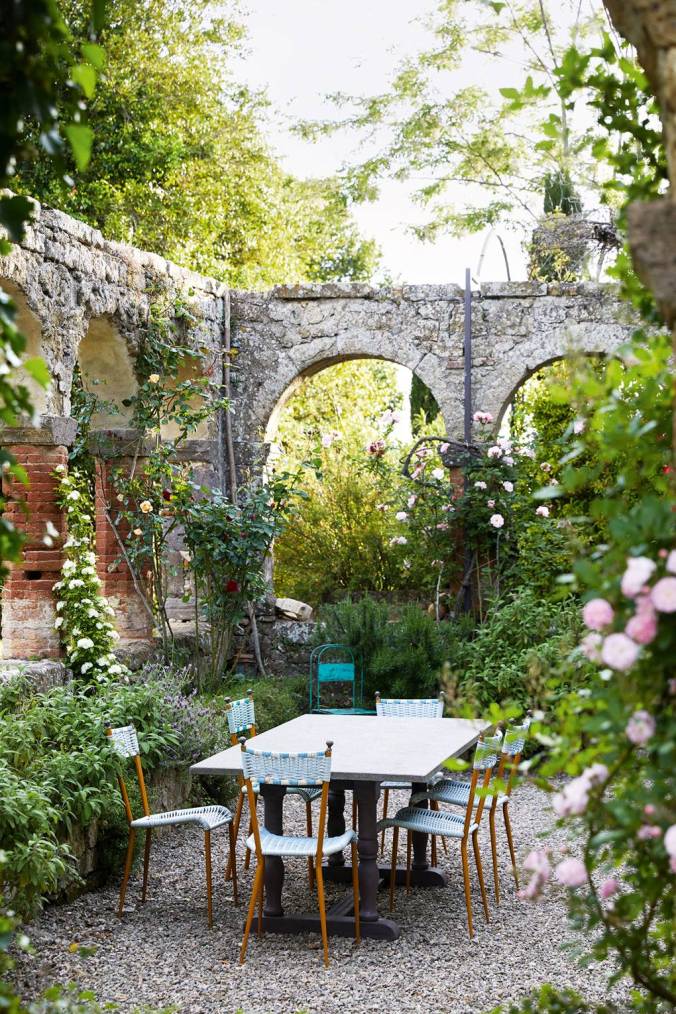
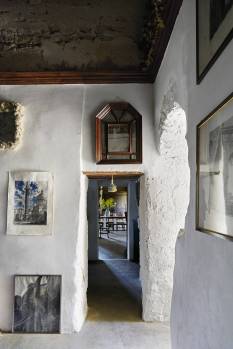
Roses in the cloister.   SIMON WATSON

Yesterday’s post linked to earlier ones with rose references, and one of those led me to a small correction. The photo above shows a slightly different angle on the roses in the garden of the restored convent. I had assumed those roses were very old. A bit of sleuthing led me to the fact that they were planted during the restoration, and they are “indeed quite perfumed.” For that and other reasons it is worth taking another look at that project, this time told by Olinda Adeane and with excellent photos by Simon Watson:

A mother & daughter’s restoration of a 16th-century Tuscan convent

A mother-and-daughter design duo has taken an unconventional approach to the conversion of a sixteenth-century convent in Tuscany, filling the rooms with objects and artworks of their own making.

In the library, hand-coloured prints stand out against the white walls. SIMON WATSON

Henry James once described his friend Edith Wharton as a ‘great and glorious pendulum’ swinging back and forth across the Atlantic. In a similar fashion, Holly Lueders, a designer from New York, has returned to Greece every year since she first visited the country as an 18-year-old student. Holly grew up in a sleepy town in Missouri with little in the way of culture or local craft, but her family was artistic and good with their hands. ‘Anything we wanted, we made for ourselves,’ remembers Holly. She studied art history and archaeology at Columbia University and completed her studies in Athens. Continue reading

Admiring A Horticultural Refuge

Stella Kalinina

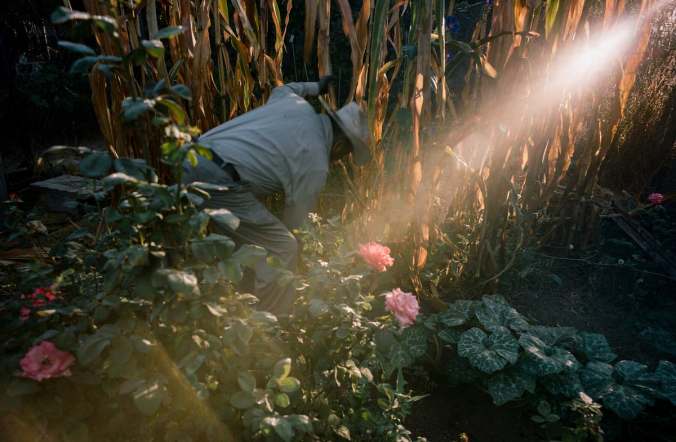
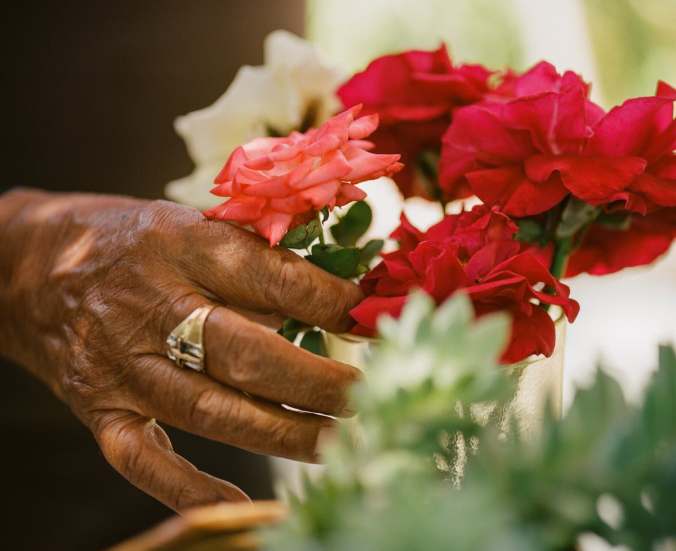
Community gardens have been a regular topic in our pages over the last decade. We never tire of the subject. I personally have a soft spot for roses, especially those found in unexpected places. So, Raúl Laly Fernández, you are my hero. I hope that the next time I am in Los Angeles I will find you in this garden and bear witness to the rose wonders I see in these photographs. Kudos to the writer/photographer Stella Kalinina for capturing this intersection between immigrant culture, working class refuge, and horticultural knowhow:

Mr. Fernández decorates a sitting area in his plot with roses that he grows.

In Los Angeles, Glimpses of an Oasis With Deep Immigrant Roots

The San Pedro Community Gardens have provided physical and spiritual nourishment for the past half a century to multiple generations of immigrant Angelenos.

Kimberly Mentlow received a plot in San Pedro after three years on a waiting list. “Being able to plant something or see something grow — it’s extremely therapeutic,” she said.

Ten minutes from my home, next to a decommissioned landfill, a freeway and the largest port in the country, sits an unlikely hillside oasis of vegetables and fruit trees.

Emerging like a mirage from its surroundings, the San Pedro Community Gardens occupy a six-acre parcel of city-owned land in the otherwise highly industrialized area of the blue-collar harbor community of San Pedro, in Los Angeles. Continue reading

Auténtica @ Authentica

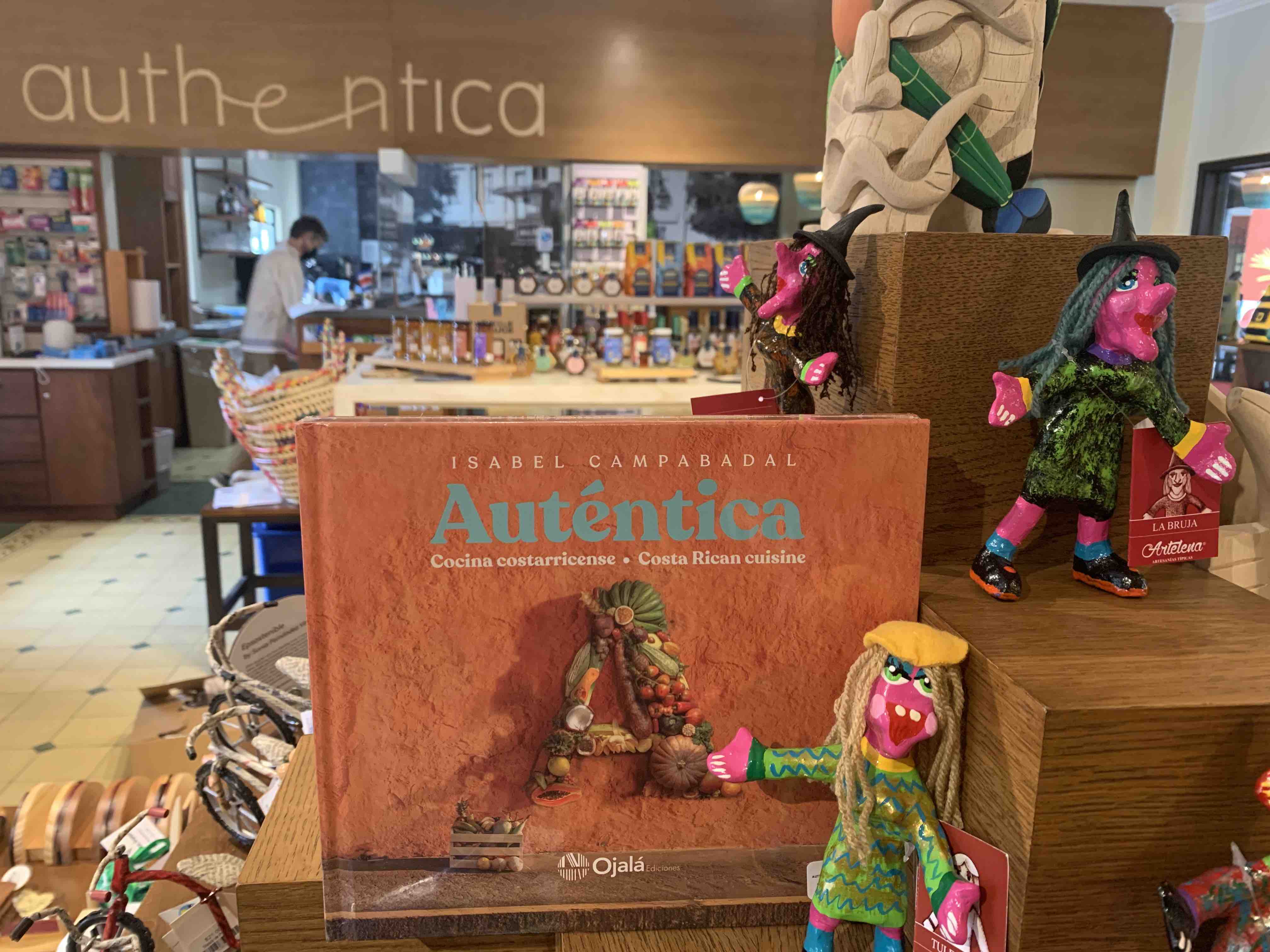
We have just placed these books on display in the two Authentica shops in Costa Rica, one at Marriott Los Suenos and the other at Marriott Hacienda Belen. The author, Isabel Campabadal, has been an author and chef for nearly five decades, and is a perfect fit with one of our aims as merchants: respect traditions and respectfully update them with all that the modern world offers.