Tree Core Samples & Age Estimations

Tree cores Harvard Forest

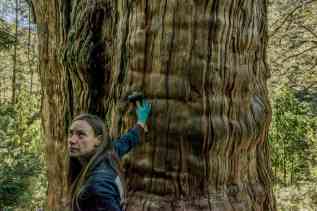
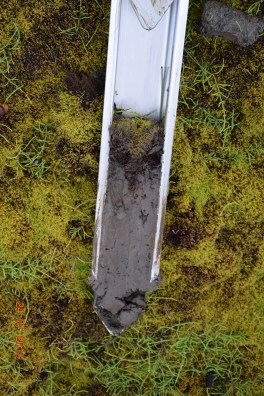
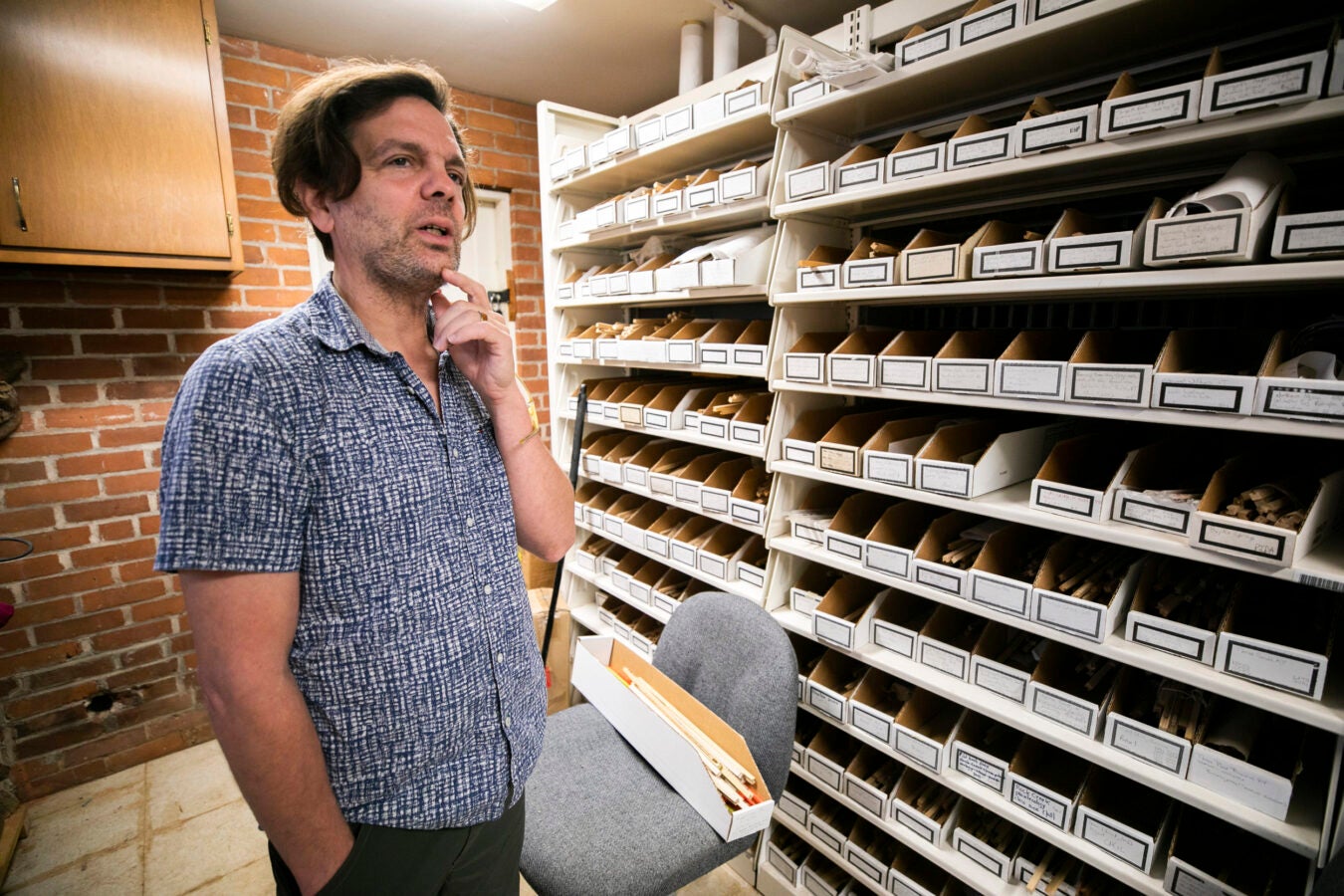
Core samples may hold clues to a forest’s response to climate change. Photos by Stephanie Mitchell/Harvard Staff Photographer

Juan Siliezar, staff writer for the Harvard Gazette asks and answers a question that we never tire of:

Want to know how cold it was in 1490? Ask a tree

Harvard Forest Senior Ecologist Neil Pederso

“We use tree cores to extract what I’ve been leaning toward calling the memory of the tree,” said Neil Pederson in the lab alongside core samples.

Sometimes getting to where you want to go is a matter of finding the right guide.

Four teams of researchers, led by Harvard Forest ecologists, searched for a patch of ancient trees deep in the woods of western Pennsylvania this summer as part of a project to study how climate changes affected trees over the centuries. One of the scientists had come across them 40 years earlier, but they appeared to have vanished. Just as the group was about to give up and move on they came across someone who gave them a valuable clue. Continue reading

Elephant Seals & Marine Sciences

Thanks to Sierra for this:

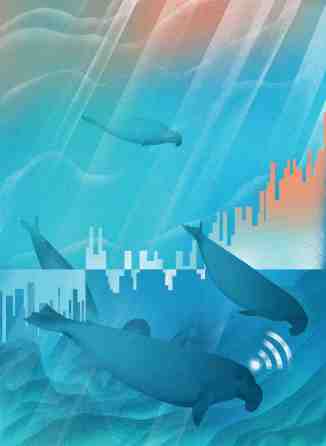
When Elephant Seals Become Ocean Researchers

Marine mammals unlock the secrets of climate and the Arctic

By Kate Golden

Illustrations by Masha Foya

ON A FEBRUARY MORNING at Año Nuevo Reserve on the coast of Northern California, hundreds of gray-brown elephant seals lay strewn, lumplike, all over the beach. It was hard to hear anything over the honks and shrieks of status jockeying and sex dramas. The north wind gusted to 35 knots and blew a river of fine sand into everyone’s faces. At a dense seal cluster near the water, researchers and students from the University of California, Santa Cruz, knelt over an 815-pound female whose stern had been labeled “X1” with Clairol bleach. Continue reading

On Those 20 Quadrillion+ Ants, Again

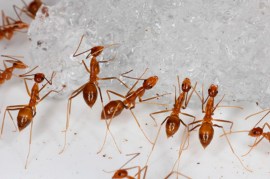
Ants in Escazu

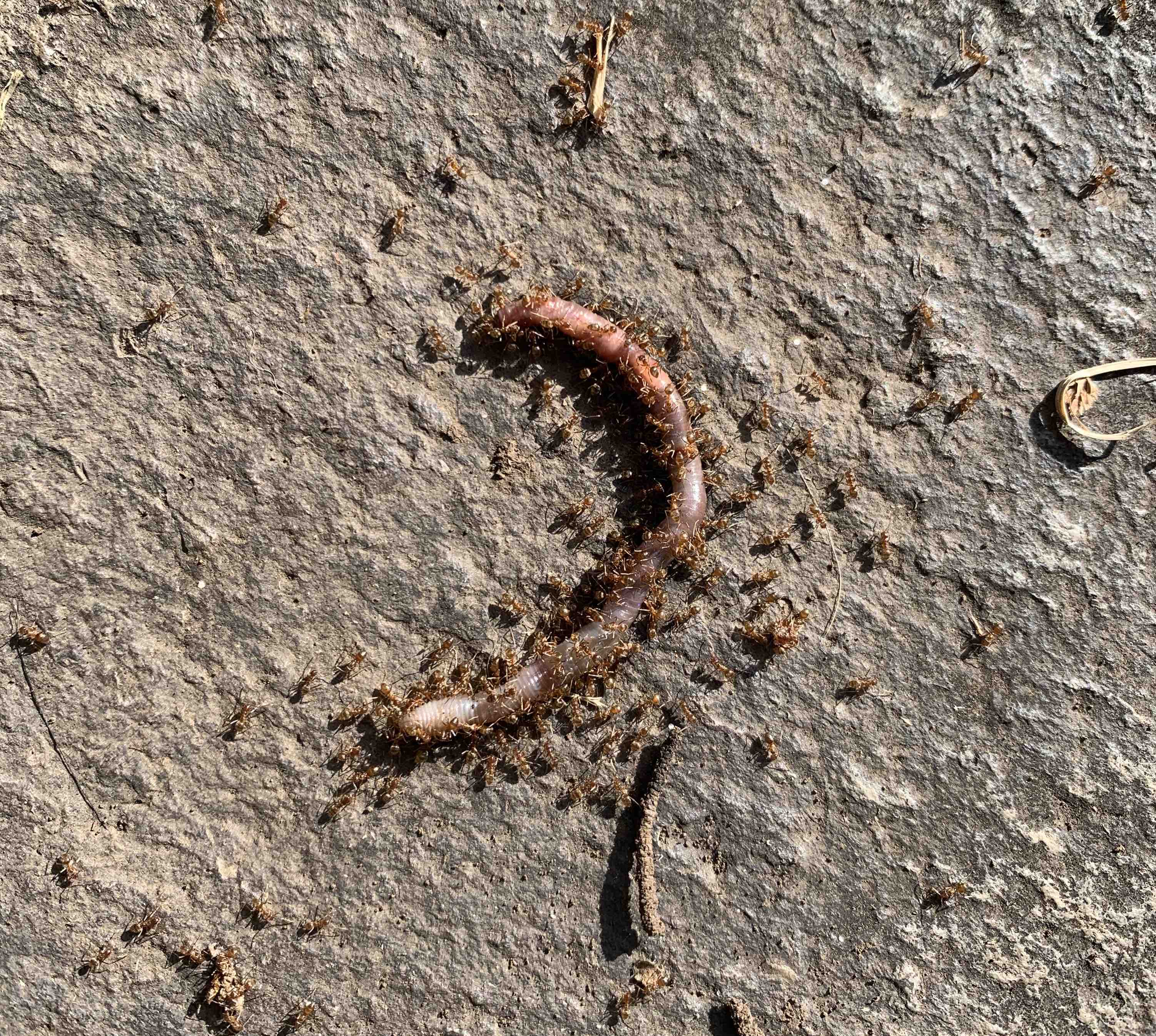
The earthworm in the photo above had been in a bag of soil where a coffee seedling started germinating earlier this year. I was moving the seedling from its small “starter” bag to a larger one, and the earthworm jumped out, wriggling under the nearby supplies I was working with. I did not see it again until it was too late. Since earthworms are good for soil, and we are in the early stages of a soil regeneration project, I was sorry to see the worm lose its life. This particular species of ant is currently everywhere on the property where we are re-planting coffee. I have not seen so many of this type of ant at any point in the last 22 years on this property, and their shocking abundance made me think of that new ant study. Normally we do not repeat sharing of news stories here, unless new information has come to light. It has only been a couple days, but I must share more on the study because my planting work is keeping the subject in front of me, and the photos in this article are that good.

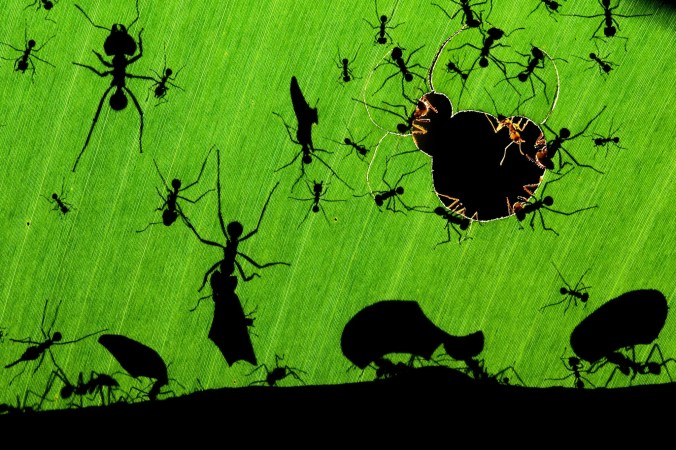
Leaf cutter ants in Costa Rica. The researchers sampled 1,300 locations around the world, estimating ant abundance in different environments in areas such as forests and steppes. Bence Mate/Nature Picture Library, via Alamy

Rebecca Dzombak, who authored this article for the New York Times, will be on our radar from now on:

Weaver ants engaged in teamwork. Sunthorn Viriyapan/Alamy

Counting the World’s Ants Requires a Lot of Zeros

There are 20 quadrillion ants worldwide, according to a new census, or 2.5 million for every living human. There are probably even more than that.

Male leaf cutter ants on the move over the Sonoran Desert in search of females and to make more ants. Norma Jean Gargasz/Alamy

Right now, ants are scurrying around every continent except Antarctica, doing the hard work of engineering ecosystems. They spread seeds, churn up soil and speed up decomposition. They forage and hunt and get eaten. You may not know how much you rely on them. Continue reading

Ant Mass Calculation

In this photo provided by the U.S. Fish and Wildlife Service, yellow crazy ants are seen in a bait testing efficacy trial at the Johnston Atoll National Wildlife Refuge in December, 2015. An invasive species known as the yellow crazy ant has been eradicated from the remote U.S. atoll in the Pacific. Robert Peck/AP

The mass of ants on earth is not a topic we have considered, but there is not too much surprise at reading this news:

The number of ants on Earth has a mass greater than all birds and mammals combined

For every human on Earth, there are estimated to be about 2.5 million ants — or 20 quadrillion in total.

A new study published by researchers at both the University of Hong Kong and University of Würzburg in Germany attempts to count the total number of ground-dwelling and tree-dwelling ants. Continue reading

Ominous Humongous Fungus

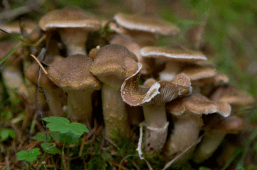
The mushrooms of Armillaria ostoyae (or Armillaria solidipes), the species of honey mushroom that makes up Humongous Fungus (Getty)

We have linked to one Katherine J. Wu article in the past, and that was to share good news; and we linked to stories about humongous fungus a couple of times–not so much news as fascinating; this time there is an ominous implication to the fungus:

The Bigger This Fungus Gets, the Worse We’re Doing

Human actions have turned a usually beneficial fungus into a bringer of death.

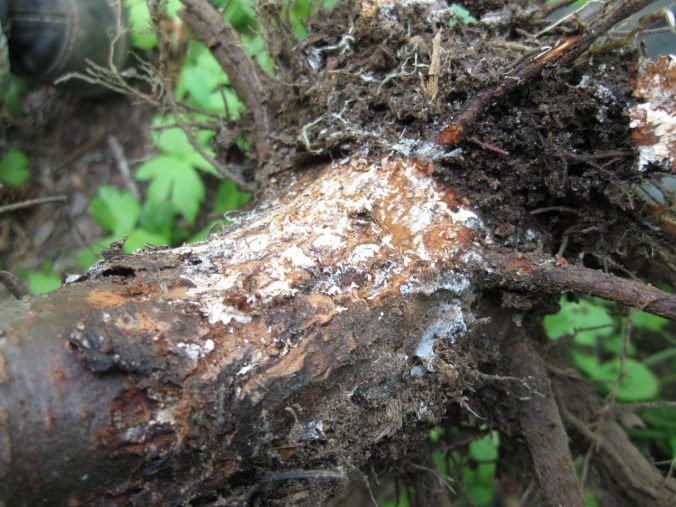
Deep in the loamy soil of forests around the world, there exists a fungus called the honey mushroom that makes its living on death. A parasite that preys on weak trees, it sucks its victims dry of nutrients, then feasts on their postmortem flesh. Continue reading

Alerce, Fungi & Futures

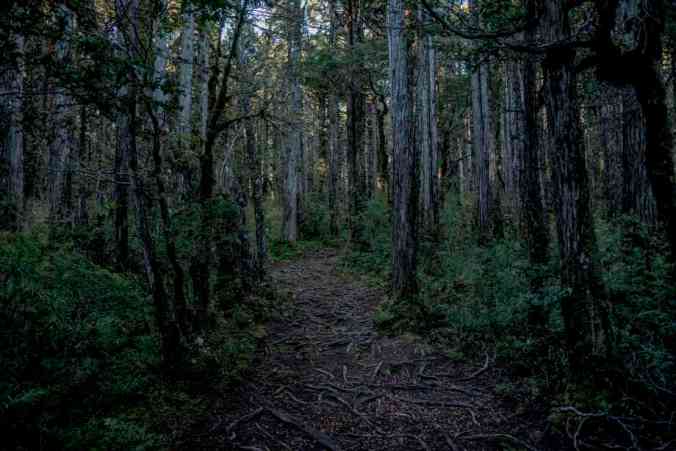
Roots rise from shallow soil. Tomás Munita

The Valdivian Coastal Reserve was mentioned once in our pages, only in passing.

Tomás Munita

Strange, because if I was asked to name my favorite protected area on the planet it would be at or near the top of my list. The abundant but threatened alerce trees were part of the reason. A family story would explain more of why, and that is part of a larger work story that needs more attention another time.

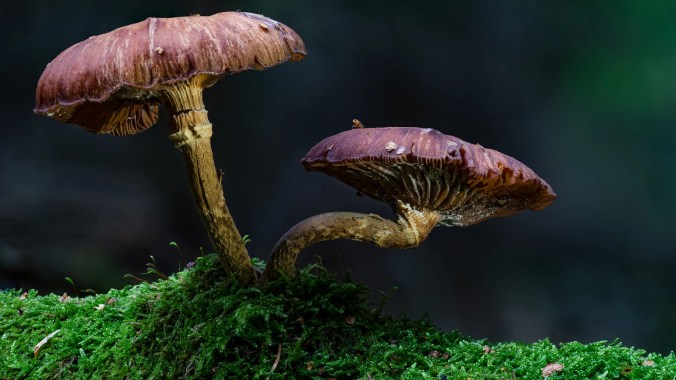
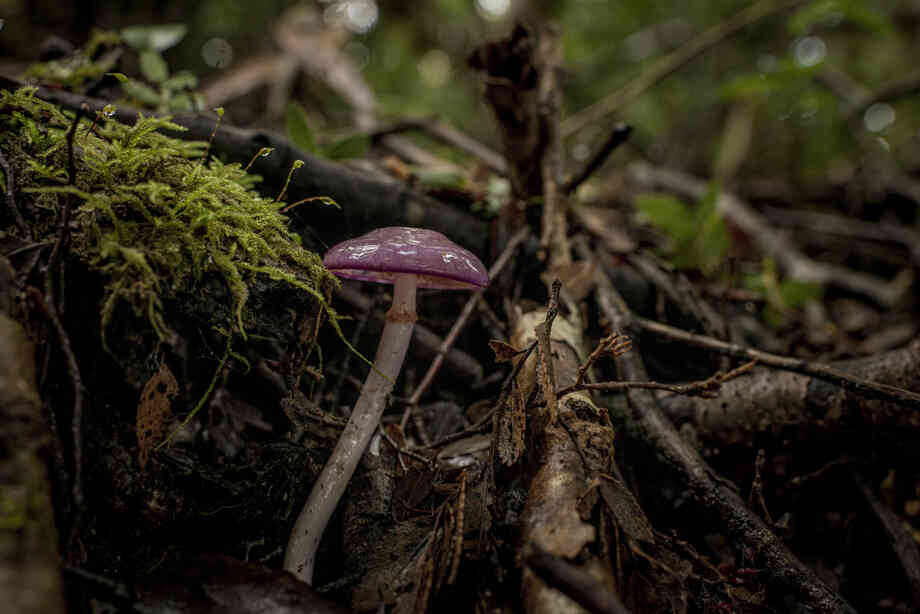
A mushroom rises from the forest floor. Tomás Munita

The story below, featuring an adjacent protected area, stirs an intense place memory, and at the same time reveals much about a topic that was not on our radar at the time. And it says much about potential futures for that place. So, thanks to the New York Times climate correspondent Somini Sengupta (again and again) as well as photographer Tomás Munita:

Unearthing the Secret Superpowers of Fungus

Tomás Munita

In the fight against warming, a formidable ally hides just beneath our feet.

 — Toby Kiers took long strides across the spongy forest floor, felt the adrenaline rush in her veins and stopped at the spot she had traveled so far to reach. Into the ground went a hollow metal cylinder. Out came a scoop of soil.

Tomás Munita

Dr. Kiers stuck her nose into the dirt, inhaled its scent, imagined what secrets it contained to help us live on a hotter planet. “What’s under here?” she asked. “What mysteries are we going to unveil?”

The soil was deposited into a clear plastic bag, then labeled with the coordinates of this exact location on Earth. Continue reading

New (To Us) Creatures Of The Deep

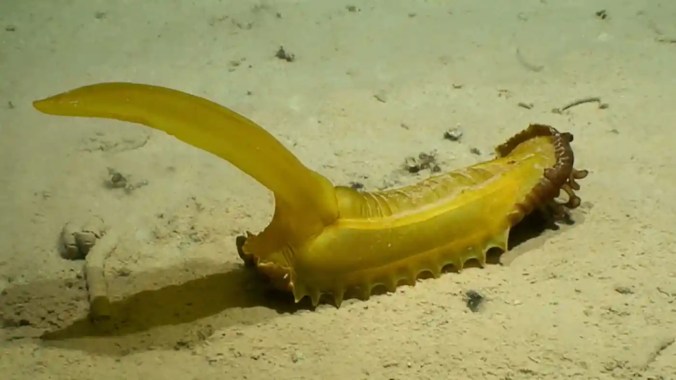
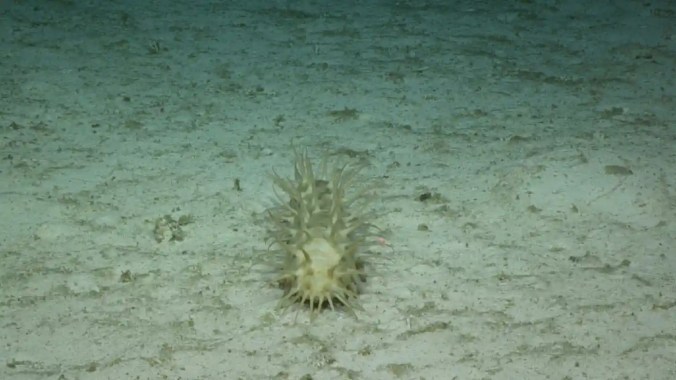
A gummy squirrel – Psychropotes longicauda – is a type of sea cucumber. This specimen is 60cm long with red palps, or lips, with which it feeds on sediment on the ocean floor, 5,100m deep

Discoveries still happen, even as the earth burns. Creatures not previously known are being identified 5,000 meters below the surface of the ocean. Some do not even yet have a name:

A spiny sea creature on the ocean floor

Scientists find 30 potential new species at bottom of ocean

Natural History Museum scientists seek to unlock mysteries of deep sea but some fear activity will disturb diversity of the depths

Scientists have found more than 30 potentially new species living at the bottom of the sea. Continue reading

The Surprise Finding With Whale Sharks

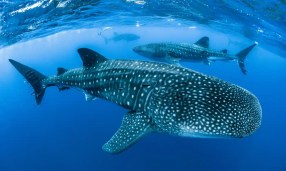
Scientists made the discovery while studying whale sharks off Western Australia’s Ningaloo reef. Photograph: Simon J Pierce/PA

We have linked to stories involving whale sharks plenty of times, always knowing their size is impressive. Now this:

Whale sharks are world’s biggest omnivores, study finds

‘Everything we thought we knew may not actually be true,’ says fish biologist in response to finding

Researchers have made a surprising discovery about the dining habits of whale sharks, handing the largest fish in the sea another world title. Continue reading
Us & Them, Then & Now

A cartoon from the mid-1800s, using apparently sophisticated insects to satirise French society (Credit: Getty Images)

Thomas Moynihan, a research fellow at Forethought Foundation and St Benet’s College, Oxford University offers this entertaining treatment of how Western culture has seen and thought about its insect co-habitants of the planet.

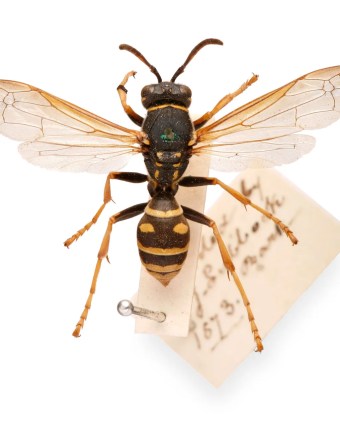
Lubbock’s wasp, described by one journalist as “a little gentleman in a brown overcoat, with black and yellow nether garments” (Credit: Alamy)

How insect ‘civilisations’ recast our place in the Universe

When looking to other creatures for signs of intelligence, insects are rarely the most obvious candidates, but as the historian Thomas Moynihan writes, it wasn’t always so. What can the early-20th Century fascination with bug societies tell us about our own?

It is 1919, and a young astronomer turns a street corner in Pasadena, California. Something seemingly humdrum on the ground distracts him. It’s an ant heap. Dropping to his knees, peering closer, he has an epiphany – about deep time, our place within it, and humanity’s uncertain fate. Continue reading
Turtles & Tortoises & Negative Senescence

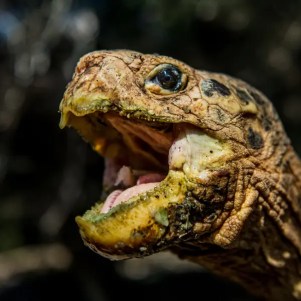
A giant Galápagos tortoise, only as old as it feels. Meridith Kohut for The New York Times

When I learn a new word–even if it is a word I cannot picture using in conversation but it represents a concept that is interesting and surprising, I consider that a good day. Jack Tamisiea, thanks for the science reporting here, and especially for the word senescence:

Tortoises and turtles don’t just live for a long time — they barely age while they live.

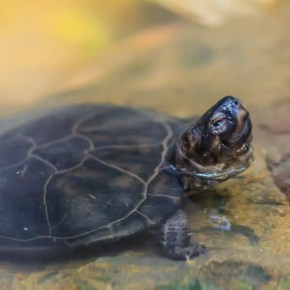
The black marsh turtles displayed negative rates of senescence, meaning their mortality risk decreased as they aged. iStock/Getty Images

For mammals like humans, aging is inevitable. No matter how many vitamins we take, skin sags, bones soften and joints stiffen over time. However, turtles and tortoises age more gracefully. Despite their wrinkled skin and toothless gums, species like Galápagos giant tortoises seem unscathed by the ravages of aging. Some show few signs of slowing down as they plod into their 100s.

To determine what drives these ageless wonders, two groups of researchers examined turtles, tortoises and their ectothermic, or coldblooded, brethren in a pair of studies published Thursday in the journal Science. Continue reading
Friday Feel-good Photos

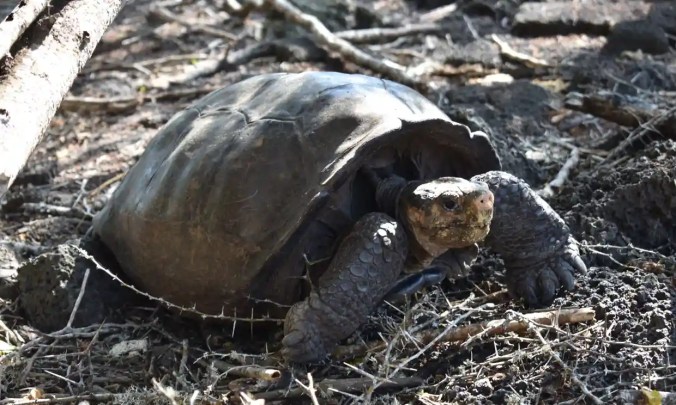
Scientists named the giant tortoise Fernanda, after the Fernandina Island, a largely unexplored active volcano in the western Galápagos archipelago that she calls home. Photograph: Lucas Bustamante/PA

Every now and then it is time for nature photos. First, above, is from a story that surprises, from a place we love:

‘Fantastic giant tortoise’ species thought extinct for 100 years found alive

Identification of Galápagos tortoise celebrated by scientists as a big deal for island’s biodiversity

And then there are photos unconnected to any news stories, scientific or otherwise, submitted for us to enjoy by people from around the world:

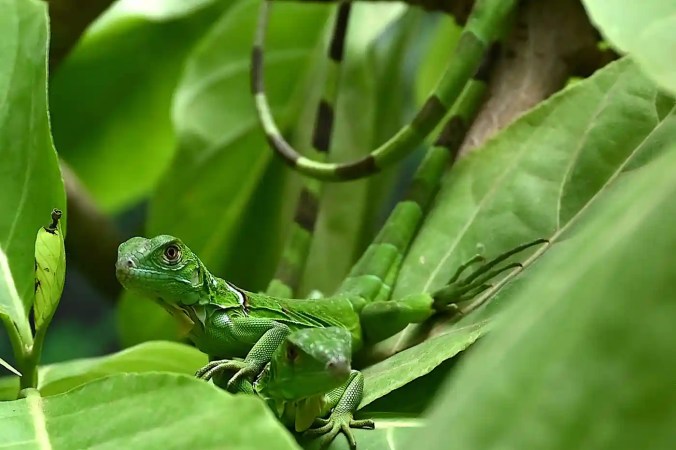
A newly hatched green iguana rests on foliage in a terrarium at the Chennai Snake Park in Chennai, India.  Photograph: Arun Sankar/AFP/Getty Images

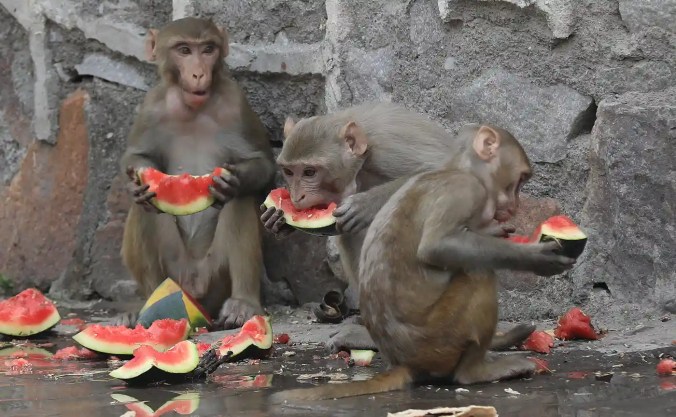
Two are from India, our home for seven years. Monkey business was a constant theme.

Monkeys eat watermelons during the heatwave in New Delhi, India. Photograph: Rajat Gupta/EPA

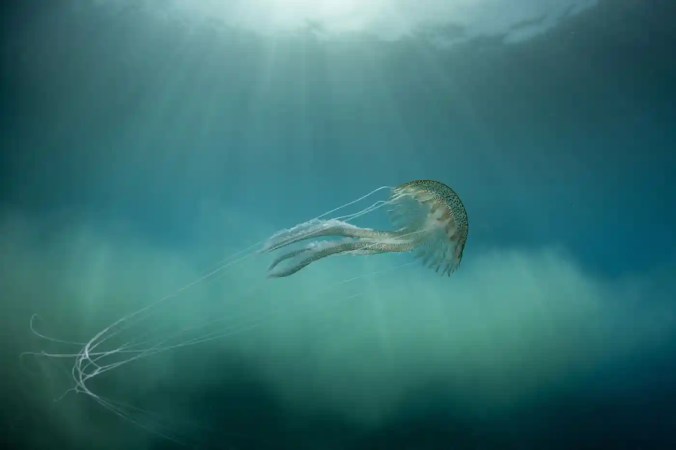
Another from a place whose name has lots of meaning for us:

A jellyfish swims off the island of Ithaca, Greece
Photograph: Cor Kuyvenhoven/Ghost Diving/Reuters

See all the other photos here.

Deep Divers & Learning

Thanks to Stephanie Pain, Knowable Magazine and Smithsonian for this:

What Are Scientists Learning About the Deepest Diving Creatures in the Ocean?

Animals-turned-oceanographers are helping biologists find out what they do when they get to the cold, dark depths

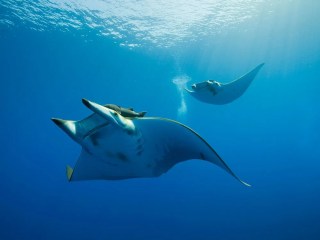
Chilean devil rays swim in the Atlantic Ocean near the Azores. Reinhard Dirscherl / ullstein bild via Getty Images

There’s only one word for it: indescribable. “It’s one of those awesome experiences you can’t put into words,” says fish ecologist Simon Thorrold. Thorrold is trying to explain how it feels to dive into the ocean and attach a tag to a whale shark — the most stupendous fish in the sea. “Every single time I do it, I get this huge adrenaline rush,” he says. “That’s partly about the science and the mad race to get the tags fixed. But part of it is just being human and amazed by nature and huge animals.”

Whale sharks are one of a select group of large marine animals that scientists like Thorrold, of the Woods Hole Oceanographic Institution in Massachusetts, have signed up as ocean-going research assistants. Continue reading
Biggest Plant On Earth

The Posidonia australis seagrass meadow in Shark Bay, Western Australia. Photograph: Rachel Austin/UWA

We have posted several times about the world’s largest living thing. Since fungi are a different category of life, that leaves room for something to be classified as the largest living plant. Thanks to Graham Readfearn for this Guardian article pointing out to us what that thing is, and where:

The plant’s spread can be seen in this aerial view of Shark Bay. Photograph: Angela Rossen

Scientists discover ‘biggest plant on Earth’ off Western Australian coast

Genetic testing has determined a single 4,500-year-old seagrass may have spread over 200 sq km of underwater seafloor – about 20,000 football fields

About 4,500 years ago, a single seed – spawned from two different seagrass species – found itself nestled in a favourable spot somewhere in what is now known as Shark Bay, just off Australia’s west coast. Continue reading
Will More Forests Cool The Planet Fast Enough?

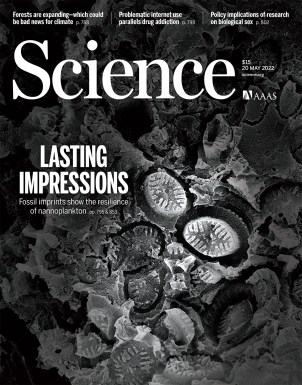
Thanks to Fred Pearce, who we normally link to at Yale e360, for The Forest Forecast, an article in the current issue of Science magazine:

Climate change could lead to a net expansion of global forests. But will a more forested world actually be cooler?

These are strange times for the Indigenous Nenets reindeer herders of northern Siberia. In their lands on the shores of the Arctic Ocean, bare tundra is thawing, bushes are sprouting, and willows that a generation ago struggled to reach knee height now grow 3 meters tall, hiding the reindeer. Surveys show the Nenets autonomous district, an area the size of Florida, now has four times as many trees as official inventories recorded in the 1980s. Continue reading

Proto-Peat In The Arctic

PHOTOGRAPH: SANNA PIILO

We have posted enough times about the importance of protecting peat, but this is the first we hear the question Carbon-Rich Peat Is Disappearing. But Is It Also Growing? Our thanks to Matt Simon at Wired for this one:

PHOTOGRAPH: SANNA PIILO

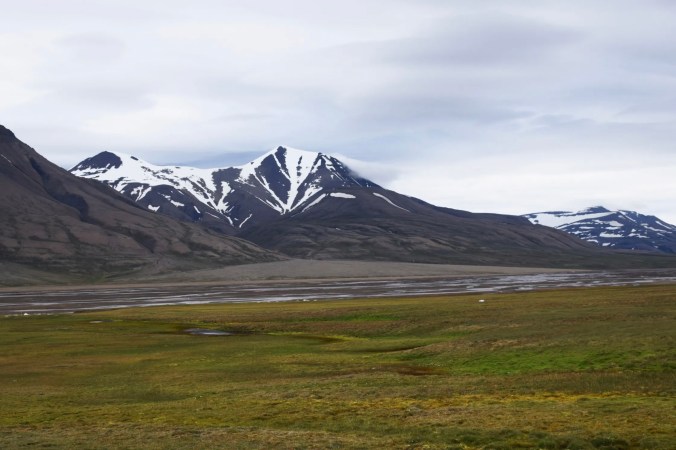
Scientists have discovered “proto-peat” forming in the Arctic as the Earth naturally sequesters carbon, but it could take centuries to mature.

THANK PEAT FOR that scotchy flavor of Scotch whisky: The muck forms in Scotland’s bogs, when layer after layer of dead vegetation resists decay and compresses into fuel, which is burned during scotch distillation. But you can also thank peat for helping keep our planet relatively cool, as all that muck—which is particularly common across the Arctic—traps a tremendous amount of carbon that would otherwise heat the atmosphere. Continue reading
The World’s Largest Living Thing

The world’s largest living thing is a stealthy parasite that lives mostly underground and beneath the bark of infected trees in a pale, stringy fungal network. COURTESY MIKE MCWILLIAMS

Thanks to Milo‘s interest in fungi, which we found infectious, we learned years ago what the world’s largest living thing is. We used to feature more stories from Atlas Obscura, but this is the first in a few years:

What the World’s Largest Organism Reveals About Fires and Forest Health

The Humongous Fungus is most visible when it produces the edible and tasty honey mushroom, but the season is brief and doesn’t happen every year. PETER PEARSALL, USFWS/PUBLIC DOMAIN

In Oregon, the Humongous Fungus plays a complex role in an ecosystem reshaped by humans.

UNDER THE BLUE MOUNTAINS OF Oregon lurks something massive and prehistoric. Yet the largest recorded organism on Earth, weighing more than 200 blue whales and dwarfing even Pando, Utah’s famous grove of quaking aspens, is nearly invisible to the untrained eye. It’s a single, genetically identifiable specimen of honey mushroom, or Armillaria ostoyae, that has been growing for thousands of years. Continue reading

Indigenous Knowhow & Conservation

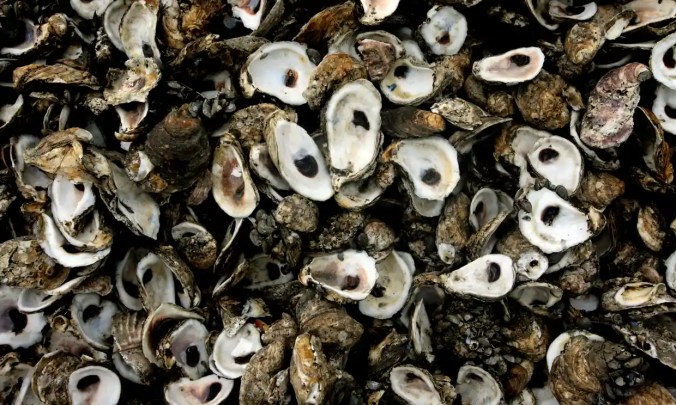
Prof Ian McNevin said ‘the scale of Indigenous oyster harvesting is extraordinary’, and compared it to contemporary commercial oyster farms. Photograph: Orjan F Ellingvag/Corbis/Getty Images

Some of us writing in these pages have been fans of oysters primarily for their culinary value (living in France, and then later in Croatia, could create such bias). But we have posted more frequently about the resiliency that oysters have come to represent in the search for protection against climate impact. Here is some more on that topic, intersecting with another theme we pay frequent attention to:

Precolonial First Nations oyster fisheries sustained millennia of intense harvests, study shows

Researchers in Australia and North America say management of oyster reefs should incorporate Indigenous knowledge

Oyster fisheries in Australia and North America survived for up to 10,000 years prior to colonisation, sustaining First Nations communities even under intense harvest, according to new research. Continue reading

Innovative Illustration & Atmospheric Pressure

Source: Geophysical Research Letters.

Whenever we see advances in innovative illustration to better our understanding of phenomena, natural or otherwise, we note it here. Atmospheric pressure is something most of us have heard countless times, but not necessarily stopped to think what it is. Among other things, it is important. Also, it is understandable. If you have a couple minutes, watch this accessible animation of a natural phenomenon that does not get enough attention, and read the accompanying text:

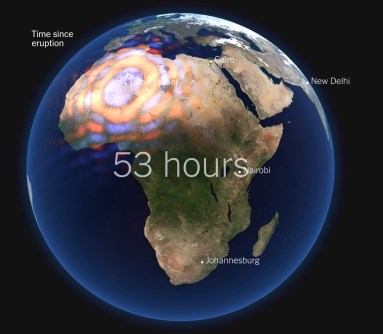
‘It’s Super Spectacular.’ See How the Tonga Volcano Unleashed a Once-in-a-Century Shockwave.

By Aatish Bhatia and Henry Fountain

Produced by Aatish Bhatia and Sean Catangui

As shown in this visualization, based on a simulation created by Ángel Amores, a physical oceanographer at the Mediterranean Institute for Advanced Studies in Majorca, Spain, the shockwave took about 36 hours to circumnavigate the globe, spreading out in concentric rings from the volcano known as Hunga Tonga-Hunga Haʻapai and traveling at the speed of sound. The simulation was published in the journal Geophysical Research Letters in March. Continue reading
Ivory-billed Woodpeckers In Louisiana

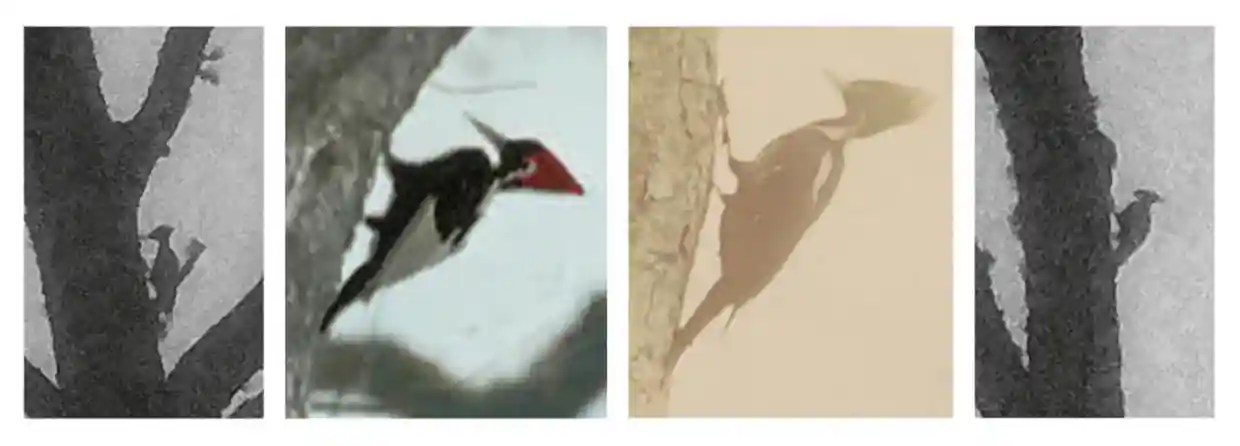
Comparison of photographs taken of apparent ivory-billed woodpeckers in Louisiana from this study (A, D), with a colorized ivory-billed woodpecker, also from Louisiana (B), and a pale-billed woodpecker taken in Central America (C). Photograph: The Guardian

The title of this post should have a question mark at the end of it, or should be considered clickbait. For bird nerds this is likely not even news. But it is important in terms of natural history in general. Ivory-billed woodpeckers have been mentioned a couple of times in our pages; but the chance of seeing one these days was considered to be zero. We can now hope we were wrong about that:

Back from the dead? Elusive ivory-billed woodpecker not extinct, researchers say

An expedition to the forests of Louisiana say extinction of bird, last definitively seen in 1944, has been exaggerated

In terms of elusiveness, it is the Bigfoot or Loch Ness monster of the bird world, so rare and undetectable that the US government declared it extinct last year. But the ivory-billed woodpecker is, in fact, still alive and pecking in the forests of Louisiana, a team of researchers has claimed. Continue reading
A New Knife Worthy Of Our Attention

Knives are the oldest type of manufactured tool, and they’re still evolving. Karsten Moran for The New York Times

I last posted on the topic of knives earlier this year, partly because the onetime blacksmith apprentice in me felt compelled to salute the skillset, but mainly because the mission behind the knife-making in that case was worth promoting.
Otherwise, culinary utensils do not get much attention in our pages. Ceiba being the celebrated exception to that general rule–wooden culinary utensils, but no knives. Derrick Bryson Taylor offers us a good reason to revisit this neglect:

Knives are humanity’s oldest tool, dating back millions of years. A group of scientists in Maryland have produced a version made of hardened wood, which they say is sharper than steel.

More than 60 years ago in “Mastering the Art of French Cooking,” Julia Child, one of America’s most emulated chefs, described the necessity of decent, reliable kitchen equipment. Continue reading