
Yaoundé, Cameroon
Yaoundé, Cameroon

Unloading the food waste at a disposal facility in Seoul. Chang W. Lee/The New York Times
One of the most covered topics in our pages during the decade since we started paying attention to it, still going strong for all the wrong reasons; so, our thanks to the New York Times for assigning John Yoon (reporting, writing) and Chang W. Lee (for photographs and video) to go to South Korea:
Food waste being separated from plastic bags at the Goyang facility.
How South Korea Puts Its Food Scraps to Good Use
When wasted food rots in landfills, it pollutes soil and water — and warms the planet. Here’s how one country keeps that from happening.
Around the world, most of the 1.4 billion tons of food thrown away each year goes to landfills. As it rots, it pollutes water and soil and releases huge amounts of methane, one of the most potent greenhouse gases. Continue reading

Hotel Castillo del Arenal, Alajuela Province, Costa Rica
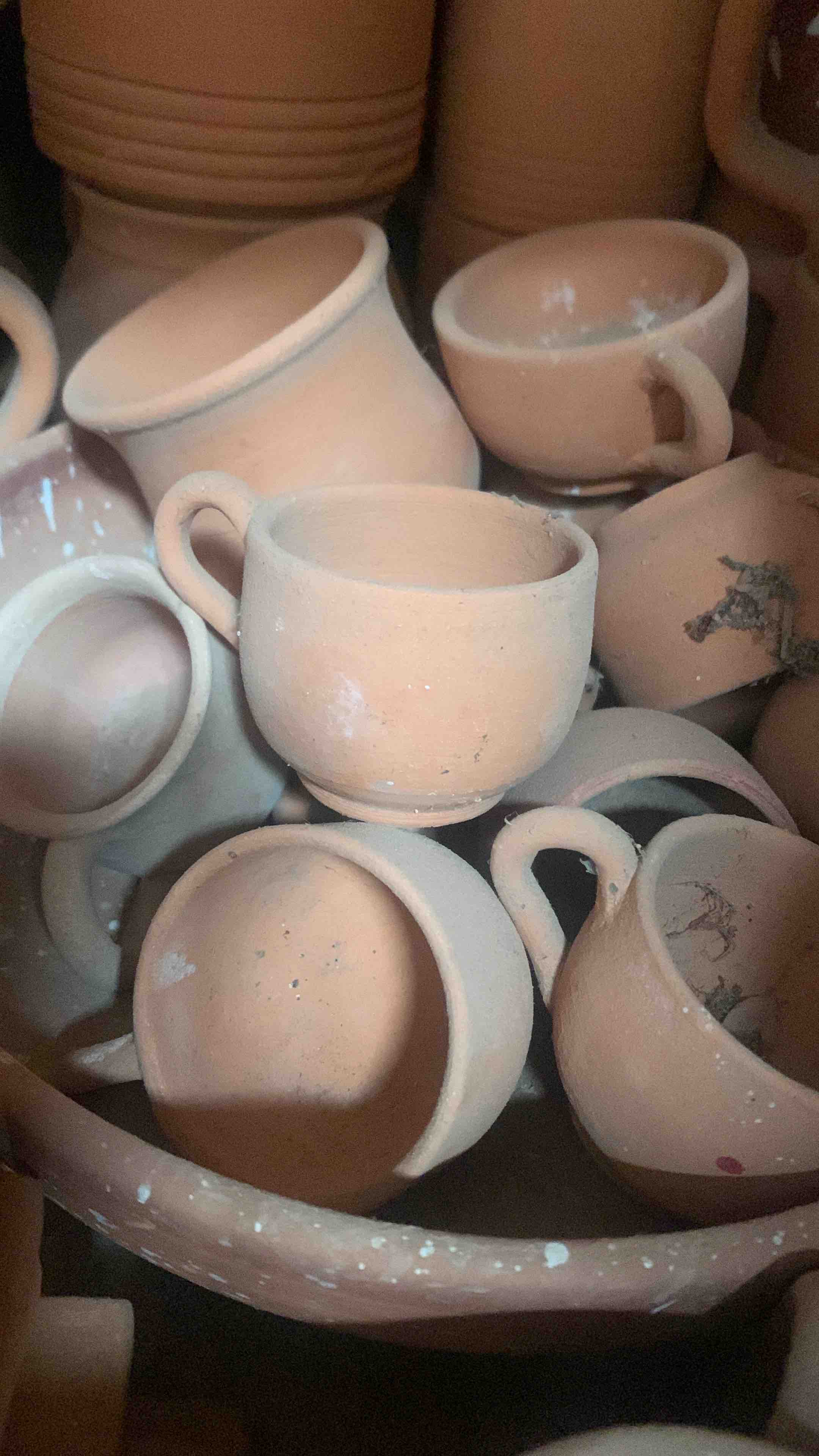 Amie and I work together, but most of my days are consumed by coffee. Especially in the March to May period, when coffee harvests are finishing and the first cuppings of the new crops are possible, my time for other activities is limited. But in June, there is more time. For the past 4+ years our shared work has included my joining her to meet artisans whose work our shops might carry. This work never disappoints, even if we conclude that the product is not a good fit for Authentica. Recently we had an afternoon together with a ceramicist we knew about, but had not yet had the opportunity to spend time with. The biggest surprise was seeing this smoke stack in the photo below.
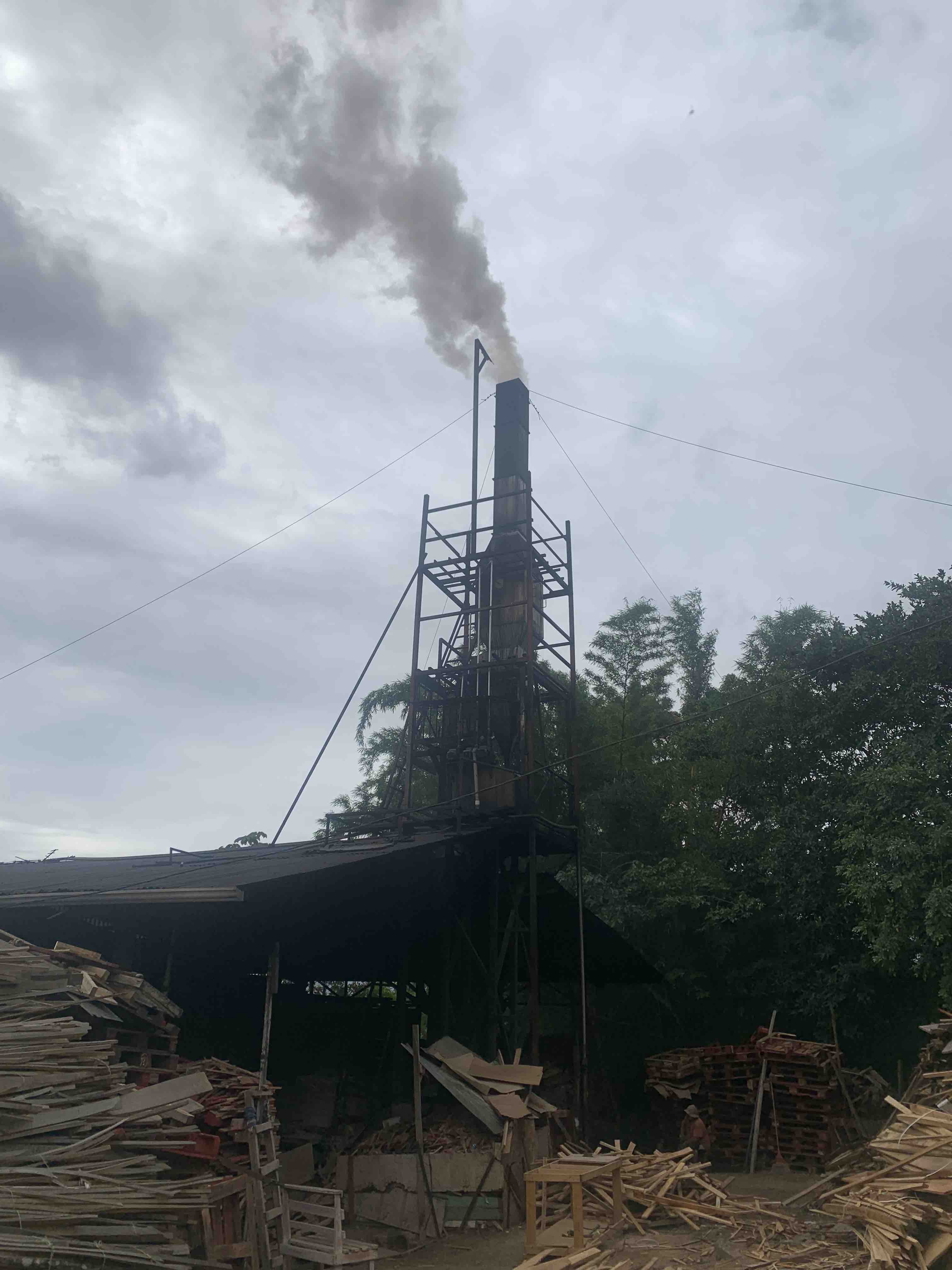
It is rustic, and at first sight not much to look at. But listening to him tell its history you can appreciate how often in history artisans lead the way that industrialists eventually follow. This was the first smokestack in Costa Rica using technology that reduces carbon and particulate emissions. Continue reading
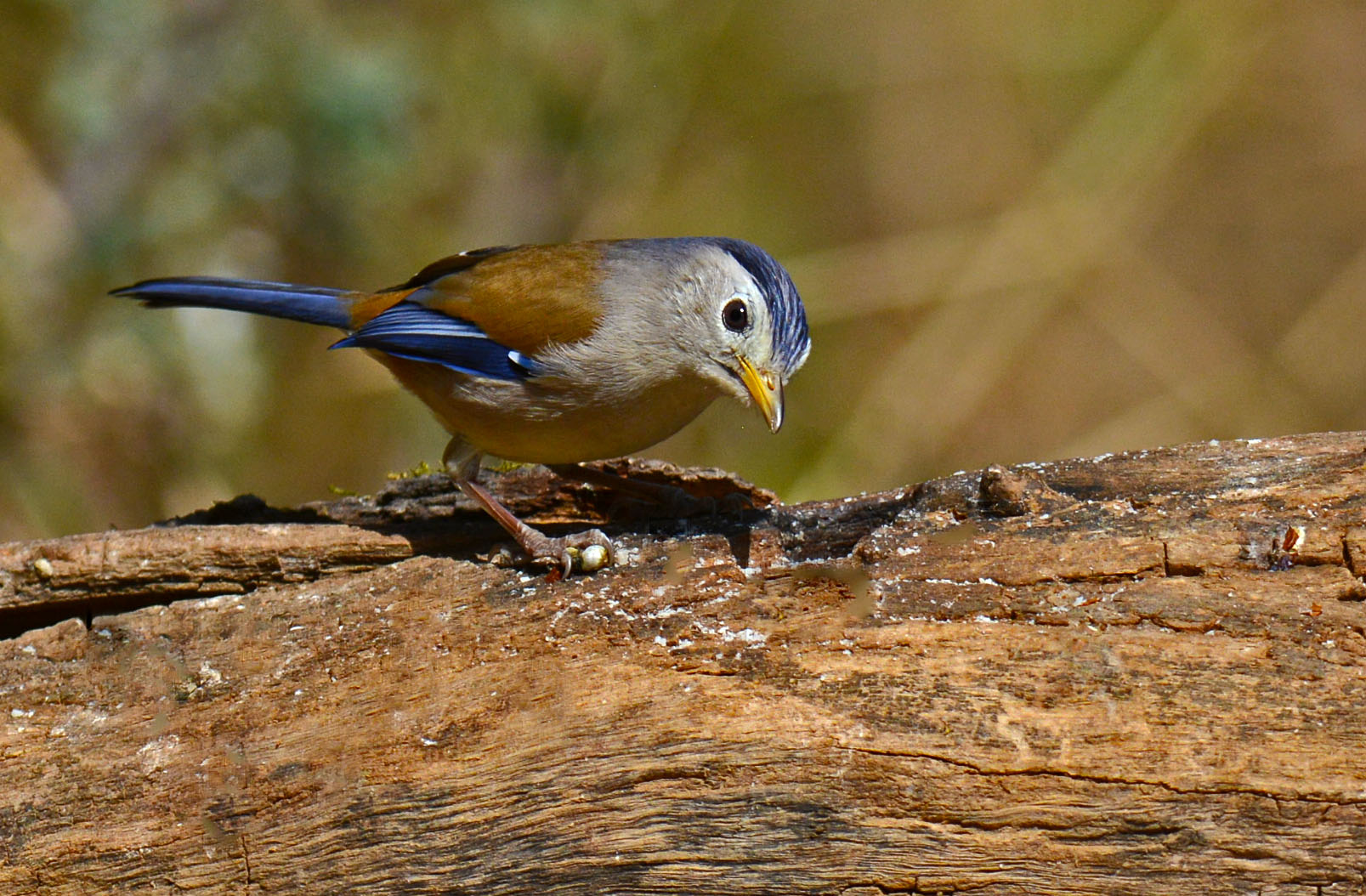
Kumaon Hills, Uttarakhand
 What? We never posted on this book or its economist author before? We correct that now with Hettie O’Brien’s article in the Guardian :
The planet’s economist: has Kate Raworth found a model for sustainable living?
Her hit book Doughnut Economics laid out a path to a greener, more equal society. But can she turn her ideas into meaningful change?
Raworth in Oxford. Photograph: Graeme Robertson/The Guardian
Consider the electric car. Sleek and nearly silent, it is a good example of how far the world has progressed in fighting the climate crisis. Its carbon footprint is around three times smaller than its petrol equivalent, and unlike a regular car, it emits none of the greenhouse gases that warm the planet or noxious fumes that pollute the air. That’s the good news. Then consider that the battery of an electric car uses 8kg of lithium, likely extracted from briny pools on South America’s salt flats, a process that has been blamed for shrinking pasturelands and causing desertification.
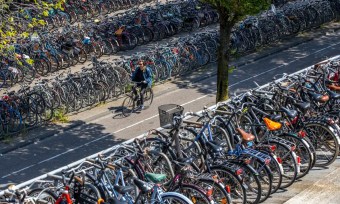
A bike park in Amsterdam which offers free parking for more than 2,500 bicycles. Photograph: Jochen Tack/Alamy
The 14kg of cobalt that prevent the car’s battery from overheating have probably come from the Democratic Republic of the Congo, where cobalt mines have contaminated water supplies and soil. As the demand for electric vehicles grows, the mining and refining of their components will intensify, further damaging natural ecosystems. By 2040, according to the International Energy Agency, the global demand for lithium will have increased more than fortyfold. Continue reading
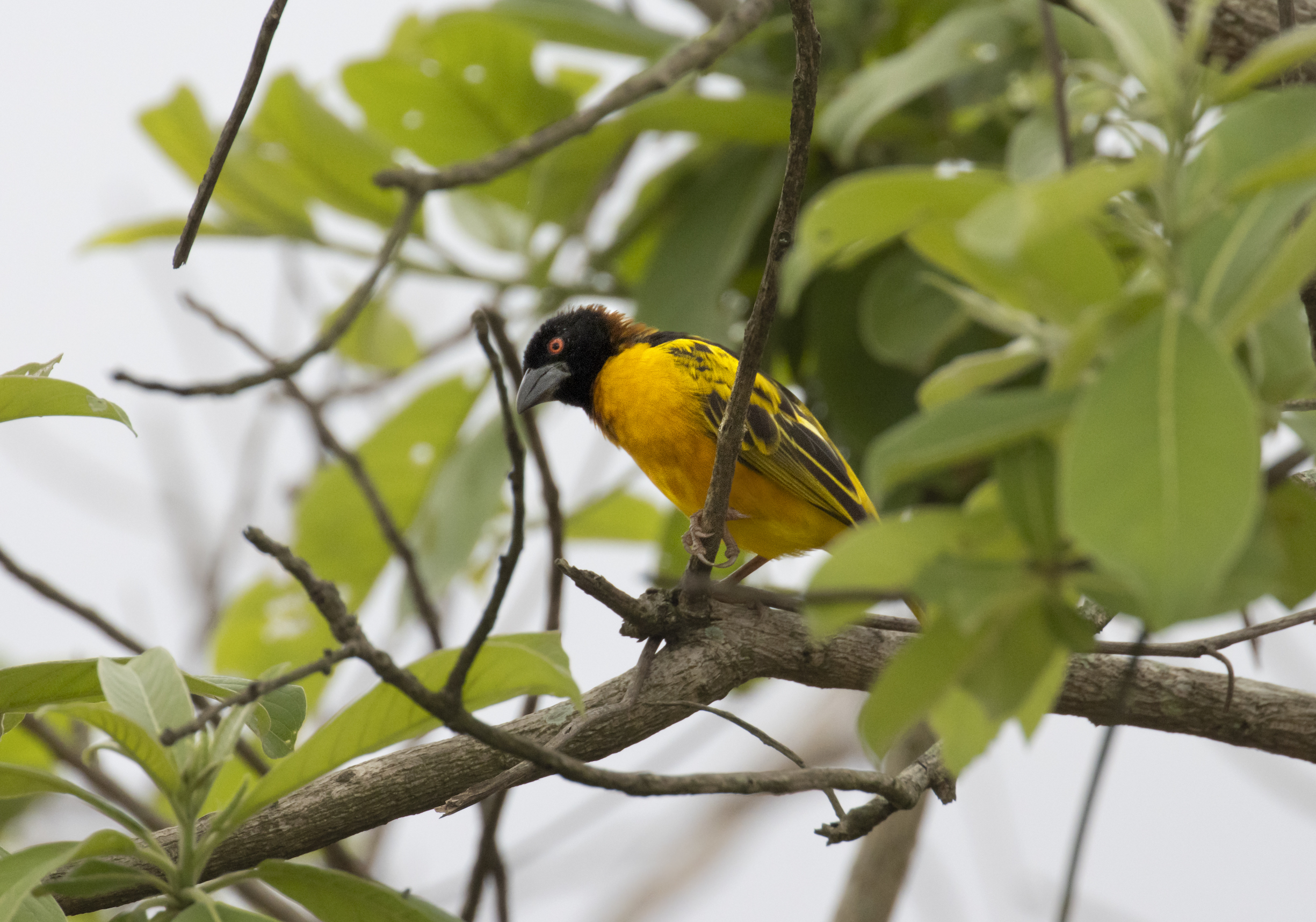
Ndjeke, Cameroon
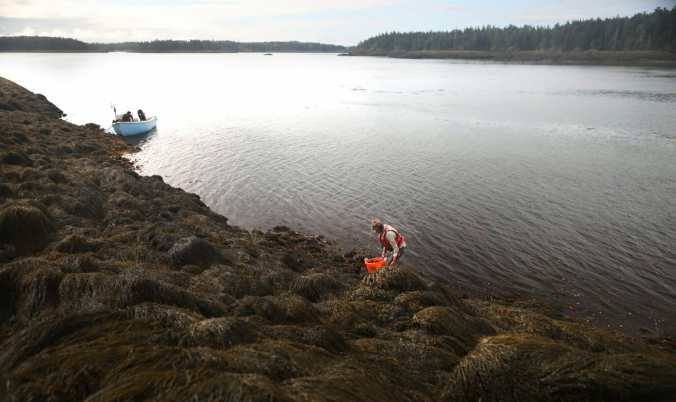
Severine von Tscharner Welcome forages for seaweed in Cobscook Bay, Maine.
Our thanks as always to Food & Environment Reporting Network. In this article by Bridget Huber, with photography by Lauren Owens Lambert, some of our earlier links to stories about farming in the sea are called into question.
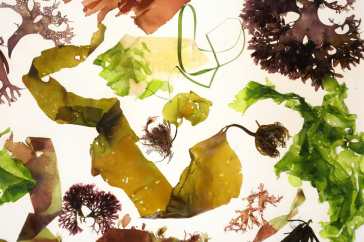
A variety of seaweed harvested from the Gulf of Maine, including sugar kelp, sea lettuce, dulse, bladderwrack, and Irish moss.
Climate savior or ‘Monsanto of the sea’
Seaweed farming is being hyped as a major weapon in the fight against climate change. But skeptics say the rush to build industrial-scale operations risks unintended consequences.
Early on a cool spring morning, in far Downeast Maine, Severine von Tscharner Welcome and her husband, Terran, scrambled along a point jutting into Cobscook Bay. The Passamaquoddy people named the bay Kapskuk after the immense tides and wild currents that make the water seem to boil. Continue reading

Hanchinal Lake, Bijapur

Illustration: Julia Louise Pereira/The Guardian
Our thanks to Victoria Namkung for this reporting in the Guardian, from Los Angeles:
‘Everything is natural and tastes so good’: microfarms push back against ‘food apartheid’
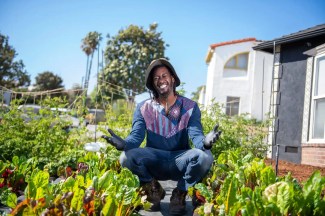
Crop Swap LA founder Jamiah Hargins in the Asante microfarm in Los Angeles, California. Photograph: Valérie Macon/AFP/Getty Images
Bipoc-led local farms in unconventional spaces decentralize systems that have produced food deserts and create food equity
On a recent Sunday morning in South Los Angeles, Crop Swap LA volunteers and staffers harvested bags of freshly picked produce from the front yard of a residence. Located just steps from Leimert Park Plaza, the Asante microfarm is the first of what will be numerous microfarms created by the organization, which is dedicated to growing hyperlocal food on unused spaces “in the neighborhood, exclusively for the neighborhood”. Continue reading

Ujarrás, Cartago, Costa Rica

Merlin Sheldrake, author of the best-selling book “Entangled Life.” Alexander Coggin for The New York Times
We are grateful to any publication that gives this topic its due attention, in this case the New York Times and a particular thanks to Jennifer Kahn for such a thoughtfully written profile:
The Man Who Turned the World on to the Genius of Fungi
A vast fungal web braids together life on Earth. Merlin Sheldrake wants to help us see it.
One evening last winter, Merlin Sheldrake, the mycologist and author of the best-selling book “Entangled Life,” was headlining an event in London’s Soho. The night was billed as a “salon,” and the crowd, which included the novelist Edward St. Aubyn, was elegant and arty, with lots of leggy women in black tights and men in perfectly draped camel’s-hair coats. “Entangled Life” is a scientific study of all things fungal that reads like a fairy tale, and since the book’s publication in 2020, Sheldrake has become a coveted speaker.
A pied bleu (Lepista personata), also known as the field blewit. Alexander Coggin for The New York Times
At talks like these, Sheldrake is sometimes asked to answer a question he poses in the first chapter of his book: What is it like to be a fungus? The answer, at least according to Sheldrake, is at once alien and wondrous. “If you had no head, no heart, no center of operations,” he began. “If you could taste with your whole body. If you could take a fragment of your toe or your hair and it would grow into a new you — and hundreds of these new yous could fuse together into some impossibly large togetherness. And when you wanted to get around, you would produce spores, this little condensed part of you that could travel in the air.” There were nods. In the audience, the woman next to me gave a long, affirming hum. Continue reading
Sanaga River, Cameroon

There’s been no enormous hurry in Washington to do much about the greatest threat that humans have ever faced. Photograph by Kevin Dietsch / Getty
Thanks, as always, to Bill McKibben for a perspective on otherwise difficult-to-make-sense-of events:
Looking at the White House Through Wildfire Smoke
This week, elected officials can see for themselves why they must get serious about climate change.
I’m sitting on a rocking chair just outside the White House fence on Thursday afternoon, and I can more or less make out the seat of American executive power through the haze. In the morning, the local government announced that the air-quality index for the District of Columbia had reached Code Purple (“very unhealthy”), because of the level of particulate pollution, which has never happened before. Continue reading
Male

A rooftop wetland on the Salesforce Transit Center in San Francisco filters wastewater from sinks and showers for reuse. JEREMY GRAHAM / ALAMY STOCK PHOTO
Our thanks to Jim Robbins, as ever, for environmental news from the front lines and for demonstrating that for all its urban challenges San Francisco remains a pioneering city:
Beyond the Yuck Factor: Cities Turn to ‘Extreme’ Water Recycling
San Francisco is at the forefront of a movement to recycle wastewater from commercial buildings, homes, and neighborhoods and use it for toilets and landscaping. This decentralized approach, proponents say, will drive down demand in an era of increasing water scarcity.
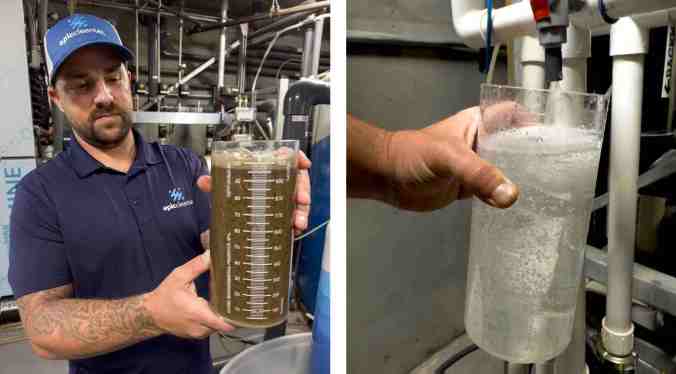
Ryan Pulley of Epic Cleantec holds a beaker of graywater. Right: A beaker of potable treated graywater. TED WOOD
In downtown San Francisco, in a cavernous garage that was once a Honda dealership, a gleaming white-and-blue appliance about the size of a commercial refrigerator is being prepared for transport to a hotel in Los Angeles. Continue reading
Female
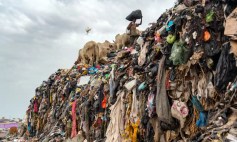
Some of the 6m items of clothing that arrive at Kantamanto Market each week. With the rise of fast fashion in the west, more is discarded as the quality drops. Photograph: Muntaka Chasant/Rex
When the clothes cast off by the wealthy are cast on to those less wealthy, it should be done so according to the golden rule:
Stop dumping your cast-offs on us, Ghanaian clothes traders tell EU
With 100 tonnes of clothing from the west discarded every day in Accra, ‘fast fashion’ brands must be forced to help pay for the choking textile waste they create, environmentalists say
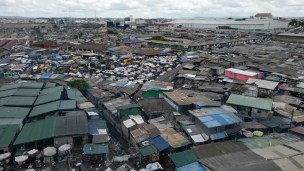
An aerial view of Kantamanto market in Accra, where 100 tonnes of secondhand clothing a day are discarded. Photograph: Misper Apawu/The Guardian
A group of secondhand clothes dealers from Ghana have visited Brussels to lobby for Europe-wide legislation to compel the fashion industry to help address the “environmental catastrophe” of dumping vast amounts of textiles in the west African country. Continue reading
Male
Enchanted Rock State Natural Area, Gillespie County, TX
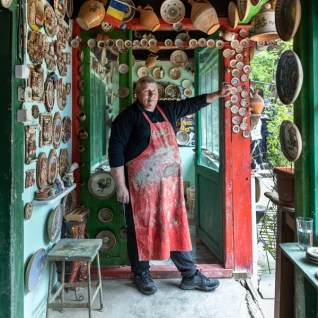
Mr. Biscu makes pieces using clay that comes from earth extracted from a hill in Horezu.
Chantel Tattoli reported this story from Horezu, Romania for the New York Times. Accompanied by photographs and video by Marko Risovic, her story is based on speaking to a dozen local potters using a translator:
Can Old-World Ceramics Survive Modern Tastes?
A style of pottery made for centuries in a small Romanian town has recently become a hot commodity.
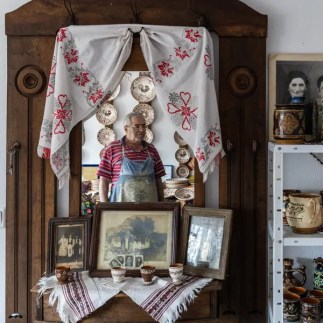
Sorin Giubega at his home, which is filled with ceramics made by him and his ancestors.
Sorin Giubega’s grandfather was a potter. So was his father. And at 8 years old, Mr. Giubega said, he started to play on a pottery wheel, too.
Mr. Giubega, now 63, and his wife, Marieta Giubega, 48, are potters in Horezu, Romania, a town in the foothills of the Capatanii Mountains about three hours by car from Bucharest.
Horezu is home to a community of about 50 artisans who make a traditional style of ceramics with methods that have been practiced for more than 300 years. Continue reading


 Organikos