Biggest Plant On Earth

The Posidonia australis seagrass meadow in Shark Bay, Western Australia. Photograph: Rachel Austin/UWA

We have posted several times about the world’s largest living thing. Since fungi are a different category of life, that leaves room for something to be classified as the largest living plant. Thanks to Graham Readfearn for this Guardian article pointing out to us what that thing is, and where:

The plant’s spread can be seen in this aerial view of Shark Bay. Photograph: Angela Rossen

Scientists discover ‘biggest plant on Earth’ off Western Australian coast

Genetic testing has determined a single 4,500-year-old seagrass may have spread over 200 sq km of underwater seafloor – about 20,000 football fields

About 4,500 years ago, a single seed – spawned from two different seagrass species – found itself nestled in a favourable spot somewhere in what is now known as Shark Bay, just off Australia’s west coast. Continue reading

Three Cheers For Lawrence MacEwen

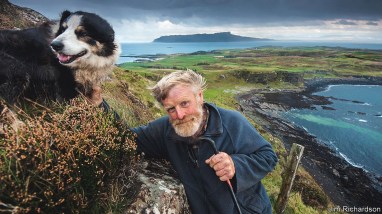
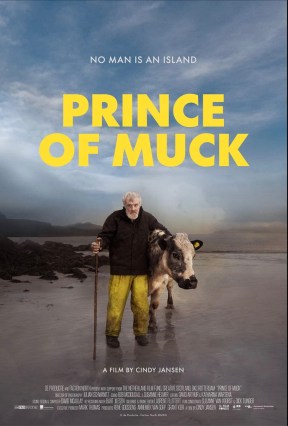
We missed this documentary film last year, perhaps because it was not reviewed in any of the news outlets we regularly monitor. But if you click the image to the right you can preview the film for a couple minutes. You will see it is about a man who spent his life protecting what he cared about. Since that is the underlying theme of the nearly 12,000 posts we have shared on this platform since 2011, it is cued up for viewing in our home this evening.  The film came to my attention in The Economist, and the accompanying photograph is unique in the history of obituaries in that publication or elsewhere:

The barefoot laird.

Lawrence MacEwen made a tiny island prosper

As soon as spring arrived, the young Lawrence MacEwen shed his shoes. Barefoot, he ran to school down the only road on Muck, a mile and a half of gravel mixed with grass. Barefoot, he jumped among the fallen basalt stones of the dykes built long ago by kelpers, who had made a living gathering seaweed from the rocks. Barefoot he climbed the craggy western cliffs, hanging on to heather for dear life, and scampered to the top of Beinn Airein, the highest hill, to look out past Eigg and Rum to Knoydart and the Cuillin Hills. Barefoot he would stand for hours on the beach below his house, so mesmerised by the rolling tide that he could not stir until his mother called him in for tea. His feet would sink a little into the white sand, embedding him in the place. Continue reading

Proto-Peat In The Arctic

PHOTOGRAPH: SANNA PIILO

We have posted enough times about the importance of protecting peat, but this is the first we hear the question Carbon-Rich Peat Is Disappearing. But Is It Also Growing? Our thanks to Matt Simon at Wired for this one:

PHOTOGRAPH: SANNA PIILO

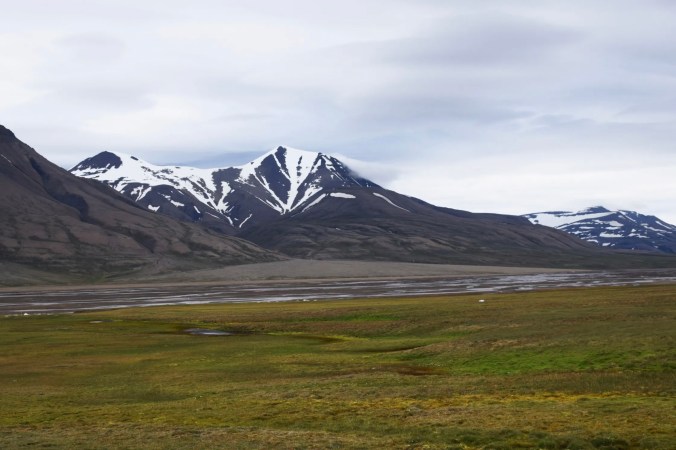
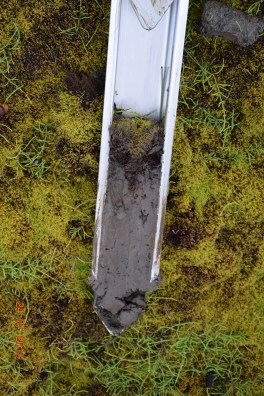
Scientists have discovered “proto-peat” forming in the Arctic as the Earth naturally sequesters carbon, but it could take centuries to mature.

THANK PEAT FOR that scotchy flavor of Scotch whisky: The muck forms in Scotland’s bogs, when layer after layer of dead vegetation resists decay and compresses into fuel, which is burned during scotch distillation. But you can also thank peat for helping keep our planet relatively cool, as all that muck—which is particularly common across the Arctic—traps a tremendous amount of carbon that would otherwise heat the atmosphere. Continue reading
The World’s Largest Living Thing

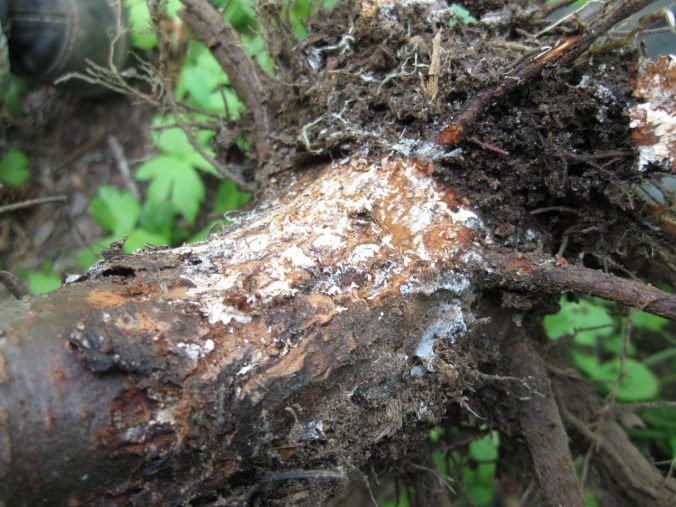
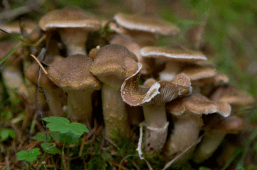
The world’s largest living thing is a stealthy parasite that lives mostly underground and beneath the bark of infected trees in a pale, stringy fungal network. COURTESY MIKE MCWILLIAMS

Thanks to Milo‘s interest in fungi, which we found infectious, we learned years ago what the world’s largest living thing is. We used to feature more stories from Atlas Obscura, but this is the first in a few years:

What the World’s Largest Organism Reveals About Fires and Forest Health

The Humongous Fungus is most visible when it produces the edible and tasty honey mushroom, but the season is brief and doesn’t happen every year. PETER PEARSALL, USFWS/PUBLIC DOMAIN

In Oregon, the Humongous Fungus plays a complex role in an ecosystem reshaped by humans.

UNDER THE BLUE MOUNTAINS OF Oregon lurks something massive and prehistoric. Yet the largest recorded organism on Earth, weighing more than 200 blue whales and dwarfing even Pando, Utah’s famous grove of quaking aspens, is nearly invisible to the untrained eye. It’s a single, genetically identifiable specimen of honey mushroom, or Armillaria ostoyae, that has been growing for thousands of years. Continue reading
Learning To Appreciate Wasps

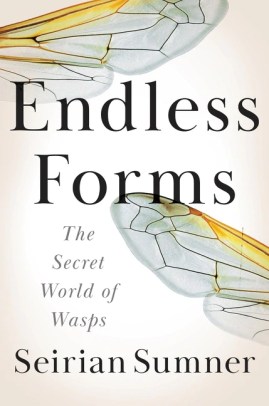
Wasps are one of the least appreciated creatures on the planet, but we have always suspected they deserve some respect. We just never investigated why that might be the case. So, our thanks to the Guardian for bringing this book to our attention in an article titled Why we should all love wasps:

Wasps have always had a bad press. But Dr Seirian Sumner, who has spent her life studying them, argues they are sophisticated, socially complex and essential to the environment

In The Wasp Woman, a 1959 B-movie directed by Roger Corman, the owner of a failing cosmetics company becomes the test subject for a novel anti-ageing formula manufactured from the royal jelly of wasps. Continue reading
P-22 & Other Cats In The Santa Monicas

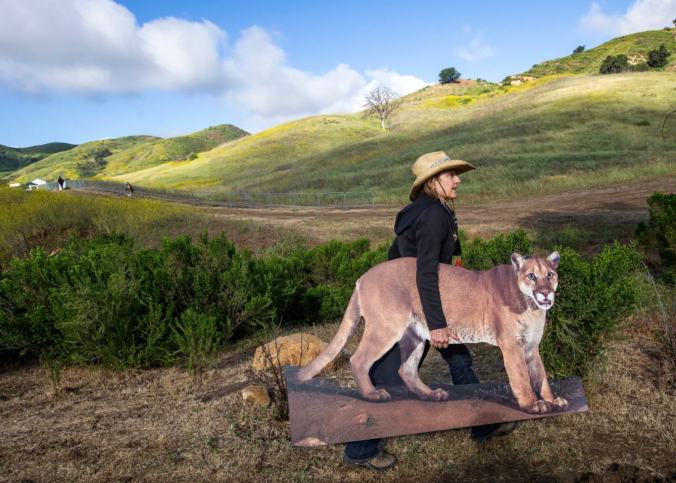
Near the location of the future Wallis Annenberg Wildlife Crossing, a volunteer for the National Wildlife Federation carries a cardboard cutout of a mountain lion known as P-22. Photograph by Mel Melcon / Los Angeles Times / Shutterstock

When we linked to earlier stories about mountain lions in urban California, P-22 was already the it-cat. And the story below, by Emily Witt, shares some anecdotes about P-22’s less fortunate wider family. But mainly it is about one hopeful initiative that P-22 seems to have unwittingly helped make happen:

An Urban Wildlife Bridge Is Coming to California

The crossing will span Route 101, providing safe passage for mountain lions and other animals hemmed in by the freeways that surround the Santa Monica Mountains.

It was just after midnight on April 21st when the radio collar of P-97, an eighteen-month-old mountain lion, sent its last signal. P-97 had only recently separated from his mother, setting out east in the Santa Monica Mountains in search of territory to call his own. (The “P” stands for puma; the number, 97, marks how many mountain lions the National Park Service had tagged when he received the designation.) Continue reading
Desalination’s Discontents

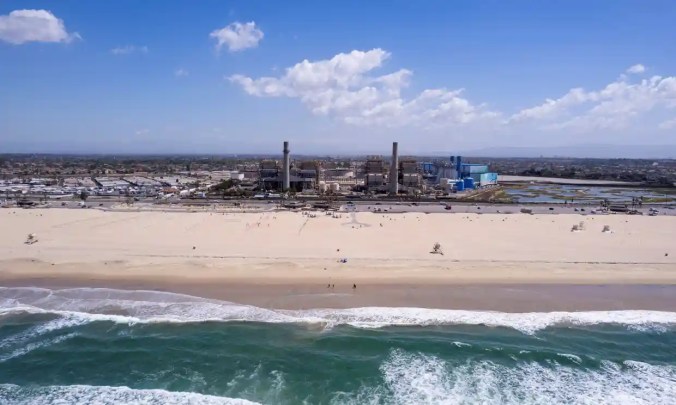
The commissioner of the panel said: ‘The ocean is under attack … I cannot say in good conscience that this amount of damage is OK.’ Photograph: Mike Blake/Reuters

Desalination, which we celebrated multiple times over the years, might not be all as good we thought it was:

Joy for environmentalists as California blocks bid for $1.4bn desalination plant

Poseidon Water sought to turn seawater into drinking water but activists said plan would devastate ecosystem on Pacific coast

California coastal panel on Thursday rejected a longstanding proposal to build a $1.4bn seawater desalination plant to turn Pacific Ocean water into drinking water as the state grapples with persistent drought that is expected to worsen in coming years with climate change. Continue reading
Altered States & Perspective On Nature

Illustration by Ian Mackay

Matthew Hutson, who only recently came to my attention, has shared a story about a brief bit of inspired clarity in How I Started to See Trees as Smart that I find compelling. Not everyone can do what he has done to get this clarity, but isn’t that one of the great reasons to respect writers? If the subtitle triggers any bad memories you might have from your own experience with hallucinogens, try to get over it and read on. Reference to The Soul of an Octopus early on will calm any wobblies. The final paragraph, and especially the final sentence, are worth arriving at:

First, I took an acid trip. Then I asked scientists about the power of altered states.

A couple of decades ago, on a backpacking trip in the Sierra Nevada, I was marching up a mountain solo under the influence of LSD. Halfway to the top, I took a break near a scrubby tree pushing up through the rocky soil. Gulping water and catching my breath, I admired both its beauty and its resilience. Its twisty, weathered branches had endured by wresting moisture and nutrients from seemingly unwelcoming terrain, solving a puzzle beyond my reckoning. Continue reading
Microfauna, Microbiota & Other Wonders Of Soil

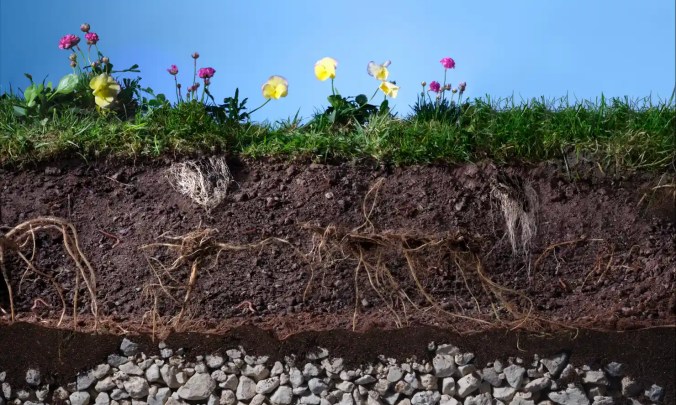
When a plant root pushes into soil, it triggers an explosion of activity in billions of bacteria. Photograph: Liz McBurney/The Guardian

I used the word microflora in the title of a post I wrote 3+ years ago, and today I learned something that serves as a correction. I used that word to distinguish from the better known charisma of megafauna. But there is a better word I should have used in that title, so I am using it in the title of today’s post. The word microbiota has made a few fleeting appearances in our pages, buried in the text of scientific explanations. This editorial by George Monbiot got me to look up the word microflora and from now on I will avoid the misnomer:

The secret world beneath our feet is mind-blowing – and the key to our planet’s future

Don’t dismiss soil: its unknowable wonders could ensure the survival of our species

Beneath our feet is an ecosystem so astonishing that it tests the limits of our imagination. It’s as diverse as a rainforest or a coral reef. We depend on it for 99% of our food, yet we scarcely know it. Soil. Continue reading
The Effects Of Fire Suppression

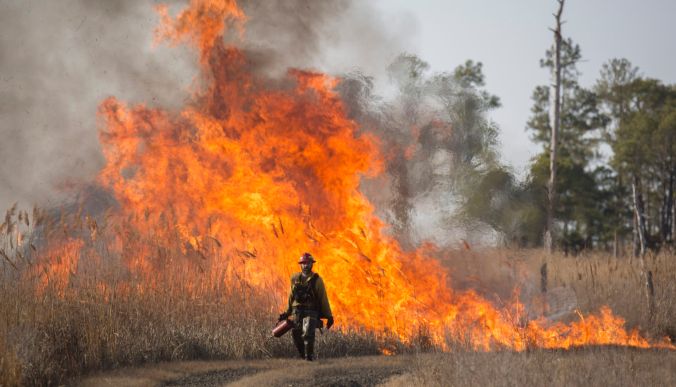
A controlled burn near the Blackwater National Wildlife Refuge in Maryland. SARAH BAKER

We have linked to many stories about wildfires over the years, noting their relationship to climate change. Our working assumption seems to have been that fire is always problematic, but here is reason to reconsider that, thanks to Gabriel Popkin and Yale e360:

Bringing Back Fire: How Burning Can Help Restore Eastern Lands

For millennia, North American ecosystems benefited from fire, mostly set by Indigenous people. Now, a movement is growing, particularly in the eastern U.S., to reintroduce controlled burns to forests and grasslands and restore the role of fire in creating biodiverse landscapes.

It’s an apocalyptic scene that has become all too familiar in recent years. Continue reading

Indigenous Knowhow & Conservation

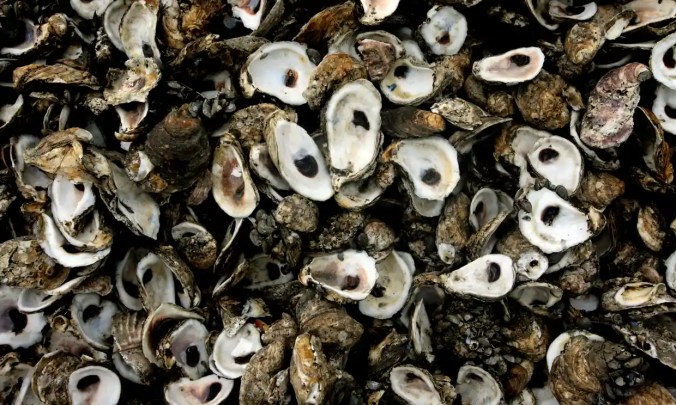
Prof Ian McNevin said ‘the scale of Indigenous oyster harvesting is extraordinary’, and compared it to contemporary commercial oyster farms. Photograph: Orjan F Ellingvag/Corbis/Getty Images

Some of us writing in these pages have been fans of oysters primarily for their culinary value (living in France, and then later in Croatia, could create such bias). But we have posted more frequently about the resiliency that oysters have come to represent in the search for protection against climate impact. Here is some more on that topic, intersecting with another theme we pay frequent attention to:

Precolonial First Nations oyster fisheries sustained millennia of intense harvests, study shows

Researchers in Australia and North America say management of oyster reefs should incorporate Indigenous knowledge

Oyster fisheries in Australia and North America survived for up to 10,000 years prior to colonisation, sustaining First Nations communities even under intense harvest, according to new research. Continue reading

Sensory Loading, Overloading & Unloading

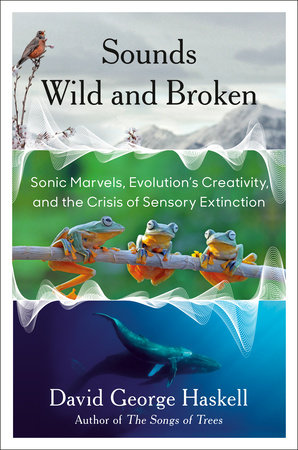
Sounds Wild and Broken by David George Haskell
In early August, 2007 we arrived in a leafy suburb on the north side of Atlanta. We had spent the previous year living on this island, where doors did not have locks and during the daytime the only man-made sounds tended to be those of fishing boats coming and going. At night on that island there were no noises other than nature’s, including small waves hitting the shores and in summertime the crickets. On the first night in Atlanta I opened the window to let in the night air, and the sound of the superhighway, a mile or so away, was distracting enough that I had to close the window to sleep. It’s not that I had not appreciated the quiet of the island, but I was surprised by how much I had adapted to it. The opening of this book review, for these reasons, resonates with my own experience:

Sounds Wild and Broken review – a moving paean to Earth’s fraying soundtrack

David George Haskell’s often wonderful book explores some of the lost frequencies of nature – heard clearly again during Covid’s initial human hush

Lockdown was, among other things, a sudden collective experiment in volume control. Sound waves from the regular rush-hour thrum of cities usually penetrate more than a kilometre below the Earth’s surface. Continue reading

Unexpectedly Amazing In Kerala

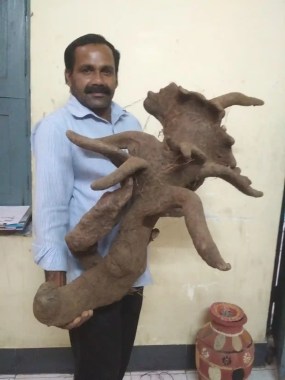
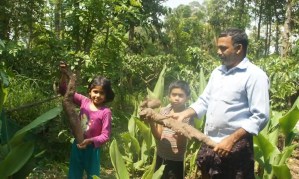
Shaji has a prized collection of more than 200 varieties of tubers. Photograph: Shaji NM

In our Kerala days we visited Wayanad many times, but I would remember if I had met Shaji. We would have sought his advice to expand on the agricultural initiatives at the properties we developed and managed.  Monika Mondal’s story ‘The tuber man of Kerala’ on a quest to champion India’s rare and indigenous crops brings back memories of unassuming neighbors doing unexpectedly amazing things:

Shaji NM has devoted his life to collecting and farming tubers such as yam, cassava and taro, and promoting them across the country

Shaji NM has spent the past two decades travelling across India to collect rare indigenous tubers. Photograph: Shaji NM

Known as “the tuber man of Kerala”, Shaji NM has travelled throughout India over the past two decades, sometimes inspecting bushes in tribal villages, at other times studying the ground of forests closer to home among the green hills of Wayanad in Kerala. His one purpose, and what earned him his title, is to collect rare indigenous varieties of tuber crops.

“People call me crazy, but it’s for the love of tubers that I do what I do,” says Shaji. “I have developed an emotional relationship with the tuber. When we did not have anything to eat, we had tubers.” Continue reading

Old Growth Forest Protection Schemes

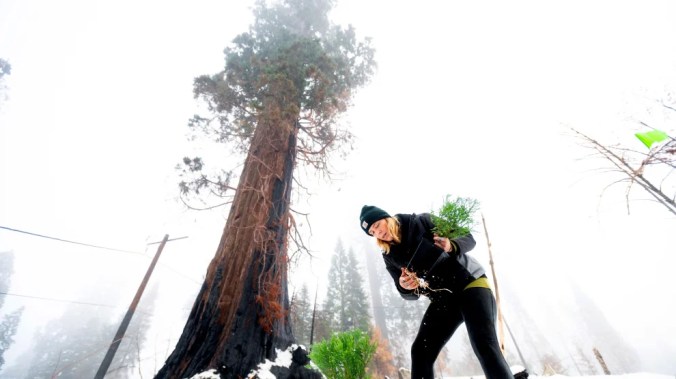
Caryssa Rouser, a propagation specialist with Archangel Ancient Tree Archive, plants a sequoia tree in October, 2021, in Sequoia Crest, California. Noah Berger/AP

Old growth forests matter for so many reasons. Not least, biophilic reasons. But at this moment, we rightly pay more attention to their value with regard to urgent climate issues. Maddie Oatman makes a good case in this Mother Jones essay:

Why Old-Growth Forests Matter So Much in the Fight Against Climate Change

Biden’s executive order to preserve ancient trees is a big deal—but it could have gone further.

Few experiences have rendered me as awestruck as the winter morning I spent wandering through a grove of ancient sequoias, their sienna bark glowing against the snowy ground. Continue reading

More On Seed Banks

We have featured these banks before, but they are worthy of a more detailed inside look.

So, thanks to by Salomé Gómez-Upegui, Rita Liu and the Guardian. Their article, Seed banks: the last line of defense against a threatening global food crisis is full of images and written descriptions that put these banks in better perspective:

As climate breakdown and worldwide conflict continue to place the food system at risk, seed banks from the Arctic to Lebanon try to safeguard

As the risks from the climate crisis and global conflict increase, seed banks are increasingly considered a priceless resource that could one day prevent a worldwide food crisis. Continue reading

Convivial Conservation

Click on this image to go to the page where the illustrative video about convivial conservation is embedded

New to me, but not new, is this pairing of words that have a magical ring to them when said together:

Convivial Conservation

Convivial (literally: ‘living with’) conservation offers a new and integrated approach to understanding and practicing environmental conservation. It is a Whole Earth vision that responds to the major ecological, social and political-economic challenges facing people and biodiversity in the 21st century

Click on the image above to watch a short video introducing the concept, and click to the right to read more about the book. Click here to read more about ongoing research on this topic. Anyone following our posts on this platform for the last decade+ will have seen a different pair of words frequently used–sometimes related to biodiversity and other times related to culture. Now that I have let this other word pairing have some space in my day, I expect to see the words more frequently in these pages.

Sometimes, You Just Have To Say…

Photo by Seth Inman taken in Kenya’s Samburu Game Reserve

… Show me a photo. When atrocities dominate the news, and threaten to overwhelm, I lean on old photographs taken by family members that offer a meditative opportunity. Recently I have found myself leaning on those that transport me to some natural phenomenon I have not myself witnessed. Recently, three years after his last work on the African continent, Seth was on a work assignment in Kenya and took the photo above. That has been my meditative escape mechanism recently, but today the Guardian’s occasional series offers some others, thanks to Joanna Ruck:

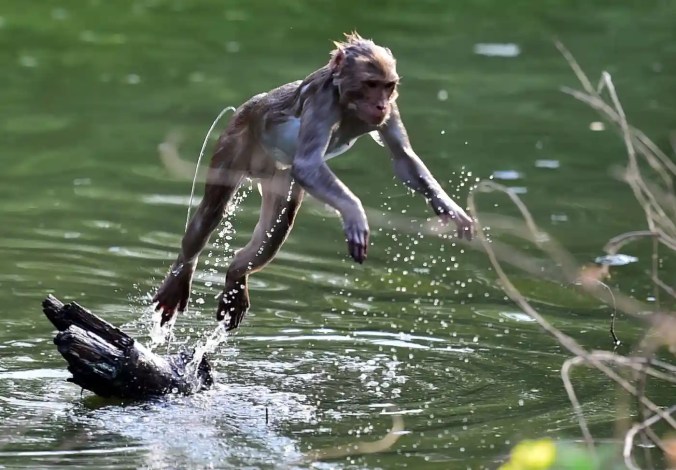
A monkey leaps in a pond during a hot summer day in Allahabad, India. Photograph: Sanjay Kanojia/AFP/Getty

For more pictures in the series, click either image.

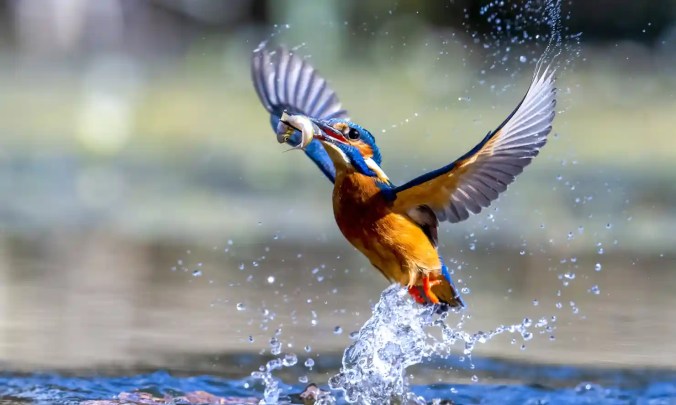
Main image: A kingfisher bags a meal in Lincolnshire, UK. Photograph: Charlotte Graham/Rex/Shutterstock

Ivory-billed Woodpeckers In Louisiana

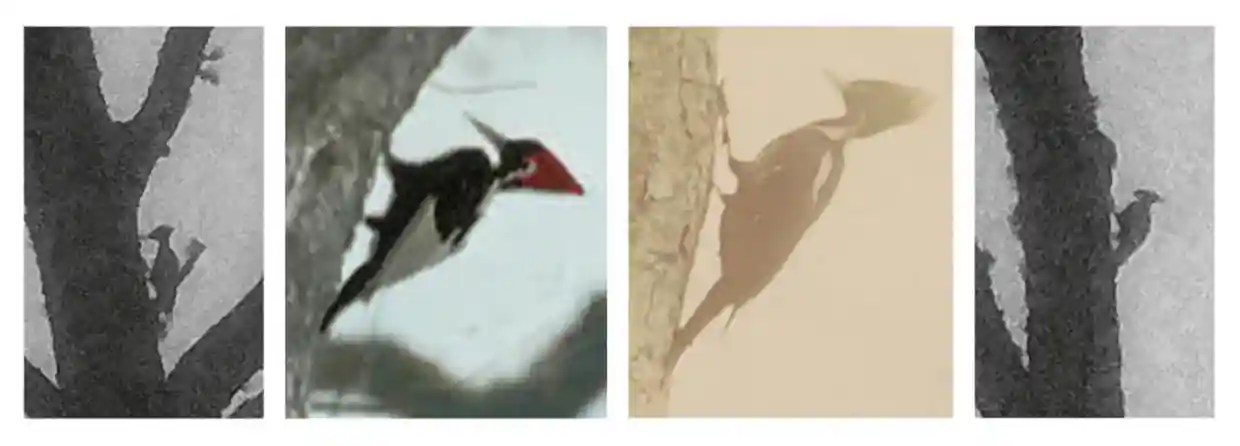
Comparison of photographs taken of apparent ivory-billed woodpeckers in Louisiana from this study (A, D), with a colorized ivory-billed woodpecker, also from Louisiana (B), and a pale-billed woodpecker taken in Central America (C). Photograph: The Guardian

The title of this post should have a question mark at the end of it, or should be considered clickbait. For bird nerds this is likely not even news. But it is important in terms of natural history in general. Ivory-billed woodpeckers have been mentioned a couple of times in our pages; but the chance of seeing one these days was considered to be zero. We can now hope we were wrong about that:

Back from the dead? Elusive ivory-billed woodpecker not extinct, researchers say

An expedition to the forests of Louisiana say extinction of bird, last definitively seen in 1944, has been exaggerated

In terms of elusiveness, it is the Bigfoot or Loch Ness monster of the bird world, so rare and undetectable that the US government declared it extinct last year. But the ivory-billed woodpecker is, in fact, still alive and pecking in the forests of Louisiana, a team of researchers has claimed. Continue reading

The Rights Of Man Versus The Rights Of Nature

For most of history, people saw themselves as dependent on their surroundings, and rivers and mountains had the last word. Illustration by Marion Fayolle

Florida is on my mind today. Yesterday I listened to some excellent reporting on this podcast episode and was surprised to learn that some consider the political climate in the state environmentally-friendly. Surprising because the entire reporting emphasized what sounded like anti-regulatory business-friendly fervor. And after reading this article by one of my favorite writers, I think the state will be on my mind for the indefinite future (late in the article she writes “Start taking Stone seriously and it’s hard to stop;” so far she is correct):

A Lake in Florida Suing to Protect Itself

Lake Mary Jane, in central Florida, could be harmed by development. A first-of-its-kind lawsuit asks whether nature should have legal rights.

Lake Mary Jane is shallow—twelve feet deep at most—but she’s well connected. She makes her home in central Florida, in an area that was once given over to wetlands. To the north, she is linked to a marsh, and to the west a canal ties her to Lake Hart. To the south, through more canals, Mary Jane feeds into a chain of lakes that run into Lake Kissimmee, which feeds into Lake Okeechobee. Were Lake Okeechobee not encircled by dikes, the water that flows through Mary Jane would keep pouring south until it glided across the Everglades and out to sea. Continue reading

Coffee, Birds & Bees

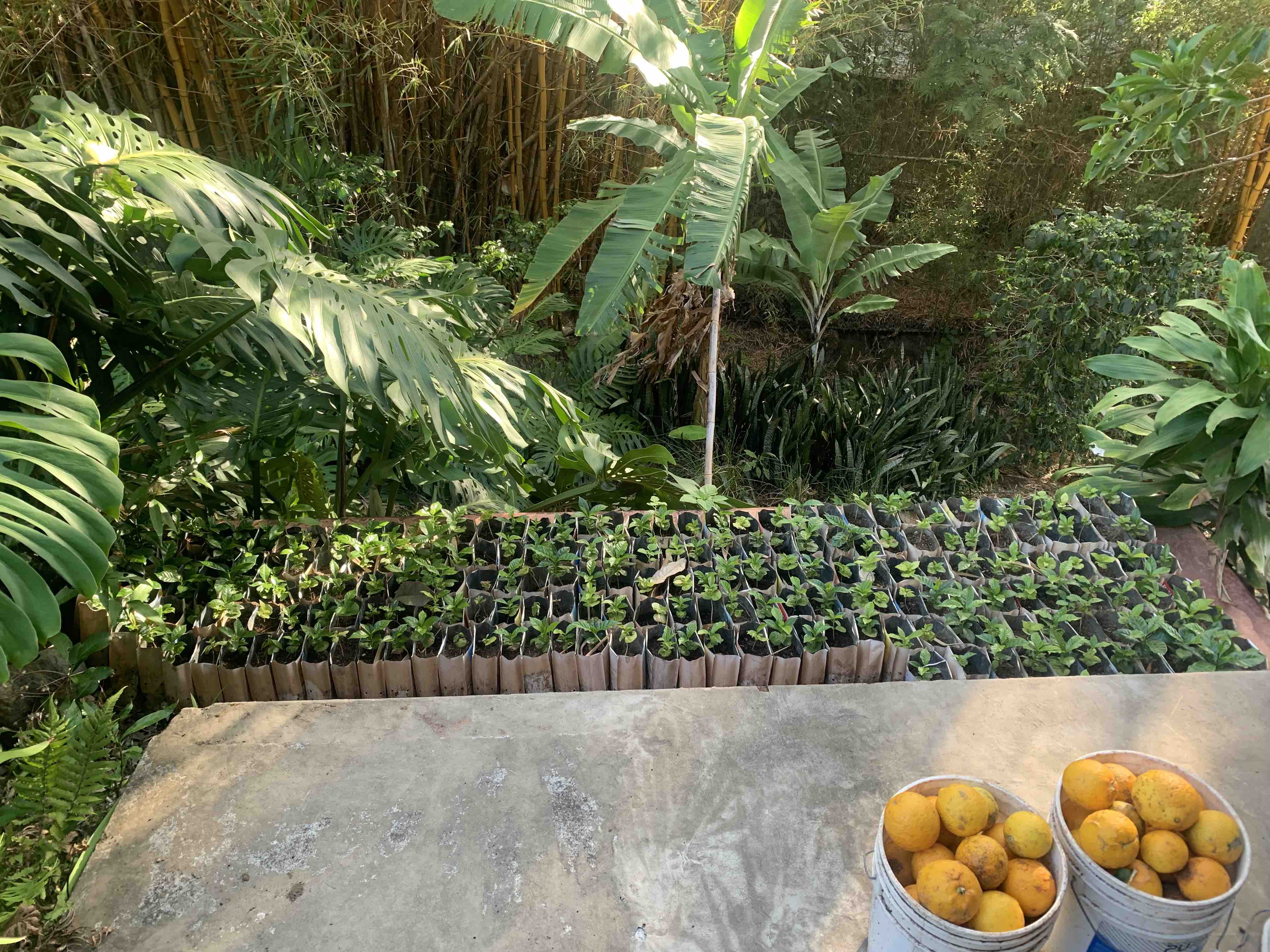
Seedlings from coffee picked in early 2021

On a couple of acres of mountain land in Escazu, on property that once was part of a larger coffee farm, we have been preparing to plant a thousand or so coffee saplings, which will eventually become trees among trees. Above are the thriving seedlings from 2021 germination, and below the early stage of germination from this year’s pickings.

Germination of coffee picked in early 2022

Coffee culture has been a long time in the making, so the slow pace of the Organikos arc has not intimidated me. And yet, if I could speed it up, I would because of the variety of beneficiaries.

Today an article by Cristen Hemingway Jaynes on the website EcoWatch brings to my attention a team of researchers who I will pay more attention to. Some are here in Costa Rica, at CATIE; the others at University of Vermont. Their work makes me appreciate the value of getting on with this:

Birds and Bees Make Better Coffee, Study Finds

Birds and bees work together as pollinators. DansPhotoArt on flickr / Moment / Getty Images

For many people, one rich, pleasant smell signals the start of a new day more than any other: coffee. Different techniques have been used to get the best cup of the caffeine-rich liquid, from a French press to the pour-over method.

A unique new study has found that the secret to better coffee is really in control of the birds and the bees. Continue reading