Celebrating French Environmental Commitments

Paris mayor Anne Hidalgo and the co-president of the Paris bid for the 2024 Olympics, Tony Estanguet, paddle on the Seine in Paris. Photograph: Reuters

Since 11+ years ago many valuable environmental opinions by George Monbiot have been linked to in our pages; today a celebration of a neighboring country’s efforts:

When it comes to rich countries taking the environment seriously, I say: vive la France

Emmanuel Macron’s government is at least doing the bare minimum to avert the planetary crisis – and putting the UK to shame

While we remain transfixed by a handful of needy egotists in Westminster and the crises they manufacture, across the Channel a revolution is happening. It’s a quiet, sober, thoughtful revolution, but a revolution nonetheless. France is seeking to turn itself into an ecological civilisation. Continue reading

Useful Summary Of Carbon Credit Schemes

©Anthropocene Magazine

Anthropocene Magazine has a useful summary, created by Mark Harris, of the strength’s, weaknesses, opportunities and threats of various carbon credit schemes. In a short read it helps clarify some, if not all, questions that can generate from conflicting headlines on the topic:

What Counts As A Carbon Credit?

A new UN draft report threatens to sideline billions of tons of future carbon removal

Back in 2015, the Paris Agreement called for the creation of an international program through which countries could trade emissions to meet their climate commitments. For that to happen, the world has to agree on what qualifies for a carbon credit. Continue reading
Capsicum Futures

The World Vegetable Center conducts research, builds networks, and carries out training and promotion activities to raise awareness of the role of vegetables for improved health and global poverty alleviation.

Among the essential components of Kerala cuisine, various chili peppers were central in our diet during the India work years. I became quite tolerant of high intensity heat from capsicum, and learned to enjoy the steamy delirium of a typical mango curry. I am out of practice, not sure I can still handle high Scoville meals any more, but heartened to know that Derek Barchenger and the W.V.C team are taking care for capsicum’s future, so thanks to Clarissa Wei for this story:

The Quest to Save Chili Peppers

A seed bank in Taiwan is home to more chili varieties than anywhere else on earth. In a warming world, we’re going to need them.

In 1999, Susan Lin, a bespectacled plant researcher at the World Vegetable Center, in Taiwan, pulled on a pair of latex gloves and got to work cross-pollinating some chili peppers. She collected tiny white flowers from a cayenne-pepper plant, shook their pollen into a tiny test tube, and walked over to an aji-chili plant. Using tweezers, she removed the petals and anthers from its flower buds, exposing the thread-like stigmas that serve as the plant’s female reproductive organs. Then she dipped the stigmas into the pollen, hoping that they would eventually form peppers. Continue reading
Youth Is Not To Be Wasted In Montana

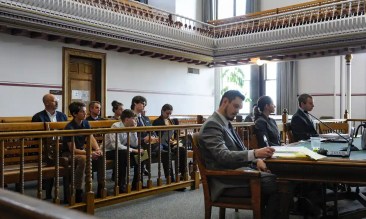
The plaintiffs look on during a status hearing for Held v Montana in the Lewis and Clark county courthouse in Helena, Montana, last month. Photograph: Thom Bridge/AP

At first it sounded like a gimmick, but listen to and read about it: there is a useful half hour podcast on this topic, and here we thank the Guardian for a bit more detailed coverage:

‘My life and my home’: young people start to testify at historic US climate trial

Some of the plaintiffs listen to arguments during the hearing in Montana. Photograph: Thom Bridge/AP

The plaintiffs note that Montana’s constitution pledges a healthy environment ‘for present and future generations’

The US’s first-ever trial in a constitutional climate lawsuit kicked off on Monday morning in a packed courtroom in Helena, Montana.

The case, Held v Montana, was brought in 2020 by 16 plaintiffs between the ages of five and 22 from around the state who allege state officials violated their constitutional right to a healthy environment by enacting pro-fossil fuel policies. Continue reading
Pyrolysis, Advanced Plastic Recycling, Explained

Plastic waste at a disposal plant in Tokyo. THE YOMIURI SHIMBUN VIA AP IMAGES

We have a difficult time giving Exxon and other petroleum companies the benefit of the doubt, but at minimum we want to understand what they say about what they are selling:

As Plastics Keep Piling Up, Can ‘Advanced’ Recycling Cut the Waste?

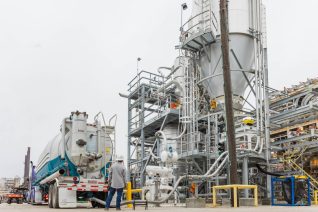
Exxon’s advanced recycling facility in Baytown, Texas. BUSINESS WIRE

Proponents of a process called pyrolysis — including oil and gas companies — contend it will keep post-consumer plastics out of landfills and reduce pollution. But critics say that by converting waste to petroleum feedstock, it will only perpetuate a dependence on fossil fuels.

Bob Powell had spent more than a decade in the energy industry when he turned his attention to the problem of plastic waste. Continue reading
Taking Inspiration From Smallhold Farms In Africa

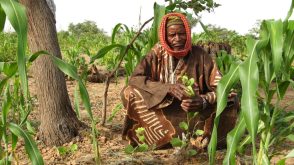
A farmer in Niger tends to a tree sprout growing among his millet crop. TONY RINAUDO / WORLD VISION AUSTRALIA

I am nearing the point where I can offer an update on the trees we have planted in advance of 1,000+ coffee plants going into the ground in their shade. Thanks to Fred Pearce, reporting in Yale E360, I have some inspiration coming from across the Atlantic on the broader value of those trees:

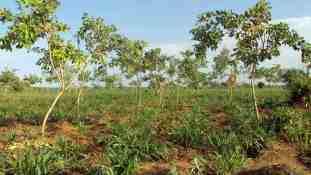
Dooki (Combretum glutinosum) trees grow on a millet field in Niger. P. SAVADOGO / ICRAF

As Africa Loses Forest, Its Small Farmers Are Bringing Back Trees

The loss of forests across Africa has long been documented. But recent studies show that small farmers from Senegal to Ethiopia to Malawi are allowing trees to regenerate on their lands, resulting in improved crop yields, productive fruit harvests, and a boost for carbon storage.

For decades, there have been reports of the deforestation of Africa. And they are true — the continent’s forests are disappearing, lost mainly to expanding agriculture, logging, and charcoal-making. But the trees? Continue reading

Food Waste Best Practice, South Korea Edition

Unloading the food waste at a disposal facility in Seoul. Chang W. Lee/The New York Times

One of the most covered topics in our pages during the decade since we started paying attention to it, still going strong for all the wrong reasons; so, our thanks to the New York Times for assigning John Yoon (reporting, writing) and Chang W. Lee (for photographs and video) to go to South Korea:

Food waste being separated from plastic bags at the Goyang facility.

When wasted food rots in landfills, it pollutes soil and water — and warms the planet. Here’s how one country keeps that from happening.

Around the world, most of the 1.4 billion tons of food thrown away each year goes to landfills. As it rots, it pollutes water and soil and releases huge amounts of methane, one of the most potent greenhouse gases. Continue reading
Costa Rica’s Ceramic Craft

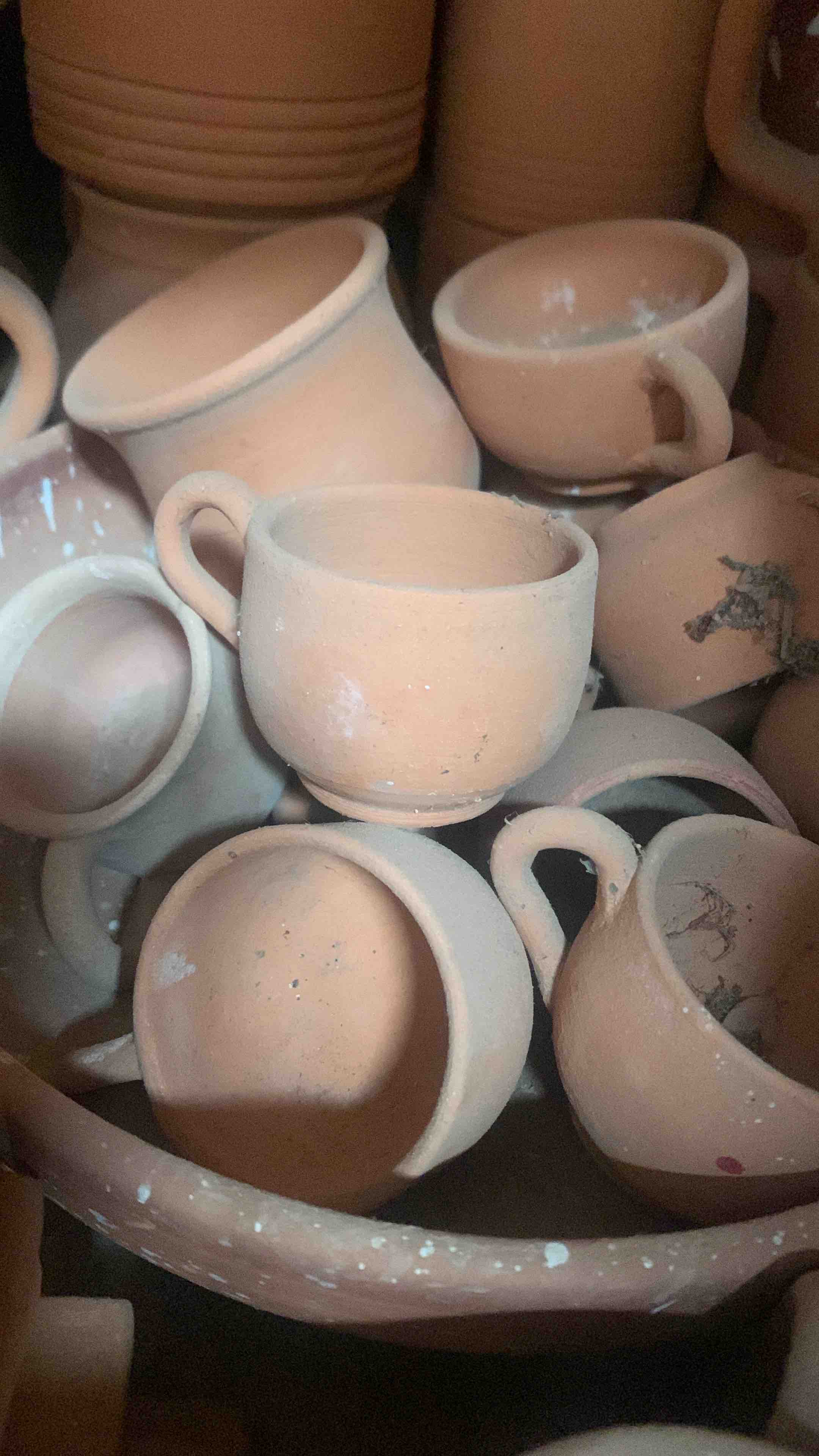
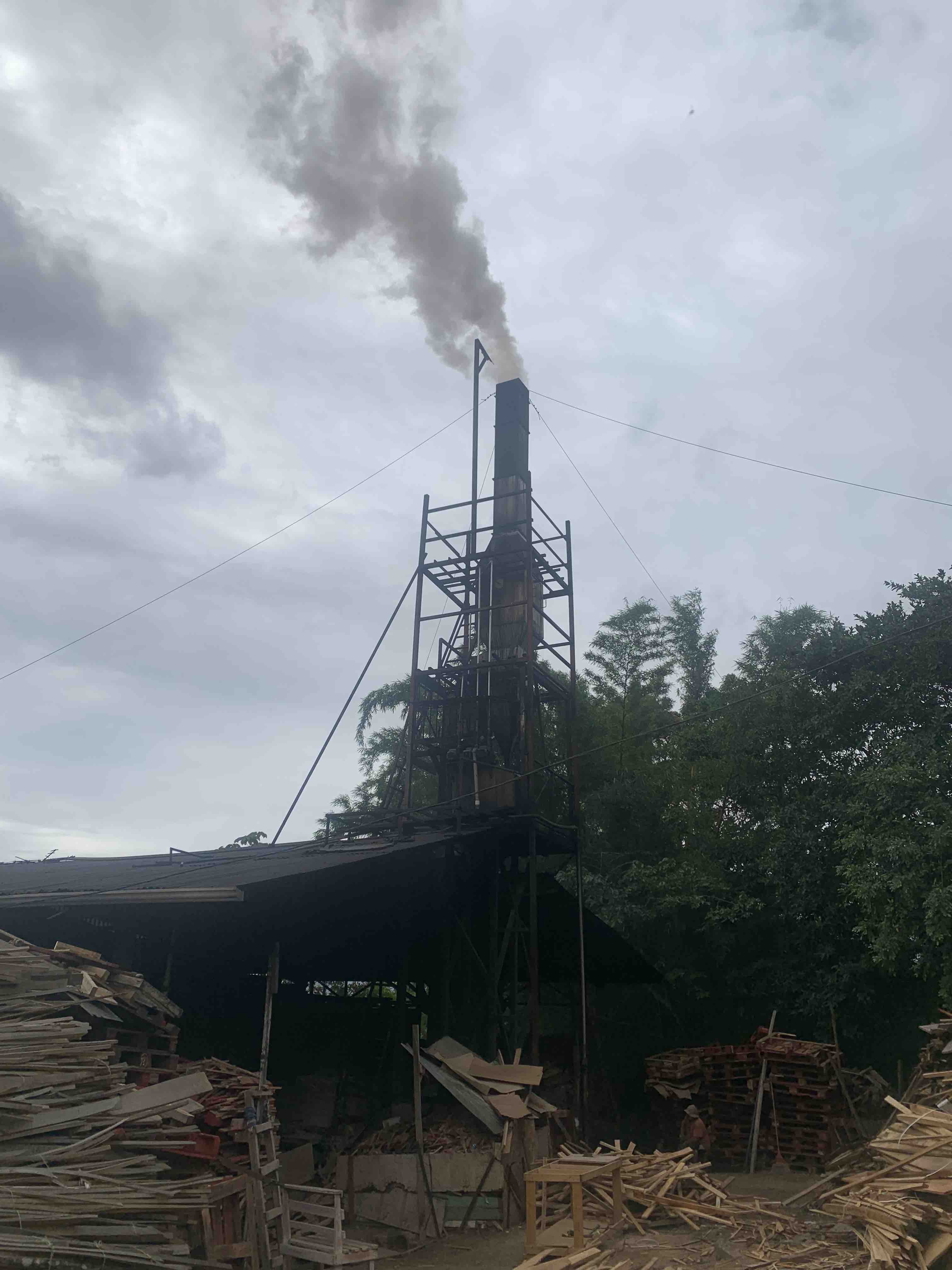
Amie and I work together, but most of my days are consumed by coffee. Especially in the March to May period, when coffee harvests are finishing and the first cuppings of the new crops are possible, my time for other activities is limited. But in June, there is more time. For the past 4+ years our shared work has included my joining her to meet artisans whose work our shops might carry. This work never disappoints, even if we conclude that the product is not a good fit for Authentica. Recently we had an afternoon together with a ceramicist we knew about, but had not yet had the opportunity to spend time with. The biggest surprise was seeing this smoke stack in the photo below.

It is rustic, and at first sight not much to look at. But listening to him tell its history you can appreciate how often in history artisans lead the way that industrialists eventually follow. This was the first smokestack in Costa Rica using technology that reduces carbon and particulate emissions. Continue reading
Taking Better Care With Help From Kate Raworth

What? We never posted on this book or its economist author before? We correct that now with Hettie O’Brien’s article in the Guardian :

The planet’s economist: has Kate Raworth found a model for sustainable living?

Her hit book Doughnut Economics laid out a path to a greener, more equal society. But can she turn her ideas into meaningful change?

Raworth in Oxford. Photograph: Graeme Robertson/The Guardian

Consider the electric car. Sleek and nearly silent, it is a good example of how far the world has progressed in fighting the climate crisis. Its carbon footprint is around three times smaller than its petrol equivalent, and unlike a regular car, it emits none of the greenhouse gases that warm the planet or noxious fumes that pollute the air. That’s the good news. Then consider that the battery of an electric car uses 8kg of lithium, likely extracted from briny pools on South America’s salt flats, a process that has been blamed for shrinking pasturelands and causing desertification.

A bike park in Amsterdam which offers free parking for more than 2,500 bicycles. Photograph: Jochen Tack/Alamy

The 14kg of cobalt that prevent the car’s battery from overheating have probably come from the Democratic Republic of the Congo, where cobalt mines have contaminated water supplies and soil. As the demand for electric vehicles grows, the mining and refining of their components will intensify, further damaging natural ecosystems. By 2040, according to the International Energy Agency, the global demand for lithium will have increased more than fortyfold. Continue reading

Seaweed Farming Further Considered

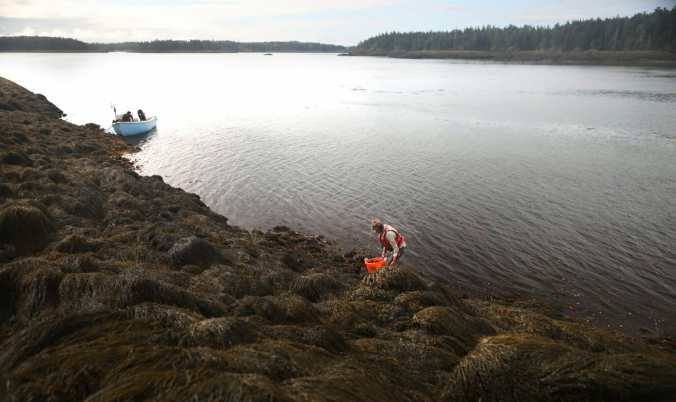
Severine von Tscharner Welcome forages for seaweed in Cobscook Bay, Maine.

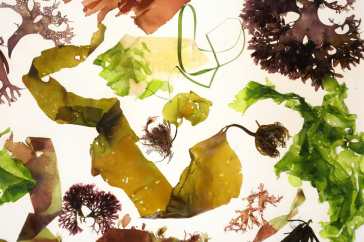
Our thanks as always to Food & Environment Reporting Network. In this article by Bridget Huber, with photography by Lauren Owens Lambert, some of our earlier links to stories about farming in the sea are called into question.

A variety of seaweed harvested from the Gulf of Maine, including sugar kelp, sea lettuce, dulse, bladderwrack, and Irish moss.

Climate savior or ‘Monsanto of the sea’

Seaweed farming is being hyped as a major weapon in the fight against climate change. But skeptics say the rush to build industrial-scale operations risks unintended consequences.

Early on a cool spring morning, in far Downeast Maine, Severine von Tscharner Welcome and her husband, Terran, scrambled along a point jutting into Cobscook Bay. The Passamaquoddy people named the bay Kapskuk after the immense tides and wild currents that make the water seem to boil. Continue reading
Crop Swap LA & Other Microfarm Advances

Illustration: Julia Louise Pereira/The Guardian

Our thanks to Victoria Namkung for this reporting in the Guardian, from Los Angeles:

‘Everything is natural and tastes so good’: microfarms push back against ‘food apartheid’

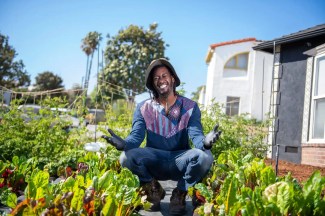
Crop Swap LA founder Jamiah Hargins in the Asante microfarm in Los Angeles, California. Photograph: Valérie Macon/AFP/Getty Images

Bipoc-led local farms in unconventional spaces decentralize systems that have produced food deserts and create food equity

On a recent Sunday morning in South Los Angeles, Crop Swap LA volunteers and staffers harvested bags of freshly picked produce from the front yard of a residence. Located just steps from Leimert Park Plaza, the Asante microfarm is the first of what will be numerous microfarms created by the organization, which is dedicated to growing hyperlocal food on unused spaces “in the neighborhood, exclusively for the neighborhood”. Continue reading

Pottery Tradition & Modernity

Mr. Biscu makes pieces using clay that comes from earth extracted from a hill in Horezu.

Chantel Tattoli reported this story from Horezu, Romania for the New York Times. Accompanied by photographs and video by Marko Risovic, her story is based on speaking to a dozen local potters using a translator:

A style of pottery made for centuries in a small Romanian town has recently become a hot commodity.

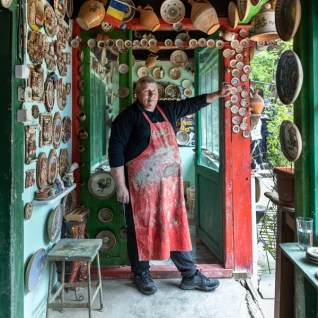
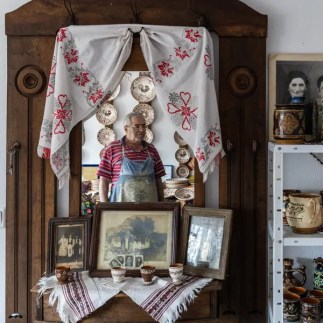
Sorin Giubega at his home, which is filled with ceramics made by him and his ancestors.

Sorin Giubega’s grandfather was a potter. So was his father. And at 8 years old, Mr. Giubega said, he started to play on a pottery wheel, too.

Mr. Giubega, now 63, and his wife, Marieta Giubega, 48, are potters in Horezu, Romania, a town in the foothills of the Capatanii Mountains about three hours by car from Bucharest.

Horezu is home to a community of about 50 artisans who make a traditional style of ceramics with methods that have been practiced for more than 300 years. Continue reading
Indigenous Food Foraging

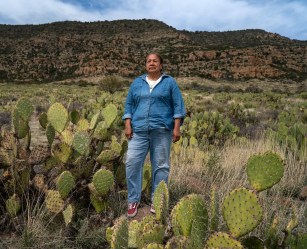
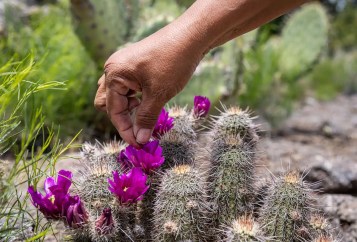
Prickly pear cacti, which produce Twila Cassadore’s favorite fruit. Photograph: Gabriela Campos/The Guardian

Samuel Gilbert was in Bylas, Arizona, on the San Carlos Apache Reservation to report this article, which contains excellent accompanying photographs by Gabriela Campos.

We thank the Guardian for this coverage of indigenous heritage:

‘It healed me’: the Indigenous forager reconnecting Native Americans with their roots

Twila Cassadore hopes teaching Western Apache traditional foodways can aid mental, emotional and spiritual health

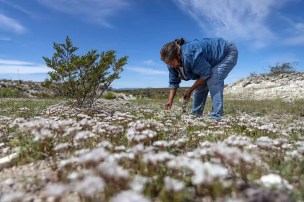
Twila Cassadore gathers wild pearl onions on a foraging trip in the San Carlos Apache Reservation in April. Photograph: Gabriela Campos/The Guardian

On a warm day in April, Twila Cassadore piloted her pickup truck toward the mountains on the San Carlos Apache Reservation in Arizona to scout for wild edible plants. A wet winter and spring rains had transformed the desert into a sea of color: green creosote bushes topped with small yellow flowers, white mariposa lilies, purple lupines and poppies in full bloom.

Cassadore picks the petals off a flowering cactus during a foraging trip. She uses the petals in salads. Photograph: Gabriela Campos/The Guardian

Cassadore and I drove up a rough dirt road that used to be an old cattle trail, passing through various ecosystems, moving from Sonoran desert to grasslands and piñon-juniper woodlands. In each area, Cassadore would stop to gather desert chia seeds, cacti flowers and thistles.

Cassadore stopped her truck beside a three-leafed sumac bush brimming with fruit. Continue reading
Miyazaki, Trees & Authentic Experience

A photograph of children walking along a path in the woods. Two of them are holding hands.

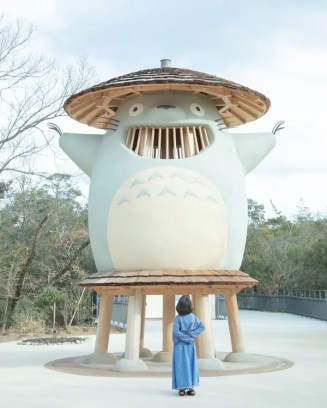
The magazine sent the Japanese photographer Rinko Kawauchi to Ghibli Park on a day when it was closed to the public, and she took along her daughter and some friends. Rinko Kawauchi for The New York Times

Links to the writings of Sam Anderson have not appeared in our pages before, and I almost missed this opportunity because at first appearance this article does not fit the norm for our themes. But if you read to the end, it does so in one clear way. It has to do with the power of nature, trees in particular, and once you read the article you will understand (if you are familiar with our platform). You can also listen to an audio version of this article here, but be sure to see the photos in the original publication:

Spirited Away to Miyazaki Land

What happens when the surreal imagination of the world’s greatest living animator, Hayao Miyazaki, is turned into a theme park?

A Totoro-like climbing structure. Rinko Kawauchi

As an American, I know what it feels like to arrive at a theme park. The totalizing consumerist embrace. The blunt-force, world-warping, escapist delight. I have known theme parks with entrance gates like international borders and ticket prices like mortgage payments and parking lots the size of Cleveland. I have been to Disney World, an alternate reality that basically occupies its own tax zone, with its own Fire Department and its own agriculture — a place where, before you’ve even entered, you see a 100-foot-tall electrical pole along the freeway with Mickey Mouse ears. This is a theme park’s job: to swallow the universe. To replace our boring, aimless, frustrating world with a new one made just for us. Continue reading
Birds, Citizen Science & You

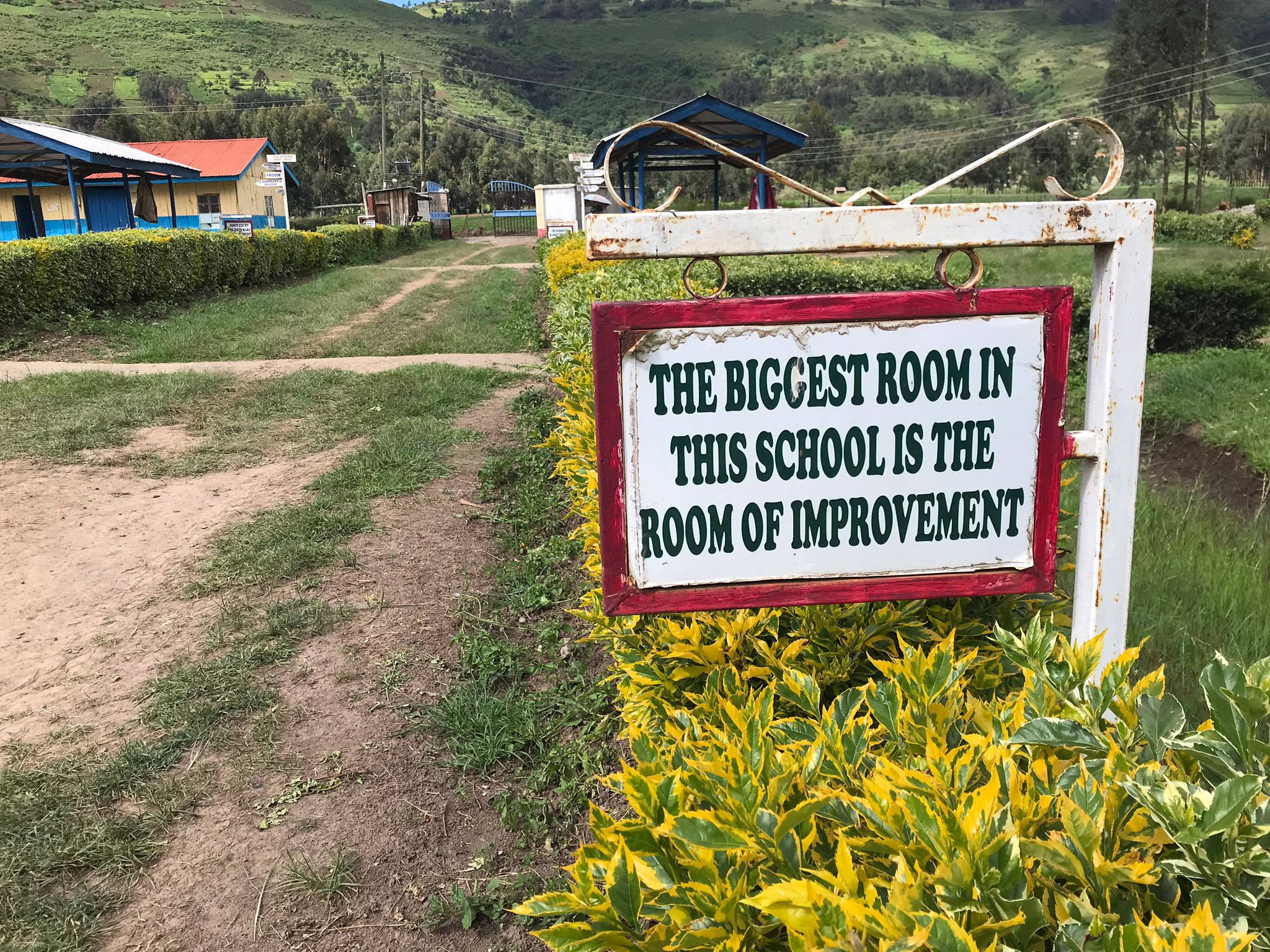
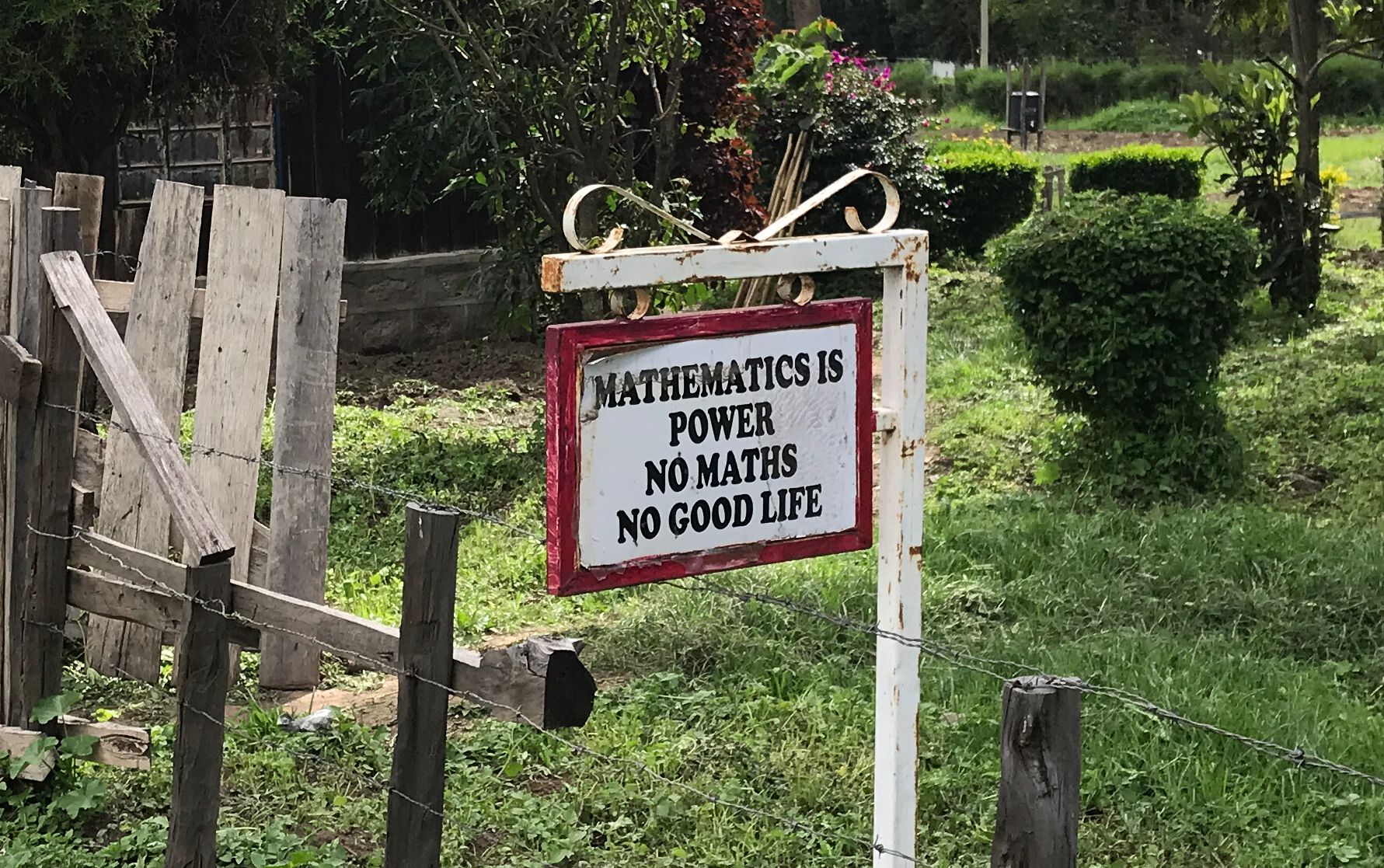
Seth has been working in various African countries recently, and is somewhere in Kenya at this moment, for work. There is a school in the vicinity, with these signs. We have not yet had the chance to hear any details about the school, but these signs anyway say most of what we might want to know.

His work, related to forest management, clearly intersects with his longstanding interest in birds, strengthened by his three years working at the Cornell Lab of Ornithology. That period coincides with our learning about citizen science and in the years since we have shared many stories from the field.

The pictures arrived from Kenya just as this initiative between the Cornell Lab of Ornithology and the New York Times comes to my attention, which you might find interesting:

Mike McQuade

Go Birding With The Times

Our understanding of birds has been profoundly shaped by the work of everyday people. After all, anyone can step outside and pay attention to an untamed world swooping above. Continue reading
Greenland’s Rock Flour

Guardian graphic. Source: Guardian research

Damian Carrington, Environment editor at the Guardian, shares these findings:

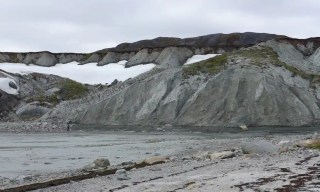
Eight-thousand-year-old marine deposits, exposed by the slow rise of Greenland after the last ice age. The cliffs are about 15 metres high. Photograph: Minik Rosing

Rock ‘flour’ from Greenland can capture significant CO2, study shows

Powder produced by ice sheets could be used to help tackle climate crisis when spread on farm fields

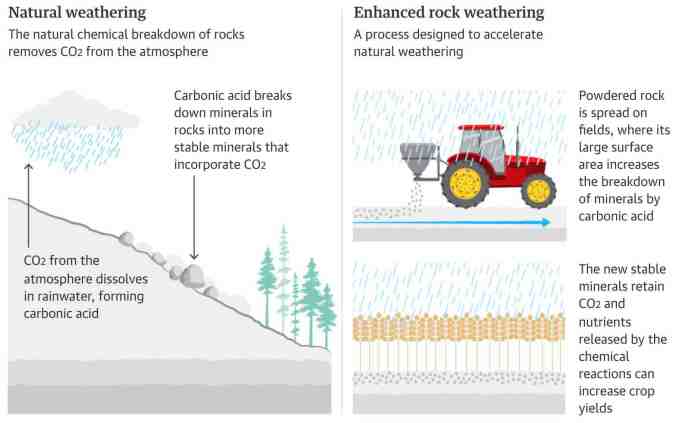
Rock “flour” produced by the grinding under Greenland’s glaciers can trap climate-heating carbon dioxide when spread on farm fields, research has shown for the first time.
Natural chemical reactions break down the rock powder and lead to CO2 from the air being fixed in new carbonate minerals. Continue reading

Give It Up For Oysters

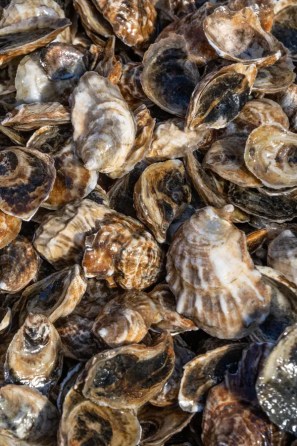
Among the ocean’s best filter feeders, one oyster cleans 50 gallons of water per day. Tony Cenicola/The New York Times

We have linked to stories about the environmental services that oysters provide, as well as the environmental activists who leverage those services; today a riff on those topics:

Stefanie Bassett and Elizabeth Peeples left their city lives behind to raise mollusks.

The Little Ram Oyster Co., a farm of 2 million oysters on the North Fork of Long Island, started with a Groupon.

To celebrate a friend’s birthday in the summer of 2017, Stefanie Bassett and Elizabeth Peeples joined eight other enthusiasts in Long Island City to learn how to shuck oysters at a discount. The Brooklyn couple, who knew each other from middle school in Columbia, Md., always had a love for the delicacy. But as they laughed with their friends and fumbled with their oyster knives, they also listened intently as an instructor explained the history and magic of the mollusks.

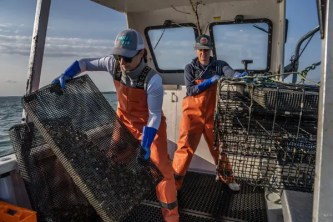
Ms. Bassett and Ms. Peeples prepare oyster cages to be put into the water. Tony Cenicola/The New York Times

“The thing that drew our attention was the positive environmental impact oysters have,” said Ms. Bassett, 42.

Among the ocean’s best filter feeders, one oyster cleans 50 gallons of water per day. New York was once known as “the Big Oyster,” but over-harvesting and poor water quality wiped out the population by the 21st century. The couple learned about efforts to bring them back to the harbor. Continue reading

11 Years, 11 Months & 11 Days Later

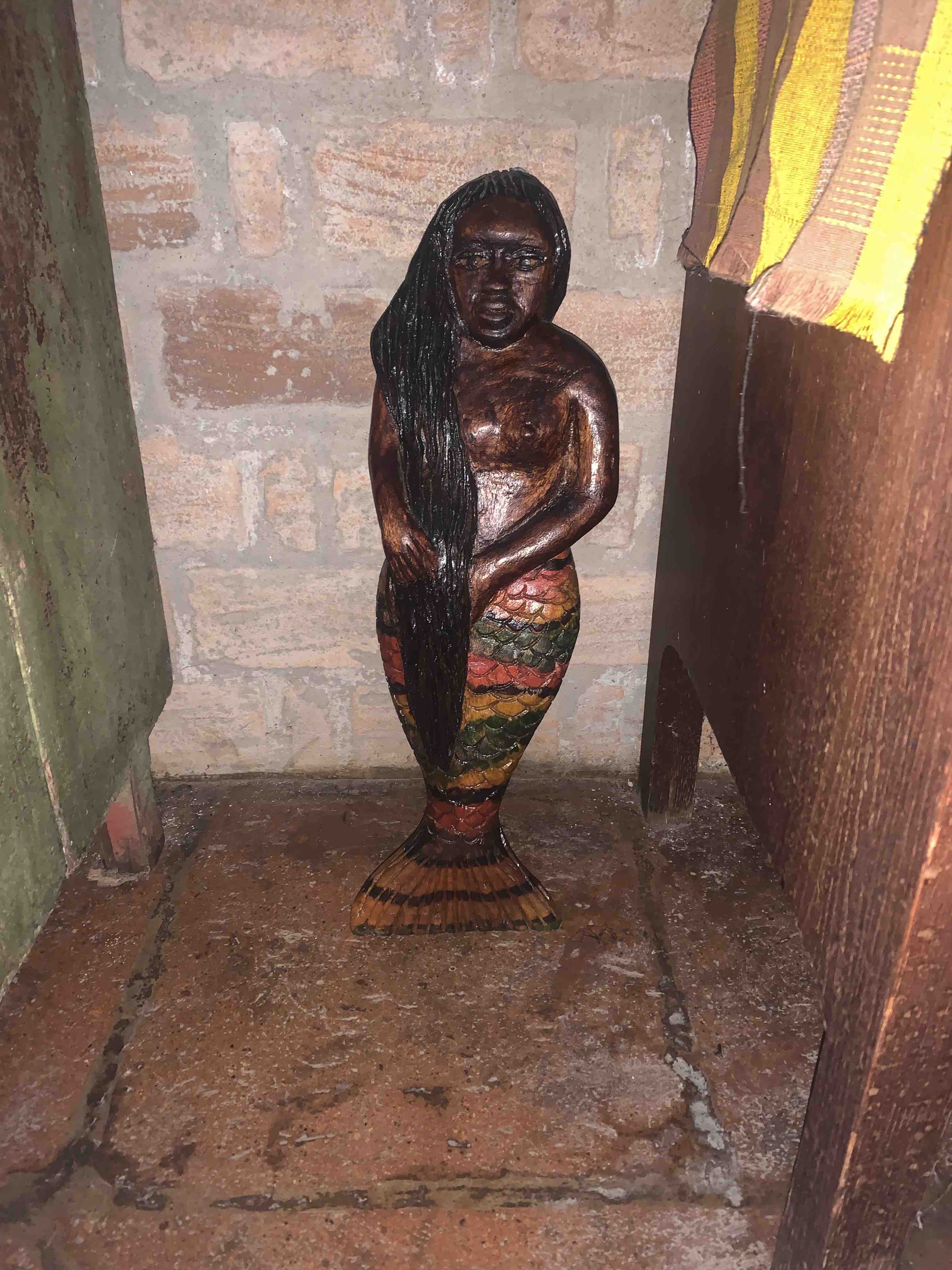
Mermaid (now in Escazu, Costa Rica), handcrafted by Rock Bottom from driftwood in Port Antonio, Jamaica

June 15, 2011 was the day we first posted on this platform, and while we have evolved since then we have remained constant and consistent in a few ways. In the daily search for something worth sharing, photos of birds from around the world have been the most constant–as in, every day since the first photo was shared by this old friend who got us started on that daily routine. Thank you, Vijaykumar, for a healthy habit-formation.

Consistent have been the shared convictions that environmental conservation, no matter how bleak the news, is worth our effort.

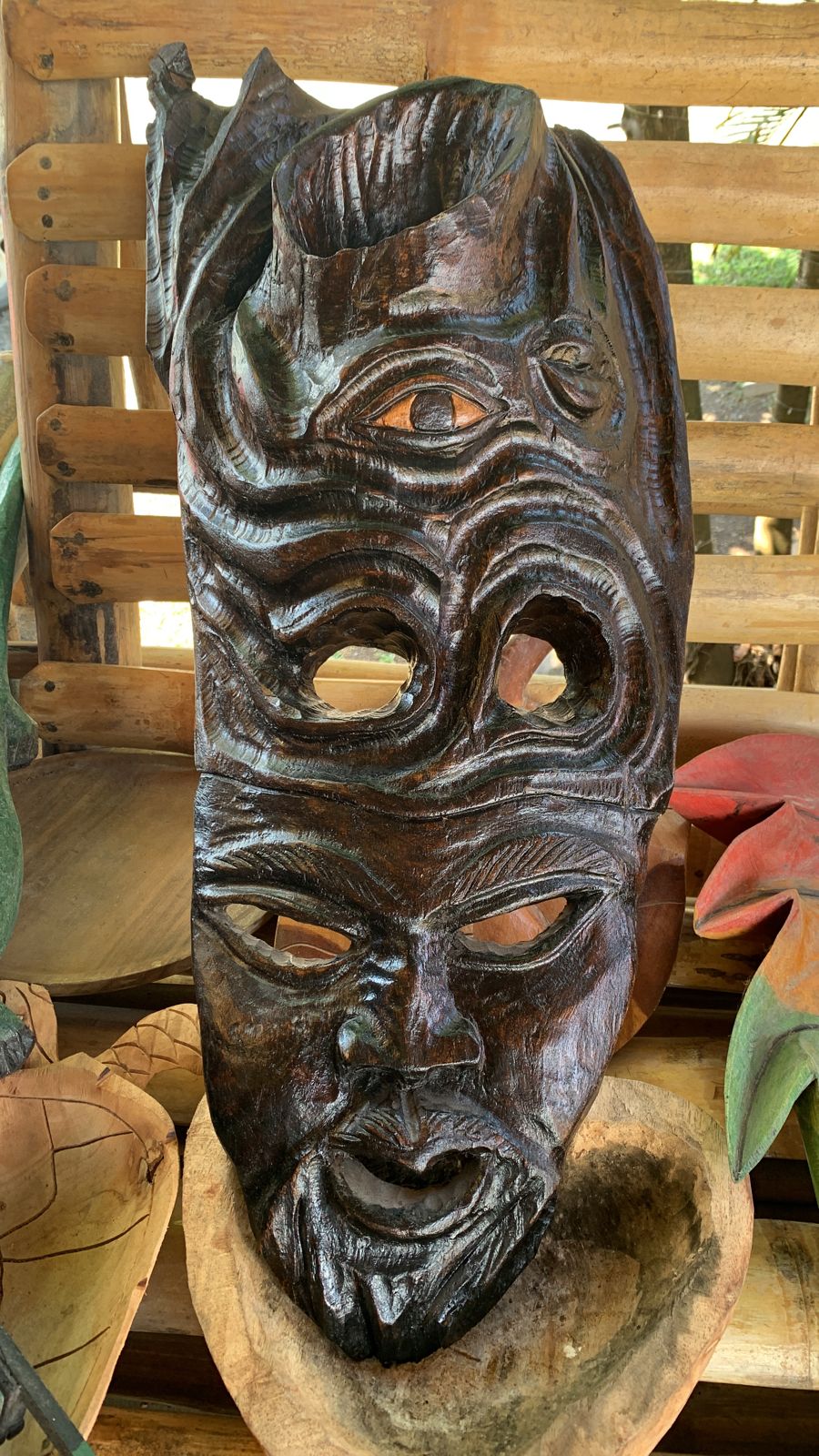
Maroon shaman mask with third eye for healing power (now in Ithaca, NY USA), handcrafted by Rock Bottom from driftwood in Port Antonio, Jamaica

Plenty more constantly interesting sub-topics like books and libraries, seemingly unrelated to the environment, have been the focus of daily posts; but they are related. As is artisan production, riffed upon many times in these pages, especially now that it is the focus of our day jobs.

So today, heading toward the twelve year mark posting here, a nod to an artisan named Rock Bottom. He carves driftwood in Port Antonio, Jamaica.

There is an effort in that part of Jamaica to revive and strengthen traditional crafts, and the work of Rock Bottom is a model for what we can hope to see more of. My hope is that the amazing engine of economic activity that Jamaica’s tourism sector represents will valorize his work and the work of others akin to his.

Sea Cucumbers Working Overtime

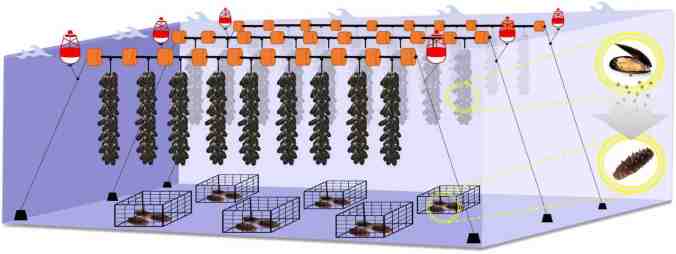
Diagram of a test project in Italy in which sea cucumbers cleaned up excrement from farmed mussels. GROSSO ET AL.

A topic that rarely, if ever, has made our pages, the sea cucumber’s moment in the spotlight has arrived:

A sea cucumber near Mindoro Island in the Philippines. IMAGEBROKER / ALAMY STOCK PHOTO

Are Sea Cucumbers a Cleanup Solution to Fish Farm Pollution?

Seafood farm operators are breeding and deploying sea cucumbers to vacuum up the massive amounts of fish waste that pose a major problem for their industry. It is part of an effort to redesign fish farms with multiple species so that they work more like natural ecosystems.

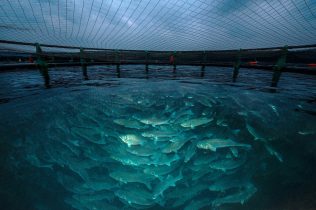
Sea bass at a fish farm in the Adriatic Sea off the coast of Slovenia. WATERFRAME / ALAMY STOCK PHOTO

Off the coast of the Hawaiian Island of Kauai, an underwater metropolis bustles. Sea turtles glide lazily through the surf while schools of fluorescent yellow butterflyfish weave between basketball-size sea urchins and sharp corals.

But Dave Anderson isn’t distracted by the otherworldly charm of the coral reef — he’s here on a mission. Around 70 feet below the surface, he finds his prize: a red sea cucumber. Continue reading

Green Capitalism Explained & Criticized

We are new to the website where this interview is on offer, and appreciate its proclamation: “We cut through the noise. Of social media. And algorithmic distraction. We find the serious stuff. The stuff you miss. Every week. With human curators.” We are also new to the explainer and critic on a set of topics we often have had links to:

ADRIENNE BULLER ON GREEN CAPITALISM AND THE PITFALLS OF CLIMATE FINANCE

Adrienne Buller is Director of Research at the think tank Common Wealth, where she leads investigative projects about building a democratic economy. She previously researched the intersection of finance and the climate crisis at InfluenceMap, and has also written for The Guardian and the Financial Times, among other publications. Continue reading