Rural Lives & Other Options

The reviews are in, and below is an excerpt. The book does not appear to be available through online booksellers in the USA, but I will be watching for it. The excerpt echoes my experience growing up in an equivalent place. A key difference between my youth and hers: my family’s income was modest but, due to my immigrant mother and father’s New England heritage I inherited a clear sense of mobility. I never had the oppressive sense of class boundaries that can dictate exclusion.

Instead I had the sense, and still do, that I could have chosen to earn the requisite fortune that would have afforded me the luxury of owning my own home in that town. But I chose otherwise, and for plenty of reasons I have no regrets whatsoever.

The view from the author’s bedroom window at Graythwaite. Rebecca Smith

Jane Austen’s English Countryside Is Not Mine

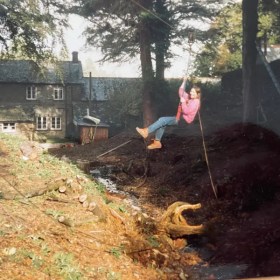
Often people assume I am someone I am not. My childhood was spent making dens in the hidden corners of the landscaped gardens of a grand country estate in the Lake District. I wandered woods full of baby pheasants being fattened up for the shoot. I roamed the hills listening to my Walkman like a modern Brontë sister. I had lakes to paddle in and a dinghy that we bumped down the ­path to a private beach.

The author playing in the garden at Graythwaite. Rebecca Smith

But they weren’t my gardens. It wasn’t my beach.

Until the age of 18, I lived on three private country estates in England. First in Yorkshire, then in Bedford, then on Graythwaite Estate, in Cumbria in the Lake District. In each of these my dad had the job of forester, working his way up until he was head forester, overseeing 500 hectares of woodland at Graythwaite, where the job came with a three-bedroom lodge on the estate. Continue reading →
Starbucks Flexing Its Muscle

Jordan Baumgarten for The New York Times

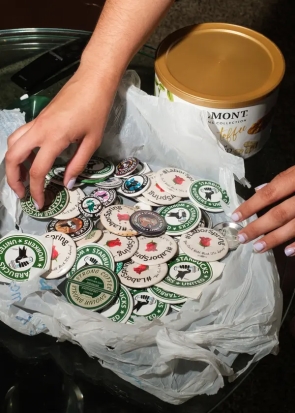
In the coffee business, we look up to the big players for inspiration. Sometimes we find something else. Starbucks can be a very admirable corporate citizen. It can also be rotten, as we are reminded in this op-ed by Megan K. Stack:

Inside Starbucks’ Dirty War Against Organized Labor

NOTTINGHAM, Md. — Agnes Torregoza came to this country when she was a toddler, brought from the Philippines by her parents. Her mother found a teaching job in the Baltimore County Public School District, and the family set about cobbling together a new life. Continue reading →
Antarctica Off The Bucket List

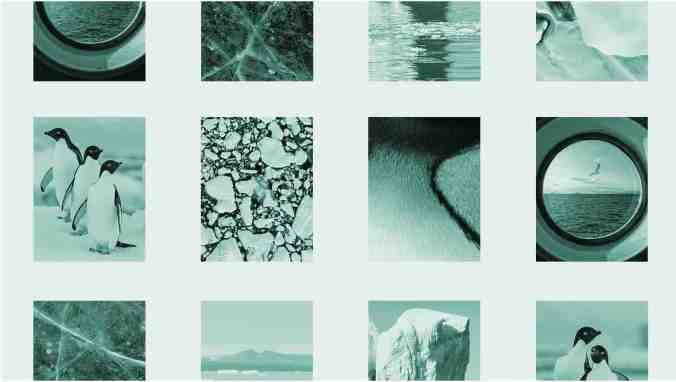
Illustration by The Atlantic. Source: Getty.

During my two years working in southern Chile I was close several times to going further south. In spite of my disappointment at the time, in hindsight I am fine with not having made the journey. Thank you, Sara Clemence, for getting that clear in my head:

Take Antarctica off your travel bucket list.

On the southernmost continent, you can see enormous stretches of wind-sculpted ice that seem carved from marble, and others that are smooth and green as emerald. You can see icebergs, whales, emperor penguins. Visitors have described the place as otherworldly, magical, and majestic. The light, Jon Krakauer has said, is so ravishing, “you get drugged by it.”

Travelers are drawn to Antarctica for what they can find there—the wildlife, the scenery, the sense of adventure—and for what they can’t: cars, buildings, cell towers. They talk about the overwhelming silence. The Norwegian explorer Erling Kagge called it “the quietest place I have ever been.” Continue reading →

Stop Digging

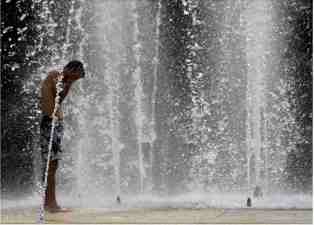
A man cools off by a fountain during a heat wave in Seville, Spain, on July 10th. Photograph by Cristina Quicler / AFP / Getty

It is difficult to imagine, from where I sit in cool weather in the mountains of Costa Rica’s central valley, what that heat would feel like. But it is not difficult to imagine all the possibilities for doing something about it. When you are in a hole that you do not want to be in, stop digging:

Is It Hot Enough Yet for Politicians to Take Real Action?

The latest record temperatures are driving, again precisely as scientists have predicted, a cascading series of disasters around the world.

We’ve crushed so many temperature records recently—the hottest day ever measured by average global temperature, the hottest week, the hottest June, the highest ocean temperatures, the lowest sea-ice levels—that it would be easy to overlook a couple of additional data points from this past weekend. But they’re important, because they help illuminate not just the size of our predicament but the political weaknesses that make it so hard to confront. Continue reading →
Capsicum Futures

The World Vegetable Center conducts research, builds networks, and carries out training and promotion activities to raise awareness of the role of vegetables for improved health and global poverty alleviation.

Among the essential components of Kerala cuisine, various chili peppers were central in our diet during the India work years. I became quite tolerant of high intensity heat from capsicum, and learned to enjoy the steamy delirium of a typical mango curry. I am out of practice, not sure I can still handle high Scoville meals any more, but heartened to know that Derek Barchenger and the W.V.C team are taking care for capsicum’s future, so thanks to Clarissa Wei for this story:

The Quest to Save Chili Peppers

A seed bank in Taiwan is home to more chili varieties than anywhere else on earth. In a warming world, we’re going to need them.

In 1999, Susan Lin, a bespectacled plant researcher at the World Vegetable Center, in Taiwan, pulled on a pair of latex gloves and got to work cross-pollinating some chili peppers. She collected tiny white flowers from a cayenne-pepper plant, shook their pollen into a tiny test tube, and walked over to an aji-chili plant. Using tweezers, she removed the petals and anthers from its flower buds, exposing the thread-like stigmas that serve as the plant’s female reproductive organs. Then she dipped the stigmas into the pollen, hoping that they would eventually form peppers. Continue reading →

Taking Inspiration From Smallhold Farms In Africa

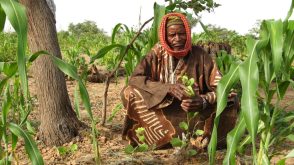
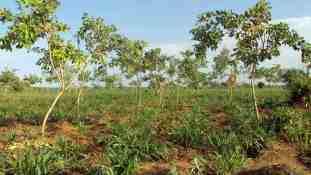
A farmer in Niger tends to a tree sprout growing among his millet crop. TONY RINAUDO / WORLD VISION AUSTRALIA

I am nearing the point where I can offer an update on the trees we have planted in advance of 1,000+ coffee plants going into the ground in their shade. Thanks to Fred Pearce, reporting in Yale E360, I have some inspiration coming from across the Atlantic on the broader value of those trees:

Dooki (Combretum glutinosum) trees grow on a millet field in Niger. P. SAVADOGO / ICRAF

As Africa Loses Forest, Its Small Farmers Are Bringing Back Trees

The loss of forests across Africa has long been documented. But recent studies show that small farmers from Senegal to Ethiopia to Malawi are allowing trees to regenerate on their lands, resulting in improved crop yields, productive fruit harvests, and a boost for carbon storage.

For decades, there have been reports of the deforestation of Africa. And they are true — the continent’s forests are disappearing, lost mainly to expanding agriculture, logging, and charcoal-making. But the trees? Continue reading →
Costa Rica’s Ceramic Craft

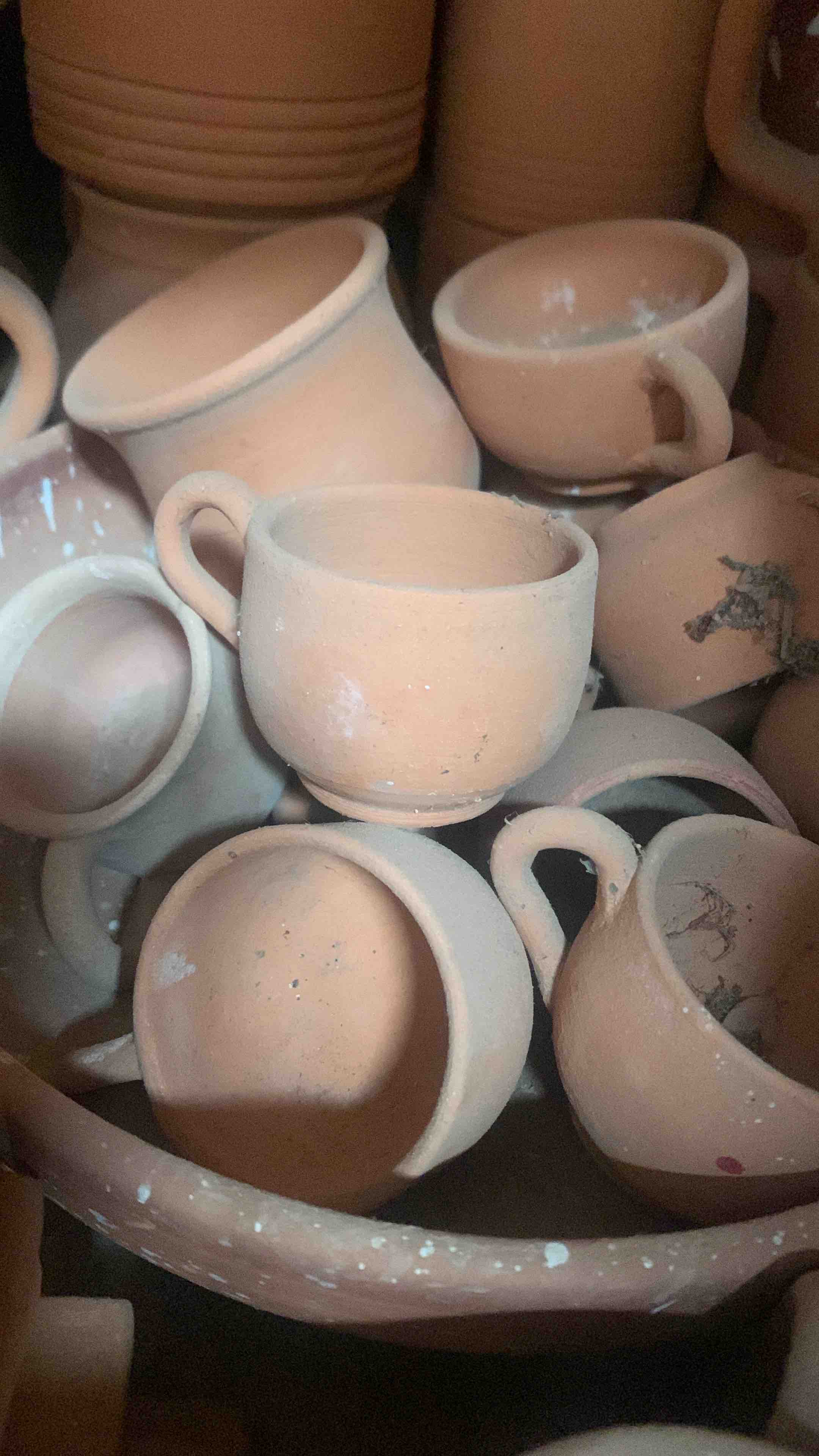
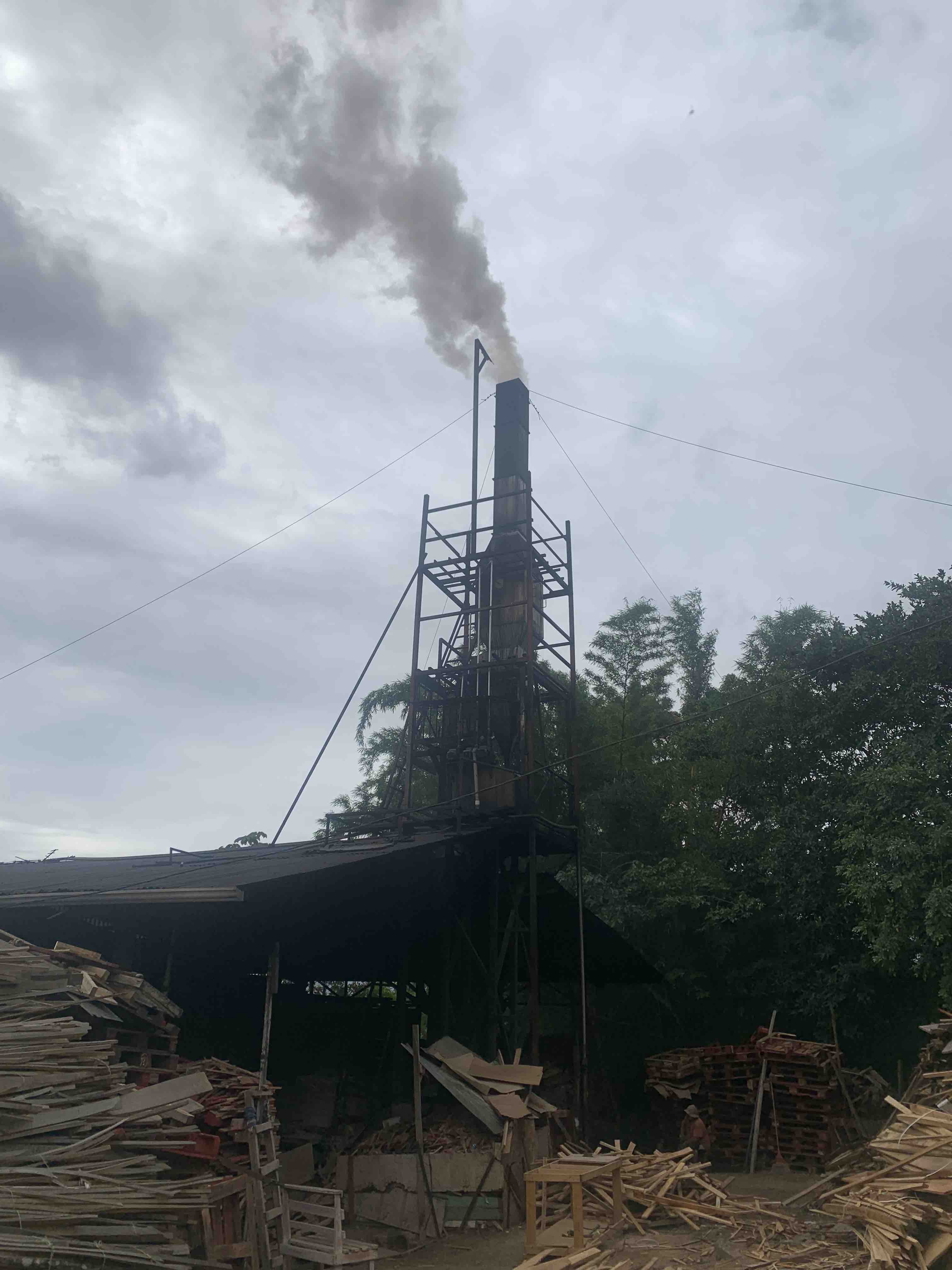
Amie and I work together, but most of my days are consumed by coffee. Especially in the March to May period, when coffee harvests are finishing and the first cuppings of the new crops are possible, my time for other activities is limited. But in June, there is more time. For the past 4+ years our shared work has included my joining her to meet artisans whose work our shops might carry. This work never disappoints, even if we conclude that the product is not a good fit for Authentica. Recently we had an afternoon together with a ceramicist we knew about, but had not yet had the opportunity to spend time with. The biggest surprise was seeing this smoke stack in the photo below.

It is rustic, and at first sight not much to look at. But listening to him tell its history you can appreciate how often in history artisans lead the way that industrialists eventually follow. This was the first smokestack in Costa Rica using technology that reduces carbon and particulate emissions. Continue reading →

San Francisco, Still A Pioneering City

A rooftop wetland on the Salesforce Transit Center in San Francisco filters wastewater from sinks and showers for reuse. JEREMY GRAHAM / ALAMY STOCK PHOTO

Our thanks to Jim Robbins, as ever, for environmental news from the front lines and for demonstrating that for all its urban challenges San Francisco remains a pioneering city:

Beyond the Yuck Factor: Cities Turn to ‘Extreme’ Water Recycling

San Francisco is at the forefront of a movement to recycle wastewater from commercial buildings, homes, and neighborhoods and use it for toilets and landscaping. This decentralized approach, proponents say, will drive down demand in an era of increasing water scarcity.

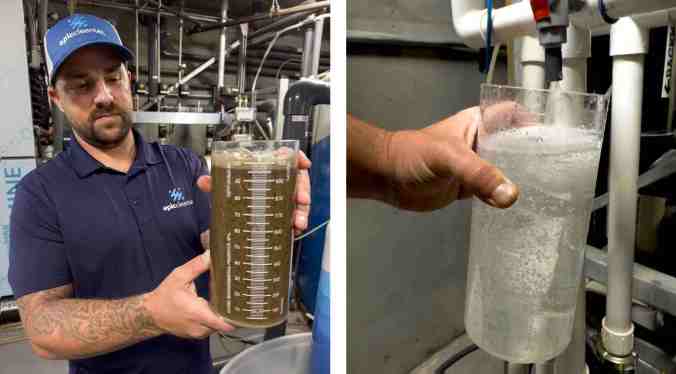
Ryan Pulley of Epic Cleantec holds a beaker of graywater. Right: A beaker of potable treated graywater. TED WOOD

In downtown San Francisco, in a cavernous garage that was once a Honda dealership, a gleaming white-and-blue appliance about the size of a commercial refrigerator is being prepared for transport to a hotel in Los Angeles. Continue reading →
Miyazaki, Trees & Authentic Experience

A photograph of children walking along a path in the woods. Two of them are holding hands.

The magazine sent the Japanese photographer Rinko Kawauchi to Ghibli Park on a day when it was closed to the public, and she took along her daughter and some friends. Rinko Kawauchi for The New York Times

Links to the writings of Sam Anderson have not appeared in our pages before, and I almost missed this opportunity because at first appearance this article does not fit the norm for our themes. But if you read to the end, it does so in one clear way. It has to do with the power of nature, trees in particular, and once you read the article you will understand (if you are familiar with our platform). You can also listen to an audio version of this article here, but be sure to see the photos in the original publication:

Spirited Away to Miyazaki Land

What happens when the surreal imagination of the world’s greatest living animator, Hayao Miyazaki, is turned into a theme park?

A Totoro-like climbing structure. Rinko Kawauchi

As an American, I know what it feels like to arrive at a theme park. The totalizing consumerist embrace. The blunt-force, world-warping, escapist delight. I have known theme parks with entrance gates like international borders and ticket prices like mortgage payments and parking lots the size of Cleveland. I have been to Disney World, an alternate reality that basically occupies its own tax zone, with its own Fire Department and its own agriculture — a place where, before you’ve even entered, you see a 100-foot-tall electrical pole along the freeway with Mickey Mouse ears. This is a theme park’s job: to swallow the universe. To replace our boring, aimless, frustrating world with a new one made just for us. Continue reading →

11 Years, 11 Months & 11 Days Later

Mermaid (now in Escazu, Costa Rica), handcrafted by Rock Bottom from driftwood in Port Antonio, Jamaica

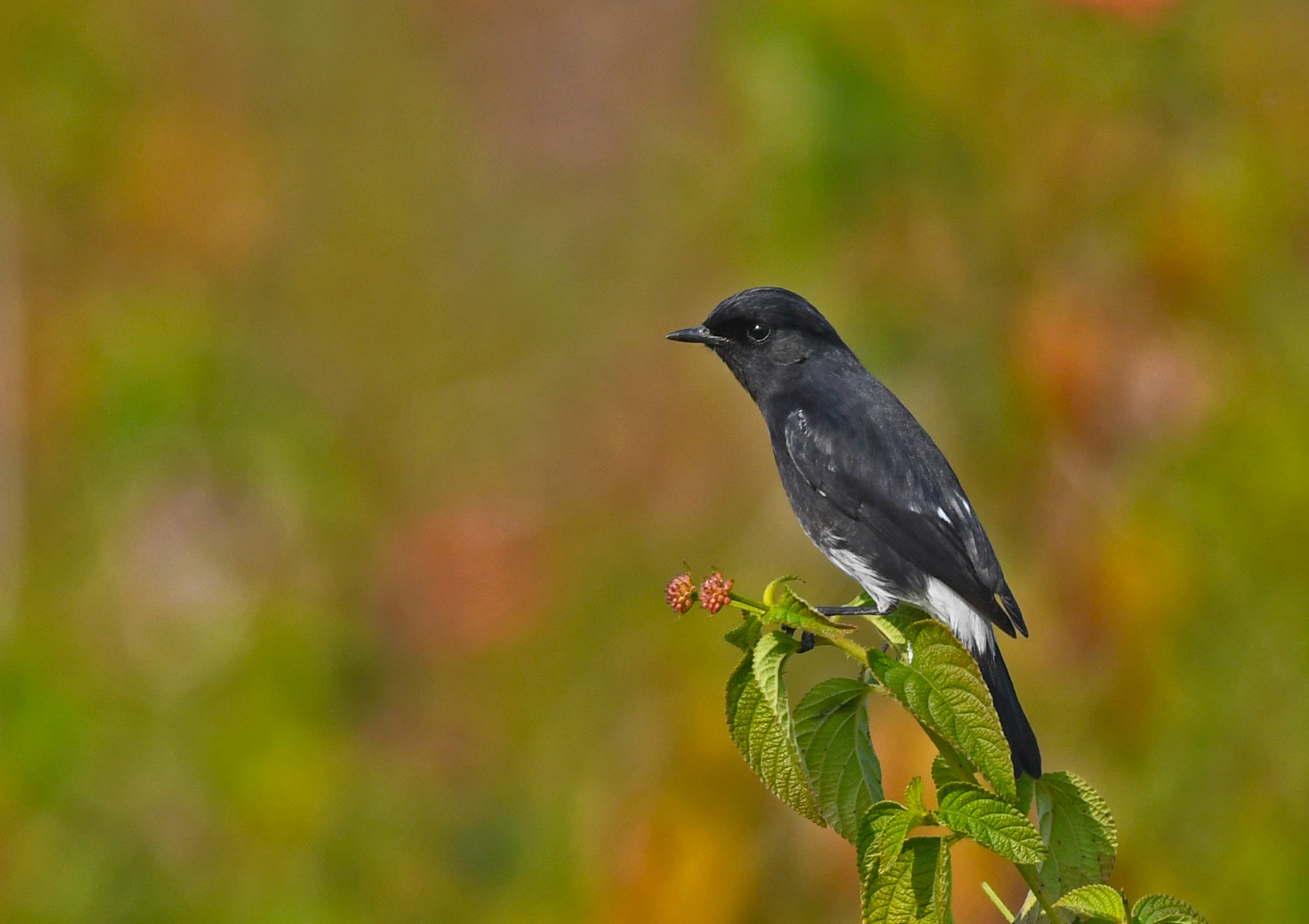
June 15, 2011 was the day we first posted on this platform, and while we have evolved since then we have remained constant and consistent in a few ways. In the daily search for something worth sharing, photos of birds from around the world have been the most constant–as in, every day since the first photo was shared by this old friend who got us started on that daily routine. Thank you, Vijaykumar, for a healthy habit-formation.

Consistent have been the shared convictions that environmental conservation, no matter how bleak the news, is worth our effort.

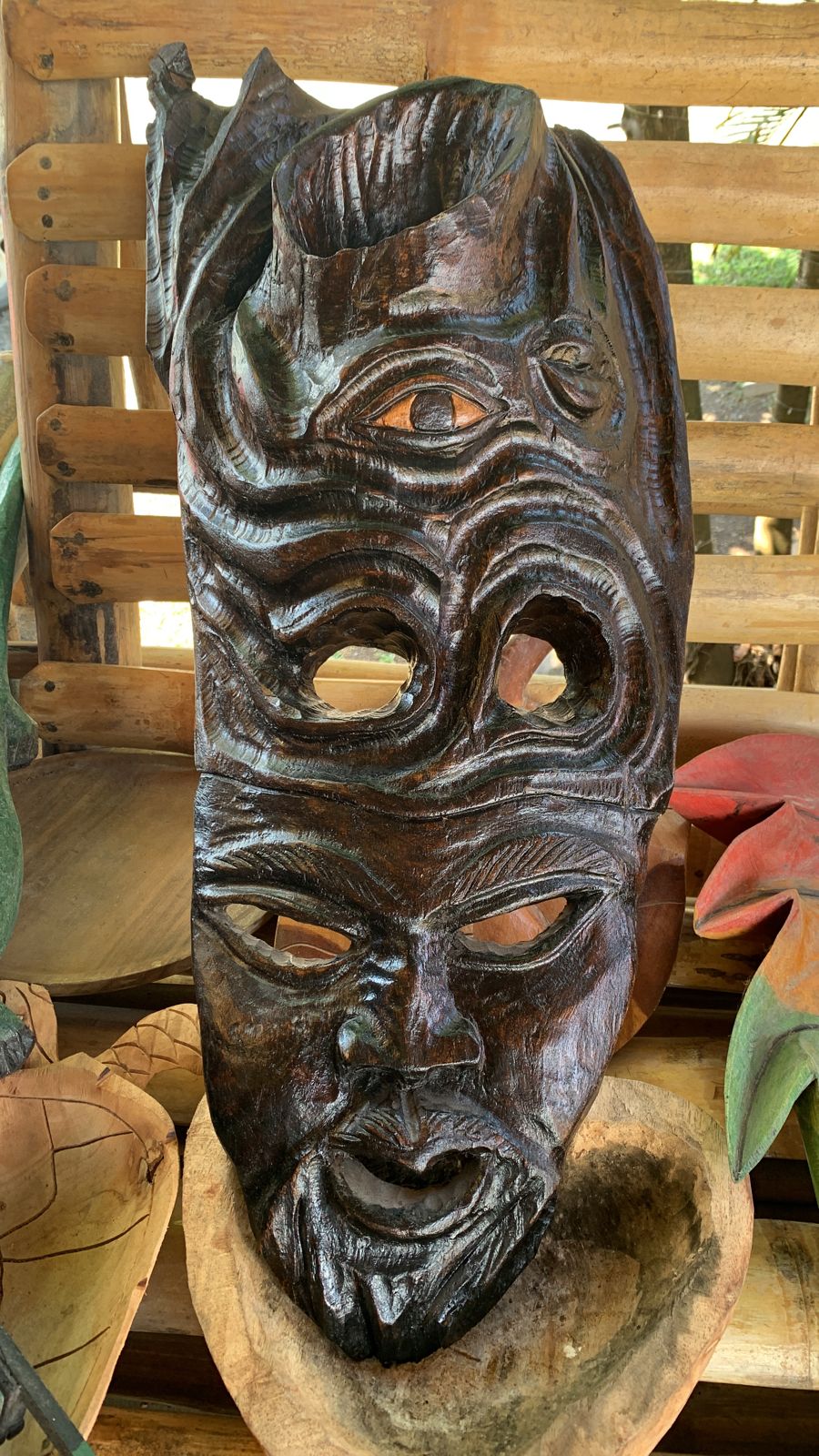
Maroon shaman mask with third eye for healing power (now in Ithaca, NY USA), handcrafted by Rock Bottom from driftwood in Port Antonio, Jamaica

Plenty more constantly interesting sub-topics like books and libraries, seemingly unrelated to the environment, have been the focus of daily posts; but they are related. As is artisan production, riffed upon many times in these pages, especially now that it is the focus of our day jobs.

So today, heading toward the twelve year mark posting here, a nod to an artisan named Rock Bottom. He carves driftwood in Port Antonio, Jamaica.

There is an effort in that part of Jamaica to revive and strengthen traditional crafts, and the work of Rock Bottom is a model for what we can hope to see more of. My hope is that the amazing engine of economic activity that Jamaica’s tourism sector represents will valorize his work and the work of others akin to his.

About The Food Waste Known As Diversion

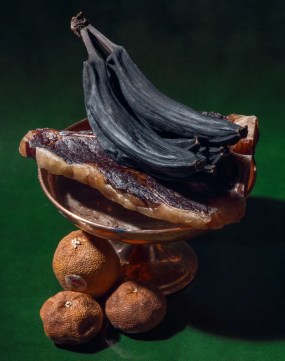
Photograph by Grant Cornett

As still life compositions go, the photo to the right is classic in style and weirdly perfect for the essay it accompanies.  Helen Rosner frequently writes about food, including a review that convinced me to watch The Bear, and this is the best of her work that I have read:

The Promises of the Home “Composting” Machine

A new crop of techy appliances wants to help fight the food-waste crisis. How virtuous should we feel using them?

In the course of a week, my kitchen produces a shocking quantity of what we might think of as edible trash: apple peels, garlic nubs, a bit of gristle from a steak, Dorito dust, tea bags, the iron-hard heel of a loaf of bread that’s been sitting out overnight. The meat scraps I feed to my dog. The bones and vegetable scraps I store in the freezer in gallon-size ziplock bags and periodically bung into a pot and simmer into stock. But even then, once the stock is made, and the chicken bones or onion ends are leached of all their flavor, I’m left again with edible trash—only now it’s soggy. And then there are the times when the strawberries aren’t sealed right and become fuzzy with mold, or the delivery sandwich turns out to be gross, or the refrigerator’s compressor breaks and somehow we don’t notice, or I’m just exhausted and overwhelmed and want everything gone. Continue reading →
Auchan 2000 & Authentica 2023

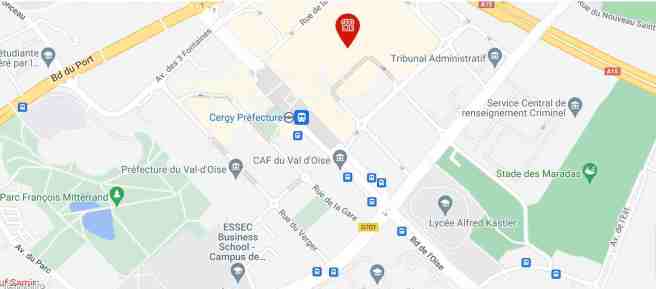
The Auchan hypermarche in Cergy is at the location of the red balloon in the image above. It is a short walk from the ESSEC campus (lower center of map). Click to go to the map on Auchan’s website

On each of the occasions I have read articles about Annie Ernaux I have been reminded of the first of my five years teaching at ESSEC. During the 2000-2003 academic years I lived on campus for extended periods away from home and family in Costa Rica. My grocery shopping was at the same Auchan elegantly dissected by the woman who last year won the Nobel Prize in Literature.  During my fourth year teaching there I was completing work on a project in Montenegro that made it more convenient for our family to be based in Paris for 12 months. This turned out to be one of the most culturally enriching experiences our family ever had together. And relevant to life now.

Adrienne Raphel’s article in The Paris Review begins with her own “big retail” experience, and at first read it connects dots between our Paris time and our retail life now. For the last 4+ years we have been waking up each day looking for novel ways to succeed without following the “pile it high and watch it fly” model. So, if that resonates with you for any reason, read on:

INTERIOR OF THE WAL-MART SUPERCENTER IN ALBANY. PHOTOGRAPH BY MATT WADE, COURTESY OF WIKIMEDIA COMMONS. LICENSED UNDER CCO 3.0.

“The Dead Silence of Goods”: Annie Ernaux and the Superstore

The first and only time I went to the Walmart in Iowa City was surreal. When I was in high school, my parents’ business-oriented small press had published a book called The Case Against Walmart that called for a national consumer boycott of the company; the author denounced everything from the superstore’s destruction of environmentally protected lands to its sweatshop labor to its knockoff merchandise. So by the time I made a pilgrimage out to the superstore at age twenty-one, I hadn’t stepped in a Walmart for nearly a decade, and it had acquired this transgressive power—the very act of crossing the threshold was as shameful as it was thrilling…

At Long Last, Lamprey Love

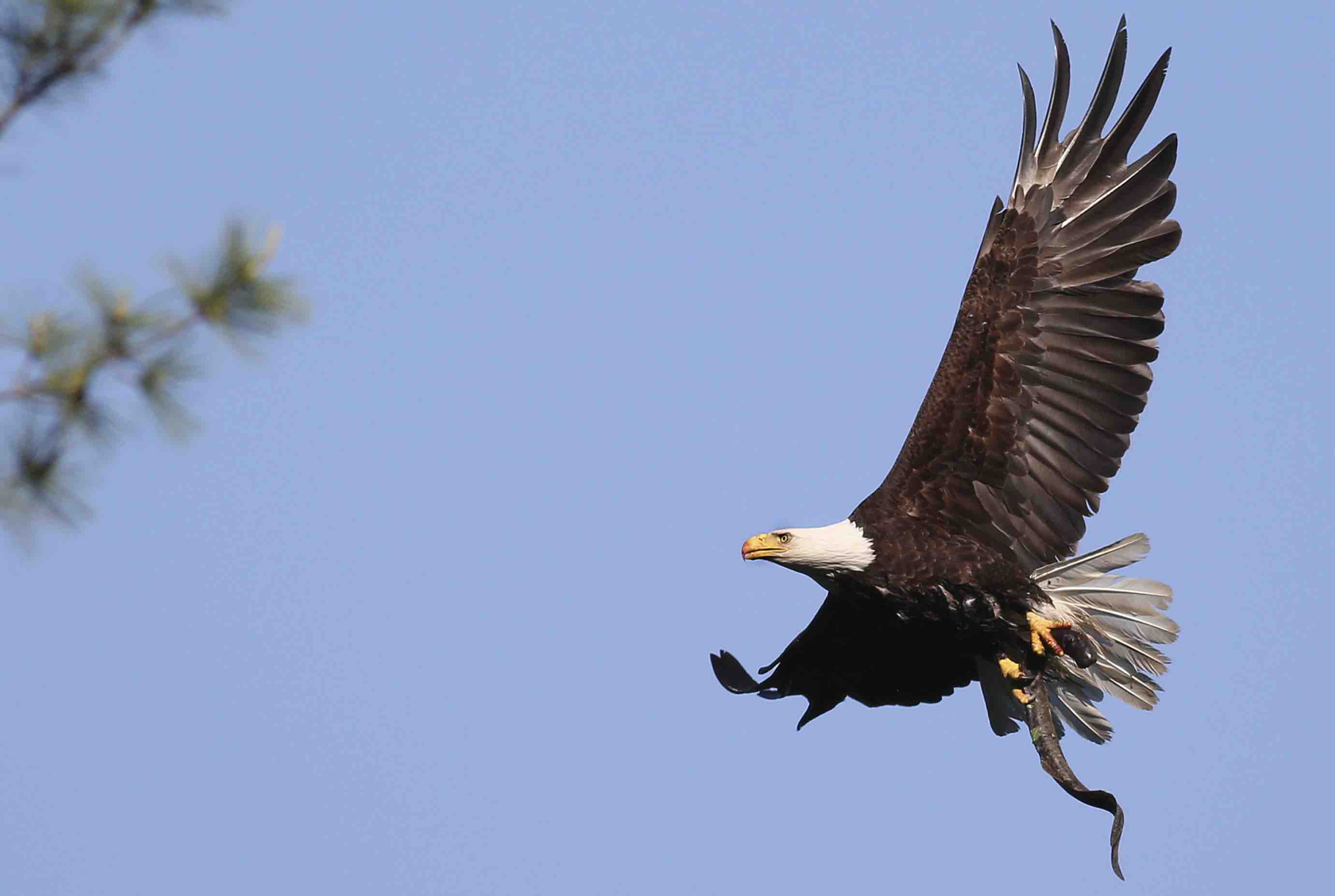
A bald eagle carries a sea lamprey snatched from the Connecticut River in Windsor, Vermont. MARY HOLLAND / NATURALLY CURIOUS

Nine years ago lamprey was referenced in a book review; then a couple years later, in a story about dam removal; and again a year later; and more recently with a book review and another dam removal story; today, a story about giving this creature its due:

A sea lamprey. T. LAWRENCE / GREAT LAKES FISHERY COMMISSION / NOAA VIA FLICKR

Long Reviled as ‘Ugly,’ Sea Lampreys Finally Get Some Respect

The sucker-mouthed marine lamprey has been dismissed as grotesque and a threat to sport fish. But fisheries managers in New England and the Pacific Northwest are recognizing the ecological importance of lampreys in their native waters and are stepping up efforts to help them recover.

Native Americans catch lamprey, eel-like fish, at Willamette Falls, a 40-foot waterfall south of Portland, Ore., Friday, June 12, 2015. An ancient fish that’s a source of food for tribes in the Pacific Northwest, lampreys have been in drastic decline in recent decades. (AP Photo/Gosia Wozniacka)

“Thousands of sea lamprey are passed upstream [on the Connecticut River] each year. This is a predator that wiped out the Great Lakes lake-trout fishery. [Lampreys] literally suck the life out of their host fish, namely small-scale fish such as trout and salmon. The fish ladders ought to be used to diminish the lamprey.” So editorialized the Lawrence (Massachusetts) Eagle-Tribune on December 15, 2002.

If that’s true, why this spring is Trout Unlimited — the nation’s leading advocate for trout and salmon — assisting the Town of Wilton, Connecticut and an environmental group called “Save the [Long Island] Sound” in a project that will restore 10 miles of sea lamprey spawning habitat on the Norwalk River? Continue reading →

Plenty To Question About Milk’s Status

We began featuring food-related stories by employees and interns, plus occasional visiting friends, during our first couple of years living in India. More recently, taste of place considerations first explored in India became for our Authentica shops in Costa Rica a key differentiator.

So my eye is drawn to food writing that overlaps with ethnicity considerations, and Mayukh Sen’s review of Spoiled brings out that book’s relevance to our pages:

A Fresh History of Lactose Intolerance

In “Spoiled,” the culinary historian Anne Mendelson takes aim at the American fallacy of fresh milk as a wonder food.

Six decades ago, Pedro Cuatrecasas, a fledgling resident at the Johns Hopkins School of Medicine, was studying the lives of impoverished residents of Baltimore when he noticed an unsettling trend. In interviews, a number of his Black patients would confess that they found milk repellent. Continue reading →
Pesticide Practicalities

The Asahi Shimbun, via Getty Images

Our thanks, as always, to Margaret Renkl:

Long Live the Fireflies (and the Wildflowers and Mosquitoes, Too)

NASHVILLE — The day we moved into this house, 28 years ago next month, a thunderstorm knocked out the power late in the day. My husband was returning the rental van. Our 3-year-old was safely tucked into his old bed in his new room. As night began to fall in the silent house, I sat down on the sofa to cry. Continue reading →
Taste Of Place & Tofu Love

David Huang

We occasionally post about food, notably during stretches where it intersects with our work. Also when someone brings to our attention something fresh in a fun way. Case in point:

America Doesn’t Know Tofu

China has spent millennia exploring the culinary possibilities of soybean curds. The West has barely scratched the surface.

Guiyang didn’t have many restaurants, per se. The metropolis was more of a city-wide night market. Even in the pre-COVID days, streets like Qingyun Road were only half-filled with cars, to leave room for tents and tables that stretched to the horizon, and for smoke and steam that rose into the clouds. Continue reading →

Keeping It Honest In Costa Rica

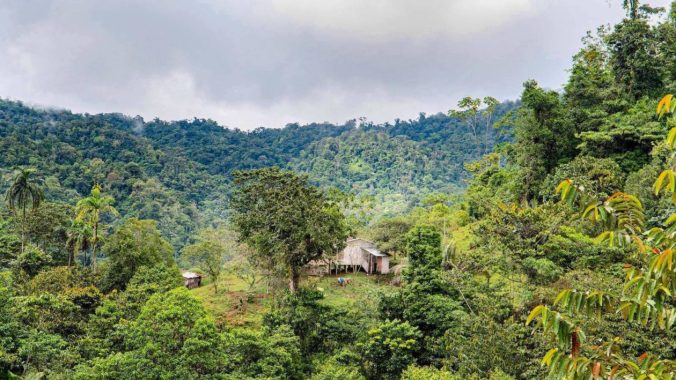
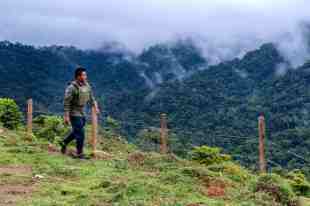
The Nairi Awari Indigenous community in Limón, Costa Rica. EZEQUIEL BECERRA / AFP VIA GETTY IMAGES

We are proud of the country we call home, and where our work us based. But even as I celebrate it from time to time, I never mistake it for perfect. There is always more work to be done. Thanks to Fred Pearce, as always, for the details we need to know:

Lauded as Green Model, Costa Rica Faces Unrest in Its Forests

Indigenous park ranger Osvaldo Martinez tours the Nairi Awari indigenous community in Limon, Costa Rica on November 9, 2021. – The indigenous people of this community are payed for caring for the environment, as part of a program awarded by the British royalty. (Photo by Ezequiel BECERRA / AFP) (Photo by EZEQUIEL BECERRA/AFP via Getty Images)

Costa Rica has won international acclaim for its initiatives to restore its forests. But those successes are now jeopardized by conflicts over the government’s failure to return traditional lands to the Indigenous people who are regarded as the best forest stewards.

Costa Rica has a green halo. In recent decades, the small Central American nation has transformed itself from a notorious hotspot for deforestation into a beacon of reforestation that is the envy of the world. Many of its more than 12,000 species of plants, 1,200 butterflies, 800 birds, and 650 mammals, reptiles, and amphibians have gone from bust to boom, and eco-tourists are savoring the spectacle. Continue reading →