Old Growth Forest Protection Schemes

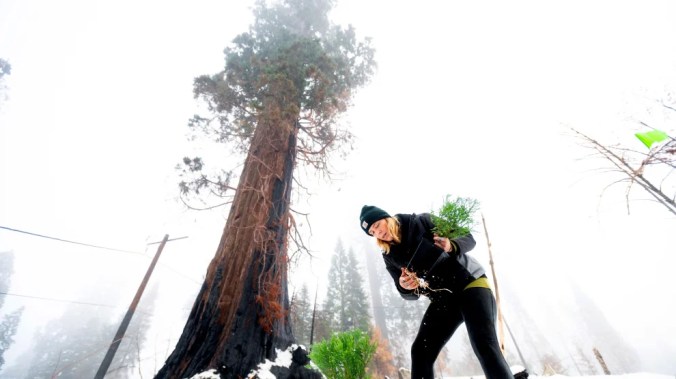
Caryssa Rouser, a propagation specialist with Archangel Ancient Tree Archive, plants a sequoia tree in October, 2021, in Sequoia Crest, California. Noah Berger/AP

Old growth forests matter for so many reasons. Not least, biophilic reasons. But at this moment, we rightly pay more attention to their value with regard to urgent climate issues. Maddie Oatman makes a good case in this Mother Jones essay:

Why Old-Growth Forests Matter So Much in the Fight Against Climate Change

Biden’s executive order to preserve ancient trees is a big deal—but it could have gone further.

Few experiences have rendered me as awestruck as the winter morning I spent wandering through a grove of ancient sequoias, their sienna bark glowing against the snowy ground. Continue reading
When Diplomats Must Be Undiplomatic

Yesterday I posted about one of the easier topics among the many options I have to post about every day. Today, a topic increasingly frequent in my posts, but definitely not an easy one. So I look to one person to summarize our week-to-week progress or lack of it. As always, I recommend signing up for his newsletter:

The World’s Top Diplomat Has Had It Up to Here

The Secretary General of the UN models how to think about climate change

I can remember when some of us organized what may have been the planet’s first truly huge climate march, with 400,000 people descending on New York in 2014. Then UN Secretary General Ban Ki-moon came to walk with us for a few blocks, and it was considered remarkable: the world’s top diplomat had previously been too diplomatic to join in protests challenging the policies of his member nations. Continue reading

Watching Whales, Hopefully Forever

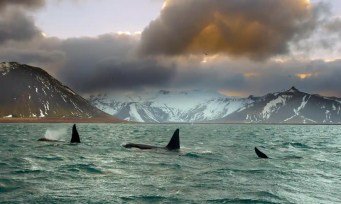
An orca pod feeding. Iceland, one of the few countries that still hunts whales commercially plans to end the practice from 2024. Photograph: Nature Picture Library/Alamy

Of all the dozens of times in our pages where whales are the central topic, there was once when Icelandic whaling was featured. And that story was about ending the practice of hunting these majestic animals. Today’s story–‘Meet us, don’t eat us’: Iceland turns from whale eaters to whale watchers–is the first time I have heard that travelers are the primary market for whale meat there. Strange, but true:

Reykjavik harbour. The small red boat on the right is an Elding whale-watching vessel. The blue one with a tall mast is a whaling boat. Photograph: Abby Young-Powell

The country’s plan to end commercial whaling is driven by falling demand but also a 15-year-long campaign aimed at their biggest consumers of whale meat – tourists

Onboard a small whale-watching boat making its way across the choppy waters of Faxaflói Bay, off the south-west coast of Iceland, a guide urges tourists not to eat whale meat. Continue reading

If SUVs Were An Individual Country

The Biden Administration is set to unveil a new set of fuel-efficiency standards on Friday. Photograph by David Paul Morris / Bloomberg / Getty

Elizabeth Kolbert’s essay offers perspective on how the SUV category has grown as a percentage of the global fleet, and what that has meant for fuel consumption. The point of the essay seems not to demonize owners of SUVs, but to suggest a mechanism to put the category on a level playing field with more fuel efficient vehicles. The humanist in me imagines that most SUV owners would own up, given the chance, and take responsibility for their footprint and pay their fair share:

A Better Idea Than Releasing Oil from the Strategic Reserve

It’s time to do away with the S.U.V. loophole.

On Thursday afternoon, President Joe Biden announced that the federal government would release up to a hundred and eighty million barrels of oil from the Strategic Petroleum Reserve over six months. The move, aimed at bringing down gas prices—“Americans are feeling Putin’s gas price hike at the pump,” Biden tweeted—is obviously politically motivated. Continue reading
McKibben’s Longform Power Pitch

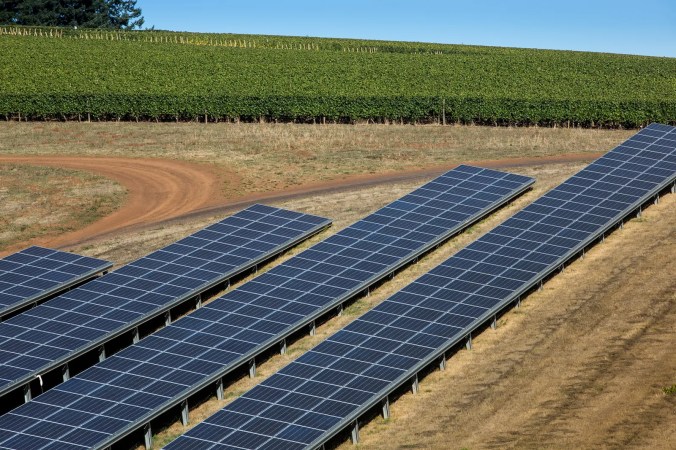
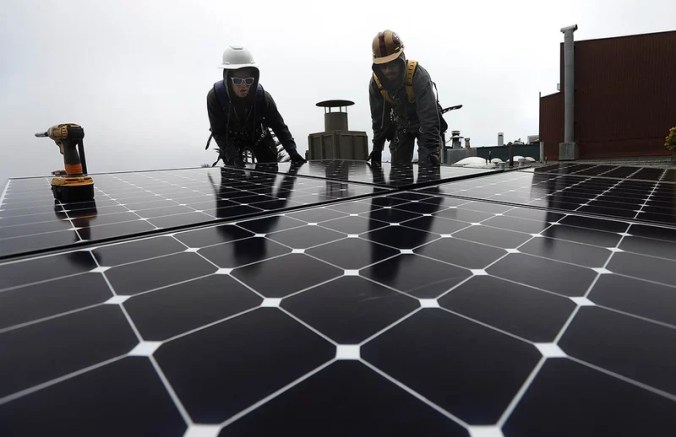
The market for electrons is predictable, meaning that solar panels installed on farmland can provide a fairly stable income for farmers. Photograph by George Rose / Getty

Illustration by Álvaro Bernis

If you have not been reading Bill McKibben regularly, or at all, here is as good a place to start as you will find. It is a long, powerful pitch:

In a World on Fire, Stop Burning Things

The truth is new and counterintuitive: we have the technology necessary to rapidly ditch fossil fuels.

In 2020, fossil-fuel pollution killed three times as many people as COVID-19 did. Photograph by Artur Widak / NurPhoto / Getty

On the last day of February, the Intergovernmental Panel on Climate Change issued its most dire report yet. The Secretary-General of the United Nations, António Guterres, had, he said, “seen many scientific reports in my time, but nothing like this.” Setting aside diplomatic language, he described the document as “an atlas of human suffering and a damning indictment of failed climate leadership,” and added that “the world’s biggest polluters are guilty of arson of our only home.” Continue reading

The Force Of Law, On Top Of Information & Protest

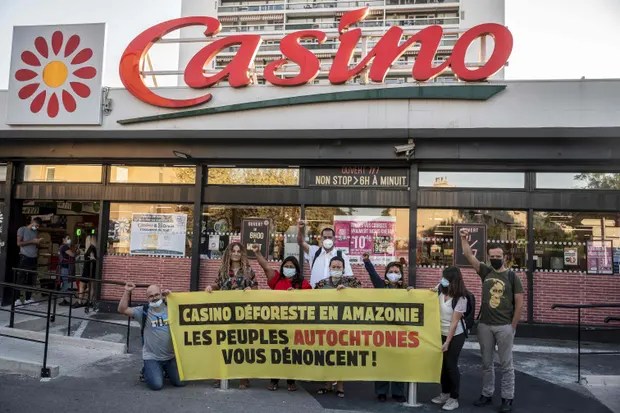
A protest in Marseille against the French supermarket chain Groupe Casino for allegedly selling meat products linked to deforestation. Photograph: Christophe Simon/AFP/Getty

What can we do when commercial interests damage our collective future? The identification of and protest against companies doing business in ways that cause environmental destruction are two important forces, but the force of law is another. Thanks to the Guardian for its ongoing coverage of these:

Legal eagles: how climate litigation is shaping ambitious cases for nature

Plans for an airport in the Tagus estuary have failed to take into account its impact on the wetlands, lawyers argue. Photograph: Handout

Environmental lawsuits are nothing new but now lawyers are turning their attention to cases that address the loss of biodiversity

The Tagus estuary near Lisbon is Portugal’s largest wetland, a vital habitat and stopover for tens of thousands of migratory birds, including flamingos, black-tailed godwits and glossy ibis. Continue reading

Frederick Law Olmsted At 200

Portrait of Frederick Law Olmsted (detail), 1895, by John Singer Sargent (1856–1925); The Artchives/Alamy Stock Photo.

From Hedgehog Review, a bit of scholarly reflection on a man whose impact on the landscape of cityscapes is still worthy of consideration:

The Man Who Built Forward Better

On Frederick Law Olmsted’s Bicentennial

Witold Rybczynski

What would Frederick Law Olmsted (1822–1903) make of his works today, in the bicentennial year of his birth? No doubt he would be delighted by the survival and continued popularity of so many of his big-city parks, particularly Central Park and Prospect Park, but also parks in Boston, Chicago, and Montreal, as well as Buffalo, Detroit, Rochester, and Louisville. He might be surprised by the bewildering range of activities these parks now accommodate—not only boating and ice-skating, as in his day, but exercising, jogging, picnicking, and games, as well as popular theatrical and musical events. I don’t think this variety would displease him. After all, it was he who introduced free band concerts in Central Park, over the objections of many of his strait-laced colleagues. He would be pleased by the banning of automobiles; his winding carriage drives were never intended for fast—and noisy—traffic. Continue reading
Circularity & The Future Of Recycling Plastic

Getty

Since our earliest days we have had team members searching for news on the subject of plastic, and what to do about it. The Atlantic, publishing an article by Ula Chrobak that was originally featured in Undark, points out The False Promise of Plastic Recycling:

A French company has a new solution to the plastic problem. Not everyone is buying it.

Since the first factories began manufacturing polyester from petroleum in the 1950s, humans have produced an estimated 9.1 billion tons of plastic. Of the waste generated from that plastic, less than a tenth of that has been recycled, researchers estimate. Continue reading

Plastic, The Gift That Keeps Giving

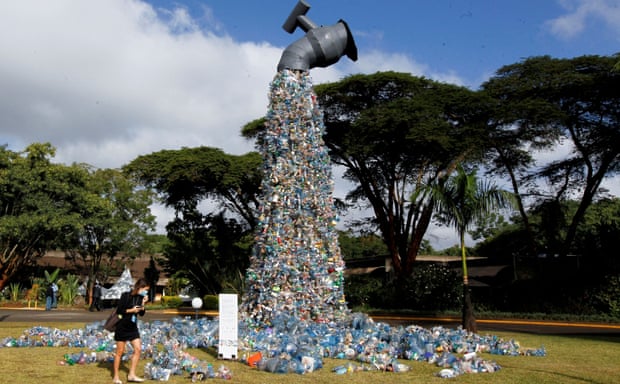
An artwork at the Nairobi summit venue by the artist Benjamin von Wong, made with rubbish from Kibera slum, urging people to ‘turn off the plastic tap’. Photograph: Monicah Mwangi/Reuters

We have endless opportunities to demonstrate leadership, thanks to plastic:

World leaders agree to draw up ‘historic’ treaty on plastic waste

UN environment assembly resolution is being hailed as biggest climate deal since 2015 Paris accord

World leaders, environment ministers and other representatives from 173 countries have agreed to develop a legally binding treaty on plastics, in what many described a truly historic moment. Continue reading

As The World Burns

Heat waves have become hotter, droughts deeper, and wildfires more frequent, the I.P.C.C. report states, and the window of time for doing anything about it is fast closing. Photograph by David McNew / Getty

Even as a geopolitical crisis has our full attention, we cannot ignore other important information about our shared future. Click through to the magazine website where one of our favored interpreters of environmental news helps us understand how The Latest U.N. Climate Report Paints Another Grim Picture:

The Secretary-General cites a “criminal” abdication of leadership. Meanwhile, the U.S. Supreme Court is hearing a case that may hamper emissions regulations.

There were two front-page-worthy developments on Monday in the world of climate policy. Perhaps even more significant than either one was the fact that they were at cross-purposes. Continue reading
We Have Seen The Future, And It Is Youthful

Sunrise models itself on the civil-rights movement of the fifties and sixties. Photograph by Evan Jenkins for The New Yorker

In the current issue of the New Yorker, Andrew Marantz offers an inside view of The Youth Movement Trying to Revolutionize Climate Politics; we can only hope they succeed where previous generations have failed:

Sunrise has already shifted the conventional wisdom about climate change. Now it wants to create a mass movement, combining street protest with policy negotiation, while there’s still time.

On the evening of November 12, 2018, six days after being elected to Congress and six weeks before being sworn in, the socialist Democrats Rashida Tlaib and Alexandria Ocasio-Cortez walked into an Episcopal church in Washington, D.C. Inside, more than a hundred activists in their teens and twenties milled around a font of holy water, wearing nametags on their flannel and fleece, eating pizza from paper plates. Continue reading

Subsidizing Environmental Degradation Must End

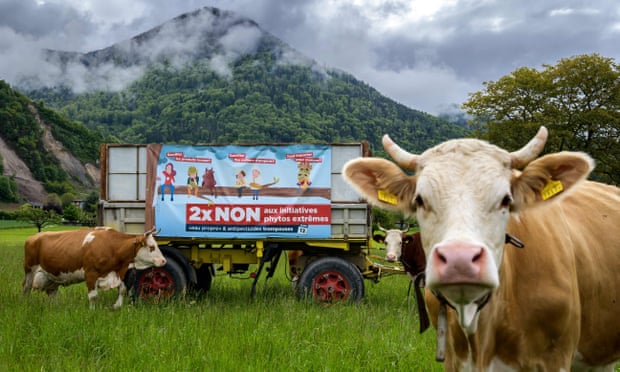
An electoral poster objecting to a proposed ban on subsidies for Swiss farms. A 2021 report found almost 90% of global farming subsidies are harmful. Photograph: Fabrice Coffrini/AFP/Getty

We missed this when it was first published a couple weeks ago, but it is still fresh and important:

World spends $1.8tn a year on subsidies that harm environment, study finds

Research prompts warnings humanity is ‘financing its own extinction’ through subsidies damaging to the climate and wildlife

The world is spending at least $1.8tn (£1.3tn) every year on subsidies driving the annihilation of wildlife and a rise in global heating, according to a new study, prompting warnings that humanity is financing its own extinction. Continue reading

Big Companies, Big Noise

(Original Caption) A man sitting atop a girder over the city is shown taking photos of the unfinished municipal building.

Bill Mckibben’s newsletter is one of the most efficient ways to stay informed on issues of interest to us in our daily posts on this platform. This week’s edition, titled Needs Improvement, is as good as any other recent edition. Consider subscription options that suit your budget by clicking the button, if you appreciate what you read below:

The Economic Giants Must Do Better than Meh

No one expects small businesses to be the leaders on climate change, though of course a noble handful are. It’s the giants—who have enormous brands to protect, and large margins to cover the cost of changing—that need to be out front. The ones with big ad campaigns with lots of windmills and penguins and cheerful shots of the smiling future. The ones who have made a lot of noise about ‘net zero.’ And how are they doing? Meh. Continue reading
Chile Has New Hands On Deck

The receding Santa Ines glacier in Seno Ballena fjord in Punta Arenas, southern Chile. Photograph: Martin Bernetti/AFP/Getty

Bringing experts into government does not sound like a news story, until you consider Chile. A country governed for decades by Chicago school economics–a strong invisible hand of market forces combined with a strong visible hand of military rule to keep leftists at bay–Chile’s most recent election led to some new hands in the governance picture.

With the climate crisis, Chile has an opportunity to set a new example for the world. The failure of markets until now to address a human-induced environmental catastrophe will be met with the combined force of expert scientific knowledge and public sector governance:

‘We need politicians and experts’: how Chile is putting the climate crisis first

President Gabriel Boric has brought renowned named climate scientist Maisa Rojas into government to help ensure a greener future

‘We need politicians and experts’: how Chile is putting the climate crisis first
President Gabriel Boric has brought renowned named climate scientist Maisa Rojas into government to help ensure a greener future

Hidden behind the Andes in a quiet corner of South America, a formidable generation of former student leaders are putting together one of the world’s most exciting progressive movements.

On 11 March, Gabriel Boric, 35, a tattooed leftist with a steely resolve to reform Chile from the bottom up, will become the country’s youngest ever president – and his green agenda is echoing across the world as time ticks away on an impending climate catastrophe.

“It is so exciting to see what these young people have done,” says Maisa Rojas, 49, a renowned Chilean climate scientist who has been named environment minister in a cabinet including several of Boric’s student protest generation. Continue reading

Big Agriculture, Anti-Regulation & Antisocial Behavior

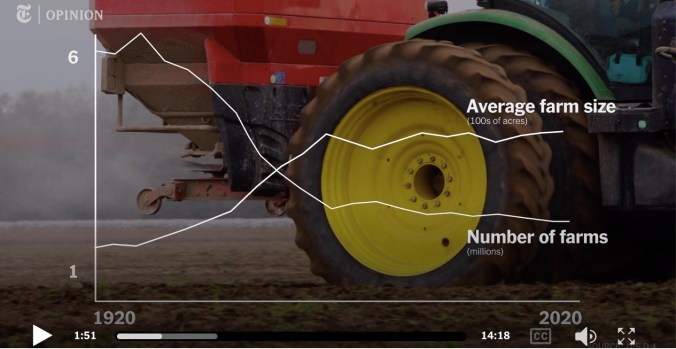
Click any image here to go to an op-ed video that takes just over 14 minutes to watch. You’ll get an inside look into what has happened to food production in the USA, and how, and why.

Summed up, it is all about the power of big-ag lobbying. They want no regulations. They want to decide on their own how to produce food. And it is making a big mess. This anti-regulatory ideology, which has the hallmark of antisocial behavior, is not unique to agricultural lobbyists, but is quite well illustrated by them.

Meet the People Getting Paid to Kill Our Planet

American agriculture is ravaging the air, soil and water. But a powerful lobby has cleverly concealed its damage.

“We’re Cooked” is an Opinion Video series about our broken food system and the three chances you get to help fix it — and save the planet — every day.


The global food system is a wonder of technological and logistical brilliance. It feeds more people than ever, supplying a greater variety of food more cheaply and faster than ever.

It is also causing irreparable harm to the planet. Continue reading

Schoonschip’s Floating Homes

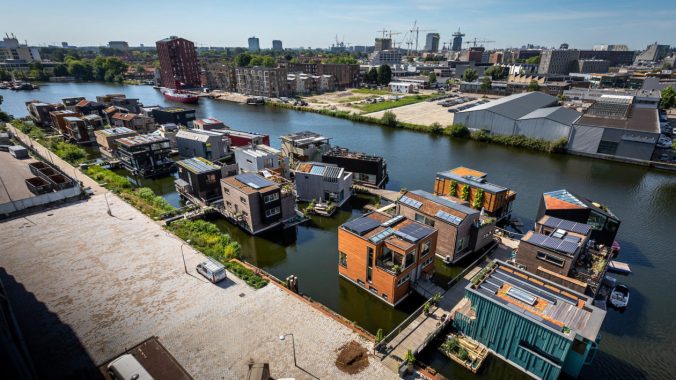
Schoonschip, a floating home development in Amsterdam. ISABEL NABUURS

Shira Rubin, writing in Yale e360, offers a view of Holland’s innovative housing approach to a future where the increase in waterscape can become an advantage. And she illustrates how this might be of use in other parts of the world facing the same challenges from rising seas:

Embracing a Wetter Future, the Dutch Turn to Floating Homes

Faced with worsening floods and a shortage of housing, the Netherlands is seeing growing interest in floating homes. These floating communities are inspiring more ambitious Dutch-led projects in flood-prone nations as far-flung as French Polynesia and the Maldives.

When a heavy storm hit in October, residents of the floating community of Schoonschip in Amsterdam had little doubt they could ride it out. They tied up their bikes and outdoor benches, checked in with neighbors to ensure everyone had enough food and water, and hunkered down as their neighborhood slid up and down its steel foundational pillars, rising along with the water and descending to its original position after the rain subsided. Continue reading

2021 Climate Inaction

ILLUSTRATION: JENNY SHARAF; GETTY IMAGES

Not fun, but a useful review:

2021 Was a Huge Missed Opportunity on Climate Action

The pandemic should have been a wake-up call—instead, emissions have climbed once more. Here’s how the US could have seized the opportunity

JUST LIKE THAT, a pandemic-fueled glimpse of a better world is growing hazy—or smoggy, to be more precise. As civilization locked down in early 2020—industries ground to a halt, more people worked from home, and almost no one traveled—global carbon dioxide emissions crashed by 6.4 percent, and in the United States by 13 percent. In turn, air quality greatly improved. Life transformed, sure enough, but that transformation was fleeting. Scientists warned that the drop would be temporary because economies would roar back stronger than ever to make up for lost revenue. Indeed, by the end of 2021, emissions have now returned to pre-pandemic levels. Continue reading

Costa Rica, Never Old

A tapir in Braulio Carrillo national park, near San José. Costa Rica’s policy of paying citizens to protect and restore ecosystems is credited with reversing deforestation rates, which threaten the species. Photograph: Michiel van Noppen/2021 Wildlife Photographer of the Year

The stories we use the title Really to highlight are among the heavies. Too much malfeasance, too often. Reading stories about Costa Rica‘s remarkable achievements related to the environment never gets old:

Billionaires, princes and prime ministers are among those keen to learn from the Central American country, which has long put nature at the heart of its policies

If there had been a popularity contest at Cop26, the Costa Rican president, Carlos Alvarado Quesada, would have been a clear winner. Leonardo DiCaprio, Jeff Bezos, Boris Johnson and Prince William all wanted to speak with the leader of the tiny Central American country, eager to bask in its green glow. Continue reading

Really, Joe?

The Build Back Better legislation included billions to accelerate clean energy like rooftop solar, but with the bill now stalled in Congress, cutting U.S. emissions will be tougher. Justin Sullivan/Getty Images

Really? is a question we have to ask every now and then. We had no time to waste, because the country with the biggest carbon footprint per capita needed to change something(s) substantially to allow the planet a chance. But one senator stood in the way. Thanks to National Public Radio (USA) for laying out clearly what the stakes were, and now are:

What losing Build Back Better means for climate change

With billions of dollars for clean energy, the Build Back Better legislation has the potential to substantially and rapidly cut heat-trapping emissions in the U.S. But after West Virginia Senator Joe Manchin rejected the bill on Sunday, Build Back Better is effectively dead, at a time when scientists say the world can’t afford to wait on climate change. Continue reading

Where Dollars Do The Most For Climate

Wood artisans take remainders leftover after the creation of larger artifacts, and recycle them by tumbling until smooth. An excellent alternative to polished stones, these “renewable pebbles” are available in the Authentica shops in Costa Rica.

We have been offering options on how to spend, while visiting Costa Rica, in ways that benefit the environment here. Small potatoes, but it is what we do.

Much more important for the planet as a whole, and for all humanity inhabiting it, is spending, or rather investing, that can have truly global impact. Robinson Meyer, a staff writer at The Atlantic, and author of the newsletter The Weekly Planet, has this useful guide for citizens of the USA:

Allison Bailey / NurPhoto / AP

A New Estimate of the ‘Most Effective’ Way to Fight Climate Change

Climate-concerned donors should focus on helping to pass climate policy, not offset their emissions, an advisory group says.

On a dollar-for-dollar basis, where will your money do the most to fight climate change? Continue reading