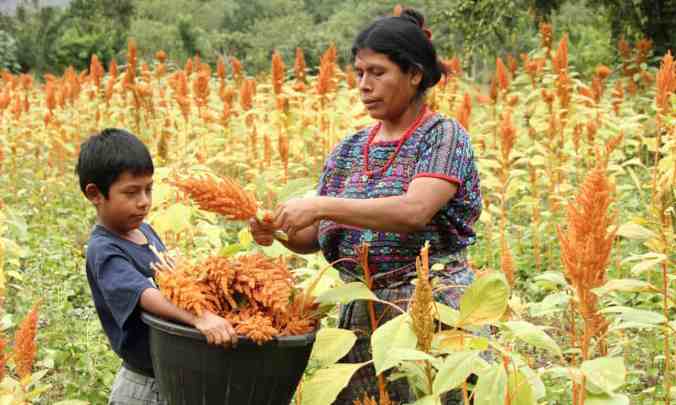
Blanca Marsella González, a member of Qachuu Aloom, harvests amaranth plants. Photograph: JC Lemus/Juan Carlos Lemus
We have been paying attention to amaranth plenty over the years. It should have occurred to me back in the early days of this platform to investigate its origins. Amaranth was so central to our diet in India that I assumed it was a native plant. Not so, but it grows all over the world:
‘It could feed the world’: amaranth, a health trend 8,000 years old that survived colonization
Indigenous women in North and Central America are coming together to share ancestral knowledge of amaranth, a plant booming in popularity as a health food
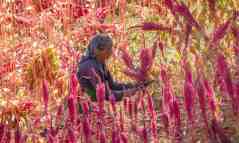
An elderly woman cuts an amaranth crop, in Uttarakhand, India. The plant is indigenous to North and Central America but also grown in China, India, Southeast Asia, West Africa and the Caribbean. Photograph: Hitendra Sinkar/Alamy Stock Photo
Just over 10 years ago, a small group of Indigenous Guatemalan farmers visited Beata Tsosie-Peña’s stucco home in northern New Mexico. In the arid heat, the visitors, mostly Maya Achì women from the forested Guatemalan town of Rabinal, showed Tsosie-Peña how to plant the offering they had brought with them: amaranth seeds.
Back then, Tsosie-Peña had just recently come interested in environmental justice amid frustration at the ecological challenges facing her native Santa Clara Pueblo – an Indigenous North American community just outside the New Mexico town of Española, which is downwind from the nuclear facilities that built the atomic bomb. Continue reading










 Organikos