Really, Joe?

The Build Back Better legislation included billions to accelerate clean energy like rooftop solar, but with the bill now stalled in Congress, cutting U.S. emissions will be tougher. Justin Sullivan/Getty Images

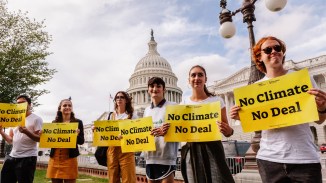
Really? is a question we have to ask every now and then. We had no time to waste, because the country with the biggest carbon footprint per capita needed to change something(s) substantially to allow the planet a chance. But one senator stood in the way. Thanks to National Public Radio (USA) for laying out clearly what the stakes were, and now are:

What losing Build Back Better means for climate change

With billions of dollars for clean energy, the Build Back Better legislation has the potential to substantially and rapidly cut heat-trapping emissions in the U.S. But after West Virginia Senator Joe Manchin rejected the bill on Sunday, Build Back Better is effectively dead, at a time when scientists say the world can’t afford to wait on climate change. Continue reading


Where Dollars Do The Most For Climate

Wood artisans take remainders leftover after the creation of larger artifacts, and recycle them by tumbling until smooth. An excellent alternative to polished stones, these “renewable pebbles” are available in the Authentica shops in Costa Rica.

We have been offering options on how to spend, while visiting Costa Rica, in ways that benefit the environment here. Small potatoes, but it is what we do.

Much more important for the planet as a whole, and for all humanity inhabiting it, is spending, or rather investing, that can have truly global impact. Robinson Meyer, a staff writer at The Atlantic, and author of the newsletter The Weekly Planet, has this useful guide for citizens of the USA:

Allison Bailey / NurPhoto / AP

A New Estimate of the ‘Most Effective’ Way to Fight Climate Change

Climate-concerned donors should focus on helping to pass climate policy, not offset their emissions, an advisory group says.

On a dollar-for-dollar basis, where will your money do the most to fight climate change? Continue reading

The Nutmeg’s Curse, Reviewed

The Nutmeg’s Curse: Parables for a Planet in Crisis
by Amitav Ghosh
Hachette
352pp
Published October 2021
ISBN: 9781529369458

Amitav Ghosh, appearing in our pages only once before, has a new book. The title of this review of the book, A Dazzling Synthesis, says plenty, as does the endorsement from Naomi Klein:

We have been aware for centuries that we are responsible for the earth’s denudation: its ‘cold staring spaces’, as English writer John Evelyn called them in 1706, mourning the trees chopped down on his estate.  Around a hundred years later, the Prussian explorer Alexander Von Humboldt worried over ‘mankind’s mischief’, conjecturing that if humans ever ventured into outer space, they would carry with them a tendency to leave everything ravaged and barren.  (The closer they resembled man, he also observed, ‘the sadder monkeys look’).  ‘Are the green fields gone?’ asked the narrator of Herman Melville’s Moby Dick, published fifty years after Von Humboldt’s 1801 diary, as he watched his fellow Manhattanites staring dreamily out to sea.  Continue reading

Orca, Climeworks & The Philosopher’s Stone

We started noticing Climeworks three years ago and have posted about Orca a couple times since then. But the video above is worth the longer look, and our thanks to Yale Climate Connections for pointing to it in their story Iceland facility sucks carbon dioxide from air, turns it into rock:

(Image credit: Climeworks video)

The technology will need a lot of scaling up to make a difference to the climate.

In Iceland, a new facility called Orca is pulling carbon dioxide out of the air so it can be stored underground. Continue reading

Bottled Green Revolution?

Not  sure whether this changes anything we read about yesterday, but at least for some it could be interesting to read about how this 80-Year-Old Man Hasn’t Watered This Sealed Bottle Garden Since 1972 And It’s Still Alive:

In a beautiful example of a closed but functional ecosystem, David Latimer has grown a garden sealed inside a giant glass bottle that he has only opened once since he started it almost 60 years ago.
Latimer planted the terrarium garden on Easter Sunday in 1960. He placed some compost and a quarter pint of water into a 10-gallon glass carboy and inserted a spiderwort sprout, which is not typically an indoor plant, using wires. Continue reading

The New Carbon Trading Rules

Hundreds of billions of dollars could change hands in coming years through a global market in greenhouse emissions. Last month’s climate summit in Glasgow, Scotland, approved the new trading system.
Peter Dejong/AP

This article provides a coherent summary of the carbon trading market’s prospects after the Glasgow Summit, including the key criticism of the scheme:

Carbon trading gets a green light from the U.N., and Brazil hopes to earn billions

Carbon emissions trading is poised to go global, and billions of dollars — maybe even trillions — could be at stake. That’s thanks to last month’s U.N. climate summit in Glasgow, Scotland, which approved a new international trading system where companies pay for cuts in greenhouse gas emissions somewhere else, rather than doing it themselves. Continue reading

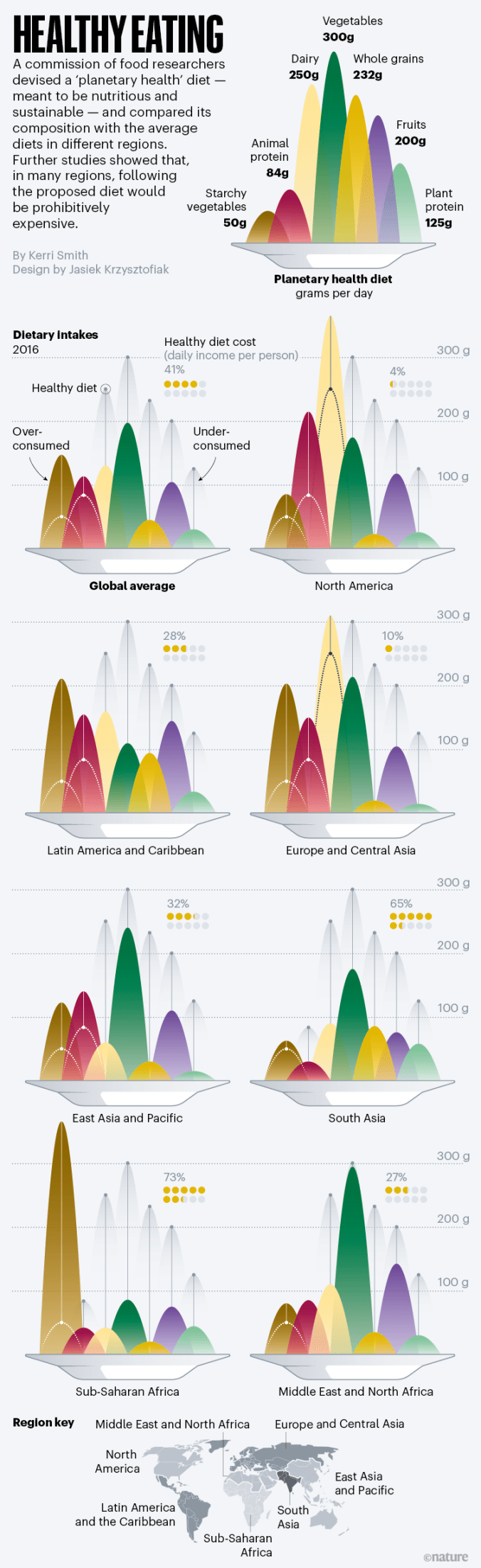
Planetary Health Diet

What we should eat for the sake of our individual and communal futures is one of the topics most posted on this platform.  Gayathri Vaidyanathan’s article below adds to the most macro of perspectives on these topics. It takes a moment to process the information in the graphic above, but this article from the journal Nature makes it clear:

What humanity should eat to stay healthy and save the planet

What we eat needs to be nutritious and sustainable. Researchers are trying to figure out what that looks like around the world.

Illustration by Paweł Jońca

A clutch of fishing villages dot the coast near Kilifi, north of Mombasa in Kenya. The waters are home to parrot fish, octopus and other edible species. But despite living on the shores, the children in the villages rarely eat seafood. Their staple meal is ugali, maize (corn) flour mixed with water, and most of their nutrition comes from plants. Continue reading

Society for the Protection of Underground Networks

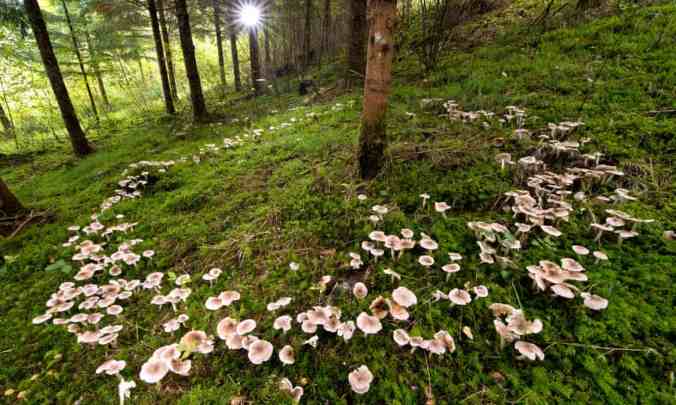
Hotspots of mycorrhizal fungi are thought to be under threat, from agriculture, urbanisation, pollution, water scarcity and changes to the climate. Photograph: Biosphoto/Alamy

We featured three articles by Fiona Harvey, Environment correspondent for the Guardian, each in 2016 on quite different topics, and then we did not see her again until today. Our attention to fungi has been constant since Milo got the topic started in 2011, and SPUN’s mapping project counts as good news:

World’s vast networks of underground fungi to be mapped for first time

Project aims to help protect some of trillions of miles of the ‘circulatory system of the planet’

Vast networks of underground fungi – the “circulatory system of the planet” – are to be mapped for the first time, in an attempt to protect them from damage and improve their ability to absorb and store carbon dioxide. Continue reading

More Trees Now

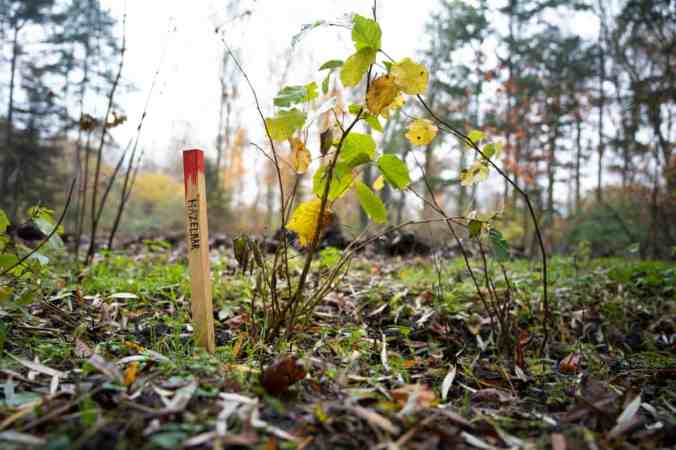
A hazel sapling (Corylus avellana) in the ditches of the tree hub at Amsterdamse Bos. Photograph: Judith Jockel/The Guardian

The trillion trees concept, which inspires but has had its share of legitimate questions, has a scrappy cousin with a novel approach:

‘Every tree counts’: Dutch come up with cunning way to create forests for free

More Trees Now aims to give away 1m unwanted saplings to farmers and councils with hope idea will spread across Europ

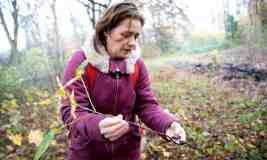
Hanneke van Ormondt saves a sapling at the tree hub in Amsterdamse Bos, Amsterdam, the Netherlands. Photograph: Judith Jockel/The Guardian

In a clearing in the Amsterdamse Bos, a forest on the outskirts of the Dutch capital, is a “tree hub” where hundreds of saplings, among them hazelnut, sweet cherry, field maple, beech, chestnut and ash, are organised by type.

The idea behind it is simple: every day unwanted tree saplings were being cleared and thrown away when those young trees could be carefully collected and transplanted to where they are wanted. Continue reading

Fixing Carbon Offset Markets

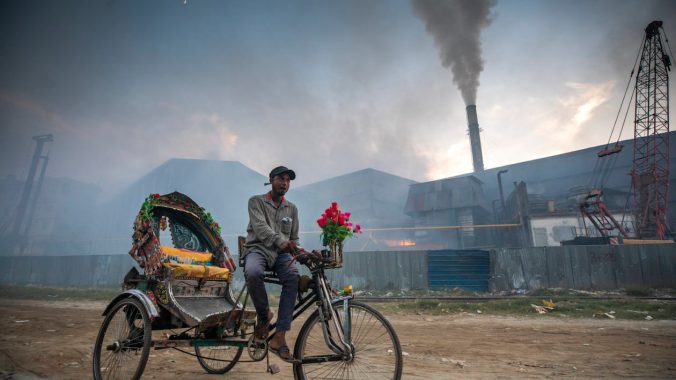
A steel re-rolling mill in Narayanganj, Bangladesh. Well-designed carbon markets could spur companies in developing countries to reduce emissions. AHMED SALAHUDDIN / NURPHOTO VIA AP

Thanks to Yale e360 for this opinion on a hot topic that we have sometimes mused less seriously about:

How to Repair the World’s Broken Carbon Offset Markets

Markets that connect businesses hoping to offset their carbon emissions with climate change mitigation projects have been plagued by problems. But an economist and his co-authors argue that carbon markets can be reformed and play a significant role in slowing global warming

In the wake of the Glasgow climate summit, governments must now return to the daunting challenge of making good on their emissions-reductions pledges, which at this point remain insufficient to hold warming below 2 or even 1.5 degrees C above pre-industrial levels. Continue reading

In The UK, Trees Say I Love You

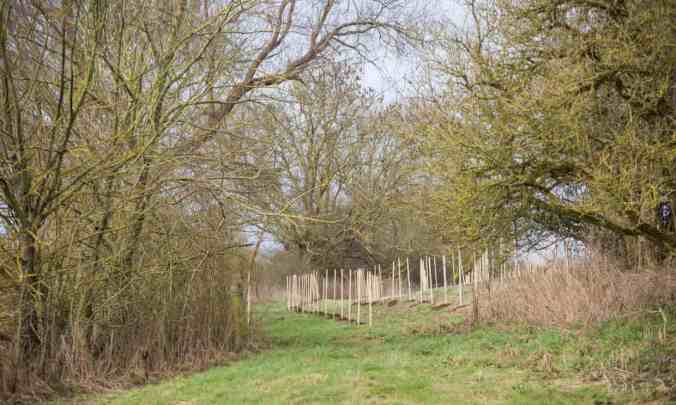
One of the National Trust’s tree-planting projects, at Kingston Lacy in Dorset. Its Plant a Tree appeal has topped £1m. Photograph: James Dobson/National Trust/PA

Planting trees is part of our business model. So, we love this news:

Forget flowers – poll shows third of people prefer to say I love you with a tree

National Trust says tree giving growing in popularity but only 7% know best season to plant

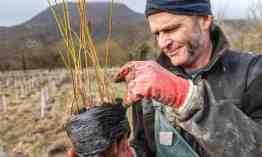
A National Trust ranger, David Smith, preparing saplings for planting at Hafod Garegog in north Wales. Photograph: Paul Harris/National Trust/PA

For centuries people have said it with flowers but research suggests a new tradition is gaining popularity in the UK – expressing love, thanks, perhaps even regret with the gift of a tree.

A third of people said they would consider saying it with a tree rather than a bouquet and more than one in 10 had already done so, according to the research commissioned by the National Trust.

However, the conservation charity also said only 7% of people in the UK knew the best time of year to plant, and it was launching a drive to improve “tree literacy”. Continue reading

Thanks Big Oil, We Got Your Messages

Illustration: Guardian Design

Geoffrey Supran and Naomi Oreskes have compiled reminders of the messaging from some of big oil’s leaders of climate change messaging, and shared it with us in the Guardian:

The forgotten oil ads that told us climate change was nothing

Since the 1980s, fossil fuel firms have run ads touting climate denial messages – many of which they’d now like us to forget. Here’s our visual guide

Both ads from the Informed Citizens for the Environment, 1991

Why is meaningful action to avert the climate crisis proving so difficult? It is, at least in part, because of ads.

The fossil fuel industry has perpetrated a multi-decade, multibillion dollar disinformation, propaganda and lobbying campaign to delay climate action by confusing the public and policymakers about the climate crisis and its solutions. This has involved a remarkable array of advertisements – with headlines ranging from “Lies they tell our children” to “Oil pumps life” – seeking to convince the public that the climate crisis is not real, not human-made, not serious and not solvable. The campaign continues to this day. Continue reading

1992 Earth Summit Revisited

Illustration by João Fazenda

In her look back at last week’s events in Glasgow, Elizabeth Kolbert comments in Running Out of Time at the U.N. Climate Conference that we were set up for this moment at the first such event nearly three decades earlier:

To really appreciate America’s fecklessness, you have to go back to the meeting that preceded all the bad COPs—the so-called Earth Summit, in 1992.

For those inclined to see them, there were plenty of bad omens last week as the latest round of international climate negotiations—cop26—got under way in Glasgow. A storm that lashed England with eighty-mile-per-hour winds disrupted train service from London to Scotland, leaving many delegates scrambling to find a way to get to the meeting. Just as the conclave began, Glasgow’s garbage workers went on strike, and rubbish piled up in the streets. Continue reading

Global North, Global South & Responsibilities

Photo: Hannah Whitaker; Prop Styling: Marina Bevilacqua.

David Wallace-Wells has done it again. Devastated me with considerations I should have had on my own, but had not. And he makes it so vivid that once you see his point you cannot stop seeing it. Having lived in the Global South for a majority of my adult years, but having been born into and lived in the Global North for the first half of my life, this story resonates with me in ways I cannot quite describe. But the quote from Proverbs in yesterday’s post seems even more intensely relevant:

Climate Reparations

A trillion tons of carbon hangs in the air, put there by the world’s rich, an existential threat to its poor. Can we remove it?

I. What Is Owed

Brazil, 2019. Photo: Cristina de Middel/Magnum Photos

The math is as simple as the moral claim. We know how much carbon has been emitted and by which countries, which means we know who is most responsible and who will suffer most and that they are not the same. We know that the burden imposed on the world’s poorest by its richest is gruesome, that it is growing, and that it represents a climate apartheid demanding reparation — or should know it. We know we can remove some of that carbon from the atmosphere and undo at least some of the damage. We know the cost of doing so using tools we have today. And we know that unless we use them, the problem will never go away. Continue reading

Greek Islands & Cleaner Energy

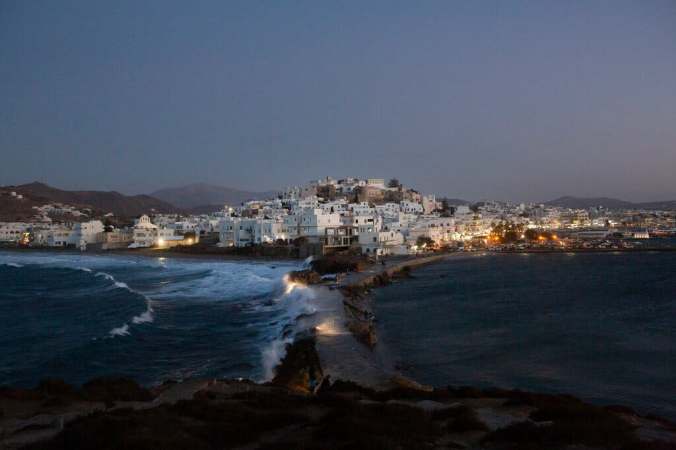
The island of Naxos is now linked to the Greek mainland via an underwater electrical cable. Eirini Vourloumis

Writing from Costa Rica, which currently generates nearly all of its electricity from renewable sources, but thinking of Greece, which is moving in that direction, my thanks to Liz Alderman and Eirini Vourloumis for the excellent reporting and photography about that journey:

Greece Is Getting Rewired for the Future

As climate change bears down, Greece is upending its sources of energy and trying to reshape its economic destiny.

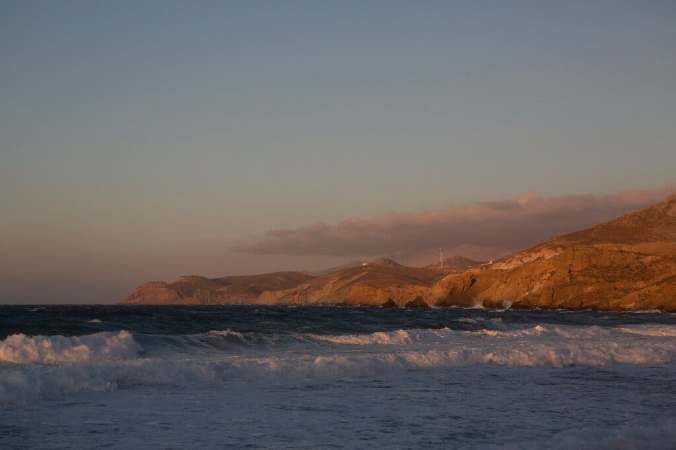
Two wind turbines on a hill outside the main town of Naxos. Eirini Vourloumis

NAXOS, Greece — On the windswept western tip of one of Greece’s largest islands, an unassuming stone building above the Aegean Sea has become an unlikely outpost in this country’s fight against climate change. Continue reading

Sign Up For McKibben

James Watt, at work in the small University of Glasgow workshop where he basically invented the fossil fuel era

I am trying to imagine getting tired of reading Bill McKibben’s constant flow of commentary and news, even though most of it is dismal. It would be like getting tired of paying attention to the environment, especially climate issues. Yesterday’s observations from Glasgow are particularly rewarding, and I hope you will consider subscribing to his newsletter:

Glasgow: where climate wreckage began

And where it’s definitely not going to end

I spent part of the morning wandering the gorgeous Victorian courtyards of the University of Glasgow (they would seem familiar to you—it’s where they shot the exteriors for the Harry Potter films), trying to find the university chapel where I was supposed to give a lecture. Instead of that august sanctuary, I stumbled across the James Watt building—and with it a poignant set of reminders about just how quickly we’ve managed to bring the world to the edge of ruin. Continue reading

Beware of LEAF’s Possible Exclusions

Thanks to Fred Pearce, as always:

A Big New Forest Initiative Sparks Concerns of a ‘Carbon Heist’

Major funding to finance forest conservation projects is set to be announced at the UN climate summit next week. But some environmentalists contend the LEAF program could exclude the Indigenous people who have long protected the forests that the initiative aims to save.

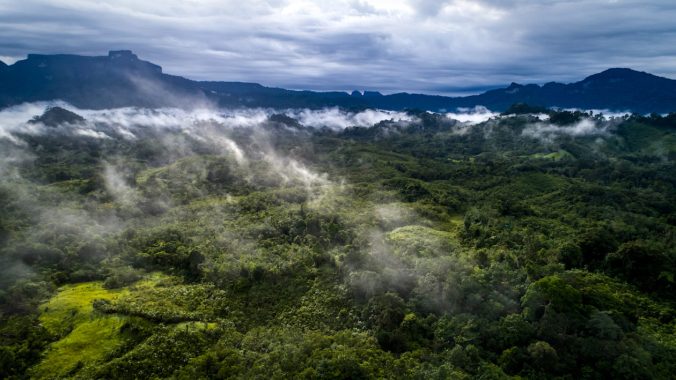
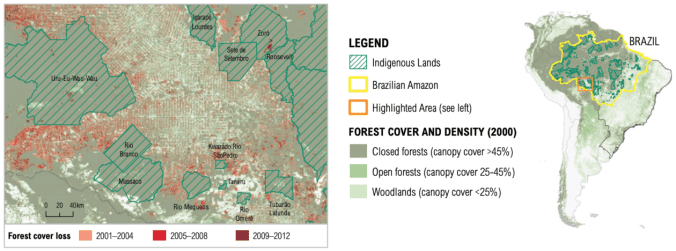
Indigenous lands on the western end Brazilian Amazon have seen far less deforestation than surrounding areas. WORLD RESOURCES INSTITUTE

After a decade of disappointing failures, UN-backed schemes to fight climate change by capturing carbon in the world’s forests are set for a comeback. Big new funding will be announced at next week’s climate conference in Glasgow, Scotland that would deliver billions of dollars in private finance for conservation projects in tropical forests, with governments and companies being able to use the carbon offsets from those projects to achieve their net-zero emissions pledges.

But concerns are growing that these new mega-offset projects will happen at the expense of forest communities. Continue reading

Coral Reef Bright Spots

A diver examines bleached coral in French Polynesia in 2019.

A diver examines bleached coral in French Polynesia in 2019. ALEXIS ROSENFELD / GETTY IMAGES

When someone offers to point out bright spots on anything in the natural world, we are all ears. When the author is Nicola Jones, all the more:

Finding Bright Spots in the Global Coral Reef Catastrophe

The first-ever report on the world’s coral reefs presents a grim picture, as losses mount due to global warming. But there are signs of hope — some regions are having coral growth, and researchers found that corals can recover if given a decade of reprieve from hot water.

When ecological genomicist Christian Voolstra started work on corals in Saudi Arabia in 2009, one of the biggest bonuses to his job was scuba diving on the gorgeous reefs. Things have changed. “I was just back in September and I was shocked,” says Voolstra, now at the University of Konstanz in Germany. “There’s a lot of rubble. The fish are missing. The colors are missing.” Continue reading

Electrify Now

SAMAN SARHENG/YALE E360

For those of us who can make the switch sooner rather than later, it is looking more and more like common sense:

From Homes to Cars, It’s Now Time to Electrify Everything

The key to shifting away from fossil fuels is for consumers to begin replacing their home appliances, heating systems, and cars with electric versions powered by clean electricity. The challenges are daunting, but the politics will change when the economic benefits are widely felt.

An all-electric house. REWIRING AMERICA

For too long, the climate solutions conversation has been dominated by the supply-side view of the energy system: What will replace coal plants? Will natural gas be a bridge fuel? Can hydrogen power industry? These are all important questions, but, crucially, they miss half the equation. We must bring the demand side of our energy system to the heart of our climate debate. Continue reading
50 Years Of Climate Science

(Zeb Andrews / Getty)

Robinson Meyer’s newsletter this week offers The Key Insight That Defined 50 Years of Climate Science:

Look out the nearest window and imagine, if you can, an invisible column of air. It sits directly on the tufts of grass, penetrates clear through any clouds or birds above, and ends only at the black pitch of space. Now envision a puff of heat rising through this column, passing through all the layers of the atmosphere on its journey. What happens as it rises? Where does it go? The answer to that simple question is surprisingly, even ominously important for the climate. But for nearly a century, the world’s best scientists struggled to resolve it. Continue reading