David Attenborough’s Green Planet

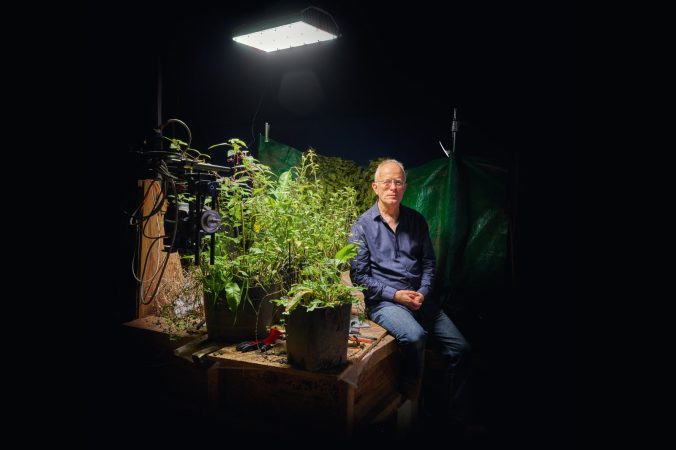
Mike Gunton, creative director of the BBC Natural History Unit and a long-time collaborator with David Attenborough.PHOTOGRAPH: BENEDICT REDGROVE

David Attenborough has been a frequent feature in our pages over the years. Each conversation with him repeats something we already knew but shares something we had not previously known:

David Attenborough’s Unending Mission to Save Our Planet

“We tend to think we are the be all and end all—but we’re not. The sooner we can realize that the natural world goes its way, not our way, the better.”

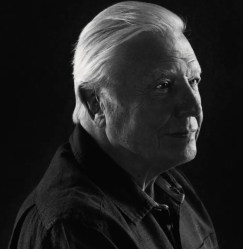
David Attenborough’s Green Planet is his latest series in a career that began in the 1950s and is as notable for its variety of firsts—pioneering 16-mm film in TV; first to film a Komodo dragon; first to use drone cameras—as it is for his long-standing commitment to bringing wildlife and environmental issues into the homes of viewers around the world. PHOTOGRAPH: NADAV KANDER

WE MAKE LOTS of programs about natural history, but the basis of all life is plants.” Sir David Attenborough is at Kew Gardens on a cloudy, overcast August day waiting to deliver his final piece to camera for his latest natural history epic, The Green Planet. Planes roar overhead, constantly interrupting filming, and he keeps putting his jacket on during pauses. “We ignore them because they don’t seem to do much, but they can be very vicious things,” he says. “Plants throttle one another, you know—they can move very fast, have all sorts of strange techniques to make sure that they can disperse themselves over a whole continent, have many ways of meeting so they can fertilize one another and we never actually see it happening.” He smiles. “But now we can.” Continue reading

Points For Creativity

Edward Constance and Brian Souyana race on Rasta Rocket, made from plastic drain pipes and fishing buoys that washed up on Aldabra. About 68 tonnes of marine litter a year is washed ashore

Do not ask yourself whether this will change anything; just smile and acknowledge that it is probably not hurting anyone to have some creative fun with environmental disasters:

Recycled regatta: world heritage site highlights plastic pollution crisis

When environmentalists on a Seychelles atoll decided to race boats made from ocean litter, they had 500 tonnes to pick from

Photographs: Anna Koester/Seychelles Islands Foundation

Martin van Rooyen, a researcher, and Luke A’Bear, a science coordinator, prepare to set sail on Red Lion, buoyed by discarded oil drums

Red Lion is the kind of boat you would not see in most regattas. Its frame is made of bamboo, sourced from washed-up fishing equipment, and it uses two old oil drums for buoyancy.

Equally strange is Rasta Rocket – made from old plastic drain pipes, washed-up floats and fishing buoys.

These were two of the boats in the inaugural Aldabra Regatta: an ironic attempt to draw attention to marine plastic pollution by racing boats made from marine debris. Continue reading
Greenpeace @ 50

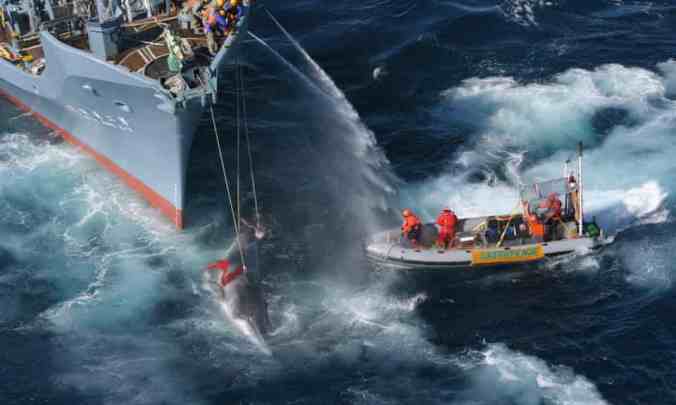
Greenpeace ship MY Esperanza and activists try to hinder the shooting of a minke whale by the Yushin Maru No.2 catcher ship. Photograph: Kate Davison/Greenpeace

Paul Watson and Sea Shepherd were favorite post topics for a while, but long time no see. With a major anniversary for Greenpeace, a look at other important images from their history seems a fitting tribute:

Greenpeace: half a century on the frontline of environmental photo activism

On the organisation’s 50th anniversary, former head of photography at Greenpeace International talks about the motives behind the creation of its picture desk

Vega boarded by French commandos in Moruroa, 1973. Photograph: Ann-Marie Horne

Fifty years ago, on 15 September 1971, a ship named the Greenpeace set out to confront and stop US nuclear weapons testing at Amchitka, one of the Aleutian Islands in south-west Alaska.

Two years later a small boat called the Vega, crewed by David McTaggart, Ann-Marie Horne, Mary Horne and Nigel Ingram sailed into the French nuclear test site area at Moruroa, French Polynesia in the southern Pacific Ocean. Continue reading
Rehabilitation Of Antitrust Law

Starting seven years ago I have been paying attention to monopoly power mostly in the context of Amazon. One of the clearest articles on the topic focused on a young person’s breakthrough idea. So I was very happy to read about Lina Khan’s Battle to Rein in Big Tech by rehabilitating antitrust law:

As monopolies and other large companies gain increasing control of our daily lives, Khan is Joe Biden’s pick to do something about it.

In the spring of 2011, a recent Williams College graduate named Lina Khan interviewed for a job at the Open Markets Program, in Washington, D.C. Open Markets, which was part of the New America think tank, was dedicated to the study of monopolies and the ways in which concentration in the American economy was suppressing innovation, depressing wages, and fuelling inequality. Continue reading
More Trees Now

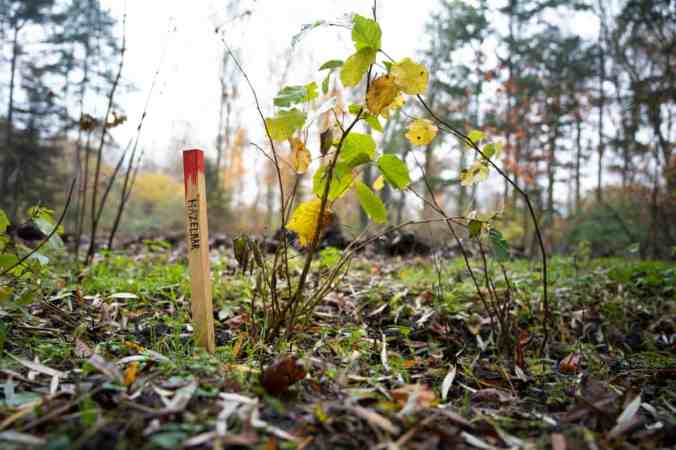
A hazel sapling (Corylus avellana) in the ditches of the tree hub at Amsterdamse Bos. Photograph: Judith Jockel/The Guardian

The trillion trees concept, which inspires but has had its share of legitimate questions, has a scrappy cousin with a novel approach:

‘Every tree counts’: Dutch come up with cunning way to create forests for free

More Trees Now aims to give away 1m unwanted saplings to farmers and councils with hope idea will spread across Europ

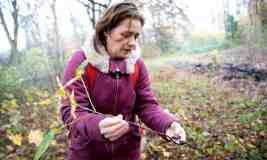
Hanneke van Ormondt saves a sapling at the tree hub in Amsterdamse Bos, Amsterdam, the Netherlands. Photograph: Judith Jockel/The Guardian

In a clearing in the Amsterdamse Bos, a forest on the outskirts of the Dutch capital, is a “tree hub” where hundreds of saplings, among them hazelnut, sweet cherry, field maple, beech, chestnut and ash, are organised by type.

The idea behind it is simple: every day unwanted tree saplings were being cleared and thrown away when those young trees could be carefully collected and transplanted to where they are wanted. Continue reading
Fixing Carbon Offset Markets

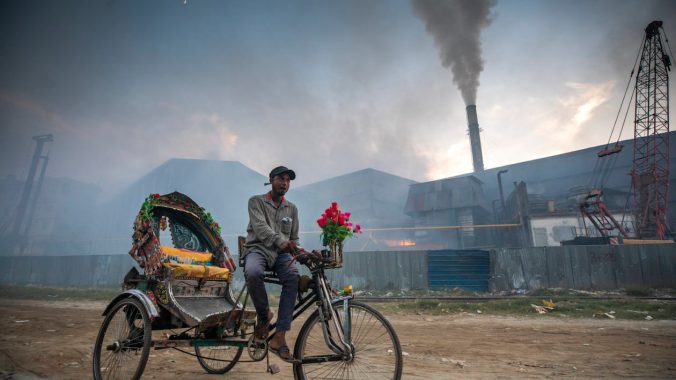
A steel re-rolling mill in Narayanganj, Bangladesh. Well-designed carbon markets could spur companies in developing countries to reduce emissions. AHMED SALAHUDDIN / NURPHOTO VIA AP

Thanks to Yale e360 for this opinion on a hot topic that we have sometimes mused less seriously about:

How to Repair the World’s Broken Carbon Offset Markets

Markets that connect businesses hoping to offset their carbon emissions with climate change mitigation projects have been plagued by problems. But an economist and his co-authors argue that carbon markets can be reformed and play a significant role in slowing global warming

In the wake of the Glasgow climate summit, governments must now return to the daunting challenge of making good on their emissions-reductions pledges, which at this point remain insufficient to hold warming below 2 or even 1.5 degrees C above pre-industrial levels. Continue reading

Thanksgiving, Organikos & Authentica At Year 3

Introduced at the Authentica shops in Costa Rica on Thanksgiving Day, 2021

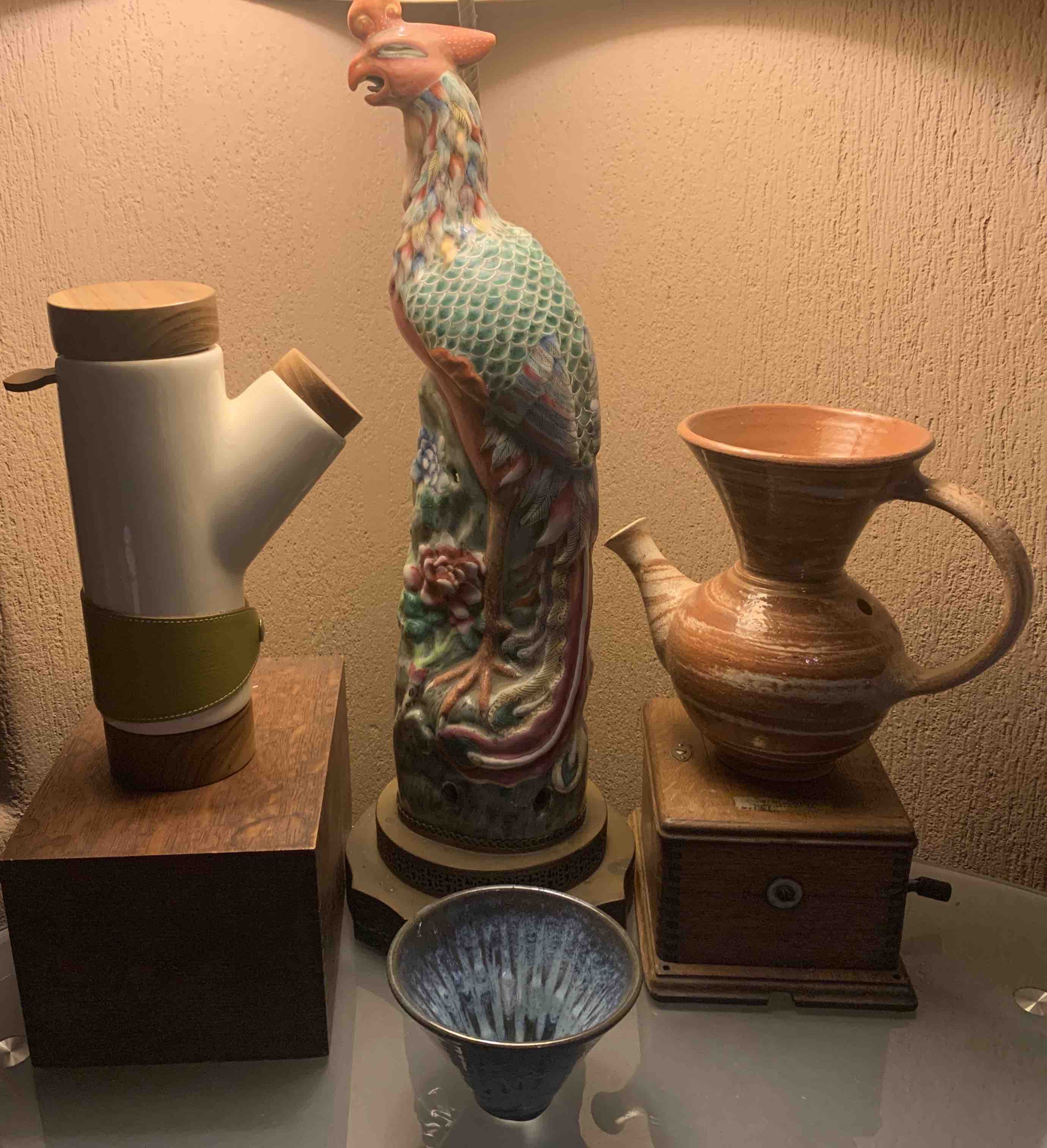
The base of the lamp at my desk is a ceramic bird that serves as a year-round reminder of Thanksgiving. And the ceramic coffee artifacts on my desk serve the same purpose, reminding me each time I sit to work that there are constantly plenty of reasons to give thanks.

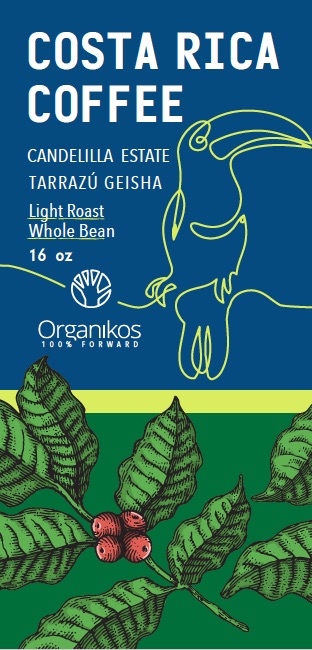
We opened two Authentica shops in Costa Rica on Thanksgiving weekend 2019. Sophomore year for both Organikos and Authentica was mettle-testing. We passed. If flying colors were not evident enough in how we passed, here they are in the label for our newest coffee. First introduced last month to a group of students at Cornell University, whose tasting notes we have appreciated receiving, as of today it is available in our shops in Costa Rica.

So, thanks for all that.

In The UK, Trees Say I Love You

One of the National Trust’s tree-planting projects, at Kingston Lacy in Dorset. Its Plant a Tree appeal has topped £1m. Photograph: James Dobson/National Trust/PA

Planting trees is part of our business model. So, we love this news:

Forget flowers – poll shows third of people prefer to say I love you with a tree

National Trust says tree giving growing in popularity but only 7% know best season to plant

A National Trust ranger, David Smith, preparing saplings for planting at Hafod Garegog in north Wales. Photograph: Paul Harris/National Trust/PA

For centuries people have said it with flowers but research suggests a new tradition is gaining popularity in the UK – expressing love, thanks, perhaps even regret with the gift of a tree.

A third of people said they would consider saying it with a tree rather than a bouquet and more than one in 10 had already done so, according to the research commissioned by the National Trust.

However, the conservation charity also said only 7% of people in the UK knew the best time of year to plant, and it was launching a drive to improve “tree literacy”. Continue reading
Solar Canopy + Bellwether Roaster = Interesting Option

As we consider new canopy options, a switch to electric roasting of Organikos coffee also seems clearly worthy of consideration. I just found out about this company, and its sustainability report from last year puts it high on my list of roasters to consider:

Letter from Bellwether

We would be remiss to start our Sustainability Report without acknowledging what a crazy year 2020 was. A global pandemic forced many of our customers, like other businesses across the world, to close their doors. Continue reading
A New Canopy Concept

This year, the garden produced more than 8,000 pounds of produce, while the panels above generate enough power for 300 local homes. Kirk Siegler/NPR

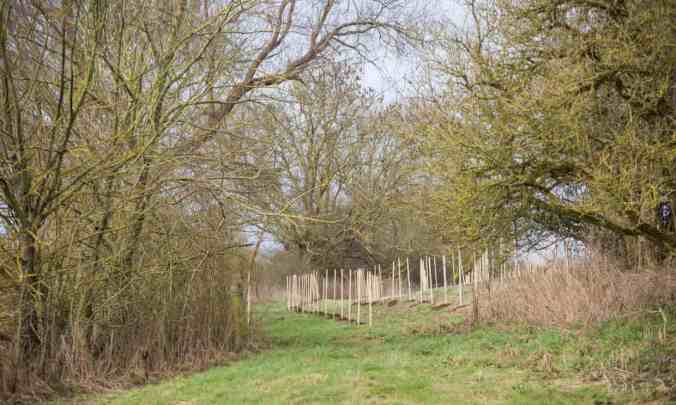
When the poro and other trees we planted in the last two years mature, they will provide shade for a thousand or so coffee saplings. High elevation arabica coffee likes shade, and birds like the habitat. Those trees are growing fast, but it will be decades until their full shade potential is reached. As I read “This Colorado ‘solar garden’ is literally a farm under solar panels” I can picture an interesting complement to the shade poro provides:

When Byron Kominek returned home after the Peace Corps and later working as a diplomat in Africa, his family’s 24-acre farm near Boulder, Colo., was struggling to turn a profit.

“Our farm has mainly been hay producing for fifty years,” Kominek said, on a recent chilly morning, the sun illuminating a dusting of snow on the foothills to his West. “This is a big change on one of our three pastures.”

That big change is certainly an eye opener: 3,200 solar panels mounted on posts eight feet high above what used to be an alfalfa field on this patch of rolling farmland at the doorstep of the Rocky Mountains. Continue reading
Global North, Global South & Responsibilities

Photo: Hannah Whitaker; Prop Styling: Marina Bevilacqua.

David Wallace-Wells has done it again. Devastated me with considerations I should have had on my own, but had not. And he makes it so vivid that once you see his point you cannot stop seeing it. Having lived in the Global South for a majority of my adult years, but having been born into and lived in the Global North for the first half of my life, this story resonates with me in ways I cannot quite describe. But the quote from Proverbs in yesterday’s post seems even more intensely relevant:

Climate Reparations

A trillion tons of carbon hangs in the air, put there by the world’s rich, an existential threat to its poor. Can we remove it?

I. What Is Owed

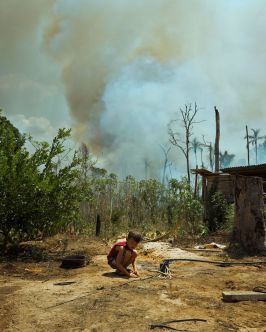
Brazil, 2019. Photo: Cristina de Middel/Magnum Photos

The math is as simple as the moral claim. We know how much carbon has been emitted and by which countries, which means we know who is most responsible and who will suffer most and that they are not the same. We know that the burden imposed on the world’s poorest by its richest is gruesome, that it is growing, and that it represents a climate apartheid demanding reparation — or should know it. We know we can remove some of that carbon from the atmosphere and undo at least some of the damage. We know the cost of doing so using tools we have today. And we know that unless we use them, the problem will never go away. Continue reading
Greek Islands & Cleaner Energy

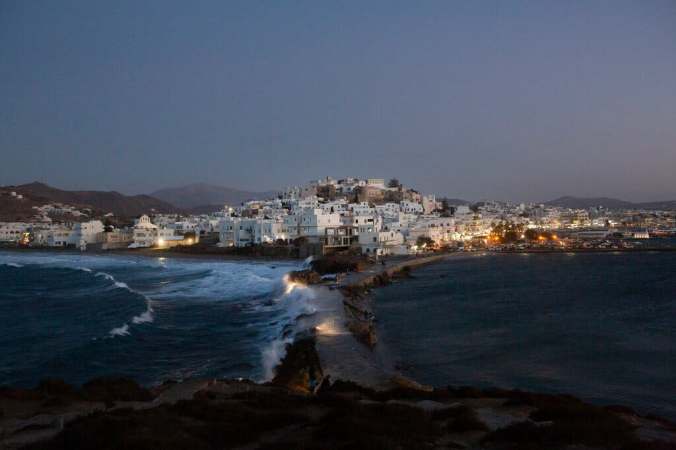
The island of Naxos is now linked to the Greek mainland via an underwater electrical cable. Eirini Vourloumis

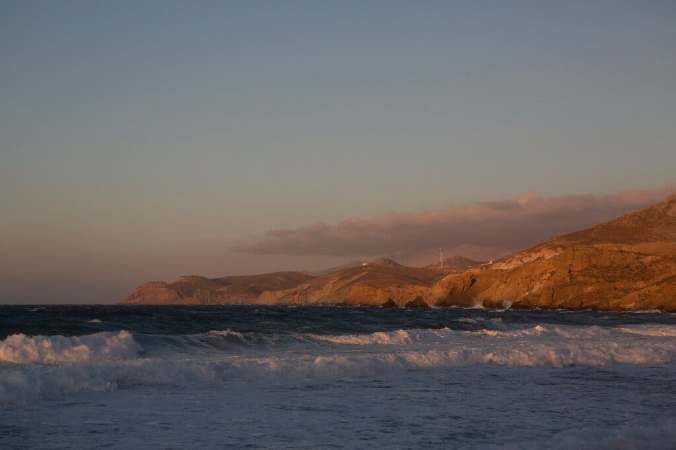
Writing from Costa Rica, which currently generates nearly all of its electricity from renewable sources, but thinking of Greece, which is moving in that direction, my thanks to Liz Alderman and Eirini Vourloumis for the excellent reporting and photography about that journey:

Greece Is Getting Rewired for the Future

As climate change bears down, Greece is upending its sources of energy and trying to reshape its economic destiny.

Two wind turbines on a hill outside the main town of Naxos. Eirini Vourloumis

NAXOS, Greece — On the windswept western tip of one of Greece’s largest islands, an unassuming stone building above the Aegean Sea has become an unlikely outpost in this country’s fight against climate change. Continue reading
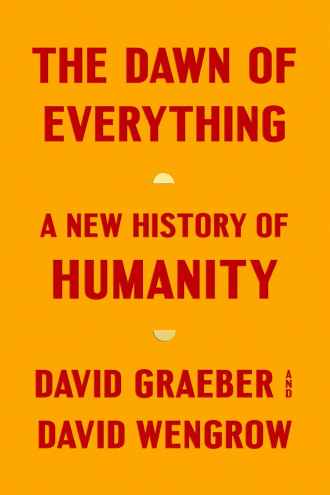
The Dawn Of Everything

Occupy Wall Street never showed up in these pages until now, which is maybe too late. I recall visiting Zuccotti Park in late 2011, to observe more than to occupy. I remember a box of books, many young people and some my own age, and a palpable sense of purpose combined with a pretty straightforward logic. Also, tranquil. That ballerina meant something. But I could not stay. I was in New York on a very brief visit. I have the opposite of anarchist beliefs and my understanding at the time was that the animating philosophy had something to do with anarchy.

I shared views with Occupy Wall Street in opposition to historic inequalities that I could see as a ticking time bomb. But my time that day was limited. I had to leave. No regrets. Until now, perhaps. Maybe I should have stayed. This book, which I have now read several reviews of, gives me reason to wonder. That protest was the brainchild of someone who then spent a decade producing a book to offer a very different view of human history:

…The Big History best-sellers by Harari, Diamond and others have their differences. But they rest, Graeber and Wengrow argue, on a similar narrative of linear progress (or, depending on your point of view, decline). Continue reading
ICARDA, CGIAR & Future Food

Thanks to Helen Sullivan, as usual, for excellent reporting and clear implications:

A Syrian Seed Bank’s Fight to Survive

Scientists have raced to safeguard a newly precious resource: plants that can thrive in a changing climate.

The International Center for Agricultural Research in the Dry Areas, known as icarda, is housed in a cluster of small buildings on a dusty property in Lebanon’s Bekaa Valley, halfway between Beirut and Damascus. Its facilities, surrounded by fields of experimental grain, include a laboratory, nurseries, and a gene bank—a storage facility in which tens of thousands of seeds have been carefully saved and catalogued.

When I first visited, on an autumn afternoon in 2019, staff members in the main building were counting, weighing, and sliding seeds into small packets. Continue reading

Roses In The Cloister

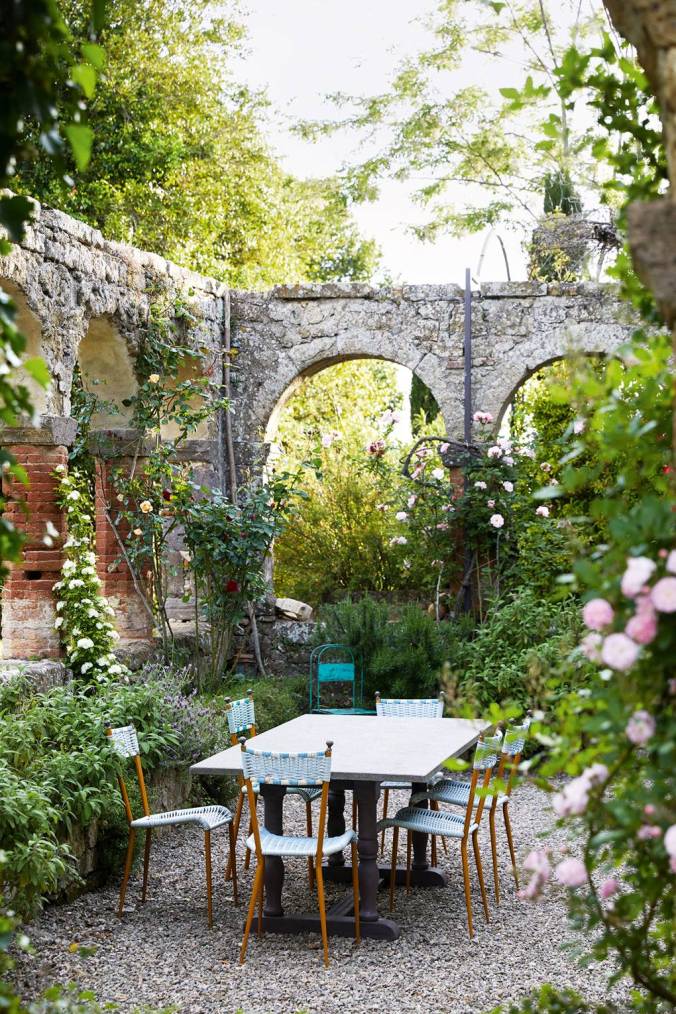
Roses in the cloister.   SIMON WATSON

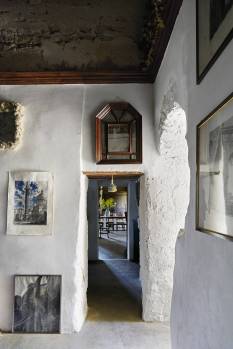
Yesterday’s post linked to earlier ones with rose references, and one of those led me to a small correction. The photo above shows a slightly different angle on the roses in the garden of the restored convent. I had assumed those roses were very old. A bit of sleuthing led me to the fact that they were planted during the restoration, and they are “indeed quite perfumed.” For that and other reasons it is worth taking another look at that project, this time told by Olinda Adeane and with excellent photos by Simon Watson:

A mother & daughter’s restoration of a 16th-century Tuscan convent

A mother-and-daughter design duo has taken an unconventional approach to the conversion of a sixteenth-century convent in Tuscany, filling the rooms with objects and artworks of their own making.

In the library, hand-coloured prints stand out against the white walls. SIMON WATSON

Henry James once described his friend Edith Wharton as a ‘great and glorious pendulum’ swinging back and forth across the Atlantic. In a similar fashion, Holly Lueders, a designer from New York, has returned to Greece every year since she first visited the country as an 18-year-old student. Holly grew up in a sleepy town in Missouri with little in the way of culture or local craft, but her family was artistic and good with their hands. ‘Anything we wanted, we made for ourselves,’ remembers Holly. She studied art history and archaeology at Columbia University and completed her studies in Athens. Continue reading

Admiring A Horticultural Refuge

Stella Kalinina

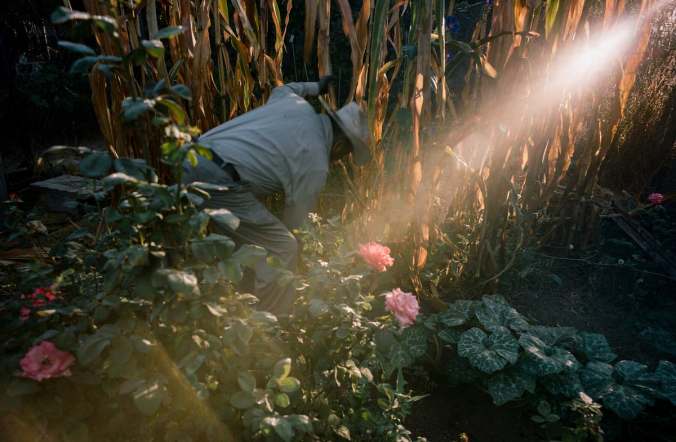
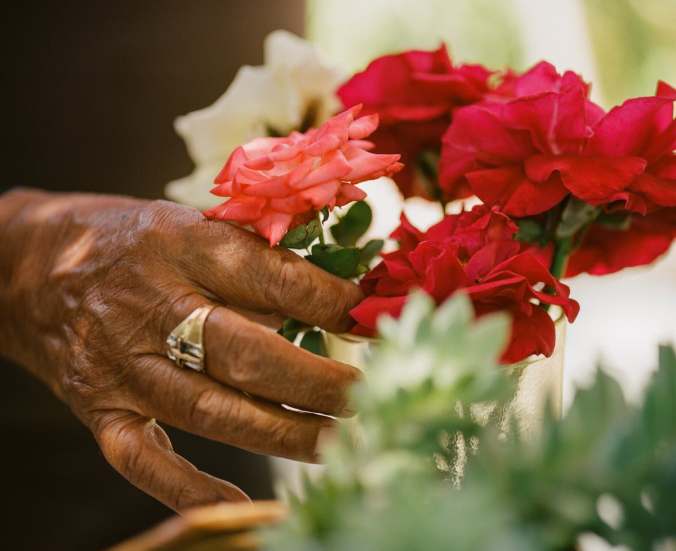
Community gardens have been a regular topic in our pages over the last decade. We never tire of the subject. I personally have a soft spot for roses, especially those found in unexpected places. So, Raúl Laly Fernández, you are my hero. I hope that the next time I am in Los Angeles I will find you in this garden and bear witness to the rose wonders I see in these photographs. Kudos to the writer/photographer Stella Kalinina for capturing this intersection between immigrant culture, working class refuge, and horticultural knowhow:

Mr. Fernández decorates a sitting area in his plot with roses that he grows.

In Los Angeles, Glimpses of an Oasis With Deep Immigrant Roots

The San Pedro Community Gardens have provided physical and spiritual nourishment for the past half a century to multiple generations of immigrant Angelenos.

Kimberly Mentlow received a plot in San Pedro after three years on a waiting list. “Being able to plant something or see something grow — it’s extremely therapeutic,” she said.

Ten minutes from my home, next to a decommissioned landfill, a freeway and the largest port in the country, sits an unlikely hillside oasis of vegetables and fruit trees.

Emerging like a mirage from its surroundings, the San Pedro Community Gardens occupy a six-acre parcel of city-owned land in the otherwise highly industrialized area of the blue-collar harbor community of San Pedro, in Los Angeles. Continue reading

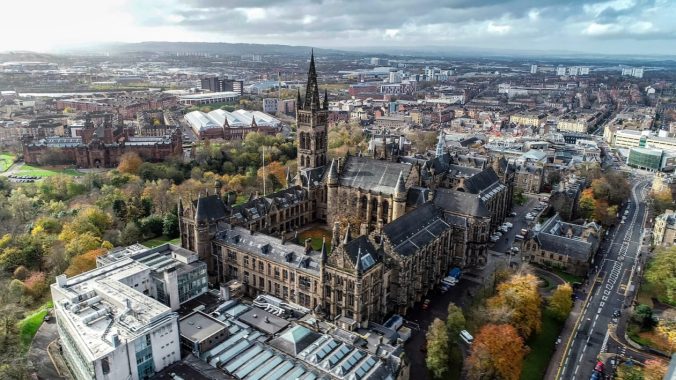
Understanding What Is At Stake At The Glasgow Climate Conference

Glasgow, Scotland, site of the 2021 UN climate conference in November. TREASUREGALORE / SHUTTERSTOCK

Fred Pearce has a unique ability to make big, complex important matters more understandable:

At Climate Talks, Can the World Move from Aspiration to Action?

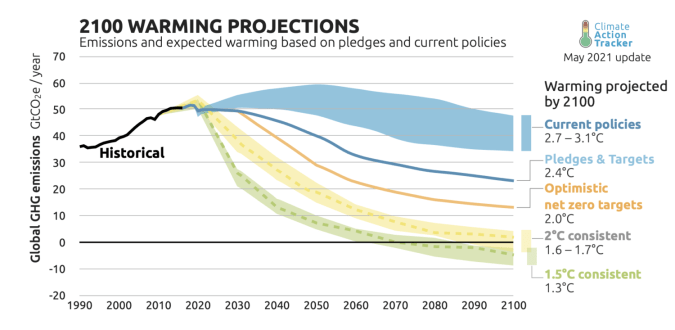
Negotiators at the Glasgow climate conference will face a critical choice: Set firm emissions targets for 2030, or settle for goals of achieving “net zero” by 2050? The course they set could determine if we have a shot at avoiding the worst impacts of climate change.

CLIMATE ACTION TRACKER

Glasgow, once the second city of the British Empire and the biggest shipbuilder on the planet, next month hosts the 26th conference of nations aiming to halt dangerous climate change. The negotiators face the challenge of turning the aspiration of the 2015 Paris Agreement to achieve “net zero” emissions by mid-century into the detailed near-term action plans necessary to turn those hopes into reality in time to halt warming at or near 1.5 degrees Celsius (2.7 degrees Fahrenheit). Continue reading

The Taste of a Place

It’s a feeling we come back to again and again, especially when talking about foods we love. Coffee, cheese, wine, tea…the  significance of each one resonates with both a sense of culture and place to where quite a few of the contributors to this site have called home.

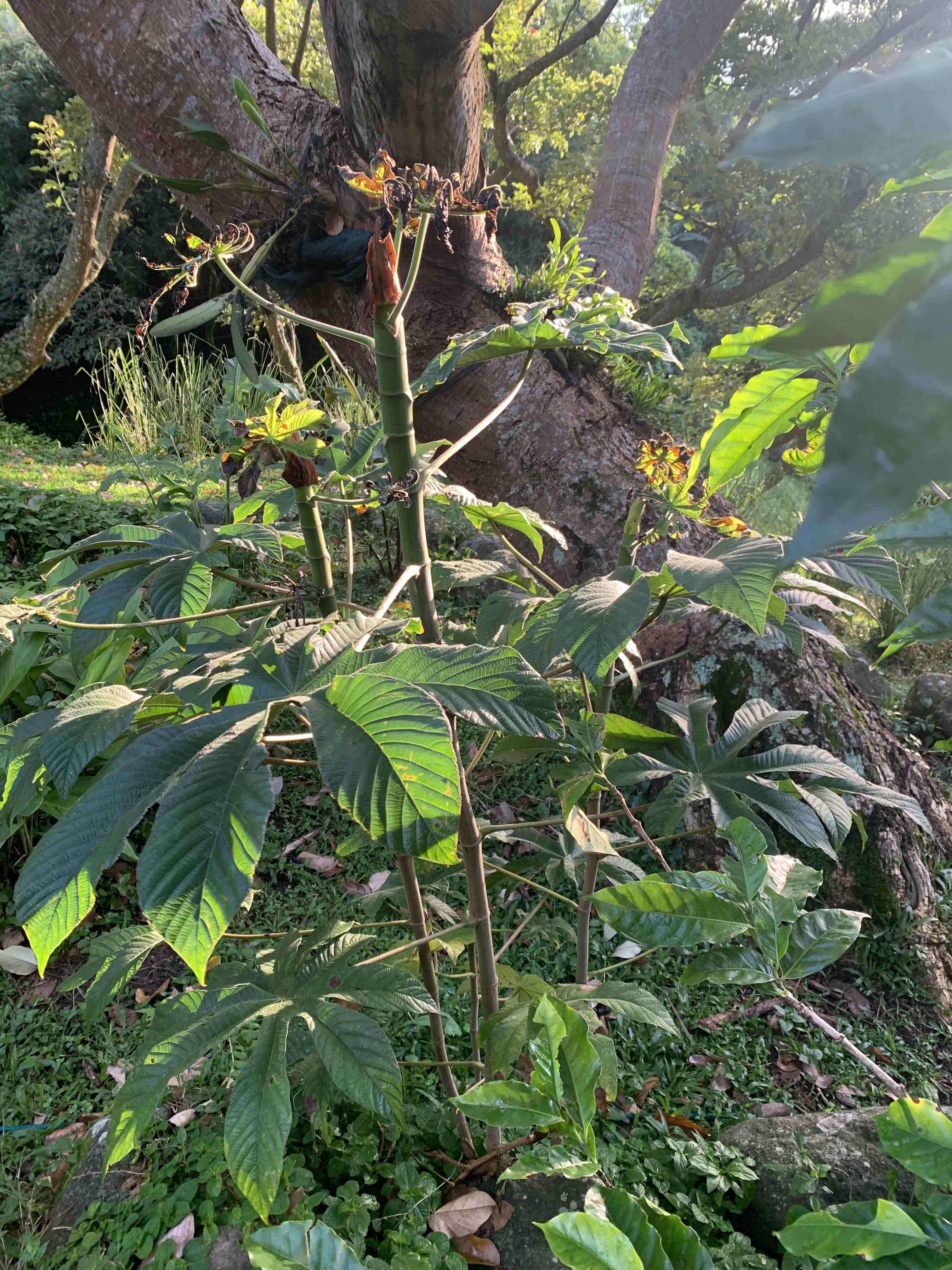
In the case of the image above, we peer into the poro trees we have mentioned numerous times. This particular poro, whose thick diagonally oriented trunk is situated at the uppermost point on the land where our coffee grows, is home to several orchids, both wild and cultivated. And in the foreground of the image a young cecropia tree is making its way upward, with a reddish top.

Next to the cecropia, out of the frame, is a mature coffee tree. Next to that is a young lime tree, and surrounding are various flowers and mano de tigre, aka monstera deliciosa. Just downhill from the trees and flowers in this image are bananas, plantain and sugar cane. The best coffees enjoy diverse company as they grow.

The Nature Conservancy’s 2021 Global Photo Contest Winners

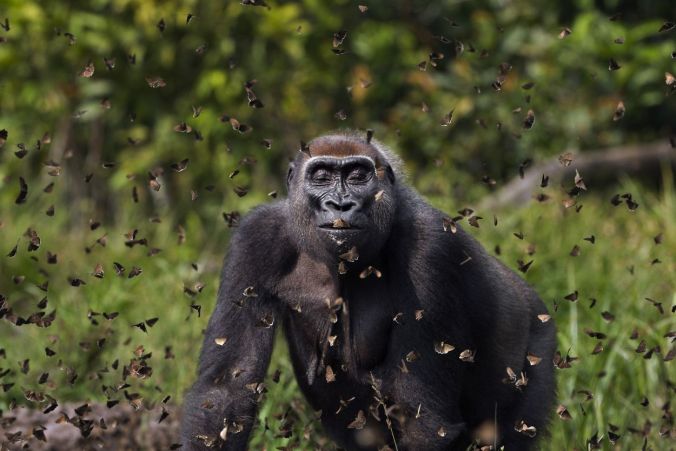
MALUI Western lowland gorilla female ‘Malui’ walking through a cloud of butterflies she has disturbed in a bai. Bai Hokou, Dzanga Sangha Special Dense Forest Reserve, Central African Republic. December 2011. © Anup Shah/TNC Photo Contest 2021

There are several annual photo contests that we have been following over the years. Thanks to The Nature Conservancy for convening this one:

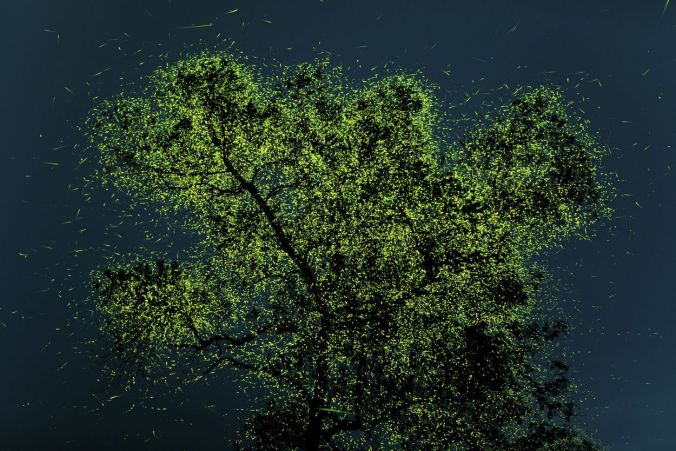
FIREFLIES Just before Monsoon, these fireflies congregate in certain regions of India and on a few special trees like this one, they are in crazy quantity which can range in millions. © Prathamesh Ghadekar/TNC Photo Contest 2021

An Illustrated Catalog of American Fruits & Nuts


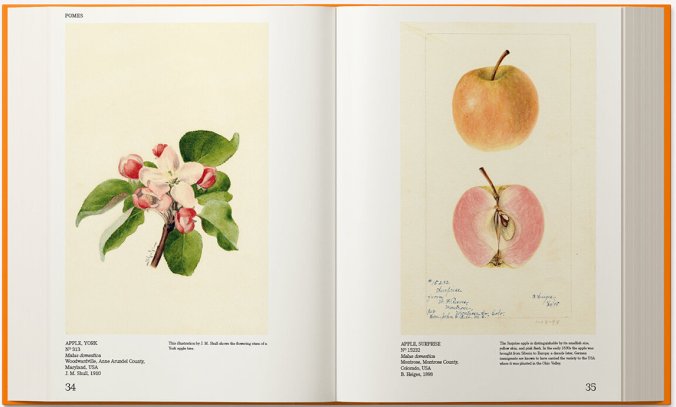
At 384 pages, with over 300 color illustrations, this illustrated catalog looks like the coffee table book of the year for any agriwonk, especially those who have been planting fruit and nut trees in the last year or so:

The United States Department of Agriculture Pomological Watercolor Collection encompasses over 7.500 botanical watercolor paintings of evolving fruit and nut varieties, alongside specimens introduced by USDA plant explorers from the late 19th and early 20th centuries. Assembled between 1886 and 1942, the collection’s remarkable, botanically accurate watercolors were executed by some 21 professional artists (including nine women). Authored largely before the widespread application of photography, the watercolors were intended to aid accurate identification and examination of fruit varietals, for the nation’s fruit growers. Continue reading