Stories from the Field: Kaziranga National Park, Assam

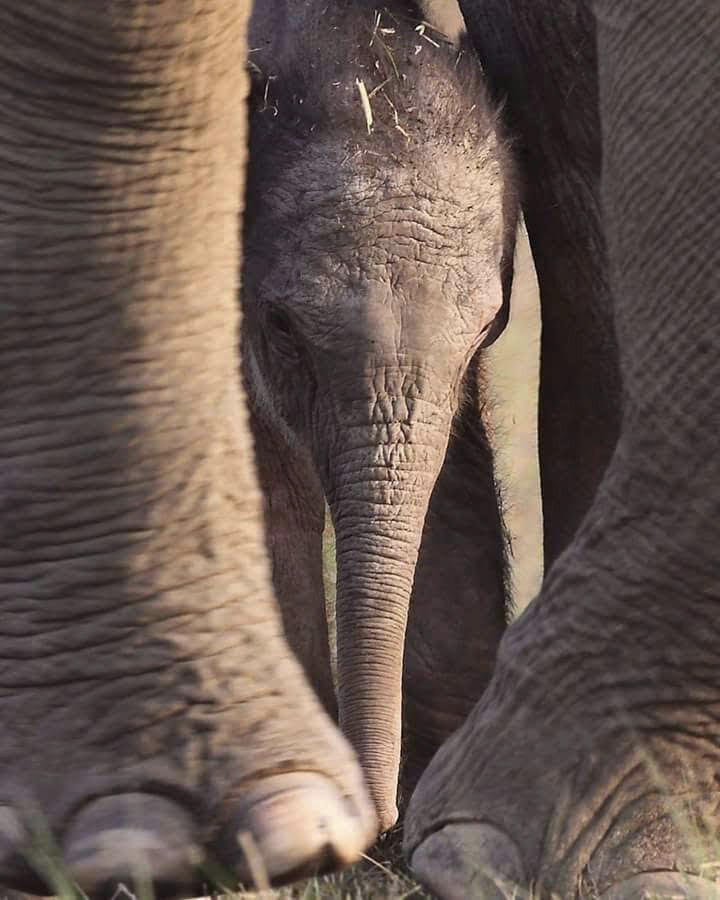
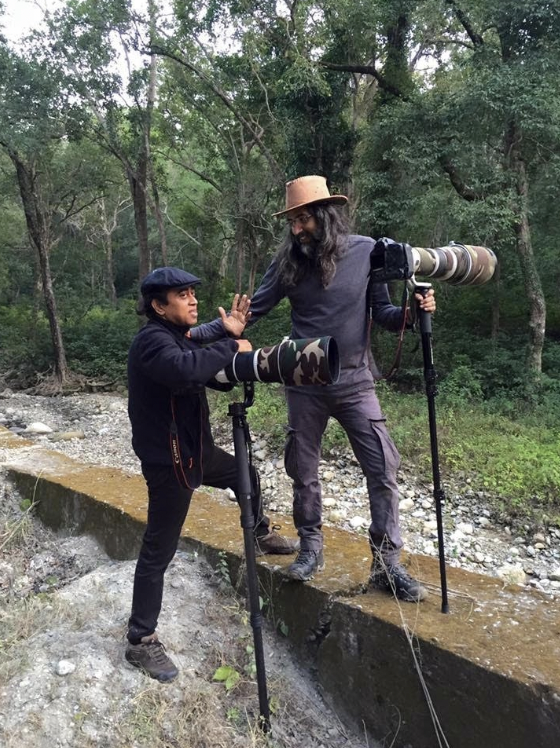
My childhood friend Sathya thrust his 1D Mark4 camera and 300 mm f4 camera lens in my hand and asked me to step out and spend more time outside my apartment. He was a medical professional. It was July 2012, and his idea was to fill me with quality air and to wrap more sun on my skin. He wanted me to travel more often and photograph birds.  It was 6 months after a week long trip at Kaziranga National Park, which had been my first taste of wildlife. I can still smell the freshness of it all.
Kaziranga is magical.

We stayed at the Wild Grass Lodge amidst the intimidating presence of huge lenses and heavy gear.
The dining hall was filled with Masai Mara and other jungle lores.
I was drawn into my fellow travel mates’ conversations on birds and elephant behaviour.
Animal psychology was a nonexistent subject for me till then. I always marveled at the life of plants & trees. The reasons and roles of their existence and their beauty.
During this trip, I was introduced into the role of fauna into the sustenance of forests and their mutual social struggles; Their mastery of leveraging each others resources, framed by unwritten cooperative laws. Their companionship in fighting extinction. Survival makes strange bedfellows among flora and fauna – from the megafauna to the smallest ant and flying insect.

Continue reading

Aeon & The Rise Of Maize In Asia

On the outskirts of Kunming, the capital of Yunnan province in southwestern China, 6 November 2006. Photo by stringer/Reuters

Aeon was a regular source of excellent ideas and information during our first few years, and we are happy to see it again:

Maize is arguably the single most important crop in the world and is rivalled only by soybeans in terms of versatility. That said, it is, along with sugar cane and palm oil, among the most controversial crops, proving particularly so to critics of industrial agriculture. Although maize is usually associated with the Western world, it has played a prominent role in Asia for a long time, and, in recent decades, its importance in Asia has soared. For better or worse, or more likely for better and worse, its role in Asia seems to be following the Western script. Continue reading

Interview With Journalist Heriberto Araujo On His Book & Brazil’s Prospects For Change

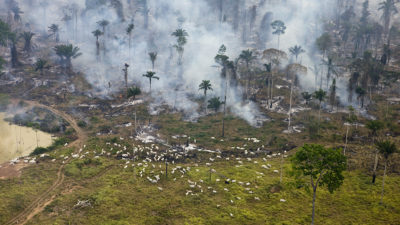
A fire set to clear land for farming in Pará state in the Brazilian Amazon.

A fire set to clear land for farming in Pará state in the Brazilian Amazon. DANIEL BELTRÁ / GREENPEACE

We were very happy with the alternative resulting in a radical change of government in Brazil, but never expected an easy solution:

Amazon Under Fire: The Long Struggle Against Brazil’s Land Barons

Journalist Heriberto Araujo spent four years reporting on the destruction of the Brazilian Amazon. In an interview with Yale Environment 360, he talks about his new book, which explores the complex web of issues underpinning the deforestation of the world’s largest rainforest.

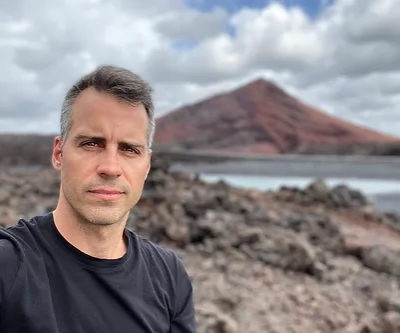
Heriberto Araujo.

Heriberto Araujo. HERIBERTO ARAUJO

Last October, when former President Luiz Inácio Lula da Silva defeated the far-right incumbent, Jair Bolsonaro, in Brazil’s national election, environmentalists around the world breathed a sigh of relief. Under Bolsonaro, who had weakened environmental protections and pushed to open Indigenous lands to commercial exploitation, deforestation in the Amazon had exploded. Lula has pledged to safeguard his country’s rainforests, but, as Spanish journalist Heriberto Araujo says in an interview with Yale Environment 360, the job won’t be easy.

Masters of the Lost LandFor his new book, Masters of the Lost Land, Araujo spent four years traveling from his home in Rio de Janeiro to Rondon do Pará, a town in the eastern Brazilian Amazon, to understand how, in less than 60 years, the largest rainforest on the planet has been transformed into an engine of economic growth. Tracing the story of land rights activist José Dutra da Costa, or “Dezinho,” who, before his assassination in 2000, led a revolution among landless peasants, Araujo comes to see how a handful of ranchers managed to grab huge swaths of pristine rainforest and why deforestation, violence, and lawlessness remain pervasive in the region. Continue reading

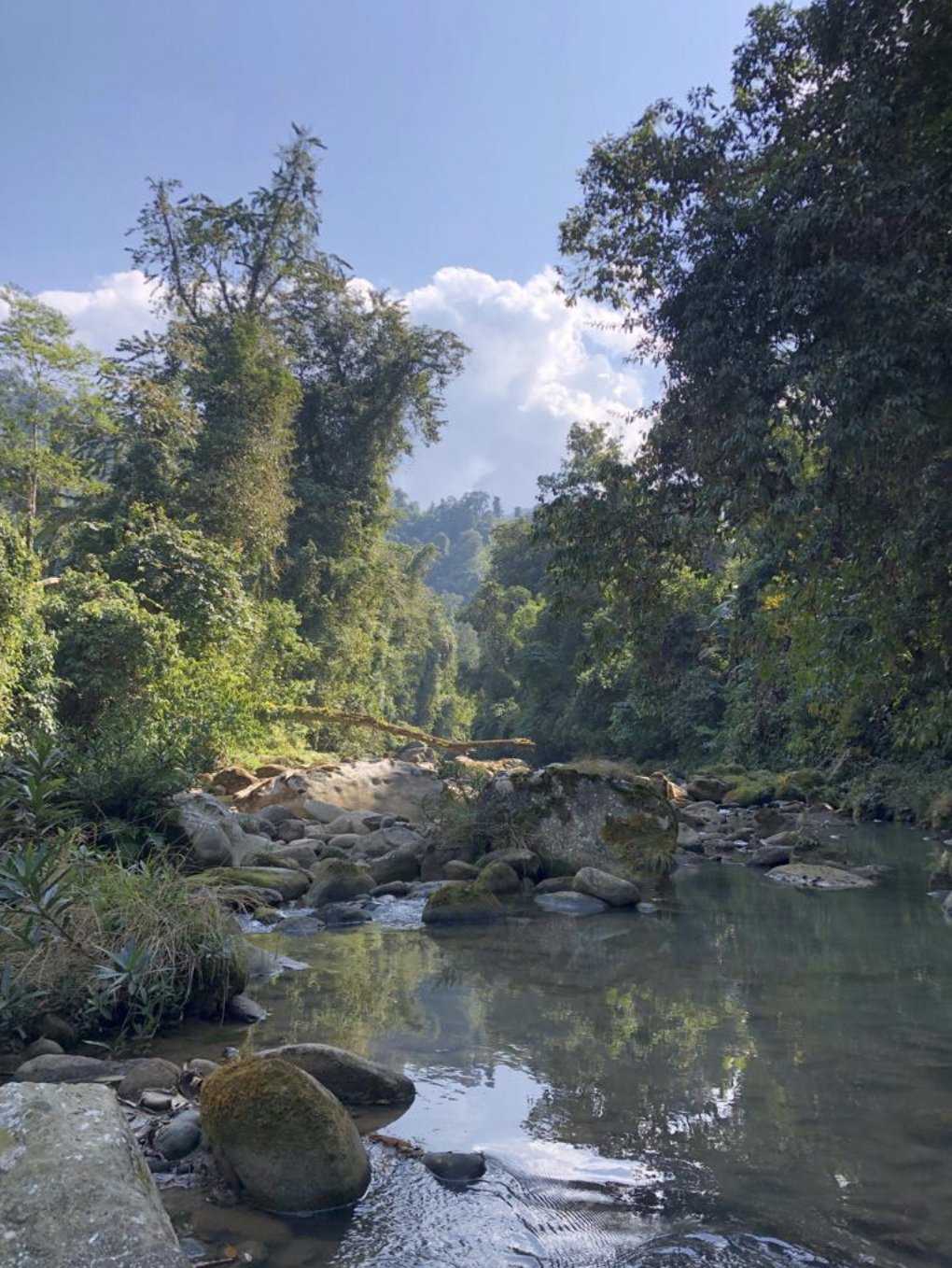
Stories from the Field: Namdapha National Park, Arunachal Pradesh

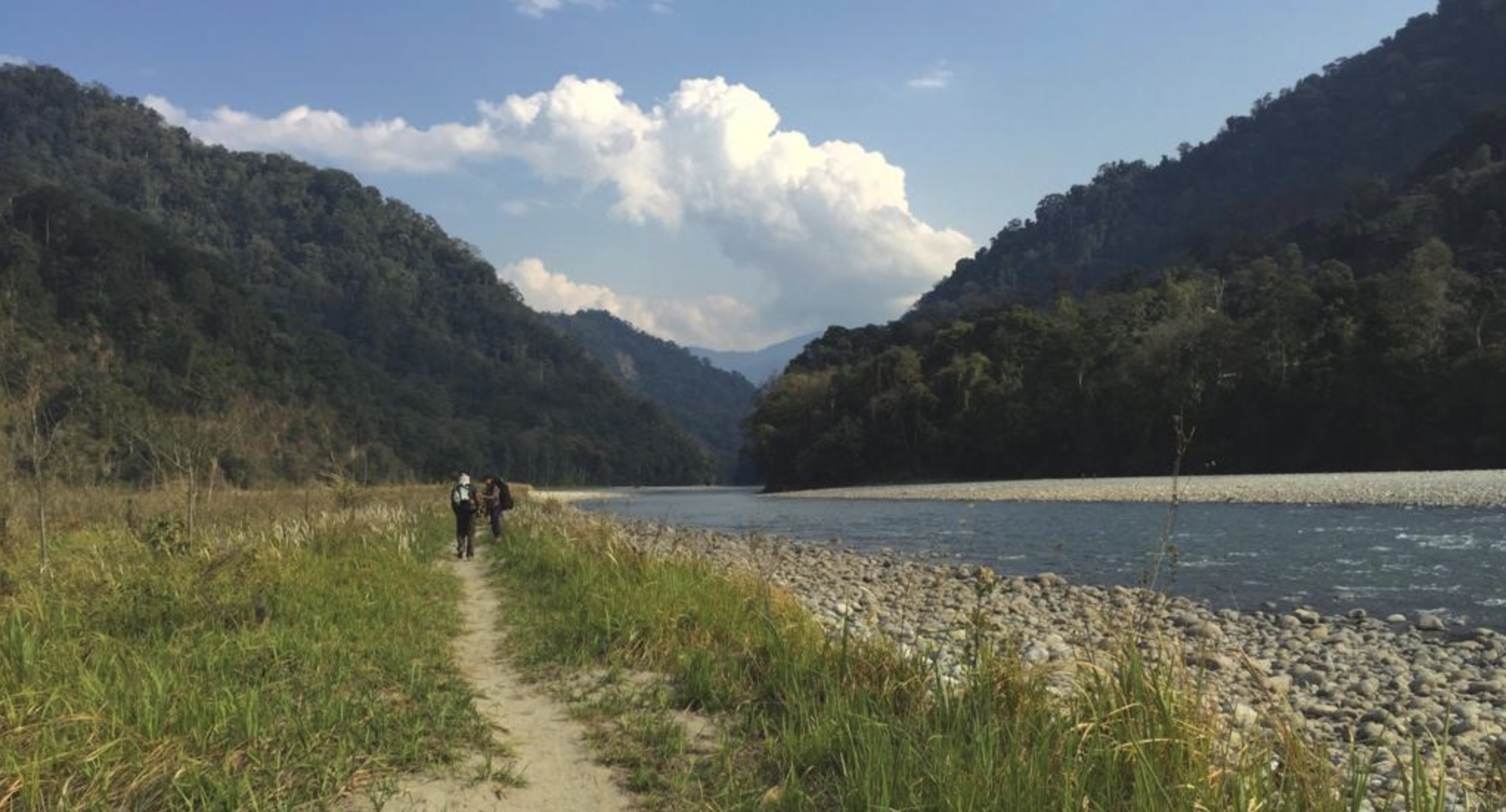
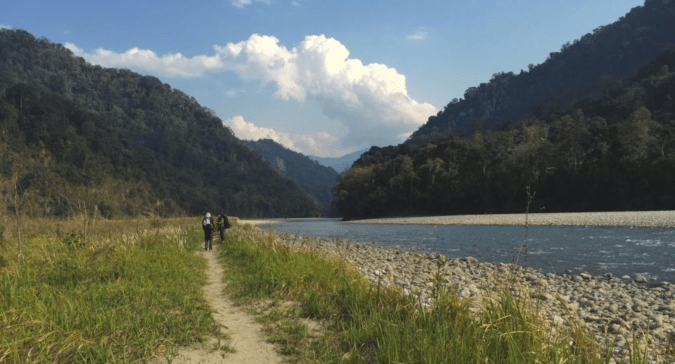
I now realize that when I posted about my experience at Eaglenest Wildlife Sanctuary, I had gotten ahead of myself, because the germ of that visit began at Namdapha National Park.  Namdapha…the name flirts and rolls around to fill your mouth, just as trekking there fills your senses.

I first met with Shashank Dalvi in March 2015 when he had organised a trek to Namdapha. After my initial foray into Kutch, I traveled every month of the year and covered the Central Himalayas extensively. I badly wanted to photograph the colourful birds of the North East and grow my list to 1000 birds of India. I had covered most parts of India by the time I was ready to travel to Namdapha.

I was seeking solitude and needed to take life at an easy pace during 2015. All the travel around the rest of India was done at a frenetic pace. Namdapha was that perfect place to bird at a gentle pace and that solitude came from the serene and silent forest. A perfect place to be lost inside a forest that totally separates you from rest of the world.

I had heard from every corner about Shashank Dalvi and especially about his work in Doyang, Nagaland. He and his team had put a stop to the annual culling of Amur Falcon’s in Nagaland, especially in Doyang.

We had heard rumors of large-scale bird hunting around the Doyang Reservoir in Nagaland some time ago. In September 2012, Bano Haralu, Ramki Sreenivasan, Rokohebi Kuotsu and I decided to investigate. What we saw shocked us – a massacre of thousands of Amur Falcons. Roko and I spent the next couple of days filming the slaughter and interacting with the hunters to understand the extent and nature of the hunt. It remains the most difficult and emotionally harrowing experience of my career.

Since then, I always wanted to bird alongside this man and learn his skill and patience. When you are in love with all creatures around you and understand their roles and impact on universal relationships you become patient in your role towards contributing toward their conservation.

I became a bit more patient. 7 days in Namdapha and surroundings gave ample time to listen about snakes, and behaviour of many mammals. 

Namdapha is declared a Project Tiger Reserve. It is also known as the land of four big cats. The only place on earth to host them all in one forest. This is also the place for rare mammal like the Takin, Musk Deer and the veryrare Slow Loris. The fragrant Agarwood is also found here. With an area of 2000 square kilometers, Namdapha is the largest virgin forests of India. Continue reading

EV Boom

Ibrahim Rayintakath

At this point we should not be surprised but the momentum is still stunning:

Electric Vehicles Keep Defying Almost Everyone’s Predictions

It is striking that in the same year that Tesla’s stock price dropped by about two-thirds, destroying more than $700 billion in market value, the global market for electric vehicles — which for so long the company seemed almost to embody — actually boomed. Continue reading

American Prairie & American Bison

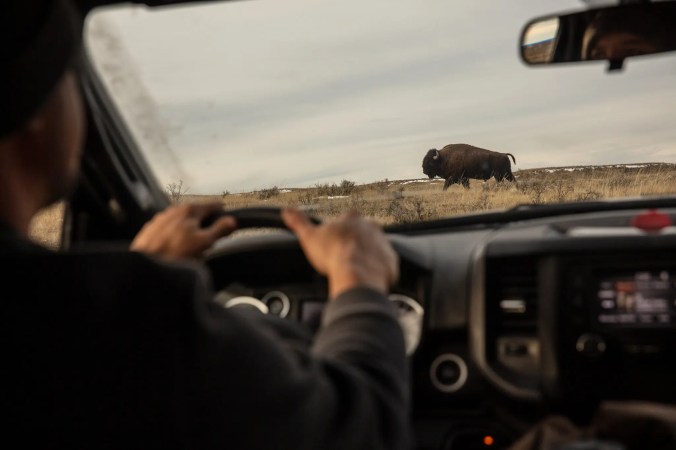
Scott Heidebrink, the director of bison restoration for the American Prairie Reserve in northeast Montana, checks on a herd. “There are ways that bison were impacting the landscape that we haven’t even thought about,” he said.

Bison restoration has been on our radar, primarily stories from the western USA, but also from the European context, where there has been considerable progress in recent years. Here is a good look at a conservation organization focused on habitat restoration, and the multi-species benefits:

Where the Bison Could Roam

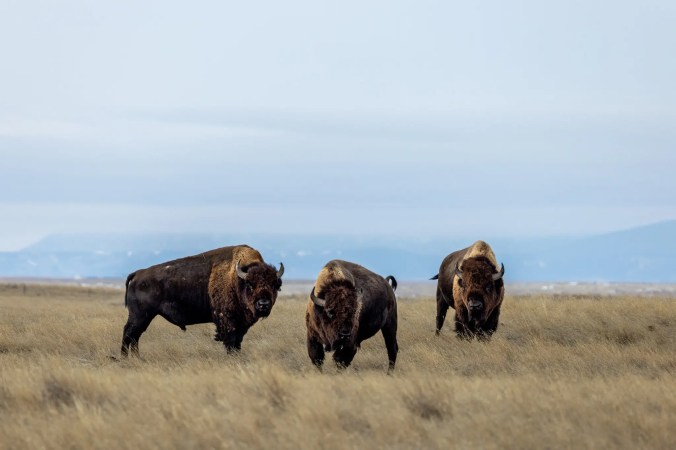
Bison once numbered in the tens of millions in the United States. Now, a nonprofit is working to restore the shortgrass prairie, where the American icons and their ecosystem can thrive again.

MALTA, Mont. — Around 200 chocolate-brown bison raise their heads, following the low growl of a pickup truck slowly motoring across the sagebrush-studded prairie. Continue reading

Agnostics Thankful For The Sacred

The Futarasan Shrine in Nikkō, Japan. Ancient forests surrounding Japan's Shinto temples cover more than a quarter-million acres.

The Futarasan Shrine in Nikkō, Japan. Ancient forests surrounding Japan’s Shinto temples cover more than a quarter-million acres. NORTOPHOTO / ALAMY STOCK PHOTO

We are agnostic when it comes to how conservation of nature is motivated, and how it is accomplished. Thanks as always to Fred Pearce:

Sacred Groves: How the Spiritual Connection Helps Protect Nature

From Ethiopia’s highlands to Siberia to the Australian rainforest, there are thousands of sacred forests that have survived thanks to traditional religious and spiritual beliefs. Experts say these places, many now under threat, have ecological importance and must be saved.

Governments from across the world made grand promises last month at the biodiversity conference in Montreal to save nature by protecting 30 percent of the planet’s land and oceans by 2030. Continue reading

Stories from the Field: Eaglenest, Arunachal Pradesh

With Gaurav Kataria

When Gaurav Kataria, a birder and tour operator, invited me to go along with him to Eaglenest Wildlife Sanctuary during March of 2015, I had loads of apprehension about the weather, terrain and the proximity to medical assistance. Earlier, before my trip to Namdhapha it was Gaurav who counseled me on similar fears and he egged me on: Namdhapha, a lowland rainforest with “empty forest syndrome” calls out to only a handful who are fortunate to appreciate it, continuing that having managed that, Eaglenest would be a cakewalk for me. In the presence of intense birders, tough itineraries become a joyous holiday. Eaglenest and Bompu camp were no exception. As the jeep, loaded with breakfast and lunch, followed us at intervals, I never felt the need to hop onto it. We would walk with our gear on the shoulders for 6 to 8 hours each invigorating day.

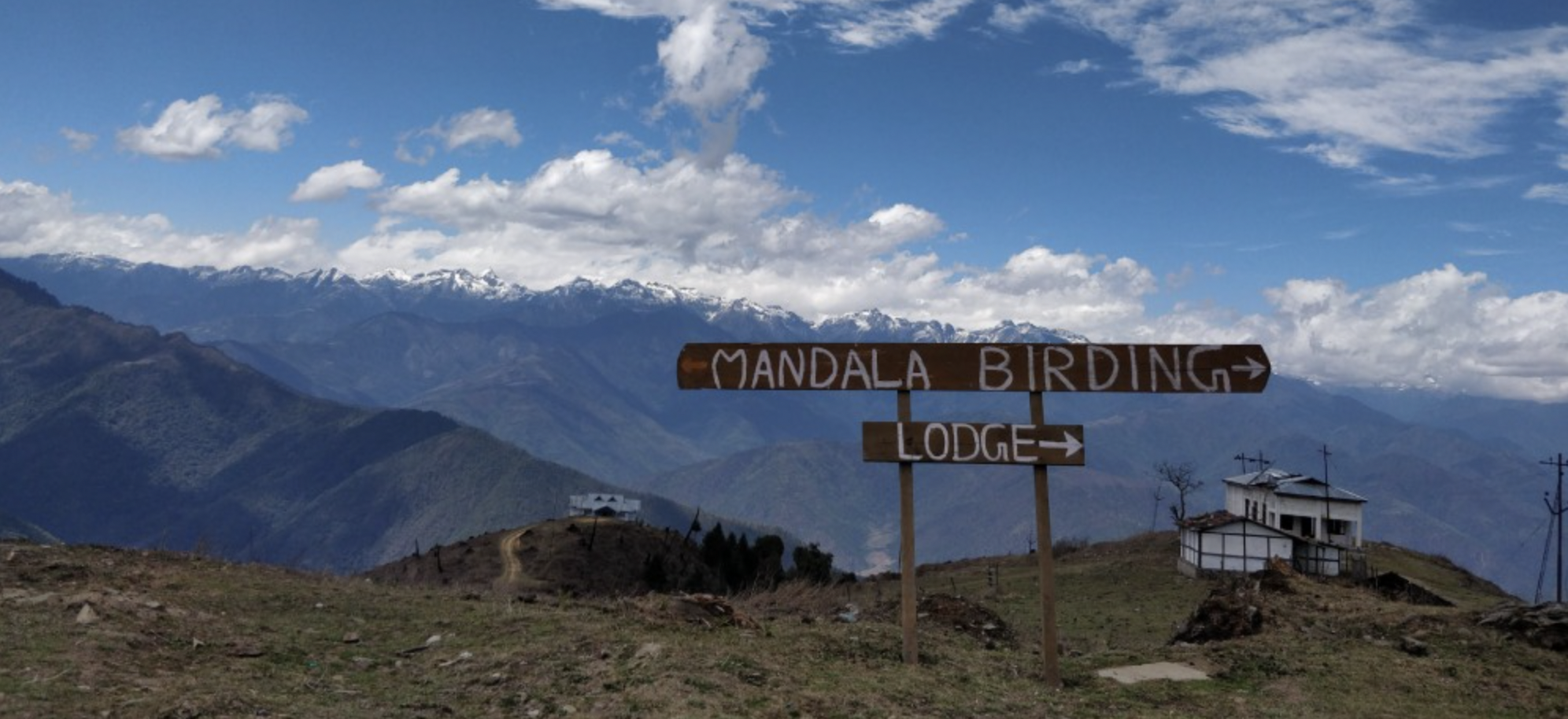
The virgin forests of Mandala, Eaglenest and the trek between Bompu Camp to Haathi Naala and Lower Kellong threw up surprises at each bend. The change in habitat and seeing different flocks or individuals after every 500 meters is a photographer/birder’s delight.

We had Phurpa Arteju as our guide. This kid was a big surprise. He could identify dozen birds in a mixed flock by their calls alone.
Trekking with him we heard and saw 220 species and photographed around 75 species.

The moment you cross into Arunachal Pradesh the change in air quality and visuals is palpable. Cross Balukpong and the festival begins. We were welcomed by the Rufous woodpecker amongst the bamboos and 500 meters later we were wondering which bird to focus on. My jaw just dropped looking at the activity of the hunting flocks.

Mandala is a constant surprise and the birds were quite comfortable in our presence. At Eaglenest, the Bugun gave us the slip. 6 trips later, it showed up as the “Year Bird” in 2018.  That time my companions and I had to leave the pair of Bugun Liochicla after watching it to our hearts content.

Bompu Camp is a visual delight. The stay and food are both excellent.
It was here I met Marmot Snetsinger, daughter of Phoebe Snetsinger, my idol, the record holder for seeing the highest number of birds. That meeting was more precious than the sighting of the rare Chestnut Breasted Partridge. The moment Marmot slung Phoebe’s binoculars around my neck, patted my back and asked me to go watch birds was the most magical moment in my bird photography life.

Continue reading

Lungs Of The Earth, The Amazon Calls Our Attention Again

Illustration by Max Guther

The Amazon is one of those big topics that we come back to again and again for a reason.  We all depend on these lungs of the earth, so it would be strange to not be obsessed with the subject:

Some Brazilian scientists fear that the Amazon may become a grassy savanna — with profound effects on the climate worldwide.

Illustration by Max Guther

One of the first times Luciana Vanni Gatti tried to collect Amazonian air she got so woozy that she couldn’t even operate the controls. An atmospheric chemist, she wanted to measure the concentration of carbon high above the rainforest. To obtain her samples she had to train bush pilots at obscure air-taxi businesses. The discomfort began as she waited on the tarmac, holding one door open against the wind to keep the tiny cockpit from turning into an oven in the equatorial sun. When at last they took off, they rose precipitously, and every time they plunged into a cloud, the plane seemed to be, in Gatti’s words, sambando — dancing the samba. Then the air temperature dipped below freezing, and her sweat turned cold. Continue reading

The Heart Beat In Greece

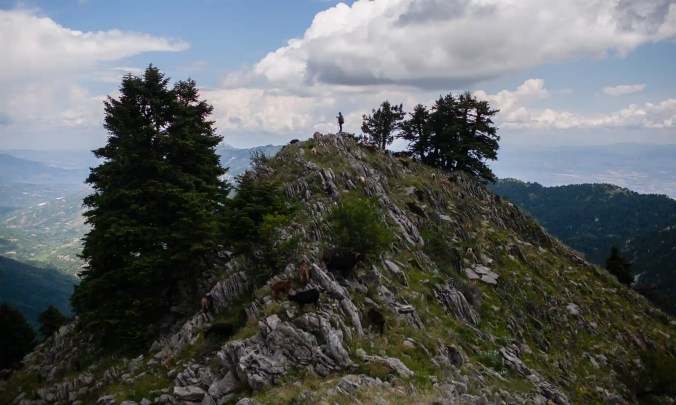
Kostas Papastavros and his goats on the top of the Koziakas mountain, part of Pindus range on mainland Greece. Photograph: Vasileios Tsiolis

I appreciate the comment about the heart beat in Katy Fallon’s portrait of a particular form of pastoral life in northern Greece. It comes just as we start dreaming of making an overdue visit back to the country I would most likely choose to live, if not for Costa Rica’s strong pull:

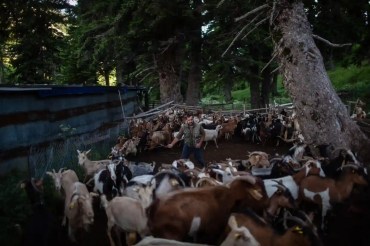
Kostas leading the goats back to the family’s makeshift summer barn on Koziakas mountain

‘My heart beats up here’: Greece’s nomadic herders on life in the hills – a photo essay

For hundreds of years the Vlach herders in Greece and the Balkans have moved livestock to high mountain pastures for the summer months. But their numbers are dwindling as their arduous existence is threatened by soaring costs and a lack of state support

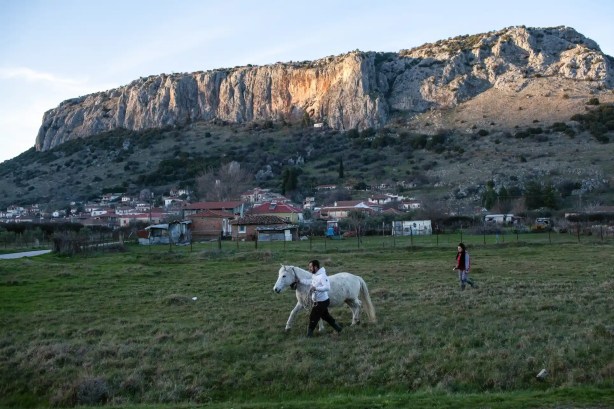
Kostas and Fotini walk with the family’s mare in front of the prehistoric cave of Theopetra village

Every spring in the Thessalian plains of central Greece, in the shadow of the mountains, an ancient and sacred migration of humans and goats takes place. Continue reading

Carbon Cowboys

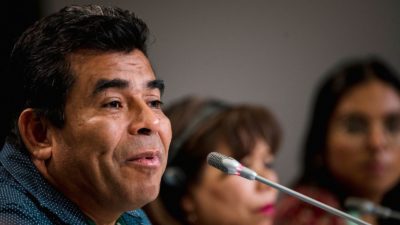
Levi Sucre Romero at the UN biodiversity conference in Montreal last week.

Levi Sucre Romero at the UN biodiversity conference in Montreal last week. ANDREJ IVANOV / AFP VIA GETTY IMAGES

Carbon credit brokers are busier than ever, and that is welcome news, but Levi Sucre Romero’s concerns give pause:

Forest Equity: What Indigenous People Want from Carbon Credits

To Indigenous leader Levi Sucre Romero, carbon credit markets have failed to respect Indigenous people and their key role in protecting their lands. In an e360 interview, he talks about how carbon brokers have taken advantage of local communities and why that must change.

Indigenous protesters at the opening ceremony of the UN biodiversity conference in Montreal this month.

Indigenous protesters at the opening ceremony of the UN biodiversity conference in Montreal this month. ANDREJ IVANOV / AFP VIA GETTY IMAGES

In a world where carbon credit markets are taking advantage of Indigenous people and their forests, the United Nation is losing its leadership on combating climate change, says Indigenous leader Levi Sucre Romero.

In an interview with Yale Environment 360, Romero, who is from Costa Rica and is coordinator of the Mesoamerican Alliance of Peoples and Forests, calls out the “carbon cowboys” — the brokers who he says are wrecking efforts to allow Indigenous communities to have ownership of the carbon credits generated on their land, and who, by acting unscrupulously and secretively, are undermining global hopes of using nature to mitigate climate change. Continue reading

Why Waste Western Water?

A woman walks along a cliff top near Lake Powell, the second biggest reservoir in the U.S., where climate-change-driven drought continues to lower water levels. Photograph by David McNew / Getty

The management of water in the western USA has been an occasional topic in these pages and Rachel Monroe adds to our understanding:

The Water Wranglers of the West Are Struggling to Save the Colorado River

Farmers, bureaucrats, and water negotiators converged on Caesars Palace, in Las Vegas, to fight over the future of the drought-stricken Southwest.

In mid-December, I drove to Lake Mead, the nation’s largest reservoir, to see its infamous bathtub ring. The bathtub, in this metaphor, is Lake Mead, on the border between Nevada and Arizona; the ring is a chalk-white coating of minerals that its receding waters have left behind. The Southwest, which includes the Colorado River Basin, has been in a protracted drought since 2000; climate change has made it worse. Continue reading

Glass Half Full, NOLA Community Recycling

This youthful organization, new to us but old enough to have proof of concept is, in their own words, crushing it:

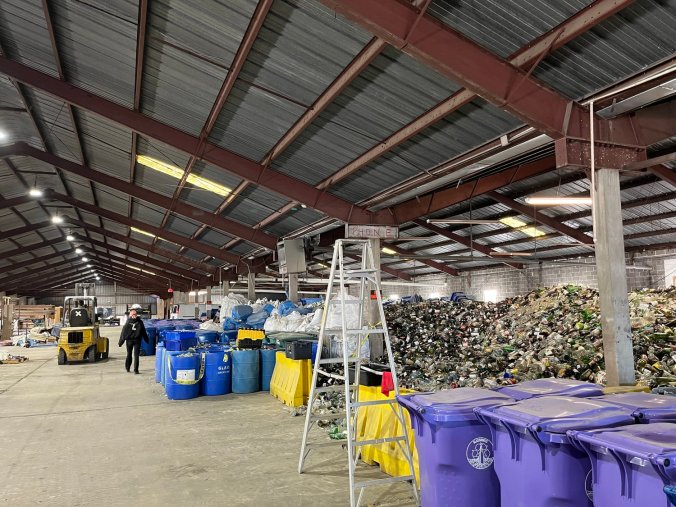
Turning glass waste into useable sand and cullet.

We collect and convert NOLA’s glass bottles — which have been crammed into our landfills for decades — into functional products: sand and glass cullet. These precious materials have an array of applications, from coastal restoration to flood prevention to eco-construction.

Converting glass into sand & glass cullet

Our recycling process involves diverting used glass products from landfills and sorting, sifting, and ultimately converting them into sand products ranging from super soft, beach-like sand to glass gravel. The final products are used for coastal restoration projects, disaster relief efforts, eco-construction, new glass products, and so much more. The applications for sand are truly endless.

Fungi Lost & Found

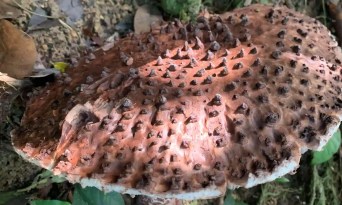
The sculptured toadstool (Amanita sculpta) had not been seen in Singapore for more than 80 years. Photograph: Adrian Loo/National Parks Board of Singapore

Over our nearly dozen years linking to stories we have shared plenty of what we have called lost and found stories (including this and this and this, and this), as well as fungi stories too numerous to link back to, this is the first lost and found fungi story:

Lost and found: how a Facebook post led to the ‘chocolate chip’ toadstool

The sighting of a ‘magnificent’ specimen of the Amanita sculpta, not seen in Singapore for 80 years, shows how the public can aid in conservation efforts

The cap is like a chocolate chip cookie,” says Serena Lee, senior manager at Singapore Botanic Gardens’ herbarium, describing the top of the sculptured toadstool (Amanita sculpta). Continue reading

Bronx River Alliance’s Foodway

Just after recently learning that this borough is the greenest, another story clues us in on this innovative program:

The Bronx River Foodway

Fresh Food from Our Land

The Foodway connects the river area with people, growing food and medicinal plants. Come explore the food forest and relish (hah!) the delight of seeds becoming plants for life.

The Guardian’s Meka Boyle gives another reason why visiting this borough is a worthwhile extension to any visit to New York City:

‘It made my heart sing’: finding herbs and medicine in the Bronx food forest

The Bronx River Foodway, the only legal place to forage in New York, celebrates the end of a season

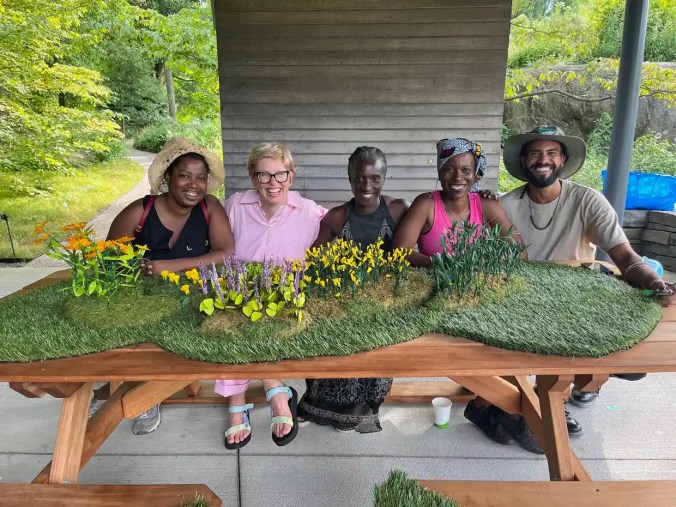
Foodway team members gathered around a picnic bench at the New York Botanical Garden created by the artist Elizebeth Hamby. Photograph: Courtesy Elizabeth Hamby

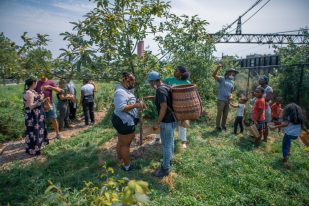
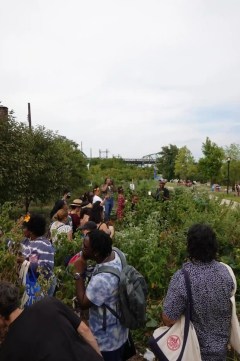
Bimwala’s tours are a mix of returning foragers eager to learn more and newcomers, many of whom have lived in the Bronx for decades. Photograph: Courtesy of Nathan Hunter

On a crisp November day in the South Bronx, more than 300 people made their way from Westchester Avenue below the clamor of the 6 train down a tree-lined path leading to Concrete Plant park. This is the home of the Bronx River Foodway, a quarter-acre food forest full of edible, mostly native plants. What looks like a stretch of land dotted with trees appears at first glance to be overrun by weeds, but the wild foliage has been intentionally planted by the Foodway. It is the only legal foraging site in New York City.

Neighbors young and old poured on to the grassy banks of the Bronx River to celebrate the end of the season and the foliage of the Bronx, including an array of snacks made from foraged ingredients: ginkgo cheese and acorn crackers, and pickled mushrooms and herbal ales made at recent four-part cooking series put on by the Foodway over the last two months. Continue reading

Tokyo’s Rooftop Solar

A rooftop solar installation in Yokohama, near Tokyo. COCREATR VIA FLICKR

Our hats off to Japan’s largest city for this requirement:

Tokyo to Mandate Rooftop Solar Panels on New Homes

Tokyo is mandating that all new homes in the city be built with rooftop solar panels starting in 2025. Continue reading

Biodiversity, Montreal & Us

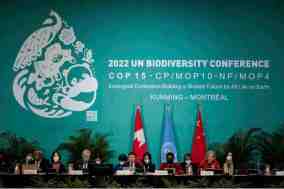
The opening plenary of the U.N. biodiversity conference in Montreal. Photograph by Andrej Ivanov / AFP / Getty

We continue, as a species, to document our impact on other species. The warning signs keep getting clearer. It is not pleasant reading, but it is documented for a reason; it is about us. It is about our responsibilities. Our thanks, as always, to Elizabeth Kolbert:

Can the U.N. Save the World from Ecological Collapse?

At this week’s summit, delegates will consider ambitious new conservation targets—even though the old ones have yet to be achieved.

The Red List of Threatened Species might best be described as a lack-of-progress report. Continue reading

Big Cats Need Space

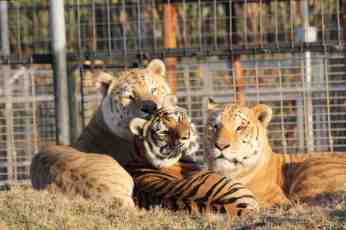
Big cats at the Greater Wynnewood Exotic Animal Park, a private sanctuary featured in the Netflix documentary series Tiger King. FIGHT4ANIMALRIGHTS VIA WIKIPEDIA

Big cats do not belong in cages, and certainly do not deserve to be treated as domestic pets. We assumed there were already clear and strict rules in place:

U.S. to Curb Private Ownership of Big Cats

The U.S. is set to enact a new law that prohibits private citizens from obtaining lions, tigers, jaguars, leopards, and other big cats as pets. Continue reading

The Little Countries That Could

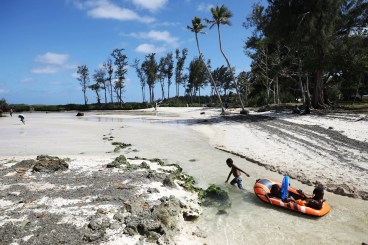
The atoll nation of Vanuatu is threatened by rising seas. “We had to learn how to manage our unimportance,” its president said. Mario Tama/Getty Images

This story has a familiar ring to it, if you are familiar with the history of Costa Rica going back to colonial times. Never a particularly “important” part of the empire, it thereby avoided many pitfalls typical of other countries in Latin America, and evolved into a stable democracy with progressive ideas and goals and achievements. We wish this little country in the Pacific comparable success by thinking outside the box, as its president says:

Emergency supplies being distributed after Cyclone Harold in 2020. International Federation of Red Cross, via Agence France-Presse — Getty Images

It wants a top international court to weigh in on whether nations are legally bound to protect against climate risks.

Nikenike Vurobaravu presides over a tiny country with a large hand in climate diplomacy.

Rising sea levels threaten the very existence of his Pacific Island nation of Vanuatu and its population of just over 300,000 people. Its best defense, he says, it to raise its voice creatively in international diplomatic talks. Continue reading

The Bronx & Greener Pastures

Van Cortlandt Lake, one of the many places popular with birds — and those who watch them.

Early in our life together, in the early/mid-1980s, Amie and I lived in two of the five boroughs that make up New York City. We never lived in the one that today, we learn, has had the most nature all along (we thank David Gonzalez for both the photographs and text of this article).

While we are not giving up the greener pastures we chose decades ago to be our home base, we are happy to know that The Bronx is so green, and can even picture making a special trip to visit this often unheralded part of New York City:

The lagoon at Pelham Bay Park.

Soundview Park

If you said Brooklyn, Manhattan, Staten Island or Queens, guess again.

From hidden coves tucked along the Orchard Beach marshes to wide promenades covered by regal arches of trees in Soundview, there is a lot more green to the Bronx than the zoo or the infield at Yankee Stadium. The pastoral vibe might make you think you’re upstate, but as they said in the classic ’80s hip-hop movie “Beat Street,” this is the Bronx. Continue reading