Bicycles & E-Bike Danger

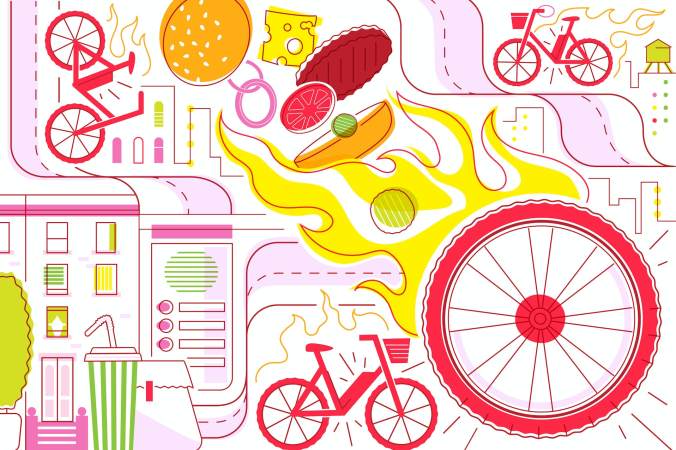
ILLUSTRATION BY SARAH ANGÈLE WILSON

Bicycle love has been a minor but notable theme in our pages over the years. In more recent years their relationship to electricity has become the focus of more stories, like this one:

The High Cost of Cheap E-Bikes

Electric bicycles are catching on—and their lithium-ion batteries are catching fire. Why is so little being done about it?

Fires and overheating accidents attributed to lithium-ion batteries killed 19 people in the United States in 2022, according to the U.S. Consumer Product Safety Commission. In New York City alone, six people died in these uniquely fast-burning infernos. Experts say poorly made batteries, like those often found on cheaper e-bike models, are the primary culprit. So why is it still so easy to purchase them? Continue reading

The Remarkable Efficiency Of Heat Pumps, Explained

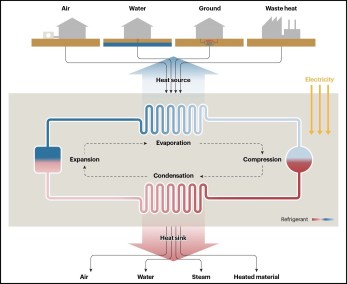
Heat pumps use electricity to compress a refrigerant, raising its temperature. IEA

Heat pumps have only been a passing reference occasionally in these pages, but today they are the focus, thanks to Paul Hockenos in Yale e360:

In Europe’s Clean Energy Transition, Industry Turns to Heat Pumps

With soaring gas prices due to the Ukraine war and the EU’s push to cut emissions, European industries are increasingly switching to high-temperature, high-efficiency heat pumps. Combined with the boom in residential use, the EU is now hoping for a heat pump revolution.

An industrial heat pump at the Mars Confectionery in Veghel, the Netherlands. GEA

The Wienerberger brickworks in Uttendorf, Austria, in the Tyrolean Alps, has always required a steady stream of 90 degree C (194 degree F) heat to dry its construction blocks. This process would have been an expensive proposition for the company after Russia cut gas exports to Europe, as it was for most of Europe’s energy-intensive construction industry. But four years ago, Wienerberger — the largest brick producer in the world — made an investment in the future that is now paying off: it replaced Uttendorf’s gas-fired boiler with an industrial-scale heat pump, which whittles the factory’s energy bill by around 425,00 euros a year. Continue reading

Good Chocolate

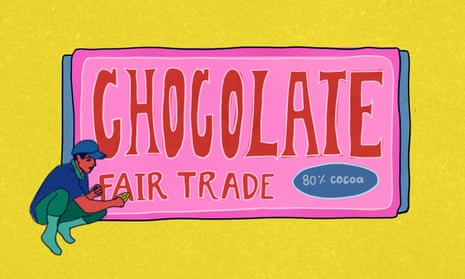
‘The only way to ensure that money is going into a farmer’s pocket is to buy directly from farmers.’

‘The only way to ensure that money is going into a farmer’s pocket is to buy directly from farmers.’ Illustration: Rita Liu/The Guardian

We have been avid readers on the topic of chocolate for almost as long as we have been sharing articles on this platform:

The sweet spot: is ethical and affordable chocolate possible?

It is possible to pay farmers a premium while selling single-origin chocolate at a cheaper price – but it means companies have to transform the way it’s made

Is it possible to make an ethical chocolate bar that’s also affordable? Tim McCollum, the founder of the bean-to-bar chocolate brand Beyond Good, says the answer is yes – but you have to transform the way it’s made. Continue reading

Insects And Our Food Future

Insects started showing up in these pages early on and as years passed we saw them as equally interesting as other parts of the natural world; but only in more recent years did we start paying attention to insects as food. Today, one more entry.

Aggressive Tourism

A group of safari vehicles packed closely together as passengers look out windows and open roofs at animals grazing on a yellow plain.

About 60 vehicles waited near the Mara River in Kenya as wildebeests and zebras gathered in August to cross the waterway as part of their migration on the Serengeti Plain. Simon Espley

We have Maria Cramer and Costas Christ to thank for this reminder about our responsibilities as producers and consumers of travel experiences:

A video showing dozens of vehicles moving in on a pair of big cats in a Kenyan game reserve highlights how “aggressive tourism” can put endangered animals at even greater risk.

The video surfaced online around October. Filmed from a distance, it shows an antelope grazing on the African plain. Suddenly, two cheetahs race toward it and the antelope takes off, running toward the camera. But the cats are too fast. They converge on it and bring it down. They begin to feed. Continue reading

Time To Care About Climate Change

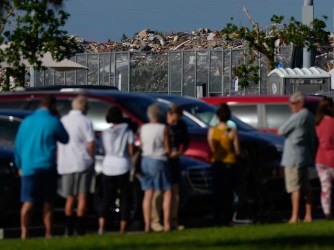
A pile of debris from Hurricane Ian rises behind a line of people waiting to vote in Fort Myers, Fla., in November 2022. Research suggests support for some climate policies increases immediately after climate-driven disasters such as Ian.
Rebecca Blackwell/AP

If you are not (yet) concerned about climate change there is no time like the present:

How our perception of time shapes our approach to climate change

Most people are focused on the present: today, tomorrow, maybe next year. Fixing your flat tire is more pressing than figuring out if you should use an electric car. Living by the beach is a lot more fun than figuring out when your house will be underwater because of sea level rise. Continue reading

Great EV Expectations

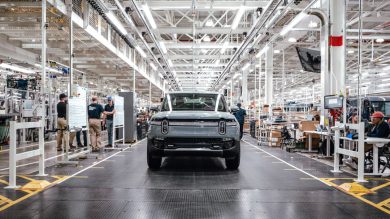
A Rivian R1T electric pickup truck at the company’s factory in Normal, Illinois. JAMIE KELTER DAVIS / BLOOMBERG VIA GETTY IMAGES

I had no reason to bet against Tesla until now, but I did wonder whether it was good for anyone (other than its shareholders) for that one company to dominate its market over the longer term. Now, happily, it looks like the market will do what we need it to do, which is get robust:

For U.S. Companies, the Race for the New EV Battery Is On

Spurred by federal mandates and incentives, U.S. manufacturers are pushing forward with developing new battery technologies for electric vehicles. The holy grail is a battery that is safer, costs less, provides longer driving range, and doesn’t use imported “conflict” minerals.

Sixteen years have passed since engineer Martin Eberhard unveiled his futuristic custom-designed sports car before a crowd of investors, journalists, and potential buyers in a Santa Monica Airport hangar. Continue reading

Glass Half Full, NOLA Community Recycling

This youthful organization, new to us but old enough to have proof of concept is, in their own words, crushing it:

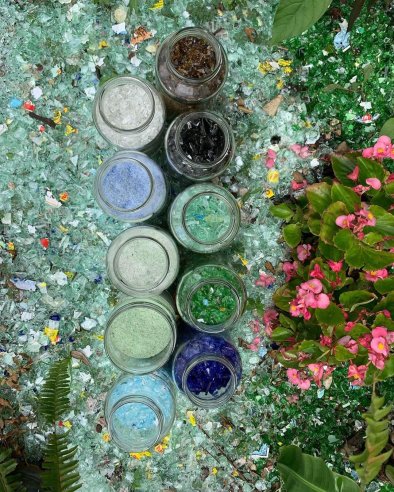
Turning glass waste into useable sand and cullet.

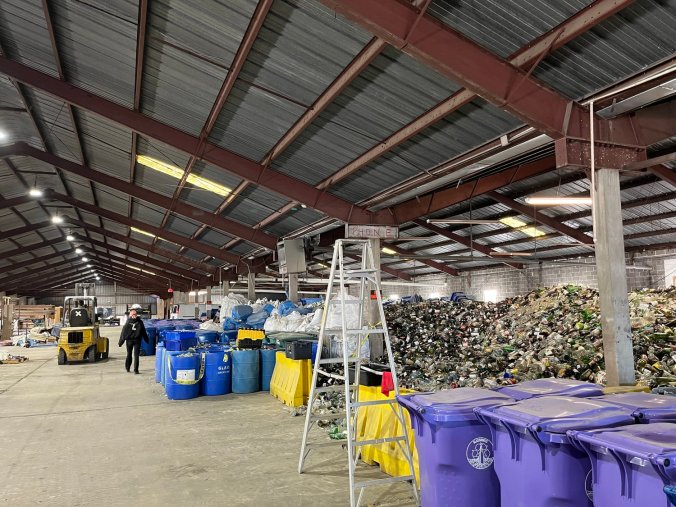
We collect and convert NOLA’s glass bottles — which have been crammed into our landfills for decades — into functional products: sand and glass cullet. These precious materials have an array of applications, from coastal restoration to flood prevention to eco-construction.

Converting glass into sand & glass cullet

Our recycling process involves diverting used glass products from landfills and sorting, sifting, and ultimately converting them into sand products ranging from super soft, beach-like sand to glass gravel. The final products are used for coastal restoration projects, disaster relief efforts, eco-construction, new glass products, and so much more. The applications for sand are truly endless.

Virtue Signaling Versus Virtue Versus Wrong

Laurence D. Fink, who runs BlackRock, has urged companies to adopt socially conscious practices. Winnie Au for The New York Times

We have no access to Mr. Fink’s motives or those of the firm he runs, or to how he and his colleagues make decisions–only to some of the actions they have taken. Our view on him and his firm may be simplistic, in that we respect their initial leadership on ESG but fault them now for not doing more. Even if they have only been virtue-signaling, and even if they fall short on true virtue, what they have done is obviously much better than those who are wrong on climate change:

BlackRock’s Pitch for Socially Conscious Investing Antagonizes All Sides

Right-wing officials are attacking BlackRock for overstepping. Those on the left say the world’s biggest asset manager is not doing enough.

Environmental, social and governance — or E.S.G. — investing, “to some degree, is a smoke screen,” said Tariq Fancy, a former BlackRock executive. Chloe Ellingson for The New York Times

It was a clarion call to chief executives everywhere.

In 2018, Laurence D. Fink, the longtime chief executive of BlackRock, the world’s largest asset manager, urged corporate leaders to assess the societal impact of their businesses, embrace diversity and consider how climate change could affect long-term growth.

“Companies,” Mr. Fink wrote in his annual letter to chief executives, “must ask themselves: What role do we play in the community? How are we managing our impact on the environment? Are we working to create a diverse work force? Are we adapting to technological change?” Continue reading

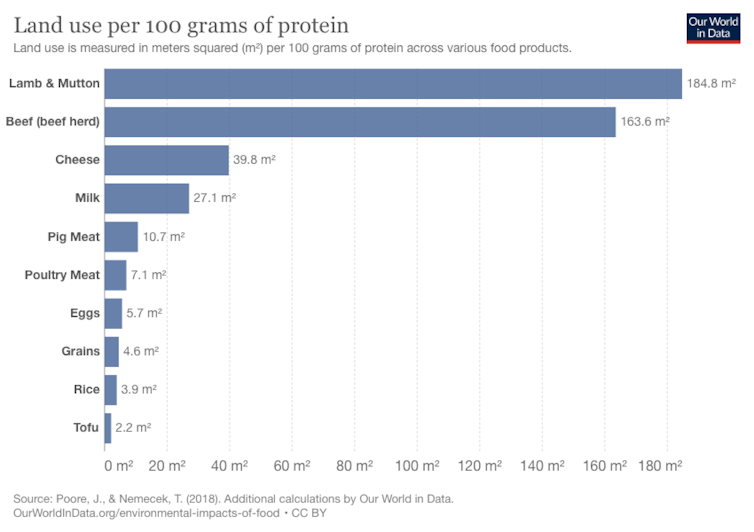
Land Use By Food Type, Data For Thought

The Conversation

Chart of land use per 100g of protein for different foodsThe Conversation is “a news organization dedicated to facts and evidence” and with the tag line “Academic rigor, journalistic flair”. Our kind of reading. The graph to the left illustrates this article’s point; the photo below to the right is too composed for rigor:

Brazil’s enormous soy farms mostly produce food for animals, not humans. lourencolf / shutterstock

New food technologies could release 80% of the world’s farmland back to nature

Here’s the basic problem for conservation at a global level: food production, biodiversity and carbon storage in ecosystems are competing for the same land. Continue reading

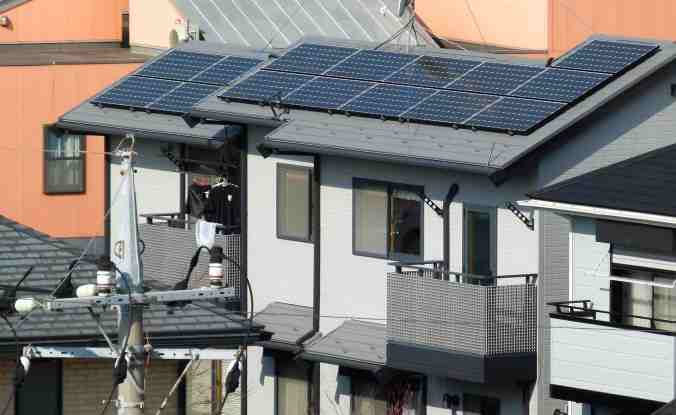
Tokyo’s Rooftop Solar

A rooftop solar installation in Yokohama, near Tokyo. COCREATR VIA FLICKR

Our hats off to Japan’s largest city for this requirement:

Tokyo to Mandate Rooftop Solar Panels on New Homes

Tokyo is mandating that all new homes in the city be built with rooftop solar panels starting in 2025. Continue reading

Is Cruise Travel Evolving In A Way That Is Good For The Planet?

Cruise ship tourism is unfortunately not disappearing as we might have hoped. Are the ships evolving to be more environmentally and socially responsible? Our thanks to Maria Cramer for asking and attempting to answer the question:

How Green is Your Cruise?

As cruise companies head into their busiest season, they say they have ambitious plans to curb greenhouse emissions and find cleaner sources of fuel. But critics say the progress is too slow.

In the Caribbean, many cruise companies have bought islands and turned them into private resorts for the exclusive use of cruise passengers who cavort in enormous wave pools, rush down 135-foot water slides with names like Daredevil’s Peak, and zip-line across wide beaches. Continue reading

Wooden Utensils & Kitchen Safety

Your cutting board, utensils and coffee maker are among the long list of items in your kitchen that could be leaching dangerous chemicals.

Your cutting board, utensils and coffee maker are among the long list of items in your kitchen that could be leaching dangerous chemicals. Illustration: Julia Louise Pereira/The Guardian

Kitchen safety, per se, is not a topic we have featured in these pages before, even though wooden utensils have been featured:

Wooden spoons and glass mugs: how to avoid toxic chemicals in your kitchen

Tom Perkins has reported widely on the potential risks of toxic chemicals. Here’s his guide to help you find safe alternatives for your kitchen

Chemicals are the invisible guests in our kitchens. You can’t see them but they are everywhere. Continue reading

Giving A Bread Its Due Honor

President Emmanuel Macron of France described the baguette as “250 grams of magic and perfection in our daily lives.” Eric Gaillard/Reuters

When the baguette was a daily part of our family’s life, we were fortunate to have a personal connection to the best guide, whose photo in the story below is as fitting as the photo above:

Steven Kaplan, perhaps the baguette’s most dedicated historian, says the bread has “little sites of memories” that “testify to a sensuality.” Daniel Janin/Agence France-Presse — Getty Images

A Slice of France, the Baguette Is Granted World Heritage Status

More than six billion baguettes are sold every year in France. But the bread is under threat, with bakeries vanishing in rural areas.

PARIS— It is more French than, perhaps, the Eiffel Tower or the Seine. It is carried home by millions each day under arms or strapped to the back of bicycles. It is the baguette, the bread that has set the pace for life in France for decades and has become an essential part of French identity.

On Wednesday, UNESCO, the United Nations heritage agency, named the baguette something worthy of humanity’s preservation, adding it to its exalted “intangible cultural heritage” list. Continue reading

The Box Footprint

Photo illustration by Todd St. John

We have barely scratched the surface on the ecological or the social implications of online retailing’s growing share of the economy. Until now, no attention to the boxes, specifically, so today we are happy to find excellent reporting focused on that. Cardboard is an increasing part of the lives of most of us living in digital economies, so thanks to Matthew Shaer for letting us know more about it:

Where Does All the Cardboard Come From? I Had to Know.

Entire forests and enormous factories running 24/7 can barely keep up with demand. This is how the cardboard economy works.
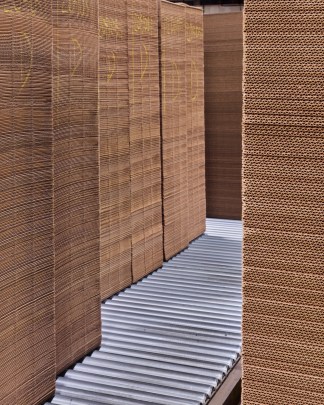
Stacks of unprinted, uncut cardboard at the International Paper factory in Lithonia, Ga. Christopher Payne for The New York Times

Before it was the cardboard on your doorstep, it was coarse brown paper, and before it was paper, it was a river of hot pulp, and before it was a river, it was a tree. Probably a Pinus taeda, or loblolly pine, a slender conifer native to the Southeastern United States. “The wonderful thing about the loblolly,” a forester named Alex Singleton told me this spring, peering out over the fringes of a tree farm in West Georgia, “is that it grows fast and grows pretty much anywhere, including swamps” — hence the non-Latin name for the tree, which comes from an antiquated term for mud pit. “See those oaks over there?” Singleton went on. “Oaks are hardwood, with short fibers. Fine for paper. Book pages. But not fine for packaging, because for packaging, you need the long fibers. A pine will give you that. An oak won’t.”
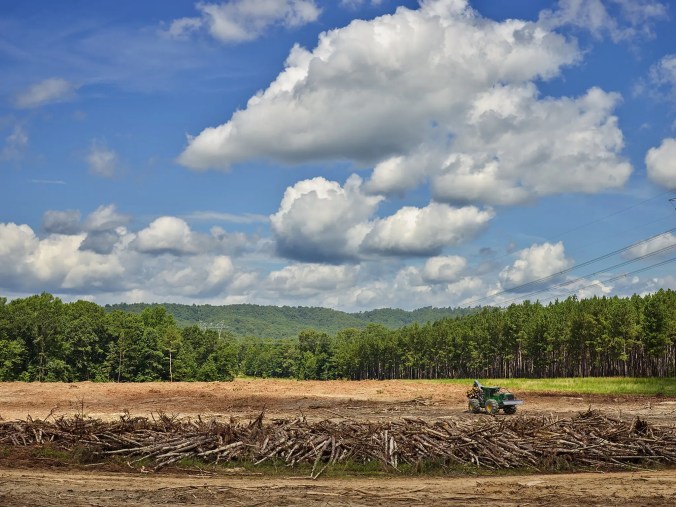
A timber farm in Rome, Ga., that supplies I.P. Christopher Payne for The New York Times

Singleton, who is 54, with a shaved head and graying beard, has spent the past few years as a fiber-supply manager for International Paper, or I.P., a packaging concern headquartered in Memphis. Continue reading

Precision Fermentation’s Implied Potential

Illustration: Eleanor Shakespeare/The Guardian

It is the first time we are seeing these two words together, and George Monbiot has this to say about the potential implied:

Embrace what may be the most important green technology ever. It could save us all

Never mind the yuck factor: precision fermentation could produce new staple foods, and end our reliance on farming

So what do we do now? After 27 summits and no effective action, it seems that the real purpose was to keep us talking. If governments were serious about preventing climate breakdown, there would have been no Cops 2-27. The major issues would have been resolved at Cop1, as the ozone depletion crisis was at a single summit in Montreal. Continue reading

Coral Defying The Odds

Corals in the waters of the Ras Mohammed National Park in the Red Sea near Sharm el Sheikh, Egypt, home to one of the only reefs in the world that can tolerate heat. Sima Diab for The New York Times

Our thanks to Jenny Gross and Vivian Yee reporting from Egypt:

Attendees of the United Nations climate conference took breaks from negotiations to see the corals for themselves.Credit…Mohammed Abed/Agence France-Presse — Getty Images

As warming waters devastate coral around the world, the sea’s stunningly colorful reefs have been remarkably resilient. But pollution, mass tourism and overfishing put them at risk.

SHARM El SHEIKH, Egypt — The vast majority of the world’s coral reefs are likely to be severely damaged in the coming decades if the planet keeps warming at its current rate. Continue reading

Greenhouse By Joost

We have not heard news of Joost Bakker in over a decade, so Max Veenhuyzen’s profile and introduction to the documentary previewed above is most welcome:

‘We can have houses covered with biology, plants, ecosystems and waterfalls’: Greenhouse by Joost documents the green-thinking initiatives of Future Food System. Photograph: Dean Bradley/Madman Entertainment

Mushroom walls and waste-fuelled stoves: inside the self-sufficient home of tomorrow

Joost Bakker believes a house can be more than a place to live: it can be a self-sustaining weapon against the climate crisis. A new Australian documentary explores his bold blueprint

Future Food System is anchored by self-watering garden beds filled with 35 tonnes of soil. Photograph: Earl Carter Images

“The most destructive things we humans do,” says Joost Bakker, “is eat.”

In terms of sentences that grab your attention, the introduction to new Australian documentary Greenhouse by Joost is right up there. Then again, Bakker – a multi-disciplinary designer, no-waste advocate and the film’s eponymous protagonist – has long been something of a provocateur. Continue reading

What Billionaires Are Responsible For

Andrew Steer speaking at the World Economic Forum in Davos in May. Photograph: Ciaran McCrickard/World Economic Forum

At first, and even second glance, this argument is reasonable, so we share it in good faith:

Billionaires should not make up climate finance gaps, says Bezos Earth Fund head

Rich countries ‘not living up to obligations’, says Andrew Steer, in charge of $10bn environmental fund

Billionaires can not be expected to make up for climate finance gaps left by rich countries that fail to deliver on promises to the developing world, the head of the Bezos Earth Fund has said…

The article is worth reading at the source, in the Guardian, and our thanks as always to that newspaper and Patrick Greenfield.

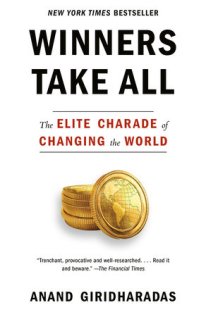
But if you want a different take on what billionaires are responsible for, you might want to read what Anand Giridharadas has to say on the topic.

Or, at least read the review in the Guardian of his 2018 book.

A Paradox Wrapped In A Conundrum

We almost always side with the animals. But sometimes there are no easy answers. Just puzzles.

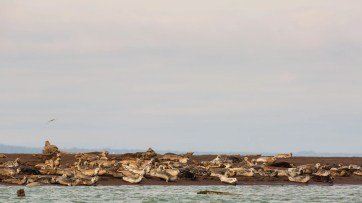
Parker Miles Blohm / KNKX. Harbor seals hauled out at low tide on the Nisqually River on October 10, 2022.

In this case, for what it is worth, our support is with the humans:

Seals and sea lions vex Washington tribes as Marine Mammal Protection Act turns 50

50 years ago, President Nixon signed the Marine Mammal Protection Act into law. The act has been hugely successful in restoring the abundance of the marine species it protects. But some say it’s too successful.

Tribes in particular say their treaty rights to fishing are under threat because now, too many seals and sea lions are feasting on endangered salmon. Continue reading