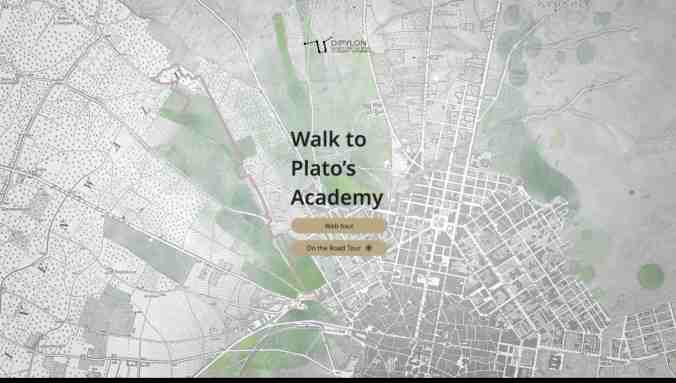
Archeologists + Cartographers = Dipylon

If you click on the image above you will experience through a short video what can happen when technically skilled map-makers, using GIS, combine forces with scholars of antiquity. Better yet, go straight to the software they have created. In advance of travel commemorating 40 years since two of us met, my daily omnivorous media diet brought me to Dipylon, via a profile by Nick Romeo, which I highly recommend (to better understand the origins and workings of Dipylon) whether or not you are planning to visit Athens:

Illustration by Eleni Kalorkoti

The Hidden Archeologists of Athens

By collecting long-forgotten archeological data, a new project reveals the researchers who toiled unrecognized.

In Don DeLillo’s 1982 novel “The Names,” an American businessman living in Athens can’t quite bring himself to visit its most iconic monument. “For a long time I stayed away from the Acropolis,” he says. Continue reading

Braiding Sweetgrass

My daily news scanning, reading and listening diet are fairly omnivorous, but I am constantly reminded of how much I miss. This sounds like a book I should have read in 2015 when it was first published, but instead I only heard about it this morning. Listening to the author talk about it, I learned that she lives where I lived when I was a boy, in a region where my family history is partly rooted; the same region where I spent seven years to get to an idea that has guided my work ever since; where both our sons and our grand daughter were born. Which is to say, as she talks about nature in that conversation, I know that particular nature. Which is to say, I will find this book.


Proposed Chumash Sanctuary One Step Closer

Thanks to National Public Radio (USA) for bringing this to our attention:

Members of the Chumash tribe have pushed for a decade to create a new marine sanctuary. If created, it would be the first to be designated with tribal involvement from the outset. Robert Schwemmer/NOAA

Biden proposes vast new marine sanctuary in partnership with California tribe

The Biden administration is one step away from designating the first national marine sanctuary nominated by a tribe. The Chumash Heritage National Marine Sanctuary would protect 5,600 square miles of ocean off the central California coast, an area known for its kelp forests, sea otters and migratory whales. Tribal members of the Chumash, who have lobbied for its creation for more than a decade, would be involved in managing it…

The First Tribally Nominated Sanctuary

Preserving marine and cultural resources along 156 miles of Central California Coastline

Estimated to generate $23 million in economic activity and create 600 new jobs

Will safeguard the Central Coast from offshore oil expansion and other threats


Bee Surprised, Again

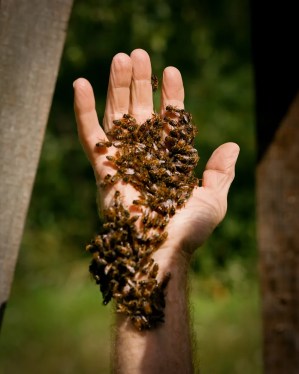
Bees have long been held to be prophetic—messengers to another realm. Photographs by Alice Zoo for The New Yorker

When reading a couple of days ago that there could be such thing as too many beekeepers, the surprise was sufficient to make me go back through all earlier posts to see if I was merely forgetting having read this before. There were no previous mentions of too many, and if anything it was reasonable to assume from all my readings on colony collapse disorder that more beekeepers might be part of the solution. And now this article is full of more surprises, including the most fundamental question: Is Beekeeping Wrong?

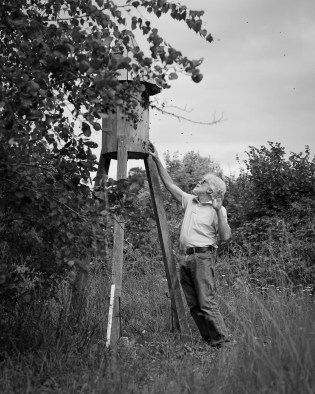
Gareth John, a natural beekeeper, tending a hive.

Parasites and pesticides have brought chaos to bee colonies throughout the world. Natural beekeepers want to transform our relationship to the hive.

On a hot, pollen-dazed morning this summer, I stopped by the house of Gareth John, a retired agricultural ecologist, who lives on a quiet lane above a river in Oxfordshire, to take a look at his bees. In British beekeeping circles, John, who has a white beard and a sprightly, didactic manner, is well known as a “natural beekeeper,” although he acknowledged right off the bat that this was a problematic term. “It’s an oxymoron, right?” he said. John cares for perhaps half a million bees, but he does not think of himself as keeping anything. “I wouldn’t call myself a dog-keeper,” he said. “But I have a dog.” Continue reading

Property Rights Versus Trespassing Rights

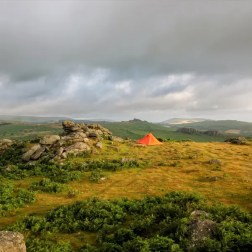
A wealthy couple bought an estate inside Dartmoor National Park and then successfully sued to bar campers from using their land. That ruling is now being appealed. Muir Vidler for The New York Times

Property rights, a foundational aspect of modern society, occasionally bump up against other rights. The journalist Brooke Jarvis has a new article that touches on this theme, we are happy to see:

The Fight for the Right to Trespass

A group of English activists want to legally enshrine the “right to roam” — and spread the idea that nature is a common good.

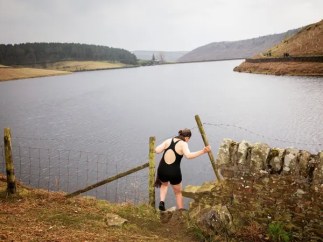
The signs on the gate at the entrance to the path and along the edge of the reservoir were clear. “No swimming,” they warned, white letters on a red background.

A protester at Kinder Reservoir. Muir Vidler for The New York Times

On a chill mid-April day in northwest England, with low, gray clouds and rain in the forecast, the signs hardly seemed necessary. But then people began arriving, by the dozens and then the hundreds. Some walked only from nearby Hayfield, while others came by train or bus or foot from many hours away. In a long, trailing line, they tramped up the hill beside the dam and around the shore of the reservoir, slipping in mud and jumping over puddles. Above them rose a long, curving hill of open moorland, its heather still winter brown. When they came to a gap between a stone wall and a metal fence, they squeezed through it, one by one, slipping under strings of barbed wire toward the water below. Continue reading

Bring Birds Back Podcast

A new (to us) podcast to get your bird nerd fix:

Let’s All Go to Gullah Geechee Sea Islands with Isaiah Scott

Bring Birds Back Season 4: Episode 4

This episode’s guest may be too young to remember the 90’s children’s show, Gullah Gullah Island, but he’s certainly influencing the next generation the same! Isaiah Scott, a rising Gen-Z bird-influencer and ornithologist, reconnects with Tenijah to dish all about his journey into birding while young, Black and curious. He also shares how his Gullah Geechee heritage continues to inspire his work, including a forthcoming field guide that seeks to preserve his ancestral connection to birds. There’s definitely “lots to see and to do there”– press play and take the journey with us!


Pottery Tradition & Modernity

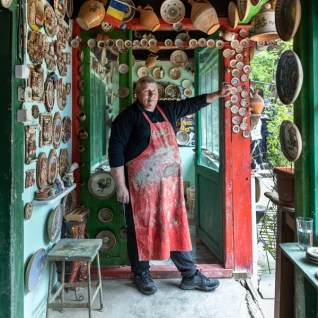
Mr. Biscu makes pieces using clay that comes from earth extracted from a hill in Horezu.

Chantel Tattoli reported this story from Horezu, Romania for the New York Times. Accompanied by photographs and video by Marko Risovic, her story is based on speaking to a dozen local potters using a translator:

A style of pottery made for centuries in a small Romanian town has recently become a hot commodity.

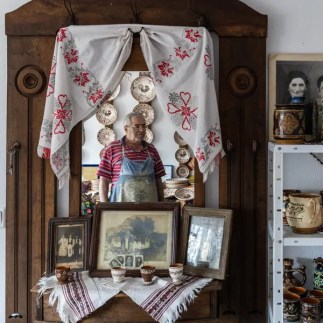
Sorin Giubega at his home, which is filled with ceramics made by him and his ancestors.

Sorin Giubega’s grandfather was a potter. So was his father. And at 8 years old, Mr. Giubega said, he started to play on a pottery wheel, too.

Mr. Giubega, now 63, and his wife, Marieta Giubega, 48, are potters in Horezu, Romania, a town in the foothills of the Capatanii Mountains about three hours by car from Bucharest.

Horezu is home to a community of about 50 artisans who make a traditional style of ceramics with methods that have been practiced for more than 300 years. Continue reading

Indigenous Food Foraging

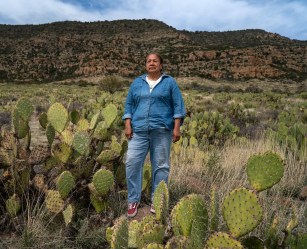
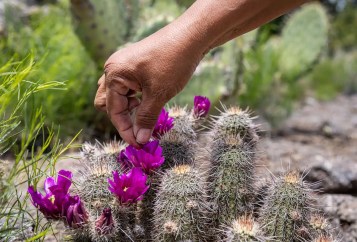
Prickly pear cacti, which produce Twila Cassadore’s favorite fruit. Photograph: Gabriela Campos/The Guardian

Samuel Gilbert was in Bylas, Arizona, on the San Carlos Apache Reservation to report this article, which contains excellent accompanying photographs by Gabriela Campos.

We thank the Guardian for this coverage of indigenous heritage:

‘It healed me’: the Indigenous forager reconnecting Native Americans with their roots

Twila Cassadore hopes teaching Western Apache traditional foodways can aid mental, emotional and spiritual health

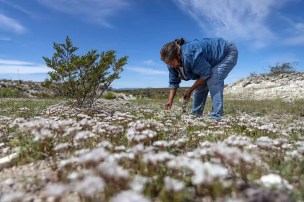
Twila Cassadore gathers wild pearl onions on a foraging trip in the San Carlos Apache Reservation in April. Photograph: Gabriela Campos/The Guardian

On a warm day in April, Twila Cassadore piloted her pickup truck toward the mountains on the San Carlos Apache Reservation in Arizona to scout for wild edible plants. A wet winter and spring rains had transformed the desert into a sea of color: green creosote bushes topped with small yellow flowers, white mariposa lilies, purple lupines and poppies in full bloom.

Cassadore picks the petals off a flowering cactus during a foraging trip. She uses the petals in salads. Photograph: Gabriela Campos/The Guardian

Cassadore and I drove up a rough dirt road that used to be an old cattle trail, passing through various ecosystems, moving from Sonoran desert to grasslands and piñon-juniper woodlands. In each area, Cassadore would stop to gather desert chia seeds, cacti flowers and thistles.

Cassadore stopped her truck beside a three-leafed sumac bush brimming with fruit. Continue reading
11 Years, 11 Months & 11 Days Later

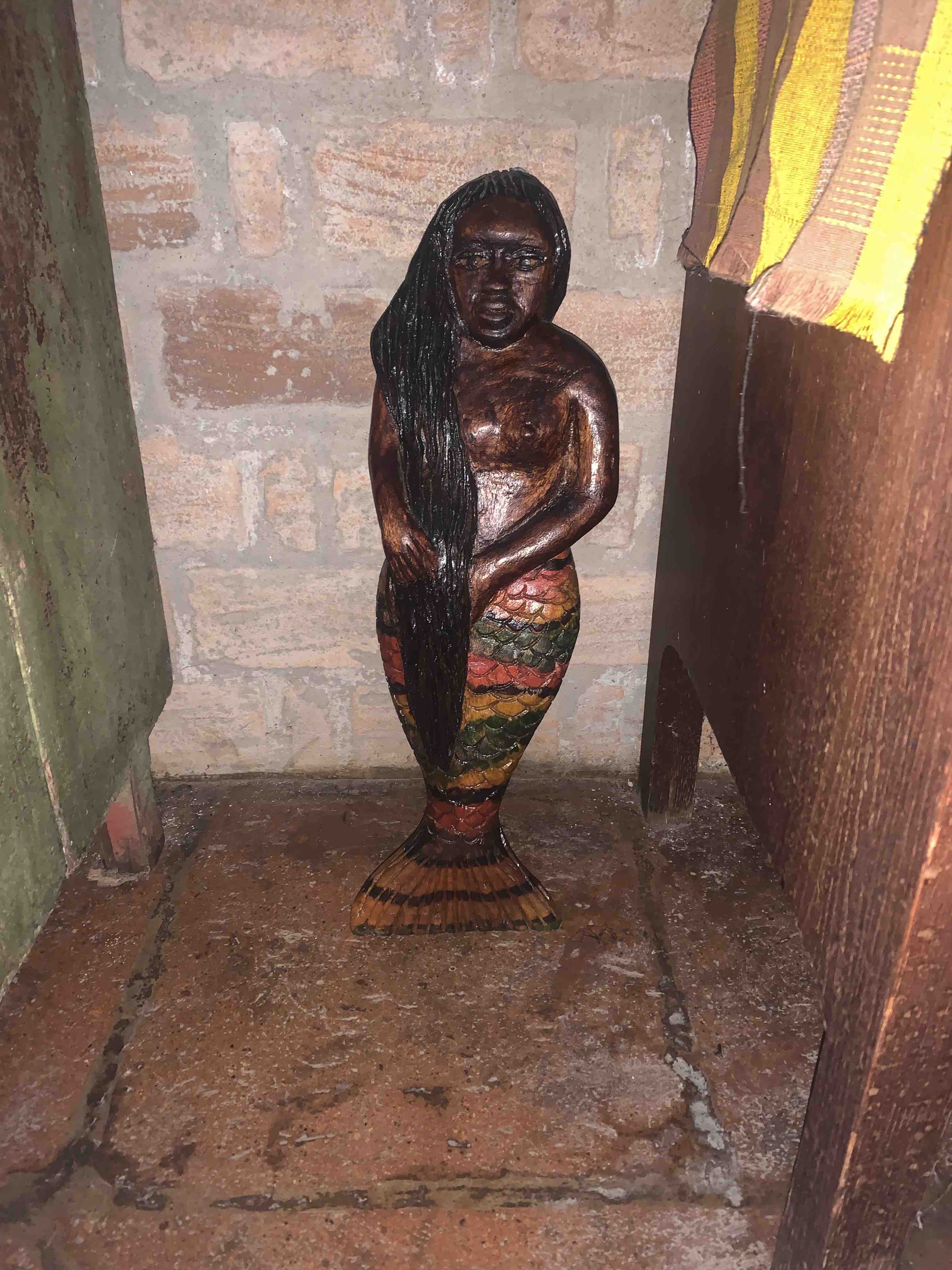
Mermaid (now in Escazu, Costa Rica), handcrafted by Rock Bottom from driftwood in Port Antonio, Jamaica

June 15, 2011 was the day we first posted on this platform, and while we have evolved since then we have remained constant and consistent in a few ways. In the daily search for something worth sharing, photos of birds from around the world have been the most constant–as in, every day since the first photo was shared by this old friend who got us started on that daily routine. Thank you, Vijaykumar, for a healthy habit-formation.

Consistent have been the shared convictions that environmental conservation, no matter how bleak the news, is worth our effort.

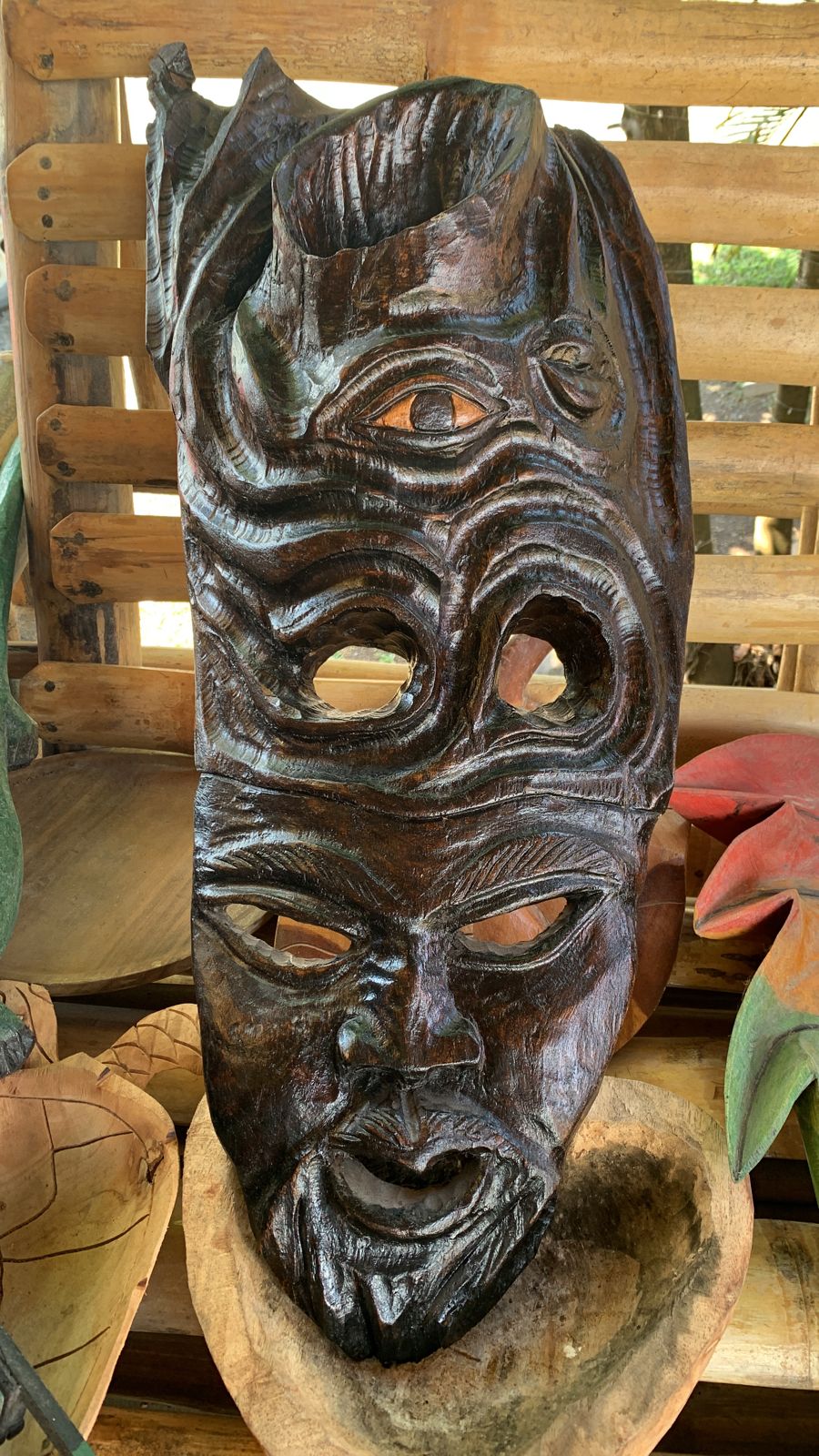
Maroon shaman mask with third eye for healing power (now in Ithaca, NY USA), handcrafted by Rock Bottom from driftwood in Port Antonio, Jamaica

Plenty more constantly interesting sub-topics like books and libraries, seemingly unrelated to the environment, have been the focus of daily posts; but they are related. As is artisan production, riffed upon many times in these pages, especially now that it is the focus of our day jobs.

So today, heading toward the twelve year mark posting here, a nod to an artisan named Rock Bottom. He carves driftwood in Port Antonio, Jamaica.

There is an effort in that part of Jamaica to revive and strengthen traditional crafts, and the work of Rock Bottom is a model for what we can hope to see more of. My hope is that the amazing engine of economic activity that Jamaica’s tourism sector represents will valorize his work and the work of others akin to his.

Auchan 2000 & Authentica 2023

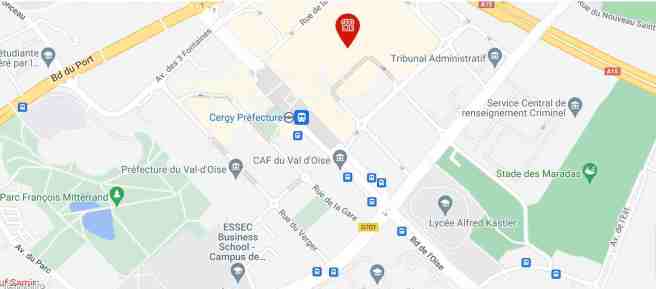
The Auchan hypermarche in Cergy is at the location of the red balloon in the image above. It is a short walk from the ESSEC campus (lower center of map). Click to go to the map on Auchan’s website

On each of the occasions I have read articles about Annie Ernaux I have been reminded of the first of my five years teaching at ESSEC. During the 2000-2003 academic years I lived on campus for extended periods away from home and family in Costa Rica. My grocery shopping was at the same Auchan elegantly dissected by the woman who last year won the Nobel Prize in Literature.  During my fourth year teaching there I was completing work on a project in Montenegro that made it more convenient for our family to be based in Paris for 12 months. This turned out to be one of the most culturally enriching experiences our family ever had together. And relevant to life now.

Adrienne Raphel’s article in The Paris Review begins with her own “big retail” experience, and at first read it connects dots between our Paris time and our retail life now. For the last 4+ years we have been waking up each day looking for novel ways to succeed without following the “pile it high and watch it fly” model. So, if that resonates with you for any reason, read on:

INTERIOR OF THE WAL-MART SUPERCENTER IN ALBANY. PHOTOGRAPH BY MATT WADE, COURTESY OF WIKIMEDIA COMMONS. LICENSED UNDER CCO 3.0.

“The Dead Silence of Goods”: Annie Ernaux and the Superstore

The first and only time I went to the Walmart in Iowa City was surreal. When I was in high school, my parents’ business-oriented small press had published a book called The Case Against Walmart that called for a national consumer boycott of the company; the author denounced everything from the superstore’s destruction of environmentally protected lands to its sweatshop labor to its knockoff merchandise. So by the time I made a pilgrimage out to the superstore at age twenty-one, I hadn’t stepped in a Walmart for nearly a decade, and it had acquired this transgressive power—the very act of crossing the threshold was as shameful as it was thrilling…

Natural History Anew

An image from 1957, when the cross and square design was still legible. American Museum of Natural History

We have featured so many natural history museums in our pages over the years that one more might have been redundant; but no:

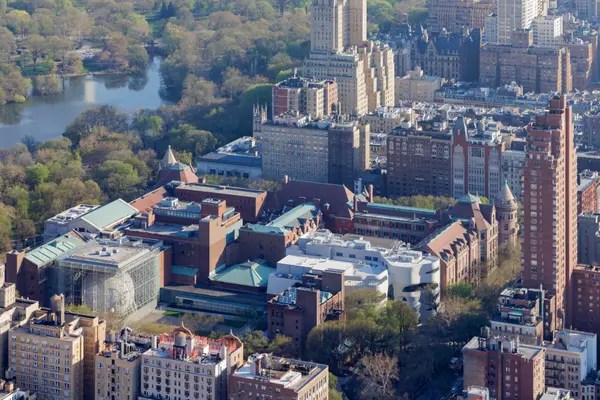
A new aerial photo shows the museum today, as a crazy quilt of buildings from many eras, with Gilder on the right. Iwan Baan

The article below, by Michael Kimmelman with photographs and video by Peter Fisher, allows us to imagine the experience of a new view on natural history in New York City.

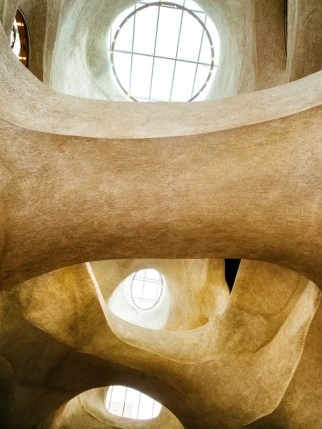
The view at the entrance toward the monumental staircase with bleacher seats.

We are ready to be awed:

The stunning $465 million Richard Gilder Center for Science, designed like a canyon, is destined to become a colossal attraction.

When plans for it first surfaced, I wondered if the new Gilder Center at the Natural History museum might end up looking overcooked.

From the outside it’s a white-pink granite cliff with yawning windows shaped a little like the openings to caves, nestling the museum’s wonderful Romanesque Revival addition from the turn of the last century. Past the front doors, that cliff face morphs. It becomes an atrium in the guise of a towering canyon, a city block deep.

Skylights and balconies in the atrium of the new Richard Gilder Center for Science, Education and Innovation.

For its architects, Jeanne Gang and her team, Gilder was clearly a gamble and leap of faith, bucking today’s innocuous norms, almost begging for charges of starchitectural self-indulgence.

Now that it’s built, I love it.

I wouldn’t go so far as to equate it with the curvaceous genius of Gaudi or with Saarinen’s groovy TWA Terminal, but it’s in the family. Like them, Gilder is spectacular: a poetic, joyful, theatrical work of public architecture and a highly sophisticated flight of sculptural fantasy. New Yorkers live to grouse about new buildings. This one seems destined to be an instant heartthrob and colossal attraction. Continue reading
The Forest Gives Much

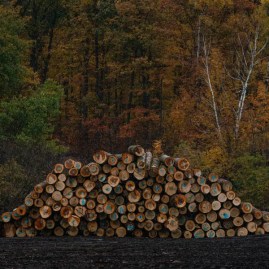
Freshly harvested logs from the Menominee Forest in Keshena, Wis., marked with color to indicate each log’s grade.

Sustainable forestry is a long-running topic in these pages over the years. The previous times we have linked to Cara Buckley stories we have been enriched by the humanity in environmental stories, so here we combine her unique talent to the topic of forestry:

The Giving Forest

The Menominee tribe has sustainably logged its forest in Wisconsin for 160 years. But that careful balance faces a crisis: too many trees and too few loggers.

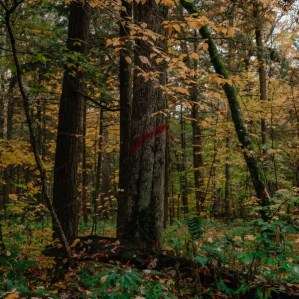
A tree marked for cutting. The Menominee harvest only trees that are sick and dying or those that have fallen naturally

MENOMINEE COUNTY, Wis. — Amid the sprawling farmlands of northeast Wisconsin, the Menominee forest feels like an elixir, and a marvel. Its trees press in, towering and close, softening the air, a dense emerald wilderness that’s home to wolves, bears, otters, warblers and hawks, and that shows little hint of human hands.

Yet over the last 160 years, much of this forest has been chopped down and regrown nearly three times. The Menominee Tribe of Wisconsin, its stewards, have pulled nearly two hundred million cubic feet of timber from this land since 1854 — white pine cut into museum displays and hard maple made into basketball courts for the Olympics. Continue reading
Libraries Old & New

Adults and children in a room of a library with bookshelves, an orange light in the ceiling and an orange wall.

The Adams Street Library in Dumbo, Brooklyn, has a children’s space with hues reminiscent of a Creamsicle. Justin Kaneps for The New York Times

The name Michael Kimmelman is rare in these pages, but in covering one of our favorite topics he gets our full attention again today:

As New York Weighs Library Cuts, Three New Branches Show Their Value

Facing a giant budget deficit, Mayor Eric Adams proposed cuts to New York libraries. But they play an outsize role in the city, offering services and safety.

Adults and children gather in a well-lit children’s room in a library that is filled with bookshelves. One child sits on a color-blocked rug, drawing.

The children’s room at the Macomb’s Bridge branch in Upper Manhattan; below, the entrance and canopy outside refer to the original landmarked architecture. Justin Kaneps for The New York Times Image

A city is only as good as its public spaces. The Covid-19 pandemic was another reminder: For quarantined New Yorkers, parks, outdoor dining sheds and reopened libraries became lifelines.

But now Mayor Eric Adams wants to slash funds for parks ($46 million) and for libraries ($13 million this fiscal year, more than $20 million next), and the City Council is debating the dining sheds. The sheds need regulation and the city budget needs to be cut by perhaps $3 billion. That said, if you don’t find the current political conversation shortsighted, you might want to do what I recently did and check out some of the library branches that have opened since the start of 2020. I visited three of them — each one a boon for its neighborhood, and money well-spent. Continue reading

Communities & Respect

The term was shaped by social-evolutionist thinking; white settlers used it to designate the “primitive” other. Illustration by Lauren Peters-Collaer

Given that our work has often brought us into close proximity, sometimes into working relationships, with such communities as described in the essay below, we have done our best to stay informed on respectful communication; so, this is of interest:

It’s Time to Rethink the Idea of the “Indigenous”

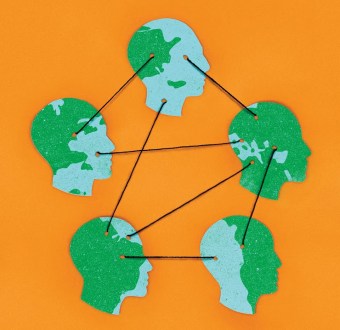
Many groups who identify as Indigenous don’t claim to be first peoples; many who did come first don’t claim to be Indigenous. Can the concept escape its colonial past?

Identity evolves. Social categories shrink or expand, become stiffer or more elastic, more specific or more abstract. What it means to be white or Black, Indian or American, able-bodied or not shifts as we tussle over language, as new groups take on those labels and others strip them away. Continue reading

Marbles Coming Home

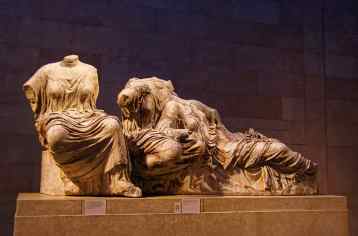
The Parthenon (“Elgin”) Marbles are displayed in the British Museum, London. Credit: Txllxt TxllxT via Wikimedia Commons, CC BY-SA 4.0

This politician, like any, wants to repatriate heritage taken away. We have no insight into his motives, but even if it were just for the bragging rights that is fine. We do not so much care who resolves it, so much as that it happens:

The Secret Meetings on the Parthenon Marbles Exposed by the FT

The Financial Times (FT) reported on Friday the secret meetings on the Parthenon Marbles between Greek PM Kyriakos Mitsotakis and George Osborne, chair of the British Museum. Continue reading
Kenya’s Libraries Get The Attention They Deserve

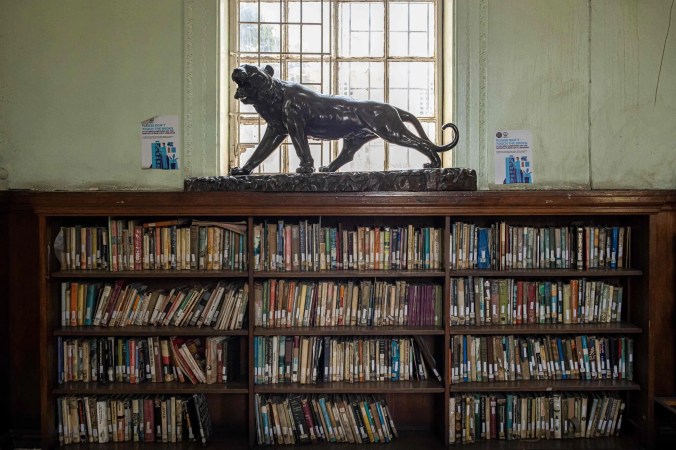
The archives of the McMillan Memorial Library are being digitized. Kenyans are also being invited to bring items such as photographs or letters to create an archive anchored in collective memory. Patrick Meinhardt/Agence France-Presse — Getty Images

Palace is a fine way to think about libraries, and Kenya has a movement to make this metaphor work:

Turning Nairobi’s Public Libraries Into ‘Palaces for the People’

A Kenyan nonprofit is restoring iconic public libraries, leaving behind a segregated past and turning them into inclusive spaces.

A project to preserve libraries such as this one is not a sprint or even a marathon, but a relay, said Lola Shoneyin, a Nigerian novelist. Patrick Meinhardt/Agence France-Presse — Getty Images

In 1931, the first library in Kenya’s capital, Nairobi, opened its doors — to white patrons only. Continue reading
Aeon & The Rise Of Maize In Asia

On the outskirts of Kunming, the capital of Yunnan province in southwestern China, 6 November 2006. Photo by stringer/Reuters

Aeon was a regular source of excellent ideas and information during our first few years, and we are happy to see it again:

Maize is arguably the single most important crop in the world and is rivalled only by soybeans in terms of versatility. That said, it is, along with sugar cane and palm oil, among the most controversial crops, proving particularly so to critics of industrial agriculture. Although maize is usually associated with the Western world, it has played a prominent role in Asia for a long time, and, in recent decades, its importance in Asia has soared. For better or worse, or more likely for better and worse, its role in Asia seems to be following the Western script. Continue reading

The Heart Beat In Greece

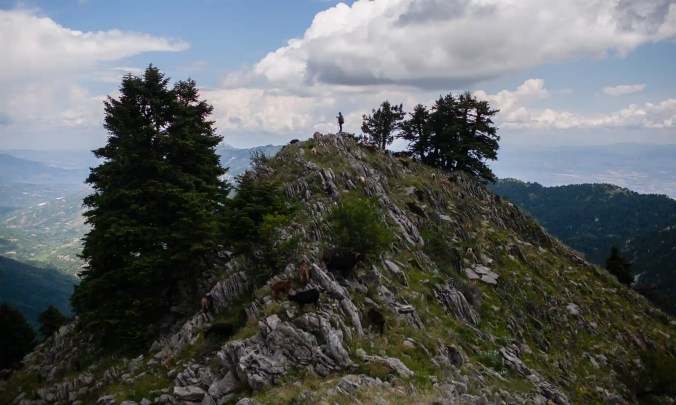
Kostas Papastavros and his goats on the top of the Koziakas mountain, part of Pindus range on mainland Greece. Photograph: Vasileios Tsiolis

I appreciate the comment about the heart beat in Katy Fallon’s portrait of a particular form of pastoral life in northern Greece. It comes just as we start dreaming of making an overdue visit back to the country I would most likely choose to live, if not for Costa Rica’s strong pull:

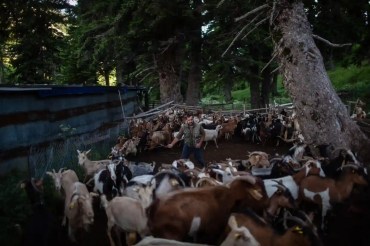
Kostas leading the goats back to the family’s makeshift summer barn on Koziakas mountain

‘My heart beats up here’: Greece’s nomadic herders on life in the hills – a photo essay

For hundreds of years the Vlach herders in Greece and the Balkans have moved livestock to high mountain pastures for the summer months. But their numbers are dwindling as their arduous existence is threatened by soaring costs and a lack of state support

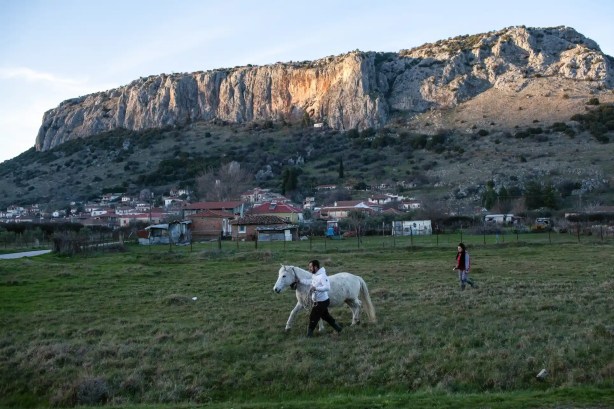
Kostas and Fotini walk with the family’s mare in front of the prehistoric cave of Theopetra village

Every spring in the Thessalian plains of central Greece, in the shadow of the mountains, an ancient and sacred migration of humans and goats takes place. Continue reading
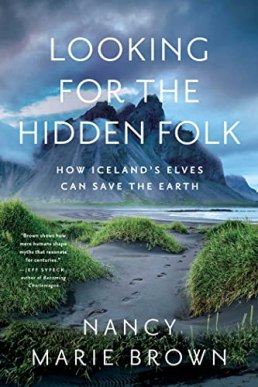
Icelandic Elf-Curious Attitudes

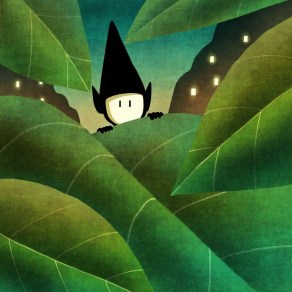
Toni Demuro

In a world that is full of climate denial nonsense, where responsibilities to nature are abandoned by many, what harm could possibly come from Icelanders believing their own peculiar sort of nonsense? We will take any help we can get if it helps us and helps our protection of nature:

In “Looking for the Hidden Folk,” Nancy Marie Brown makes a strong case for everyday wonder.

For 70 summers, children have boated to an island in the Adirondack wilderness to seek out a cluster of tiny wooden houses and leave messages for the fairies who are said to live there. Sometimes the fairies write back — on slips of birch bark, tucked into the crevice of a log for children to find and exult over. The adult go-betweens behind the letters can’t resist feeding the children’s faith that the natural world reciprocates their interest.

Of course, they don’t believe in fairies themselves. In “Looking for the Hidden Folk,” the cultural historian Nancy Marie Brown asks: Why not? “Why should disbelief be our default? Why should we deride our sense of wonder? Why do we allow our world to be disenchanted?” Continue reading

The Invention Of Books

We are happy to have reason to return to our love of books, reading, as well as the history and importance of libraries.

Our thanks to Kathryn Hughes at the Guardian for giving us a look into the most recent work of Irene Vallejo:

Papyrus by Irene Vallejo review – how books built the world

From Alexandria to Oxford, a kaleidoscopic history of the written word

Reading between the lines … Tianjin Binhai Library in China.
What do you give the queen who has everything? When Mark Antony was wondering how to impress Cleopatra in the run-up to the battle of Actium in 31BC, he knew that jewellery would hardly cut it. The queen of the Ptolemaic kingdom of Egypt had recently dissolved a giant pearl in vinegar and then proceeded to drink it, just because she could. In the face of such exhausted materialism, the Roman general knew that he would have to pull out the stops if he was to win over the woman with whom he was madly in love. So he arrived bearing 200,000 scrolls for the great library at Alexandria. Continue reading