Coral Defying The Odds

Corals in the waters of the Ras Mohammed National Park in the Red Sea near Sharm el Sheikh, Egypt, home to one of the only reefs in the world that can tolerate heat. Sima Diab for The New York Times

Our thanks to Jenny Gross and Vivian Yee reporting from Egypt:

Attendees of the United Nations climate conference took breaks from negotiations to see the corals for themselves.Credit…Mohammed Abed/Agence France-Presse — Getty Images

As warming waters devastate coral around the world, the sea’s stunningly colorful reefs have been remarkably resilient. But pollution, mass tourism and overfishing put them at risk.

SHARM El SHEIKH, Egypt — The vast majority of the world’s coral reefs are likely to be severely damaged in the coming decades if the planet keeps warming at its current rate. Continue reading

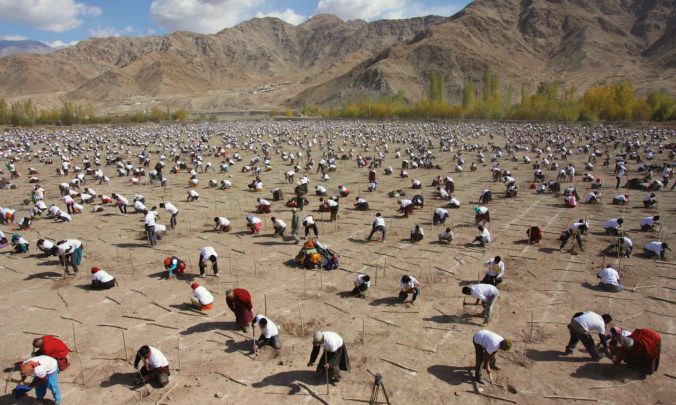
Nepal’s Community Forests

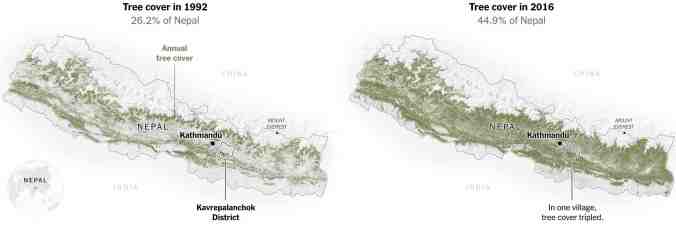
Note: Green areas show land that is mostly covered by trees, based on an analysis of satellite imagery. Source: Jefferson Fox, Jamon Van Den Hoek, Kaspar Hurni, Alexander Smith and Sumeet Saksena.By Pablo Robles

We have shared plenty of stories about Nepal, but until now no story about Nepal involving trees or forests. We welcome this one:

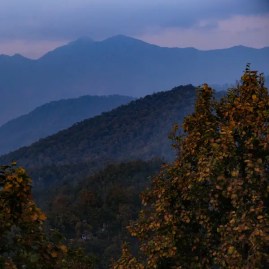
The community forests in Khairahani, Nepal, stretching over several tree-capped hills in March. Karan Deep Singh/The New York Times

An effort decades in the making is showing results in Nepal, a rare success story in a world of cascading climate disasters and despair

KANKALI COMMUNITY FOREST, Nepal — The old man moved gingerly, hill after hill, cutting dry shrubs until he was surrounded by trees that had grown from seedlings he had planted two decades ago. He pointed to a row of low peaks above the Kathmandu valley that were covered with dense foliage. Continue reading

Wonders Of The Yucatán

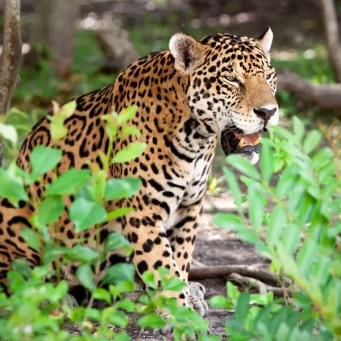
In Calakmul and elsewhere, the fierce jaguar was worshiped as a deity. Ancient rulers and warriors adorned themselves with the animal’s skulls, skins, fangs and claws. Adrian Wilson for The New York Times

Several months ago when we confirmed our plans to attend a wedding in Merida, Mexico on November 5, Calakmul came to mind. We had already explored many famous Maya sites in Central America, most recently in Belize, not to mention Mexico, over the last three decades; and we have also been fortunate with big cat sightings.

We decided against extending our stay, choosing to spend a few days in Mexico City instead (I have been obsessed with Barragán in recent years, so seeing his former home and workshop there was a must). Charly Wilder‘s article in the New York Times, which I am only seeing now, makes me wonder when we will return to see what we neglected in the Yucatan:

The number of jaguars is growing in Mexico, especially in areas of the Yucatán Peninsula. Patryk Kosmider/Getty Images

Thanks to Mexican conservation efforts, the jaguar is making a comeback in the Yucatán Peninsula. A traveler ventures into its habitat in the tropical jungles surrounding an ancient Maya city.

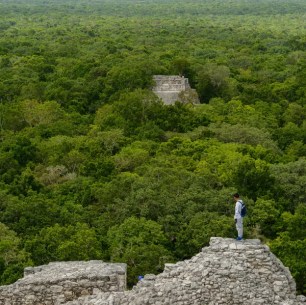
From the top of the great pyramid of the ancient Maya city of Calakmul in the southern Yucatán Peninsula in Mexico, you can see all the way to Guatemala. The jungle stretches out infinitely in every direction, an ocean of green punctuated only by the stepped pyramid peaks of two other Maya temples. Continue reading

A Paradox Wrapped In A Conundrum

We almost always side with the animals. But sometimes there are no easy answers. Just puzzles.

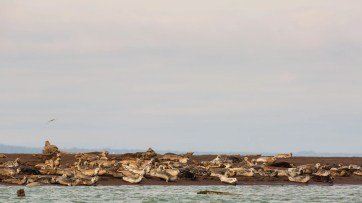
Parker Miles Blohm / KNKX. Harbor seals hauled out at low tide on the Nisqually River on October 10, 2022.

In this case, for what it is worth, our support is with the humans:

Seals and sea lions vex Washington tribes as Marine Mammal Protection Act turns 50

50 years ago, President Nixon signed the Marine Mammal Protection Act into law. The act has been hugely successful in restoring the abundance of the marine species it protects. But some say it’s too successful.

Tribes in particular say their treaty rights to fishing are under threat because now, too many seals and sea lions are feasting on endangered salmon. Continue reading

Birds, Us, Past & Future

Our daily photo feature has been a long-running privilege for us to share from our various bird photographer friends who travel the world, and clearly a reason for some visitors to stay tuned here. We do what we can to ensure those birds are there for future generations to appreciate. The book featured above is likely to be of interest to many of those visitors. The author, seen only once before in our pages more than ten years ago, Tim Birkhead offers historical perspective that is well-reviewed and his publisher has this to say:

Since the dawn of human history, birds have stirred our imagination, inspiring and challenging our ideas about science, faith, art, and philosophy. Continue reading

Animal-Free Meat & Racing The Clock

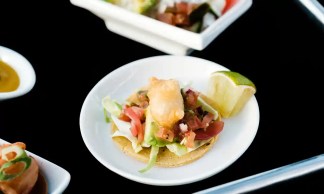
BlueNalu’s fried cell-cultured yellowtail amberjack fish taco. Photograph: Courtesy of BlueNalu

Whether the meat you eat is from land animals or from the ocean, the chances are high that you will be eating man-made versions sooner rather than later:

‘Fishless fish’: the next big trend in the seafood industry

‘Alternative seafood’ is having a moment, with the rise of companies like BlueNalu and Wildtype, which has the backing of Leonardo DiCaprio

In the middle of San Francisco, there’s a pilot production plant for Wildtype, one of a handful of cell-cultivated seafood companies in the US. Inside, it’s growing sushi-grade coho salmon in tanks similar to those found in breweries – no fishing or farming required. Continue reading

Peanuts, Soil Regeneration & Coffee

I will not blame Ruby Tandoh for the link to the predatory bookseller in her essay; the magazine she writes for is responsible. Instead, I will just put a better link from the book image on the left to where you might purchase it. Bringing our attention to the book is enough of a good deed to overlook that link. Especially as I work on finding new ways to fix nitrogen in the soil we are prepping for coffee planting:

The Possibilities of the Peanut

I’ve made salads of peanut with watermelon and sumac, fries dunked in garlic-scented satay sauce, and more variations on my aunt’s Ghanaian groundnut stew than I can remember.

Illustration by Sophia Pappas

It would be hard to find a more devoted champion of the peanut than the agricultural scientist George Washington Carver. Born into slavery in Missouri around 1864, Carver studied at Iowa State University and then taught at the Tuskegee Institute, where he would spend much of the rest of his life learning to repair the environmental damage wrought by intensive cotton farming. Continue reading

British Rainforest Revival

Human activity has impacted the amount of temperate rainforest in the UK but it still exists in a few places, such as the Brecon Beacons in Wales. Photograph: Henk Meijer/Alamy

We already knew that rainforests are not only tropical ecosystems. But when you live in the tropics, you can forget. Our thanks as always to Patrick Greenfield, and to the Guardian, for this reminder:

Exclusive: campaigners call for protection and careful tree-planting to help restore the temperate rainforests that once covered swathes of the country

Rainforest, which has been decimated over thousands of years, has the potential to be restored across a fifth of Great Britain, a new map reveals. Continue reading

Banana Genome Science

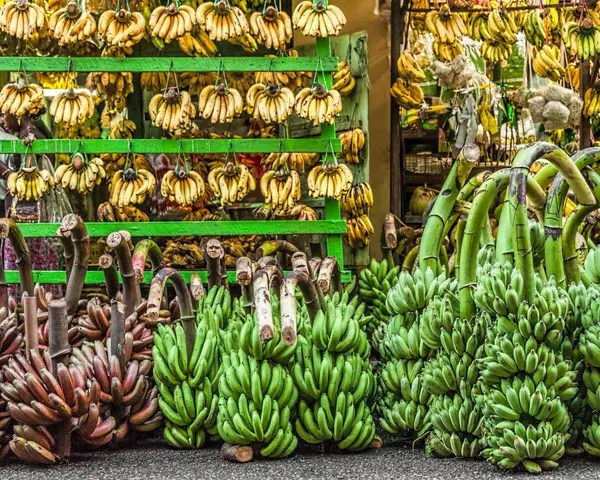
Imagine if you had all of these bananas to pick from every day. Beatrice Sirinuntananon/Shutterstock

We did not search for banana ancestors while living in India. We just found as many varietals as we could to support the genetic stock. I have remained interested in doing the same ever since. They are more versatile than most people are aware, so the outcome of this scientific search matters:

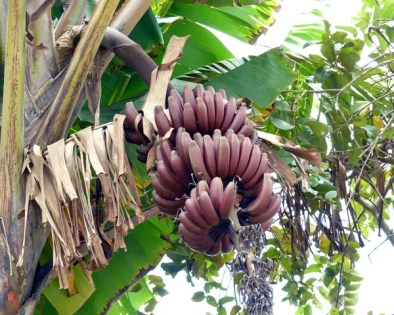
Red or blue, squat or bulbous, seeded or seedless: Bananas have a lot of diversity and scientists have identified genetic signals of varieties that have not yet been found in the wild. guentermanaus/Shutterstock

The Search Is on for Mysterious Banana Ancestors

A new study shows that domesticated bananas have genetic markers tying them to three types of wild bananas that have not yet been found.

Bananas, it turns out, are not what we thought they were.

Sure, most, when ripe, are yellow and sweet and delicious slathered in peanut butter. Continue reading

Another Surprise From The Deep

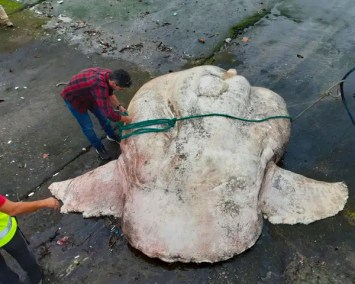
Researchers with a giant sunfish at the marina in Horta in the Azores in December. Atlantic Naturalist

We do not tire of the ocean surprises; this one is of an entirely different magnitude:

A sunfish found near the Azores in the Atlantic Ocean weighed as much as an S.U.V. Scientists say it’s a sign that the sea’s largest creatures can live if we let them.

The fish, at more than 6,000 pounds, is about the weight of a Chevrolet Suburban S.U.V. Atlantic Naturalist

It was easy for scientists to have doubts when they were told that the carcass of a colossal fish had been found floating just off the coast of Faial Island in Portugal’s Azores archipelago in the Mid-Atlantic Ocean in December 2021.

People do tend to exaggerate when it comes to the size of fish after all. However, their skepticism lifted the moment they laid eyes on the fish. It was the biggest bony fish they had ever seen. In fact, it might have been the biggest anyone had ever seen. Continue reading

Deep Sea Creatures & Deep Sea Materials

Another type of gummy squirrel found on an expedition in the CCZ called Psychropotes semperiana. DeepCCZ Project

We have linked to articles concerned about mining deep sea locations for the materials needed in electric vehicle batteries, and other articles featuring deep sea creatures we had no previous knowledge of.  Now it is time to combine the two topics more explicitly, and we thank Benji Jones at Vox for this article:

Relicanthus daphneae, an anemone-like organism in the CCZ, stuck on top of the stalk of a dead sea sponge. Its tentacles can extend several feet long. Diva Amon and Craig Smith/University of Hawaiʻi

These spectacular deep-sea creatures live in a potential mining hot spot

The world needs more metals for batteries to fight climate change. Should it come at the cost of these animals?

Metallic nodules recovered from the Clarion-Clipperton Zone. Abyssline Project

If you were to dive to the bottom of the ocean somewhere between Hawaii and Mexico, you might see a field of sunken treasure. Here, in what’s called the Clarion-Clipperton Zone (CCZ), much of the seafloor is covered with fist-sized rocks that contain valuable metals like cobalt, manganese, and nickel. Continue reading

If You Happen To Be In New York City

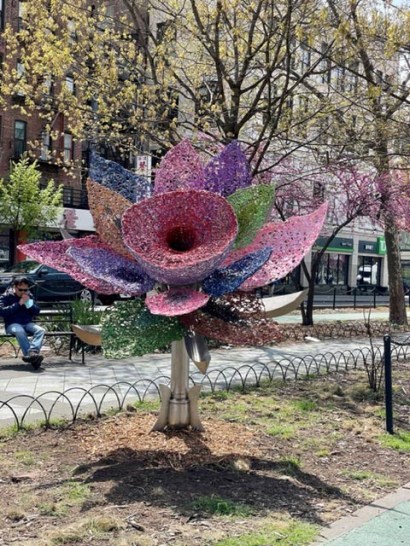
Installed in several locations on the Allen Street Malls between Broome and Hester Streets, this group exhibition features four artworks by five artists addressing themes of nature. Artists include Elizabeth Knowles and Eric David Laxman, Elaine Lorenz, Judith Peck, and Michael Wolf.

While at Cornell University last month I got my fill of early autumn florals and educational signage. While in the Botanic Gardens I was struck by a floral sculpture, a type of art I am not often moved by. But that one worked. And so, looking through the Art in the Parks section  of the New York City Department of Parks & Recreation  website,  the  image to the right caught my  attention.  And scrolling further through that collection I saw the image  below, which on a day after hurricane-driven rains  in  Costa  Rica,  with  the  morning sky clear of clouds,  hits the spot:

Naomi Lawrence, Tierra Fragil

September 25, 2022 to September 10, 2023
Morningside Park, Manhattan

Description:Tierra Fragil, depicts endangered insects and birds with the flowers and plants imperative to their survival. The mural informs and encourages the preservation of familiar species whose presence we may have taken for granted.

Tierra Fragil is made possible in part with public funds from Creative Engagement a regrant program supported by the New York City Department of Cultural Affairs in partnership with the City Council and the New York State Council on the Arts with support of the office of the Governor and the New York State Legislature, UMEZ Arts Engagement a regrant program supported by the Upper Manhattan Empowerment Zone Development Corporation and administered by LMCC. Additional funding was provided by the Friends of Morningside Park.

Infinity Trees

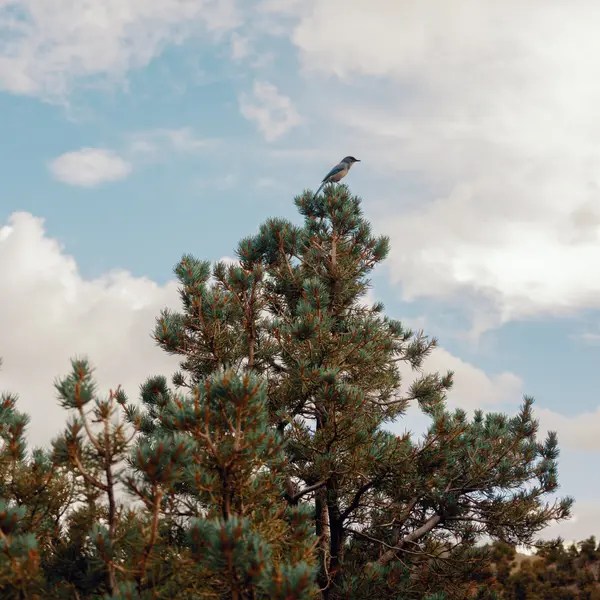
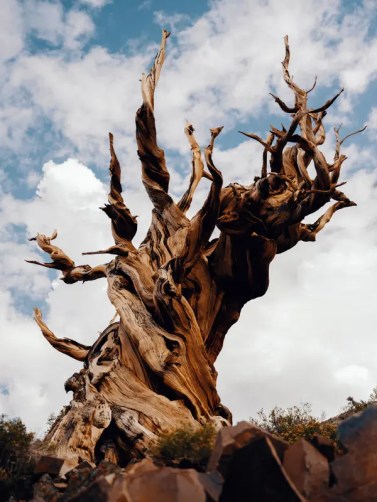
The trees, according to the ecologist Constance Millar, give you a “sense of infinity.” Photo by Adam Perez

We know that getting to a trillion trees is a stretch, but we might be able to sense infinity from a certain species of tree, according to Soumya Karlamangla in the New York Times article we link to here. Photos by Adam Perez help alot.

Bristlecone pines can live and reproduce even with only one branch of needles. Photo by Adam Perez

Historically I have worked to find my personal sense of infinity deep within tropical forests, but reading this and seeing the photos of these trees in a totally different type of ecysystem I can be convinced that it is elsewhere also:

In California, Where Trees Are King, One Hardy Pine Has Survived for 4,800 Years

In a harsh alpine desert, the Great Basin bristlecone pines abide amid climate change. Among them is the oldest tree on Earth (if you can find it).

Great Basin bristlecone pine trees endure in harsh conditions that other vegetation cannot withstand. Photo by Adam Perez

BISHOP, Calif. — Before the Egyptians built the Pyramids, before Jesus Christ was born, before the Roman Empire formed or collapsed, the trees were here.

Ten thousand feet up in the White Mountains of central California, in a harsh alpine desert where little else survives, groves of gnarled, majestic Great Basin bristlecone pines endure, some for nearly 5,000 years. Their multicolor trunks bend at gravity-defying angles, and their bare branches jut toward the sky, as if plucked from the imaginations of Tim Burton or J.K. Rowling.

These ancient organisms, generally considered the oldest trees on Earth, seem to have escaped the stringent laws of nature. Continue reading

Challenges In Getting To A Trillion Trees

More than 9,000 people in Leh, India planted more than 50,000 tree saplings in under an hour on October 10, 2010. DRUKPA PUBLICATIONS VIA WIKIPEDIA

Fred Pearce has helped us understand the complexity in the relationship between trees and climate change, and this new story takes it to a logical extreme:

Phantom Forests: Why Ambitious Tree Planting Projects Are Failing

High-profile initiatives to plant millions of trees are being touted by governments around the world as major contributions to fighting climate change. But scientists say many of these projects are ill-conceived and poorly managed and often fail to grow any forests at all.

It was perhaps the most spectacular failed tree planting project ever. Certainly the fastest. Continue reading

I Will Not Panic Over Leafminers

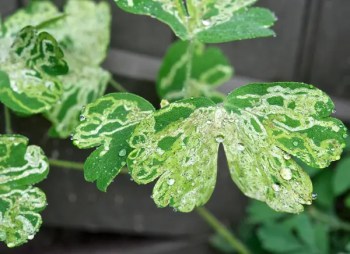
Charley Eiseman, a naturalist who conducts biodiversity surveys for conservation groups, became interested in leaf mines because of patterns like this one. It’s the handiwork of the moth Phyllocnistis populiella in a quaking aspen leaf (Populus tremuloides).

As soon as the sun is up, most days, I am outside. Even after 22 years working on this property I find surprises constantly. When Margaret Roach writes, I read; when she offers visual cues to complement her clear writing, all the better:

Leaf mines on columbine (Aquilegia) can be serpentine squiggles or blotches. Larvae of flies in the genus Phytomyza make these familiar markings when they feed between a leaf’s epidermal layers. Margaret Roach

Don’t jump to the conclusion that those mysterious marks are evidence of disease. They may be leaf mines or galls — and that’s a good thing.

During the early days of the coronavirus pandemic, some of us mastered bread-baking (if we could get our hands on flour) or devoted ourselves to nurturing some new mail-order houseplant. Continue reading

Oysters & Rescue Plans

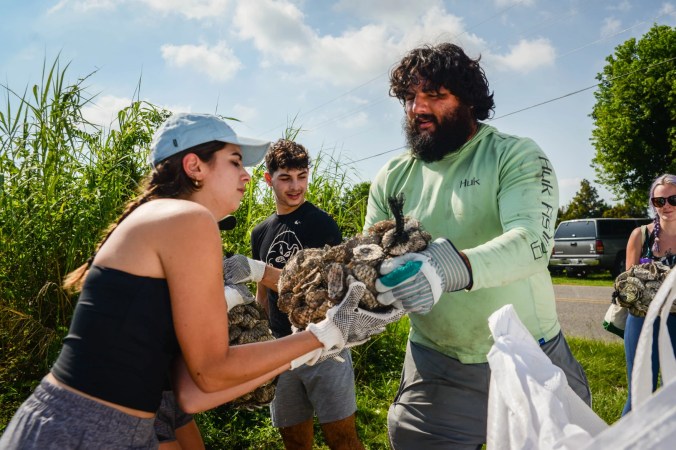
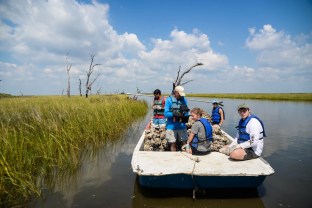
Halle Parker/WWNO. Pointe-au-Chien Indian Tribe member Pete Lebeouf works with volunteers to load bags of oyster shells onto a boat on Saturday, Sept. 24, 2022.

We have enjoyed every instance of oysters being treated with respect, beyond culinary. When indigenous knowhow is part of the story, even better. Our thanks to Halle Parker and WWNO (National Public Radio, USA) for this story:

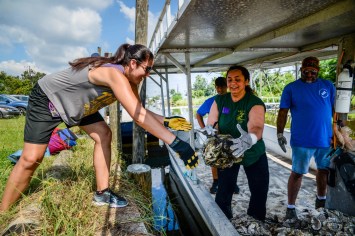
Halle Parker/WWNO.  Pointe-au-Chien Indian Tribe citizens Patty Ferguson-Bohnee and Lori Stewart pass bags of oyster shell and pile it on a boat for transport during a volunteer event on Saturday, Sept. 24, 2022.

A Louisiana tribe is losing cultural sites to coastal erosion. Oyster reefs could help.

For the past six years, the Pointe-au-Chien Indian Tribe has battled to stop its historic earthen Indian mounds from slipping into the sea, looking to the power of oyster shells to protect them. Now, they’ve expanded that effort.

Halle Parker/WWNO. Volunteers boat down to Bernard’s Mound, one of the Pointe-au-Chien Indian Tribe’s historic mounds, to build a new oyster reef that will help slow erosion during an event on Saturday, Sept. 24, 2022.

The tribe has lived in the area for centuries, forced south as Louisiana was colonized, and the mounds that past members built have a range of uses. Some might’ve held homes, others were used for ceremonies and some were burial sites, said Lori Stewart, a member of the tribe.

“The mounds are really significant because we do have some of our ancestors that are buried there, and so we don’t want to see that washed away,” she said. “That’s sacred to us.” Continue reading

Bee Bus Spots

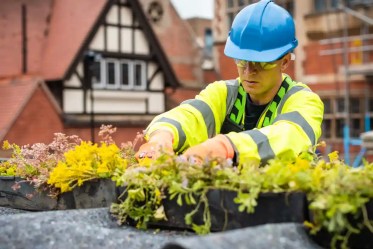
A living roof in Cardiff planted with pollinator friendly plants. Photograph: Clear Channel

Phoebe Weston brightens our day with this story:

Planting at one of 30 bee bus stops in Leicester. Photograph: Clear Channel

Buzz stops: bus shelter roofs turned into gardens for bees and butterflies

Bee bus stops first appeared in the Dutch city of Utrecht. Now the UK is planning for more than 1,000 and there is growing interest across Europe and in Canada and Australia

Butterflies and bees are getting their own transport network as “bee bus stops” start to pop up around UK cities and across Europe. Humble bus shelter roofs are being turned into riots of colour, with the number of miniature gardens – full of pollinator-friendly flora such as wild strawberries, poppies and pansies – set to increase by 50% in the UK by the end of this year. Continue reading

Elephant Seals & Marine Sciences

Thanks to Sierra for this:

When Elephant Seals Become Ocean Researchers

Marine mammals unlock the secrets of climate and the Arctic

By Kate Golden

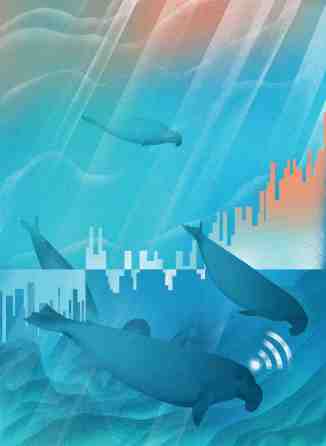
Illustrations by Masha Foya

ON A FEBRUARY MORNING at Año Nuevo Reserve on the coast of Northern California, hundreds of gray-brown elephant seals lay strewn, lumplike, all over the beach. It was hard to hear anything over the honks and shrieks of status jockeying and sex dramas. The north wind gusted to 35 knots and blew a river of fine sand into everyone’s faces. At a dense seal cluster near the water, researchers and students from the University of California, Santa Cruz, knelt over an 815-pound female whose stern had been labeled “X1” with Clairol bleach. Continue reading

Alerce, A Mysterious Phenomenon Examined Scientifically

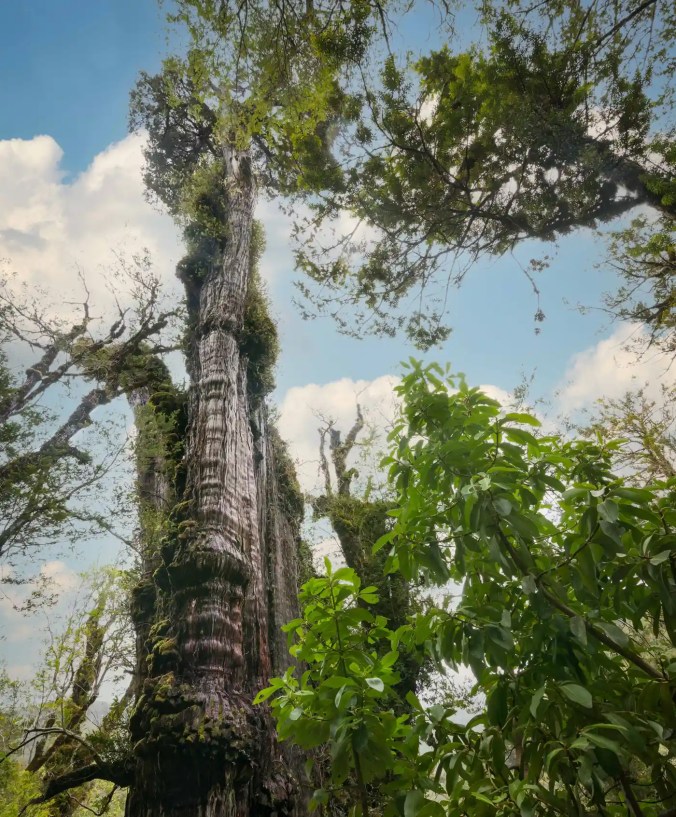
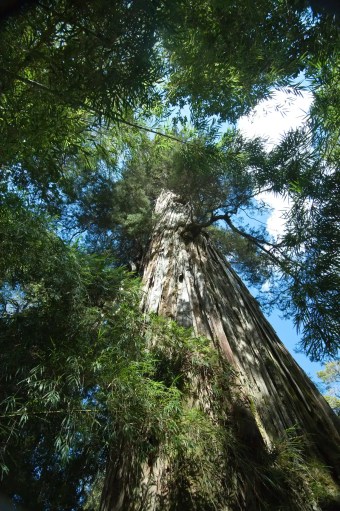
The Gran Abuelo tree in Alerce Costero national park, Chile. Buried alerce trunks can hold carbon for more than 4,000 years. Photograph: Salomón Henríquez

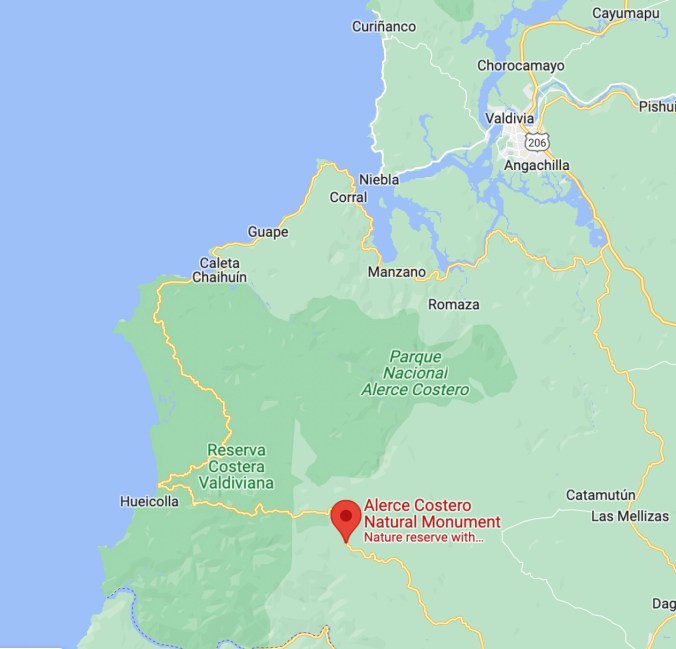
I do not recall whether we saw the tree pictured above, but we certainly breathed in the oxygen it expired. We spent the summer of 2009 in southern Chile, some of it working in the Chaihuin River Valley–a portion of the Reserva Costera Valdiviana co-owned at the time by WWF and The Nature Conservancy. The “Caleta” entrance to Chaihuin can be seen in the map below.

We have also seen the redwood trees in California, distant cousins of the alerce. Spectacular is an insufficient word to describe them, but hours-long visits to redwoods cannot compare to sleeping night after night under alerces. Chaihuin was for our family an immersion into the alerce ecosystem. Although I reserve the word miracle for other types of mysterious phenomena, I have no problem with a scientist using the word in this manner:

Alerce shingle was used as currency by local populations throughout the 1700s and 1800s. Photograph: Krystyna Szulecka Photography/Alamy

‘It’s a miracle’: Gran Abuelo in Chile could be world’s oldest living tree

100ft alerce has estimated age of 5,484, more than 600 years older than Methuselah in California

In a secluded valley in southern Chile, a lone alerce tree stands above the canopy of an ancient forest.

Green shoots sprout from the crevices in its thick, dark trunks, huddled like the pipes of a great cathedral organ, and water streams down its lichen-streaked bark on to the forest floor from bulbous knots in the wood. Continue reading

On Those 20 Quadrillion+ Ants, Again

Ants in Escazu

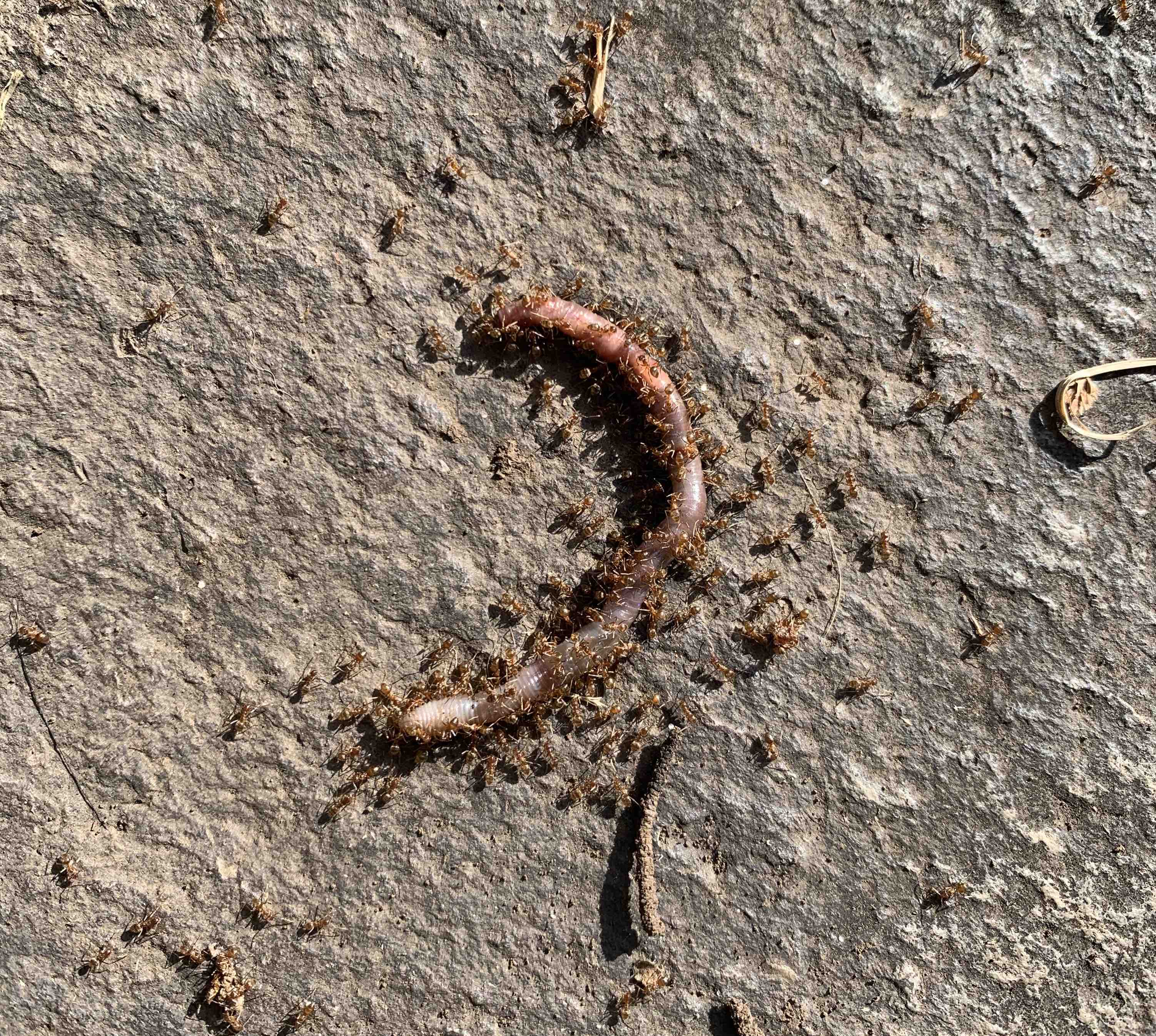
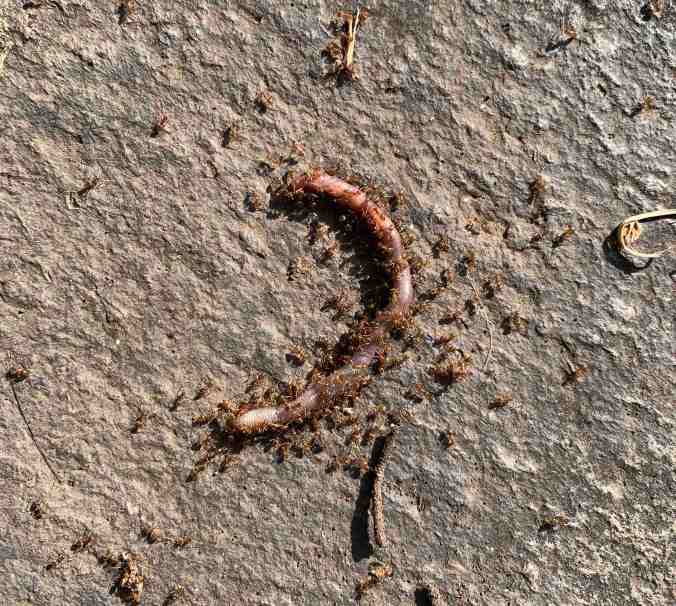
The earthworm in the photo above had been in a bag of soil where a coffee seedling started germinating earlier this year. I was moving the seedling from its small “starter” bag to a larger one, and the earthworm jumped out, wriggling under the nearby supplies I was working with. I did not see it again until it was too late. Since earthworms are good for soil, and we are in the early stages of a soil regeneration project, I was sorry to see the worm lose its life. This particular species of ant is currently everywhere on the property where we are re-planting coffee. I have not seen so many of this type of ant at any point in the last 22 years on this property, and their shocking abundance made me think of that new ant study. Normally we do not repeat sharing of news stories here, unless new information has come to light. It has only been a couple days, but I must share more on the study because my planting work is keeping the subject in front of me, and the photos in this article are that good.
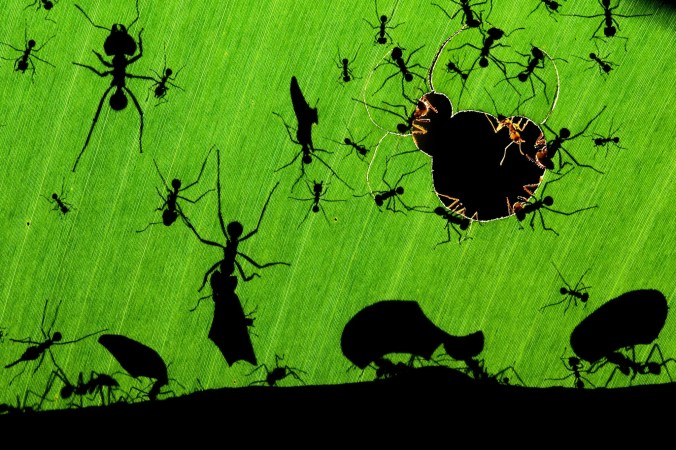
Leaf cutter ants in Costa Rica. The researchers sampled 1,300 locations around the world, estimating ant abundance in different environments in areas such as forests and steppes. Bence Mate/Nature Picture Library, via Alamy

Rebecca Dzombak, who authored this article for the New York Times, will be on our radar from now on:

Weaver ants engaged in teamwork. Sunthorn Viriyapan/Alamy

Counting the World’s Ants Requires a Lot of Zeros

There are 20 quadrillion ants worldwide, according to a new census, or 2.5 million for every living human. There are probably even more than that.
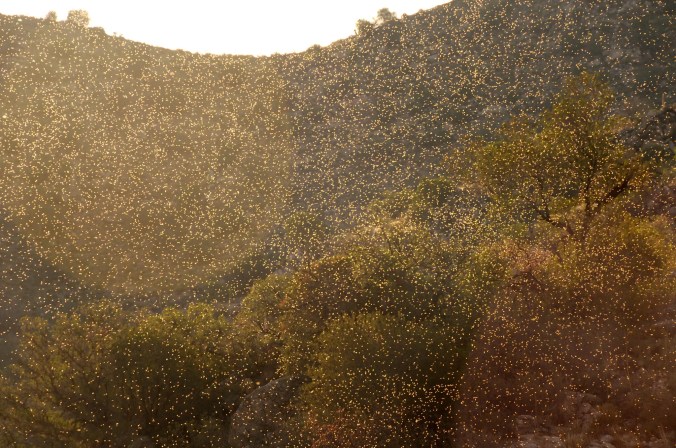
Male leaf cutter ants on the move over the Sonoran Desert in search of females and to make more ants. Norma Jean Gargasz/Alamy

Right now, ants are scurrying around every continent except Antarctica, doing the hard work of engineering ecosystems. They spread seeds, churn up soil and speed up decomposition. They forage and hunt and get eaten. You may not know how much you rely on them. Continue reading