Think, While You Can, About The Processed Foods You Eat

Jess Ebsworth

The groceries we shop for, even with the finer shopping options, sometimes disappoint; but some foods are just plain wrong, as this article by Sally Wadyka in the New York Times explains:

The Link Between Highly Processed Foods and Brain Health

Eating packaged foods like cereal and frozen meals has been associated with anxiety, depression and cognitive decline. Scientists are still piecing together why.

Roughly 60 percent of the calories in the average American diet come from highly processed foods. Continue reading

Alcohol 2.0

click this image to go to the video and accompanying text

Alcohol rarely features in our pages, but in the spirit of public service announcement this pair seems worth sharing:

The Opinion Video above is about a drug problem — but not the one you may think. While the United States struggles to deal with the opioid crisis, there’s a quieter drug epidemic that has been unfolding for a lot longer. It involves a substance that was normalized long ago but that, by some measures, plays a role in more than 140,000 deaths a year.

It’s alcohol.

But don’t worry. We here at Opinion Video are not a bunch of temperance reformers coming to take away your six-packs and single malts. We just think there’s a lot more that American lawmakers could be doing to lessen the harm that alcohol causes…

The Economist podcast episode below, from a couple months back, is a useful bookend to the op-ed above. It illuminates the mysteries of the hangover and the chemistry of new alcohol-free, healthy and buzz-inducing alternatives:

How alternatives to alcohol could save lives

Our podcast on science and technology. This week, we explore how innovators are dreaming up ways to enjoy the effects of alcohol, without the costs

ALCOHOL IS the most widely used drug in the world, but it is also the cause of three million deaths each year and has been linked to many other long-term illnesses. Continue reading

Plenty To Question About Milk’s Status

We began featuring food-related stories by employees and interns, plus occasional visiting friends, during our first couple of years living in India. More recently, taste of place considerations first explored in India became for our Authentica shops in Costa Rica a key differentiator.

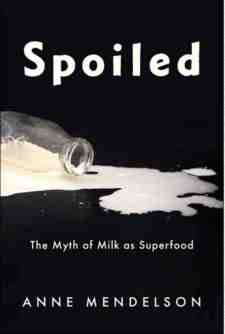
So my eye is drawn to food writing that overlaps with ethnicity considerations, and Mayukh Sen’s review of Spoiled brings out that book’s relevance to our pages:

A Fresh History of Lactose Intolerance

In “Spoiled,” the culinary historian Anne Mendelson takes aim at the American fallacy of fresh milk as a wonder food.

Six decades ago, Pedro Cuatrecasas, a fledgling resident at the Johns Hopkins School of Medicine, was studying the lives of impoverished residents of Baltimore when he noticed an unsettling trend. In interviews, a number of his Black patients would confess that they found milk repellent. Continue reading

The Good Life, Researched, Written & Spoken About

Robert Waldinger, MD has a way with words, and ideas, and life experience, judging by his discussion with Sam Harris. This topic is not typical of most of the content we link to, but for a Tuesday in early 2023 it is as worthwhile as anything we can think to share. Click the image of the book to go to the website where its author introduces it:

Eight decades. Three generations. Thousands of lives.

The Harvard Study of Adult Development is an extraordinary scientific endeavor that began in 1938 and is still going strong (Waldinger is the fourth director, and Schulz its associate director). For over eight decades, the study has tracked the same individuals and their families, asking thousands of questions and taking hundreds of measurements—from brain scans to blood work—with the goal of discovering what really makes for a good life.

Through all the years of studying these lives, strong relationships stand out for their impact on physical health, mental health, and longevity. Waldinger and Schulz boil it down simply:

“Good relationships keep us happier and healthier. Period.”

Stories from the Field: Kaziranga National Park, Assam

My childhood friend Sathya thrust his 1D Mark4 camera and 300 mm f4 camera lens in my hand and asked me to step out and spend more time outside my apartment. He was a medical professional. It was July 2012, and his idea was to fill me with quality air and to wrap more sun on my skin. He wanted me to travel more often and photograph birds.  It was 6 months after a week long trip at Kaziranga National Park, which had been my first taste of wildlife. I can still smell the freshness of it all.
Kaziranga is magical.

We stayed at the Wild Grass Lodge amidst the intimidating presence of huge lenses and heavy gear.
The dining hall was filled with Masai Mara and other jungle lores.
I was drawn into my fellow travel mates’ conversations on birds and elephant behaviour.
Animal psychology was a nonexistent subject for me till then. I always marveled at the life of plants & trees. The reasons and roles of their existence and their beauty.
During this trip, I was introduced into the role of fauna into the sustenance of forests and their mutual social struggles; Their mastery of leveraging each others resources, framed by unwritten cooperative laws. Their companionship in fighting extinction. Survival makes strange bedfellows among flora and fauna – from the megafauna to the smallest ant and flying insect.

Continue reading

Insects And Our Food Future

Insects started showing up in these pages early on and as years passed we saw them as equally interesting as other parts of the natural world; but only in more recent years did we start paying attention to insects as food. Today, one more entry.

Wooden Utensils & Kitchen Safety

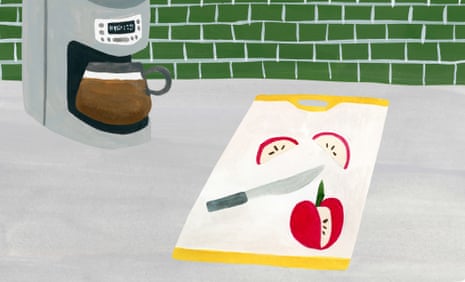
Your cutting board, utensils and coffee maker are among the long list of items in your kitchen that could be leaching dangerous chemicals.

Your cutting board, utensils and coffee maker are among the long list of items in your kitchen that could be leaching dangerous chemicals. Illustration: Julia Louise Pereira/The Guardian

Kitchen safety, per se, is not a topic we have featured in these pages before, even though wooden utensils have been featured:

Wooden spoons and glass mugs: how to avoid toxic chemicals in your kitchen

Tom Perkins has reported widely on the potential risks of toxic chemicals. Here’s his guide to help you find safe alternatives for your kitchen

Chemicals are the invisible guests in our kitchens. You can’t see them but they are everywhere. Continue reading

New Fracking Science

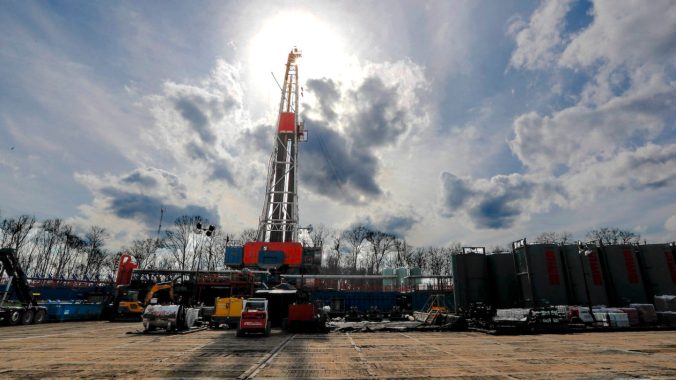
A shale gas drilling rig in St. Marys, Pennsylvania. AP PHOTO / KEITH SRAKOCIC

We thought the science of fracking’s dangers was already sufficiently clear, and now this (read Jon Hurdle’s entire story at Yale e360):

As Evidence Mounts, New Concerns About Fracking and Health

Two decades after the advent of fracking, a growing number of studies are pointing to a link between gas wells and health problems, particularly among children and the elderly. Researchers are now calling for new regulations restricting where wells can be located.

Almost 20 years after the adoption of hydraulic fracturing began to supercharge U.S. production of oil and gas, there’s growing evidence of a correlation between the industry’s activities and an array of health problems ranging from childhood cancer and the premature death of elderly people to respiratory issues and endocrine disruption. Continue reading

Raw Versus Cooked, The Quiz

Take our quiz to find out.

If you subscribe to the tenets of the raw food diet, or even if you don’t, you may have heard the phrase, “When you cook it, you kill it.” Many people believe that applying heat to vegetables — whether by sautéing, boiling, steaming, frying, roasting or grilling — zaps their nutrition. Continue reading

Coffee, History & Literature

Adam Gopnik, one of our favorite essayists, wrote an excellent essay on this topic; and Michael Pollan, among others, wrote a book.

There is still plenty to say about the history of coffee, as far as we are concerned, and Ed Simon demonstrates it in this essay from The Millions, an online magazine:

Coffee, the Great Literary Stimulant

“I have measured out my life with coffee spoons.” –T.S Eliot, “The Love Song of J. Alfred Prufrock” (1915)

Maronite priest Antonio Fausto Naironi once claimed that the greatest of miracles happened in ninth-century Ethiopia. It was then and there, in the province of Oromia, that a young shepherd named Kaldi noticed that his goats were prone to running, leaping, and dancing after they had eaten blood-red berries from a mysterious bush. Continue reading

The Treefest Walks

The Treefest walks are part of a £14.5m research quest investigating how to secure public benefits from forested landscapes. Photograph: Fabio De Paola/The Guardian

When is a walk in the woods more than just a walk? One answer might be biophilia, for starters. Our thanks to Miles Richardson for his work and to Patrick Barkham, as per his usual breadth of attention, for bringing another important story to our attention:

‘I’m glowing’: scientists are unlocking secrets of why forests make us happy

Research project aims to discover how age, size and shape of woodlands affect people’s happiness and wellbeing

Miles Richardson is gathering data from the Treefest research walks to examine how biodiverse spaces benefit wellbeing. Photograph: Fabio De Paola/The Guardian

How happy do you feel right now? The question is asked by an app on my phone, and I drag the slider to the space between “not much” and “somewhat”. I’m about to start a walk in the woods that is part of a nationwide research project to investigate how better to design the forests of the future.

Volunteers are being sought to record their feelings before and after eight walks on a free app, Go Jauntly, which could reveal what kind of treescapes most benefit our wellbeing and mental health. Continue reading

More Insects In Our Diet

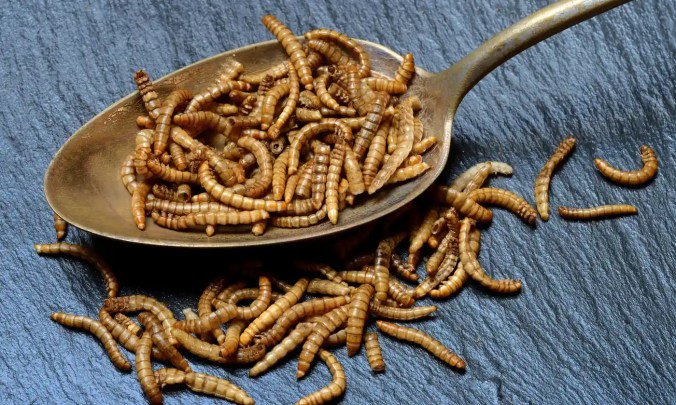
Mealworms, the larval form of the yellow mealworm beetle, have been cooked with sugar by researchers who found that the result is a meat-like flavoring. Photograph: image BROKER/Alamy

Thanks again to Oliver Milman, after a long while,  for this article in the Guardian. The photo is clickbait, so try not to let it get in the way. The story is worthy of attention, unless you are vegan, because of its prediction about how commonplace eating insects will be for most of us in the not too distant future; or should be:

Flavorings made from mealworms could one day be used on convenience food as a source of protein

Insects can be turned into meat-like flavors, helping provide a more environmentally friendly alternative to traditional meat options, scientists have discovered. Continue reading

Graphic Food For Thought

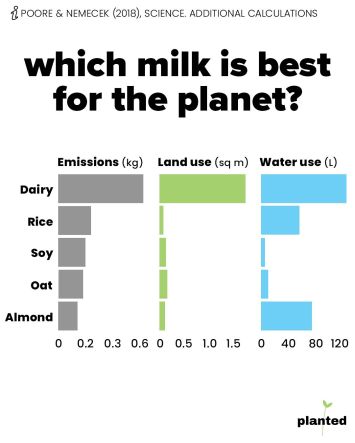
I came across this graph posted on LinkedIn. More interesting than the graph is the commentary it provoked.

Looking at the affiliations of the commenters it is clear in some cases why, for example dairy farmers, they would have claims contrary to those in the graph.

But read all the comments.

Who are all these people?

Plant-based Diet Enhanced By The Sea

Seaweed ecologist Dr Sophie Steinhagen inspects the crop at the seafarm in the Koster archipelago in Sweden.

Three months into a beef-free diet, with no temptation to lapse, I am aware that other animal protein is so far a saving grace. When I switch entirely to alternative creatures such as crickets, and to plants including seaweed, I will know the transformation is complete.

Seaweed farming in Sweden could be a vital component of the shift away from eating meat for protein.

Meanwhile, thanks to the Guardian for Richard Orange’s reporting from Malmö on Sea-farmed supercrop: how seaweed could transform the way we live.

From high-protein food to plastics and fuel, Swedish scientists are attempting to tap the marine plant’s huge potential

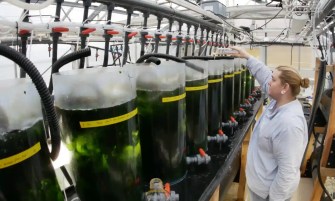
Steinhagen inspects the tanks in her “seaweed kindergarten”.

You can just see the buoys of the seafarm,” Dr Sophie Steinhagen yells over the high whine of the boat as it approaches the small islands of Sweden’s Koster archipelago. The engine drops to a sputter, and Steinhagen heaves up a rope to reveal the harvest hanging beneath: strand after strand of sea lettuce, translucent and emerald green. Continue reading

Meat Me Half Way

Changing the way we eat to improve our lives and save our planet has been a common theme over the years on this platform. In case you missed yesterday’s post, this new book by Brian Kateman was mentioned in the newsletter:

We know that eating animals is bad for the planet and bad for our health, and yet we do it anyway. Ask anyone in the plant-based movement and the solution seems obvious: Stop eating meat.

But, for many people, that stark solution is neither appealing nor practical. Continue reading

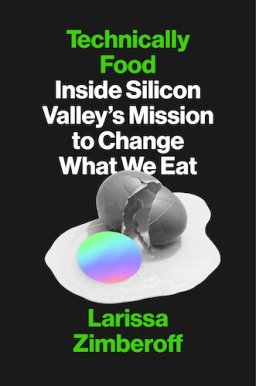
Technically Food

We instinctively favor real food, but this author’s book has our attention:

The inside story of the paradigm shift transforming the food we eat, and the companies behind it.

Eating a veggie burger used to mean consuming a mushy, flavorless patty that you would never confuse with a beef burger. But now products from companies like Beyond Meat, Impossible Foods, and Eat Just that were once fringe players in the food space are dominating the media, the refrigerated sections of our grocery stores, and, increasingly, the world. With the help of scientists working in futuristic labs––making milk without cows, and eggs without chickens––startups are creating wholly new food categories. Real food is being replaced by high-tech. Continue reading

Improving The Lives Of The Poor And Disadvantaged With Nature

LUISA RIVERA / YALE E360

Thanks to Carl Safina for this opinion:

Protecting Earth: If ‘Nature Needs Half,’ What Do People Need?

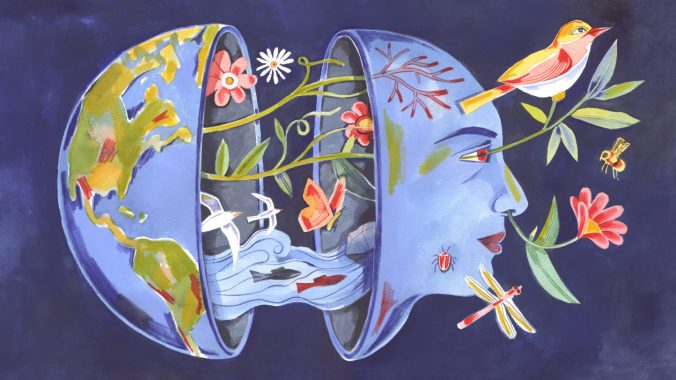
The campaign to preserve half the Earth’s surface is being criticized for failing to take account of global inequality and human needs. But such protection is essential not just for nature, but also for creating a world that can improve the lives of the poor and disadvantaged.

Must nature and civilization be opposing interests? Is nature conservation anti-people? What must be preserved to preserve what needs preserving? Is there a single path that can reverse the three crises of apocalypse: the extinction crisis, the toxics crisis, and the climate crisis? Sixteen ecologists, including me, think the answer to that last question is yes. Continue reading

Planetary Health Diet

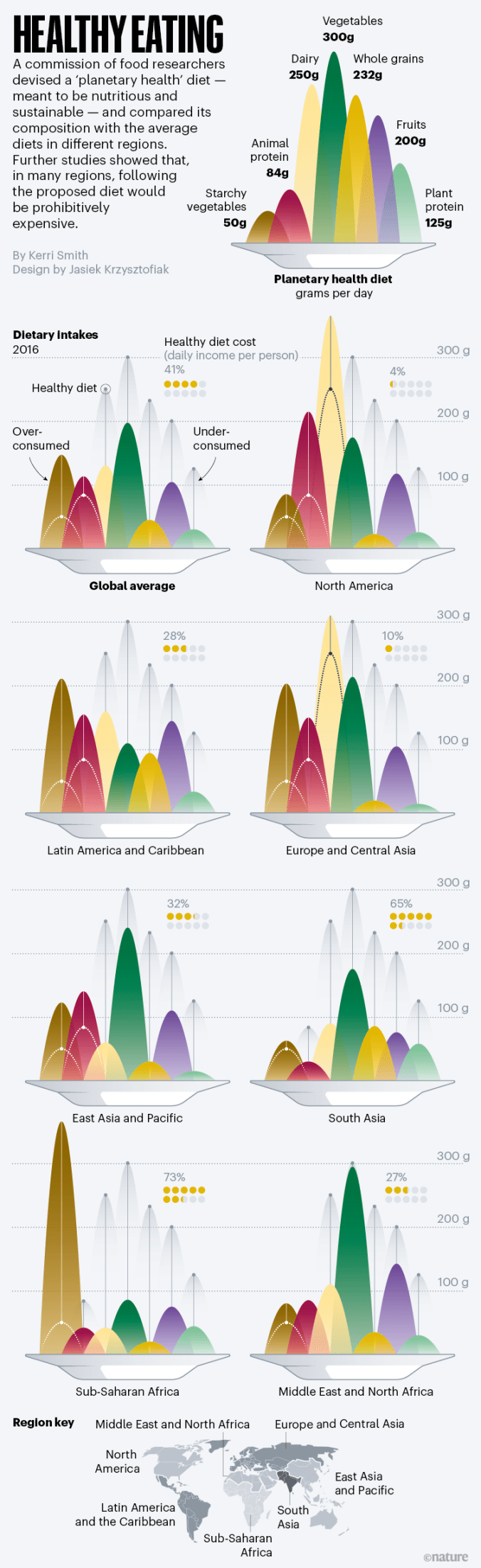
What we should eat for the sake of our individual and communal futures is one of the topics most posted on this platform.  Gayathri Vaidyanathan’s article below adds to the most macro of perspectives on these topics. It takes a moment to process the information in the graphic above, but this article from the journal Nature makes it clear:

What humanity should eat to stay healthy and save the planet

What we eat needs to be nutritious and sustainable. Researchers are trying to figure out what that looks like around the world.

Illustration by Paweł Jońca

A clutch of fishing villages dot the coast near Kilifi, north of Mombasa in Kenya. The waters are home to parrot fish, octopus and other edible species. But despite living on the shores, the children in the villages rarely eat seafood. Their staple meal is ugali, maize (corn) flour mixed with water, and most of their nutrition comes from plants. Continue reading

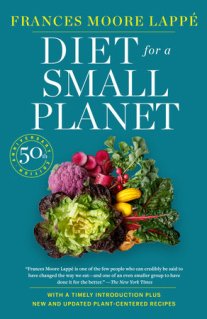
Diet For A Small Planet, Five Decades And Counting

Moosewood has been mentioned, along with its cookbooks, and we have featured plenty of other stories about veg-forward diets and related cookbooks; so it is odd that neither this book nor its author have featured in our pages before. Just in time to celebrate five decades, a fitting tribute to its author:

Frances Moore Lappé’s last hamburger was in 1971, the same year she published “Diet for a Small Planet,” her hugely influential book about food and sustainability, which virtually created the publishing category of food politics and turned Ms. Lappé into what she once self-deprecatingly called “the Julia Child of the soybean circuit.” Continue reading

Admiring A Horticultural Refuge

Stella Kalinina

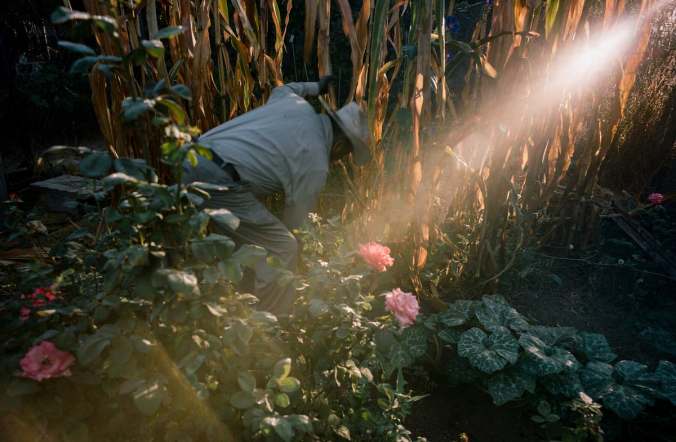
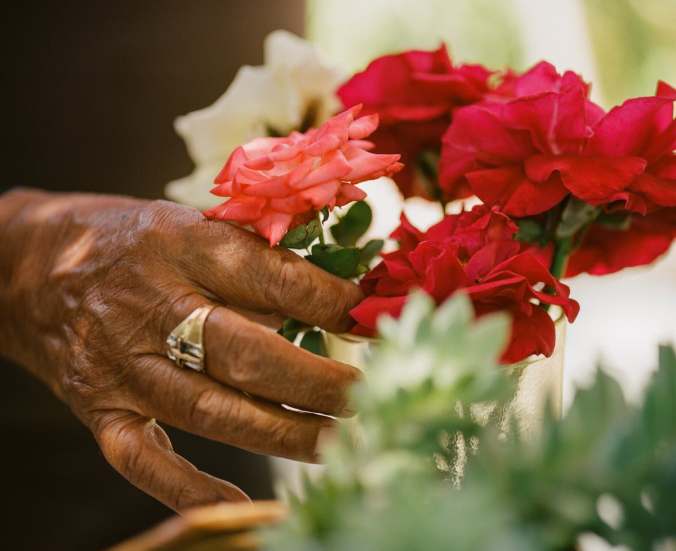
Community gardens have been a regular topic in our pages over the last decade. We never tire of the subject. I personally have a soft spot for roses, especially those found in unexpected places. So, Raúl Laly Fernández, you are my hero. I hope that the next time I am in Los Angeles I will find you in this garden and bear witness to the rose wonders I see in these photographs. Kudos to the writer/photographer Stella Kalinina for capturing this intersection between immigrant culture, working class refuge, and horticultural knowhow:

Mr. Fernández decorates a sitting area in his plot with roses that he grows.

In Los Angeles, Glimpses of an Oasis With Deep Immigrant Roots

The San Pedro Community Gardens have provided physical and spiritual nourishment for the past half a century to multiple generations of immigrant Angelenos.

Kimberly Mentlow received a plot in San Pedro after three years on a waiting list. “Being able to plant something or see something grow — it’s extremely therapeutic,” she said.

Ten minutes from my home, next to a decommissioned landfill, a freeway and the largest port in the country, sits an unlikely hillside oasis of vegetables and fruit trees.

Emerging like a mirage from its surroundings, the San Pedro Community Gardens occupy a six-acre parcel of city-owned land in the otherwise highly industrialized area of the blue-collar harbor community of San Pedro, in Los Angeles. Continue reading