Indigenous Food Foraging

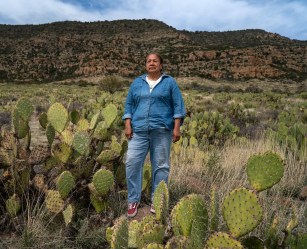
Prickly pear cacti, which produce Twila Cassadore’s favorite fruit. Photograph: Gabriela Campos/The Guardian

Samuel Gilbert was in Bylas, Arizona, on the San Carlos Apache Reservation to report this article, which contains excellent accompanying photographs by Gabriela Campos.

We thank the Guardian for this coverage of indigenous heritage:

‘It healed me’: the Indigenous forager reconnecting Native Americans with their roots

Twila Cassadore hopes teaching Western Apache traditional foodways can aid mental, emotional and spiritual health

Twila Cassadore gathers wild pearl onions on a foraging trip in the San Carlos Apache Reservation in April. Photograph: Gabriela Campos/The Guardian

On a warm day in April, Twila Cassadore piloted her pickup truck toward the mountains on the San Carlos Apache Reservation in Arizona to scout for wild edible plants. A wet winter and spring rains had transformed the desert into a sea of color: green creosote bushes topped with small yellow flowers, white mariposa lilies, purple lupines and poppies in full bloom.

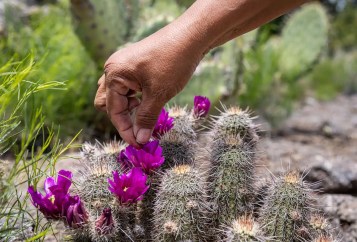
Cassadore picks the petals off a flowering cactus during a foraging trip. She uses the petals in salads. Photograph: Gabriela Campos/The Guardian

Cassadore and I drove up a rough dirt road that used to be an old cattle trail, passing through various ecosystems, moving from Sonoran desert to grasslands and piñon-juniper woodlands. In each area, Cassadore would stop to gather desert chia seeds, cacti flowers and thistles.

Cassadore stopped her truck beside a three-leafed sumac bush brimming with fruit. Continue reading
Birds, Citizen Science & You

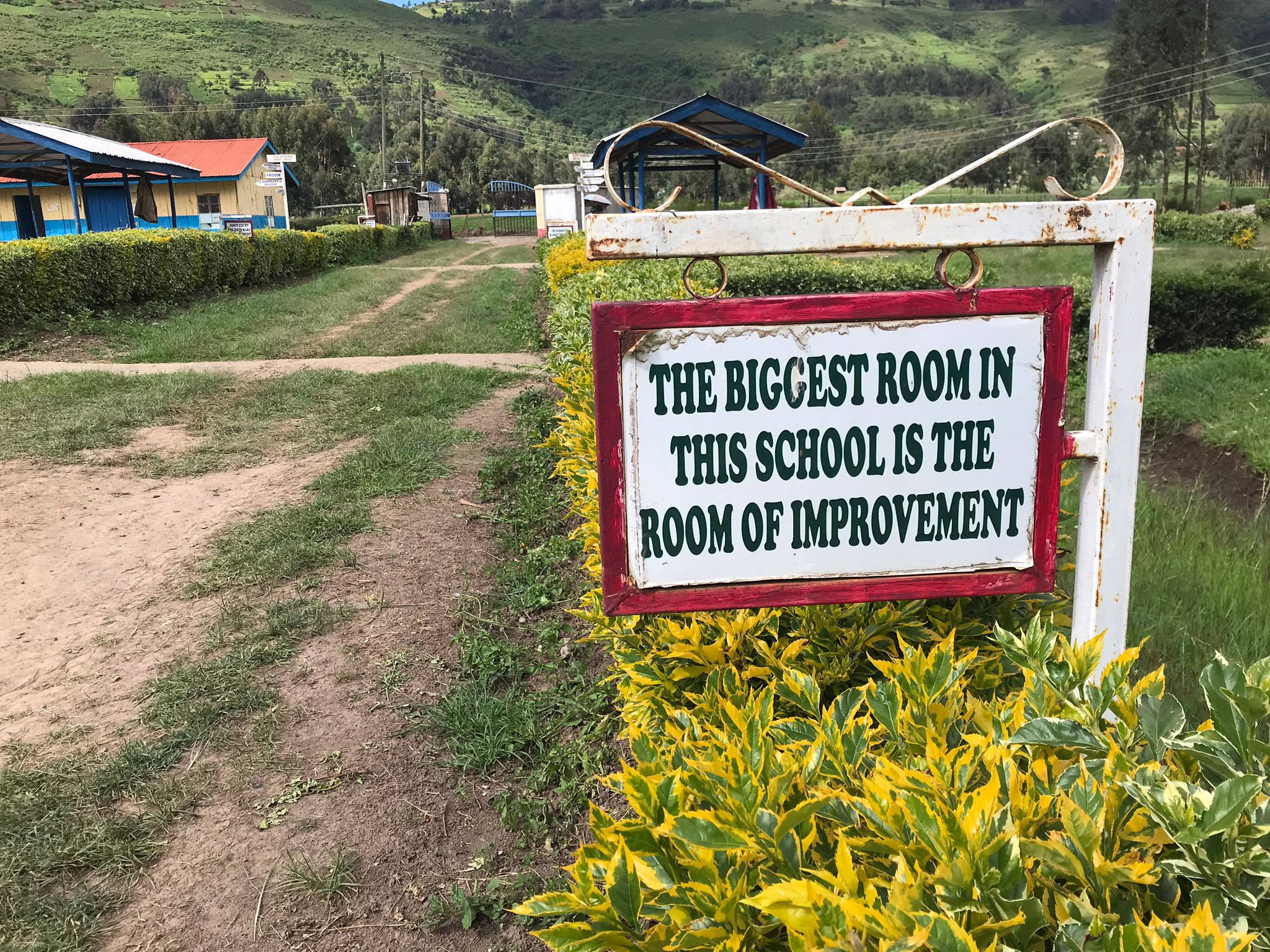
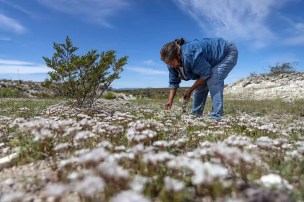
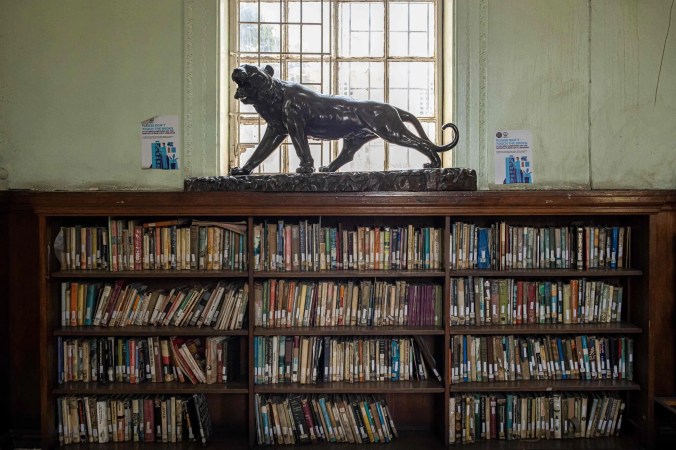
Seth has been working in various African countries recently, and is somewhere in Kenya at this moment, for work. There is a school in the vicinity, with these signs. We have not yet had the chance to hear any details about the school, but these signs anyway say most of what we might want to know.

His work, related to forest management, clearly intersects with his longstanding interest in birds, strengthened by his three years working at the Cornell Lab of Ornithology. That period coincides with our learning about citizen science and in the years since we have shared many stories from the field.

The pictures arrived from Kenya just as this initiative between the Cornell Lab of Ornithology and the New York Times comes to my attention, which you might find interesting:

Mike McQuade

Go Birding With The Times

Our understanding of birds has been profoundly shaped by the work of everyday people. After all, anyone can step outside and pay attention to an untamed world swooping above. Continue reading

Give It Up For Oysters

Among the ocean’s best filter feeders, one oyster cleans 50 gallons of water per day. Tony Cenicola/The New York Times

We have linked to stories about the environmental services that oysters provide, as well as the environmental activists who leverage those services; today a riff on those topics:

Stefanie Bassett and Elizabeth Peeples left their city lives behind to raise mollusks.

The Little Ram Oyster Co., a farm of 2 million oysters on the North Fork of Long Island, started with a Groupon.

To celebrate a friend’s birthday in the summer of 2017, Stefanie Bassett and Elizabeth Peeples joined eight other enthusiasts in Long Island City to learn how to shuck oysters at a discount. The Brooklyn couple, who knew each other from middle school in Columbia, Md., always had a love for the delicacy. But as they laughed with their friends and fumbled with their oyster knives, they also listened intently as an instructor explained the history and magic of the mollusks.

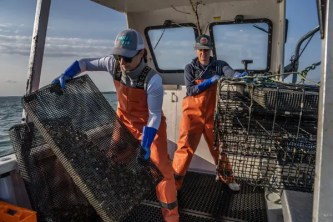
Ms. Bassett and Ms. Peeples prepare oyster cages to be put into the water. Tony Cenicola/The New York Times

“The thing that drew our attention was the positive environmental impact oysters have,” said Ms. Bassett, 42.

Among the ocean’s best filter feeders, one oyster cleans 50 gallons of water per day. New York was once known as “the Big Oyster,” but over-harvesting and poor water quality wiped out the population by the 21st century. The couple learned about efforts to bring them back to the harbor. Continue reading

11 Years, 11 Months & 11 Days Later

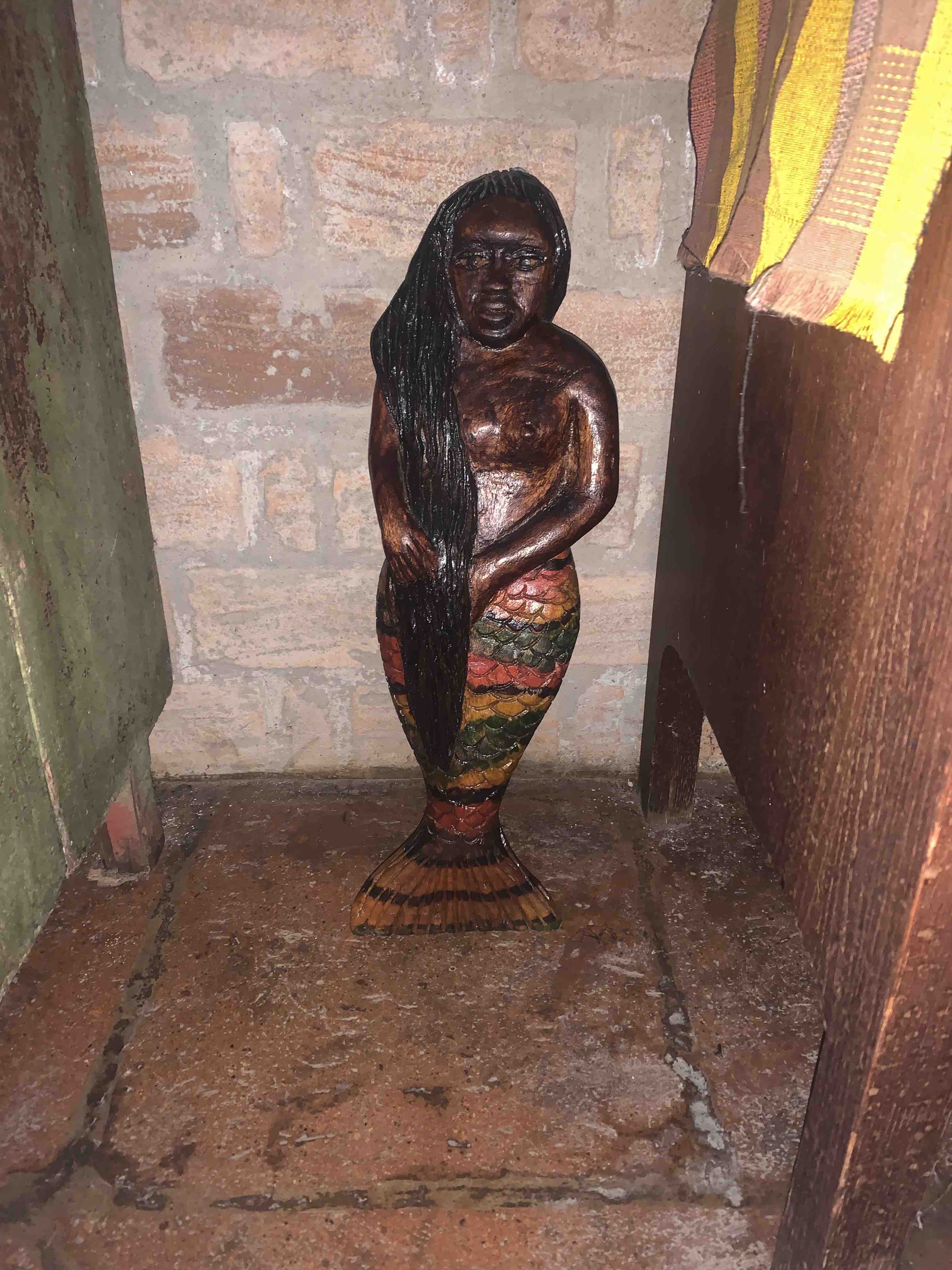
Mermaid (now in Escazu, Costa Rica), handcrafted by Rock Bottom from driftwood in Port Antonio, Jamaica

June 15, 2011 was the day we first posted on this platform, and while we have evolved since then we have remained constant and consistent in a few ways. In the daily search for something worth sharing, photos of birds from around the world have been the most constant–as in, every day since the first photo was shared by this old friend who got us started on that daily routine. Thank you, Vijaykumar, for a healthy habit-formation.

Consistent have been the shared convictions that environmental conservation, no matter how bleak the news, is worth our effort.

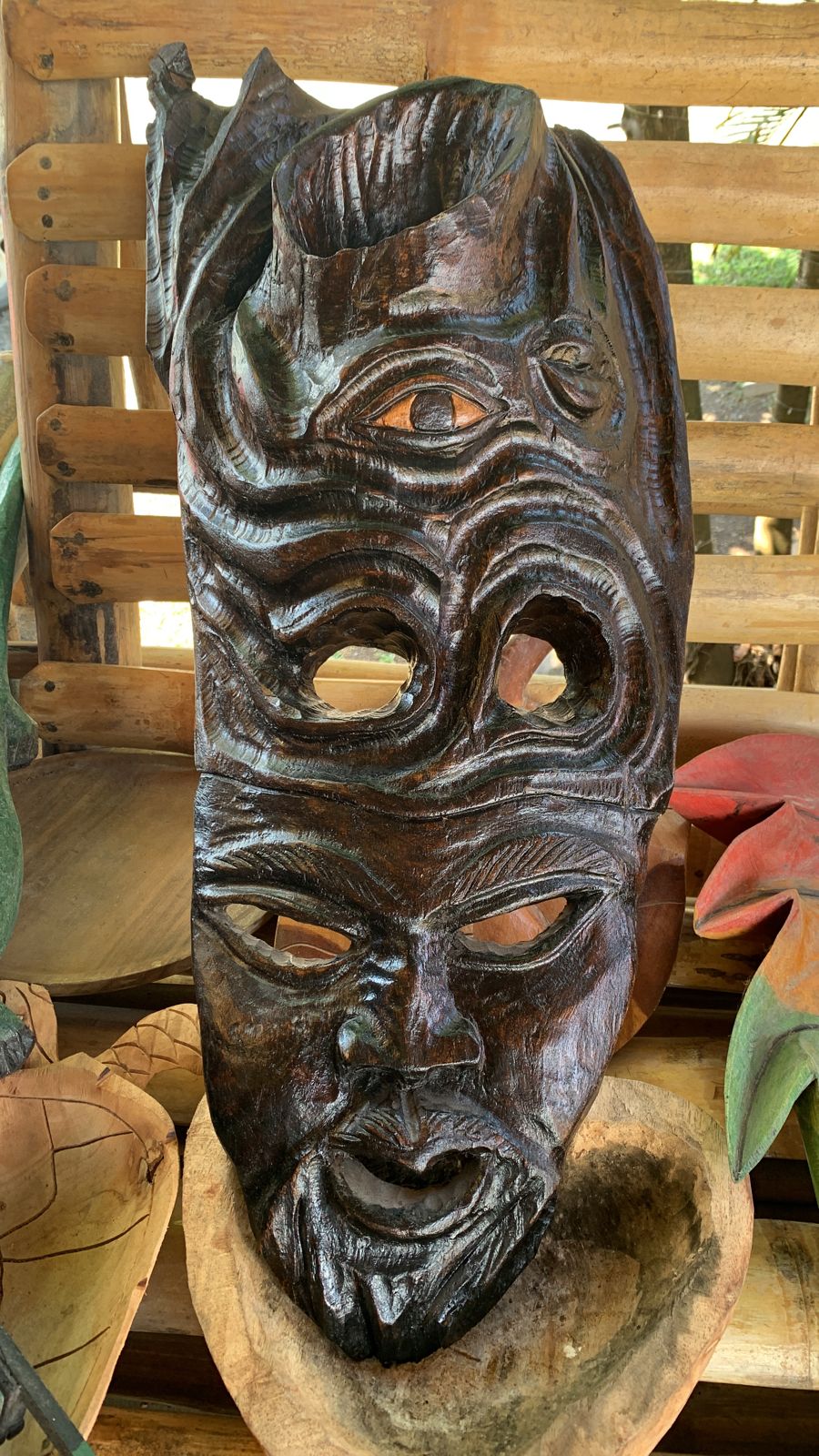
Maroon shaman mask with third eye for healing power (now in Ithaca, NY USA), handcrafted by Rock Bottom from driftwood in Port Antonio, Jamaica

Plenty more constantly interesting sub-topics like books and libraries, seemingly unrelated to the environment, have been the focus of daily posts; but they are related. As is artisan production, riffed upon many times in these pages, especially now that it is the focus of our day jobs.

So today, heading toward the twelve year mark posting here, a nod to an artisan named Rock Bottom. He carves driftwood in Port Antonio, Jamaica.

There is an effort in that part of Jamaica to revive and strengthen traditional crafts, and the work of Rock Bottom is a model for what we can hope to see more of. My hope is that the amazing engine of economic activity that Jamaica’s tourism sector represents will valorize his work and the work of others akin to his.

Andy Hunter Scales Up Without Selling Out

Andy Hunter, the founder of Bookshop.org (pictured here at Spoonbill & Sugartown Books in Brooklyn) developed his love for books early. “I became a reader, in the beginning, because it provided me solace,” he says. PHOTOGRAPH: YAEL MALKA

Who could resist a story about scaling up without selling out–especially when it involves an online book shop?

Our thanks to Kate Knibbs, a senior writer at WIRED, for this profile of someone who has indirectly featured in our pages without being named before.

Not to mention the photographs by Yael Malka accompanying the story:

How Bookshop.org Survives—and Thrives—in Amazon’s World

Andy Hunter’s ecommerce platform was a pandemic hit. Now he’s on a mission to prove that small businesses can scale up without selling out.

“DO YOU REMEMBER what kind of beer it was?”

PHOTOGRAPH: YAEL MALKA

Andy Hunter pauses for so long before answering my question, it’s awkward. He’s racking his brain. I’ve asked him to tell me about the night he came up with the idea that led to his improbably successful bookselling startup, Bookshop.org. As a former magazine editor, he wants to get the details right.

He remembers the easy stuff: It was 2018. He was on the road for work. At the time, Hunter ran the midsize literary publishing house Catapult, a job that required schmoozing at industry events. The night of his big brainstorm, he was away from his two young daughters and his usual evening obligations—dishes, bedtime rituals—and had a rare moment to think, and drink a beer. Continue reading

The Forest Gives Much

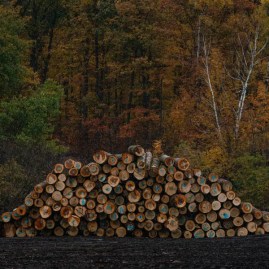
Freshly harvested logs from the Menominee Forest in Keshena, Wis., marked with color to indicate each log’s grade.

Sustainable forestry is a long-running topic in these pages over the years. The previous times we have linked to Cara Buckley stories we have been enriched by the humanity in environmental stories, so here we combine her unique talent to the topic of forestry:

The Giving Forest

The Menominee tribe has sustainably logged its forest in Wisconsin for 160 years. But that careful balance faces a crisis: too many trees and too few loggers.

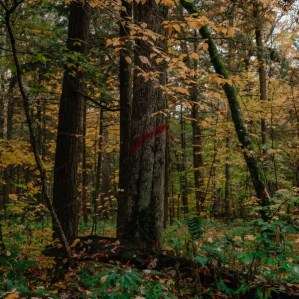
A tree marked for cutting. The Menominee harvest only trees that are sick and dying or those that have fallen naturally

MENOMINEE COUNTY, Wis. — Amid the sprawling farmlands of northeast Wisconsin, the Menominee forest feels like an elixir, and a marvel. Its trees press in, towering and close, softening the air, a dense emerald wilderness that’s home to wolves, bears, otters, warblers and hawks, and that shows little hint of human hands.

Yet over the last 160 years, much of this forest has been chopped down and regrown nearly three times. The Menominee Tribe of Wisconsin, its stewards, have pulled nearly two hundred million cubic feet of timber from this land since 1854 — white pine cut into museum displays and hard maple made into basketball courts for the Olympics. Continue reading

Audubon, The Name

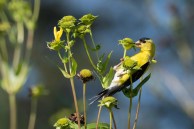
American Goldfinch on cup plant. Photo: Catherine Mullhaupt/Audubon Photography Awards

Elizabeth Gray, Chief Executive Officer and Ex Officio Board Director of Audubon offers this:

Open Letter from the CEO on Audubon’s Name

Hear directly from Dr. Elizabeth Gray on why Audubon is keeping its name.

Dear Flock,

This past year, the National Audubon Society embarked on a process to reexamine the name of our organization, in light of the personal history of the organization’s namesake, John James Audubon.  Continue reading

Leveraging Guarani Knowhow For Reforestation

A Guarani man walks through a cleared patch of Brazil’s Atlantic Forest that the local Indigenous community is trying to reforest. DIEGO HERCULANO / NURPHOTO VIA GETTY IMAGES

Thanks to Jill Langlois and Yale e360:

How Indigenous People Are Restoring Brazil’s Atlantic Forest

The Guarani Mbya people are working to restore the once-vast Atlantic Forest, which has been largely lost to development. Gaining official tenure of their lands, they hope, will boost their efforts, which range from planting native trees to reintroducing pollinators.

It was 2016 when Jurandir Jekupe noticed the bees were gone.

Their nests were once common in Yvy Porã, the Guarani Mbya village where Jekupe grew up and still lives. Continue reading

Libraries Old & New

Adults and children in a room of a library with bookshelves, an orange light in the ceiling and an orange wall.

The Adams Street Library in Dumbo, Brooklyn, has a children’s space with hues reminiscent of a Creamsicle. Justin Kaneps for The New York Times

The name Michael Kimmelman is rare in these pages, but in covering one of our favorite topics he gets our full attention again today:

As New York Weighs Library Cuts, Three New Branches Show Their Value

Facing a giant budget deficit, Mayor Eric Adams proposed cuts to New York libraries. But they play an outsize role in the city, offering services and safety.

Adults and children gather in a well-lit children’s room in a library that is filled with bookshelves. One child sits on a color-blocked rug, drawing.

The children’s room at the Macomb’s Bridge branch in Upper Manhattan; below, the entrance and canopy outside refer to the original landmarked architecture. Justin Kaneps for The New York Times Image

A city is only as good as its public spaces. The Covid-19 pandemic was another reminder: For quarantined New Yorkers, parks, outdoor dining sheds and reopened libraries became lifelines.

But now Mayor Eric Adams wants to slash funds for parks ($46 million) and for libraries ($13 million this fiscal year, more than $20 million next), and the City Council is debating the dining sheds. The sheds need regulation and the city budget needs to be cut by perhaps $3 billion. That said, if you don’t find the current political conversation shortsighted, you might want to do what I recently did and check out some of the library branches that have opened since the start of 2020. I visited three of them — each one a boon for its neighborhood, and money well-spent. Continue reading

Spirit Catcher and Lumen-Less Lantern, An Art Intervention by Willie Cole

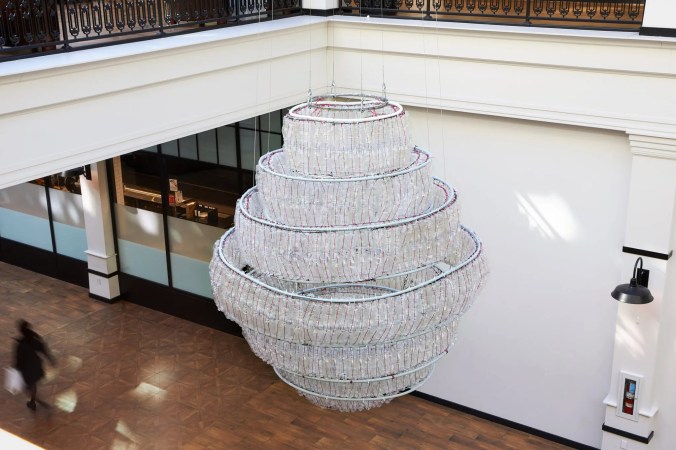
Willie Cole in his artist-in-residence studio at Express Newark, where he has been assembling chandeliers made from thousands of used plastic bottles. Rachel Vanni for The New York Times

Recycling has been a key theme in these pages since we started. Sometimes upcycle has been the term. Of course, reuse is also interesting.

All of these are worth our attention and support.

Our thanks to Laura van Straaten and the New York Times for bringing Willie Cole’s exhibition into view:

The artist invited the community in Newark to reimagine objects that would otherwise be destined for a landfill — to look at them in a fresh, imaginative way.

“Spirit Catcher” by Willie Cole is made of thousands of water bottles held together with metal wire and sculpted to resemble a chandelier. Rachel Vanni for The New York Times

NEWARK — The artist Willie Cole has created two colossal new sculptures and generated a provocative group exhibition stemming from an unusual open call asking artists to transform objects destined for landfill into something imaginative and new. Continue reading

Neighborly Advice

Reporting credit: ChavoBart Digital Media

Thanks to the team at Yale Climate Connections:

When do many people decide to go solar? When they’re referred by a friend or neighbor.

They’re more likely to listen to people they trust.

Rooftop solar panels can save people money on their electricity bills. And those savings can mean a lot — especially for people with low incomes, who might have to choose between paying for utilities or buying food or medicine…


All That Breathes, A Film & A Feeling

Image posted by nswewind to twitterWith a film review titled It’s easy to focus on what’s bad — ‘All That Breathes’ celebrates the good it would be difficult to resist reading, but spoilers can be annoying; not here:

In Anne Lamott’s book on writing, she tells a great story about facing tasks that seem overwhelming. Her 10-year-old brother was doing a big school project on birds, and as the deadline loomed, he became paralyzed by how much he still had to do. His father put his arm around him and gave him a piece of advice, “Bird by bird, buddy,” he told him. “Just take it bird by bird.”

Image posted by asideshowfilm to twitterThis useful life lesson takes literal form in All That Breathes, a wonderful new documentary that arrives on HBO and HBO Max garlanded with international awards. Directed by Shaunak Sen — and ravishingly shot by Ben Bernhard — this inspiring film takes us inside the lives of two ordinary seeming Muslim brothers in Delhi who are actually extraordinary in their dedication to doing good in a city teetering on the edge of apocalypse.

The brothers are named Saud and Nadeem, the former friendly, the latter a little grumpy. Continue reading

Kenya’s Libraries Get The Attention They Deserve

The archives of the McMillan Memorial Library are being digitized. Kenyans are also being invited to bring items such as photographs or letters to create an archive anchored in collective memory. Patrick Meinhardt/Agence France-Presse — Getty Images

Palace is a fine way to think about libraries, and Kenya has a movement to make this metaphor work:

Turning Nairobi’s Public Libraries Into ‘Palaces for the People’

A Kenyan nonprofit is restoring iconic public libraries, leaving behind a segregated past and turning them into inclusive spaces.

A project to preserve libraries such as this one is not a sprint or even a marathon, but a relay, said Lola Shoneyin, a Nigerian novelist. Patrick Meinhardt/Agence France-Presse — Getty Images

In 1931, the first library in Kenya’s capital, Nairobi, opened its doors — to white patrons only. Continue reading

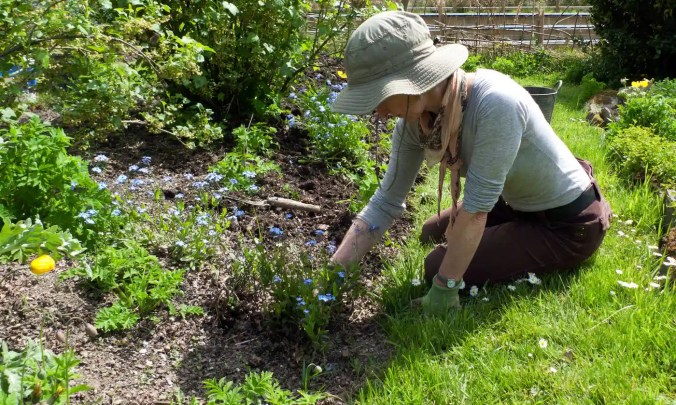
UK Plant Prospecting & iNaturalist

While once gardening was somewhat of a battle against nature, people are now working with native plants and animals. Photograph: Kathy deWitt/Alamy

We are happy to see citizen scientists putting this technology to such use anywhere, but particularly gratified to know that a large organization is encouraging its use for such an important initiative:

RHS asks gardeners to find interesting ‘weeds’ that may be rare plants

People urged to submit specimens to an app as private gardens may be fresh source of scientific discovery

Record the “weeds” that pop up in your garden because they could be a rare plant, the Royal Horticultural Society has said. Continue reading
Aeon & The Rise Of Maize In Asia

On the outskirts of Kunming, the capital of Yunnan province in southwestern China, 6 November 2006. Photo by stringer/Reuters

Aeon was a regular source of excellent ideas and information during our first few years, and we are happy to see it again:

Maize is arguably the single most important crop in the world and is rivalled only by soybeans in terms of versatility. That said, it is, along with sugar cane and palm oil, among the most controversial crops, proving particularly so to critics of industrial agriculture. Although maize is usually associated with the Western world, it has played a prominent role in Asia for a long time, and, in recent decades, its importance in Asia has soared. For better or worse, or more likely for better and worse, its role in Asia seems to be following the Western script. Continue reading
Agnostics Thankful For The Sacred

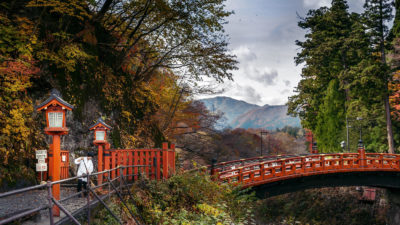
The Futarasan Shrine in Nikkō, Japan. Ancient forests surrounding Japan's Shinto temples cover more than a quarter-million acres.

The Futarasan Shrine in Nikkō, Japan. Ancient forests surrounding Japan’s Shinto temples cover more than a quarter-million acres. NORTOPHOTO / ALAMY STOCK PHOTO

We are agnostic when it comes to how conservation of nature is motivated, and how it is accomplished. Thanks as always to Fred Pearce:

Sacred Groves: How the Spiritual Connection Helps Protect Nature

From Ethiopia’s highlands to Siberia to the Australian rainforest, there are thousands of sacred forests that have survived thanks to traditional religious and spiritual beliefs. Experts say these places, many now under threat, have ecological importance and must be saved.

Governments from across the world made grand promises last month at the biodiversity conference in Montreal to save nature by protecting 30 percent of the planet’s land and oceans by 2030. Continue reading

The Heart Beat In Greece

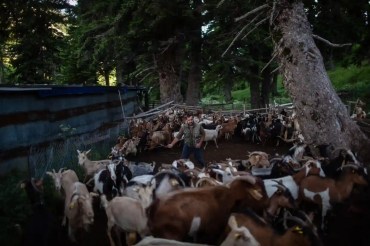
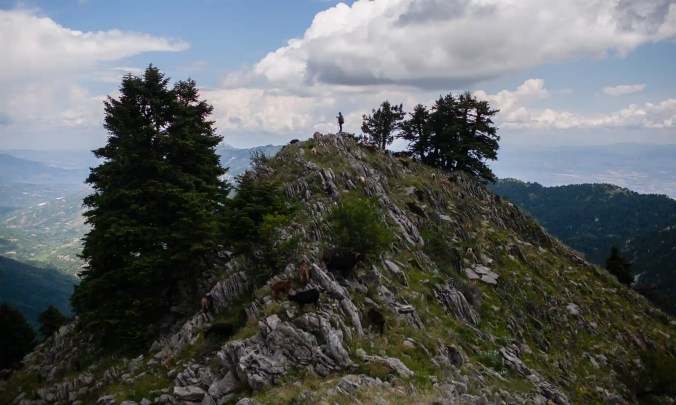
Kostas Papastavros and his goats on the top of the Koziakas mountain, part of Pindus range on mainland Greece. Photograph: Vasileios Tsiolis

I appreciate the comment about the heart beat in Katy Fallon’s portrait of a particular form of pastoral life in northern Greece. It comes just as we start dreaming of making an overdue visit back to the country I would most likely choose to live, if not for Costa Rica’s strong pull:

Kostas leading the goats back to the family’s makeshift summer barn on Koziakas mountain

‘My heart beats up here’: Greece’s nomadic herders on life in the hills – a photo essay

For hundreds of years the Vlach herders in Greece and the Balkans have moved livestock to high mountain pastures for the summer months. But their numbers are dwindling as their arduous existence is threatened by soaring costs and a lack of state support

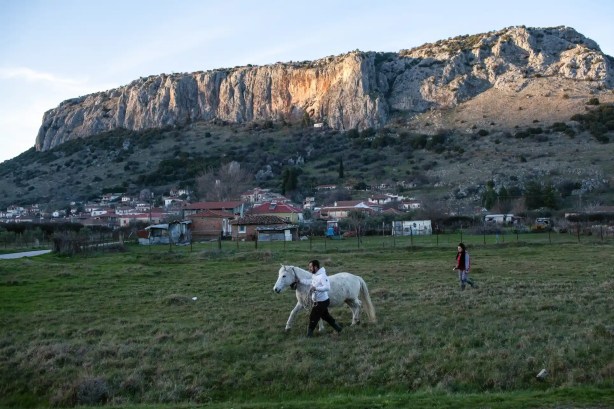
Kostas and Fotini walk with the family’s mare in front of the prehistoric cave of Theopetra village

Every spring in the Thessalian plains of central Greece, in the shadow of the mountains, an ancient and sacred migration of humans and goats takes place. Continue reading
Carbon Cowboys

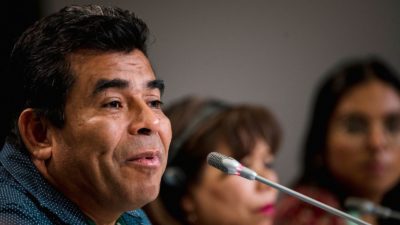
Levi Sucre Romero at the UN biodiversity conference in Montreal last week.

Levi Sucre Romero at the UN biodiversity conference in Montreal last week. ANDREJ IVANOV / AFP VIA GETTY IMAGES

Carbon credit brokers are busier than ever, and that is welcome news, but Levi Sucre Romero’s concerns give pause:

Forest Equity: What Indigenous People Want from Carbon Credits

To Indigenous leader Levi Sucre Romero, carbon credit markets have failed to respect Indigenous people and their key role in protecting their lands. In an e360 interview, he talks about how carbon brokers have taken advantage of local communities and why that must change.

Indigenous protesters at the opening ceremony of the UN biodiversity conference in Montreal this month.

Indigenous protesters at the opening ceremony of the UN biodiversity conference in Montreal this month. ANDREJ IVANOV / AFP VIA GETTY IMAGES

In a world where carbon credit markets are taking advantage of Indigenous people and their forests, the United Nation is losing its leadership on combating climate change, says Indigenous leader Levi Sucre Romero.

In an interview with Yale Environment 360, Romero, who is from Costa Rica and is coordinator of the Mesoamerican Alliance of Peoples and Forests, calls out the “carbon cowboys” — the brokers who he says are wrecking efforts to allow Indigenous communities to have ownership of the carbon credits generated on their land, and who, by acting unscrupulously and secretively, are undermining global hopes of using nature to mitigate climate change. Continue reading
Glass Half Full, NOLA Community Recycling

This youthful organization, new to us but old enough to have proof of concept is, in their own words, crushing it:

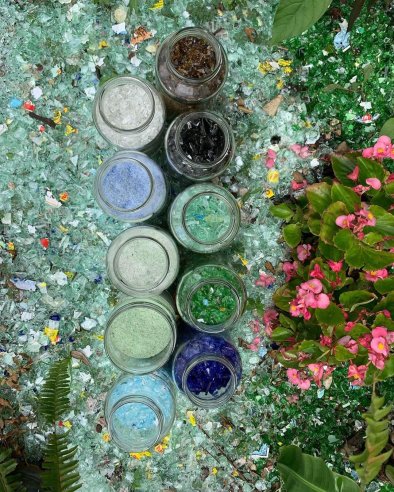
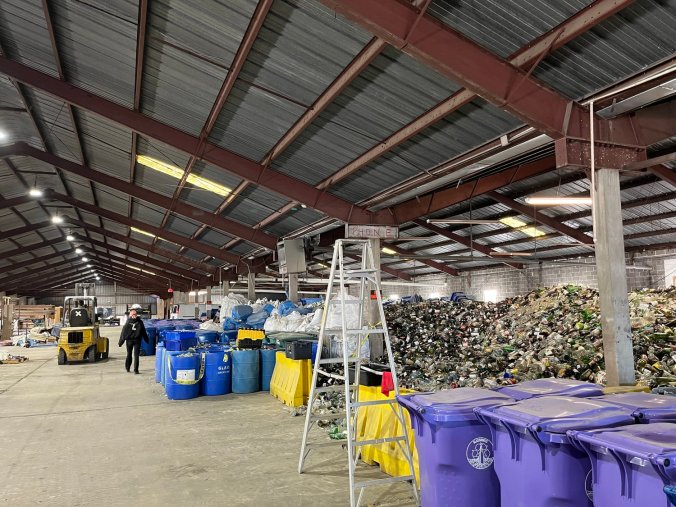
Turning glass waste into useable sand and cullet.

We collect and convert NOLA’s glass bottles — which have been crammed into our landfills for decades — into functional products: sand and glass cullet. These precious materials have an array of applications, from coastal restoration to flood prevention to eco-construction.

Converting glass into sand & glass cullet

Our recycling process involves diverting used glass products from landfills and sorting, sifting, and ultimately converting them into sand products ranging from super soft, beach-like sand to glass gravel. The final products are used for coastal restoration projects, disaster relief efforts, eco-construction, new glass products, and so much more. The applications for sand are truly endless.

Origami At The American Museum Of Natural History

D. Finnin/© AMNH

Folding paper was a frequent topic for us starting in 2011, but origami specifically has been featured only a few times. This holiday season at the American Museum of Natural History we add to the mentions:

The Making of the Origami Holiday Tree

One 13-Foot Tree, 1,000 Origami Models: A Spectacular Museum Tradition

M. Shanley/© AMNH

Early each year, as the days begin to get a bit longer and the first signs of spring crop up in Central Park, Ros Joyce and Talo Kawasaki, volunteers from OrigamiUSA and the designers of the Museum’s Origami Holiday Tree start planning for the year ahead.

M. Shanley/© AMNH

They begin combing the Museum’s halls in search of inspiration—going from floor to floor to decide on a perfect theme and to find just the right exhibits to re-create as origami models on the tree. Continue reading