Bio-Based Gains

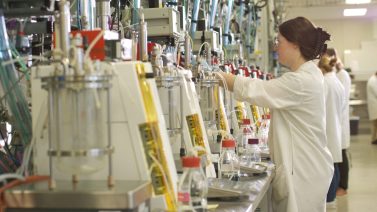
Scientists at San Diego-based Genomatica, which is developing a plant-based nylon. GENOMATICA

We have been watching and waiting for this range of products to have their day, and Jim Robbins delivers an up to date account that gives hope:

From Lab to Market: Bio-Based Products Are Gaining Momentum

A 3D-printed house made from sawdust and other timber industry waste by the University of Maine’s Advanced Structures and Composites Center. UNIVERSITY OF MAINE

Propelled by government investment and shareholder demand, manufacturers are pushing to get bio-based products into the marketplace. These new materials — made from plants, fungi, and microbes — aim to replace those that contain toxins and are difficult to recycle or reuse.

In the 1930s, the DuPont company created the world’s first nylon, a synthetic polymer made from petroleum. The product first appeared in bristles for toothbrushes, but eventually it would be used for a broad range of products, from stockings to blouses, carpets, food packaging, and even dental floss.

Nylon is still widely used, but, like other plastics, it has environmental downsides: it is made from a nonrenewable resource; its production generates nitrous oxide, a potent greenhouse gas; it doesn’t biodegrade; and it sheds microfibers that end up in food, water, plants, animals, and even the clouds.

Laminated timber beams and floors used in the construction of Ascent, a 25-story apartment building in Milwaukee. THORNTON TOMASETTI

Now, however, a San Diego-based company called Genomatica is offering an alternative: a so-called plant-based nylon made through biosynthesis, in which a genetically engineered microorganism ferments plant sugars to create a chemical intermediate that can be turned into nylon-6 polymer chips, and then textiles. The company has partnered with Lululemon, Unilever, and others to manufacture this and other bio-based products that safely decompose. Continue reading

Reducing Cement’s Carbon Footprint, Improving Its Longevity

PHOTOGRAPH: GETTY IMAGES

Whether we want buildings to last longer or not, we now know that reducing the carbon footprint of the materials used is a consideration is important:

The Secret to Making Concrete That Lasts 1,000 Years

Scientists have uncovered the Roman recipe for self-repairing cement—which could massively reduce the carbon footprint of the material today.

ROME’S PANTHEON STANDS defiant 2,000 years after it was built, its marble floors sheltered under the world’s largest unreinforced concrete dome. For decades, researchers have probed samples from Roman concrete structures—tombs, breakwaters, aqueducts, and wharves—to find out why these ancient buildings endure when modern concrete may crumble after only a few decades. Continue reading

The Remarkable Efficiency Of Heat Pumps, Explained

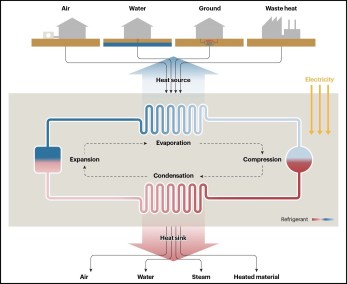
Heat pumps use electricity to compress a refrigerant, raising its temperature. IEA

Heat pumps have only been a passing reference occasionally in these pages, but today they are the focus, thanks to Paul Hockenos in Yale e360:

In Europe’s Clean Energy Transition, Industry Turns to Heat Pumps

With soaring gas prices due to the Ukraine war and the EU’s push to cut emissions, European industries are increasingly switching to high-temperature, high-efficiency heat pumps. Combined with the boom in residential use, the EU is now hoping for a heat pump revolution.

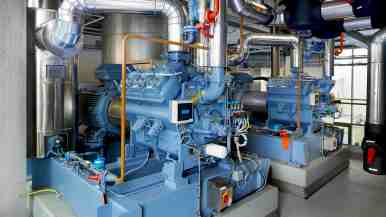
An industrial heat pump at the Mars Confectionery in Veghel, the Netherlands. GEA

The Wienerberger brickworks in Uttendorf, Austria, in the Tyrolean Alps, has always required a steady stream of 90 degree C (194 degree F) heat to dry its construction blocks. This process would have been an expensive proposition for the company after Russia cut gas exports to Europe, as it was for most of Europe’s energy-intensive construction industry. But four years ago, Wienerberger — the largest brick producer in the world — made an investment in the future that is now paying off: it replaced Uttendorf’s gas-fired boiler with an industrial-scale heat pump, which whittles the factory’s energy bill by around 425,00 euros a year. Continue reading

EV Boom

Ibrahim Rayintakath

At this point we should not be surprised but the momentum is still stunning:

Electric Vehicles Keep Defying Almost Everyone’s Predictions

It is striking that in the same year that Tesla’s stock price dropped by about two-thirds, destroying more than $700 billion in market value, the global market for electric vehicles — which for so long the company seemed almost to embody — actually boomed. Continue reading

Great EV Expectations

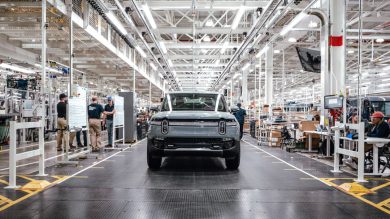
A Rivian R1T electric pickup truck at the company’s factory in Normal, Illinois. JAMIE KELTER DAVIS / BLOOMBERG VIA GETTY IMAGES

I had no reason to bet against Tesla until now, but I did wonder whether it was good for anyone (other than its shareholders) for that one company to dominate its market over the longer term. Now, happily, it looks like the market will do what we need it to do, which is get robust:

For U.S. Companies, the Race for the New EV Battery Is On

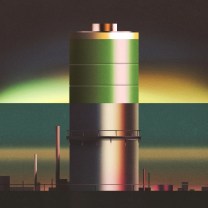
Spurred by federal mandates and incentives, U.S. manufacturers are pushing forward with developing new battery technologies for electric vehicles. The holy grail is a battery that is safer, costs less, provides longer driving range, and doesn’t use imported “conflict” minerals.

Sixteen years have passed since engineer Martin Eberhard unveiled his futuristic custom-designed sports car before a crowd of investors, journalists, and potential buyers in a Santa Monica Airport hangar. Continue reading

Precision Fermentation’s Implied Potential

Illustration: Eleanor Shakespeare/The Guardian

It is the first time we are seeing these two words together, and George Monbiot has this to say about the potential implied:

Embrace what may be the most important green technology ever. It could save us all

Never mind the yuck factor: precision fermentation could produce new staple foods, and end our reliance on farming

So what do we do now? After 27 summits and no effective action, it seems that the real purpose was to keep us talking. If governments were serious about preventing climate breakdown, there would have been no Cops 2-27. The major issues would have been resolved at Cop1, as the ozone depletion crisis was at a single summit in Montreal. Continue reading

Beware The Phantom

(Photo credit: Isaac Bowen / CC BY-NC 2.0)

Thanks to Yale Climate Connections:

‘’Phantom’ power is responsible for up to 10% of a home’s energy use

The electricity that your gadgets use during standby mode could be driving up your utility bill. 

‘Tis the season of ghosts, goblins … and phantom power? Continue reading

Carbon Burial Venturing

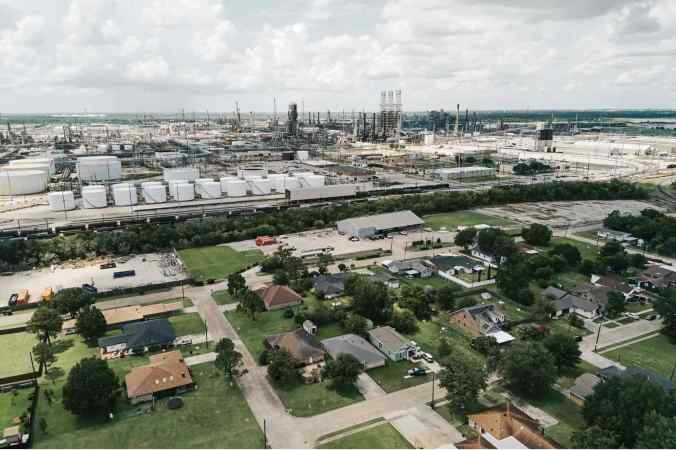
Port Arthur’s Motiva Oil Refinery.PHOTOGRAPH: KATIE THOMPSON

The capturing of carbon is a concept we have been working to understand, but questions about where it goes  and how it is stored, have been fuzzy until now (thanks to Jeffrey Ball at Wired):

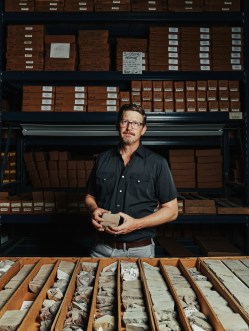
Tip Meckel holds a sandstone sample. PHOTOGRAPH: KATIE THOMPSON

The Big Business of Burying Carbon

The porous rock beneath the Gulf Coast launched the petroleum age. Now entrepreneurs want to turn it into a gigantic sponge for storing CO2.

SOMETIME AFTER THE dinosaurs died, sediment started pouring into the Gulf of Mexico. Hour after hour the rivers brought it in—sand from the infant Rockies, the mucky stuff of ecosystems. Year after year the layers of sand hardened into strata of sandstone, pushed down ever deeper into the terrestrial pressure cooker. Continue reading

Air Conditioning 2.0

The new mechanism (pictured) could replace traditional vapor-compression cooling technology, which has remained largely unchanged since the early 20th century.

Oddly, we have only mentioned air conditioning twice before in our pages since 2011. So much of the human population is in need of it, and its carbon footprint is so problematic, it presents a significant challenge to efforts to mitigate climate change. Here is reason to mention it again:

Assistant Professor of Chemistry Jarad Mason (left) and co-author Jinyoung Seo have developed a new class of solid-state refrigerants that could enable energy-efficient and emission-free cooling. Jon Chase/Harvard Staff Photographer

Keeping cool without warming the planet

A summer dilemma worthy of Solomon: how to stay cool in days of high heat and humidity without turning to traditional air conditioning, which consumes vast amounts of electricity and emits potent climate-changing greenhouse gases.

The answer potentially involves a new class of solid-state refrigerants that could enable energy-efficient and emission-free cooling. Continue reading

Sylvia Earle, Her Deepness

Sylvia Earle. Illustration by João Fazenda

Yesterday’s post got me looking back at our attention to marine science over the years, making me wonder whether we have given that topic its fair share. Yes, probably, but more is needed. I already knew this name because it has appeared in our pages a few times over the years. But just recently I heard her name from two different people who have had the chance to know her personally. One of them, when I mentioned the name, replied with Her Deepness replacing Sylvia Earle’s given name. Thanks to Dana Goodyear, who had me at puma, but who also knows a thing or two about water, now this:

Without Sylvia Earle, We’d Be Living on Google Dirt

The marine biologist and aquanaut evokes a Bond girl with a Ph.D. To save a species, she says, you have to know it.

Do you like to breathe?” This is a question that the marine biologist and deep-sea explorer Sylvia Earle asks frequently. The ocean produces half of the oxygen on Earth. If it dies, humanity can’t survive, so humans better pay attention to it. Continue reading

Critical Mass On Greener Steel

Getty

Greening the production of steel has been the topic of exactly one previous post, which linked to an article by Matthew Hutson from last September that made passing reference to the company featured in the article below. Maybe we are getting closer to critical mass:

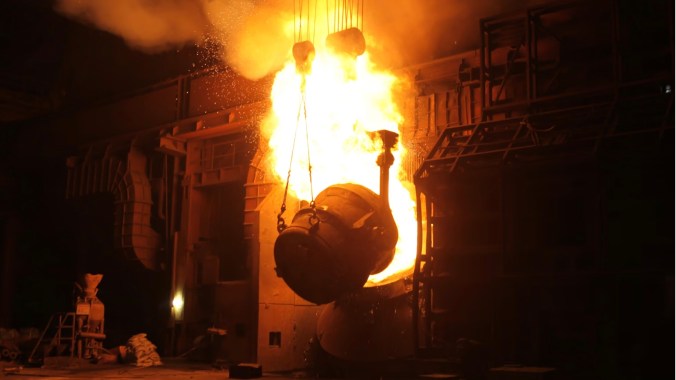
Roughly a tenth of global carbon emissions comes from the steel industry. Doing something about that is easier said than done.

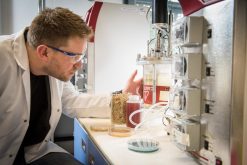
In the city of Woburn, Massachusetts, a suburb just north of Boston, a cadre of engineers and scientists in white coats inspected an orderly stack of brick-size, gunmetal-gray steel ingots on a desk inside a neon-illuminated lab space.

What they were looking at was a batch of steel created using an innovative manufacturing method, one that Boston Metal, a company that spun out a decade ago from MIT, hopes will dramatically reshape the way the alloy has been made for centuries. Continue reading

Mosquito GMO News

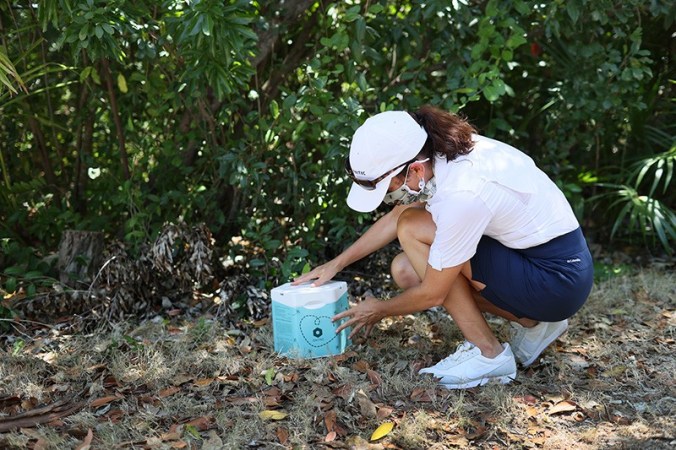
Biotechnology firm Oxitec ran the first open-air test of genetically modified mosquitoes in the United States by placing boxes of its eggs in selected spots in the Florida Keys. Credit: Joe Raedle/Getty

Genetically modified this and that have been concerns of ours for most of the time we have been posting on environmental issues and nature news. This news below may be the best test of how tolerant one might become about a technology that is inherently full of danger–of the unintended consequences variety more than the known in advance variety–and yet could tame some of the greatest natural pests that mankind suffers from:

Biotech firm announces results from first US trial of genetically modified mosquitoes

Oxitec reports that its insects behaved as planned — but a larger trial is needed to learn whether they can reduce wild mosquito populations.

Researchers have completed the first open-air study of genetically engineered mosquitoes in the United States. The results, according to the biotechnology firm running the experiment, are positive. But larger tests are still needed to determine whether the insects can achieve the ultimate goal of suppressing a wild population of potentially virus-carrying mosquitoes. Continue reading

Carbon, Sequestration & Hope

(Brandon Thibodeaux / The New York Times / Redux)

When I read about a promising new technology related to carbon sequestration, I am ambivalent based on the experience of many past false hopes. Carbon is a very large problem. Finding new methods of sequestration is a very challenging puzzle.

I track such developments every week by reading the newsletter that Bill McKibben posts on Substack. Most weeks I post something here from that, and do my best to balance the terrifying and enraging with the more hopeful news he occasionally shares there.

The only other newsletter I read regularly is Robinson Meyer’s newsletter for the Atlantic, called The Weekly Planet. Here is one of his worth reading for a bit of encouragement (when you click the hyperlink it will go to the current newsletter, which until April 20 is this one; after April 20 scroll to find this edition):

The Biggest Investment Ever in Sucking Carbon Out of the Sky

The world’s biggest tech companies are getting serious about carbon removal, the still-nascent technology wherein humanity can pull heat-trapping carbon dioxide out of the atmosphere. Yesterday, an alliance of prominent Silicon Valley companies—including Google, Meta, Shopify, and the payment company Stripe—announced that it is purchasing $925 million in carbon removal over the next eight years. In a world awash in overhyped corporate climate commitments, this is actually a big deal. Continue reading

A New Knife Worthy Of Our Attention

Knives are the oldest type of manufactured tool, and they’re still evolving. Karsten Moran for The New York Times

I last posted on the topic of knives earlier this year, partly because the onetime blacksmith apprentice in me felt compelled to salute the skillset, but mainly because the mission behind the knife-making in that case was worth promoting.

Otherwise, culinary utensils do not get much attention in our pages. Ceiba being the celebrated exception to that general rule–wooden culinary utensils, but no knives. Derrick Bryson Taylor offers us a good reason to revisit this neglect:

Knives are humanity’s oldest tool, dating back millions of years. A group of scientists in Maryland have produced a version made of hardened wood, which they say is sharper than steel.

More than 60 years ago in “Mastering the Art of French Cooking,” Julia Child, one of America’s most emulated chefs, described the necessity of decent, reliable kitchen equipment. Continue reading

Nuclear Fusion’s Heat Feat

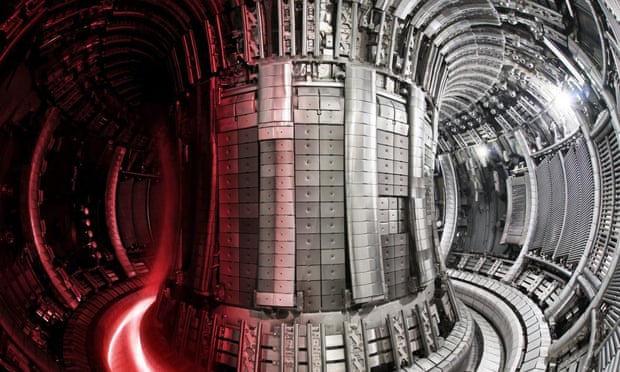
The interior of the JET, where an experiment generated 59 megajoules of heat, beating the 1997 record of 21.7 megajoules. Photograph: UKAEA

We have no expertise in this specific energy-related subject, but we know that new sources of energy are an important potential contributor to the reduction of global warming. So, we read this news about a new heat record from nuclear fusion as a qualified source of hope:

Nuclear fusion heat record a ‘huge step’ in quest for new energy source

Oxfordshire scientists’ feat raises hopes of using reactions that power sun for low-carbon energy

The prospect of harnessing the power of the stars has moved a step closer to reality after scientists set a new record for the amount of energy released in a sustained fusion reaction. Continue reading

Palm Oil Potential

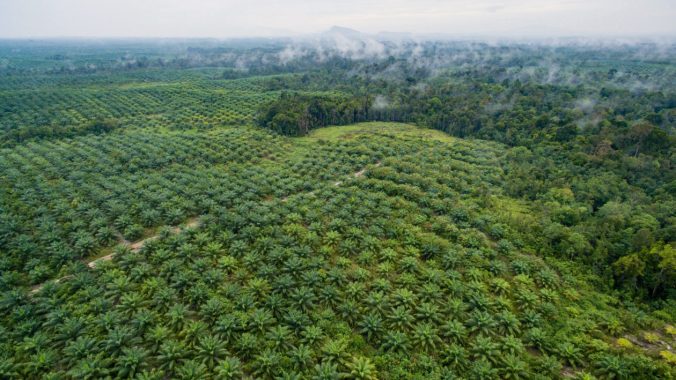
An oil palm plantation encroaches on a rainforest in West Kalimantan, Indonesia. NANANG SUJANA / CIFOR

Palm oil’s problems, and potential solutions have been catalogued in these pages many times. In this recent story by James Dinneen, writing again for Yale Environment 360, a new potential solution is explored:

Can Synthetic Palm Oil Help Save the World’s Tropical Forests?

Christopher Chuck, a chemical engineer at the University of Bath, is working to produce yeast able to generate more oil from cheaper feedstocks. UNIVERSITY OF BATH

Numerous startups are creating synthetic palm oil in the lab, hoping to slow the loss of tropical forests to oil palm cultivation. But palm oil is the most widely used vegetable oil, and producing a synthetic version on a large scale remains a daunting challenge.

Tom Jeffries and Tom Kelleher met at Rutgers University in the 1970s while studying industrially useful microbes. Jeffries went on to run a yeast genomics program at the U.S. Department of Agriculture; Kelleher spent decades in the biomedical industry, working with biologics like insulin, which are produced by genetically modified microbes in giant, fermenting vats. Continue reading

Green Steel On The Horizon

The steel industry produces around two billion tons of it each year, while emitting more than three billion tons of carbon dioxide annually. Photograph by Christine Olsson / Alamy

The ratio of carbon dioxide produced, relative to steel produced, is surprising. The bigger surprise is how to improve that ratio:

The Promise of Carbon-Neutral Steel

A new manufacturing technique could drastically reduce the footprint of one of our dirtiest materials.

Steel production accounts for around seven per cent of humanity’s greenhouse-gas emissions. There are two reasons for this startling fact. First, steel is made using metallurgic methods that our Iron Age forebears would find familiar; second, it is part of seemingly everything, including buildings, bridges, fridges, planes, trains, and automobiles. According to some estimates, global demand for steel will nearly double by 2050. Green steel, therefore, is urgently needed if we’re to confront climate change. Continue reading
Orca On

The video above is the shortest, clearest primer we could find to explain how this machine technology works. With Orca now on we will get the chance to see how much promise this process holds for carbon capture’s machine approach versus the tree approach, which we now know needs some reconsideration:

World’s biggest machine capturing carbon from air turned on in Iceland

Operators say the Orca plant can suck 4,000 tonnes of CO2 out of the air every year and inject it deep into the ground to be mineralised

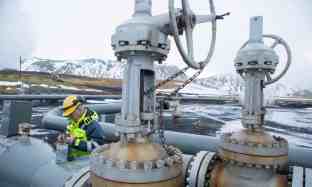
A worker on a CarbFix carbon injection well in Iceland in 2017. The company is involved in the new Orca plant designed to draw carbon dioxide out of the air and store it as rock. Photograph: Christian Science Monitor/Getty Images

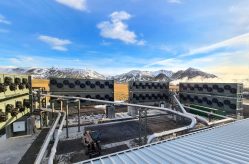
The world’s largest plant designed to suck carbon dioxide out of the air and turn it into rock has started running, the companies behind the project said on Wednesday.

The plant, named Orca after the Icelandic word “orka” meaning “energy”, consists of four units, each made up of two metal boxes that look like shipping containers.

Constructed by Switzerland’s Climeworks and Iceland’s Carbfix, when operating at capacity the plant will draw 4,000 tonnes of carbon dioxide out of the air every year, according to the companies. Continue reading

The New Race In Wind Energy, Between Fixed And Floating Turbines

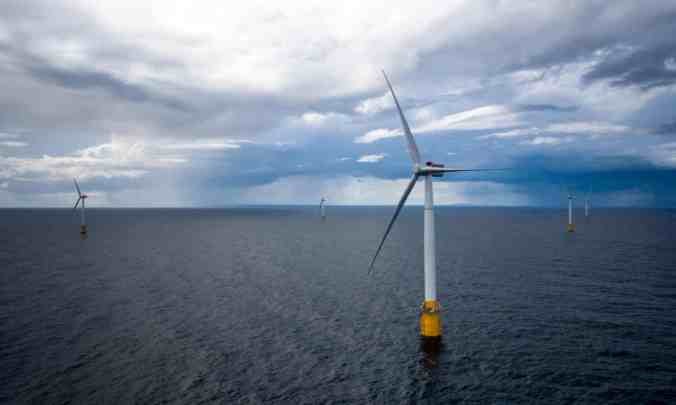
The world’s first floating wind farm 15 miles offshore of Aberdeenshire, in Scotland. The 30 megawatt installation can power approximately 20,000 households Photograph: Xinhua/Alamy

Wind, of all the alternative energy sources we pay attention to, requires vast areas for generation. So water has become the go-to place to place the turbines. It looks like the new race is whether to have the turbines fixed or floating:

Floating wind turbines could open up vast ocean tracts for renewable power

Technology could help power a clean energy transition if it can overcome hurdles of cost, design and opposition from fishing

In the stormy waters of the North Sea, 15 miles off the coast of Aberdeenshire, in Scotland, five floating offshore wind turbines stretch 574 feet (175 metres) above the water. The world’s first floating windfarm, a 30 megawatt facility run by the Norwegian company Equinor, has only been in operation since 2017 but has already broken UK records for energy output. Continue reading
Carbon Capture Closer

Fans draw air into Climeworks’ direct air capture plant in Zurich, Switzerland. CLIMEWORKS

Our thanks as always to Jon Gertner for this news.  Combining capturing carbon with other goals is not new, but it has been goal-setting elusive of significantly robust results; we are getting closer:

The Dream of Carbon Air Capture Edges Toward Reality

Next month, an industrial facility in Iceland will join a growing number of projects to remove CO2 from the air and put it underground. But major hurdles, including high costs, remain before this technology can be widely deployed and play a key role in tackling climate change.

Climeworks’ Orca plant under construction near Reykjavik, Iceland. CLIMEWORKS

In early September, at an industrial facility located about 25 miles southeast of Reykjavik, Iceland, the Swiss company Climeworks will mark the opening of a new project named “Orca.” At least in a conventional sense, Orca doesn’t actually make anything. It is comprised of eight elongated boxes that resemble wood-clad tanks. Each of these boxes — known as “collectors” — is roughly the size of a tractor trailer, and each is festooned with 12 whirring fans that draw a stream of air inside. Within the collectors, a chemical agent known as a sorbent will capture CO2 contained in the air wafting through. Continue reading