Reviving Plants Lost To Time

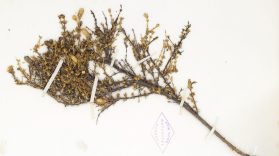
A branch of Blutaparon rigidum, collected on a 1905-1906 expedition to the Galapagos Islands, contains hundreds of potentially viable seeds. NEW YORK BOTANICAL GARDEN

We have touched on the topic of reviving extinct species only a few times previously, and as obvious as it seems we must mention that reviving plant species sounds like a more sound ambition. So, thanks to Janet Marinelli and Yale e360 for this story:

Back from the Dead: New Hope for Resurrecting Extinct Plants

Armed with new technology, botanists are proposing what was once thought impractical: reviving long-lost plant species by using seeds from dried specimens in collections. The challenges remain daunting, but researchers are now searching for the best de-extinction candidates.

In January 1769, botanists Joseph Banks and Daniel Solander found a daisy in Tierra del Fuego, at the southern tip of South America. Continue reading

The Diligence Of Local Bees

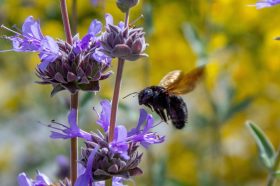
Native Bees Yield Hardier Flowers Than Honey Bees, Research Finds

Bees getting the scientific attention they deserve, our thanks to Yale e360 for summarizing and sharing these findings:

Native Bees Yield Hardier Flowers Than Honey Bees, Research Finds

Flowers pollinated by native bees produce fitter offspring than flowers pollinated by honey bees, according to a new study carried out in San Diego, California. Continue reading

Duckweed, By Plantible Foods

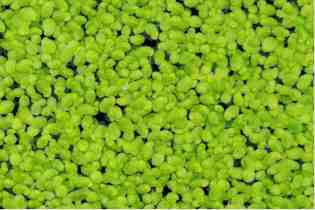
Duckweed at the Plantible Foods aqua farm in San Marcos, Calif. (Eric Thayer/for The Washington Post)

We link frequently to articles about meat replacement options, and this appears to be the first time that duckweed is the plant protein being featured. So, thanks to Michael J. Coren, a climate advice columnist at the Washington Post, for this:

The plant protein that could push meat off your plate

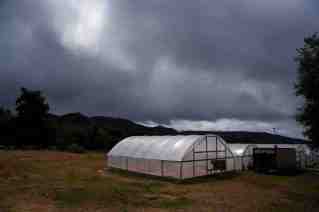
Plantible grows duckweed in ponds housed in greenhouses. (Eric Thayer/for The Washington Post)

SAN MARCOS, Calif. — I came to this aquatic farm an hour outside of San Diego because I wanted to see what could be the future of humanity’s protein supply.

At the moment, it looks more like a meth lab out of the drama “Breaking Bad,” jokes Tony Martens Fekini, the chief executive of Plantible Foods.

Debris from a machine that grinds duckweed. (Eric Thayer/for The Washington Post)

Decrepit recreational vehicles squat on the property. In one corner, people tend to vials, grow lights and centrifuges in a trailer lab. More than a dozen big ponds filled with duckweed, a tiny green plant, bask in the Southern California sunshine.

But the only thing cooking here is protein.

Continue reading

Capsicum Futures

The World Vegetable Center conducts research, builds networks, and carries out training and promotion activities to raise awareness of the role of vegetables for improved health and global poverty alleviation.

Among the essential components of Kerala cuisine, various chili peppers were central in our diet during the India work years. I became quite tolerant of high intensity heat from capsicum, and learned to enjoy the steamy delirium of a typical mango curry. I am out of practice, not sure I can still handle high Scoville meals any more, but heartened to know that Derek Barchenger and the W.V.C team are taking care for capsicum’s future, so thanks to Clarissa Wei for this story:

The Quest to Save Chili Peppers

A seed bank in Taiwan is home to more chili varieties than anywhere else on earth. In a warming world, we’re going to need them.

In 1999, Susan Lin, a bespectacled plant researcher at the World Vegetable Center, in Taiwan, pulled on a pair of latex gloves and got to work cross-pollinating some chili peppers. She collected tiny white flowers from a cayenne-pepper plant, shook their pollen into a tiny test tube, and walked over to an aji-chili plant. Using tweezers, she removed the petals and anthers from its flower buds, exposing the thread-like stigmas that serve as the plant’s female reproductive organs. Then she dipped the stigmas into the pollen, hoping that they would eventually form peppers. Continue reading

More On Merlin Sheldrake, Fungi & Related Matters

Merlin Sheldrake, author of the best-selling book “Entangled Life.” Alexander Coggin for The New York Times

We are grateful to any publication that gives this topic its due attention, in this case the New York Times and a particular thanks to Jennifer Kahn for such a thoughtfully written profile:

A vast fungal web braids together life on Earth. Merlin Sheldrake wants to help us see it.

One evening last winter, Merlin Sheldrake, the mycologist and author of the best-selling book “Entangled Life,” was headlining an event in London’s Soho. The night was billed as a “salon,” and the crowd, which included the novelist Edward St. Aubyn, was elegant and arty, with lots of leggy women in black tights and men in perfectly draped camel’s-hair coats. “Entangled Life” is a scientific study of all things fungal that reads like a fairy tale, and since the book’s publication in 2020, Sheldrake has become a coveted speaker.

A pied bleu (Lepista personata), also known as the field blewit. Alexander Coggin for The New York Times

At talks like these, Sheldrake is sometimes asked to answer a question he poses in the first chapter of his book: What is it like to be a fungus? The answer, at least according to Sheldrake, is at once alien and wondrous. “If you had no head, no heart, no center of operations,” he began. “If you could taste with your whole body. If you could take a fragment of your toe or your hair and it would grow into a new you — and hundreds of these new yous could fuse together into some impossibly large togetherness. And when you wanted to get around, you would produce spores, this little condensed part of you that could travel in the air.” There were nods. In the audience, the woman next to me gave a long, affirming hum. Continue reading

Indigenous Food Foraging

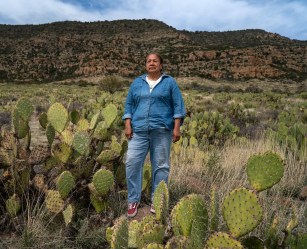
Prickly pear cacti, which produce Twila Cassadore’s favorite fruit. Photograph: Gabriela Campos/The Guardian

Samuel Gilbert was in Bylas, Arizona, on the San Carlos Apache Reservation to report this article, which contains excellent accompanying photographs by Gabriela Campos.

We thank the Guardian for this coverage of indigenous heritage:

‘It healed me’: the Indigenous forager reconnecting Native Americans with their roots

Twila Cassadore hopes teaching Western Apache traditional foodways can aid mental, emotional and spiritual health

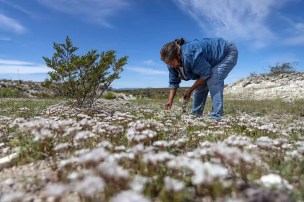
Twila Cassadore gathers wild pearl onions on a foraging trip in the San Carlos Apache Reservation in April. Photograph: Gabriela Campos/The Guardian

On a warm day in April, Twila Cassadore piloted her pickup truck toward the mountains on the San Carlos Apache Reservation in Arizona to scout for wild edible plants. A wet winter and spring rains had transformed the desert into a sea of color: green creosote bushes topped with small yellow flowers, white mariposa lilies, purple lupines and poppies in full bloom.

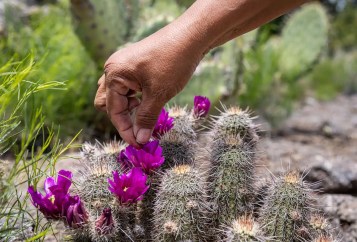
Cassadore picks the petals off a flowering cactus during a foraging trip. She uses the petals in salads. Photograph: Gabriela Campos/The Guardian

Cassadore and I drove up a rough dirt road that used to be an old cattle trail, passing through various ecosystems, moving from Sonoran desert to grasslands and piñon-juniper woodlands. In each area, Cassadore would stop to gather desert chia seeds, cacti flowers and thistles.

Cassadore stopped her truck beside a three-leafed sumac bush brimming with fruit. Continue reading

Weed Is A Weed Is A Weed

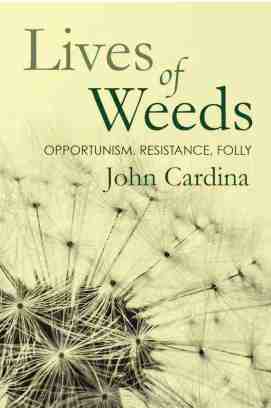
Weeds are classified subject to norms, we have read; thanks to Rivka Galchen for reminding us, and reference to this book:

What Is a Weed?

The names we call plants say more about us than they do about the greenery that surrounds us.

Steve Brill’s first stop was the greenery behind the bike racks. Brill, who is known as Wildman Steve, picked up a weed with heart-shaped seed pods and a small, four-petalled white flower. About thirty of us were gathered for a three-hour foraging tour through Prospect Park, in Brooklyn.

Illustration by Karlotta Freier

The plant was shepherd’s purse, a name that references the seed pods’ resemblance to the containers shepherds used to make from the bladders of sheep. “It’s in the mustard family,” Brill said. “Most all of the flowers in the mustard family are four petals in the shape of a cross.” He encouraged everyone to take a bite, and to tell him what vegetable it tasted like. Continue reading

Planting For Foraging

Picking too many fiddleheads from a single ostrich fern plant can reduce its productivity. Jared Rosenbaum, a field botanist, never harvests more than one or two from any individual plant. (Also, cooking with fiddleheads can be toxic, so be sure to wash them well and never eat them raw: Always boil them before you sauté or cook them in any other way.) Jared Rosenbaum/Wild Ridge Plants

Margaret Roach delivers the goods when we need a dose of useful plant life information:

Why It’s Better to Plant Wild Greens Than to Forage for Them

This spring, don’t forage for wild edible plants. Instead, welcome them into your garden.

Jared Rosenbaum knows the primal thrill of foraging — a sense of interdependence with the natural world that he wants his son to experience, too.

But as a field botanist, he also understands that foraging is one of the many pressures on native-plant populations. And he has a proposition for gardeners: What if we gave back to the wild edible plants that tempt us on our springtime woodland hikes, by welcoming them into the landscapes we cultivate?
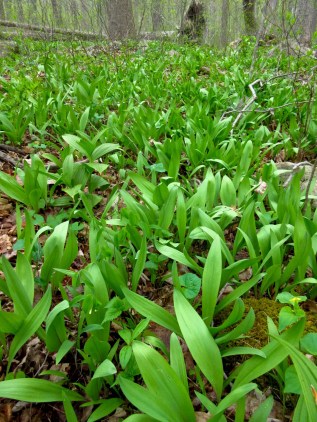
For a fleeting moment each spring, wild leeks (otherwise known as ramps) are a star of restaurant menus, creating a demand that has intensified the pressure on wild populations. Jared Rosenbaum/Wild Ridge Plants

It’s one layer of the habitat restoration and ecological design inspiration that he and his wife, Rachel Mackow, provide to clients of Wild Ridge Plants, in rural Pohatcong Township, N.J. And it’s reflected in many of their mail-order nursery’s plant choices, too.

In Mr. Rosenbaum’s recent book, “Wild Plant Culture: A Guide to Restoring Edible and Medicinal Native Plant Communities,” he revisits that idea: “The time has come to reconnect with our habitats, right where we live, work, and play,” he writes. “Not as museum pieces, but as vital, sustaining elements in our lives, livelihoods, and lifeways.”

That includes our gardens. Continue reading

UK Plant Prospecting & iNaturalist

While once gardening was somewhat of a battle against nature, people are now working with native plants and animals. Photograph: Kathy deWitt/Alamy

We are happy to see citizen scientists putting this technology to such use anywhere, but particularly gratified to know that a large organization is encouraging its use for such an important initiative:

RHS asks gardeners to find interesting ‘weeds’ that may be rare plants

People urged to submit specimens to an app as private gardens may be fresh source of scientific discovery

Record the “weeds” that pop up in your garden because they could be a rare plant, the Royal Horticultural Society has said. Continue reading

Aeon & The Rise Of Maize In Asia

On the outskirts of Kunming, the capital of Yunnan province in southwestern China, 6 November 2006. Photo by stringer/Reuters

Aeon was a regular source of excellent ideas and information during our first few years, and we are happy to see it again:

Maize is arguably the single most important crop in the world and is rivalled only by soybeans in terms of versatility. That said, it is, along with sugar cane and palm oil, among the most controversial crops, proving particularly so to critics of industrial agriculture. Although maize is usually associated with the Western world, it has played a prominent role in Asia for a long time, and, in recent decades, its importance in Asia has soared. For better or worse, or more likely for better and worse, its role in Asia seems to be following the Western script. Continue reading

What To Do With A Tenner

‘In the woods, there will be much more fungi and even more colour: scarlet elf cup (above), orange witches’ butter, yellow stagshorn, green elf cup, blue roundheads.’ Photograph: fotoco-istock/Getty Images/iStockphoto

This recommendation from Lucy Jones is as good as any we might otherwise recommend:

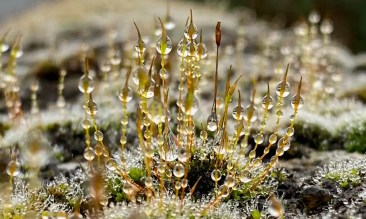
‘Wet weather makes for particularly juicy moss.’ Water droplets on moss on a wall. Photograph: Niall Carson/PA

The winter world may seem gloomy – but look closely, and you’ll see nature casting a spell

For less than a tenner, do as I do: buy a hand lens, head outside and discover fungi and moulds lighting up the darkness

‘You won’t believe how exquisite slime moulds are.’ Photograph: Alastair Hotchkiss/Woodland Trust/PA

The profound therapeutic benefits of connecting with nature and spending time outside are well known. But in winter? When it’s cold, gloomy and everything looks dead? In fact, especially in the winter, when we are susceptible to fatigue, illness and seasonal low mood. And actually there is plenty of life, beauty and wonder right outside our doors, if we look closely.

Come and take a short walk with me in my nearest wild patch – an urban cemetery, a common environment across the British Isles. Continue reading

Fungi Lost & Found

The sculptured toadstool (Amanita sculpta) had not been seen in Singapore for more than 80 years. Photograph: Adrian Loo/National Parks Board of Singapore

Over our nearly dozen years linking to stories we have shared plenty of what we have called lost and found stories (including this and this and this, and this), as well as fungi stories too numerous to link back to, this is the first lost and found fungi story:

Lost and found: how a Facebook post led to the ‘chocolate chip’ toadstool

The sighting of a ‘magnificent’ specimen of the Amanita sculpta, not seen in Singapore for 80 years, shows how the public can aid in conservation efforts

The cap is like a chocolate chip cookie,” says Serena Lee, senior manager at Singapore Botanic Gardens’ herbarium, describing the top of the sculptured toadstool (Amanita sculpta). Continue reading

Peanuts, Soil Regeneration & Coffee

I will not blame Ruby Tandoh for the link to the predatory bookseller in her essay; the magazine she writes for is responsible. Instead, I will just put a better link from the book image on the left to where you might purchase it. Bringing our attention to the book is enough of a good deed to overlook that link. Especially as I work on finding new ways to fix nitrogen in the soil we are prepping for coffee planting:

The Possibilities of the Peanut

I’ve made salads of peanut with watermelon and sumac, fries dunked in garlic-scented satay sauce, and more variations on my aunt’s Ghanaian groundnut stew than I can remember.

Illustration by Sophia Pappas

It would be hard to find a more devoted champion of the peanut than the agricultural scientist George Washington Carver. Born into slavery in Missouri around 1864, Carver studied at Iowa State University and then taught at the Tuskegee Institute, where he would spend much of the rest of his life learning to repair the environmental damage wrought by intensive cotton farming. Continue reading

Banana Genome Science

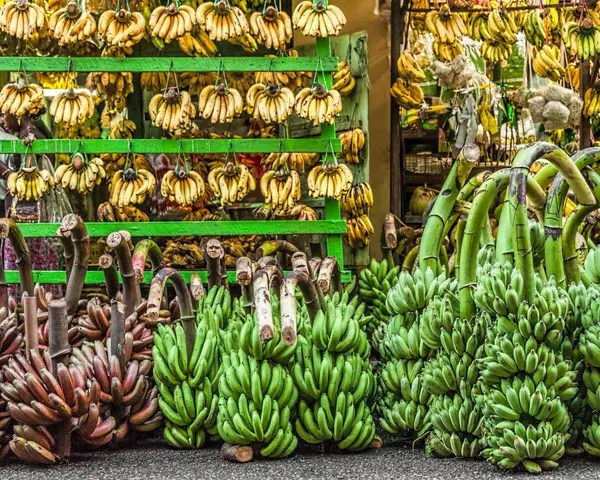
Imagine if you had all of these bananas to pick from every day. Beatrice Sirinuntananon/Shutterstock

We did not search for banana ancestors while living in India. We just found as many varietals as we could to support the genetic stock. I have remained interested in doing the same ever since. They are more versatile than most people are aware, so the outcome of this scientific search matters:

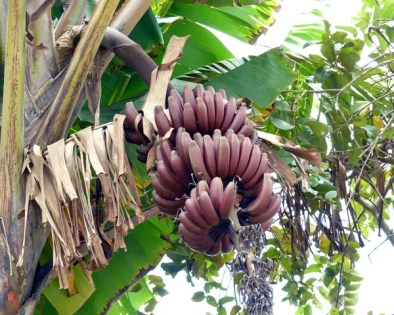
Red or blue, squat or bulbous, seeded or seedless: Bananas have a lot of diversity and scientists have identified genetic signals of varieties that have not yet been found in the wild. guentermanaus/Shutterstock

The Search Is on for Mysterious Banana Ancestors

A new study shows that domesticated bananas have genetic markers tying them to three types of wild bananas that have not yet been found.

Bananas, it turns out, are not what we thought they were.

Sure, most, when ripe, are yellow and sweet and delicious slathered in peanut butter. Continue reading

Infinity Trees

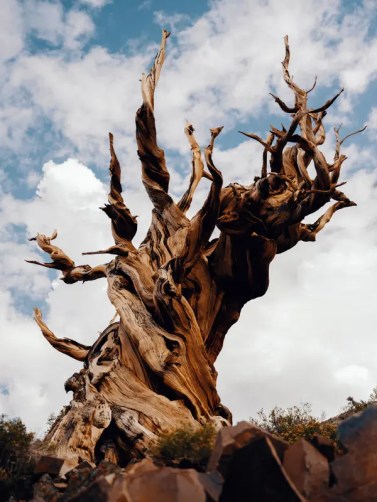
The trees, according to the ecologist Constance Millar, give you a “sense of infinity.” Photo by Adam Perez

We know that getting to a trillion trees is a stretch, but we might be able to sense infinity from a certain species of tree, according to Soumya Karlamangla in the New York Times article we link to here. Photos by Adam Perez help alot.

Bristlecone pines can live and reproduce even with only one branch of needles. Photo by Adam Perez

Historically I have worked to find my personal sense of infinity deep within tropical forests, but reading this and seeing the photos of these trees in a totally different type of ecysystem I can be convinced that it is elsewhere also:

In California, Where Trees Are King, One Hardy Pine Has Survived for 4,800 Years

In a harsh alpine desert, the Great Basin bristlecone pines abide amid climate change. Among them is the oldest tree on Earth (if you can find it).

Great Basin bristlecone pine trees endure in harsh conditions that other vegetation cannot withstand. Photo by Adam Perez

BISHOP, Calif. — Before the Egyptians built the Pyramids, before Jesus Christ was born, before the Roman Empire formed or collapsed, the trees were here.

Ten thousand feet up in the White Mountains of central California, in a harsh alpine desert where little else survives, groves of gnarled, majestic Great Basin bristlecone pines endure, some for nearly 5,000 years. Their multicolor trunks bend at gravity-defying angles, and their bare branches jut toward the sky, as if plucked from the imaginations of Tim Burton or J.K. Rowling.

These ancient organisms, generally considered the oldest trees on Earth, seem to have escaped the stringent laws of nature. Continue reading

I Will Not Panic Over Leafminers

Charley Eiseman, a naturalist who conducts biodiversity surveys for conservation groups, became interested in leaf mines because of patterns like this one. It’s the handiwork of the moth Phyllocnistis populiella in a quaking aspen leaf (Populus tremuloides).

As soon as the sun is up, most days, I am outside. Even after 22 years working on this property I find surprises constantly. When Margaret Roach writes, I read; when she offers visual cues to complement her clear writing, all the better:

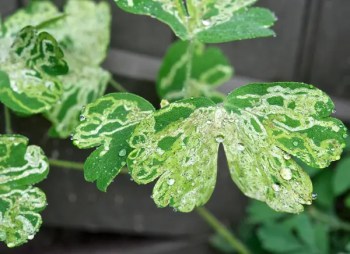
Leaf mines on columbine (Aquilegia) can be serpentine squiggles or blotches. Larvae of flies in the genus Phytomyza make these familiar markings when they feed between a leaf’s epidermal layers. Margaret Roach

Don’t jump to the conclusion that those mysterious marks are evidence of disease. They may be leaf mines or galls — and that’s a good thing.

During the early days of the coronavirus pandemic, some of us mastered bread-baking (if we could get our hands on flour) or devoted ourselves to nurturing some new mail-order houseplant. Continue reading

Cornell Botanic Gardens & Promises Fulfilled

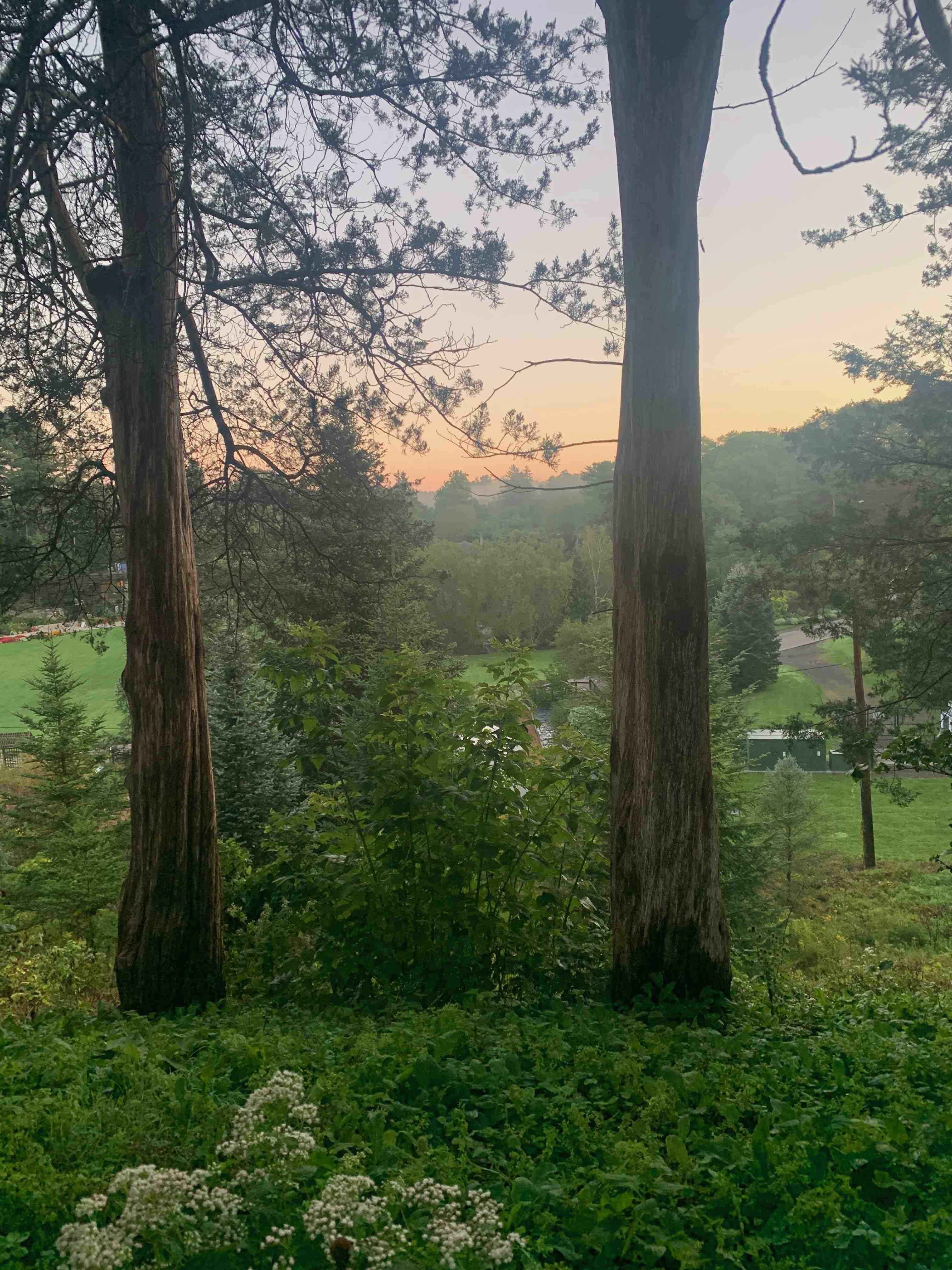
Picking up where I left off yesterday, this group of photos captures the essence of my morning walk. Destination: the Botanic Gardens on the campus of Cornell University. The photo above is from one of the main campus roads, looking down onto my destination. Continue reading

Alerce, Fungi & Futures

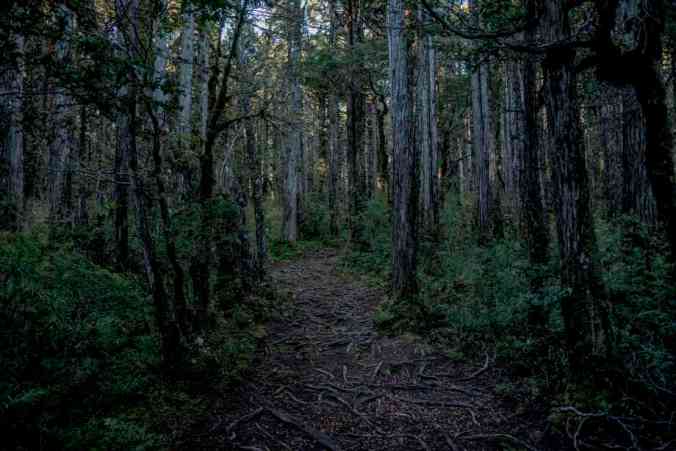
Roots rise from shallow soil. Tomás Munita

The Valdivian Coastal Reserve was mentioned once in our pages, only in passing.

Tomás Munita

Strange, because if I was asked to name my favorite protected area on the planet it would be at or near the top of my list. The abundant but threatened alerce trees were part of the reason. A family story would explain more of why, and that is part of a larger work story that needs more attention another time.

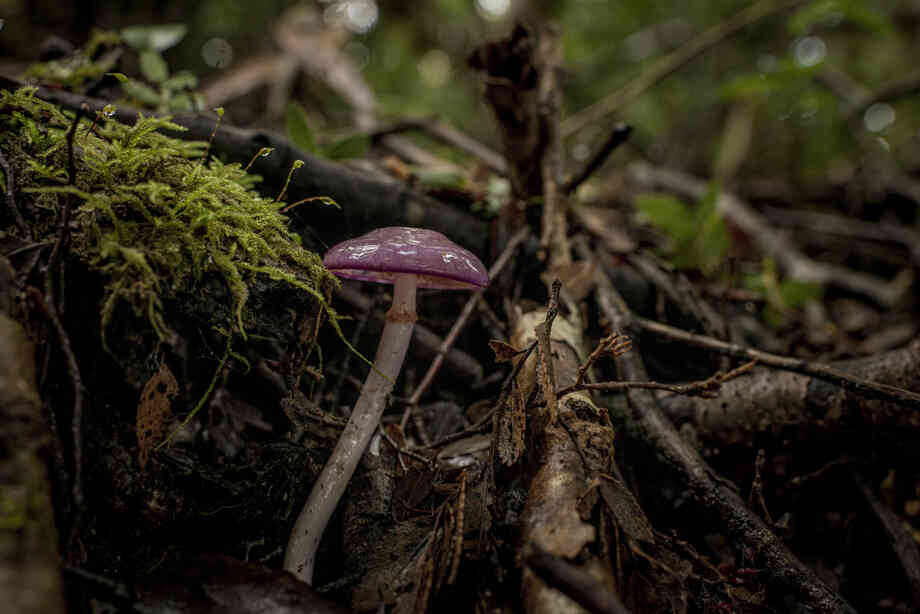
A mushroom rises from the forest floor. Tomás Munita

The story below, featuring an adjacent protected area, stirs an intense place memory, and at the same time reveals much about a topic that was not on our radar at the time. And it says much about potential futures for that place. So, thanks to the New York Times climate correspondent Somini Sengupta (again and again) as well as photographer Tomás Munita:

Unearthing the Secret Superpowers of Fungus

Tomás Munita

In the fight against warming, a formidable ally hides just beneath our feet.

 — Toby Kiers took long strides across the spongy forest floor, felt the adrenaline rush in her veins and stopped at the spot she had traveled so far to reach. Into the ground went a hollow metal cylinder. Out came a scoop of soil.

Tomás Munita

Dr. Kiers stuck her nose into the dirt, inhaled its scent, imagined what secrets it contained to help us live on a hotter planet. “What’s under here?” she asked. “What mysteries are we going to unveil?”

The soil was deposited into a clear plastic bag, then labeled with the coordinates of this exact location on Earth. Continue reading

Orchid Hunters Teaching Their Craft

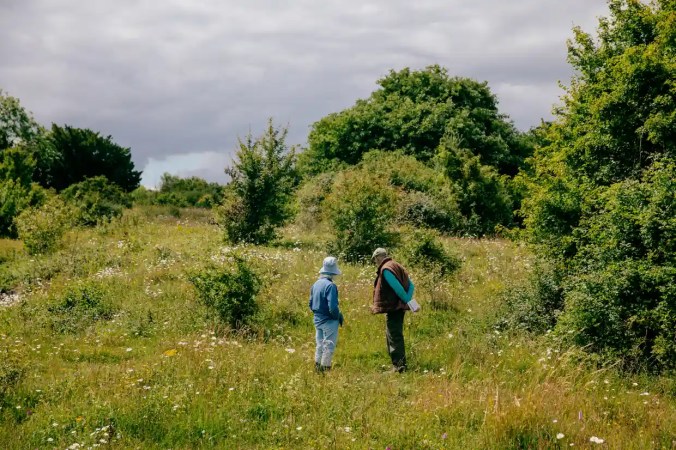
Orchid enthusiasts on the hunt at Noar Hill. Photograph: Peter Flude/The Guardian

We feature stories involving orchids whenever there is something new to learn:

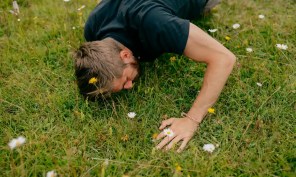
Bersweden stops to smell a musk orchid at Noar Hill. Photograph: Peter Flude/The Guardian

‘Like stroppy teenagers’: the joy of hunting devious and demanding orchids

For British botanist Leif Bersweden, finding an orchid is ‘pure joy’ and one that he is happy to share with fellow enthusiasts as they scour a nature reserve in Hampshire

It’s a Friday, and half a dozen retirees are scouring the ground for flowers. Continue reading

Trees & Careful Planting

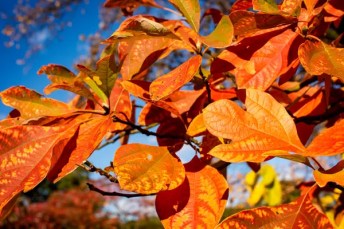
Fast-to-establish sassafras (Sassafras albidum), an Eastern native tree, has distinctively shaped leaves that fire up brilliantly in autumn. Michael Stewart/Courtesy Brooklyn Botanic Garden

One of the minor downsides to life in the tropics is decades of missed autumn leaves. But that downside is counterbalanced by so many upsides that the loss is trivial. And we have photos like the one to the right, as well as the possibility of travel (including to the botanical gardens featured in the story below), plus plenty of writing on the science of those colors, to dissipate the trivia.

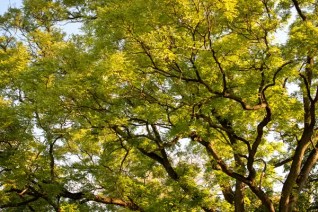
Mr. Roddick is often asked to open up a tree’s canopy to let in more light. His answer is based on the tree’s species, its health and its age. “Better to train a young tree to fit into a garden as opposed to trying to change an old tree,” he said. Michael Stewart/Courtesy Brooklyn Botanic Garden

Besides, our trees are awesome for reasons other than color. They grow fast. Some of them fix nitrogen. And most of those we have been planting have a shading responsibility specific to the coffee we are planting. So this article resonates even if some of the particulars are not relevant to our land, trees, and related growing conditions. Margaret Roach has been a constant companion reminding me of all this, through her writings mainly on gardens in the north.

The base of an old London plane tree at Brooklyn Botanic Garden. Tree roots on most landscape trees are shallow and prone to injury, yet we often fail to consider how our gardening and home-improvement projects will affect them. Michael Stewart/Courtesy Brooklyn Botanic Garden

Trees can take a lot of punishment, but they have their limits. Here’s how to work around them safely.

If trees could talk, they’d probably start by saying, “Enough with the insults already.”

In more than 30 years of working with trees, Christopher Roddick has made it a practice to listen to their unspoken language — and to show respect for some of the largest and oldest organisms among us. Continue reading